
I’ll never forget my first field season in the dusty plains of Baja, Mexico. I wasn’t looking for groundhogs then; I was looking for kangaroo rats and other desert animals like prairie dogs. I spent hours watching these social rodents through a spotting scope, mesmerized by the way they’d bolt upright to scan for predators. Later, in my travels across North America, I encountered a very similar creature, the Geomyidae (pocket gophers), and the “whistle pigs” of the north.
My parents used to get so annoyed back home when they saw soil being pushed up in the garden. Now I see those mounds differently. These animals aren’t just “pests”, they are keystone species. Whether it’s a beaver damming a stream or a groundhog engineering an underground mansion, these “ecosystem engineers” change the very chemistry of the soil. In addition, they provide homes for other animals like foxes, badgers, and even rabbits.
Today, we’re going to look past the Groundhog Day kitsch and dive into the real science of the groundhog (Marmota monax). Put on your field boots; we’re going digging for some fun facts about groundhogs.
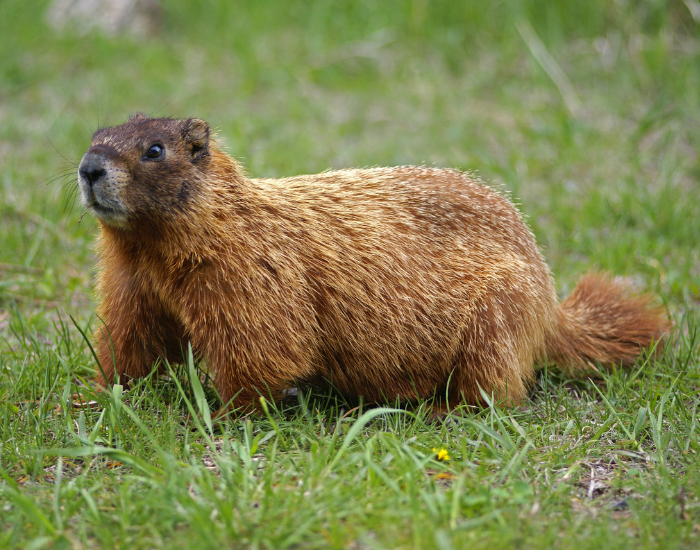
1. They Are Actually “Giant” Ground Squirrels
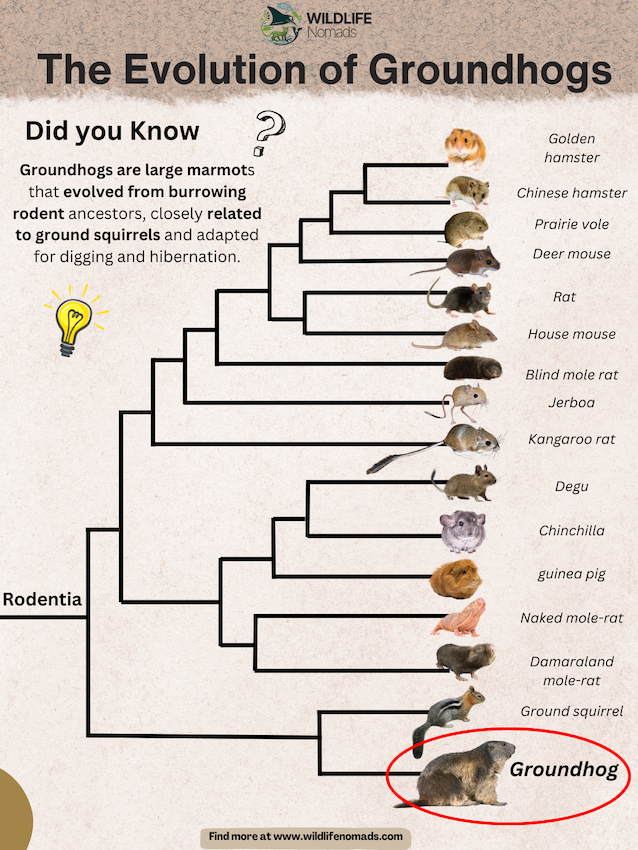
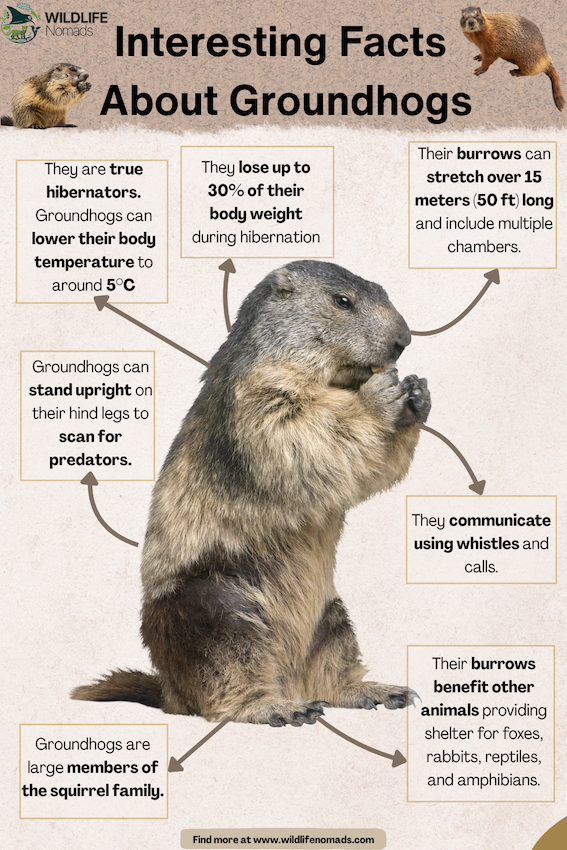
Most people don’t realize that groundhogs are members of the squirrel family (Sciuridae). Specifically, they are marmots. While their cousins like the Alpine marmot of the high Rockies prefer rocky slopes, groundhogs remain the most widespread of their kind across North America. They are closely related to the smaller ground squirrels you see darting across grassy areas. However, the groundhog is the heavyweight champion of the group.
2. The Truth Behind the Name “Woodchuck”
Ever wondered why woodchucks are called woodchucks? It actually has nothing to do with how much wood a woodchuck could chuck. The name comes from the Native American word “wuchak,” which roughly translates to “the digger.”
If we’re being scientific, though, woodchucks don’t chuck wood at all. Nevertheless, wildlife biologists have actually humored this question. If a woodchuck could chuck wood, calculations based on their burrow volume suggest they could move about 700 pounds of dirt and debris in one sitting.
3. Groundhogs Are True Hibernators
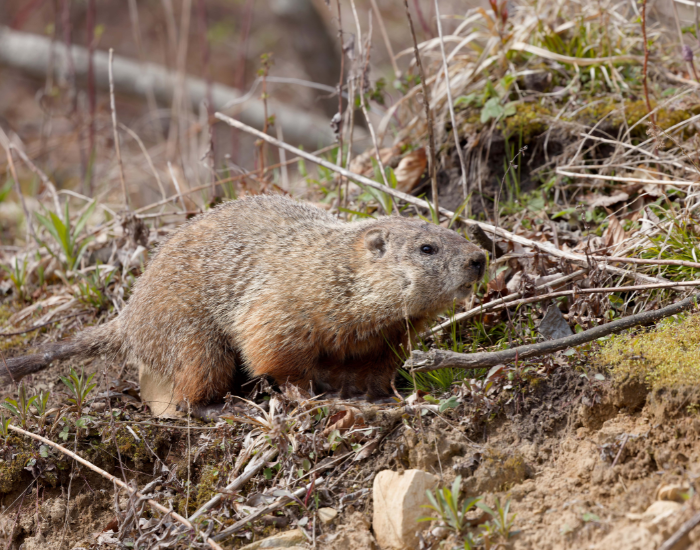
In the world of biology, we distinguish between “sleepers” and “true hibernators.” Bears, for instance, are actually light sleepers compared to groundhogs. In late fall, a groundhog enters a deep sleep that is almost death-like. While hibernating, groundhogs remain in their burrows for months, entering a state of deep sleep with dramatic physiological changes. Groundhogs are among the few animals capable of such deep hibernation and extreme metabolic reduction.
The groundhog’s body temperature drops dramatically from 99°F to as low as 37°F. Breathing slows from 16 breaths per minute to just 2. Their heart rate drops from 80 beats per minute to a mere 5 beats. While hibernating, a groundhog’s heartbeat slows from 80 beats per minute to 5 beats per minute. During hibernation, a groundhog’s heartbeat slows from 80 beats per minute to 5 beats per minute. This incredible metabolic feat allows them to survive winter when vegetation is scarce.
4. The Engineering Marvel of the Burrow
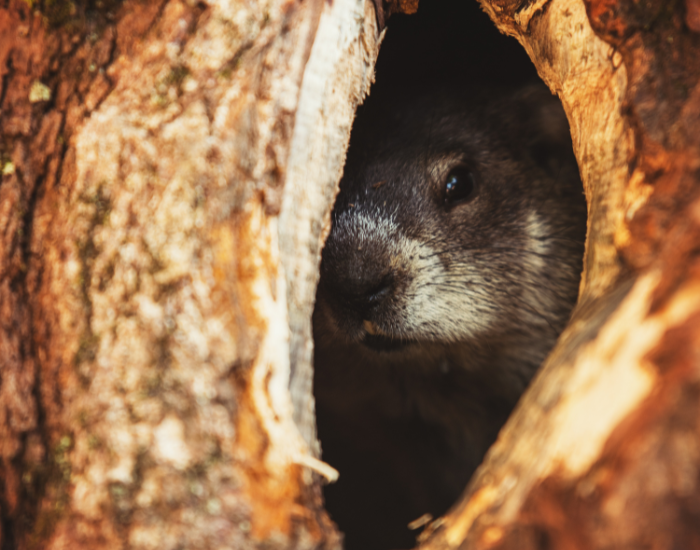
When I was in Mexico observing the gopher, I was struck by the complexity of their tunnels. Groundhogs take this to the next level. A single groundhog burrow can be 66 feet long with different chambers for different purposes. They have a “bathroom” chamber (very hygienic animals!) and a dedicated nesting chamber.
In addition, they use the excavated soil to create a mound near the entrance. This prevents flooding, a strategy I’ve seen used by humans in flood-prone regions. Therefore, these burrows serve multiple functions beyond simple shelter.
5. Why Do Groundhogs Stand Up?
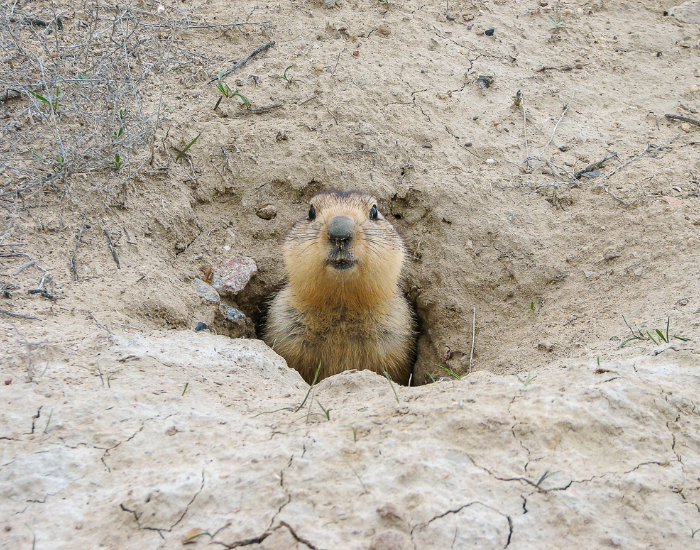
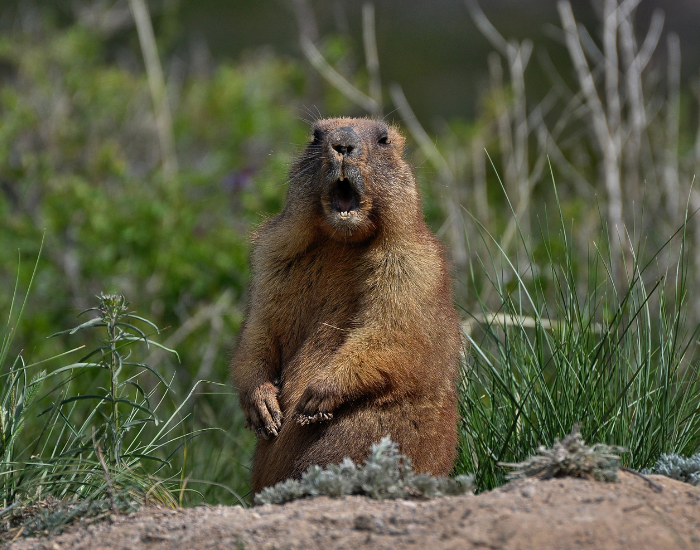
If you’ve seen groundhog pictures online, you’ve likely seen them sitting upright like little sentinels. This isn’t just for a cute photo. They do this to scan for predators like a hungry fox or coyotes.
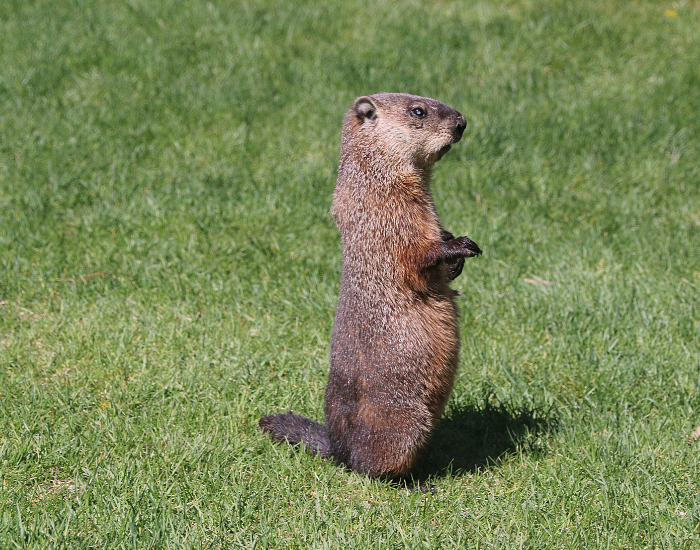
When they spot danger, they emit a high-pitched whistle to warn local groundhogs in the area. This is why many old-timers call them a “whistle pig.” Consequently, this behavior plays a crucial role in their survival.
6. Their Teeth Never Stop Growing
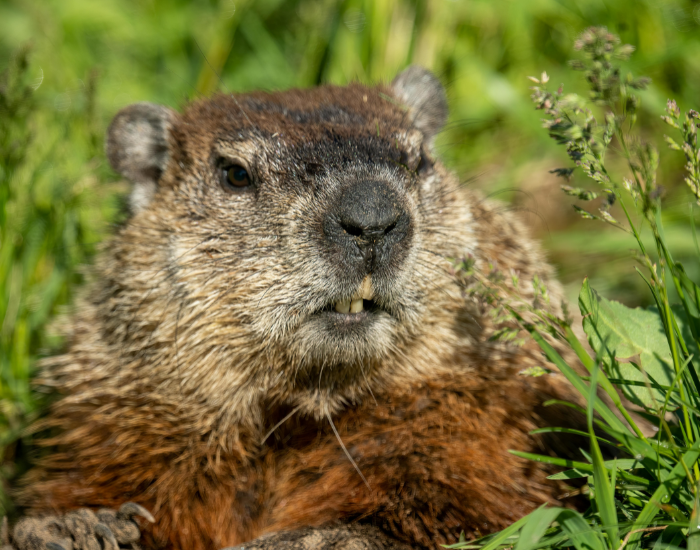
Like all rodents, a groundhog’s upper and lower incisors grow continuously. They grow about 1/16th of an inch every week. To keep them properly aligned and at a manageable length, they constantly gnaw on vegetation, bark, and roots. Groundhogs have a varied diet and will sometimes eat bird eggs as part of their opportunistic feeding habits.
If they don’t eat enough tough material, their teeth could eventually grow into their skull. This is why groundhogs are such voracious eaters during summer and warm months.
7. They Are Surprisingly Fast (and Agile!)
Don’t let that chunky body weight fool you. How fast are groundhogs? On the ground, groundhogs can reach speeds up to 10 miles per hour. If you’re asking “are groundhogs fast?” the answer is: fast enough to beat a human to a hole!
Beyond sprinting, they are also skilled climbers. Groundhogs can climb trees to escape a predator or to reach particularly delicious fruit. For example, they’ll scale branches that most people wouldn’t expect them to access.
8. Punxsutawney Phil: The Weather Prognosticator
We can’t talk about groundhogs without mentioning Punxsutawney Phil. Since 1887, people have gathered in Pennsylvania on February 2nd for Groundhog Day. Punxsutawney Phil is the most famous groundhog associated with Groundhog Day predictions. Originally, this day was Candlemas Day. People watch to see if the groundhog sees its shadow.
According to tradition, if the groundhog sees its shadow on February 2, there will be six more weeks of winter. If Phil sees no shadow, an early spring is on the way. While the Groundhog Day prediction is a beloved tradition, as a biologist, I must tell you something important. Phil’s accuracy is only about 39%. The Punxsutawney Groundhog Club has records of Phil’s predictions for over 100 years, and Phil has predicted 99 forecasts of more winter and 15 early springs according to the Punxsutawney Groundhog Club.
In the wild, groundhogs usually emerge from hibernation in late winter or early April. Their emergence depends on soil temperature, not folklore. Therefore, Punxsutawney Phil represents more of a cultural tradition than a scientific predictor. Nevertheless, the famous Groundhog Day celebration continues each February.

9. They Can Eat a Pound of Food in One Sitting
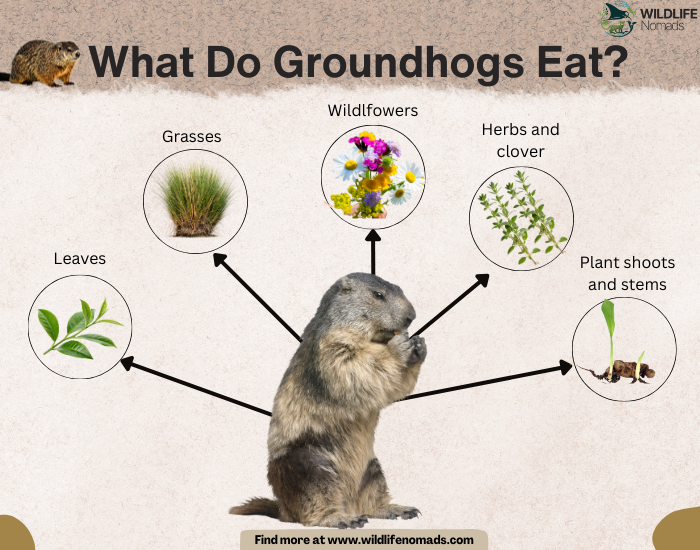
A groundhog’s diet and foraging habits are legendary among gardeners. Groundhogs eat clover, alfalfa, and garden veggies with enthusiasm. In one sitting, groundhogs can consume over a pound of food. For a human, that’s the equivalent of eating a 15-pound salad!
They need this caloric intake to build up fat stores. During hibernation, groundhogs lose nearly 25% of their body weight. Consequently, what groundhogs eat during summer becomes critical for winter survival.
10. They Are “Mouse Bears”
In some regions, people nickname them the “mouse bear.” If you look at their thick fur, short ears, and the way they waddle, they truly do resemble miniature grizzly bears. Despite their cute appearance, they are fierce defenders of their dens. They will use their lower incisors to give a nasty bite if cornered.
Are Groundhogs Good or Bad to Have Around?
It depends on your perspective.
The Benefits
Soil Aeration: Their digging mixes nutrients and aerates the soil. Therefore, they improve soil quality for plant growth.
Home Builders: Abandoned burrows provide essential shelter for foxes, badgers, and snakes. Consequently, groundhogs support biodiversity.
Food Chain: They are a vital food source for top predators. This keeps the ecosystem balanced.
The Downsides
Foundation Issues: If they dig too close to a house, they can damage structures. However, this is preventable with proper yard management.
Garden Raiders: They can decimate a patch of clover or lettuce in an afternoon. For example, a baby groundhog can quickly learn to raid gardens from its parents.

FAQ: Quick Facts on Groundhogs
They gravitate toward succulent greens. Clover, alfalfa, dandelions, and your prized garden tomatoes top the list. Groundhogs eat these foods throughout summer to prepare for hibernation.
In the wild, they typically live 3 to 6 years. In captivity, where they don’t have to worry about a hungry fox, they can live up to 14 years.
First, they are the largest species in the squirrel family. Second, they are one of the few true hibernators in North America. Third, they can swim and climb trees. Fourth, their burrows can be up to 66 feet long. Fifth, people also know them as woodchucks or whistle pigs.
On average, they live 4 to 5 years in the wild. However, captive groundhogs can live much longer when protected from predators.
No, the Groundhog Day prediction is folklore. Groundhogs emerge based on soil temperature, not their shadow. Nevertheless, the tradition remains popular.
A Keystone Species
Whether you call them woodchucks, groundhogs, or whistle pigs, these animals represent incredible resilience. They are part of our natural resources in North America. In my years of field work, from the burrows of Mexico to the forests of the East Coast—I’ve learned something important. Every animal has a role.
The groundhog isn’t just a weather prognosticator. It’s a structural engineer that supports dozens of other species. Next time you see a groundhog sitting upright in a field, take a second to appreciate them. These creatures possess complex biological machinery that allows them to survive a frozen winter. Then, they emerge just in time for spring.
Groundhogs demonstrate remarkable adaptations. From their hibernation abilities to their engineering skills, they showcase nature’s ingenuity. Therefore, understanding these animals helps us appreciate the interconnected web of life around us.