I Did Not Expect to See a Snake in Norway
I was doing a biology exchange year in Sweden, mostly obsessing over mosses and cold-adapted mammals, when a friend invited me to Norway for the weekend. There were three of us: two PhD students and me, a bachelor’s student at the time. Walking with biologists, as you can imagine, is a slow process. We stop every two minutes to argue over a fern.
We were trekking down a dirt road deep in the Norwegian forest when something moved. About a metre ahead of us, a sleek, dark shape glided across the path. My brain stalled. I genuinely didn’t expect to see a snake that far north. Too cold. Too rugged. But there it was.
My Swedish friend leaned in and whispered, “I think that’s a grass snake.”
These reptiles are far more resilient and widespread than most people realise. While the snake I saw in that Nordic forest was the Eastern grass snake (Natrix natrix), the encounter made me curious about the ones back home in the UK. Whether you call them Britain’s longest snake or by their specific scientific name, Natrix helvetica, grass snakes are the quiet masters of the European wetland, and they deserve a lot more credit.
Here are 15 grass snake facts that might just surprise you.
Britain’s Most Secretive Slitherer
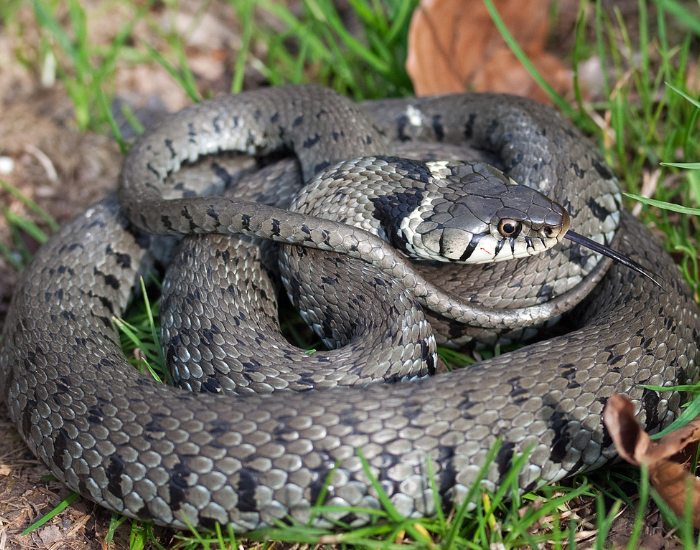
if you live in Britain, you’ve probably spotted a flash of green disappearing into the undergrowth near a pond. Chances are, you are seeing one of United kingdom’s iconic animals, grass snake, Britain’s longest snake and one of its most misunderstood. Grass snakes are the UK’s most common snake species. Despite looking intimidating, this extremely timid and shy creature is completely harmless to humans.
In this post, we’ll dive into 12 amazing grass snake facts, covering their behaviour, diet, habitat, and the conservation challenges they face in England and Wales.
Quick Species Summary
| Feature | Detail |
|---|---|
| Scientific Name | Natrix helvetica |
| Average Length | Up to 1.5 m (females larger) |
| Diet | Frogs, toads, newts, small fish |
| Conservation Status | Priority Species; protected under the Wildlife and Countryside Act 1981 |
| Venomous? | No |
| Habitat | Wetlands, gardens, open woodland |
| Hibernation | October – March/April |
1. The Grass Snake Is Britain’s Longest Snake
The grass snake holds the title of Britain’s longest native snake, and it is not even close. Females regularly reach 1.2 metres, with the largest recorded specimens stretching to around 1.5 metres. Males are noticeably smaller, typically coming in at 70–90 cm.
Don’t let the size fool you, however. Grass snakes are entirely non-venomous and pose no threat to humans whatsoever.
2. They Wear a Distinctive Yellow and Black Collar
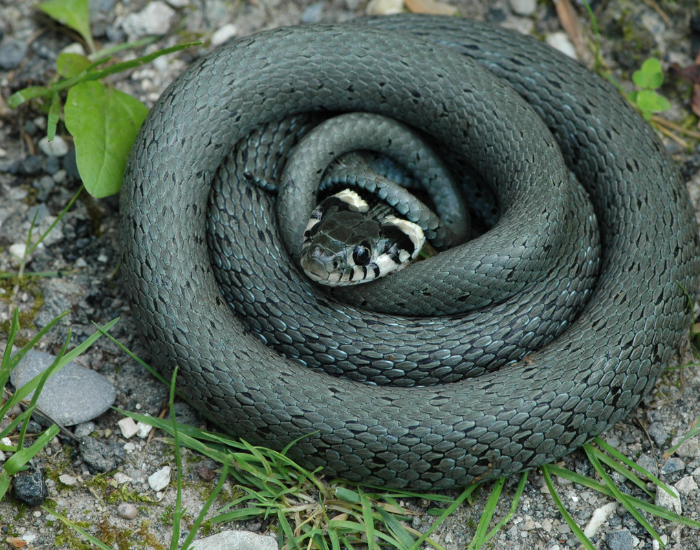
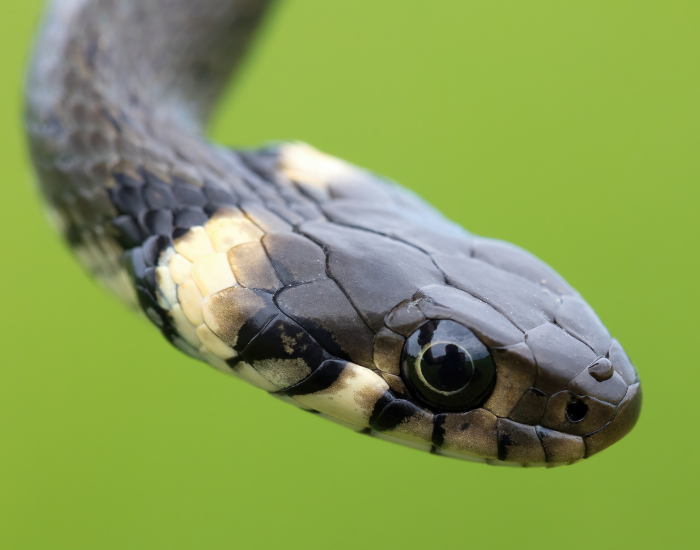
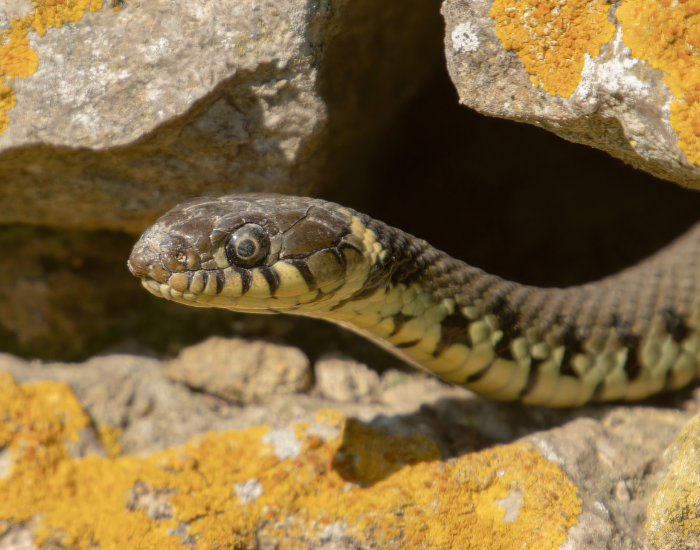
The easiest way to identify a grass snake is its distinctive yellow and black collar just behind the head. This vivid marking gives the species one of its older names: the “ringed snake.”
In addition to the collar, grass snakes have black markings and dark markings along their bodies, which help distinguish them from similar species. The body itself is typically grey-green with dark bars and dark stripes, especially prominent in the barred grass snake, running along the flanks. These features, along with a pale underside, make identification easier. This colouring makes them excellent at blending into wetland vegetation, which explains why so many people walk right past them.
3. Britain’s Grass Snake Is Actually Its Own Species
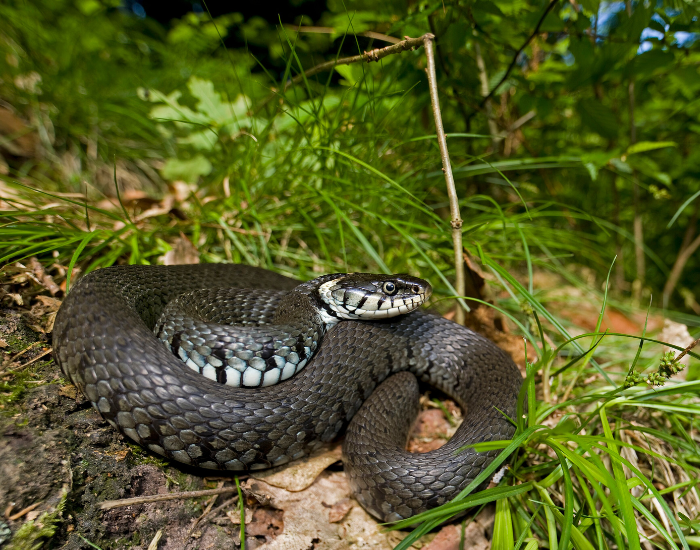
Here’s a fact that surprises many people. In 2017, scientists updated the species status of grass snakes found in Britain and western Europe, granting them full species status as the barred grass snake (Natrix helvetica). This reclassification applies specifically to populations in Great Britain and western Europe, distinguishing them from the central European Natrix natrix.
Therefore, when you spot one in your garden or near a pond, you’re looking at a genuinely unique native species, not just a regional variant.
4. Grass Snakes Are Excellent Swimmers
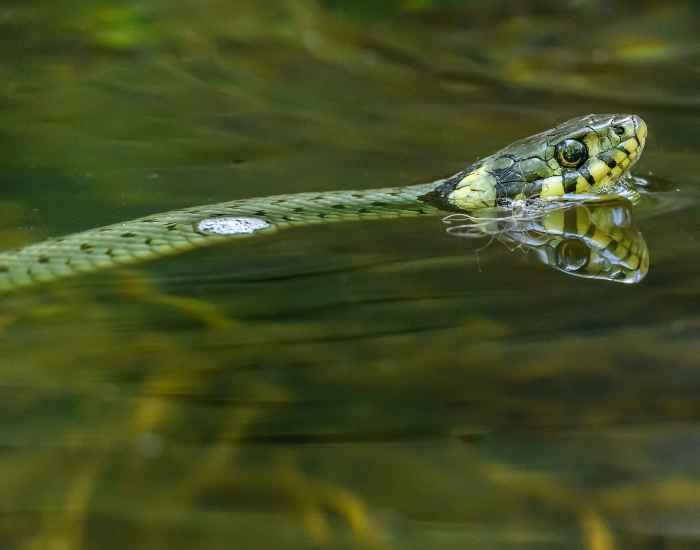
Grass snakes are strongly associated with wetland habitats, and for good reason, they are excellent swimmers. They are often seen gliding silently across water bodies, moving smoothly and unobtrusively as they hunt. They hunt many types of amphibians like frogs, toads, newts, and small fish in ponds, rivers, and canals, often pursuing prey underwater.
However, grass snakes live in a variety of environments and are not exclusively tied to water. You’ll also find them in open woodland, dry grasslands, hedgerows, and gardens, particularly those with a compost heap nearby.
5. Frogs Are Their Favourite Food
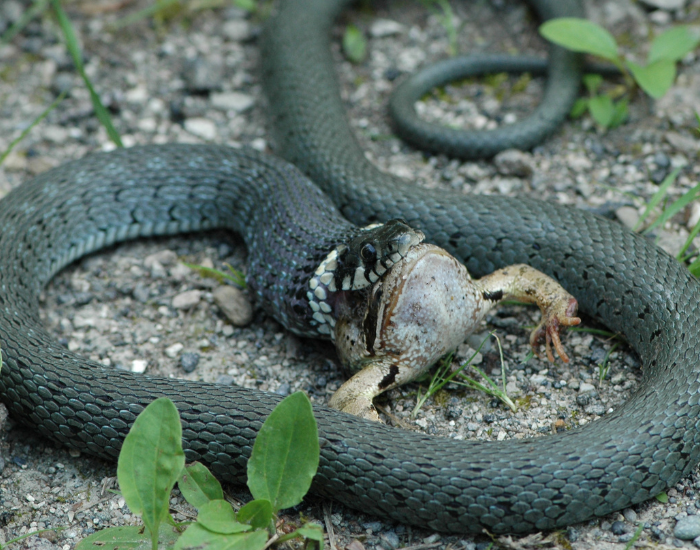
When it comes to diet, frogs are firmly at the top of the menu. In Britain, the bulk of the grass snake’s diet consists of frogs and toads, though they also take newts, small fish, and occasionally small mammals or birds.
Grass snakes rely on the element of surprise to catch unsuspecting prey, using stealth and ambush tactics. They catch their prey by striking out and grabbing it with their jaws, then swallowing it whole.
Interestingly, some studies suggest adult grass snakes can survive for up to 12 months on fewer than ten frogs. They’re not fussy eaters, but they are efficient ones.
6. They Lay Eggs in Rotting Vegetation
Grass snakes are Britain’s only egg-laying snake. Females lay up to 40 leathery eggs, typically in June or July, choosing a sheltered location such as warm, rotting vegetation or compost heaps as their incubation site.
Compost heaps are a firm favourite. The microbial heat generated by decomposing plant matter keeps the eggs at a stable temperature. Eggs hatch in late summer or early autumn, producing hatchlings around 15 cm long. These miniature versions of the adults are immediately independent.
7. They Hibernate From October to March
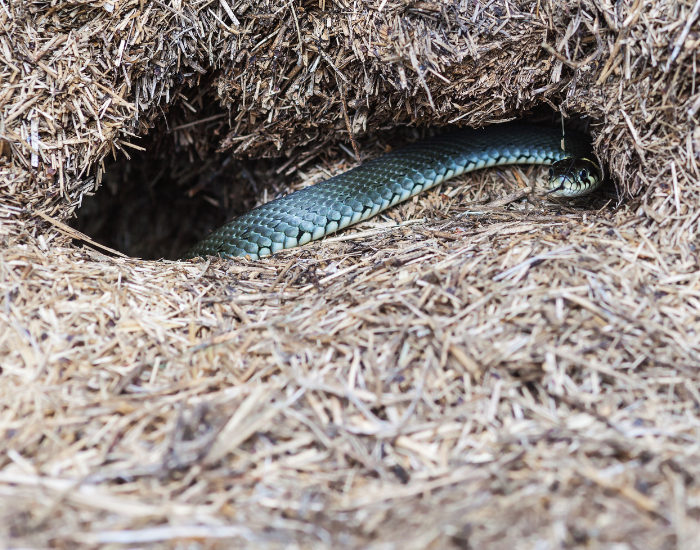
Like all British reptiles, grass snakes are cold-blooded and rely on external heat sources to generate warmth. As temperatures drop in autumn, grass snakes hibernate, typically from October or November to March. Grass snakes spend the winter in hibernation, seeking out warm, humid environments to survive the coldest months.
Hibernation sites include tree root systems, fallen trees, compost heaps, and rabbit warrens. Grass snakes often share these sheltered locations with other reptile species, including adders.
In early spring, males emerge first and spend the morning basking in the sun to raise their body temperature before the breeding season begins.
8. Mating Involves a Spectacular “Ball” of Snakes
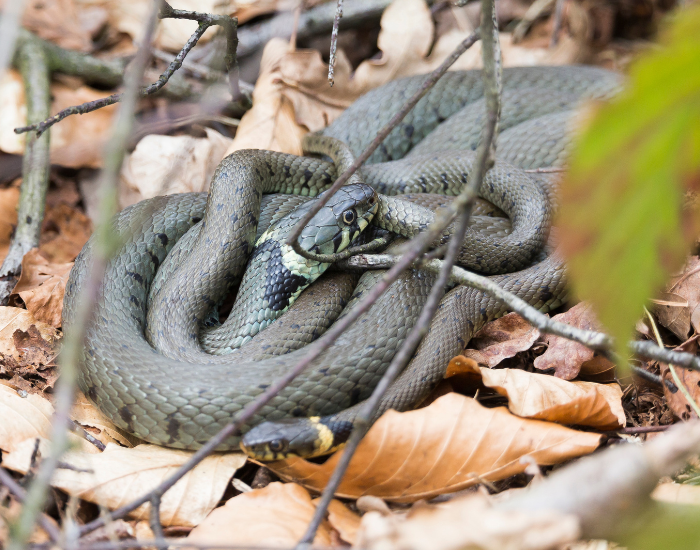
Grass snakes breed in spring, typically April and May. Males emerge from hibernation first and compete for females in an extraordinary display. Several males will jostle together around a single female, forming what’s known as a “mating ball.”
Usually, the largest and most persistent male succeeds. After mating, the female seeks out warm egg-laying sites, and this is why compost heaps and garden ponds are so valuable for this species.
9. They Play Dead to Escape Predators
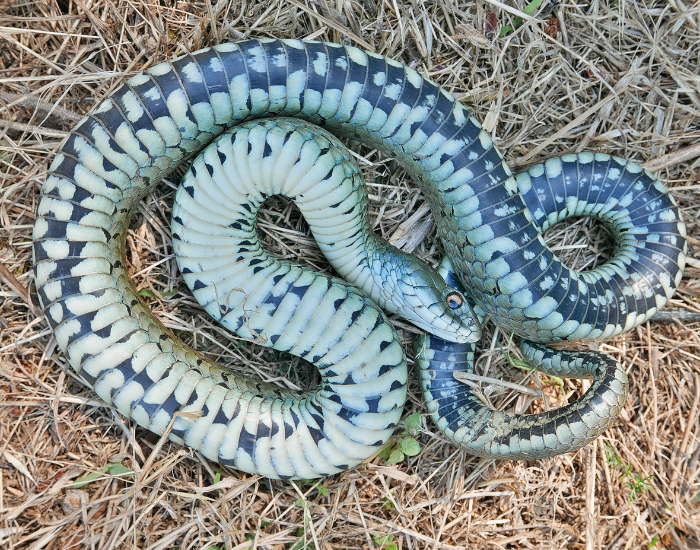
When a grass snake cannot flee, it has a dramatic defence strategy to deter predators: feigning death. The snake rolls onto its back, goes completely limp, opens its mouth, and lets its tongue loll out. This behaviour, known as thanatosis, convinces many predators that the snake is already dead and not worth eating.
In addition to feigning death, grass snakes can also release a foul-smelling substance from their cloaca to deter predators. The odour is described as a heady mix of rotting fish and garlic, unpleasant enough to deter most predators. They rarely bite, even when handled.
10. Grass Snakes Are Absent From Scotland and Ireland
Grass snakes are found across most of England and Wales but are absent from Scotland and Ireland. They are most common in southern England and the Midlands, where a mix of wetland and dry open habitats provides ideal conditions.
Climate change may gradually shift this range northward, though milder winters could also disrupt hibernation patterns, a threat that researchers are monitoring closely.
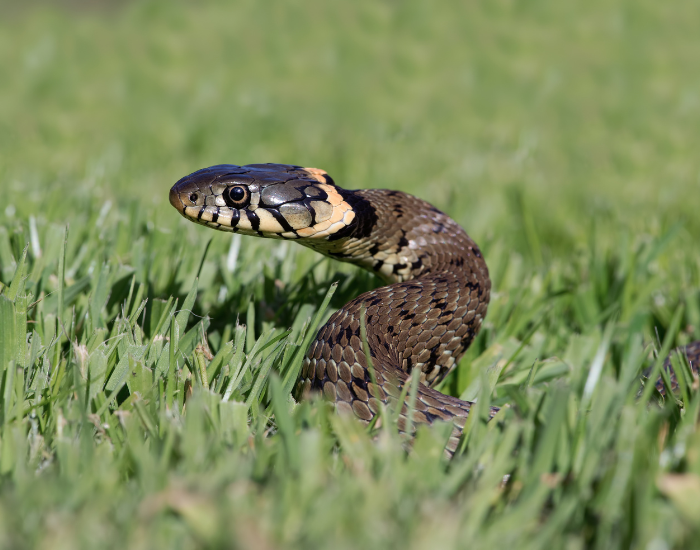
11. Don’t Confuse It With an Adder or a Slow Worm
Misidentification is remarkably common. I have had hikers swear blind they saw a “massive venomous adder” that turned out to be a harmless grass snake. Here is a simple field guide:
| Feature | Grass Snake | Adder | Slow Worm | Smooth Snake |
|---|---|---|---|---|
| Collar | Yellow and black | None | None | None |
| Pattern | Dark bars and spots | Bold zigzag | Smooth, uniform | Less prominent dark markings |
| Pupils | Round | Vertical slit | N/A (legless lizard) | Round |
| Head Shape | Oval | Triangular | Bullet-shaped | Slender, narrow head |
The smooth snake is a rare native species in the UK, distinguished by its slender build, round pupils, and less prominent dark markings compared to grass snakes and adders.

12: They Can Live Up to 15 Years, If They Make It
In the wild, a grass snake can live for up to around 15 years. However, survival in the early years is tough, with many falling prey to predators. Many hatchlings do not make it through their first winter, with many falling prey to a variety of predators. Young grass snakes are at high risk of falling prey to birds of prey like buzzards, herons, hedgehogs, many types of foxes, and domestic cats, one of the most significant threats in suburban areas.
This vulnerability is why population numbers are so sensitive to habitat quality. Lose the ponds and the compost heaps, and you lose the snakes.
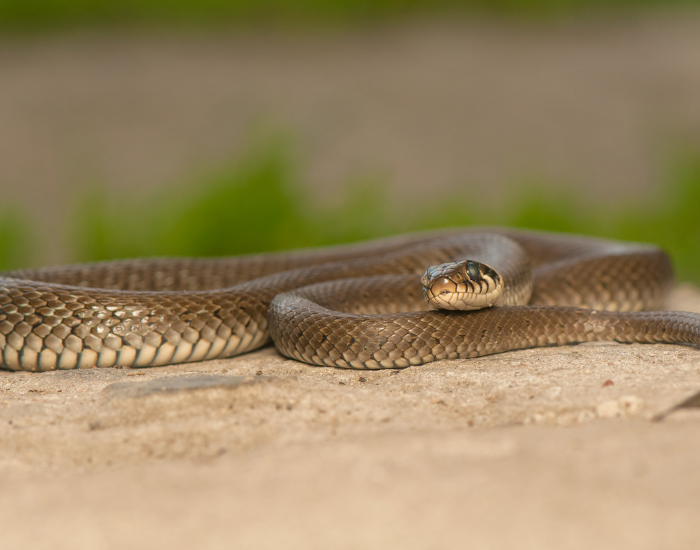
13 They Are a Priority Species Under UK Law
Grass snake populations have declined significantly across much of central and western Wales and northern England. Habitat loss, agricultural intensification, the loss of farm ponds, and water pollution are the main drivers of decline. Grass snakes are becoming less frequently sighted, indicating a decline in their population.
Grass snakes are listed as a priority species under the Biodiversity Action Plan due to their declining numbers. As a result, the grass snake is now a Priority Species under the UK Post-2010 Biodiversity Framework. They are protected by law in Great Britain and are fully protected under the Wildlife and Countryside Act 1981, making it illegal to deliberately kill, injure, or sell them. Conservation efforts focus on wetland habitat restoration, pond creation, and biodiversity action planning.

FAQs about Grass Snakes
Grass snakes are typically grey-green in colour with dark bars along the flanks and a distinctive yellow and black collar behind the head. Females are larger than males, and both sexes have pale undersides.
In Britain, grass snakes eat mainly frogs and toads. They also take newts, small fish, and occasionally small mammals or birds. Juveniles often feed on tadpoles.
Yes. Grass snakes are fully protected under the Wildlife and Countryside Act 1981. It is illegal to deliberately kill, injure, or sell them. They are also a Priority Species under the UK Biodiversity Framework.
The easiest distinction is the collar: grass snakes have a yellow and black collar behind the head, while adders display a distinctive dark zigzag pattern along their back. Slow worms — which are actually legless lizards, not snakes — are sometimes mistaken for grass snakes, but are much smaller with a bullet-shaped head.
Grass snakes very rarely bite. When threatened, they prefer to flee, feign death, or release a foul-smelling substance. They are harmless to humans.

The Bottom Line
The grass snake is one of Britain’s most remarkable, and most overlooked, wild animals. It is harmless, ecologically vital, and genuinely fascinating to observe. From its remarkable egg-laying strategy to its theatrical death-feigning performance, it deserves far more appreciation than it usually receives.
If you find one basking in your garden this spring, consider it a privilege. Britain’s longest snake has chosen your patch as home, and that means your habitat is doing something right