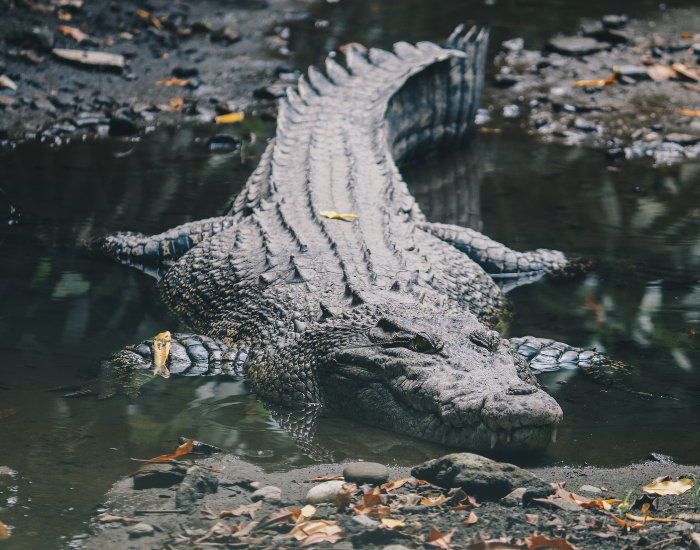
Last month I stood at a railing on the east coast of Australia, watching a saltwater crocodile the length of a canoe sun itself by the water’s edge. The thing was massive. A small child could have fit entirely inside its open mouth, and I am not exaggerating for effect. I have written about plenty of extinct giants, from Ice Age animals to the prehistoric ground sloth and the doomed dodo bird. Reptiles hit differently, though. They are still here, still watching you from the shallows.
So one thought nagged at me on that railing: what if this reptile were four or five times bigger? That is roughly Deinosuchus, a giant crocodile that ruled Late Cretaceous North America. After diving deep into the research and talking with people who study these fossils, I came away rattled and fascinated. Below are 12 facts about Deinosuchus that genuinely changed how I see the “salties” I admire today, including how big it really got, what food it chased, and why it was not quite the alligator we assumed.

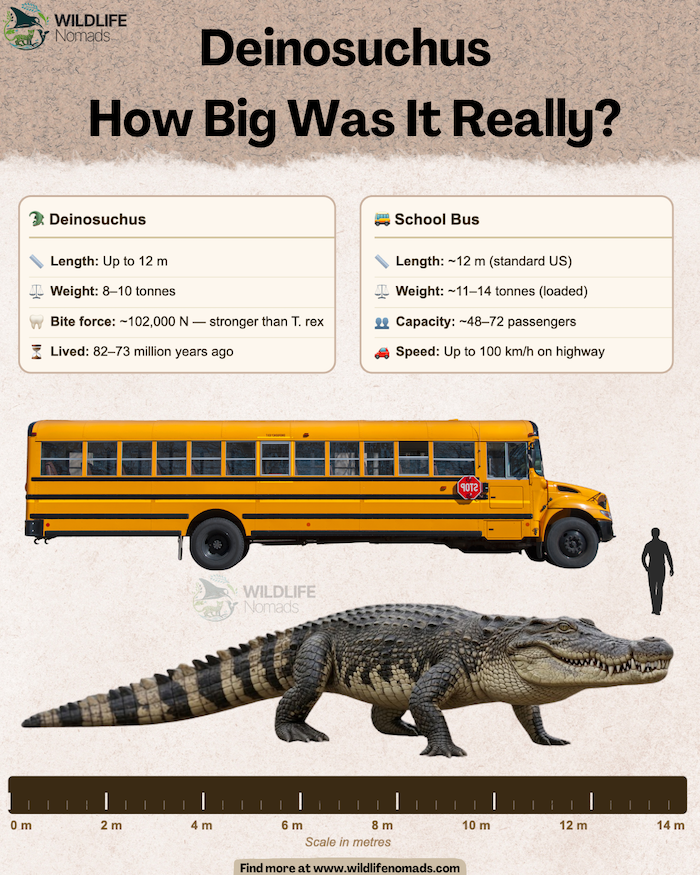
1. Deinosuchus Was Longer Than a School Bus
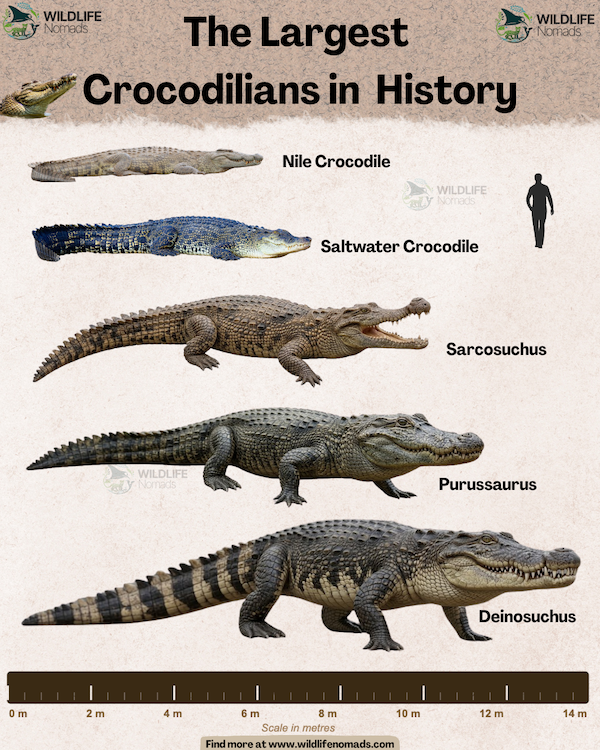
Let’s start with the number everyone wants. The biggest individuals reached up to 12 meters in length, which is roughly 39 feet. Most solid evidence estimates land the largest Deinosuchus closer to 10.5 meters, or about 33 to 35 feet. That is a Deinosuchus size in feet that beggars belief.
The skull alone tells the story. A single skull could exceed 1.3 meters in length, longer than my entire torso. Deinosuchus weight estimates run from a lean 2.5 tons to a massive 14 tons in the heaviest individuals. For comparison, the Australian saltwater crocodile that unsettled me weighs maybe a ton. This giant crocodilian outweighed it many times over, and its body size still stops paleontologists mid-sentence.
2. Deinosuchus Had Teeth Built to Crush, Not Slice
One paleontologist described its teeth as “the size of bananas,” and the comparison stuck with me. The animal carried robust, rounded teeth about 2.8 inches long. These were not delicate cutting tools. They were blunt pegs built to crush bone and shell.
That design points straight at food. The terror reptile used those robust teeth to crush turtle shells, and the Late Cretaceous seas teemed with large marine turtles. Researchers estimate the Deinosuchus bite force at around 23,000 to 102,000 newtons, in the same brutal league as the strongest crocodilians ever measured. A bite like that turns armor into a meal.
3. Deinosuchus Hunted Dinosaurs at the Water’s Edge
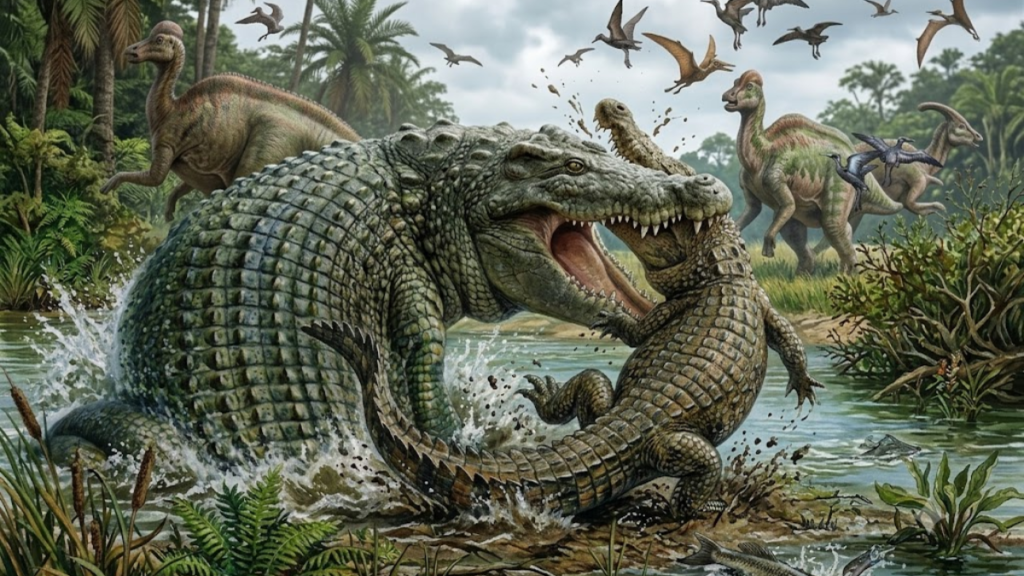
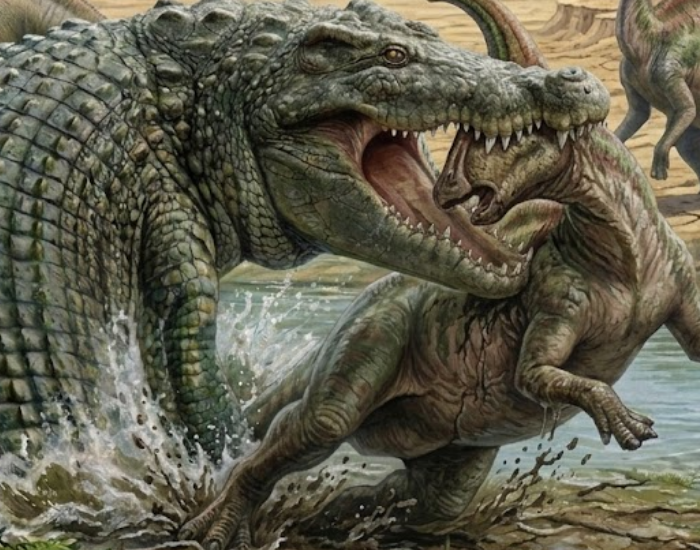
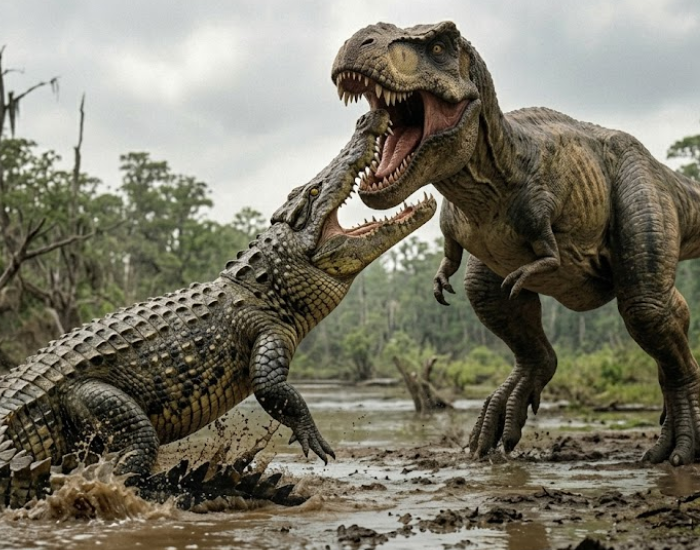
Here is where a big reptile becomes a genuine nightmare. As an apex predator, Deinosuchus preyed on dinosaurs and other large vertebrates that wandered too close to the shoreline. Bite marks preserved on fossil bones suggest this predator regularly hunted hadrosaurs, the duck-billed dinosaurs of the period. Those same bite marks give us our clearest window into how it killed.
Few predators could match it, because almost nothing could fight back. As an ambush hunter, the beast likely lunged from the water and dragged terrestrial prey under, exactly as living crocodilians do. That said, its menu shifted with location. This crocodyliform adapted its diet based on the food each region offered, taking marine turtles and large fish along the coast, then ambushing dinosaurs as prey near river systems. Not many predators can list “dinosaur” on the menu.
4. Deinosuchus Wore a Coat of Bony Armor
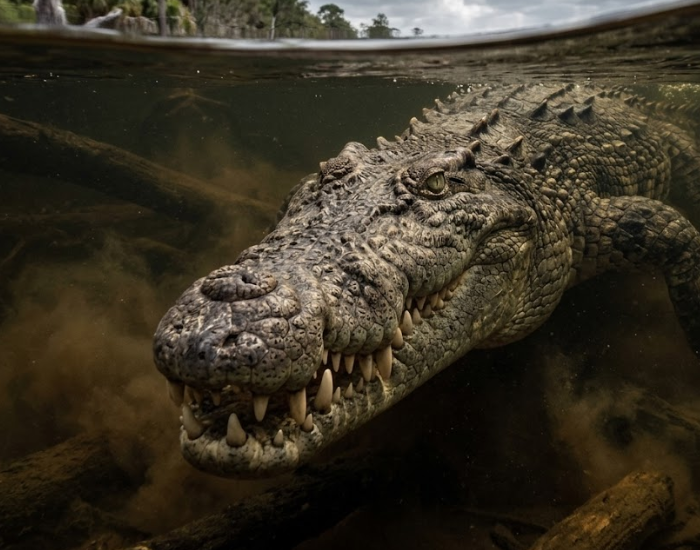
The back of this predator was covered in thick, hemispherical osteoderms, the bony plates set into crocodilian skin. These fossil osteoderms were more than decoration. They worked as armor, as body-temperature regulators, and as structural support for an enormous frame.
When I worked at a zoo in Mexico years ago, I helped care for several crocodile species, and running a hand along their backs felt like touching cobblestones. Now picture those cobblestones scaled up to the size of dinner plates. That texture is one reason Deinosuchus fossils stay so recognizable to the people who unearth them. Many Deinosuchus fossils are, in fact, just these chunky plates.
5. Deinosuchus Grew Slowly and Lived a Long Time
Becoming the largest crocodyliform of its time took patience. The animal needed over 35 years to reach full length, and the oldest individuals may have lived more than 50 years. Scientists read these ages from growth rings in the bones and osteoderms, much like counting growth rings in a tree.
Interestingly, this giant grew slower than the large dinosaurs it sometimes ate. Most dinosaurs sprinted to adult size; Deinosuchus took the long road instead. Those decades of slow growth meant getting steadily bigger, hungrier, and harder to challenge.
6. Deinosuchus Ruled the Coasts of a Vanished Sea
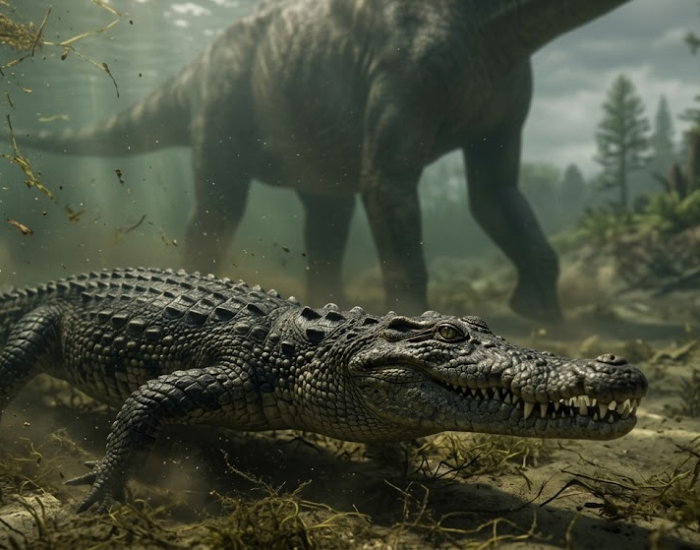
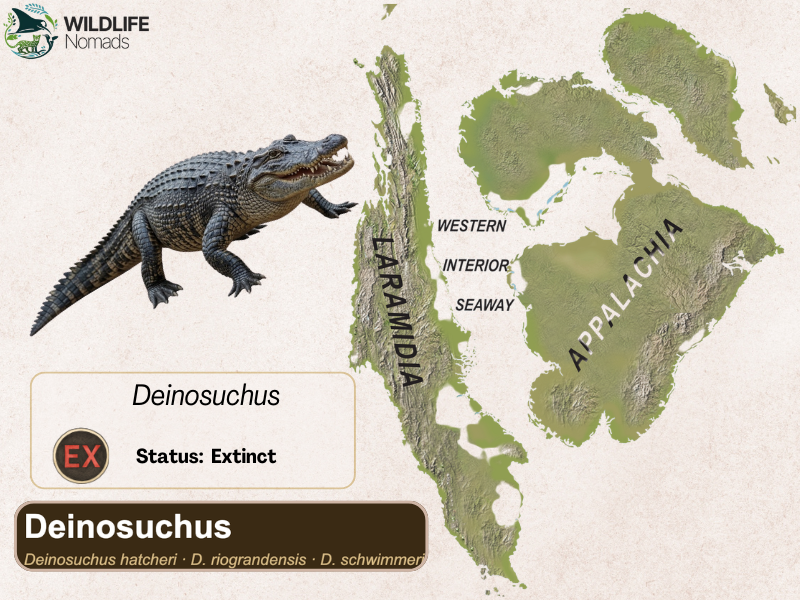
During the Late Cretaceous, a shallow ocean called the Western Interior Seaway split North America in two. Deinosuchus lived along both coasts of this seaway, thriving in coastal plains and big river systems. Its habitats included rivers, lakes, and especially estuaries, the brackish zones where fresh water meets the sea.
The fossil record backs this up. Specimens have surfaced in 12 U.S. states and northern Mexico, with fossils most abundant in the Gulf Coastal Plain region of Georgia. These fossils date from 82 to 73 million years ago, marking a reign of roughly nine million years as the undisputed top predator of its wetlands. Picture a sluggish, mangrove-fringed coast 75 million years ago, the water warm and brackish, and you have the perfect stage. Beginning 82 million years ago, the largest animals in that water answered to it. New fossils still emerge from these old coastal rocks, and each batch widens the known map of where it once hunted.
7. Deinosuchus Worked Both Freshwater and Saltwater
Like modern saltwater crocodiles (“salties”), Deinosuchus possessed a high tolerance for saltwater, allowing it to dominate a massive range of wetlands. This apex predator moved freely between freshwater rivers, lakes, brackish estuaries, and open shorelines along the Western Interior Seaway.
A 2025 study published in Communications Biology suggests Deinosuchus inherited this salt tolerance from its ancestral crocodilians, enabling it to disperse widely across diverse coastal habitats. While modern American alligators have lost this ability and stick strictly to freshwater, this prehistoric giant easily patrolled the marine surf 80 million years ago, crossing aquatic zones that today’s alligators simply cannot tolerate.
8. Deinosuchus Was Not the Alligator We Long Assumed
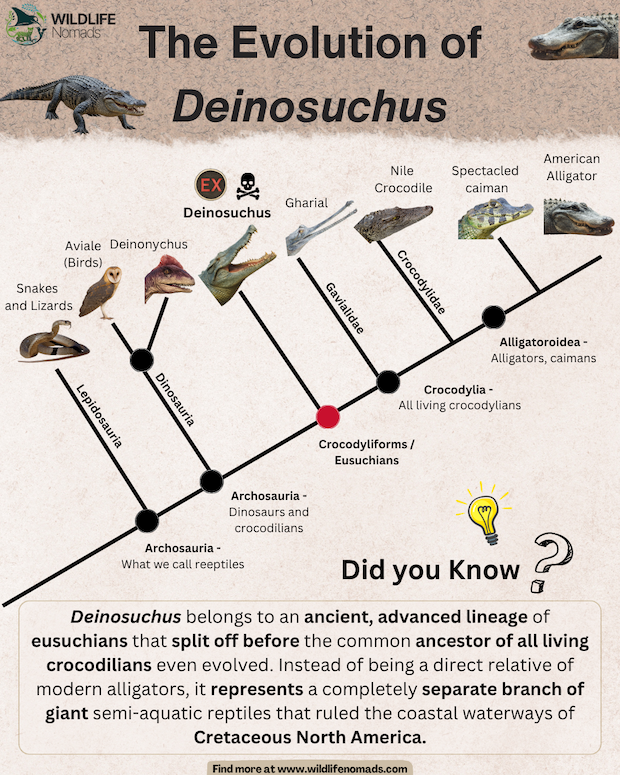
For decades, textbooks filed this genus as a basal member of Alligatoroidea, the branch leading to modern alligators and caimans. Scientists first classified it in the family Crocodylidae back in 1954, then later shifted it toward the alligators. The animal genuinely shows traits of both alligators and crocodiles, which made it a taxonomic headache. Living alligators, after all, still look like plausible kin.
Then the story changed. That 2025 analysis suggests it split off before the alligator lineage, sitting as a stem-group crocodylian instead. The debate is far from settled, and I love that. One clarification, though: despite the company it kept, this was not a dinosaur. Among reptiles, it was a crocodyliform, closely related to the crocodiles and alligators basking in sanctuaries today.
9. Deinosuchus Came in More Than One Species
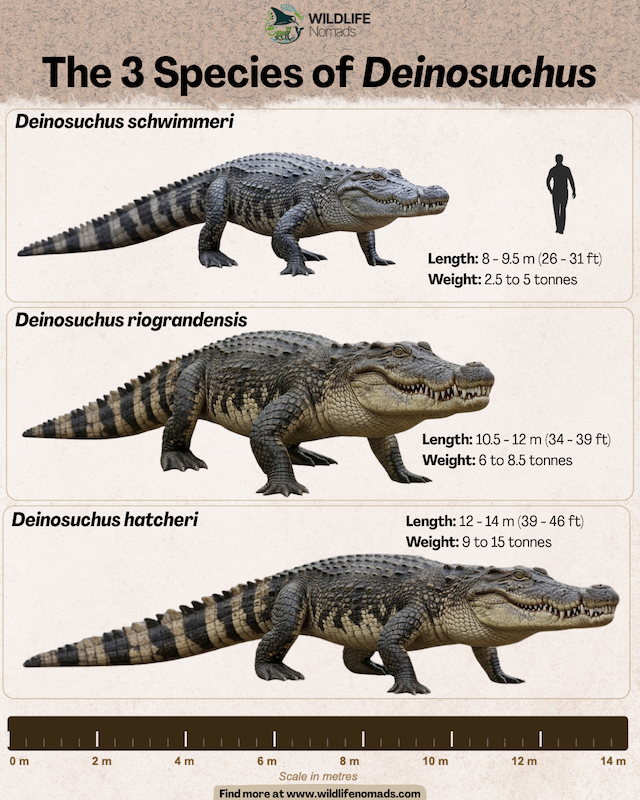
People picture a single monster, but this genus held several Deinosuchus species spread across late cretaceous north america. Deinosuchus riograndensis roamed the western coast, including parts of Texas and New Mexico, and grew to the largest sizes on record. Deinosuchus hatcheri is another named species, and the abundant eastern animals are often assigned to Deinosuchus schwimmeri. Sorting these species kept paleontologists busy for decades.
This split matters for understanding body size. The western Deinosuchus hatcheri and riograndensis trended toward giant proportions, while the eastern species stayed numerous but slightly smaller. Same genus, same fearsome blueprint, different neighborhoods, separated by hundreds of miles of open seaway.
10. Deinosuchus Was First Known From Teeth and a Jaw Fragment
Long before anyone grasped its scale, the giant crocodilian Deinosuchus was a puzzle of scraps. Early material amounted to colossal teeth and a jaw piece, hinting at something enormous but incomplete. Researchers discovered more remains over decades, slowly assembling the picture. In 1954, the American Museum of Natural History displayed a famous oversized skull reconstruction that fixed the legend in public imagination.
Anatomy filled in the rest. Like its living cousins, this predator had a secondary bony palate, letting it breathe through its nostrils while its mouth stayed submerged. That single feature explains how it could hold prey underwater without drowning. Every new tooth and bone since has sharpened the portrait of this giant croc.
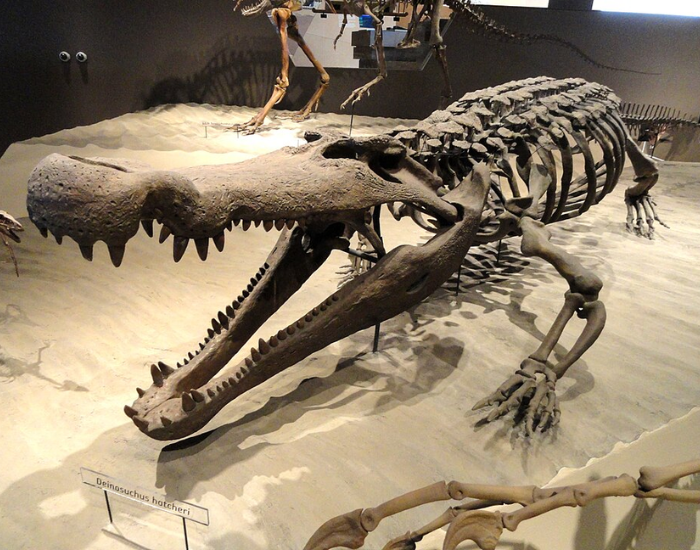
11. Deinosuchus Outsized Every Other Crocodilian of Its Age
No contemporary came close. It dwarfed every other crocodilian sharing its rivers, and no large crocodilian of the period rivaled its bulk, not even the early alligators. This giant croc held the title of largest crocodyliform of the Late Cretaceous, a true heavyweight among reptiles.
Then it vanished. The species disappeared around 73 million years ago, millions of years before the asteroid-driven extinction event that closed the Cretaceous. That timing matters, because it went extinct on its own schedule, not in the famous extinction event that wiped out the dinosaurs. The likeliest culprit was the slow retreat of the Western Interior Seaway, which drained the estuaries it depended on. As those coastal habitats shrank, this apex reptile went extinct, and the fossils it left are all that remain. No animals have filled that exact niche since, and fresh fossils keep surfacing across the old coastlines.
My Crocodile Confession From the Zoo
One quick story before the FAQ. At that Mexican zoo, visitors kept tossing coins into the crocodile pond for luck, I suppose. Cleaning the enclosure meant relocating two large reptiles first, and moving them while fishing out coins was equal parts thrilling and terrifying. Neither animal came close to the bulk of the Australian salties, let alone a Deinosuchus. Standing there, I never imagined a predator big enough to eat a dinosaur. Now I cannot unimagine it.
Frequently Asked Questions About Deinosuchus
A fully grown Deinosuchus reached roughly 33 to 39 feet in length, or about 10 to 12 meters. Deinosuchus weight ranged from 2.5 to 14 tons depending on the individual and species. That body size makes it one of the largest crocodyliforms ever discovered.
The longest individual likely measured around 12 meters, close to 39 feet. Most conservative evidence estimates put the largest Deinosuchus near 10.5 meters, or about 35 feet. The western species Deinosuchus riograndensis produced these record-setting giants.
A well-documented individual typically ran 26 to 35 feet in length, with the biggest specimens stretching beyond. In metric terms, its size spanned roughly 8 to 12 meters. The skull alone could exceed 1.3 meters.
Yes, and Deinosuchus is the best example. This giant crocodilian comfortably exceeded 30 feet, making today’s 20-foot saltwater crocodile look modest. No living crocodile approaches that length now.
It ate large vertebrates, including dinosaurs, marine turtles, and big fish. Bite marks on hadrosaur bones show the animal hunted duck-billed dinosaurs at the water’s edge as prey. It crushed turtle shells with robust, banana-sized teeth.
No. Deinosuchus was a crocodyliform, closely related to modern crocodiles and alligators rather than to dinosaurs. It lived alongside dinosaurs from 82 to 73 million years ago and sometimes ate them.

What Deinosuchus Teaches Us
Studying this giant reframed every modern crocodilian I have ever watched, because today’s “salties” carry the same ancient toolkit at a fraction of the scale. Size aside, the bony armor, the salt tolerance, the parental care, and the patient decades of growth all echo across more than 70 million years. If a 33-foot Deinosuchus that ate dinosaurs does not make you respect the lineage, nothing will.
Go see one for yourself. Visit a reputable sanctuary, learn the difference between alligators, crocodiles, and caimans, or read up on the living crocodiles of Australia and the strange, slender gharial in our website. Then tell me in the comments: would you rather meet a Deinosuchus or a great white? I know my answer.
References:
Cossette, A. P., & Brochu, C. A. (2020). A systematic review of the giant alligatoroid Deinosuchus from the Campanian of North America and its implications for the relationships at the root of Crocodylia. Journal of Vertebrate Paleontology, 40(1), e1767638.
Walter, J., Darlim, G., Massonne, T., Aase, A., Frey, E., & Rabi, M. (2025). Expanded phylogeny elucidates Deinosuchus relationships, crocodylian osmoregulation and body-size evolution. Communications Biology, 8, 612. https://doi.org/10.1038/s42003-025-07653-4
Erickson, G. M., & Brochu, C. A. (1999). How the ‘terror crocodile’ grew so big. Nature, 398(6724), 205–206. https://doi.org/10.1038/18343
Erickson, G. M., Gignac, P. M., Steppan, S. J., Lappin, A. K., Vliet, K. A., Brueggen, J. D., Inouye, B. D., Kledzik, D., & Webb, G. J. W. (2012). Insights into the ecology and evolutionary success of crocodilians revealed through bite-force and tooth-pressure experimentation. PLoS ONE, 7(3), e31781. https://doi.org/10.1371/journal.pone.0031781
Brochu, C. A. (1999). Phylogenetics, taxonomy, and historical biogeography of Alligatoroidea. Journal of Vertebrate Paleontology, 19(S2), 9–100. https://doi.org/10.1080/02724634.1999.10011201