Meeting the Curly Tailed Lizard
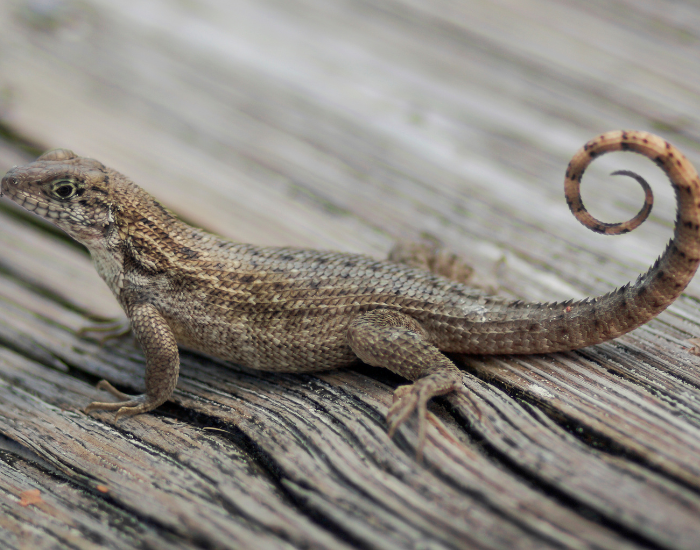
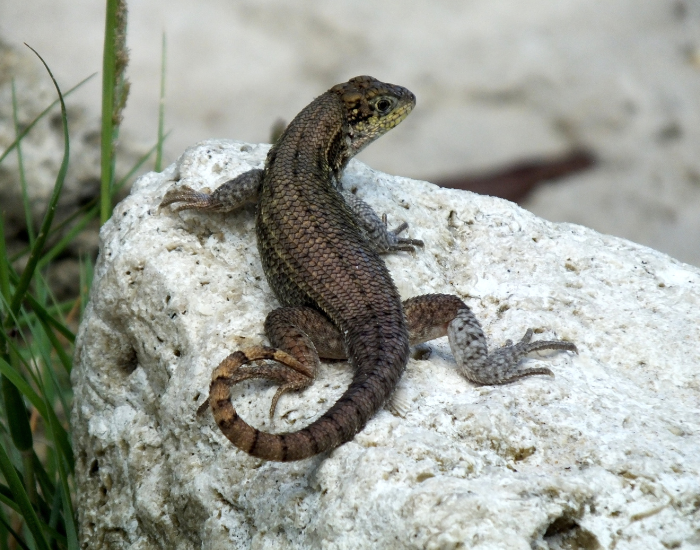
This little reptile with a beautiful spiral tail you can see here on the photo is a northern curly-tailed lizard (Leiocephalus carinatus), a species with a big personality, a love for sunny spots, and a history that stretches from Bahamian dunes to Florida sidewalks. It is commonly known as the curly tailed lizard in many regions. This lizard with curled tail is more than just quirky: it’s a story of ecological adaptation, human introductions, and survival strategies worth understanding.
What Is a Curly Tailed Lizard?
The northern curly-tailed lizard is part of the genus Leiocephalus, a group of saurian reptiles recognized by their robust bodies and upward-curling tails. With their keeled dorsal scales and sturdy build, Leiocephalus carinatus resembles lizards of the genus Sceloporus in both scale texture and body shape. These reptiles are often seen basking openly in sunny areas, displaying their tails as both communication and defense.
Key Characteristics of Adults
- Snout-to-vent length: ~10.5 cm
- Total length: ~26 cm (about 10 inches)
- Body: A robust lizard with keeled dorsal scales
- Tail display: Often curled upward or held in a horizontal position
- Color: Sandy brown with crossbands, blending well against sand and rocks
Field identification: A stocky lizard, frequently motionless when approached, yet quick to dash for immediate refuge under a shrub or into a rock retreat. I once crouched in the Bahamas watching one remain completely motionless for what felt like hours.
Geographic Range & Habitat
Geographic range. Native to the Bahamas, Cayman Islands, and south-central Cuba (including Playa Larga), Leiocephalus carinatus has established introduced populations in parts of South Florida, particularly Miami-Dade and Palm Beach. The species is also found in a few other parts outside its native range, such as Florida and Honduras.
In its home islands, the species is widespread, occupying diverse habitats such as coastal dunes, rocky scrub, and human-altered areas. These reptiles prefer sunny areas on the ground, where they can bask and forage, though they’ll also scale low walls and garden edges.
Curly-Tailed Lizard Florida: How Did They Get Here?
The story of curly tail lizards in Florida begins in the 1940s, when they were released in Palm Beach to combat sugar cane pests. While they likely did munch on insects, the introduction also allowed them to spread into cities and suburbs.
Today, curly-tailed lizards are a familiar sight across Miami-Dade and beyond. They thrive in urban habitats, basking on sidewalks and driveways. But as a non-native species, they’re now labeled invasive, outcompeting Florida’s native lizards.
Extension services even note them in Special Publication No. reports, advising homeowners about the ecological impacts of these reptiles.
Behavior: Why the Tail Curl?
That dramatic curled tail isn’t random, it’s a survival tool.
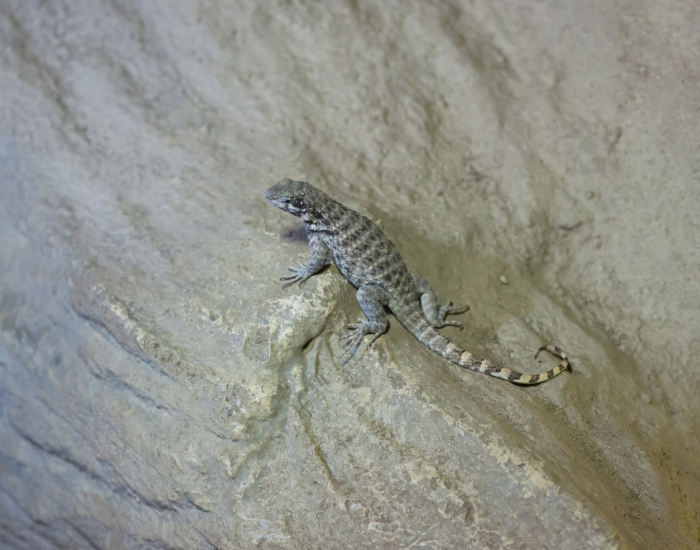
- Pursuit deterrent: The raised tail, known as tail curling, acts like a warning flag, telling predators: “I see you.” This tail curling is used to intimidate would be pursuers and can discourage would-be pursuers from wasting energy.
- Social signal: During encounters, males raise tails as dominance displays. I once watched two males face off, tails curled upward, each intimidating the other without a fight.
- Anti-predator strategies: If threatened, they sprint into cover, sometimes played dead and remained completely motionless for a short while, or burrow into sand for refuge.
These multiple roles highlight the clever use of one simple body part.

What Do Curly Tailed Lizards Eat?
In both native and Florida ranges, curly tails are opportunistic feeders.
Diet Includes
- Insects: beetles, ants, caterpillars, and even roaches
- Plant matter: seeds, flowers, and fruits
- Occasional prey: smaller lizards
Yes, curly tails in Florida will eat roaches, I confirmed this myself while observing one raid a compost pile in Miami. Their flexible diet is one reason they’re such a successful introduced population.
Florida Impacts: Invasive Species Concerns
The northern curly-tailed lizard is classified as an invasive species in Florida. Impacts include:
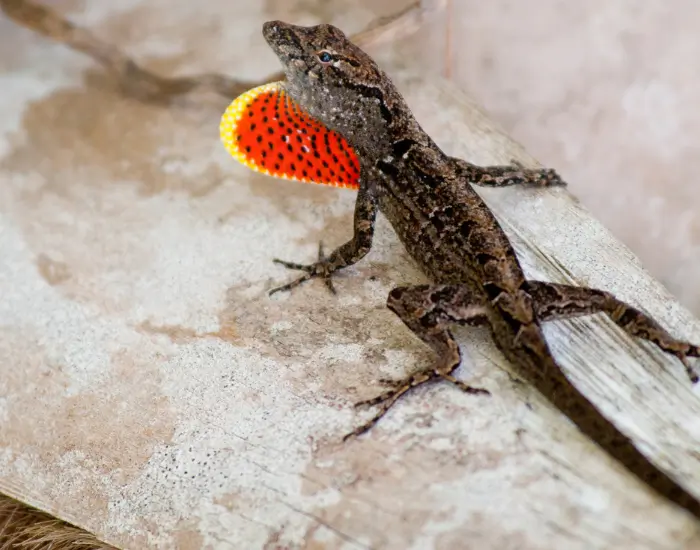
- Competition with native reptiles, especially green and brown anoles
- Predation on small invertebrates and juvenile lizards
- Alteration of urban ecosystems through dominance of basking sites
Though not dangerous to humans, their ecological footprint is significant. They’re another example of how well-meaning introductions can reshape local environments.
Curious about Florida’s other reptiles? Check out
Taxonomy & Subspecies
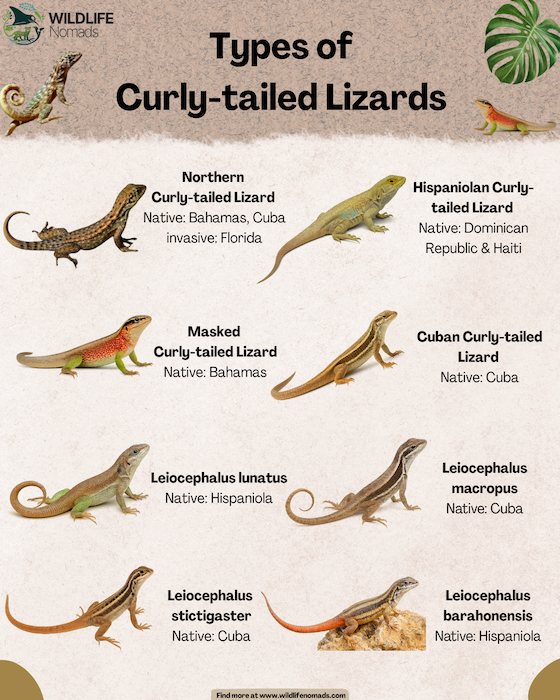
Within Leiocephalus carinatus, taxonomists have historically recognized several island forms as subspecies. These include mogotensis Schwartz (western Cuba), microcyon Schwartz, cayensis Schwartz (Cayman Islands), zayasi Schwartz, and labrossytus Schwartz. While some modern checklists now treat these names as local variants rather than formal subspecies, they still highlight the remarkable diversity within this adaptable reptile and its broader genus.
Can You Keep a Curly-Tailed Lizard as a Pet?
While occasionally available in the pet trade, curly tails aren’t common as household pets. Care involves:
- Sandy substrate for burrowing
- Heat and UV lighting
- Ample space for activity
In captivity, curly-tailed lizards have been observed to burrow completely under the sand in a holding tank, even when other shelters like rocks are available.
But here’s the catch: In Florida, these lizards are invasive, and removing them from the wild is discouraged. Before considering one, always check local laws. You can find more about illegal pet trade on our article.
Description (Adults)
Adult curly tails:
- Reach ~10 inches in total length
- Show keeled dorsal scales and sandy brown crossbands
- Bask boldly in the open, unlike skittish geckos
I once measured a particularly large captured specimen in Cuba, its vent length was just over 10 cm, and it stayed motionless long enough for a perfect note sketch.
Newest Research on Curly Tailed Lizards
Recent studies are revealing just how adaptable the northern curly-tailed lizard (Leiocephalus carinatus) really is. A 2021 paper in the Biological Journal of the Linnean Society showed that Florida populations display thermal flexibility, allowing them to survive in cooler conditions than their native Caribbean range (Claunch et al., 2021).
More recently, a 2024 study in Reptiles & Amphibians examined how predation risk relates to reproduction, finding that while females in Florida endure frequent tail loss, this doesn’t drastically alter their investment in offspring (Reptiles & Amphibians, 2024).
FAQs About Curly Tailed Lizards
No. They’re native to the Bahamas, Cuba, and Cayman Islands, with introduced populations in Florida.
Yes, especially in Florida where they compete with native lizards.
Introduced in Palm Beach during the 1940s to fight sugar cane pests.
Mostly insects (including roaches), fruits, seeds, and smaller reptiles.
About 26 cm (10 inches) including the tail.
It’s a pursuit deterrent and social signal.
Yes in some regions, but not recommended in Florida due to their invasive status.
Lessons from a Curly Tail
The curly tailed lizard isn’t just a Caribbean curiosity or Florida oddity. It’s a living story of ecology, human intervention, and survival. Watching a northern curly-tailed lizard with its tail curled upward reminds me of the resilience I’ve seen in reptiles worldwide, from iguanas in the Galápagos to geckos clinging to rainforest leaves.
As scientists and travelers, we must ask: what happens when species cross borders? Sometimes we gain fascinating neighbors; other times, we disrupt entire ecosystems. The curly tail is both, a charismatic reptile and a cautionary tale.