Wildlife Nomads


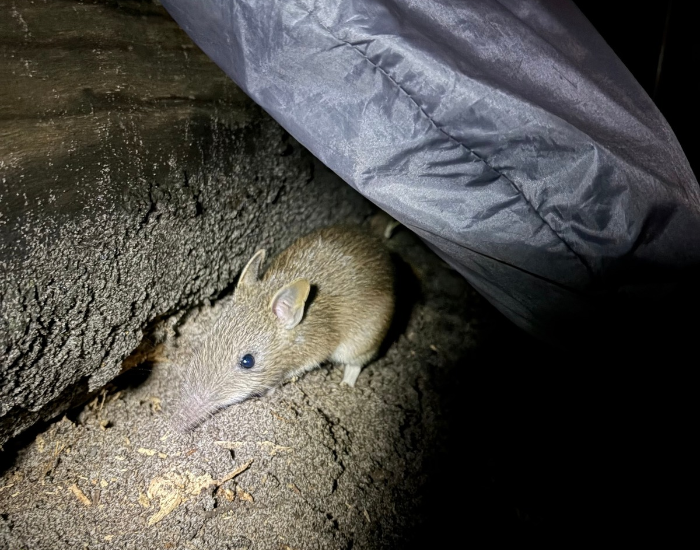
Eastern quolls vanished from mainland Australia decades ago. Meanwhile, southern brown bandicoots disappeared from Jervis Bay for a century. Now, in Booderee National Park, eastern quolls and bandicoots are both breeding again.
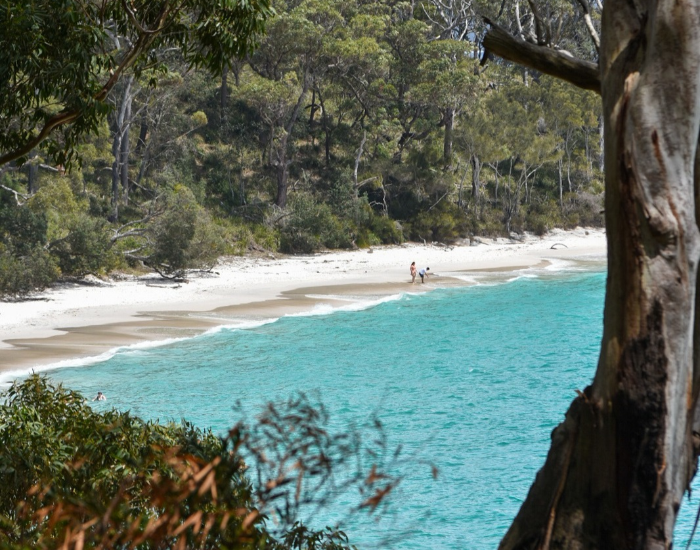
Jackie and I just spent four nights at Green Patch, inside Booderee, on our Australia lap. On the first night, a long-nosed bandicoot climbed onto our table. I tell that story in why Jervis Bay is great for wildlife.
So this comeback story feels personal. It also shows how hard these returns really are.
Bandicoots: Back After a Century
The southern brown bandicoot is a small, ground-digging marsupial. Typically, it weighs between 400 g and 1.2 kg and loves low scrub, heath and dense ground cover.
For about a century, bandicoots were locally extinct around Booderee. In the Dhurga language, the animal is called guragurr. In fact, its remains even turn up in old middens, so it was once part of the local diet.
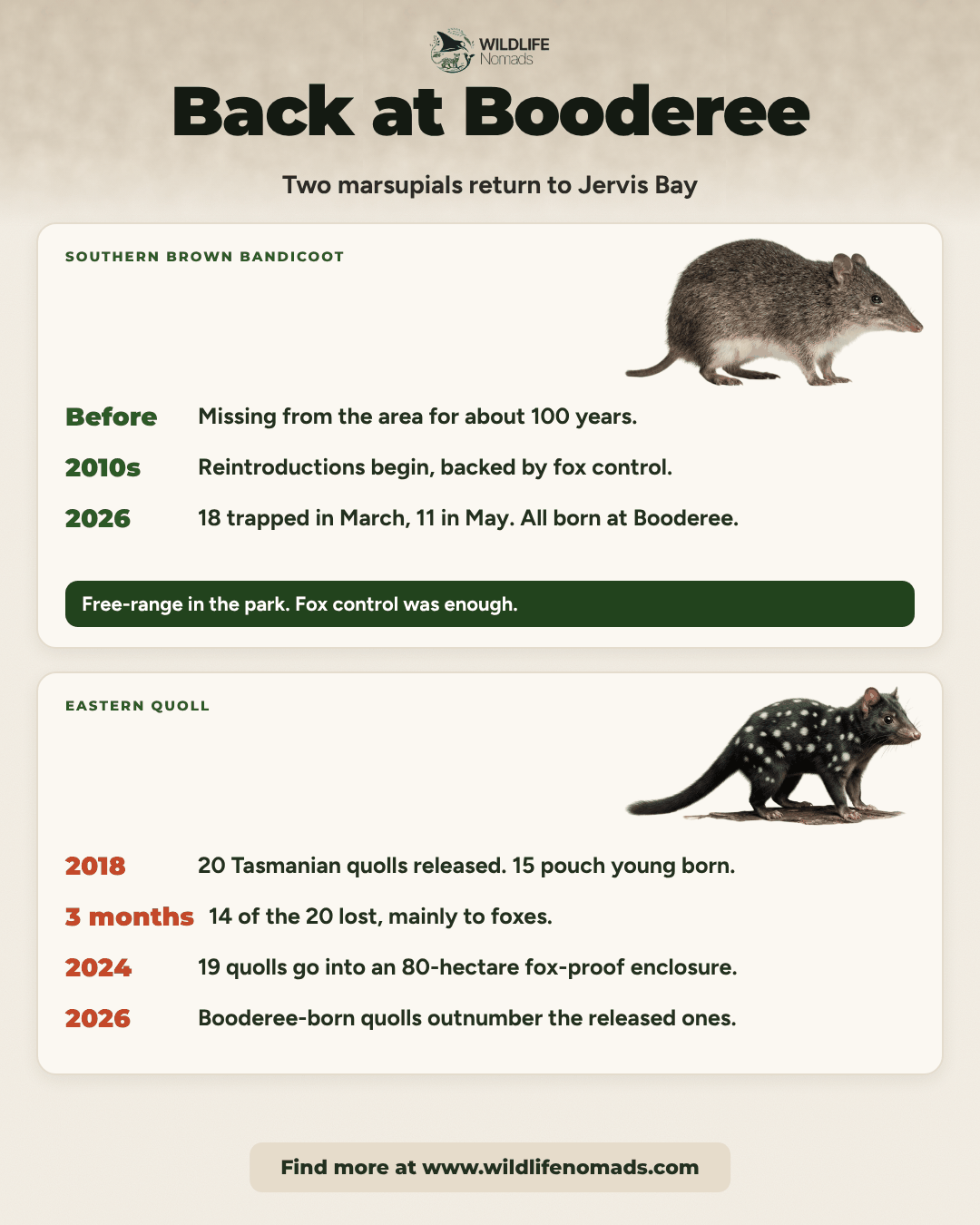
Eventually, reintroductions began in the mid-2010s, backed by years of fox control. Then, in 2026, rangers trapped 18 bandicoots in March and another 11 in May. Better still, every one of them was born at Booderee.
Booderee Eastern Quolls: A Harder Road
The eastern quoll is a small, spotted carnivorous marsupial. However, it survived in Tasmania but disappeared from the mainland in the 20th century.
In March 2018, a pilot project released 20 Tasmanian quolls into Booderee. Soon after, females carried 15 tiny pouch young. As a result, they were the first eastern quolls born wild on the mainland in more than 50 years.
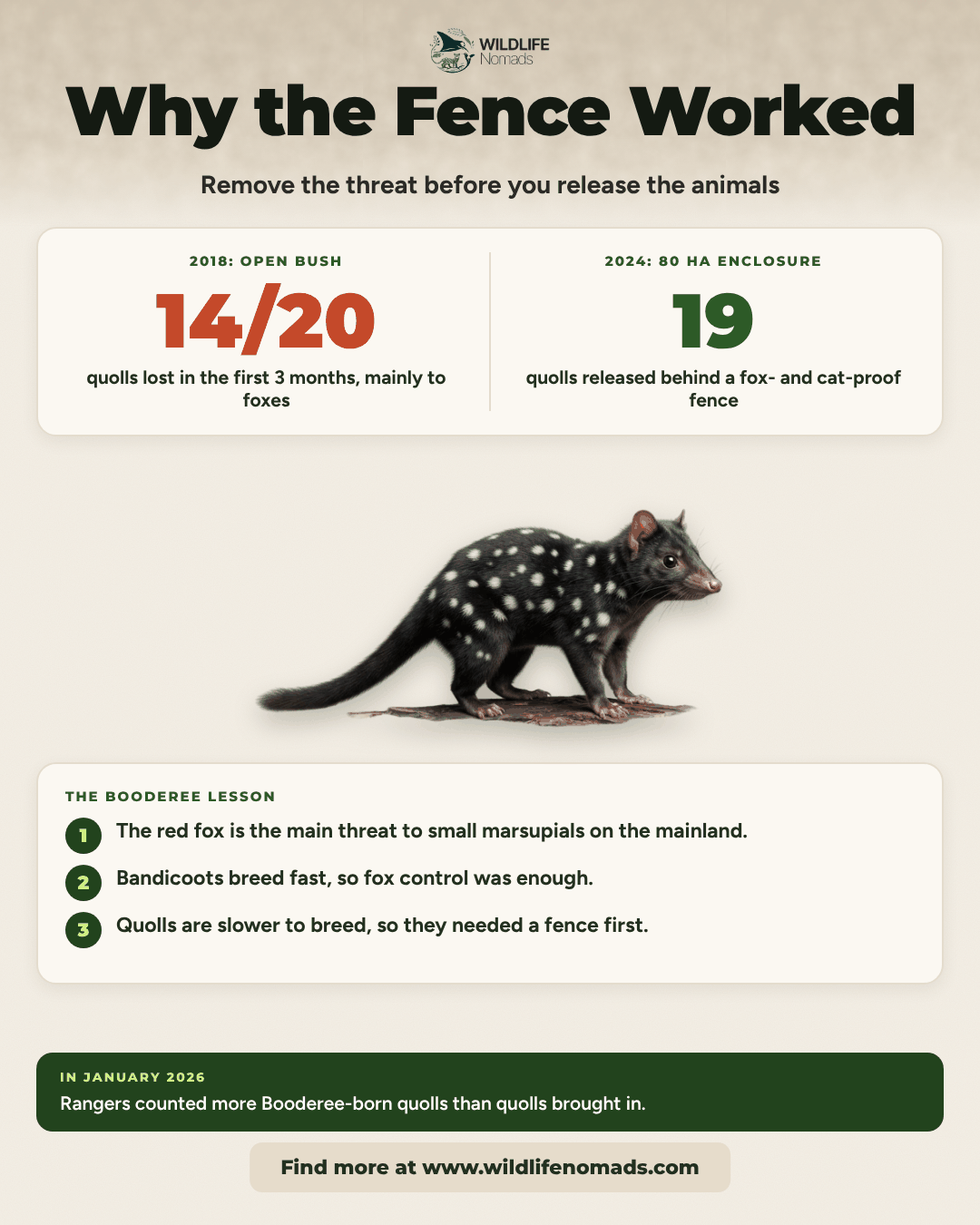
But then reality hit. Within the first three months, 14 of the 20 quolls were lost, mainly to foxes. The open bush was still too dangerous.
This short video from the Threatened Species Recovery Hub shows that first pilot release.
The Fence That Saved Eastern Quolls at Booderee
So the new plan gave quolls a safe base first. Specifically, the 80-hectare enclosure keeps foxes and cats out while the population builds.
Clearly, it’s working. In the January 2026 survey, rangers counted more Booderee-born quolls than animals brought in from outside. Then, in June 2026, Aussie Ark added five more quolls to the gardens.
Aussie Ark runs its breeding sanctuary in the Barrington Tops, the same mountains where I searched for a platypus. In other words, wildlife recovery in New South Wales is a network of places working together.
What Eastern Quolls at Booderee Teach Us
Overall, Booderee’s lesson is simple. In short, reintroduction fails if the original threat is still there. For small marsupials in mainland Australia, that threat is usually the red fox.
For example, bandicoots made it in the open because fox control kept numbers low. By contrast, quolls, which are slower to breed, needed a fence first. Either way, neither success happened by luck.
Read more about these programs in our guide to species reintroductions, or see how invasive species in Australia shaped the problem.
FAQs About Booderee’s Quolls and Bandicoots
They disappeared from the mainland in the 20th century but survived in Tasmania. Reintroduced populations now live in fenced sites like Booderee National Park.
Booderee is at Jervis Bay on the south coast of New South Wales. It is jointly managed with the Wreck Bay Aboriginal Community.
Foxes. In the 2018 pilot, 14 of the 20 released quolls were lost within three months, mainly to fox predation.
Spots in the Dark Again
Not long ago, a quoll at Jervis Bay would have been impossible. Today, young quolls born there outnumber the ones released. I didn’t see one during our four nights at Green Patch. After all, most of them still live behind the Botanic Gardens fence.
References:
Parks Australia. (2026, March 19). Eastern quolls breeding at Booderee. parksaustralia.gov.au
Parks Australia. (2026, August 3). Success for southern brown bandicoots at Booderee after population disappeared for a century. parksaustralia.gov.au
NESP Threatened Species Recovery Hub. Booderee reintroduction findings (Project 3.2.2.1 factsheet). nespthreatenedspecies.edu.au
Aussie Ark. (2026, June 9). Five endangered eastern quolls return to the wild. aussieark.org.au