During my bachelor’s degree, I had to build an entomology collection. My classmates and I spent long nights in the lab pinning and identifying insects. We sorted beetles, moths, the odd wasp, and drawer after drawer of common bees like the honeybee.
That lab doubled as a biological collection, and my professor was a bee specialist. To my shock, the trays held thousands of green bees, blue bees and the classic black and yellow bees that all looked identical to me. Slowly, painfully, my friends and I learned to tell them apart.
This guide picks up where my 15 bee species post left off. There, I mapped the whole family. Here, I zoom in on one plush, unmistakable branch: the bumblebees. Once you can identify a few bumble bees, the rest of the genus opens up fast.
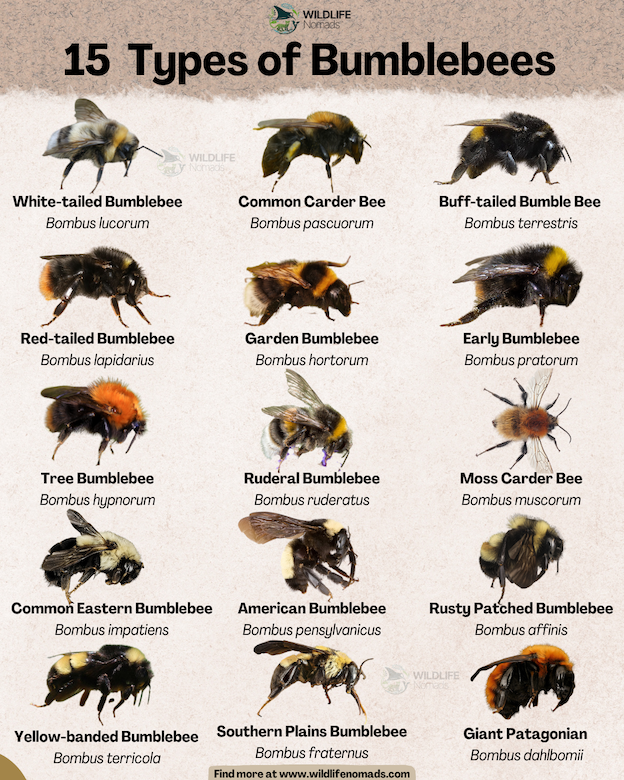
Below are 15 types of bumblebees you can actually recognize in the field. You will learn their colours, their size, where they nest, and why these native pollinators keep whole ecosystems fed. By the end, telling a buff-tailed from a red-tailed will feel obvious.
What Makes a Bumblebee a Bumblebee
Bumblebees belong to the genus Bombus, inside the huge family Apidae, the same group as honey bees, carpenter bees, and orchid bees. There are around 250 species worldwide!
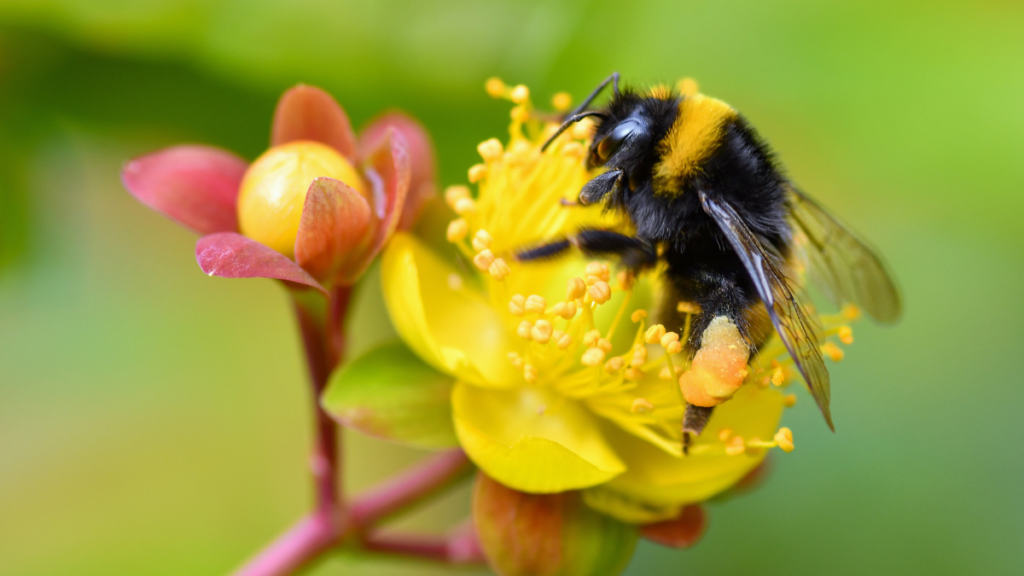
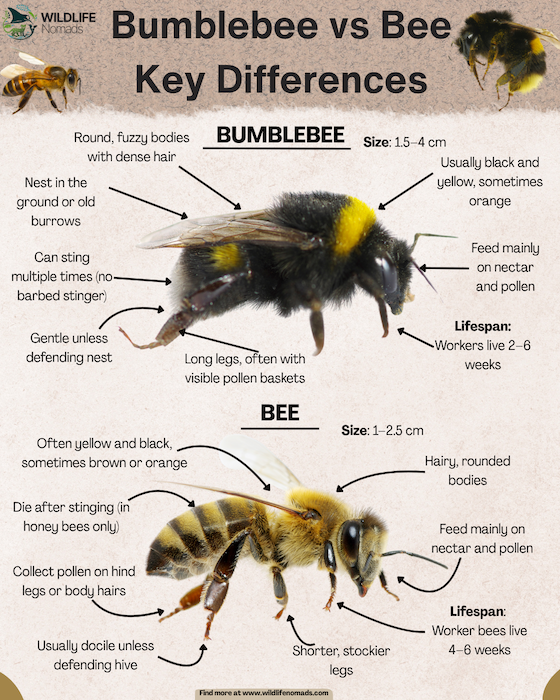
A few traits set them apart. Bumblebees are large, round, and densely furred, and they carry far fewer stripes than honeybees. A big queen can reach 26 mm long. Look at the abdomen and thorax: broad colour bands, feathery hair, and a tail colour that often clinches the ID.
They are true social insects, but on a modest scale. Bumblebee colonies typically hold 50 to 400 individuals, not the tens of thousands a honey bee hive contains. Those colonies are annual, only mated new queens survive the winter, then start fresh each spring.
Here is the trait I love most. Bumblebees perform buzz pollination, a technique unique to this genus. Certain plants lock their pollen inside tube-like structures called poricidal anthers. A bumblebee grips the flower and rapidly vibrates its thoracic muscles, and the pollen shakes free, a trick a honeybee simply cannot manage.
That skill has enormous reach. One-third of the human diet relies directly or indirectly on insect pollination, and buzz pollination is essential for crops like tomatoes that honey bees cannot service well. These are important pollinators, so learning their faces is worth the effort.
1. Buff-tailed Bumblebee (Bombus terrestris)
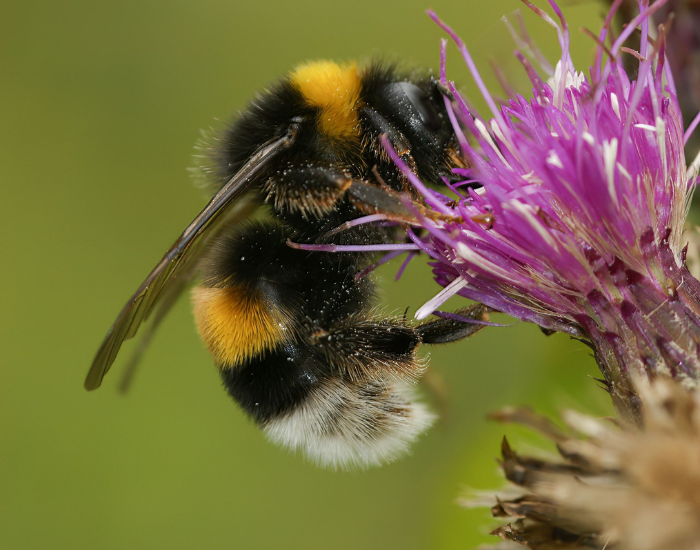
Start with the heavyweight most people picture first. The buff-tailed bumblebee is a large bumble bee with two golden-yellow bands and a buff-white tail. Queens are genuinely chunky, among the biggest you will meet in a European garden.
This is the bumblebee reared commercially by the million for greenhouse tomatoes, precisely because of its buzz pollination talent. It nests underground, often in old rodent burrows, in colonies that can swell past 300 workers by mid-summer. If you see buff-tailed bumblebees working a flower in February, that is a queen who woke early.
2. White-tailed Bumblebee (Bombus lucorum)
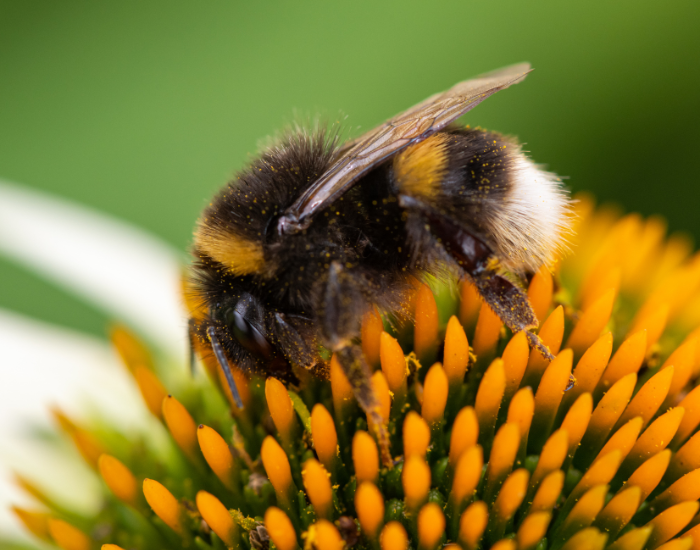
The white-tailed bumblebee is the buff-tailed’s near-twin, and separating them is a classic identification headache. The bands are a brighter lemon-yellow, and the tail is a clean, pure white rather than buff.
Honestly, even specialists sometimes need a microscope to be sure, because B. lucorum is really a cluster of look-alike species. In the field, go by the crisper yellow and the snow-white tail. It nests underground too, ranges across northern Europe and Asia, and thrives from lowland gardens up into cool mountain meadows.
3. Common Carder Bee (Bombus pascuorum)
Not every bumblebee wears black and yellow. The common carder bee is brown-and-orange with darker bands, a warm ginger fuzz all over. It is one of the easiest bumble bees to name once you know it.
The name comes from its nesting habit. Carder bees “card” moss and dry grass into insulating material, building nests on the soil surface under long grass rather than digging deep. It flies late into the season, is often the last bumblebee you spot in autumn, and adores clover, especially red clover, and other deep flowers.
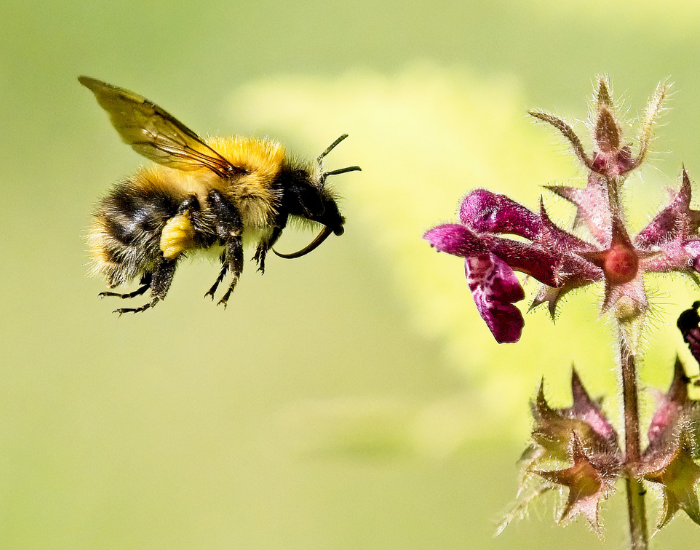
4. Red-tailed Bumblebee (Bombus lapidarius)
Few bumble bees are as clean-cut as Bombus lapidarius. The queen is jet-black with a vivid orange-red tail, a two-tone design you can name from across a meadow. Males add a splash of yellow on the face and thorax.
This species nests underground, often under stones, which its old name “stone bumblebee” hints at. It favours open grassland, roadside verges, and gardens, and works knapweed, clover, and thistles hard through summer. When you finally lock in a red-tailed from a distance, bumble bee identification suddenly feels achievable.
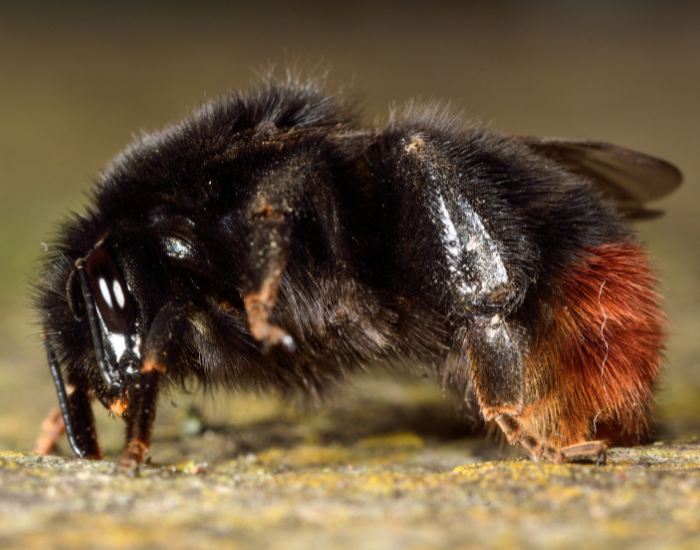
5. Garden Bumblebee (Bombus hortorum)
The garden bumblebee looks a lot like the buff-tailed at a glance (black with yellow bands and a white tail) but it carries three yellow bands instead of two, and a notably long face. That long head houses an exceptionally long tongue.
That tongue is the whole story. B. hortorum specializes in deep, tubular flowers that shorter-tongued bees cannot reach: foxgloves, honeysuckle, and red clover. As a result, it is a key pollinator of plants other bumblebees skip, and a welcome sign that your garden’s deeper blooms are being served.
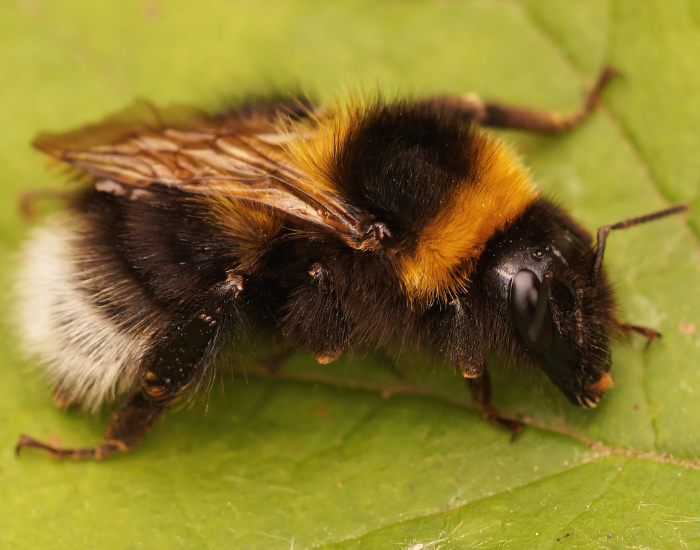
6. Early Bumblebee (Bombus pratorum)
True to its name, the early bumblebee is one of the first out each spring. It is also one of the smallest bumble bees, compact, with a lemon-yellow collar, a yellow band, and a warm orange-red tail.
Because it emerges early and finishes early, a colony can be winding down by mid-summer when others are peaking. It nests in all sorts of cavities: old bird boxes, tussocks, even upholstered furniture left in sheds. Its short, bright season makes it a favourite of gardeners who plant early-flowering shrubs.
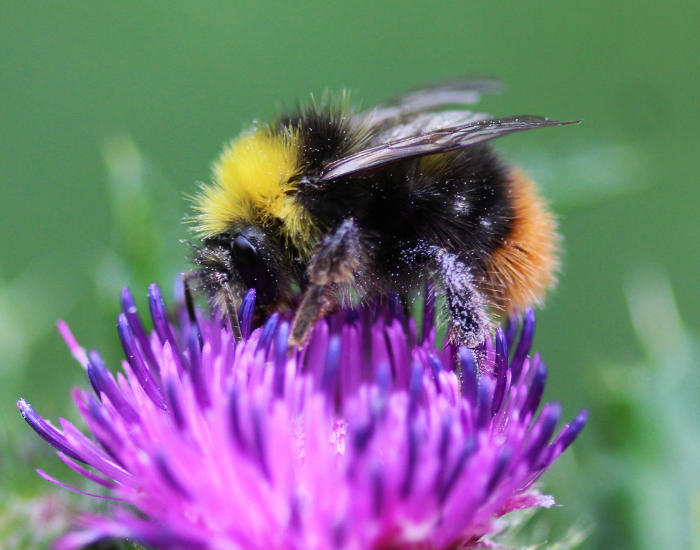
7. Tree Bumblebee (Bombus hypnorum)
The tree bumblebee has one of the most memorable colour patterns of any bumble bee: a ginger-brown thorax, a black abdomen, and a crisp white tail. Three zones, three colours — no fuss.
It earns its name by nesting off the ground. The tree bumblebee readily takes over bird boxes and cavities in walls and eaves, which is why so many people meet this one at home. It has spread rapidly across Europe in recent decades and reached Britain only in 2001, a rare bumblebee success story against the wider trend.
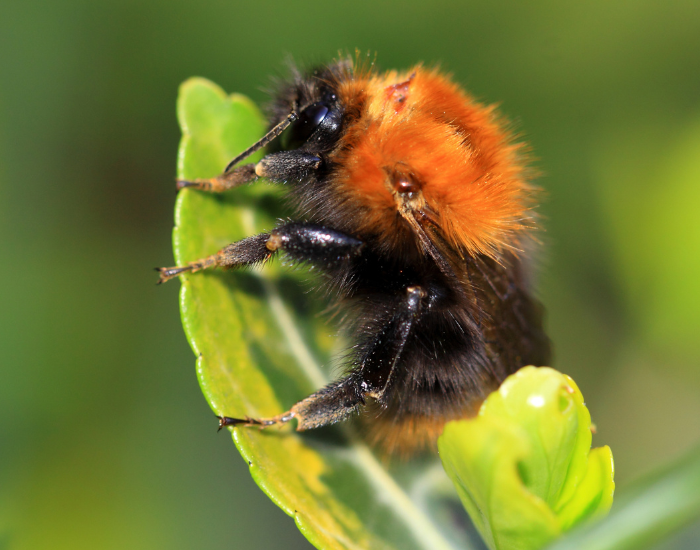
8. Ruderal Bumblebee (Bombus ruderatus)
The ruderal bumblebee is a large, long-faced, long-tongued species that closely resembles the garden bumblebee. Look for the same three yellow bands and white tail, though many individuals are entirely black.
Like other long-tongued bumble bees, the ruderal bumblebee is a specialist of deep flowers and a champion of red clover, which is exactly why it was shipped to New Zealand in the 1800s to pollinate clover crops. In Britain it declined sharply and is now a conservation concern, clinging to a handful of flower-rich grasslands.
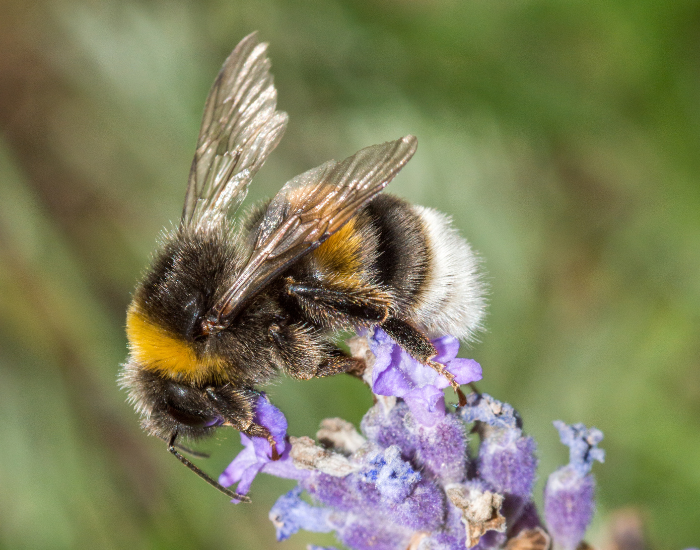
9. Moss Carder Bee (Bombus muscorum)
The moss carder bee (Bombus muscorum) is a gorgeous, uniform ginger bumblebee with no black hairs on its body, a clean gold from head to tail. That all-over evenness separates it from the common carder, which shows darker patches.
Once widespread, B. muscorum has retreated to coastal grasslands, machair, and unimproved meadows. It is a surface nester like other carder bees, gathering moss and grass as insulating material. Its decline tracks the loss of wildflower habitat, and it now counts among Britain’s most threatened bumble bees.
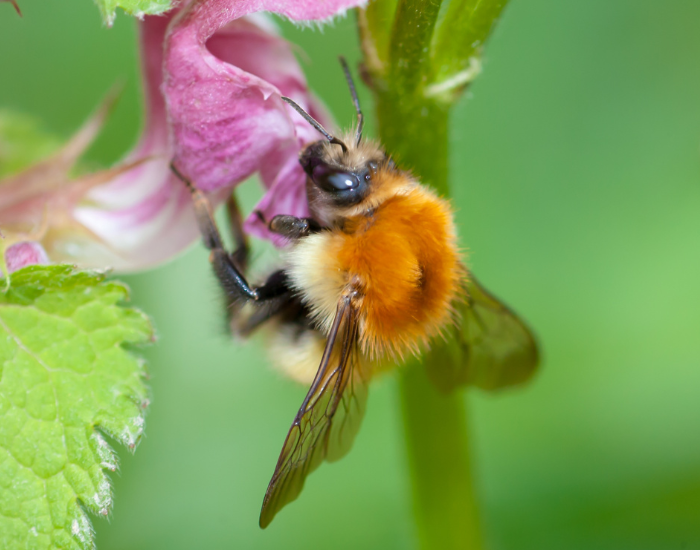
10. Common Eastern Bumblebee (Bombus impatiens)
Crossing to North America, the common eastern bumblebee is the one you are most likely to meet east of the Rockies. It has a yellow thorax, a mostly black abdomen with a single yellow band, and an adaptable, city-friendly streak.
B. impatiens is now reared commercially in North America much as the buff-tailed is in Europe, pollinating greenhouse tomatoes and peppers through buzz pollination. While many of its relatives crash, this generalist has held steady and even expanded — a useful reminder that not every bumblebee story is a decline.
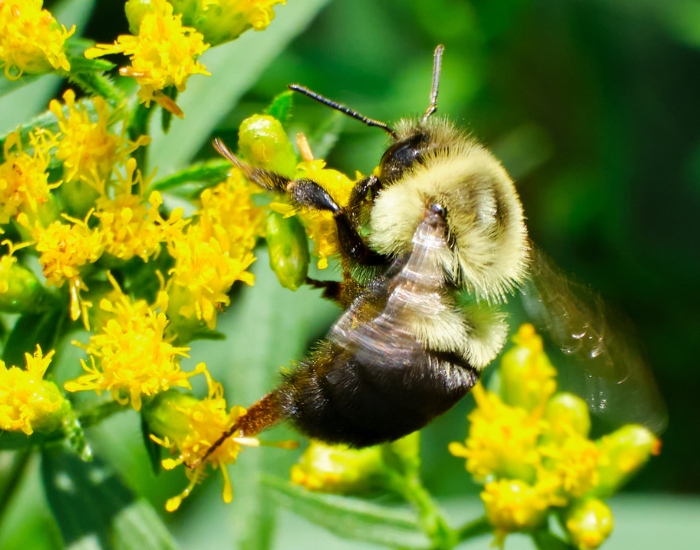
11. American Bumblebee (Bombus pensylvanicus)
The American bumblebee (Bombus pensylvanicus) is a large, long-faced species with a yellow-and-black abdomen and a black-topped head. It once buzzed across open fields and prairies throughout the United States in huge numbers.
That past tense matters. This species has vanished from much of its northern range and is under review for endangered species protection. Habitat destruction and pesticide use have hit it hard. Seeing a healthy population of B. pensylvanicus today feels like glimpsing a piece of a richer, older countryside.
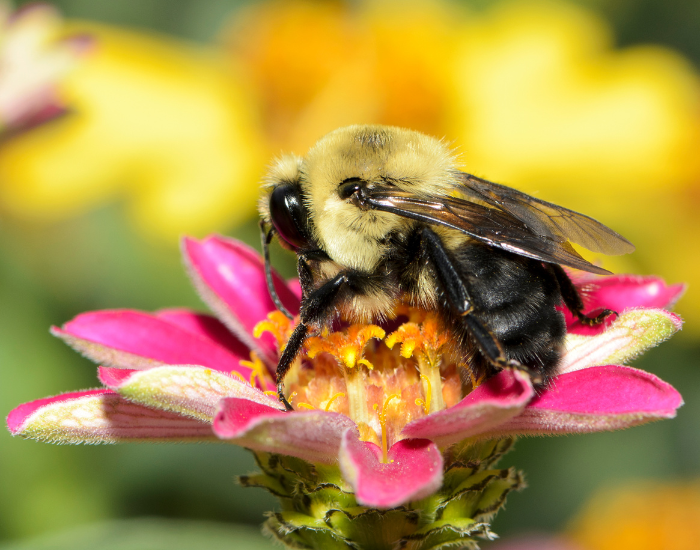
12. Rusty Patched Bumblebee (Bombus affinis)
The rusty patched bumblebee (Bombus affinis) carries a small rust-coloured smudge in the middle of its second abdominal band, subtle, but diagnostic. Workers and males show it; queens do not.
In 2017 it became the first bumblebee listed as endangered in the continental United States. Its population has collapsed by nearly 90% in two decades, driven by disease, habitat loss, and pesticides. B. affinis has become the poster child for bumblebee conservation in North America, and every verified sighting is now logged with care.
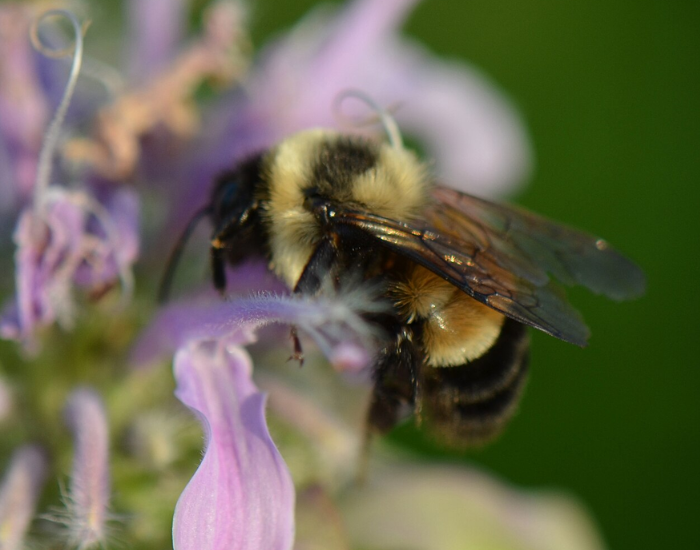
13. Yellow-banded Bumblebee (Bombus terricola)
The yellow-banded bumblebee (Bombus terricola) is a handsome black bee split by bold yellow bands across the thorax and abdomen. It ranges across the northern United States and Canada, in meadows, forest edges, and boreal clearings.
Once common, it suffered one of the steeper declines among North American bumble bees, likely tied to an introduced pathogen and low levels of neonicotinoids that can reduce bumblebee numbers by up to 55%. It is slowly reappearing in some areas, which gives conservationists cautious hope for this once-abundant native pollinator.
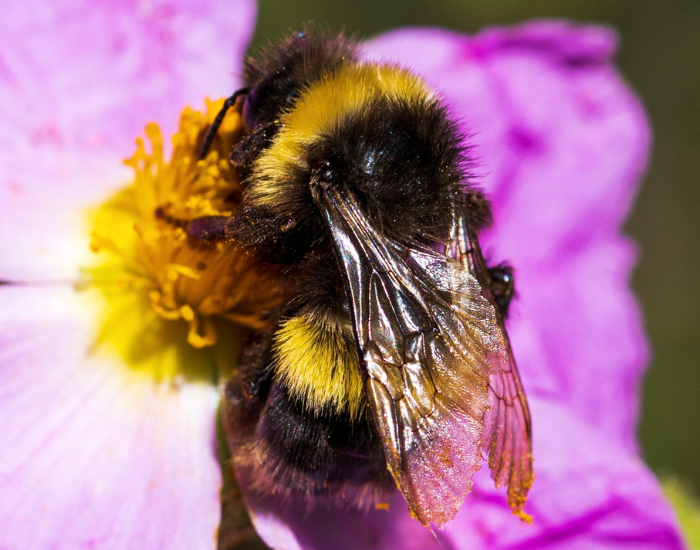
14. Southern Plains Bumblebee (Bombus fraternus)
The southern plains bumblebee (Bombus fraternus) is a striking, boldly striped bee of the American grasslands, with unusually flat, tidy bands that make it look almost painted. It favours open prairie and pasture across the southeastern and central United States.
This is a grassland specialist, and grasslands are among the most heavily converted habitats on the continent. As prairie became cropland, B. fraternus declined steeply and now ranks as vulnerable. Where remnant prairie survives, though, this large, handsome bumblebee can still be found working the summer bloom.
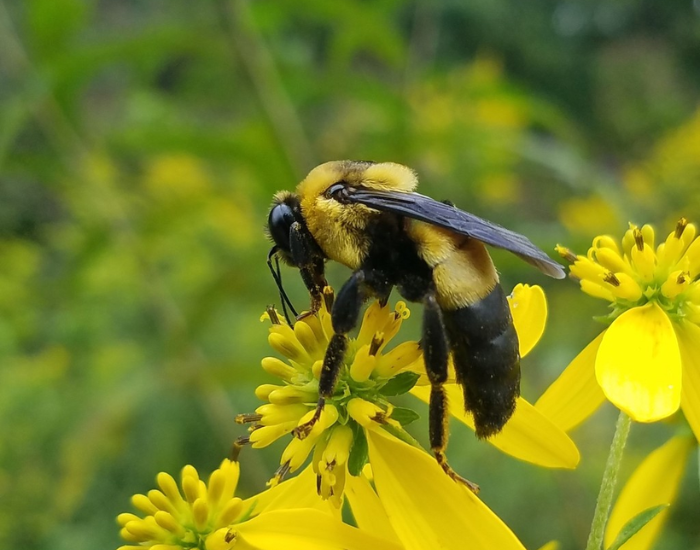
15. Giant Patagonian Bumblebee (Bombus dahlbomii)
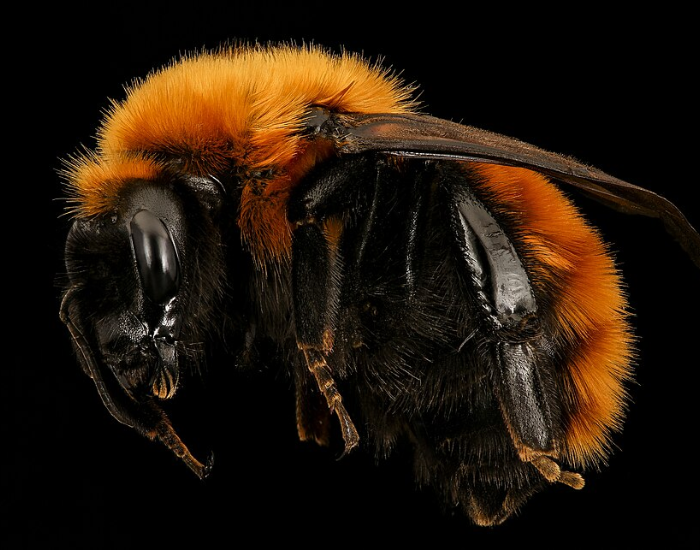
I saved the giant for last. The largest bumblebee species on Earth is Bombus dahlbomii, whose queens reach up to 40 mm long, big enough that people liken them to flying mice. Its coat is a deep, fiery ginger all over.
It is the only native bumblebee in South America’s temperate forests, ranging through Patagonia. Tragically, it is crashing fast, squeezed by the introduced buff-tailed bumblebee and the parasite that invasive species carries. Watching a B. dahlbomii bumble past a Patagonian flower is now a genuine privilege, and a warning about what we stand to lose.
How to Help Bumblebees in Your Yard
The good news is that supporting bumble bees is genuinely easy. Planting pollinator-friendly flowers helps, and bumblebees especially prefer blooms like bee balm, asters, and clover. Aim for something flowering from early spring through late summer, so queens and workers always have fuel.
You can offer shelter, too. Bumble bee nests can be encouraged with a quiet compost pile, an undisturbed log, or a patch of rough grass left long. Skip the pesticides, resist the urge to tidy every corner, and you turn an ordinary garden into real habitat.
Frequently Asked Questions
Yes, but rarely. Bumblebees are not normally aggressive and will only defend their nest if it is disturbed. Unlike honeybees, a bumblebee can sting repeatedly without injuring itself, since its stinger is smooth. They pose a small-to-moderate sting risk, so avoid swatting them and give a nest space, and you will almost never be stung.
In a healthy garden, not rare at all in spring and summer, but that depends heavily on where you live. Common species like the buff-tailed and common carder are still widespread. Others, such as the rusty patched or the giant Patagonian bumblebee, have become genuinely scarce, so spotting them is now a real event.
Absolutely. Bumblebees are among the most effective native pollinators, and their buzz pollination boosts the yield of tomatoes, blueberries, and many other crops. They forage in cooler temperatures and poorer weather than honey bees, so they keep working when other insects stay home. A yard with bumble bees is a healthier, more productive one.
Nectar for energy and pollen for protein. Only female bumblebees collect nectar and pollen, trapping grains on branched, electrostatic hairs and carrying pollen in baskets on their hind legs. They favour deep, nectar-rich flowers like red clover, foxglove, bee balm, and asters, and will forage up to 2 km from the nest to reach them.
The Bottom Line
Learn a handful of these types of bumblebees and the genus stops looking like one fuzzy insect and starts looking like 15 distinct lives, the buzz-pollinating buff-tailed, the ginger common carder, the vanishing giant of Patagonia. Each fills a role in pollination that no other quite matches.
So next time a bumblebee trundles past, look at the tail, the bands, the face before you name it. Then plant something it can feed on. If you want more, meet the whole family in my guides to bee species, honey bees, and blue bees, and tell me in the comments which bumblebee you spotted first.
Can You Name That Bumblebee? 🐝
A 15-photo identification challenge — the wrong answers are deliberately tricky look-alikes, especially the black-yellow-white-tailed twins. Check the bands, the face, and the tail colour. Go back and change any answer before you score.
Which bumblebee is this?
References:
Cameron, S. A., Lozier, J. D., Strange, J. P., Koch, J. B., Cordes, N., Solter, L. F., & Griswold, T. L. (2011). Patterns of widespread decline in North American bumble bees. Proceedings of the National Academy of Sciences, 108(2), 662–667. https://doi.org/10.1073/pnas.1014743108
Goulson, D., Nicholls, E., Botías, C., & Rotheray, E. L. (2015). Bee declines driven by combined stress from parasites, pesticides, and lack of flowers. Science, 347(6229), 1255957. https://doi.org/10.1126/science.1255957
Whitehorn, P. R., O’Connor, S., Wackers, F. L., & Goulson, D. (2012). Neonicotinoid pesticide reduces bumble bee colony growth and queen production. Science, 336(6079), 351–352. https://doi.org/10.1126/science.1215025
Morales, C. L., Arbetman, M. P., Cameron, S. A., & Aizen, M. A. (2013). Rapid ecological replacement of a native bumble bee by invasive species. Frontiers in Ecology and the Environment, 11(10), 529–534. https://doi.org/10.1890/120321
De Luca, P. A., & Vallejo-Marín, M. (2013). What’s the ‘buzz’ about? The ecology and evolutionary significance of buzz-pollination. Current Opinion in Plant Biology, 16(4), 429–435. https://doi.org/10.1016/j.pbi.2013.05.002
Cameron, S. A., & Sadd, B. M. (2020). Global trends in bumble bee health. Annual Review of Entomology, 65, 209–232. https://doi.org/10.1146/annurev-ento-011118-111847
Goulson, D. (2010). Bumblebees: Behaviour, Ecology, and Conservation (2nd ed.). Oxford University Press. https://global.oup.com/academic/product/bumblebees-9780199553075