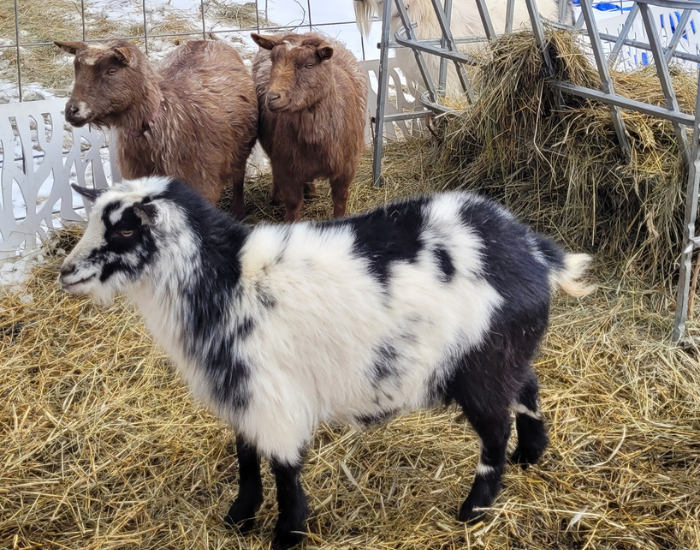
Last summer, the Wildlife Nomads team visited a small family farm tucked into the rolling hills of Alberta, Canada. I expected cattle. I expected horses. What I did not expect was a sprawling herd of goats, dozens of them, in every shape, size, and temperament imaginable. Pygmy goats headbutted each other near the fence. A pair of tall, droopy-eared Nubians watched us like suspicious librarians. And a massive Boer buck stood on a hay bale, surveying his kingdom with zero interest in our cameras.
That afternoon reminded me of something I keep coming back to as a field biologist. We overlook the animals right in front of us. I have written about crows, ravens, and donkeys for the same reason. These are creatures we see so often that we stop seeing them. Goats are everywhere — raised on every continent except Antarctica, woven into many cultures for thousands of years — and yet most people cannot name more than one or two goat breeds. That changes today. Here are 14 types of goats that will make you rethink everything about these extraordinary animals.
What Are Goats, Exactly?
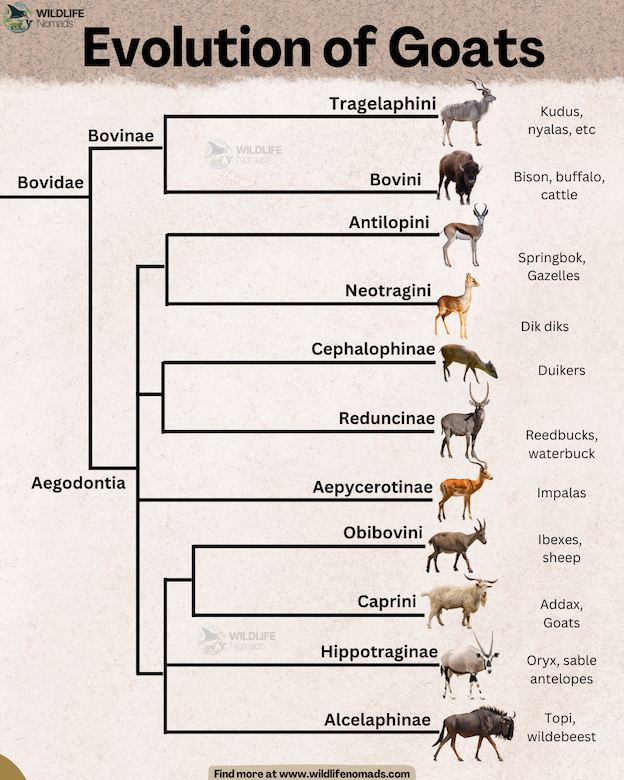
Before we dive into specific breeds, a quick primer. Goats belong to the genus Capra, a group of even-toed ungulates in the family Bovidae (sharing a common ancestor with similar animals such as buffalos, oryx, nilgai and springbok). The domestic goat (Capra hircus) descends from the wild bezoar ibex of the Middle East, domesticated roughly 10,000 years ago at archaeological sites across the Fertile Crescent. That makes goats one of the earliest domesticated animals in human history, older than horses, older than chickens, and closely related to sheep and cattle.
Today, over 300 goat breeds exist worldwide. They are ruminants, meaning they ferment plant-based food in a specialized stomach before digesting it. If you have ever watched goats chewing endlessly, that is cud chewing, a hallmark of ruminant digestion shared with cows, sheep, and cattle. Goats eat an astonishing range of vegetation, including invasive plant species that other livestock refuse. That adaptability is exactly why humans have raised them for milk, meat, wool, and companionship across nearly every habitat on earth. Unlike cows or sheep, goats actively seek out brush, thorny weeds, and woody shrubs, they are nature’s land-clearing crew.
Young goats are called kids. Adult female goats are called does, and uncastrated males are called bucks. Adult males can weigh anywhere from 70 to 140 kilograms depending on the breed. The gestation period runs about 150 days, and most does give birth to one or two kids per mating season. Goats are sociable animals that form strong herd bonds, and they recognize individual human faces, a trait confirmed by peer-reviewed behavioral research. Among domesticated animals, goats rank alongside dogs and horses in their ability to read human social cues. Domesticated goats now outnumber most other livestock species in developing nations, where they serve as a primary source of dairy, meat, and fiber for millions of families.
Now, let me walk you through 15 breeds and wild species that showcase just how diverse the goat family truly is.
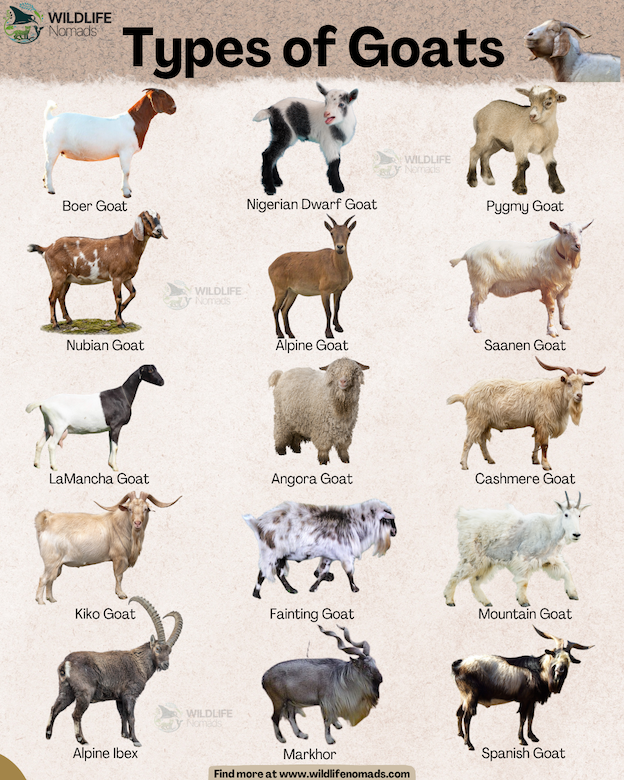
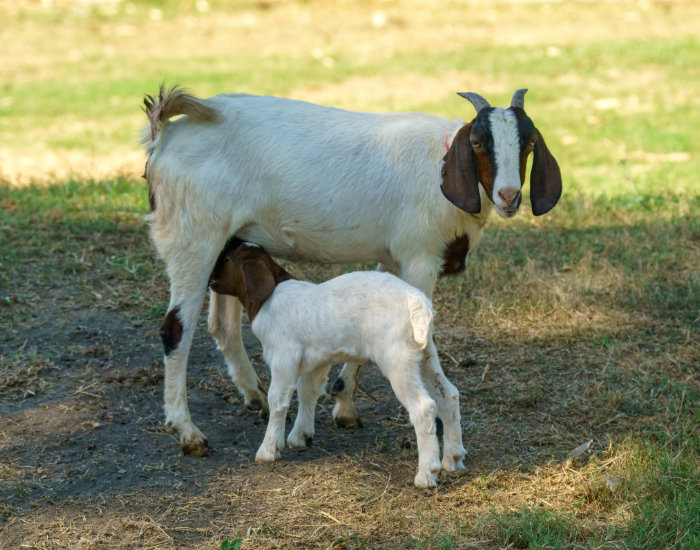
1. Boer Goat
If goat breeds had a bodybuilder category, the Boer goat would sweep every trophy. Developed in South Africa’s Eastern Cape during the 1920s, Boer goats were bred by crossing European, Indian, and indigenous African goats into a single, muscular meat-producing machine. Adult males weigh up to 115 kilograms. Their signature look, white body, red head, backward-curving horns, is instantly recognizable on farms across North America, Australia, and beyond.
What fascinates me about Boer goats is their resilience. These animals thrive in arid regions with limited water. Females often produce twins or triplets, and the mother bonds fiercely with her young from birth. Does can kid twice in three years. That kind of fertility revolutionized the global goat meat industry. If you eat goat meat anywhere in the world, there is a good chance Boer genetics are involved. Boer goats are now raised alongside cattle, sheep, and chickens on diversified farms across six continents.
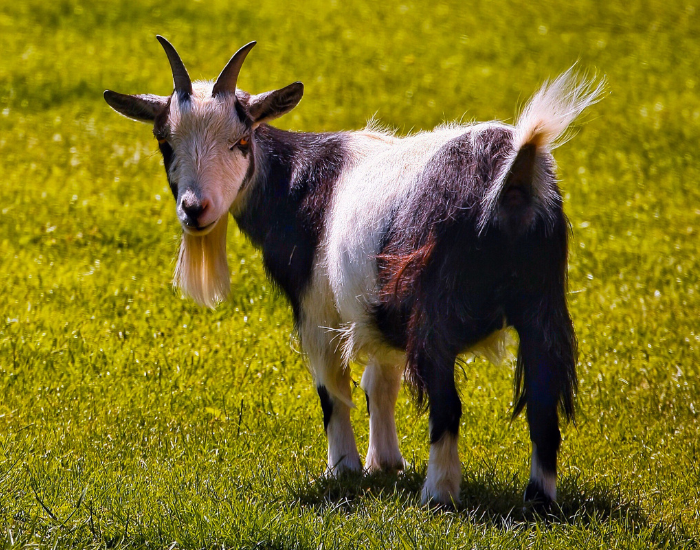
2. Nigerian Dwarf Goat
Standing barely 60 centimeters tall, the Nigerian Dwarf goat might be the most underestimated dairy goat on the planet. Originally imported from West Africa to American zoos between the 1930s and 1960s, these tiny goats were never meant to be dairy animals. Then someone tested their milk. The butterfat content clocks in at 5 to 6 percent, rivaling breeds twice their size.
That discovery turned Nigerian Dwarfs into one of the most popular small-farm dairy goats in the United States. Their compact size makes them ideal for urban and suburban homesteads. They produce rich, sweet milk perfect for cheese-making.
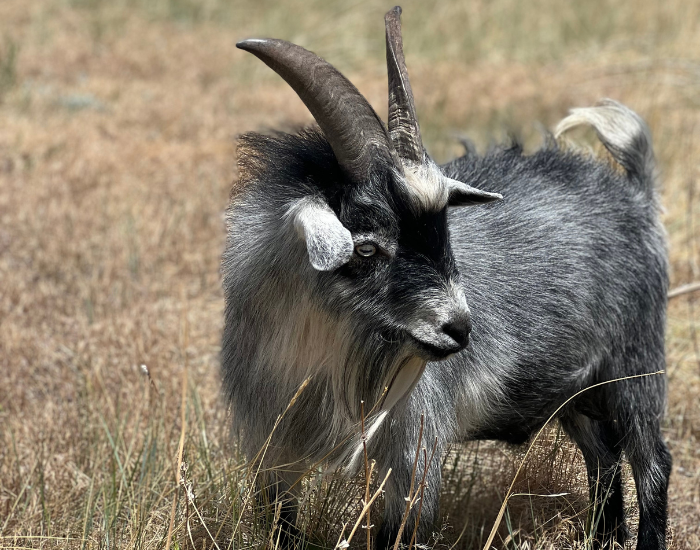
3. Pygmy Goat
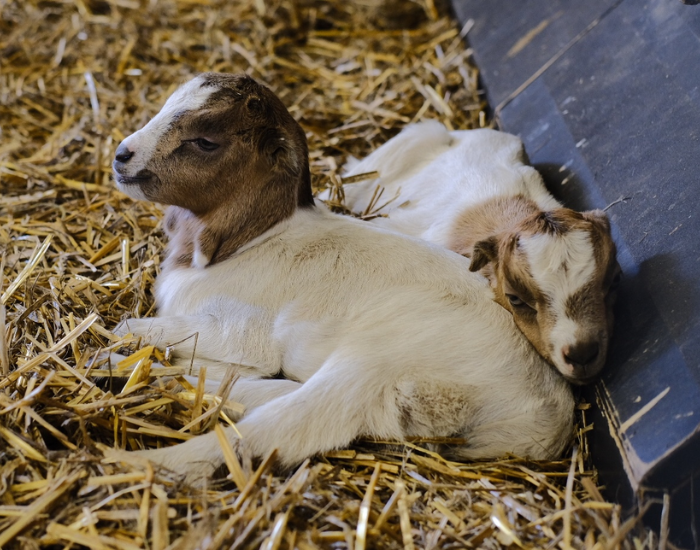
Pygmy goats share West African origins with the Nigerian Dwarf, but their story took a different turn. Stocky, compact, and heavily muscled, pygmy goats were originally bred for meat production. They stand just 40 to 50 centimeters at the withers and weigh 25 to 40 kilograms, yet they pack more muscle per pound of body weight than many larger breeds.
On that Alberta farm, the pygmy goats were the entertainers. They scaled everything, logs, buckets, the farmer’s ATV. Their short, sturdy builds and bold personalities make them popular companion animals today, though they remain productive meat goats in West Africa and beyond. Females are prolific breeders, often delivering twins or triplets.
4. Nubian Goat
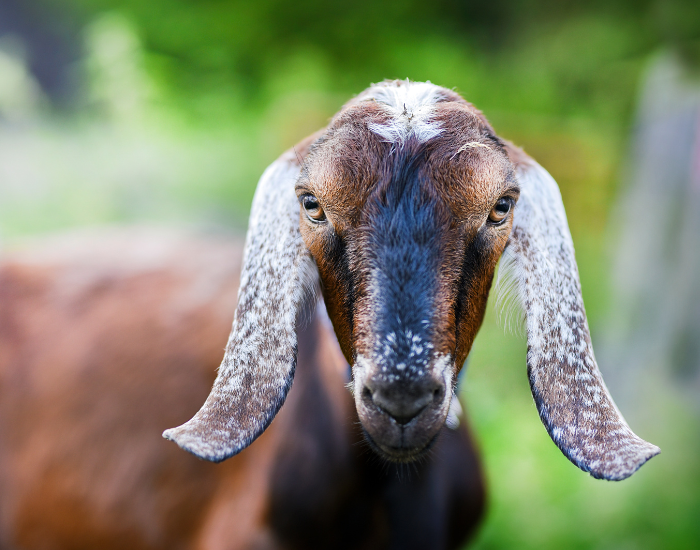
You will hear a Nubian before you see one. These goats are loud, opinionated, and impossible to ignore — qualities I can respect in any species. Developed in Great Britain during the 19th century, Nubians are a cross between native British goats and large, lop-eared goats from India, North Africa, and the Middle East. Their long, droopy ears and convex “Roman nose” profile make them one of the most distinctive dairy goats alive. Those droopy ears are not just ornamental — they help regulate body temperature in hot climates, a trait inherited from their Middle Eastern and North African ancestors.
Nubians produce less total milk volume than Alpine or Saanen breeds, but their milk is richer. Butterfat content hovers around 5 percent, making it ideal for cheese, yogurt, and soap. They are also heat-tolerant, which explains their popularity in warmer climates. Here is a piece of history I love: Nubians first reached Britain aboard P&O steamships. The shipping company loaded goats onto vessels returning from the Orient to provide fresh milk and meat during long sea voyages. An accidental breed, born at sea.
5. Alpine Goat
Alpine goats are the workhorses of commercial dairy goat operations worldwide. Originating in the French Alps, these medium-to-large goats have erect ears, straight facial profiles, and an elegant, fine-boned build. They arrived in the United States in 1920 and quickly proved their worth.
The numbers speak for themselves. Alpine goats average over 2,100 pounds of milk per lactation, a staggering volume for any dairy goat breed. Their milk contains about 3.4 percent fat and high protein, making it a staple in commercial goat dairy production. I think of Alpines as the quiet professionals. They lack the Nubian’s drama or the Pygmy’s charm, but they produce more milk than almost any other goats on earth. Sometimes boring is brilliant.
6. Saanen Goat
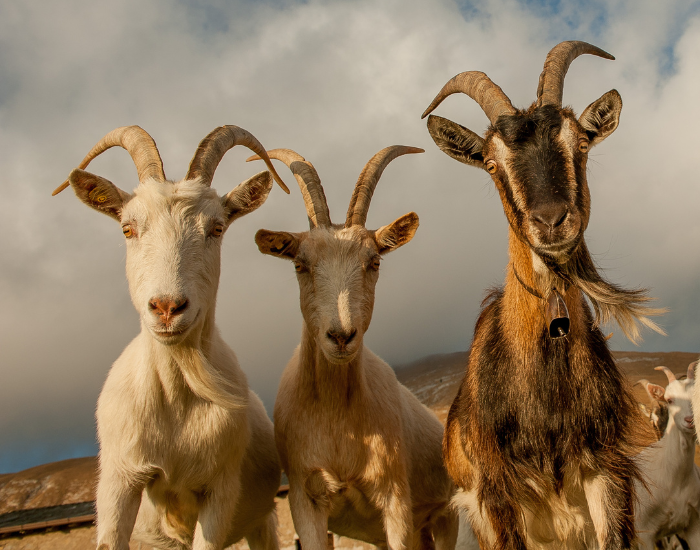
If Alpines are the workhorses, Saanens are the thoroughbreds. Originating in Switzerland’s Saanen Valley, these all-white dairy goats hold the record for the highest milk yields of any goat breed in the world. A single Saanen doe can produce over 838 kilograms of milk in a 264-day lactation period. They are distributed across more than 80 countries and have fundamentally shaped global dairy goat production standards.
The trade-off? Saanens require careful management. Their pale skin burns easily in direct sunlight, and they need more intensive care than hardier breeds raised on open pasture. But for commercial dairy farmers focused on volume and consistency, Saanen goats are the gold standard. Their milk rivals cow milk in versatility while remaining naturally easier to digest. Goat production at the commercial dairy level depends heavily on Saanens, and their genetics have been exported to improve dairy herds on every inhabited continent.
7. LaMancha Goat
The first time I saw a LaMancha goat, I thought something was wrong with its ears. Then I learned: that is the entire point. LaManchas are the only goat breed with almost no external ears. Their “gopher ears” measure barely an inch long. Their “elf ears” max out at two inches. It is not a defect, it is a deliberately bred trait that actually reduces insect and infection problems in warm climates.
LaManchas are also the only dairy goat breed developed entirely in the United States, created in California by breeder Eula Fay starting in 1927. They produce high-butterfat milk with remarkable consistency and have one of the sweetest temperaments of any dairy goat breed. These goats genuinely seek out human company. On a list of goats you must see, LaManchas earn their spot for sheer uniqueness alone.
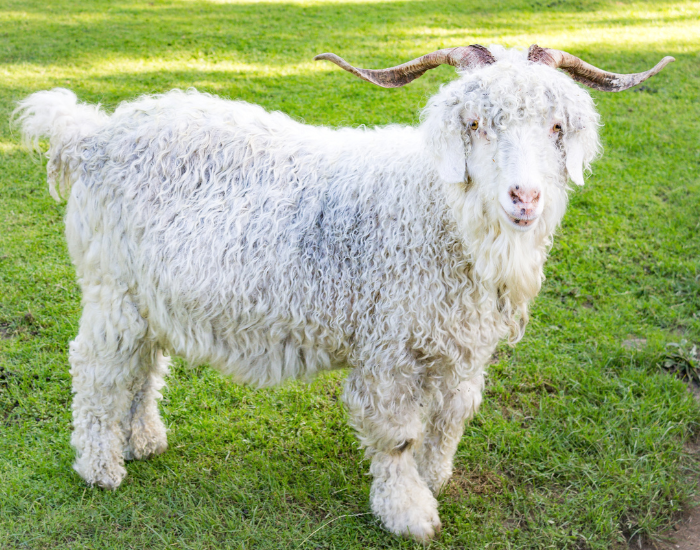
8. Angora Goat
Angora goats produce mohair — one of the most luxurious natural fibers in the world. Named for the Ankara region of Turkey where they originated over 2,400 years ago, these slender, elegant goats are covered head to body in long, lustrous ringlets of fine fiber. They are sheared twice per year, producing 5 to 10 pounds of mohair per fleece annually.
Mohair differs from wool in important ways. It is stronger, more elastic, and has a distinctive luster that wool cannot match. High-end fashion houses have used mohair for centuries in suits, scarves, and upholstery. When Europeans first encountered Angora goats in the 1550s through Dutch trade accounts, the fiber trade that followed changed textile markets permanently. Today, South Africa and Turkey remain the world’s largest mohair producers.
9. Cashmere Goat
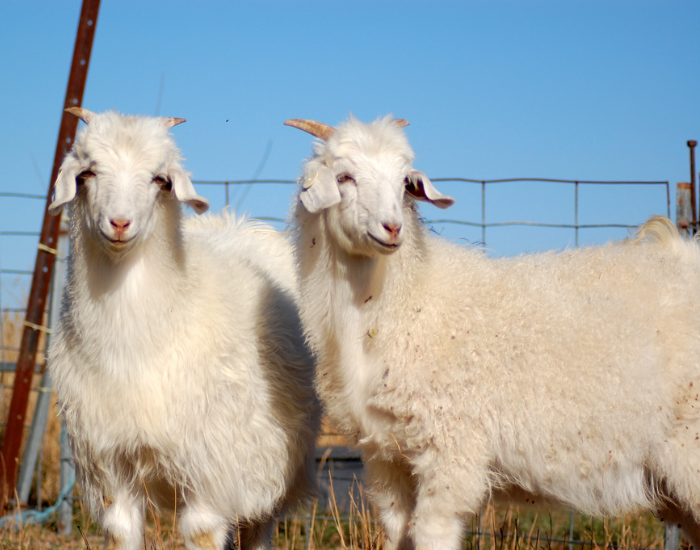
If Angora goats produce luxury, cashmere goats produce opulence. The cashmere fiber — grown as a fine, downy winter undercoat beneath coarser guard hair — measures just 14 to 19 micrometers in diameter. That is nearly twice as soft as human hair. A single cashmere goat produces only enough fiber for one sweater every few years, which explains why pure cashmere garments cost hundreds of dollars.
Cashmere goats originated in the Kashmir and Ladakh regions spanning India, Tibet, Nepal, and China. Unlike mohair, cashmere must be combed, not sheared — a labor-intensive process that adds to its cost. China produces roughly 60 percent of the world’s cashmere supply. I have always found it remarkable that an animal adapted to brutal Himalayan mountains produces the world’s softest textile. That contrast, rugged animal, impossibly delicate fiber — captures everything I love about the natural world.
10. Kiko Goat
The Kiko breed exists because two New Zealand farmers asked a radical question: what if we let natural selection do the breeding? In the 1980s, Garrick and Anne Batten crossed feral goats with Nubian, Saanen, and Toggenburg breeds, then subjected the offspring to harsh New Zealand hill country conditions with minimal human intervention. After four generations of ruthless selection, they closed the herd in 1986.
The result is a meat goat that practically raises itself. Kiko goats — named from the Māori word for “meat” — are also called low-input goats by farmers who appreciate that they require almost no supplementary feeding. They resist internal parasites better than most breeds. Does consistently produce two kids per year starting at age two. For farmers seeking low-input livestock, Kikos represent the dream scenario: maximum production, minimum management.
11. Fainting Goat (Capra hircus)
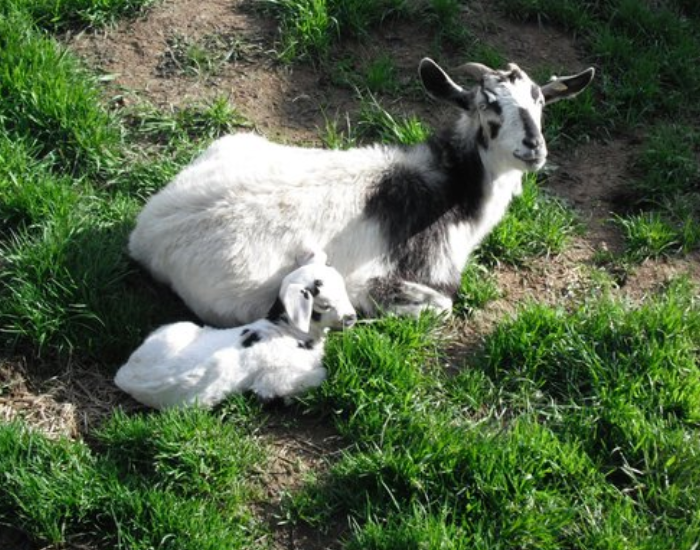
Fainting goats do not actually faint. The name comes from myotonia congenita, a genetic muscle condition that causes their muscles to stiffen when startled. The goat freezes, sometimes toppling over, then recovers within seconds. It looks dramatic on video. In reality, the goat remains fully conscious throughout.
A man named John Tinsley brought the original “stiff goats” to Tennessee from Nova Scotia in the 1880s. Farmers quickly noticed two things. First, the myotonia made these goats terrible fence climbers, a huge advantage for keeping livestock contained. Second, the same muscle condition gave them significantly more muscle mass per pound of body weight, making them exceptional meat goats. Today, fainting goats are raised across North America both for meat and as companion animals. They are also called Tennessee Meat goats, Wooden Leg goats, or simply Myotonic goats.
12. Mountain Goat (Oreamnos americanus)
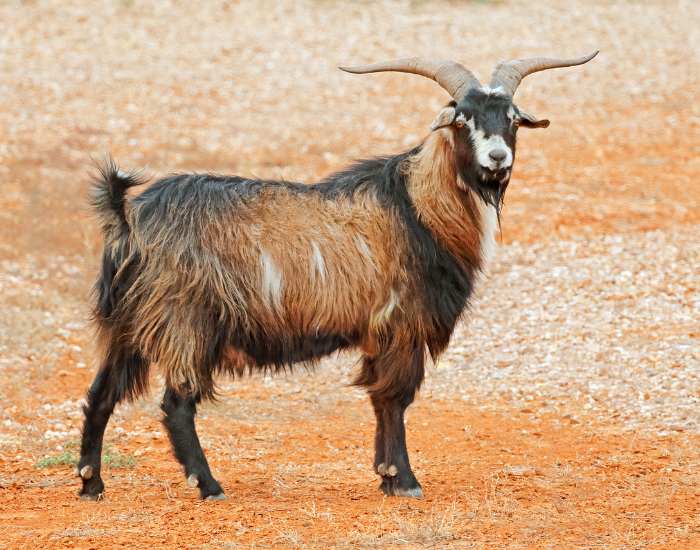
Now we leave the farm and head for the cliffs. The mountain goat (Oreamnos americanus) is not technically a true goat — it belongs to the genus Oreamnos, not Capra. But it looks like a goat, climbs like nothing else on earth, and earns its common name through sheer audacity.
Mountain goats inhabit the steepest, most punishing terrain in northwestern North America. From the Rocky Mountains through the Cascades into British Columbia, Alberta, and southeastern Alaska, these white-coated wild goats navigate near-vertical cliffs that would kill most mammals. Their secret? Specialized hooves with soft, spongy centers and sharp-edged rims, biological climbing shoes that grip bare rock at impossible angles. Both male and female goats carry short, black horns with yearly growth rings. Young mountain goats, called kids, can stand and walk within hours of birth on these treacherous mountain slopes.

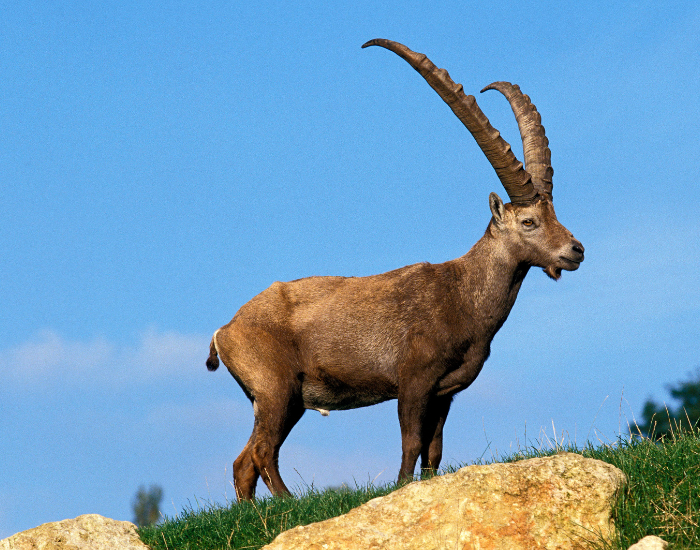
13. Alpine Ibex (Capra ibex)
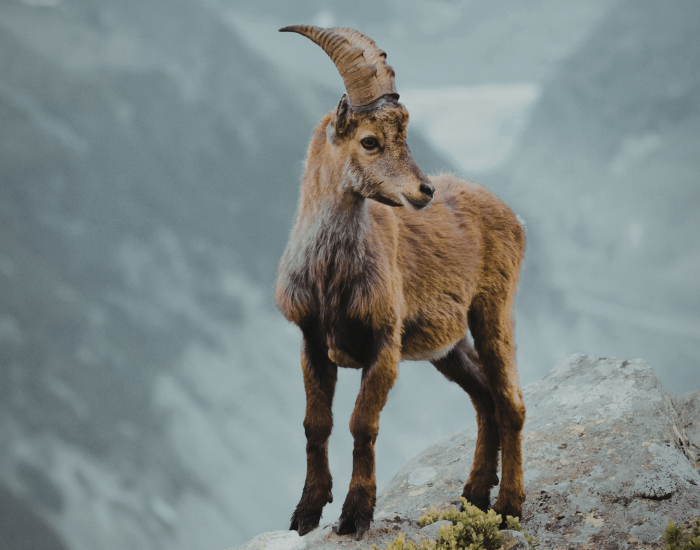
The Alpine ibex (Capra ibex) is one of conservation’s greatest comeback stories. By the early 19th century, hunting had driven this wild species of the genus Capra to near extinction. Fewer than 100 individuals survived in a single population in Gran Paradiso, Italy. Humans had wiped them from the rest of the Alps — their entire historical range across France, Switzerland, Austria, and Germany, leaving zero ibex across thousands of square kilometers of mountains.
Then came one of history’s most successful reintroduction programs. From that tiny Gran Paradiso remnant, conservationists bred and relocated ibex across the Alpine mountains over decades. Today, roughly 53,000 Alpine ibex roam the Alps. Adult males stand up to 101 centimeters at the withers and carry massive, ridged, backward-curving horns that can weigh up to 15 kilograms. Females are notably smaller, with shorter horns and lighter builds.
14. Markhor (Capra falconeri)
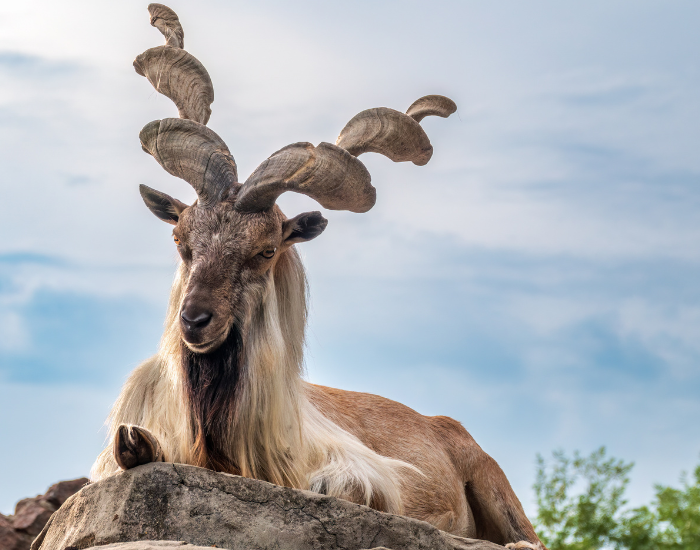
The markhor (Capra falconeri) is Pakistan’s national animal, and one look explains why. Males carry enormous corkscrew horns that spiral up to 160 centimeters long, the most spectacular goat’s horns in the natural world. The name itself comes from Persian, meaning “curly.” These wild goats inhabit the mountain regions where Central and South Asia meet, from Turkmenistan and Afghanistan through Pakistan and into India.
Markhors live at elevations between 600 and 3,600 meters in shrub forests of oak, pine, and juniper across some of the most rugged mountains on earth. Adult males carry those massive spiraling horns and develop thick, shaggy manes on their chests and necks during the mating season. Females are smaller, with shorter horns and reddish coats. They are currently listed as Near Threatened by the IUCN, with poaching remaining the primary threat.
Frequently Asked Questions About Goats
Over 300 recognized goat breeds exist worldwide, spanning dairy, meat, fiber, and dual-purpose categories. The domestic goat (Capra hircus) accounts for most breeds, while several wild species — including the mountain goat, Alpine ibex, and markhor — add further diversity to the goat family.
Goats are even-toed ungulates in the family Bovidae, making them closely related to sheep, cattle, and wild antelope. Within the subfamily Caprinae, domestic goats share the genus Capra with wild goats like the ibex and markhor. Sheep are their closest relatives — both are ruminants that share cud chewing, similar digestive systems, and overlapping ranges across mountains and grasslands worldwide.
Goats are browsers, not grazers. They prefer shrubs, weeds, and woody plants over grass. This makes them excellent at clearing invasive plant species and overgrown pastures. On farms, goats eat hay, grain, and forage. They are not the indiscriminate eaters of legend — goats do not actually eat tin cans. They do explore objects with their mouths, which fuels the myth.
Why Goats Deserve a Second Look
Next time you pass goats on a country road or spot mountain goats on a ridge, stop. Watch them. These are animals that shaped civilizations, fed armies, clothed royalty in cashmere and mohair, and still clear invasive plant species from landscapes no other livestock will touch. Young and old, wild and domesticated goats alike carry 10 millennia of shared history with humans in every step. If this list sparked your curiosity, check out our guides to types of crows, raven facts and types, and fascinating facts about donkeys — more everyday animals hiding extraordinary stories. Drop a comment below and tell me which goat breed surprised you most.
References:
Amills, M., Capote, J., & Tomàs, A. (2017). Goat domestication and breeding: A jigsaw of historical, biological and molecular data with missing pieces. Animal Genetics, 48(4), 422–441. https://doi.org/10.1111/age.12598
Brito, L. F., Kijas, J. W., Ventura, R. V., Sargolzaei, M., Porto-Neto, L. R., Cánovas, A., & Schenkel, F. S. (2017). Genetic diversity and signatures of selection in various goat breeds revealed by genome-wide SNP markers. BMC Genomics, 18(229), 1–20. https://doi.org/10.1186/s12864-017-3610-0
Bertolini, F., Servin, B., Talenti, A., et al. (2018). Signatures of selection and environmental adaptation across the goat genome post-domestication. Genetics Selection Evolution, 50, 57. https://doi.org/10.1186/s12711-018-0421-y
Colli, L., Milanesi, M., Vajana, E., et al. (2021). VarGoats project: A dataset of 1159 whole-genome sequences to dissect Capra hircus global diversity. Genetics Selection Evolution, 53, 81. https://doi.org/10.1186/s12711-021-00659-6
Daly, K. G., Mattiangeli, V., Hare, A. J., et al. (2018). Ancient goat genomes reveal mosaic domestication in the Fertile Crescent. Science, 361(6397), 85–88. https://doi.org/10.1126/science.aas9411
Guo, J., Zhong, J., Li, L., et al. (2024). Selection signatures and landscape genomics analysis to reveal climate adaptation of goat breeds. BMC Genomics, 25, 59. https://doi.org/10.1186/s12864-024-10334-x