The ocean is a master of the bizarre, and if you’ve been following us, you know we’ve already waded into some strange deep waters creatures. We’ve chased the shadows of giant squid, marveled at the nightmare-fuel glow of anglerfish, and recently obsessed over the color-shifting wizardry of cuttlefish. But even in a sea full of shape-shifters and bioluminescent wonders, one creature stands apart, less like a biological fluke and more like a mathematical dream. It doesn’t change color, it doesn’t have a backbone, and it’s been swimming through mass extinctions since before the first dinosaur took a breath. I’m talking about the nautilus.
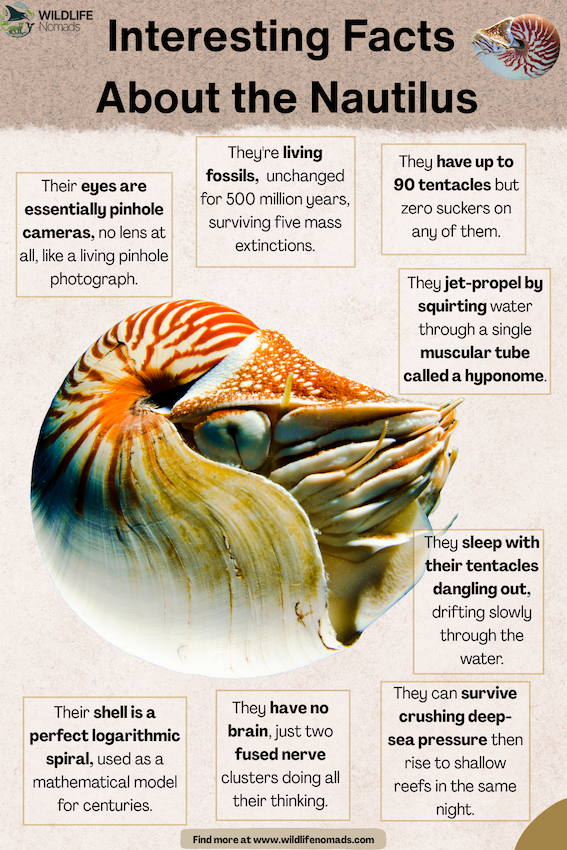
Nautiluses have survived five mass extinctions. While they were long thought to consist of only a handful of species, recent genomic work has redrawn the map. Nine species are now recognised across two genera, Nautilus and Allonautilus, and even that count is argued over. When the asteroids took out the dinosaurs, the nautiluses just kept swimming. Today, we’re going to dive into the bizarre biology, the spiral geometry, and the urgent conservation efforts needed to keep these ancient sailors in our oceans.
1. They are the “Old Souls” of the Cephalopod World
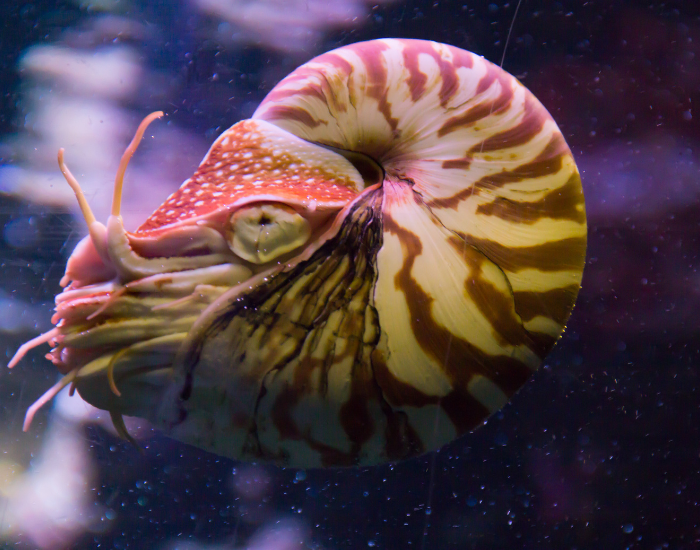
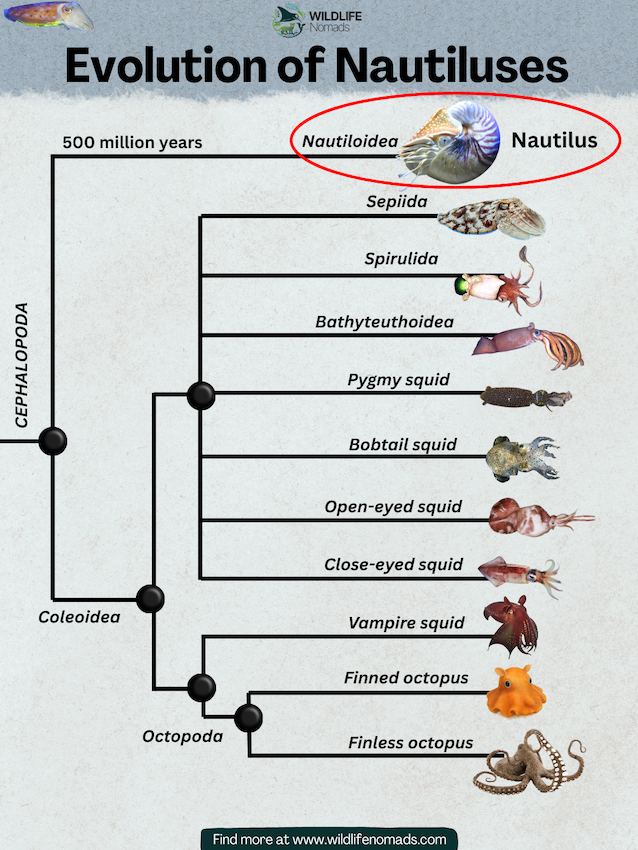
When we talk about cephalopods, we usually think of the hyper-intelligent, short-lived, and soft-bodied octopuses, squid, and cuttlefish. But nautiluses are the outliers. Compared to other cephalopods, nautiluses stand out for their external shell and much longer lifespan. While a giant Pacific octopus might live only 3-5 years, the nautilus age can reach over 20 years.
They are the only living cephalopods to retain a true external shell. To me, they represent a bridge to a prehistoric world; they haven’t changed much in nearly 500 million years. This is why they are often called a living fossil, a term that always sparks a bit of a debate among my biology peers (technically, they have evolved, just very slowly). Nautiluses belong to the molluscs, one of the biggest phyla in my interactive tree of life.
2. A Masterclass in Geometry: The Chambered Shell
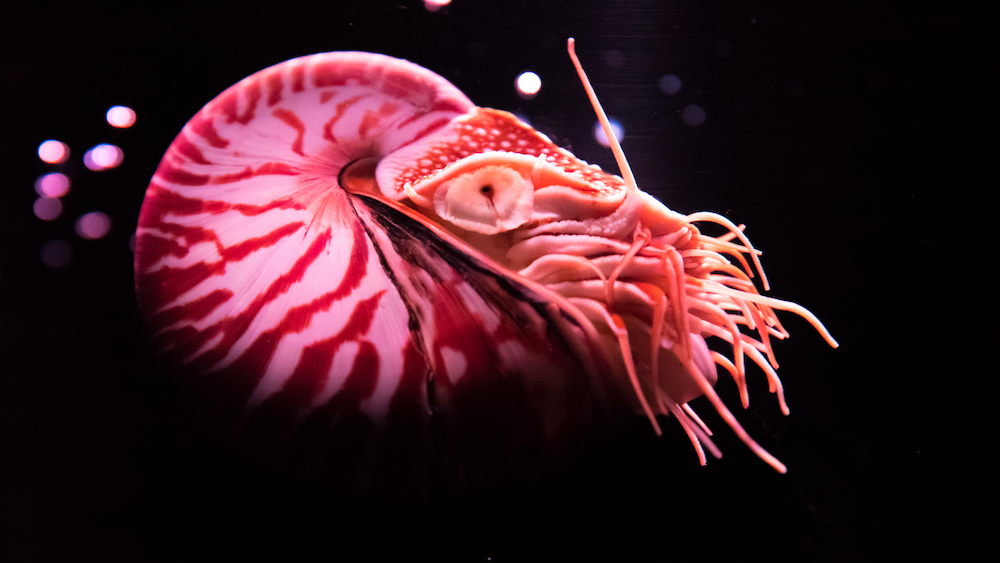
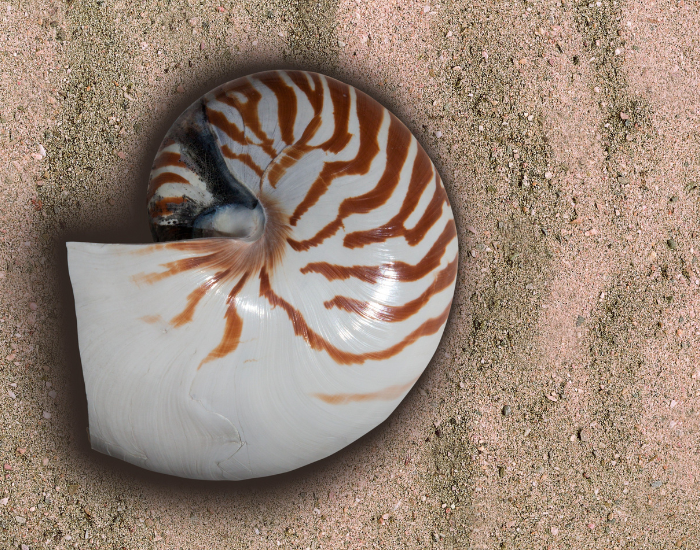
The most iconic feature of this animal is the nautilus chambered shell. It’s not just a house; it’s a sophisticated buoyancy device. As nautiluses grow, they create new, larger chambers and move their soft bodies into the outermost chamber. They leave behind a tube called a siphuncle that runs through all the shell chambers.
By using this tube, the nautilus pumps fluids and gases in and out of the sealed rooms to control its buoyancy. It’s essentially a biological submarine. The shell diameter of nautiluses can reach up to 25 centimeters, and this large shell diameter is a key factor in species identification and helps maintain their buoyancy in the water.
3. Jet Propulsion and the “Nautilus Wobble”
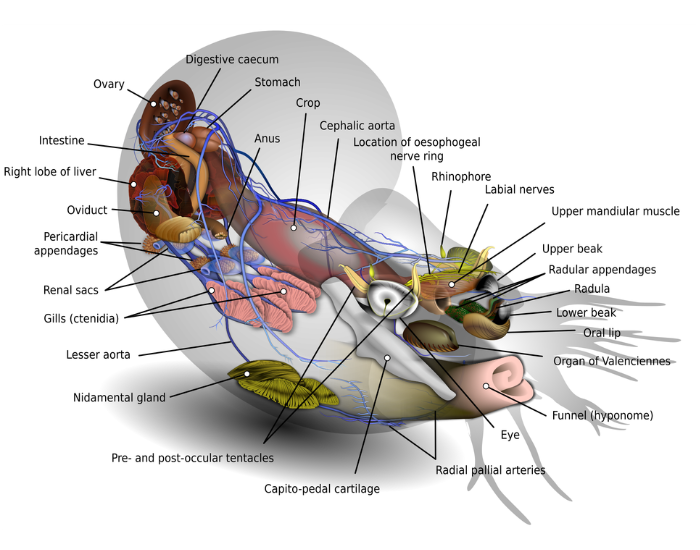
Unlike squid, which can dart past you at lightning speed, nautiluses move with a charming, rhythmic wobble. They use jet propulsion, drawing water into their mantle cavity and expelling it through a funnel to move through the water column.
This method isn’t the fastest. However, it is incredibly efficient for a scavenger navigating nutrient-poor depths. Low mobility is a feature here, not a flaw. Nautiluses have spent millions of years perfecting the art of spending as little energy as possible.
4. They Have Over 90 Tentacles (And No Suckers!)
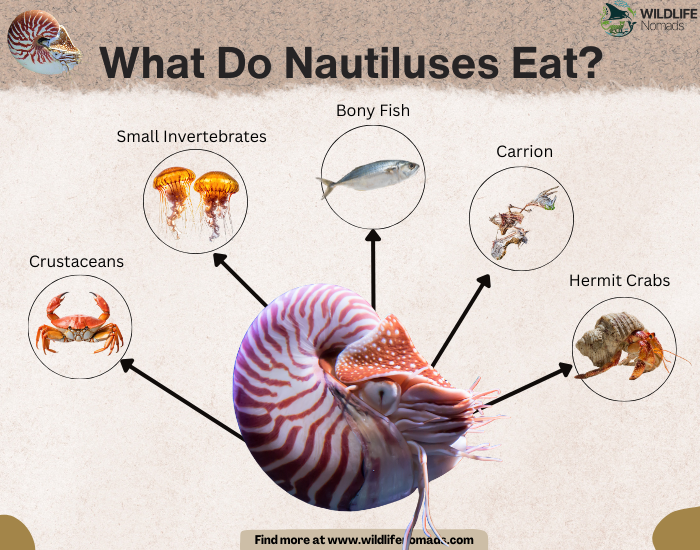
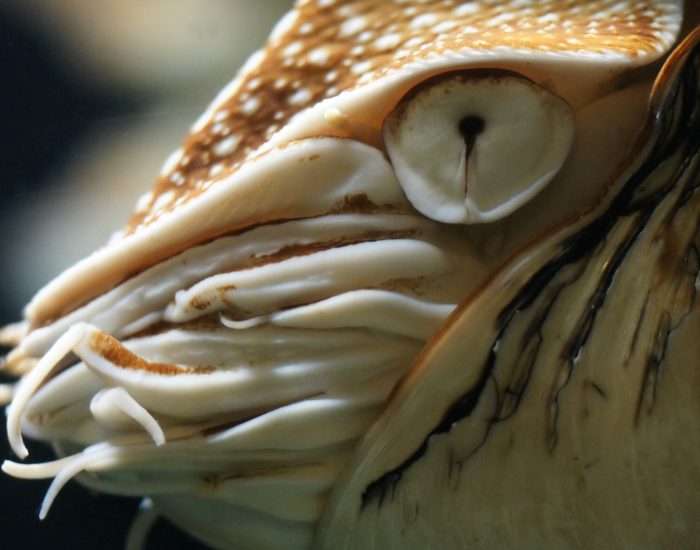
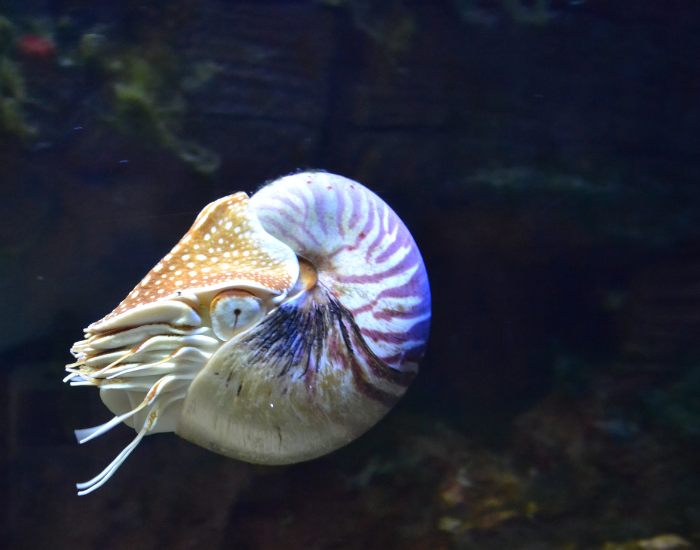
If you look closely at a chambered nautilus, you’ll notice they don’t have the eight or ten arms we expect. Instead, they have upwards of 90 small tentacles. Interestingly, these tentacles lack the suckers found on octopuses. Instead, they are coated with a sticky secretion that helps them grip their food, which mostly consists of crustaceans and bony fish they scavenge along the sea floor.
5. Their Eyes are Like Ancient Cameras
Here’s a fact that delights every biologist I know: nautiluses have eyes that function exactly like a pinhole camera. They lack a lens to focus light. Instead, they use a simple hole that lets light in, producing blurry but functional vision.
Their eyesight isn’t sharp, they do not have the best sense of sight. However, it is perfectly adapted for detecting movement and shadows in the shallower depths or the dark twilight zone where they spend their days. Most cephalopods have evolved highly complex eyes, yet nautiluses never needed to, their ancient design still works.
6. Where Are Nautiluses Found?
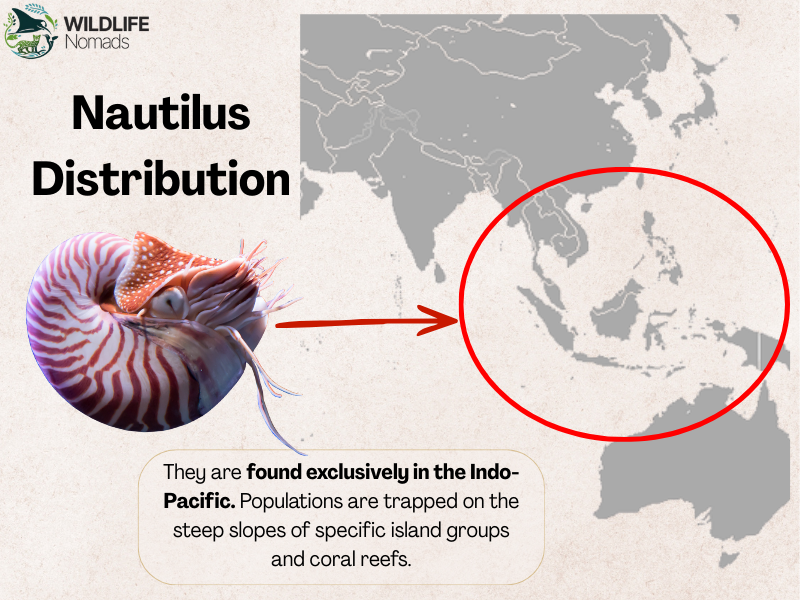
If you want to find nautiluses, head to the Western Pacific Ocean and the Indo-Pacific region. Their habitat is tied to the steep slopes of coral reefs near places like the Philippines, Fiji, Vanuatu, Papua New Guinea, and Australia’s Great Barrier Reef.
Because nautiluses cannot cross deep ocean trenches, the pressure would implode their shells, populations remain isolated. This isolation drives the evolution of distinct nautilus species across the South Pacific. In addition, it makes each population especially vulnerable to local overfishing.
7. They are Deep-Sea Commuters
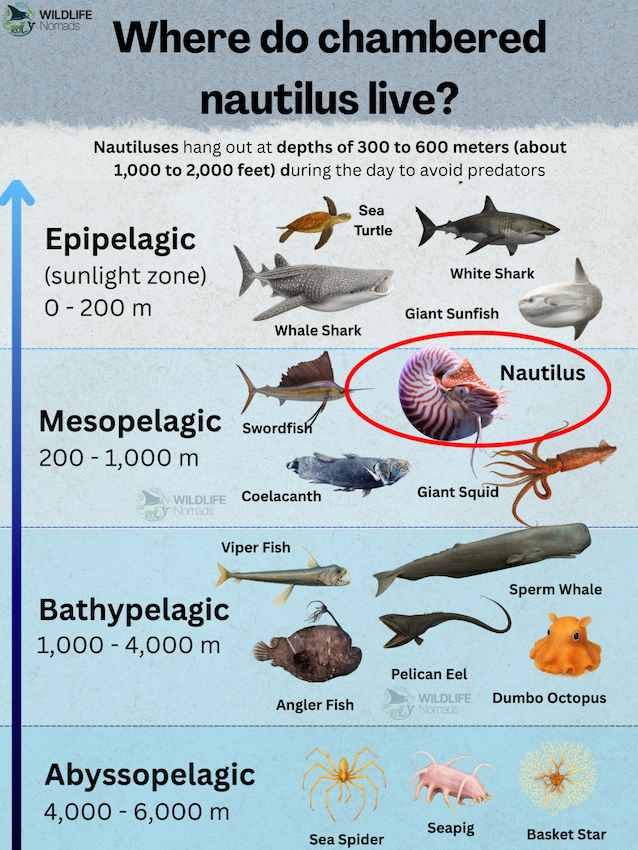
Where do chambered nautilus live? The chambered nautilus floats at about 300 (about 1,000 to 2,000 feet) in my deep sea dive, not far above the depth where its shell would implode. During the day to avoid predators like sharks, octopuses and large fish. However, at night, they undergo a “vertical migration,” rising to shallower depths to hunt.
Nautiluses are slow-moving predators and play a crucial role as scavengers in their ecosystem. But they have a “crush depth”, if they go below about 800 meters, their beautiful shells would implode.
8. Slow Growth and Late Maturity
This is the part that worries me as a biologist. Most animals in the ocean reproduce quickly. Not the nautilus. Nautiluses grow slowly and reach sexual maturity somewhere between ten and fifteen years old. When they finally do, the female lays a single large egg at a time. Nobody has yet counted how many one wild female produces in a year. Captive animals have managed anywhere from none to three a month, and each egg then develops for ten to fourteen months before hatching.
Unlike most cephalopods, nautiluses do not have a larval stage; the young develop inside the egg and emerge fully formed. Nautiluses reproduce via internal fertilization, where males transfer sperm to females using specialized tentacles. This “low-and-slow” life history characteristics, including slow growth, low reproductive rates, late maturity, and low mobility, make chambered nautiluses incredibly vulnerable to overfishing.
9. The Threat of the “Lustrous Coil”
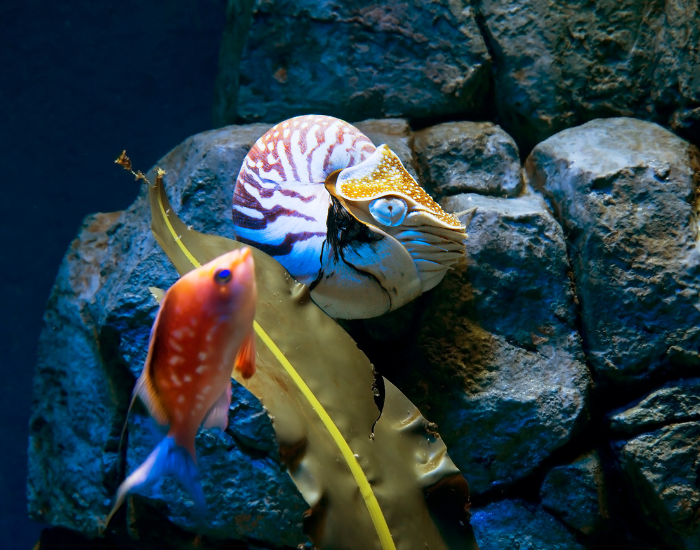
The biggest threat facing nautiluses isn’t a natural predator. It is the international trade in their shells. The lustrous coil of a polished nautilus shell commands high prices in jewellery markets and home décor. However, that beauty comes at a steep cost.
Commercial harvest has gutted whole populations. In the Tañon Strait, trap yields fell by about 97% between 1971 and 1987, and the fishery there is now considered commercially extinct. Four municipalities in Palawan recorded declines of 70 to 94% in under twenty years.
10. There are More Species Than We Thought
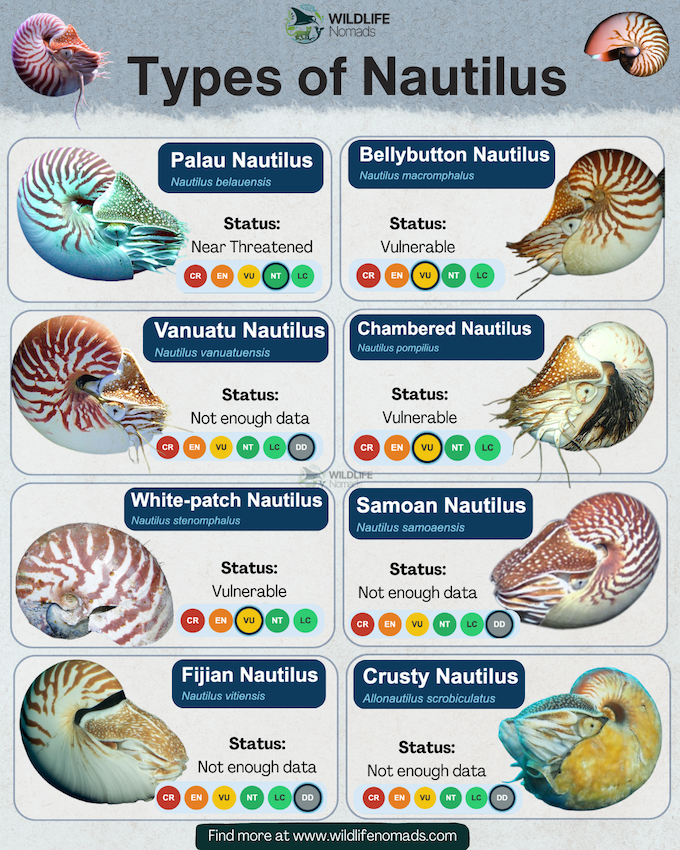
For decades, scientists believed there were only one or two nautilus species. However, recent genetic research has revealed surprising diversity. Today, researchers recognise several species of nautilus across two genera: Nautilus and Allonautilus.
The most studied is Nautilus pompilius, the nautilus scientific name for the common chambered nautilus. In 2023, researchers described three more species from the Coral Sea and South Pacific. The ocean still keeps secrets, even now. Each population tends to evolve on its own, because no nautilus can cross a deep trench to reach the next reef.
11. Conservation Efforts Are Finally Catching Up
Are nautiluses endangered? The answer is complex. In 2018, NOAA Fisheries listed Nautilus pompilius as a threatened species under the Endangered Species Act. Furthermore, all nautilid species are now listed under CITES Appendix II, meaning international trade requires a permit.
These conservation efforts represent a turning point. However, enforcement remains patchy, and nautilus populations in heavily fished areas continue to decline.
12. Success in Captivity: The Monterey Bay Aquarium
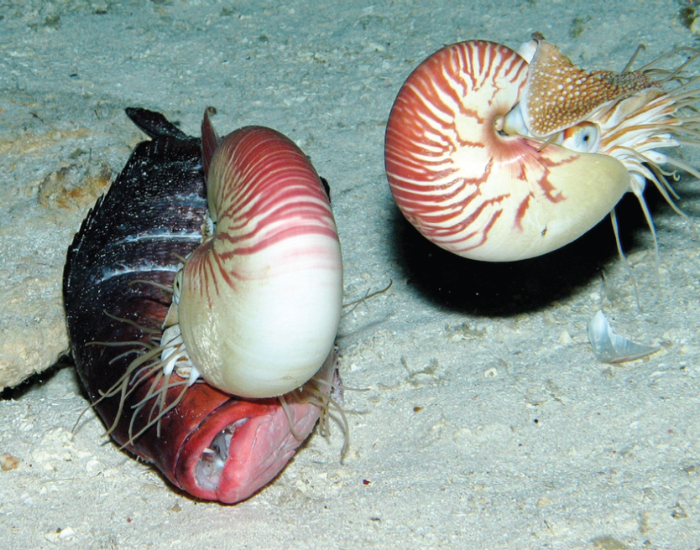
Breeding these animals is notoriously difficult. The Waikīkī Aquarium in Honolulu got there first, under Bruce Carlson, becoming the first institution anywhere to produce viable nautilus embryos. Aquarists found the first embryo in 1985 and hatched the first young in 1988. That work let scientists watch internal fertilisation and development directly, which no one can do on a reef slope at 300 metres.
FAQ: Your Nautilus Questions Answered
While there isn’t a global headcount, we know they are in trouble. In some heavily fished areas, they have nearly disappeared. This is why the NOAA Fisheries and global conservation efforts are so focused on regulating the shell trade.
They typically stay between 1,000 and 2,000 feet during the day. If they go deeper than 2,600 feet, their shells will collapse under the pressure.
They are currently listed as threatened under the Endangered Species Act (ESA) and protected under CITES Appendix II. While not yet “endangered” globally, they are on the path toward it if shell harvesting isn’t controlled.
They are the “garbage collectors” of the reef, eating dead fish, crustaceans, and occasionally small bony fish.
Closing the Last Chamber
As a biologist, I’ve seen what happens when we value a “product” more than a living system. The nautilus has survived five mass extinctions, let’s not make the “sixth extinction” their last. Their external shell is a marvel of nature, but it belongs on a living animal at the bottom of the Western Pacific Ocean, not on a dusty shelf in a gift shop.
Just as the nautilus builds its spiral shell, leaving behind each chamber as it grows, we too can strive to build our own ‘new temple’, a symbol of progress and enlightenment, by leaving behind old limitations and making choices that protect the natural world.
Wildlife Nomads Challenge
The Crush Depth Challenge
Ten questions on the last shelled cephalopod on Earth. Instant feedback after every answer.
References
Barord, G. J., Combosch, D. J., Giribet, G., Landman, N., Lemer, S., Veloso, J., & Ward, P. D. (2023). Three new species of Nautilus Linnaeus, 1758 (Mollusca, Cephalopoda) from the Coral Sea and South Pacific. ZooKeys, 1143, 51–69. https://doi.org/10.3897/zookeys.1143.84427
Convention on International Trade in Endangered Species (CITES). (2016). Consideration of proposals for amendment of Appendices I and II: Inclusion of the family Nautilidae in Appendix II (CoP17 Prop. 48 Rev. 1). CITES Secretariat. https://cites.org/sites/default/files/eng/cop/17/prop/060216/E-CoP17-Prop-48%20Rev.pdf
Dunstan, A. J., Ward, P. D., & Marshall, N. J. (2011). Vertical distribution and migration patterns of Nautilus pompilius. PLOS ONE, 6(2), e16311. https://doi.org/10.1371/journal.pone.0016311
Landman, N. H., Cochran, J. K., & Saunders, W. B. (2010). Growth and longevity of Nautilus. In W. B. Saunders & N. H. Landman (Eds.), Nautilus: The biology and paleobiology of a living fossil (pp. 401–420). Springer Netherlands. https://doi.org/10.1007/978-90-481-3299-7
Neil, T. R., & Askew, G. N. (2018). Swimming mechanics and propulsive efficiency in the chambered nautilus. Royal Society open science, 5(2), 170467. https://doi.org/10.1098/rsos.170467
NOAA Fisheries. (2018). Endangered Species Act status review report: Chambered nautilus (Nautilus pompilius). U.S. Department of Commerce, National Oceanic and Atmospheric Administration. https://www.fisheries.noaa.gov/
Ward, P. D., Dooley, F., & Barord, G. J. (2016). Nautilus: Biology, systematics, and paleobiology as viewed from 2015. Swiss Journal of Palaeontology, 135, 169–185. https://doi.org/10.1007/s13358-016-0112-7