I still remember the first time I came face-to-face with a male peacock at a local zoo. I wasn’t in the African rain forests or the forested interior of India; I was about seven years old. To a kid, that bright blue head, the massive, looming peacock’s train, and the distinctive bare patches of skin on its face felt like an alien encounter. I was terrified! They seemed so big, so loud, and, let’s be honest, a bit judgmental.
Years later, as a biologist traveling to observe wild peafowl in their native habitats, that fear turned into pure clinical fascination. We often see them as “garden ornaments,” but these birds are masters of evolutionary engineering. Whether it’s the Indian peacock (Pavo cristatus) or the elusive Congo peacock, there is a deep complexity behind those shining eyes.
If you’ve ever wondered where do peacocks come from or any other random question about they, you’re in the right place. Let’s unpack the secrets of the pheasant family and see what makes these birds the true royalty of the avian world.
1. Peacocks vs. Peafowl: What’s in a Name?
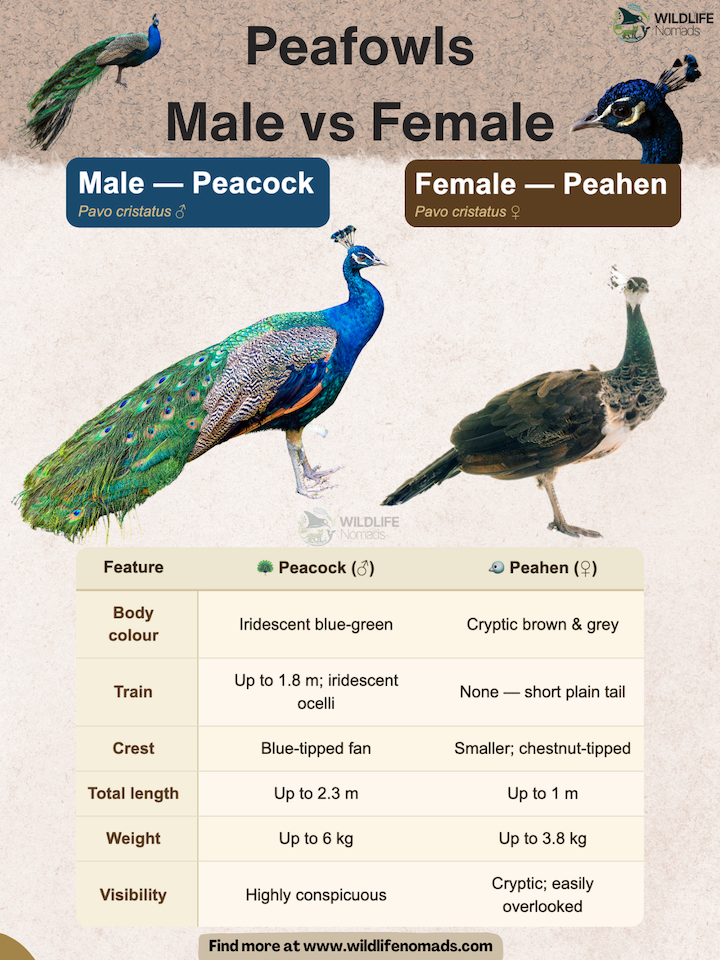
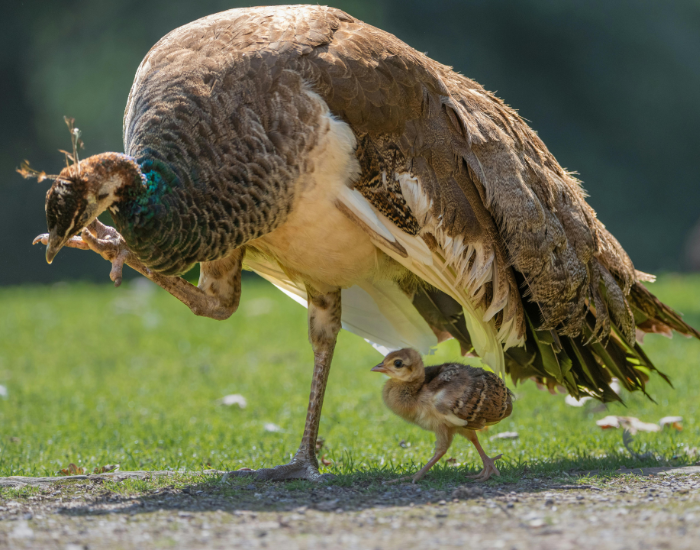
One of the most common mistakes I hear (even from fellow scientists in a rush!) is calling every bird in this family a “peacock.” In reality, peacock refers only to the male. Males are called peacocks. The females are peahens, and together, they are peafowl. When they have babies, those adorable balls of fluff are peachicks.
The common peafowl most of us know is the Indian blue peafowl. In my fieldwork, I’ve found that using the correct terminology helps us understand their dimorphism. The male peafowl is known for his elaborate train and iridescent plumage, while the Indian peahen has duller, less vibrant plumage compared to the male. The male needs to be seen, while the female needs to disappear.
2. They Are Actually Heavy-Duty Forest Dwellers
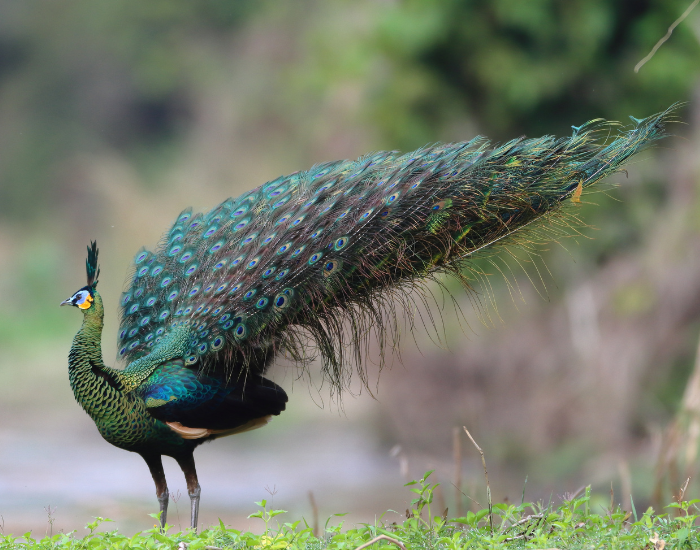
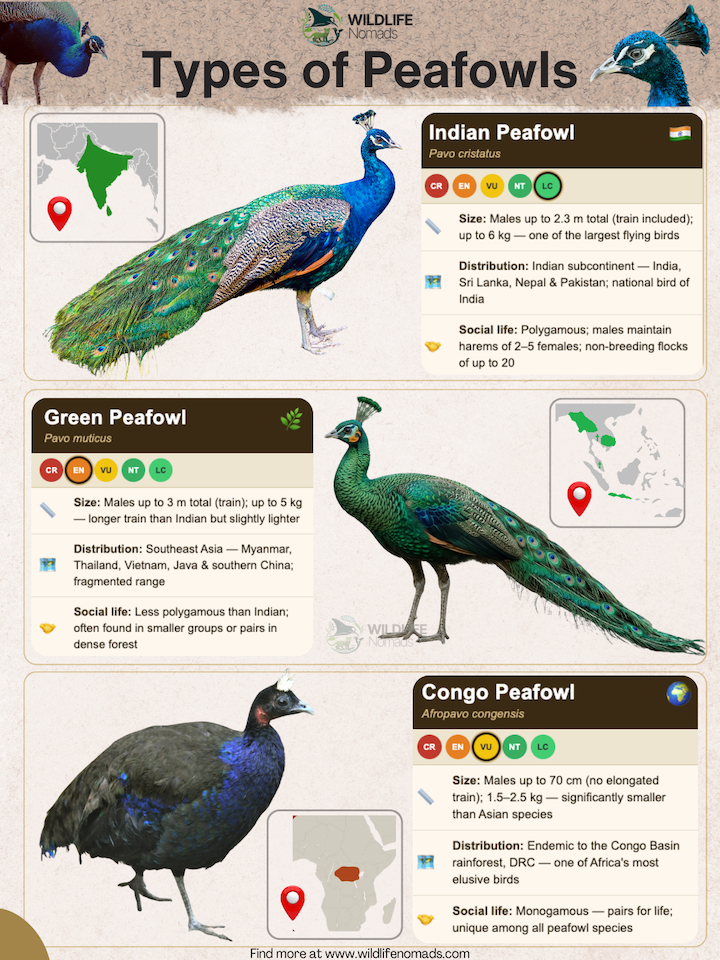
So, where does peacock live? While we see domesticated peafowl in parks, their native habitats are the large, deciduous forests of Asia and Africa. The Indian peacock is native to South Asia, while the green peacock (Pavo muticus) thrives in Southeast Asia. These are the two most recognizable species of peafowl, known for their vivid plumage and elaborate breeding displays. Both the blue peacock and green peacock inhabit open lowland forests, as well as farms and agricultural fields.
Then there is the outlier: the Congo peafowl (Afropavo congensis). This is the only African species of the group. Unlike their flashy cousins, they stay hidden in the forested interior of the Democratic Republic of Congo. I’ve always found it fascinating how the two asiatic species evolved such massive trains, while the African species kept things much more low-key to navigate dense jungles.
3. That “Tail” Isn’t Actually a Tail
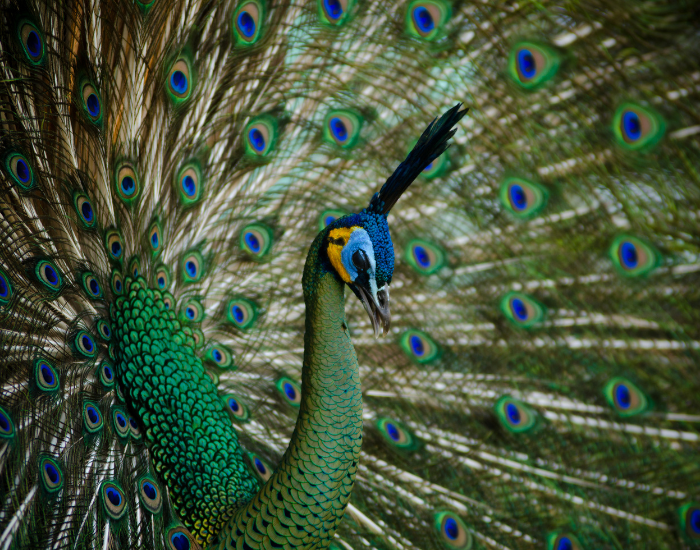
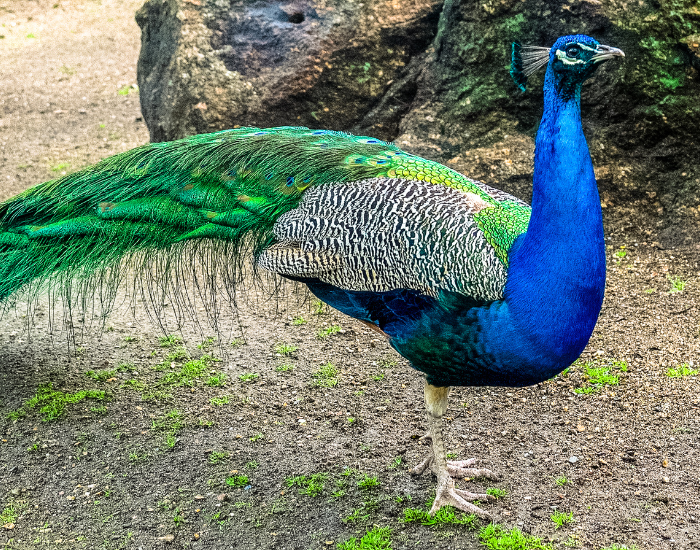
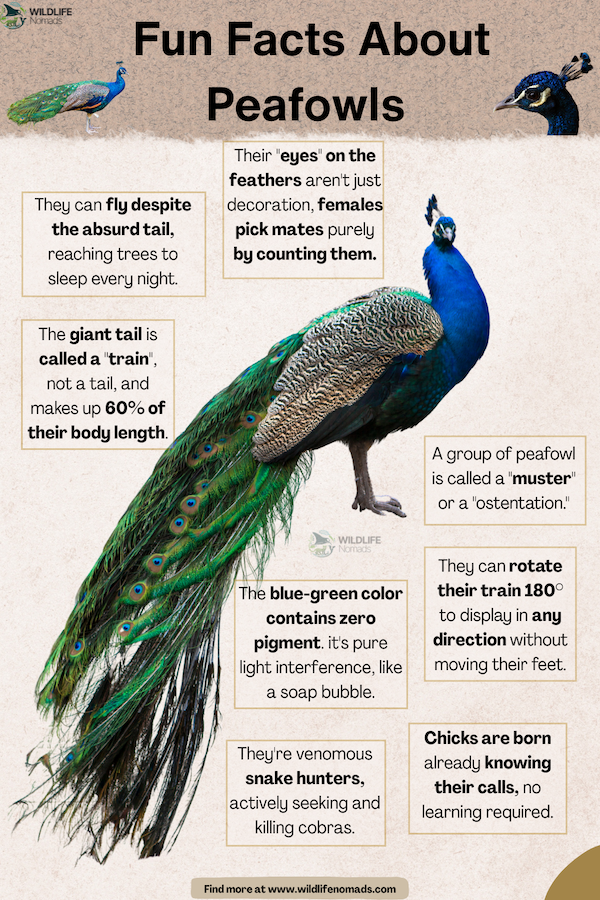
This fact is one of the most surprising ones, a peacock’s tail feathers aren’t actually his tail. The stiff feathers that make up the “train” are actually highly elongated upper tail coverts. The true tail feathers are shorter, stiffer feathers located underneath, which act as a structural support to hold the train up during peacock displays.
During the breeding season, a male will grow these long feathers to incredible lengths—sometimes over 5 feet! Watching a male peacock lift that weight for the first time in the spring is a masterclass in avian strength.

4. The Physics of the “Feathers Shimmy”
Have you ever seen a peacock’s colors dance? It’s called the “train-rattling” or feathers shimmy. When a male wants to attract females, he vibrates his feathers at a specific frequency (about 22-30 Hz). This creates a shimmering effect and a low-frequency sound humans can barely hear, but female peafowl feel it through their crests, which act as sensory antennas.
This isn’t just for show; it’s a high-stakes courtship display. The peahen’s colors are drab (browns and creams) because she is the one doing the judging. She’s looking for the most iridescent feathers and the most symmetrical scale pattern in the eyespots. Male peafowl develop their mature coloring over time, with young males beginning to show colorful feathers around three months of age and reaching full sexual maturity, including their full train and vibrant colors, at three years.
5. They Are the National Bird of India
In 1963, the Government of India declared the Indian peacock its national bird. The choice goes far beyond beauty. In Rajasthan and across rural South Asia, wild peafowl live alongside villages in genuine ecological harmony. They function as ground feeders that consume insects, locusts, and small reptiles, including young cobras.
In this sense, peafowl serve as a natural form of pest management. They are the neighbourhood watch that most farmers are genuinely happy to have around.
6. Can Peacocks Fly?
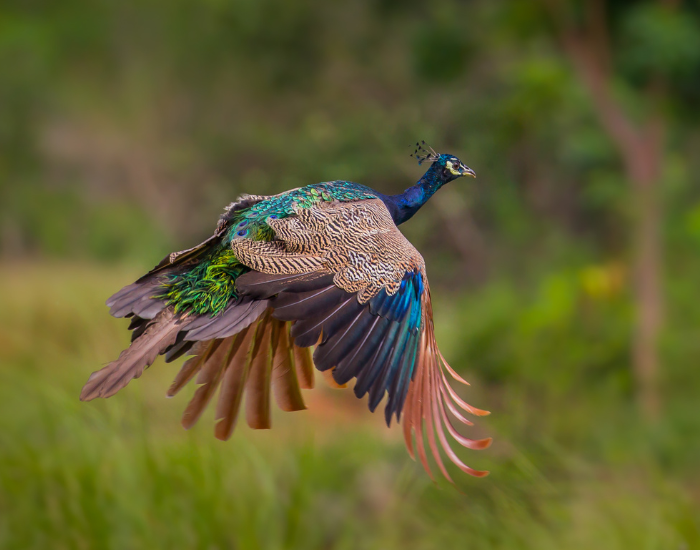
Yes, they absolutely do! Despite having a train length that seems impossible to manage, they are quite capable of flight. However, they are ground feeders, so they only fly to escape jungle cats like the bengal tiger, or to roost in trees for the night.
Seeing a male peacock in full flight is one of the most surreal sights in nature. It looks like a glittering blue comet trailing a massive golden cape through the canopy.
7. There Are Three Distinct Species
While the Indian blue peafowl is the most recognizable, there are actually three species of peafowl:
- Indian Peafowl (Pavo cristatus): The iconic blue bird.
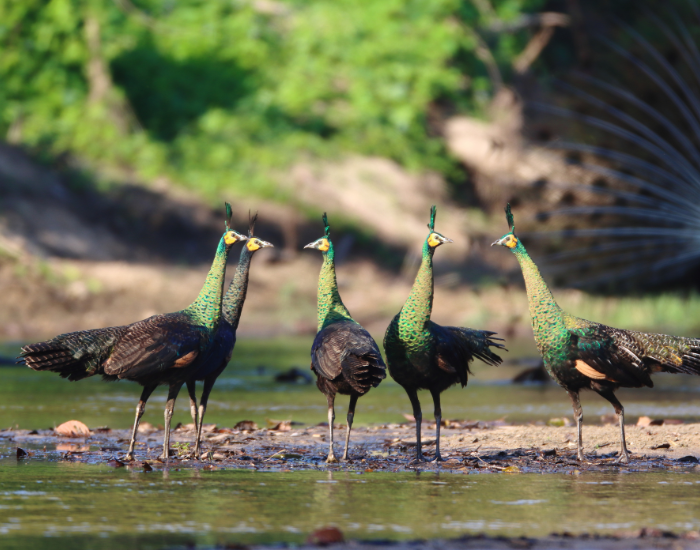
- Green Peafowl (Pavo muticus): A taller, sleeker bird with metallic and light green scales and feathers on its head and neck.
- Congo Peafowl (Afropavo congensis): The shy African relative.
The green peacock faces serious conservation pressures. Habitat loss, hunting, and the illegal wildlife trade have fragmented its population across Southeast Asia. Some populations in India, Bangladesh, and Malaysia are already considered locally extinct.
Conservation efforts now focus on protected areas such as Huai Kha Khaeng Wildlife Sanctuary in Thailand and Cat Tien National Park in Vietnam. China’s 2020 Yunnan Green Peafowl case — where courts halted a hydropower project to protect a breeding population — marked a landmark moment in proactive wildlife litigation.
8. White Peacocks Aren’t Albinos
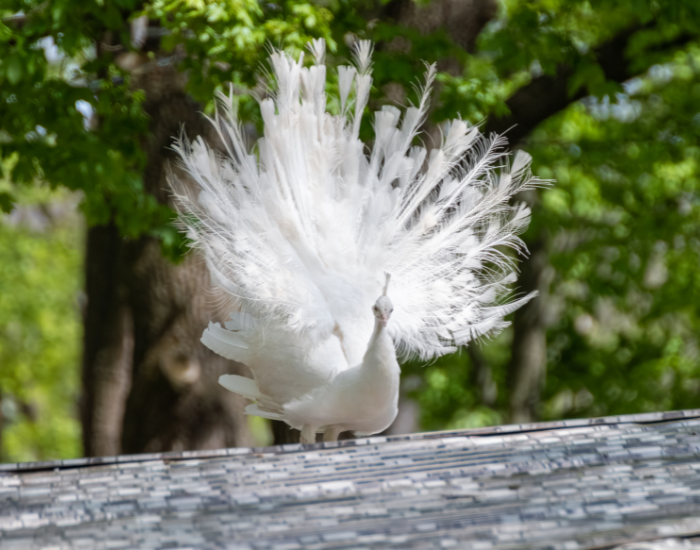
You might have seen a stunning white peacock and thought it was an albino. Well, actually, most white peacocks are leucistic rather than true albinos”. This is one of several genetic color mutations where the bird lacks pigment in its feathers but still has shining eyes with color.
In the wild, a white bird wouldn’t last long—they are basically a neon “eat me” sign for jungle cats and other small creatures that hunt them. But in domesticated peafowl populations, these genetic color mutations are highly prized.
9. They Are Loud (And Have Many Calls)
If you have ever lived near a zoo, you know the male calls all too well. During mating season, peacocks produce a loud, piercing call that carries across forest and suburb alike. Research documents at least 11 distinct vocalisations.
One of the most memorable mating rituals involves a behaviour called the “hoot-dash,” where the male lets out a loud call and sprints toward a female. It is aggressive, flashy, and — according to field observations — surprisingly effective.
10. They Grow Up Slowly
How long do peacocks live? In the wild, typically 10–25 years. In captivity, with no predators and reliable food, they can reach 30 years or more. However, they do not acquire their mature colouring quickly. Male and female peachicks look identical for the first year — all dull brown and fluffy — to avoid attracting predators.
It takes approximately three years for a male to develop his full, vivid plumage. In nature, beauty is a long-term investment. The train continues to grow and improve through the first several years of a male’s life.
11. They Are Incredible Snake Hunters
Do not let the iridescent feathers mislead you — these birds are formidably tough. As omnivorous ground feeders, peafowl consume insects, seeds, fruit, and small reptiles. They are particularly well known for hunting venomous snakes, using their large wings as shields and their powerful beaks to deliver the decisive strike.
This behaviour is part of what makes wild peafowl genuinely valuable to the communities they share land with. Cobras and other venomous snakes do not last long around a healthy peacock.
12. The Mystery of the Eyespots (Ocelli)
Each peacock’s train contains roughly 100 – 150 eyespots, or ocelli. Darwin cited them as a primary example of sexual selection, and he was correct. What matters to the peahen is not simply the number of eyespots. She evaluates the overall shimmer created when the male performs his train-rattling display.
If a male is sick or nutritionally stressed, his peacock’s colours appear dull. The feathers arranged across the train lose their optical coherence. Therefore, the display reliably signals health and genetic fitness to watching females — which is exactly what Darwin predicted, even if the precise biomechanics took over 150 years to confirm.
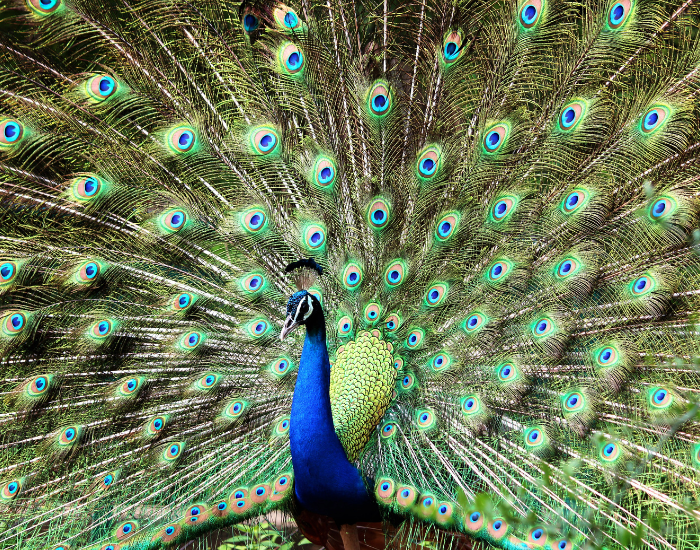
What Do Peacocks Eat? Diet and Foraging Secrets
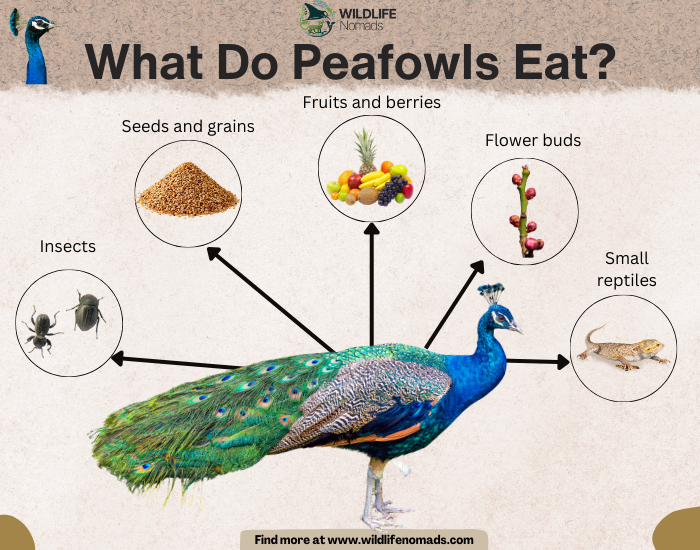
If you’ve ever watched a group of blue peafowl or green peafowl strutting through the undergrowth, you’ll notice they’re almost always busy foraging. As classic ground feeders, peafowl have a surprisingly varied diet that reflects their adaptability and intelligence. In the wild, these birds are true omnivores: they’ll peck at seeds, grains, and fallen fruits, but they’re just as likely to snap up a passing beetle or cricket. Their sharp beaks and strong legs are perfect tools for scratching through leaf litter in search of edible roots, tubers, and hidden insects.
FAQ: Your Top Peacock Questions Answered
Most peafowl species are native to Asia (India, Sri Lanka, Myanmar, Java) and the African rain forests (Congo).
Technically, yes! “Peacock” is the term for the male. The females are called peahens.
In healthy native habitats, they live about 15-20 years. In captivity, with no predators, they can reach 30+ years.
They are omnivores. They eat insects, grains, small reptiles. Peahens lay tan eggs, which are light green or tan in color to help camouflage them during incubation.
Yes! Every year after the breeding season, they undergo a molt and lose their entire train. It grows back in time for the next mating season.
Nature’s Most Flashy Engineer
As a biologist, I always encourage people to look past the surface. These birds are more than just a very flashy plumage; they are indicators of forest health. If you ever get the chance to see them in the wild, take a moment to listen to the male calls and watch the way those feathers shimmy. It is one of nature’s greatest shows.
References:
Dakin, R., & Montgomerie, R. (2009). Peacocks Orient Their Courtship Displays towards the Sun. Behavioral Ecology and Sociobiology, 63(6), 825–834. http://www.jstor.org/stable/40295406
Dakin, R., McCrossan, O., Hare, J. F., Montgomerie, R., & Kane, S. A. (2016). Biomechanics of the peacock’s display: How feather structure and resonance influence multimodal signaling. PLOS ONE, 11(4), e0152759. https://doi.org/10.1371/journal.pone.0152759
Kane, S. A., Van Beveren, D., & Dakin, R. (2018). Biomechanics of the peafowl’s crest reveals frequencies tuned to social displays. PLOS ONE, 13(11), e0207247. https://doi.org/10.1371/journal.pone.0207247
Loyau, A., Saint Jalme, M., Cagniant, C., & Sorci, G. (2005). Multiple sexual advertisements honestly reflect health status in peacocks (Pavo cristatus). Behavioral Ecology and Sociobiology, 58, 552–557. https://doi.org/10.1007/s00265-005-0958-y
Takahashi, M., Arita, H., Hiraiwa-Hasegawa, M., & Hasegawa, T. (2008). Peahens do not prefer peacocks with more elaborate trains. Animal Behaviour, 75(4), 1209–1219. https://doi.org/10.1016/j.anbehav.2007.10.004
BirdLife International. (2018). Pavo muticus. The IUCN Red List of Threatened Species 2018: e.T22679440A131749282. https://doi.org/10.2305/IUCN.UK.2018-2.RLTS.T22679440A131749282.en
Sukumal, N., McGowan, P. J. K., & Savini, T. (2015). Change in status of green peafowl Pavo muticus (Family Phasianidae) in Southcentral Vietnam: A comparison over 15 years. Global Ecology and Conservation, 3, 11–19. https://doi.org/10.1016/j.gecco.2014.10.007
Yan, M., Gu, B., Zhang, M., Wang, W., Quan, R., Li, J., & Li, J. (2021). The range contraction and future conservation of green peafowl (Pavo muticus) in China. Sustainability, 13(21), 11723. https://doi.org/10.3390/su132111723