
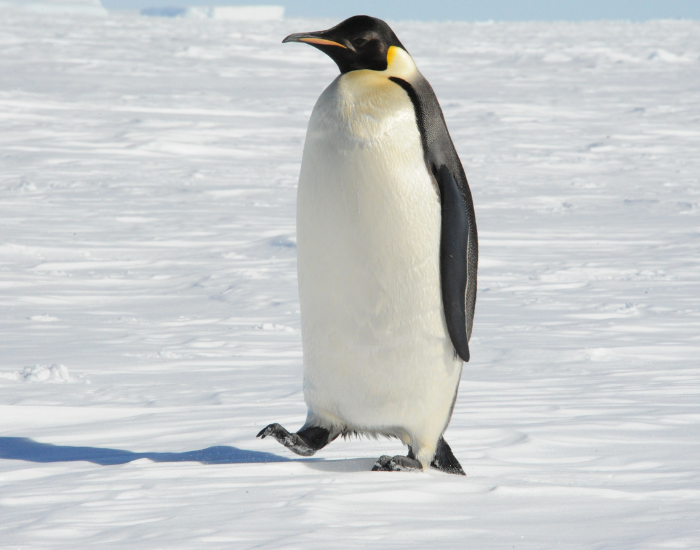
I’m sure you’ve seen the video. You know the one, a lone emperor penguin waddling across a vast, monochromatic expanse of white, seemingly deep in thought, walking toward an unknown horizon. It went viral because, in our busy human lives, we found it relatable. It looked like a nomad. Just like us.
The Wildlife Nomads team have spent years chasing that same feeling of wonder. We’ve been lucky enough to spot some penguins species, for example the tiny, frantic little penguin in Australia and the surprisingly heat-tolerant Galapagos penguin right on the equator. But the emperor penguin (Aptenodytes forsteri) is the “Final Boss” of the bird world. They aren’t just seabirds; they are masters of an Antarctic winter that would freeze a human solid in minutes.
While they are the biggest penguins in the world today, their story, and the story of their fossil remains—is even weirder than the viral clips suggest. Let’s dive into the icy waters of the Antarctic Peninsula and beyond.
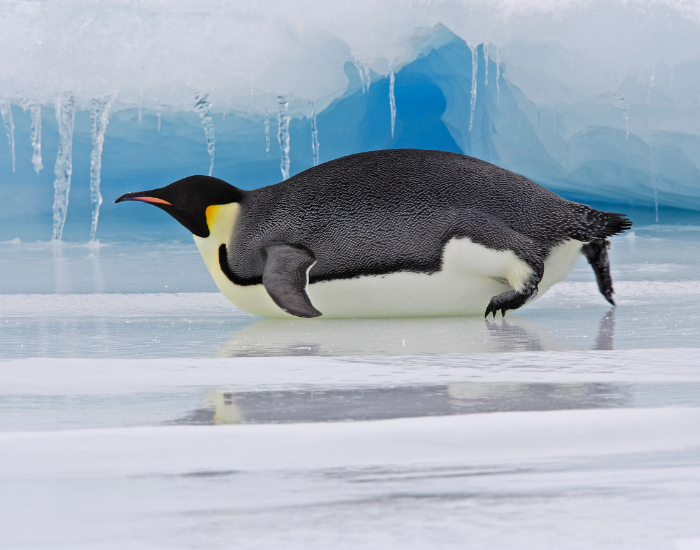
1. They Are the World’s Largest Living Penguin
The emperor penguin stands approximately 100–122 cm tall and weighs between 22–45 kg, depending on the season. That’s roughly the height of a six-year-old child. No other living penguin species comes close — they outsize even the flashy king penguin, which stands around 90–95 cm.
However, they have some formidable ancestors. Fossils of a species called Kumimanu fordycei, discovered in North Otago, New Zealand, suggest this giant penguin weighed approximately 150 kg — more than three times the weight of a modern emperor. It lived around 57 million years ago and is currently the largest fossil penguin on record.
So while the emperor is the biggest penguin species alive today, they’re relatively modest compared to their ancient cousins.
2. A Colony Is a Living, Breathing Organism
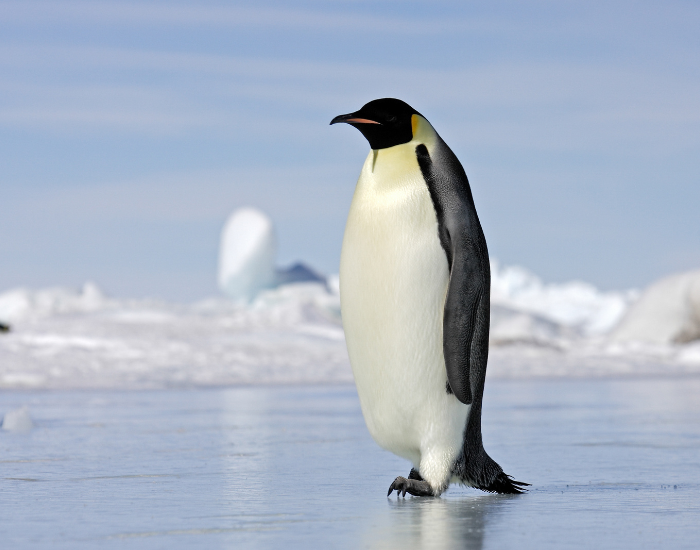
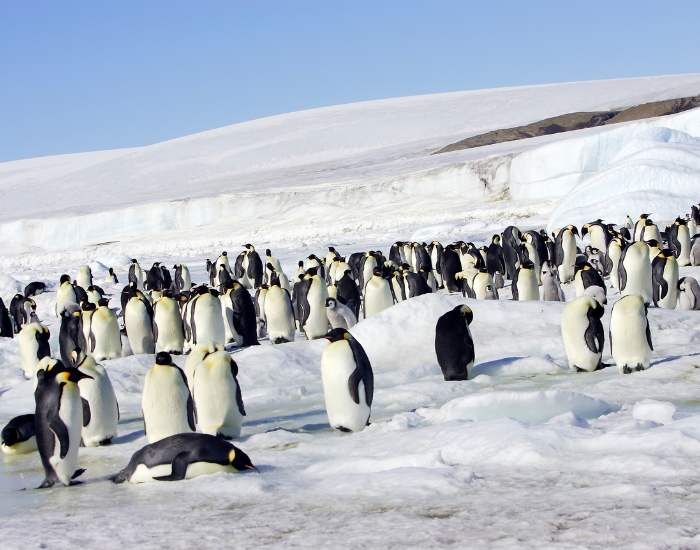
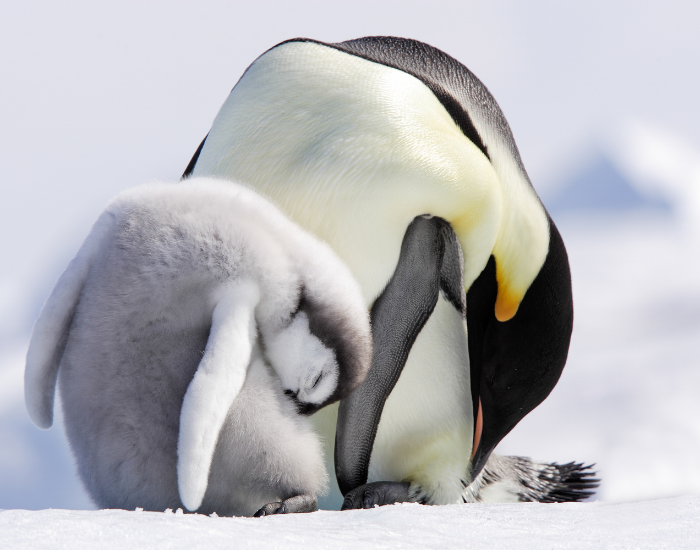
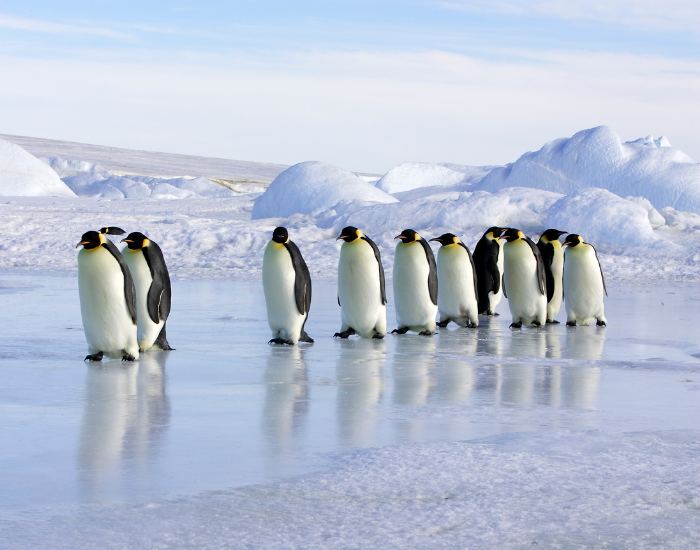
On land, a group of penguins is called a colony — and during the brutal Antarctic winter, that colony functions as a single survival machine. Emperor penguin colonies can contain thousands of birds, all pressed together in a tight huddle.
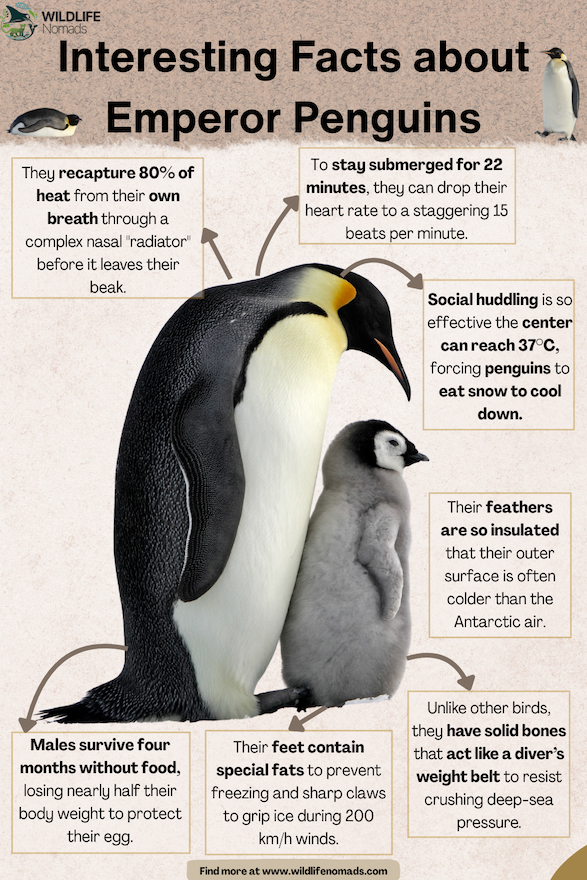
The emperor penguin chicks shelter at the center. Adult breeding pairs rotate from the freezing outer edge into the warm interior in a slow, coordinated shuffle. This behaviour — called social thermoregulation — allows the huddle’s center to reach around 37°C (98.6°F), even when outside temperatures plunge to -50°C and winds hit 200 km/h.
Huddling reduces heat loss by roughly 50%. Without it, the male’s fat reserves simply wouldn’t last the winter.
3. They Are Birds — Not Mammals
Is an emperor penguin a mammal? Surprisingly, this question comes up often. Because they waddle like seals and have solid bones rather than hollow ones, people sometimes get confused. However, they are unmistakably a type of bird. They grow new feathers once a year through a process called moulting, lay a single egg, and have a beak.
Their solid bone structure is actually an evolutionary adaptation. It eliminates the risk of barotrauma — the crushing pressure damage that hollow bones would suffer at extreme dive depths. Evolution traded flight for the ability to dive like a torpedo.
4. Males Fast for Up to Four Months
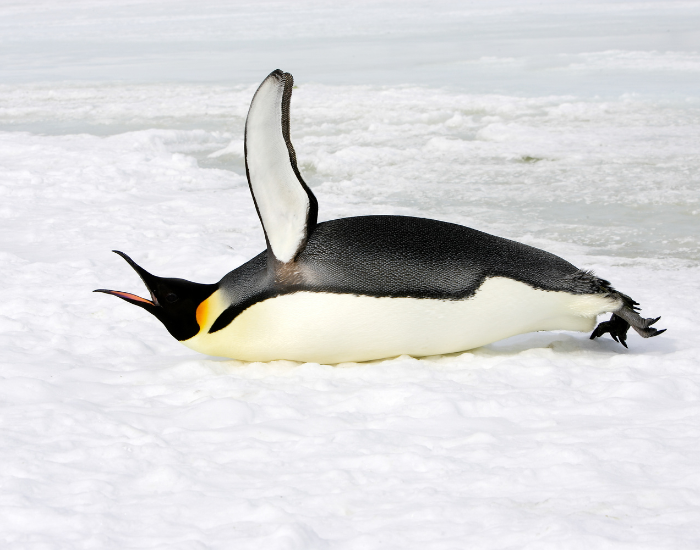
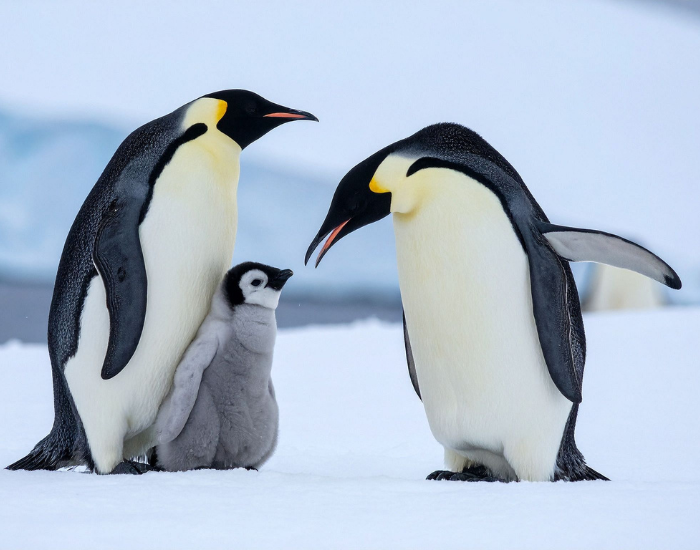
Imagine not eating for up to four months while standing in a blizzard. That is the reality for male emperor penguins during breeding season. After the female lays a single egg in May or June, she heads to the sea to replenish her energy. The male stays behind, balancing the egg on his feet beneath a warm brood pouch.
By the time the egg hatches — after roughly 65–75 days of incubation — the male may have lost nearly half his body weight. This fasting period is one of the most extreme examples of parental sacrifice in the animal kingdom.
When the female returns, the pair takes turns foraging and caring for their chick. This division of duties continues until the young penguin is ready to face the Southern Ocean on its own.
5. Their Diet is a Deep-Sea Buffet
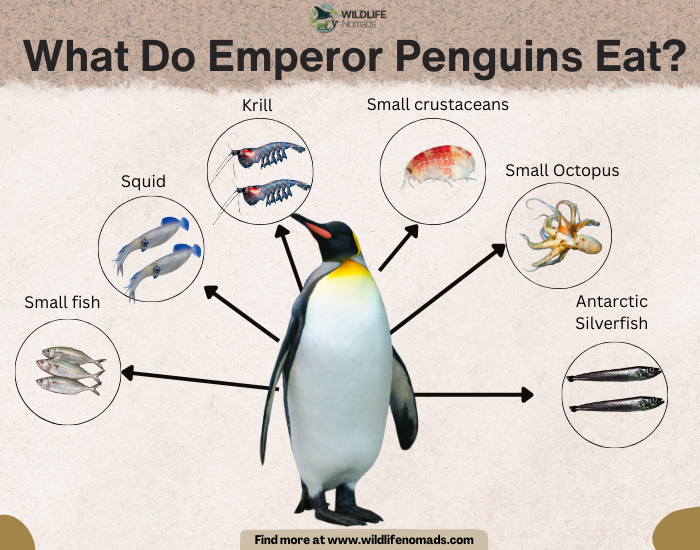
What do penguins eat? While they love fish, the penguins diet is actually quite diverse. They are apex predators in their ecosystem, targeting squid, krill, and various other prey.
Because of their sheer size, they can capture larger prey than any other species of penguin. They are incredible divers, reaching great depths of over 500 meters. To survive at those pressures, they’ve evolved solid bones that don’t crush, unlike the air-filled bones of a seagull or an eagle.
6. They Share Antarctica With Other Penguin Species
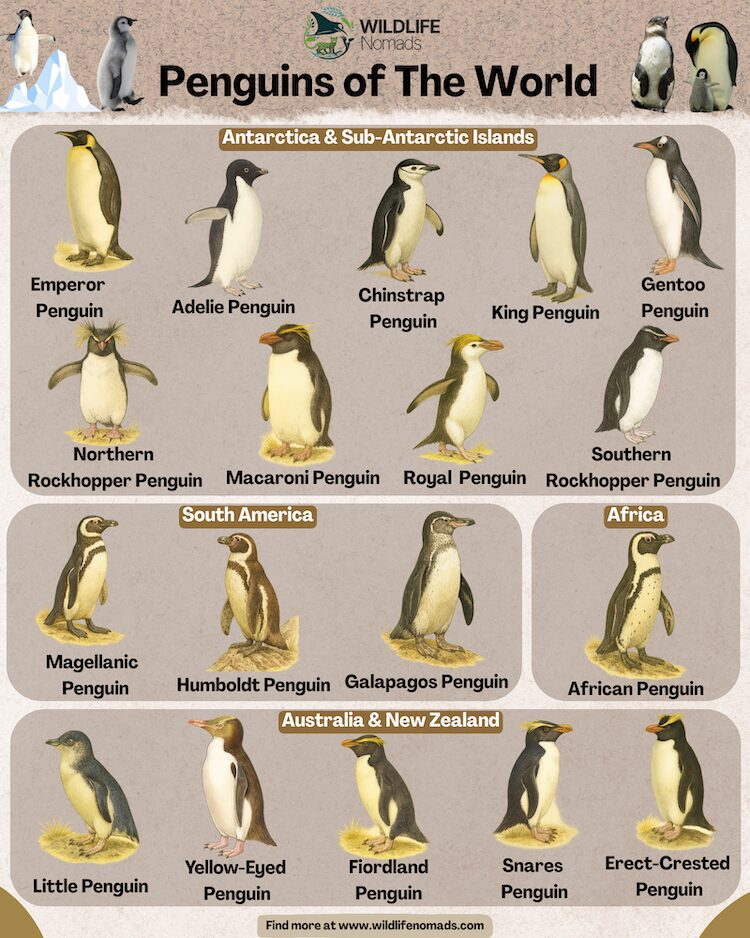
A common misconception is that the Emperor is the sole resident of the frozen south. While they are the most iconic Antarctic penguins, they share the continent with chinstrap penguins, Adélies, and Gentoo penguins. However, the Emperor is the only one that remains on the sea ice through the darkest, coldest parts of the winter to breed.
Others, like the rockhopper penguins or the African penguins, prefer slightly “warmer” (if you can call it that) coastal climates or islands like Marion Island.
7. They Breathe More Efficiently Than Almost Any Animal
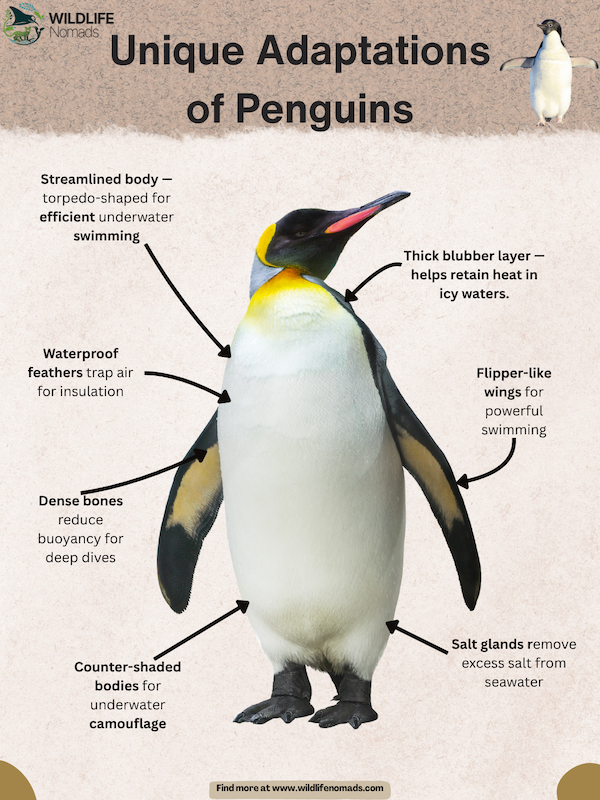
Emperor penguins can recapture up to 80% of the heat in their breath through a counter-current heat exchange system in their nasal passages. This adaptation is critical in an environment where every calorie counts.
They also have two layers of scale-like feathers — up to 100 feathers per square inch — providing extraordinary insulation. Beneath that, a thick layer of fat adds further protection. Even their feet contain special fats that prevent freezing, and strong claws grip the ice without slipping.
8. Climate Change is Their Greatest Threat
This is the “critical thinker” part of my biologist brain coming out. The emperor penguin life expectancy is typically 15–20 years in the wild, but their future is tied directly to sea ice.
Climate change is causing the ice to break up earlier in the season. If the ice disappears before the emperor penguin chicks have grown their waterproof new feathers, they can’t survive the cold waters. Scientists are monitoring emperor penguin colonies via satellite, and the data is concerning. Without stable ice, the next generation simply doesn’t make it to adulthood.

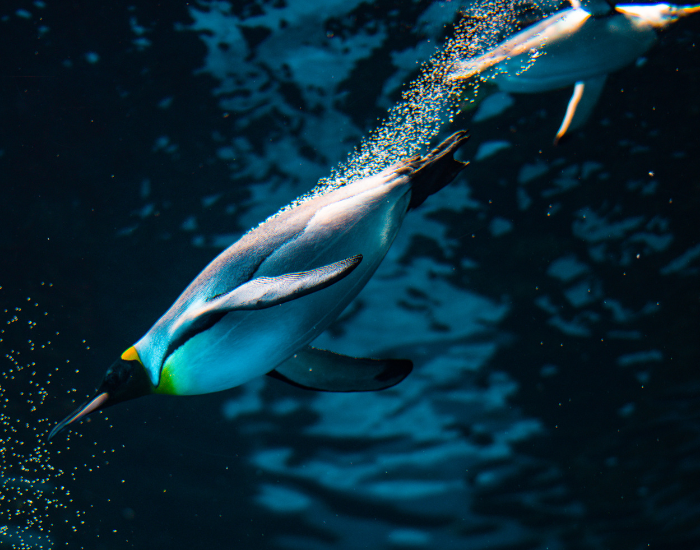
9. They Are Record-Breaking Divers
The emperor penguin is the world’s deepest-diving bird. The maximum recorded dive reached an astonishing 564 metres — the equivalent of nearly twice the height of the Shard in London. The longest recorded dive lasted approximately 22 minutes, though typical foraging dives last just 3–6 minutes at depths of 150–250 metres.
To survive those crushing pressures, their heart rate drops to just 15–20 beats per minute during a dive. Non-essential organs shut down to conserve oxygen. Their haemoglobin and myoglobin bind oxygen at very low concentrations, allowing them to function at depths that would render a human diver unconscious.
Scientists are still working to fully understand how they avoid decompression sickness — the “bends”, that would be fatal to human divers at those depths.
10. We’re Still Finding Their Ancient Relatives
We are currently in a golden age of paleontology. New fossil remains found on Seymour Island and the Antarctic Peninsula are constantly rewriting the history of these birds. Every time an international team unearths many early fossil penguins, we realize that the earliest penguins were likely much more diverse than the living species we see today. The most intriguing fossil birds yet to be found might even show us species that lived in lush, green Antarctic forests millions of years ago.
11. The Ice Changes Everything
Standing on the Antarctic ice — as I hope to do more in my career — the scale of the landscape is overwhelming. There’s no sound except the wind and the trumpeting of the colony. It forces a shift in perspective. We see emperor penguins as cute or motivational on social media. But in reality, they’re among the toughest survivors on Earth (same as the animals found in the desert!).
They don’t have a fixed nest. Their home is wherever the ice is stable enough to breed. This nomadic lifestyle is what makes them resilient. It’s also what makes them so vulnerable when the ice itself becomes unreliable.
12. The Paradoxical Nomads of the South
It’s a common mistake, but you’ll never find a penguin in the Arctic. They are exclusively Southern Hemisphere icons, and the Emperor is their undisputed heavyweight champion.
For a long time, we believed these birds were strictly “philopatric”—meaning they were biologically hardwired to return to the exact same breeding spot every single year. But as a biologist, I love it when new data flips the script. Recent satellite imagery and aerial photography have revealed that emperors are actually more flexible than we gave them credit for.
Researchers found several instances where colonies didn’t return to their usual “home,” and even discovered a new colony on the Antarctic Peninsula that likely moved from a nearby abandoned site. This “life history plasticity” is a fancy way of saying they are smart enough to move when their environment changes. They aren’t just “loyalists” by heart; they are survivors who know when to find a new patch of frozen real estate. This makes them true nomads—not just in distance, but in their ability to adapt to a changing world.
Quick FAQ: Emperor Penguin Edition
The Emperor is significantly larger and heavier than the King penguin.
Not anymore! But fossil remains of Palaeeudyptes klekowskii suggest they once stood nearly that tall.
No, but they are the only ones that stay on the ice through the winter.
A colony (on land) or a raft (in water).
Our Biological Takeaway
The emperor penguin isn’t just a flightless bird; it’s a biological marvel that challenges everything we know about warm-blooded survival. Whether they are huddling against a blizzard or diving to the great depths of the Southern Ocean, they represent a part of our world that is still wild, still mysterious, and still worth fighting for.
Cesar and I will keep traveling, keep observing, and keep sharing these stories from the field. Because the more we know about the biggest penguins in the world, the better we can protect the icy home they depend on.
References:
Fretwell, P. T. (2026). Discovery of Antarctic moulting sites in satellite imagery reveals new threat to emperor penguins. Communications Earth & Environment, 7(1), Article 192. https://doi.org/10.1038/s43247-026-03231-6
Groscolas, R., & Robin, J. P. (2001). Long-term fasting and re-feeding in penguins. Comparative Biochemistry and Physiology Part A: Molecular & Integrative Physiology, 128(3), 645–655. https://doi.org/10.1016/S1095-6433(00)00341-X
Kloess, P. A., Poust, A. W., & Stidham, T. A. (2020). Earliest fossils of giant-sized bony-toothed birds (Aves: Pelagornithidae) from the Eocene of Seymour Island, Antarctica. Scientific reports, 10(1), 18286. https://doi.org/10.1038/s41598-020-75248-6
Kooyman, G. L., & Kooyman, T. G. (1995). Diving behavior of Emperor Penguins nurturing chicks at Coulman Island, Antarctica. The Condor, 97(2), 536–549. https://doi.org/10.2307/1369039
LaRue, M. A., Kooyman, G., Lynch, H. J., & Fretwell, P. (2014). Emigration in emperor penguins: Implications for interpretation of long-term studies. Ecography, 37(12), 1142–1145. https://doi.org/10.1111/ecog.00990
McCafferty, D. J., Gilbert, C., Thierry, A. M., Currie, J., Le Maho, Y., & Ancel, A. (2013). Emperor penguin body surfaces cool below air temperature. Biology letters, 9(3), 20121192. https://doi.org/10.1098/rsbl.2012.1192