
I’ve chased wildlife across continents, tracking orangutans through the rain-soaked jungles of Sumatra, watching grey whales surface just metres away in the lagoons of Baja, and smiling at quokkas on sunlit islands off the Australian coast. Each journey has deepened my respect for how strange, resilient, and quietly miraculous the natural world really is. And yet, for all the animals I’ve been lucky enough to encounter, none has captured my imagination quite like the okapi.
At first glance, the okapi looks like something dreamed up rather than evolved: a forest-dwelling giraffe with zebra stripes, velvet-dark fur, and an air of secrecy that feels almost intentional. Known as the “African unicorn,” the okapi remained invisible to Western science until 1901, despite existing all along in the dense rainforests of Central Africa. Even today, it feels less like an animal you find and more like one you’re allowed to glimpse.
Lately, I’ve found myself drawn to species that seem almost fictional, animals that look as though they’ve stepped out of an Avatar film rather than an ecosystem. From the bizarre, nose-laden saiga antelope to the richly striped bongo and the golden, mountain-dwelling takin of Sichuan, these creatures challenge our assumptions about what nature is supposed to look like. The okapi sits at the heart of that fascination: real, endangered, and still largely unseen.
In this deep dive, we’ll explore what makes the okapi so extraordinary, how it survives in the shadows of the Ituri Forest, and why protecting this quiet icon of biodiversity matters more than ever.

1. The Okapi is Not a Hybrid, It’s the Giraffe’s Only Living Relative
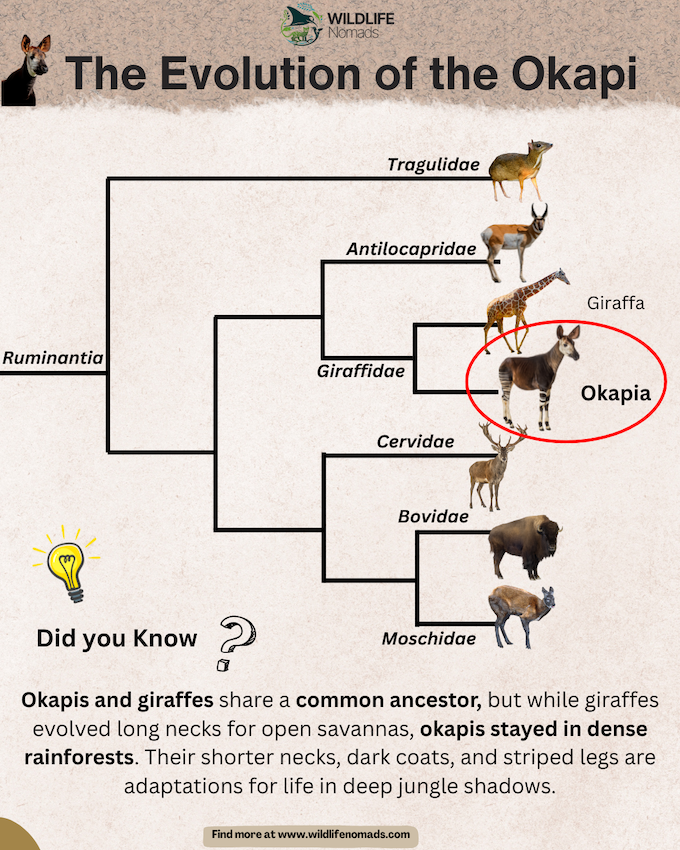
The okapi sports zebra-like stripes on its legs and a giraffe-shaped face. However, the biological reality is clear, the okapi is a distinct species and is closely related to the giraffe, as they are the only extant members of the Giraffidae family.
While the giraffe evolved on open savannas and developed its famous long neck, the okapi remained in the rainforest habitat. This forest giraffe represents an ancient lineage that has changed little over millions of years. Male okapi have skin-covered, horn-like protuberances called ossicones, while females possess hair whorls and lack ossicones. Both animals share a prehensile tongue and a similar pacing gait, moving the legs on the same side together.
The okapi belongs to the Giraffidae family and is the only species in the Okapia genus. This makes it a true living fossil, offering scientists a window into giraffe evolution.
2. The Okapi Lives Exclusively in the Democratic Republic of Congo
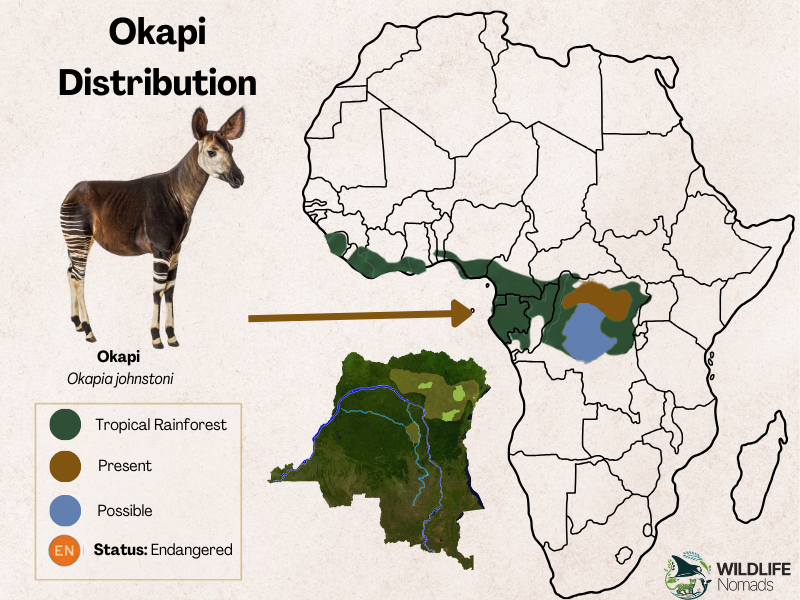
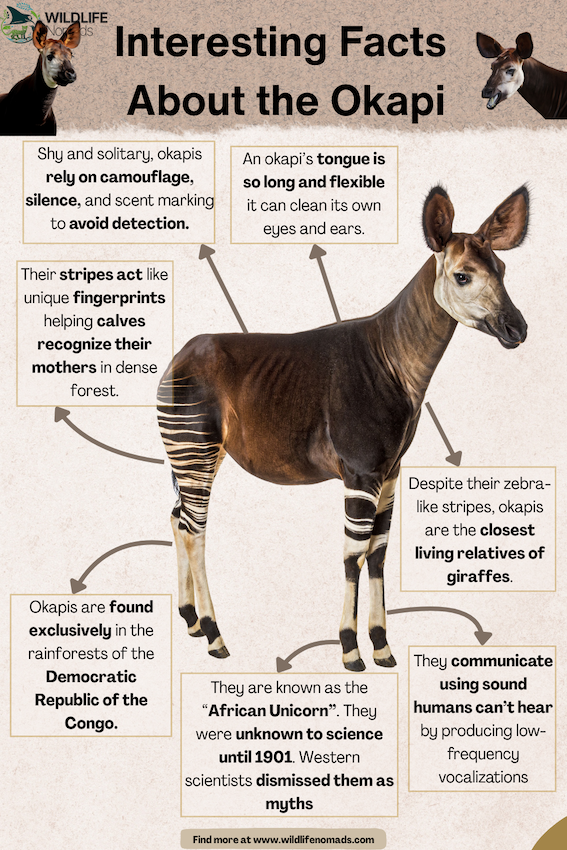
The okapi range is incredibly restricted. These solitary animals are endemic to the Democratic Republic of Congo, specifically the Ituri rainforest. You won’t find wild okapi anywhere else on Earth.
The Ituri rainforest provides perfect okapi habitat—dense vegetation, perpetual twilight under thick canopy, and abundant plant species. This rainforest habitat sits at altitudes of 500-1,500 meters and receives constant rainfall. The okapi’s dark, reddish brown coat with white stripes provides excellent camouflage in the dappled forest light.
The Okapi Wildlife Reserve, a World Heritage Site, protects the largest remaining population. Other key areas include Maiko National Park and the newly designated Lomami National Park. However, civil unrest and armed groups continue to threaten these protected areas.
3. That Prehensile Tongue is Longer Than You Think
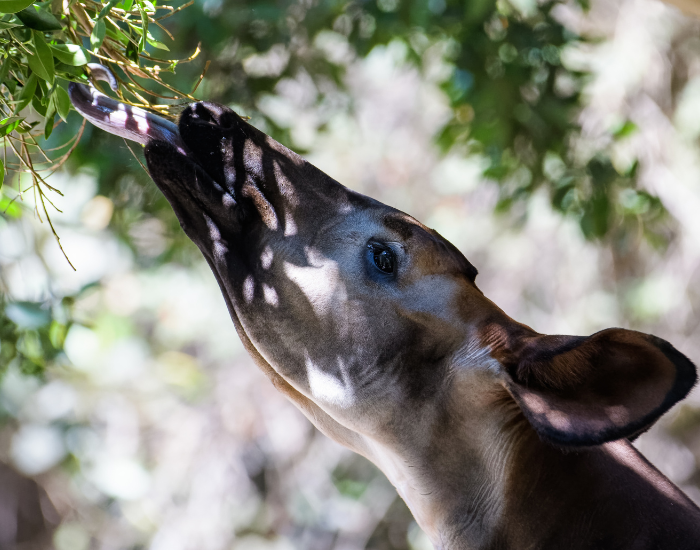
The okapi tongue is truly remarkable. Measuring between 12-18 inches (30-46 cm) long, it rivals some of the longest tongues in the animal kingdom. This blue-black, prehensile tongue serves multiple purposes beyond feeding.
Okapis use their tongue to strip leaves from branches with precision. However, the tongue’s length also allows them to lick their own eyelids and clean out their ears. This self-grooming adaptation helps keep parasites at bay in the humid rainforest environment.
The tongue’s dark blue color may protect against sun exposure during feeding. Its prehensile nature, meaning it can grasp and hold objects, makes it perfect for selective browsing among hundreds of plant species.
4. Okapis Communicate Through Infrasound
Here’s what blows my mind: okapis communicate using infrasound. These are frequencies so low that human ears cannot detect them. Females use this “secret channel” to stay in contact with their okapi calf across the dense forest.
Research conducted in the 1990s revealed this remarkable adaptation. The okapi’s large auditory bullae (ear bones) enhance their ability to both hear and transmit these low-frequency sounds.
This infrasonic communication provides a huge survival advantage. Predators like leopards cannot intercept these calls, allowing mother and okapi calf to coordinate without alerting danger nearby.
5. Baby Okapis Don’t Defecate for Weeks
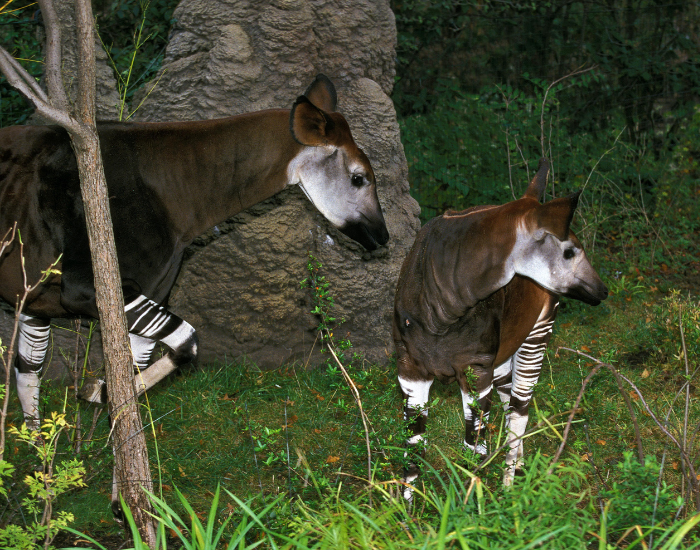
Okapi calves have one of the strangest survival strategies in nature. For the first 4-8 weeks of life, a single okapi calf doesn’t defecate. This extraordinary adaptation prevents predators from tracking the vulnerable youngster through scent.
After a gestation period of 14-16 months, the female okapi gives birth to one okapi calf weighing 30-65 pounds. The okapi calf can stand within 30 minutes and begin nursing in 15-30 minutes after birth. However, for the first two months, the calf remains hidden in dense vegetation while the mother returns periodically to nurse.
This hiding strategy, combined with delayed waste production, dramatically improves survival rates. Leopards, the primary predators of okapis, rely heavily on scent tracking. By leaving no trace, okapi calves essentially disappear into the forest floor.
6. The Okapi Population Has Crashed Dramatically
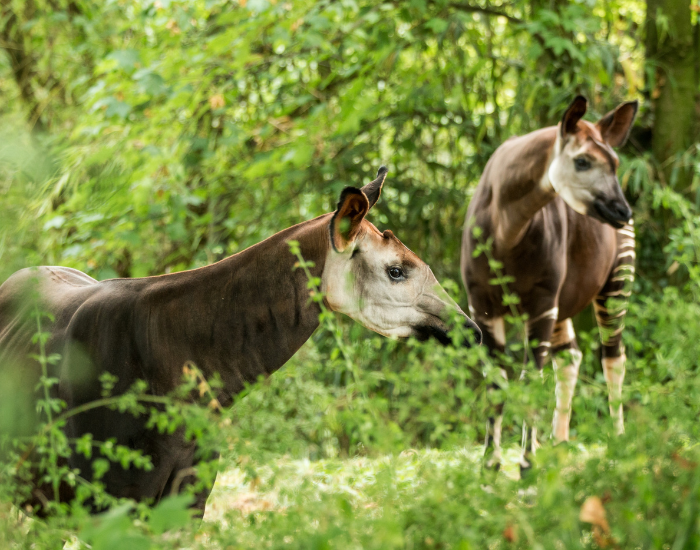
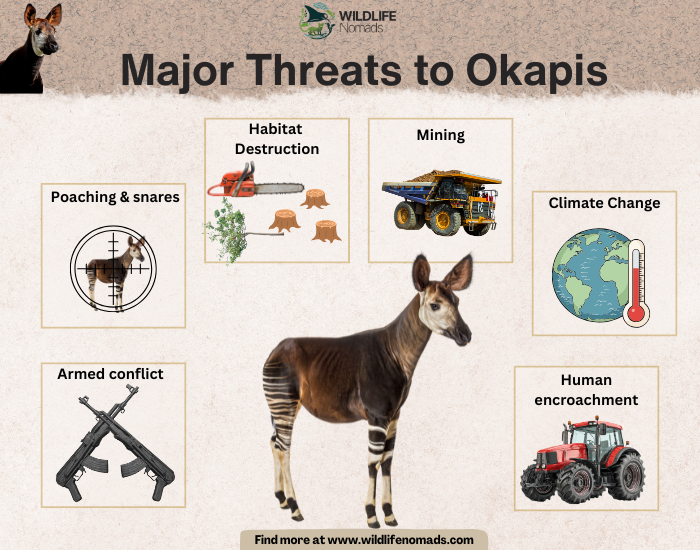
How many okapis are left in the world? The answer is deeply concerning. Current estimates suggest between 5,000-10,000 individuals remain in the wild, though some experts fear the number could be as low as 3,000 in the Okapi Wildlife Reserve alone. The major threats facing okapi populations include habitat destruction, illegal hunting, mining, and armed conflicts.
The International Union for Conservation of Nature (IUCN) classifies the okapi as an Endangered and threatened species, with populations declining by over 50% in the past three generations (approximately 24 years). Recent research indicates that artisanal mining is responsible for 98% of habitat destruction since 2009. Illegal hunting for bushmeat and skin has also led to a decline in okapi populations.
The species faces what conservationists call “the Big Three” threats: habitat loss through logging and mining, poaching for bushmeat and skins, and civil conflict in the Democratic Republic of Congo. These pressures have created an increasingly fragmented habitat.
7. Okapis Are Incredibly Selective Eaters
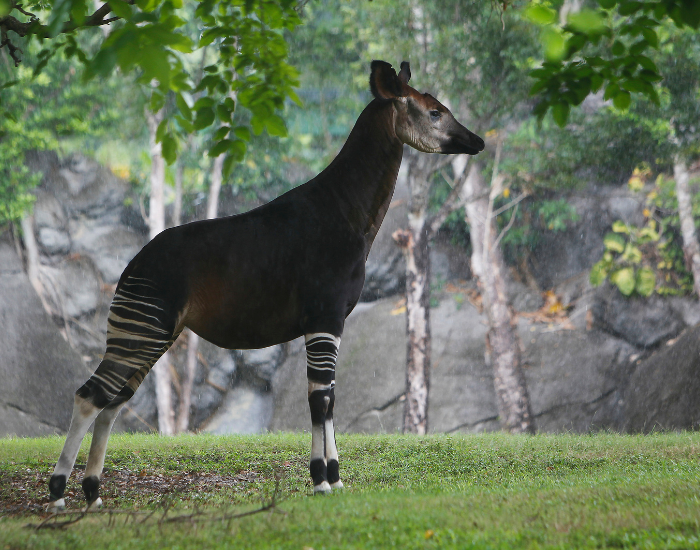
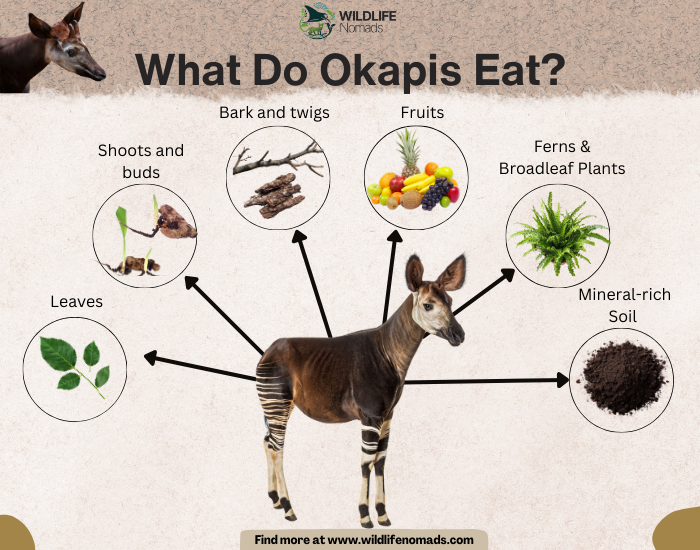
Despite living in one of Earth’s most biodiverse ecosystems, okapis are remarkably picky eaters. They feed on over 100 species of plants, including many that are toxic to humans and other animals. Their diet consists of leaves, buds, grasses, ferns, fruit, and fungi.
What makes the okapi unique in the Ituri Forest is its exclusive focus on understory vegetation. No other large mammal feeds solely on plants in the forest’s lower levels. This niche specialization reduces competition with other herbivores.
Okapis also consume riverbed clay and soil to obtain essential minerals and salt. An adult okapi eats between 45-60 pounds of food daily. This selective browsing actually helps with seed dispersal and forest regeneration across their territory.
8. The Okapi’s Stripes Serve Multiple Functions
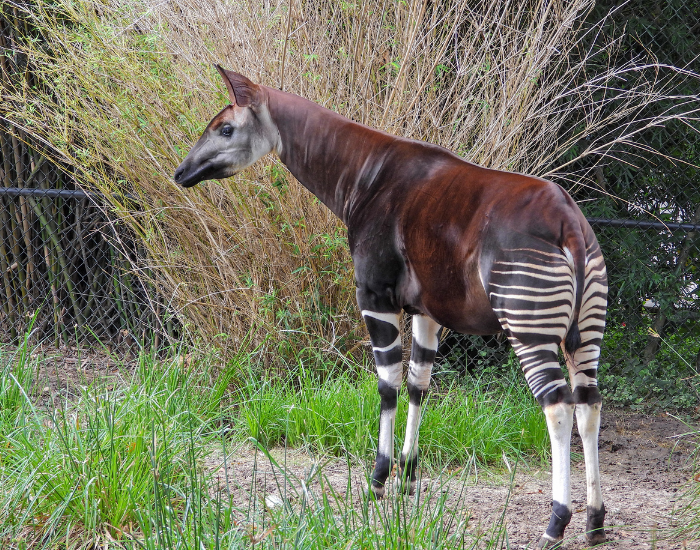
Those distinctive white stripes on the okapi’s legs and hindquarters aren’t just for show. They serve as sophisticated camouflage in the forest’s dappled light. The stripes help break up the animal’s outline, making it nearly invisible in dense vegetation.
The zebra-like stripes may also help okapis identify each other. Since these are solitary animals that rarely meet, the unique stripe patterns could function as individual identification markers. Young calves may follow their mother’s striped legs through the forest understory.
Additionally, the stripes might play a role in thermoregulation or insect deterrence, though scientists continue to study these possibilities. What’s certain is that the pattern provides excellent concealment from leopards and other threats.
9. Only Select Zoos House Okapis
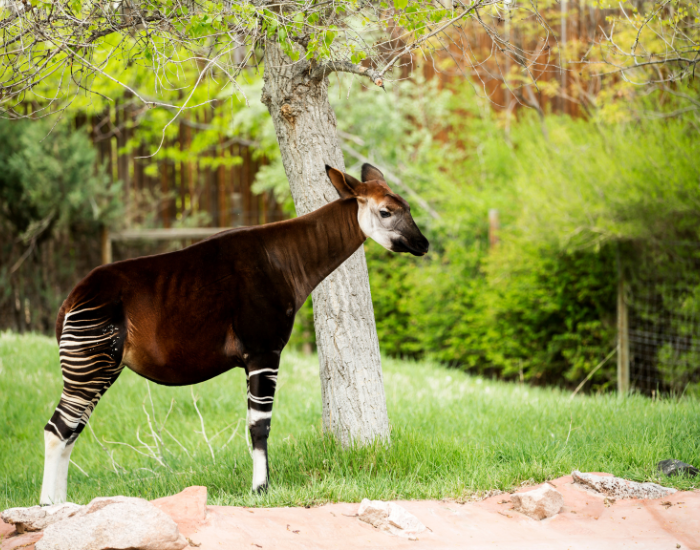
Because okapis are so rare and endangered, relatively few zoos have the resources to care for them properly. If you’re wondering what zoos have okapi, several AZA-accredited institutions maintain breeding programs.
The Maryland Zoo, San Diego Zoo, Disney’s Animal Kingdom, London Zoo, and Antwerp Zoo are all leaders in okapi conservation. Antwerp Zoo played a historic role—it was the first zoo to display an okapi in 1919 and coordinates the European breeding program.
Around 100 okapis currently live in accredited Association of Zoos and Aquariums facilities worldwide. These captive populations serve as genetic insurance. The Zoological Society and other organizations manage carefully coordinated breeding programs to maintain genetic diversity.
Some facilities offer an okapi encounter where visitors can observe these animals up close. However, okapis remain sensitive and easily stressed, requiring specialized rainforest-mimicking environments.
10. The Okapi Conservation Project Has Been Fighting Since 1987
Founded in 1987, the Okapi Conservation Project (OCP) works on the ground in the Democratic Republic of Congo. The organization collaborates with the Institut Congolais pour la Conservation de la Nature (ICCN) to protect the Okapi Wildlife Reserve.
The OCP takes a holistic approach that goes beyond wildlife protection laws. Their programs include:
- Training and supporting rangers who patrol protected areas
- Removing snares set by poachers
- Confronting illegal miners and armed groups
- Providing conservation education through local radio broadcasts
- Implementing agroforestry programs for sustainable farming
- Engaging local communities in conservation efforts
This community-based strategy recognizes that conservation only succeeds when local people benefit. The OCP works to ensure that protecting the forest also supports the Indigenous Mbuti and Efe communities who call it home.
In a tragic 2012 attack, armed militants killed six rangers and all 14 captive okapis at the OCP headquarters in Epulu. Despite this devastating setback, the organization rebuilt and continues its critical work. In 2025, an okapi returned to Epulu for the first time in over a decade, a hopeful sign.
11. The Okapi Faces New Threats Beyond Habitat Loss
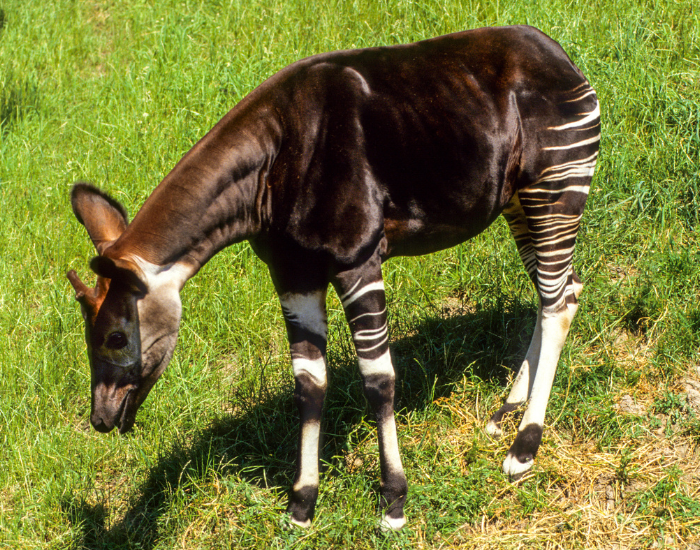
While habitat destruction remains the primary threat, new dangers continue to emerge. Armed conflict in eastern Congo has intensified in recent years, making conservation work increasingly dangerous. Rangers risk their lives daily confronting heavily armed poachers and illegal miners.
The demand for coltan, a mineral used in smartphones and electronics, drives much of the illegal mining. These operations clear vast swaths of primary forest, the same forest critical to okapi survival. Gold mining presents similar challenges and threats.
Climate change also looms as a long-term threat. Shifts in rainfall patterns and temperature could alter the rainforest ecosystem that okapis depend on. The interconnected nature of these challenges makes protecting this endangered species even more complex.
12. Why the Okapi Matters Beyond the Congo
The okapi isn’t just important for the Democratic Republic of Congo, it’s a flagship species for global biodiversity. The Ituri rainforest stores massive amounts of carbon, helping regulate Earth’s climate. It also provides habitat for thousands of other species, many found nowhere else.
Protecting okapi habitat means protecting entire ecosystems. The Congo Basin rainforest is the world’s second-largest tropical forest after the Amazon. Its health affects rainfall patterns across Africa and influences global climate systems.
The okapi also represents evolutionary history we cannot replace. As the giraffe’s only living relative, it offers unique insights into how megafauna adapted to forest environments. Losing the okapi means losing millions of years of evolution.
On a cultural level, the okapi serves as a national symbol of the Democratic Republic of Congo. It appears on the country’s currency and represents pride in the nation’s exceptional biodiversity.
FAQs about Okapis
Estimates range from 5,000-10,000 individuals, though recent research suggests numbers may be lower. Populations have declined by over 50% in the past two decades.
Okapis are endemic to the Democratic Republic of Congo in Central Africa. They inhabit the Ituri rainforest and surrounding areas at altitudes of 500-1,500 meters. Males have larger home ranges, which may overlap with several females.
Okapis have a 12-18 inch prehensile tongue that can clean their ears and eyes, communicate via infrasound that humans cannot hear, and have zebra-like stripes for camouflage. They’re also the giraffe’s only living relative. Okapis have scent glands located above their hooves, which they use to mark territory and communicate with other okapis.
Yes, around 100 okapis live in accredited zoos worldwide. The Maryland Zoo, San Diego Zoo, and Antwerp Zoo are particularly known for their okapi programs. Female okapis typically have only one calf per pregnancy.
A Future for the Forest Giraffe
As a biologist, my work centers on data. However, my passion lies in wonder. The okapi embodies everything that makes wildlife conservation urgent and worthwhile. This forest giraffe proves that Earth still harbors secrets in its most remote corners.
We face a choice. We can allow the okapi to slip into extinction, joining species like the dodo and ground sloth in the history books. Or we can support the brave people working to save these endangered animals in the Democratic Republic of Congo.
The okapi’s survival depends on actions we take today. From supporting conservation organizations to raising awareness, every effort counts. The “African Unicorn” has earned its mythical reputation, let’s ensure it remains more than just a myth.