Why Being a King Doesn’t Mean Being Invincible
In the world of wildlife trends, we’ve seen a strange obsession lately. It usually starts with a hypothetical question on social media: “Could 100 men beat a silverback gorilla?” or “How many bodybuilders does it take to pin a silverback?”
As a biologist, I find these debates both hilarious and a bit heartbreaking. While the internet treats the silver backed gorilla like a mythological superhero or a final boss in a video game, the reality I’ve seen on the ground in Central Africa is quite different.
Yes, a silverback gorilla is a powerhouse of muscle and bone. However, despite their fame as ferocious warriors, these creatures are incredibly sensitive, socially complex, and, most importantly, deeply vulnerable. They aren’t looking for a fight. Instead, they are looking to protect their family groups.
In this deep dive, we’re going to step away from the “who would win in a fight” memes. Therefore, we’ll look at the real silverback gorilla information that makes these great apes so vital to our world. If you are curios to know more about African animals, explore our ebook: Animals of Africa: Ecosystem Explorer
1. What is a Silverback Gorilla, Exactly?
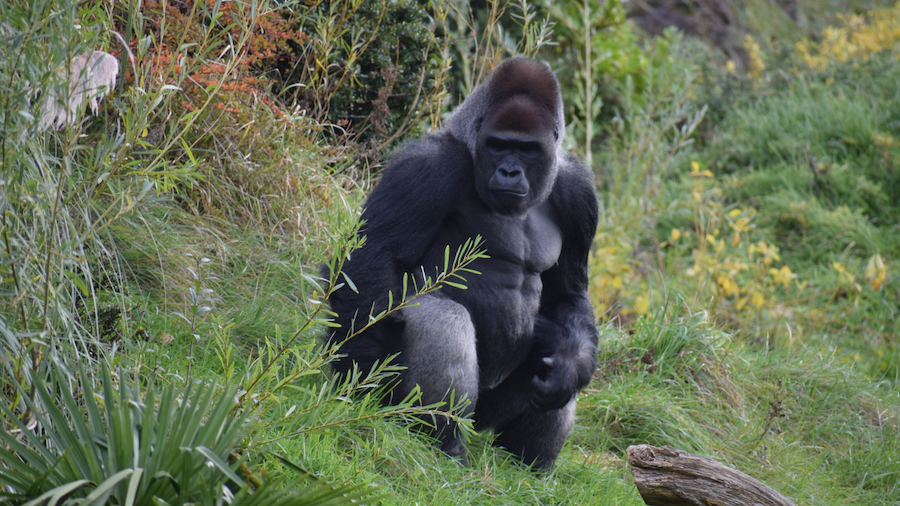
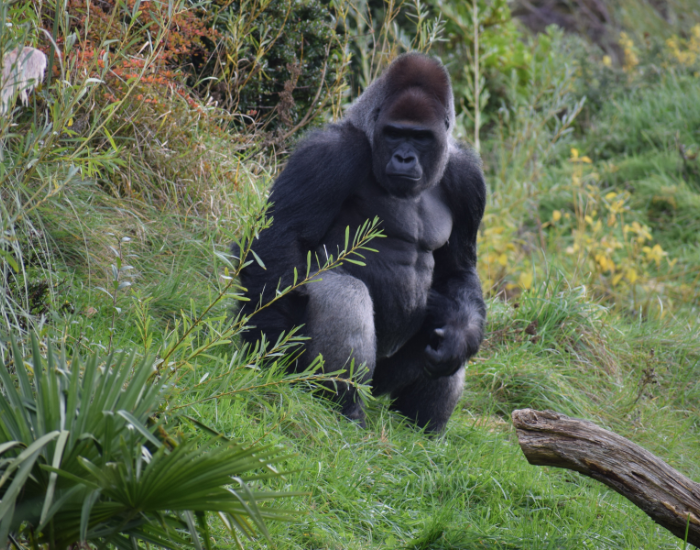
To understand the silver backed gorilla, you first have to understand that “silverback” isn’t a species, it’s a rank. Within a gorilla group, the silverback is the mature male gorilla who has reached a point in his development where the hair on his back turns a distinctive grayish-white or silver.
Think of it like a badge of office. In the eastern gorilla and western gorilla species, this silvering usually happens around age 12 to 15. Before they get their silver, these younger males are known as blackbacks.
While a male develops his silver saddle, he also develops the massive muscle mass and the iconic sagittal crest (that high ridge on the skull) that gives him that “king of the jungle” look. A fully grown silverback gorilla can stand up to 6 feet tall when upright and weigh between 300 to 500 pounds (136–227 kg).
2. The Great Divide: Eastern vs. Western Gorilla Species
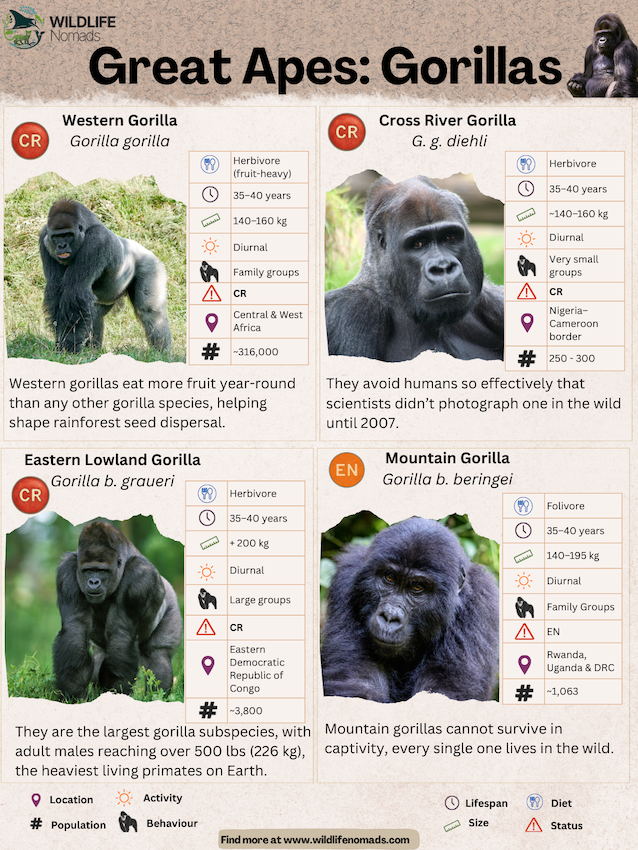
When we talk about gorillas, we are actually talking about two distinct species. In fact, each has its own subspecies with unique characteristics.
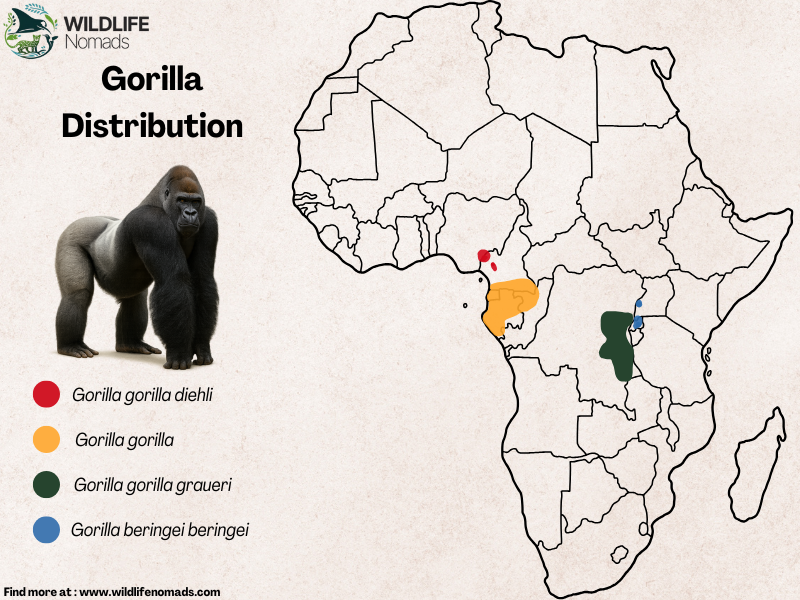
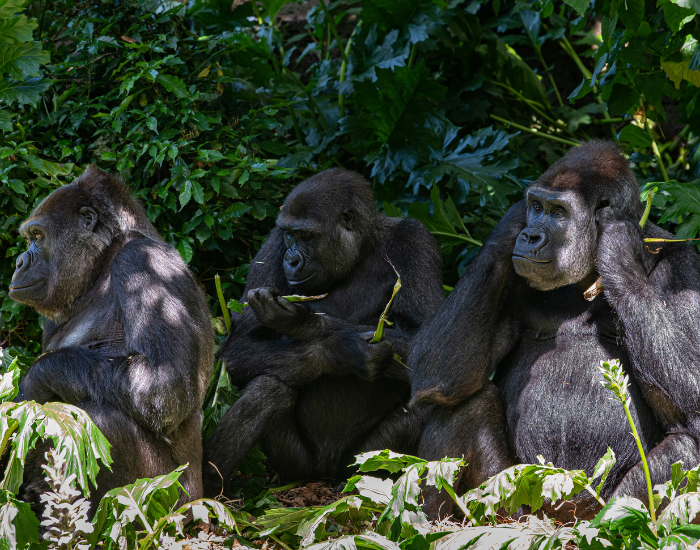
The Western Gorilla: This species includes the western lowland gorillas and the Cross River gorilla. These are the ones you most often see in documentaries or zoos. They tend to live in lowland forests and lowland swamps across countries like Gabon, Cameroon, and the Democratic Republic of Congo.
The Eastern Gorilla: This species includes the famous mountain gorillas and the eastern lowland gorilla (also known as Grauer’s gorilla). Mountain gorillas are found in only two places: the Virunga National Park (which spans Volcanoes National Park in Rwanda, Mgahinga Gorilla National Park in Uganda, and Virunga National Park in the Democratic Republic of Congo) and the Bwindi Impenetrable National Park in Uganda. These are considered the best places to see gorillas in the wild.
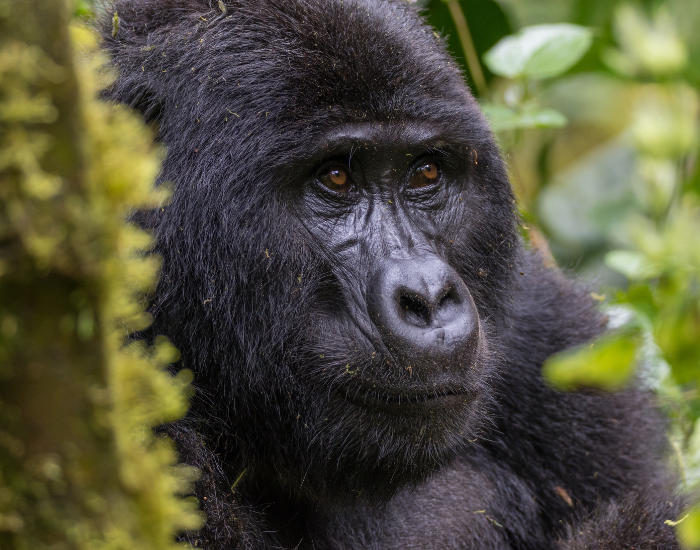
While they look similar to the untrained eye, mountain gorillas have much thicker, longer hair. This is a necessary adaptation for living in the chilly, high-altitude bamboo forests of the Virunga Mountains. In these habitats, the silverback mountain is the dominant male, leading the group and ensuring their safety, which is especially important given their critically endangered status. In addition, mountain gorillas live at elevations where temperatures can drop significantly, requiring this extra insulation.
3. Silverback Gorillas Eat a Vegetarian Diet
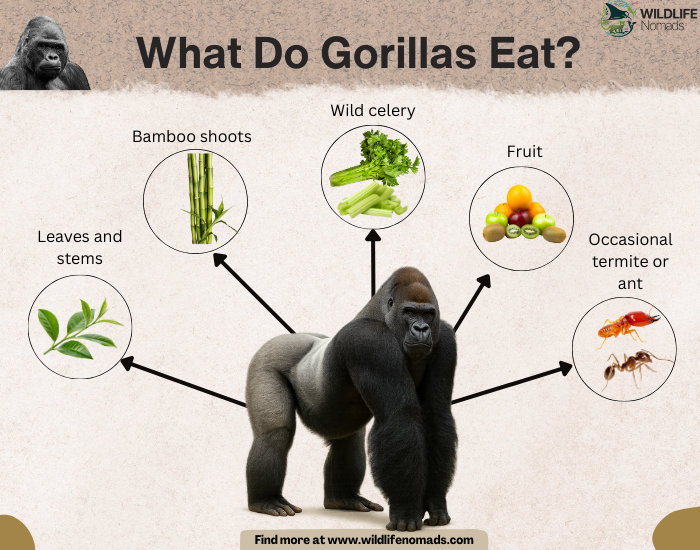
There is a common misconception that because silverback gorillas are so muscular, they must eat a high-protein, meat-heavy diet. In reality, the mountain gorilla silverback diet is primarily made up of stems, leaves, fungi, flowers, and bark, with seasonal variations and an abundance of vegetation available to them. This makes them one of nature’s most impressive herbivores.
A fully grown silverback gorilla can consume up to 30 kg (about 66 lbs) of food a day. Their diet is primarily herbivorous, consisting of:
- Leaves and stems
- Bamboo shoots
- Wild celery
- Fruit (especially for lowland gorillas)
- The occasional termite or ant for a little protein boost
Silverback gorillas primarily eat a diet consisting of leaves, stems, and pith, with fruit making up only a small part of their diet. Mountain gorillas have flexible diets and can adapt to various habitats, primarily consuming foliage. Because their food is low in calories but high in fiber, they spend a huge portion of their day foraging and eating. Gorillas rarely drink water because they obtain sufficient hydration from the succulent vegetation they consume.
4. The Strength of 10 to 20 Men: How Strong is a Strong Adult Male?
To answer the viral question: How strong is a silverback gorilla? These primates are among the strongest in the animal world. Estimates from researchers and biomechanical studies suggest a silverback is roughly 6 to 10 times stronger than the average human.
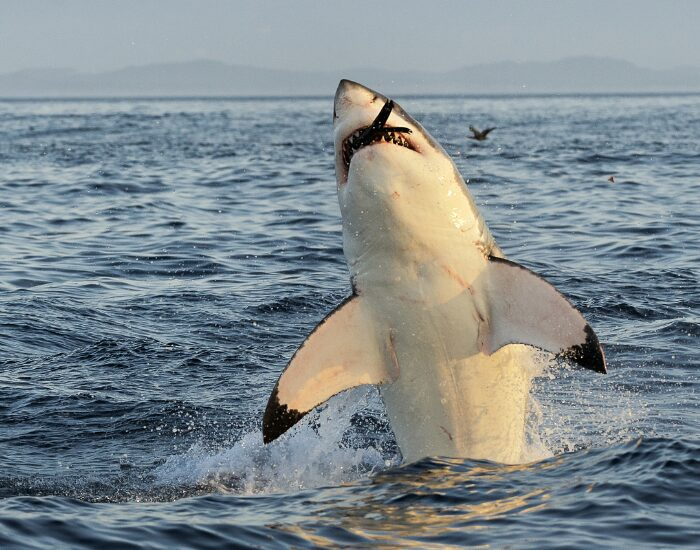
A strong adult male can lift over 800 kg (1,800 lbs). In addition, he has a bite force of about 1,300 PSI, stronger than a lion or a great white shark.
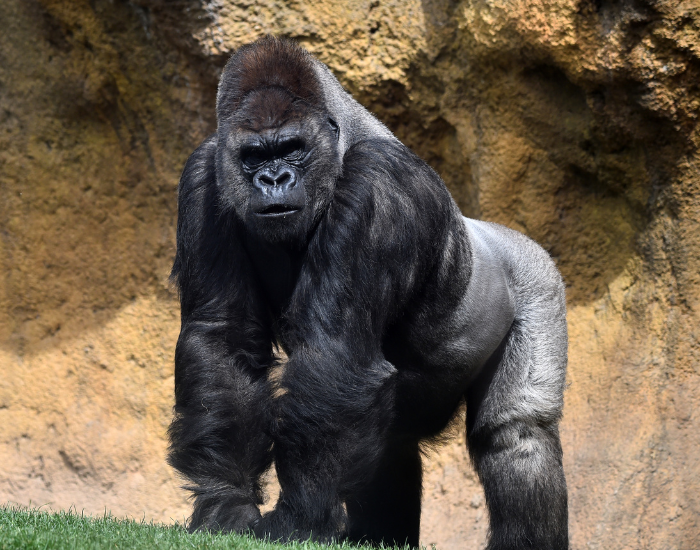
However, here is the critical thinker’s lens: they don’t use this strength to bully other gorillas or animals. That power is reserved for tearing apart dense vegetation or defending the family groups from rival males or leopards.
While some may wonder if silverback gorillas are aggressive, the reality is that silverback gorillas aggressive behavior is not inherent; they typically only display aggression when they feel threatened or provoked, such as when encountering intruders or territorial threats. When a silverback gorilla recognizes a threat, he doesn’t immediately attack. Instead, he uses intimidation displays like chest-beating, roaring, and bluff charges to ward off threats, aiming to avoid a physical confrontation. This makes them far more gentle than their powerful physique suggests.

5. The Social CEO: Only One Dominant Silverback Controls the Group
In a typical gorilla group (a family group typically number between 5 and 30 individuals), there is only one dominant silverback who calls the shots. He is the “CEO” of the troop. He decides when the group wakes up, where they eat, and where they sleep. As one of the largest great apes on Earth, it’s easy to assume the biggest individual is automatically the leader, but size isn’t always the deciding factor in dominance, social ties and strength play huge roles, too. To see how impressive their massive size really is, check out our Animal Size Comparison Tool to pit gorillas against other iconic wildlife.
The troop usually consists of:
- The dominant silverback
- Several adult females
- Offspring (infants and juveniles)
- Sometimes a few subordinate silverbacks or mature and lone blackback males who are often his sons
The dominant silverback controls the mating rights within the group. However, he also carries the heavy burden of protection. If rival males try to take over, the silverback will fight to the death to protect the adult females and their young gorillas.
6. Where Do Silverbacks Live in the Wild?
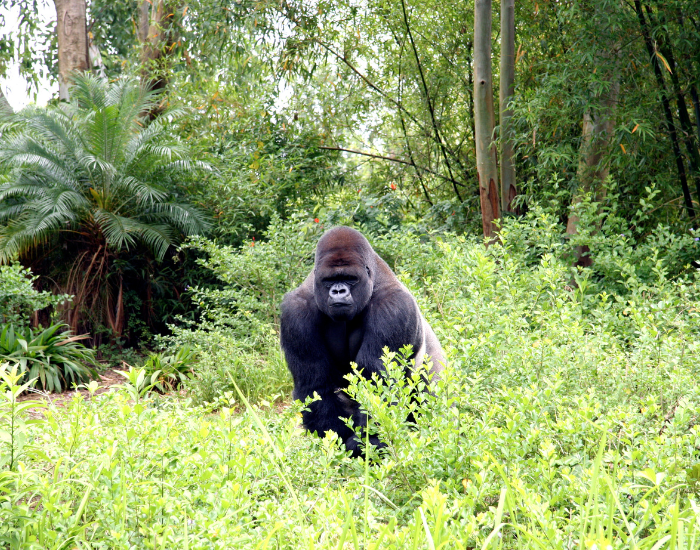
If you wanted to visit silverback gorillas in the wild, you’d head to Central Africa. Their distribution is somewhat patchy, split by the massive Congo River. Silverback gorillas live in close-knit social groups led by a dominant male, known as the silverback, who protects and guides the troop. These groups inhabit dense forests and mountainous regions, where they forage and interact within their natural environment.
Mountain gorillas are found in only two places:
- The Virunga Massif (which spans Volcanoes National Park in Rwanda, Mgahinga Gorilla National Park in Uganda, and Virunga National Park in the Democratic Republic of Congo)
- The Bwindi Impenetrable National Park in Uganda
Western lowland gorillas have a much larger range across countries like Gabon, Cameroon, and the Democratic Republic of Congo.
They thrive in dense vegetation and dense forests where they can hide and forage in peace. The mountain gorilla population has shown remarkable resilience in recent years, thanks to intensive gorilla conservation efforts and protected national park areas.
Gorilla trekking tours are available in Rwanda, Uganda, and the Democratic Republic of Congo. You or any visitors must obtain a gorilla trekking permit to observe silverback gorillas in their natural habitat, but believe, me, these hikes can be physically demanding, requiring visitors to be prepared for hiking in mountainous terrain.
7. Silverback Gorillas Are Surprisingly Gentle Giants
Despite being labeled “aggressive” in old Hollywood movies, silverback gorillas are actually quite shy. During my time observing gorillas in the wild, I was always struck by their patience.
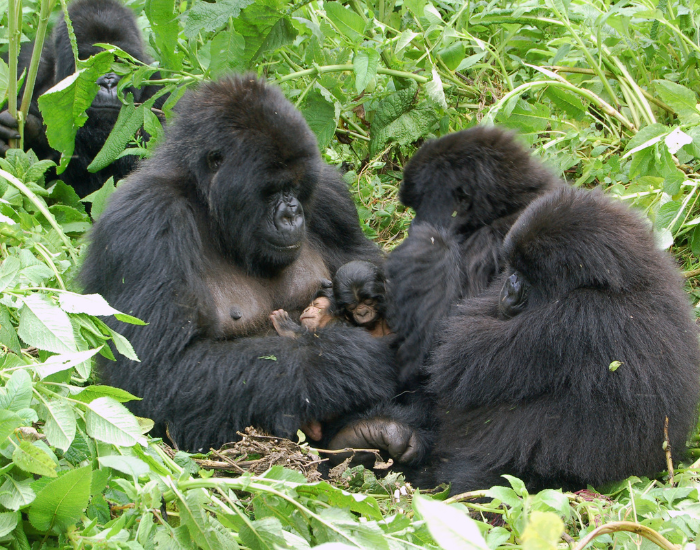
For example, you’ll see a 400-pound male silverback gorilla letting a tiny infant climb all over his head and pull his hair without so much as a grunt of annoyance. This gentle behavior extends to how the dominant male interacts with all members of the family groups.
Are silverback gorillas friendly to humans? I wouldn’t use the word “friendly”, they are wild animals, not pets. However, through “habituation” (a long process where they get used to humans visiting), they can be incredibly calm.
They treat us like part of the scenery. As long as you follow the rules when you visit silverback gorillas during gorilla trekking, keeping your distance and avoiding direct eye contact, they are peaceful neighbors. Conservation efforts to protect gorillas are crucial, and tourists on Uganda safaris or visits to the Bwindi Impenetrable Forest can safely observe these magnificent creatures. Conservation organizations provide training and equipment to rangers to make anti-poaching efforts effective. Community-based programs also encourage local people to protect gorillas instead of harming them, through initiatives like eco-tourism.
8. The Difference Between a Silverback and a Blackback
It’s all about puberty. A male gorilla develops into a blackback around age 8. At this stage, he is mature sexually but hasn’t yet developed the silver hair or the full size of a leader. He is essentially a “teenager” among mature males.
A mature and lone blackback might eventually leave the troop to live a solitary life until he can attract his own several adult females and start a new troop. This transition is a dangerous time for young gorillas. In fact, they no longer have the protection of the dominant male during this period.
Female mountain gorillas mature earlier than males and play a crucial role in group dynamics, including infant care, social cohesion, and reproduction. Their reproductive behavior and involvement in raising offspring are central to the stability and success of gorilla groups.
Some younger males stay with their natal group as subordinate silverbacks. However, they must wait their turn to lead or challenge the dominant silverback for control of the family groups.

9. They Are Our Close Relatives in the Great Apes Family
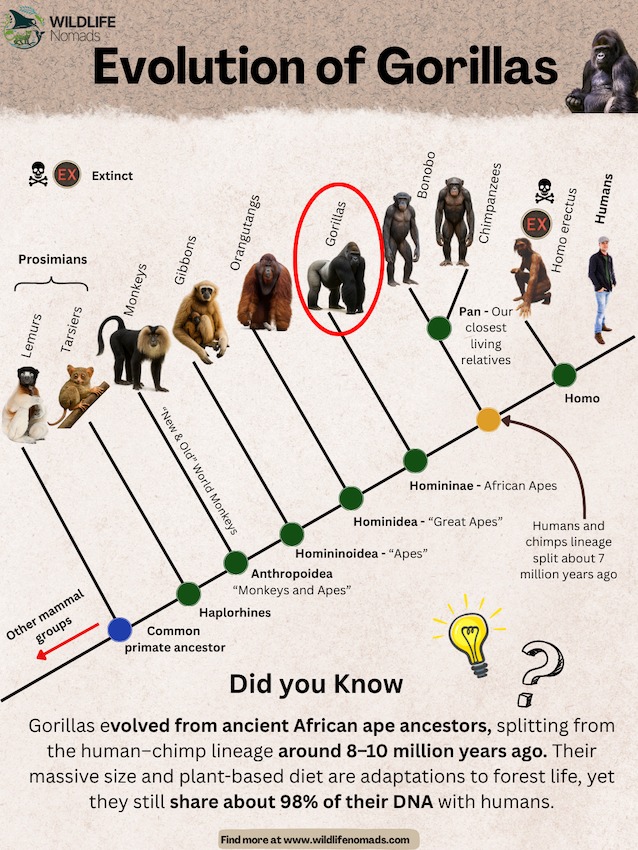
As great apes (like chimpanzees and orangutangs), gorillas share about 98% of our DNA. This high level of genetic similarity means they are susceptible to many human diseases. This is why gorilla conservation efforts are so strict about gorilla trekking permits and health protocols.
A simple human cold or a virus like Ebola can be devastating to gorilla populations. Therefore, tourists who want to visit silverback gorillas must follow strict health guidelines. In addition, visitors must maintain a distance of at least 7 meters (about 23 feet) from the gorillas in the wild.
Conservation efforts at places like Virunga National Park and the Bwindi Impenetrable National Park include intensive health monitoring of both gorillas and visitors.
10. The Tragic Reality: Critically Endangered Status
This is the part where the “tough guy” image fades away. All subspecies of gorillas are listed as endangered species or critically endangered by the IUCN. The threats they face are not from other gorillas or predators, but from us:
Habitat Destruction: Logging and mining for minerals like coltan (used in our cell phones) continue to destroy their natural habitat. The Democratic Republic of Congo faces particularly intense pressure from resource extraction.
Poaching: Despite protection efforts, illegal hunting for the bushmeat trade or “trophies” continues to threaten gorilla subspecies.
Disease: As mentioned, their immune systems aren’t prepared for human pathogens. Disease transmission from humans remains a significant threat to several silverback gorillas and their family groups.
The mountain gorilla population is a rare success story in conservation efforts. Thanks to intense gorilla conservation and the revenue from Uganda safaris and Rwandan tourism, their numbers have climbed from a few hundred to over 1,000. However, other gorilla subspecies like the Cross River gorilla remain critically endangered with fewer than 300 individuals left in the wild.
11. Silverback Gorillas Recognize Their Families and Show Complex Emotions
Gorillas are among the smartest animals in the world. Include of course, a high emotional intelligence. They form deep social bonds, particularly between the silverback and his adult females. They grieve when a member of the troop dies and show immense joy during play.
When a silverback gorilla recognizes a long-lost troop member or a familiar researcher, their body language changes completely. They aren’t just biological machines. Instead, they are sentient beings with complex inner lives.
Research has shown that gorillas use over 25 different vocalizations to communicate. In addition, they have unique nose prints (similar to human fingerprints) that researchers use to identify individual gorillas in the wild.
12. 100 Men vs. One Silverback? The Real Battle
To circle back to the internet’s favorite question: Would 100 men beat a silverback? Biologically, the silverback wins the physical fight every time. An angry silverback could seriously injure multiple attackers with his incredible strength and bite force.
However, in the real world, “100 men” (representing humanity) are winning in the worst way possible. We are winning by taking their land and destroying their homes through habitat destruction.
The real question should be: Can 100 men (or 100,000 men) save a silverback? The answer to that is yes. Therefore, we must support national park protection and sustainable tourism initiatives like gorilla trekking in places such as the Bwindi Impenetrable Forest.

FAQ: Quick Hits on Silverback Gorilla Information
Generally, no. They are “gentle giants.” However, an angry silverback is incredibly dangerous if provoked or if he perceives a threat to his family groups. Nevertheless, they prefer intimidation displays over actual violence.
Because of the patch of silver hair that develops on their back and hips as they reach social and sexual maturity, typically between ages 12-15.
They can stand up to 6 feet tall when upright and weigh between 300 to 500 pounds (136–227 kg). Therefore, they are among the largest primates on Earth.
Protecting the Kings of the Forest
The silver backed gorilla is a testament to the raw power and the delicate balance of nature. They are the anchors of their ecosystems. Moreover, their survival is a reflection of our own ability to co-exist with the wild.
Conservation efforts work. The mountain gorilla population has proven that with proper protection, habitat preservation, and community involvement, we can reverse the decline of critically endangered species.
The next time you see a meme about how strong these animals are, remember this: their greatest strength is their family bond, and their greatest weakness is the world we’ve built around them. However, we have the power to change that narrative through gorilla conservation and sustainable tourism.
The future of the silverback, whether in the lowland forests of the Democratic Republic of Congo or the high-altitude ranges of the Virunga Mountains, depends on choices we make today. Therefore, let’s make sure these magnificent creatures remain in the wild for generations to come.
Silverback Gorilla Biology & Science Quiz
Ten fun study questions covering gorilla rank, plant-based diet, bite force, DNA similarity, and conservation status. Test your retention!
Multiple Choice
Experience Gorillas in the Wild
Here is a list of our recommended Safari tours with trusted partners so you can spot a cheetah and many other animals in the wild:
This blog is reader-supported. When you buy experiences through links listed on this site, we may earn an affiliate commission.
References:
Gilardi, K. V. K., Genovese, B. N., Harris, L. A., Cranfield, M., Noheri, J. B., Mudakikwa, A., Zimmerman, D., Kinani, J. F., Bahizi, M., Smiley Evans, T., Goldstein, T., & Mazet, J. A. K. (2026). Environmental and demographic risk factors for respiratory illness in endangered wild mountain gorillas (Gorilla beringei beringei) in Rwanda. Frontiers in Conservation Science, 6, 1685438. https://doi.org/10.3389/fcosc.2025.1685438
Granjon, A.-C., Robbins, M. M., Arinaitwe, J., Cranfield, M. R., Eckardt, W., Mburanumwe, I., Musana, A., Robbins, A. M., Roy, J., Sollmann, R., Vigilant, L., & Hickey, J. R. (2020). Estimating abundance and growth rates in a wild mountain gorilla population. Animal Conservation, 23(4), 455–465. https://doi.org/10.1111/acv.12559
Plumptre, A. J., Nixon, S., Kujirakwinja, D. K., Vieilledent, G., Critchlow, R., Williamson, E. A., Nishuli, R., Kirkby, A. E., & Hall, J. S. (2016). Catastrophic decline of world’s largest primate: 80% loss of Grauer’s gorilla (Gorilla beringei graueri) population justifies Critically Endangered status. PLOS ONE, 11(10), e0162697. https://doi.org/10.1371/journal.pone.0162697
Salmi, R., Hammerschmidt, K., & Doran-Sheehy, D. M. (2013). Western gorilla vocal repertoire and contextual use of vocalizations. Ethology, 119(10), 831–847. https://doi.org/10.1111/eth.12122
Wright, E., Galbany, J., McFarlin, S. C., Ndayishimiye, E., Stoinski, T. S., & Robbins, M. M. (2020). Dominance rank but not body size influences female reproductive success in mountain gorillas. PLOS ONE, 15(6), e0233235. https://doi.org/10.1371/journal.pone.0233235