You’ve probably seen spotted hyenas and African wild dogs in Documentaries about African Animals, powerful predators that command attention on the African savanna. But there’s one animal that may look similar to these creatures yet rarely appears in the spotlight. It’s a striped, maned mammal that most people have never heard of, let alone seen.
Many people remain confused about this animal. The name means “earth wolf” in Afrikaans, suggesting a canine connection. However, the truth proves far more interesting.
What is an Aardwolf?
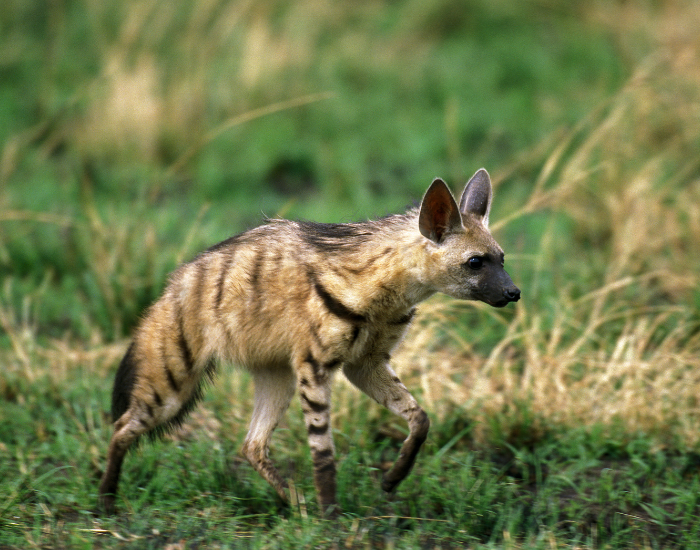
The aardwolf is one of Africa’s most misunderstood mammals. This nocturnal mammal plays a crucial role in the ecology of southern Africa, east Africa, and northeast Africa. As nature’s ultimate termite-eating specialist, one aardwolf can consume up to 300,000 termites in a single night.
This is the story of Proteles cristata, the termite eating hyena that deserves recognition.
Aardwolf Taxonomy: Understanding the Hyena Species Connection
Have you asked if an aardwolf is a type of hyena. The answer highlights the aardwolf’s unique place in the animal kingdom.
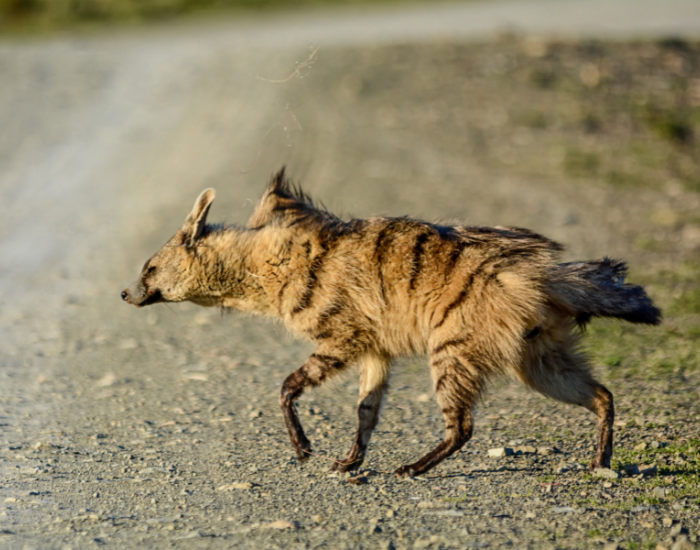
Yes, the aardwolf belongs to the hyena family (Hyaenidae). In fact, it ranks among four hyena species, alongside the striped hyena, brown hyena, and spotted hyenas. However, its lineage remains distinct.
The aardwolf is the smallest and most specialized of these species. It occupies its own subfamily, Protelinae, and genus, Proteles. Think of it this way: differences between an aardwolf and spotted hyenas are immense, similar to differences between housecats and lions in the family Felidae.
While large hyenas function as powerful hunters and scavengers, the aardwolf evolved as a dedicated insectivore. Fossil evidence shows aardwolves have existed in Africa for millions of years. The name Proteles cristata roughly translates to “first complete crest,” referencing its distinctive mane.
Physical Characteristics: Built for Eating Insects
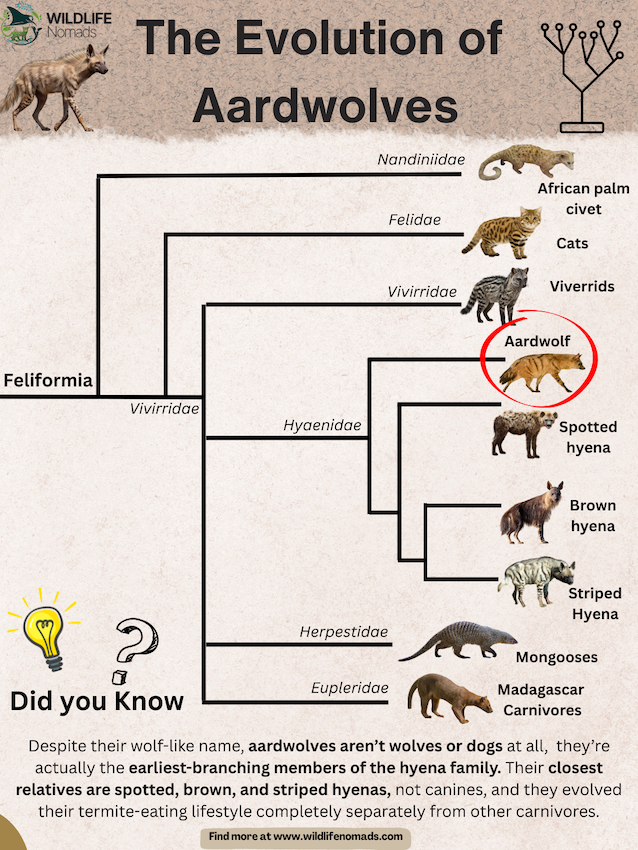
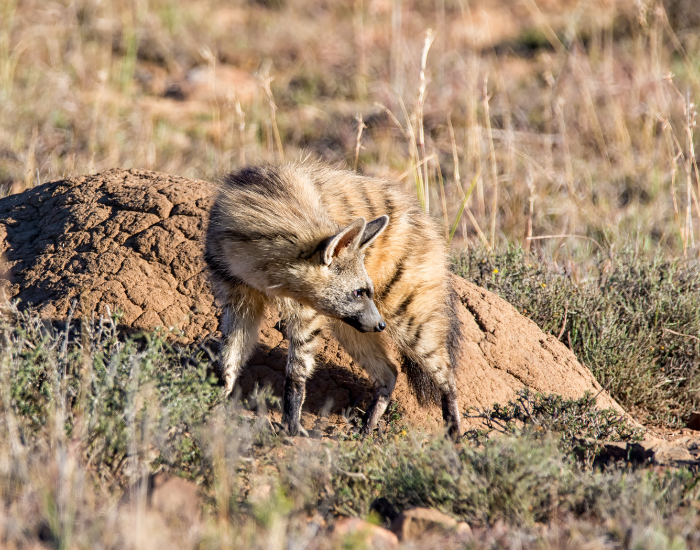
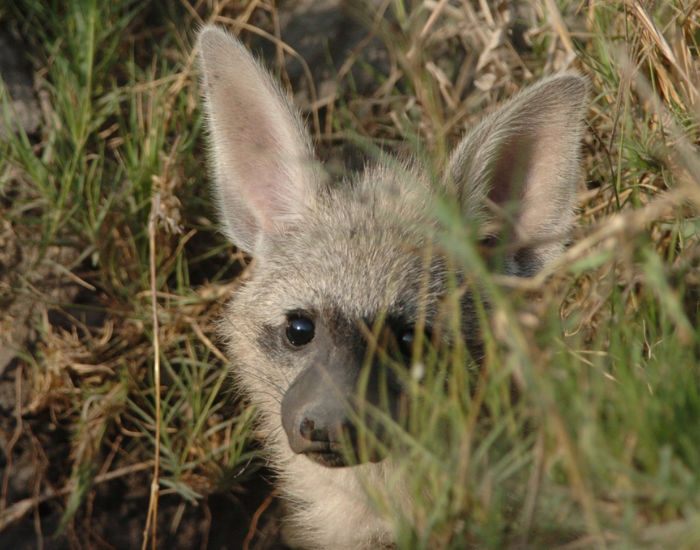
The aardwolf is built for specialized feeding rather than fighting. They display beautiful yellowish fur adorned with black stripes running vertically down their bodies. The distinctive mane along their neck and back can erect to make them appear larger when threatened.
Size and Weight
Adult aardwolves typically weigh between 7.9–12 kg (18–26 lbs) and stand about 50 cm (20 inches) tall at the shoulder. This makes them significantly smaller than other hyenas.
The Sticky Tongue and Specialized Teeth
The aardwolf tongue is long, broad, and equipped with large papillae. These small bumps secrete a sticky substance that acts like biological flypaper for catching termites.
Aardwolf teeth are highly specialized. They retain large canine teeth for defense, but their cheek teeth and molars are small, peg-like, and widely spaced. These aardwolf teeth are almost vestigial because they don’t need to crush bones or tear muscle. Their main work involves licking, not chewing.
This contrast between physical traits and those of large scavenging cousins illustrates a core biology principle: evolution favors efficiency.

Termite-Eating Specialization: The Ultimate Insectivore
The aardwolf diet revolves almost entirely around termites. They are capable of consuming 250,000–300,000 termites per night during solitary foraging.
Their diet consists primarily of termites from the genus Trinervitermes, known as harvester termites. What makes this feeding strategy remarkable is its sustainability.
Non-Destructive Feeding
Unlike aardvarks that destroy termite mounds, the aardwolf uses a delicate approach. They wait for termite populations to emerge or lick termites from the surface without causing structural damage. This allows them to return to the same termite mounds repeatedly.
Targeting Soldier Termites and Worker Termites
They specifically consume soldier termites and worker termites using their sticky tongue. Their breeding season and activity levels correlate with the rainy season when termites are most active.
When termite numbers drop, they may supplement their diet with occasionally small mammals or other insects. However, this represents a very small percentage of their intake.
Habitat and Distribution: Where Earth Wolves Live
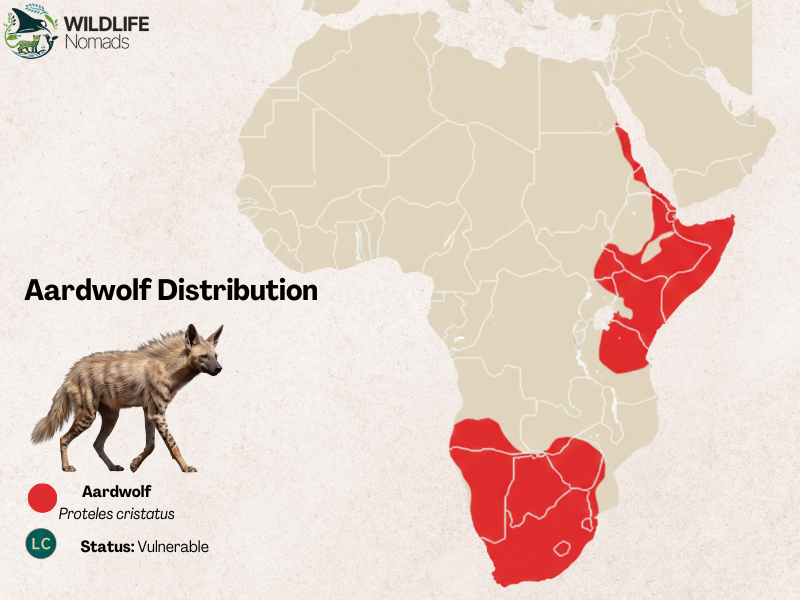
The aardwolf habitat is tightly linked to preferred termite populations. Two distinct populations exist: one in southern Africa (Botswana, South Africa, Namibia) and another in east and northeast Africa (Tanzania, Kenya, Somalia).
Preferred Habitats
Aardwolves thrive in open dry plains, scrubland, and bushland. They favor heavily grazed grasslands and savannas. However, they avoid true desert, mountainous regions, and dense forest.
Underground Burrows and Dens
During the day, they retreat to underground dens to sleep. These can be burrows they dig themselves or abandoned dens from other animals like springhares or porcupines. A single aardwolf or pair may maintain up to a dozen dens within their own territory, rotating between them every six weeks. This practice forms part of their territorial and anti-predator strategy.
Social Structure: Solitary Foragers with Stringent Systems
Despite belonging to the hyena family, some of the most social carnivores, aardwolves are mostly solitary animals when foraging.
Nocturnal Lifestyle
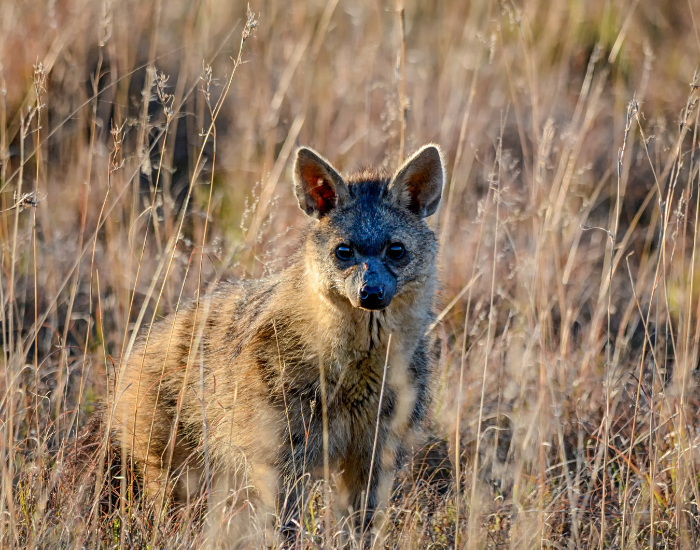
Aardwolves are primarily nocturnal animals, emerging after sunset to search for food. This avoids daytime heat and most larger predators. During winter months, they may occasionally become diurnal feeders during the coldest periods to conserve heat.
Stringent Territorial System
They operate within a stringent territorial system. A mated pair shares a territory, sometimes with their most recent offspring. They defend territories not through aggressive confrontation but through sophisticated scent marking using secretions from anal glands.
Researchers note that dominant males can deposit thousands of scent marks per night to maintain boundaries.
Breeding Season and Dominance
During the breeding season, typically starting in winter night (or dry season), social dynamics intensify. Dominant males fiercely protect their mate and territory. Interestingly, females may be courted by dominant neighboring aardwolves and sometimes mate with less dominant neighboring aardwolves from outside their territory.
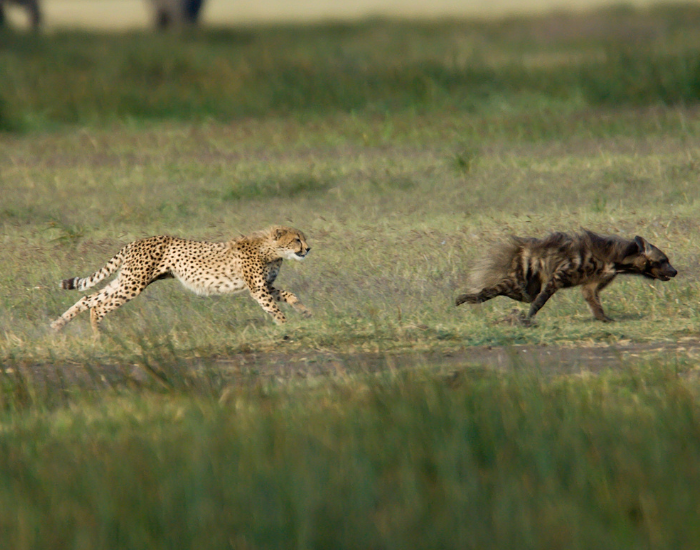
Aardwolves are not aggressive. They’re shy and rarely confrontational, preferring to display their impressive mane or release musky anal gland secretion rather than fight.
Reproduction and Growth: Supervised Foraging Life
Breeding occurs seasonally during cooler months when termites remain available.
Gestation and Birth
After a gestation period of 89–92 days, females give birth to litters of two to five cubs in well-protected underground burrows.
Cub Care and Development
The pups remain in the den for 6–8 weeks. This critical period requires both parents to be vigilant. By three months of age, cubs begin supervised foraging, venturing out with a parent to learn routes and techniques for finding termites.
They become fully independent by four months. This entire cycle is beautifully adapted to ensure young can survive when ready to forage alone.
Conservation Status: Current Challenges for Aardwolves
The aardwolf is currently classified as “Least Concern” by the IUCN Red List. However, challenges exist across their range.
Mistaken Beliefs About Livestock Predation
The biggest issue involves mistaken beliefs that aardwolves prey on livestock like chickens or lambs. This leads to persecution by farmers who might poison or hunt them. Given their specialized termite eating diet and small non-predatory teeth, this couldn’t be further from the truth. Their diet is nearly 100% eating insects.
Additional Threats
They’re vulnerable to habitat loss as human populations grow. Open grasslands and savannas convert into farmland or housing, causing habitat fragmentation.
Pesticide use poses another threat. Since their survival depends entirely on termite populations, widespread agricultural pesticides devastate their food source, creating cascading impacts on aardwolf health and reproduction.
Conservation initiatives focus heavily on education to change farmer perceptions and promote coexistence, supported by rigorous scientific research confirming their insectivorous diet.
12 Essential Aardwolf Facts
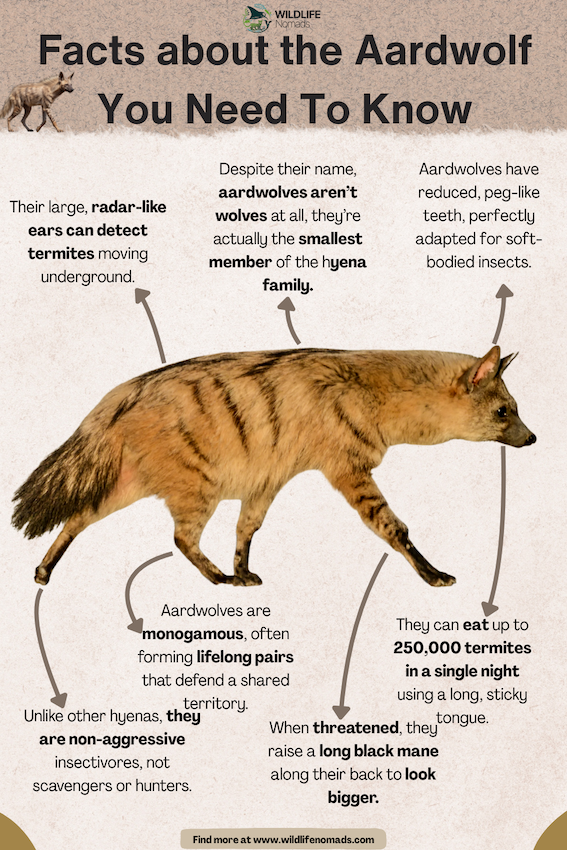
To dispel myths and appreciate this incredible animal, here are key facts:
- Not Really a Wolf: Despite the name meaning “earth wolf” in Afrikaans, they’re not related to wolves or dogs (Canidae). They belong to the hyena family (Hyaenidae).
- Solitary Specialist: They’re primarily solitary foragers, spending nights alone consuming termites.
- The Smallest Hyena: The aardwolf is the smallest of four hyena species.
- Termite Super-Feeder: Adult aardwolves can eat termites numbering up to 300,000 in a single night.
- Non-Predatory Diet: Their diet is almost entirely eating insects. They very rarely consume occasionally small mammals and cannot kill larger animals.
- The Sticky Tool: They possess a long, broad, sticky tongue perfectly adapted for efficiently lapping up termites from the ground.
- Scent Marking Experts: They use secretions from anal glands for scent marking to delineate and defend their own territory.
- The Mane’s Defense: When threatened, the aardwolf raises its distinctive mane along its back to appear twice its actual size.
- Two Distinct Populations: One population lives in southern Africa, another in east and northeast Africa.
- The Tooth Truth: Aardwolf teeth (molars and premolars) are small and peg-like, specialized for eating insects, not tearing flesh.
- Homebody Burrowers: A single pair may maintain up to a dozen dens within their range, rotating between them.
- Nocturnal Life: They’re strictly nocturnal mammals, avoiding daytime heat and visibility.
FAQ: Common Aardwolf Questions
Yes, it belongs to the hyena family (Hyaenidae) as one of four hyena species. However, it occupies its own specialized subfamily (Proteles). It’s a termite eating hyena, not a hunter like spotted hyenas.
No. Despite the name meaning “earth wolf,” they’re not related to dogs (Canidae). They belong to the hyena family.
Aardwolves are not aggressive but extremely shy, generally avoiding human contact. They’re wild animals and should not be approached. They’re not dangerous to humans.
Yes, the aardwolf tongue is long, flat, and sticky, making it perfectly adapted for lapping up hundreds of thousands of termites they eat each night.
Yes, they have large defensive canine teeth. However, their molars and premolars (cheek teeth) are small and weak, reflecting their insectivorous diet.
Protecting Africa’s Hidden Architect
The aardwolf exemplifies nature’s specialization. This shy, beautiful creature carved out a niche as the ultimate termite eating hyena of African savannas. Its entire existence, from distinctive stripes and yellowish fur to sticky tongue and peg-like aardwolf teeth, testifies to evolutionary efficiency.
My experience of seeing one emerge from shadows confirms that wild places still hold profound secrets. As conservationists, biologists, and informed citizens, we have a responsibility to look beyond common narratives and protect these specialized species.
By supporting conservation efforts that protect aardwolf habitat from fragmentation and educating local communities about the animal’s truly harmless and beneficial insectivorous diet, we ensure the earth wolf continues its quiet, essential work across southern Africa and beyond.
Ready To See an Aardwolf in the Wild?
Here is a list of our recommended Safari tours with trusted partners so you can spot a cheetah and many other animals in the wild:
This blog is reader-supported. When you buy experiences through links listed on this site, we may earn an affiliate commission.