The forest floor transforms at night into a world of shadows and whispers. As a biologist, I’ve learned that the most misunderstood creatures often carry the most dramatic names.
This brings us to the so-called Tarantula Moth.
If you’ve searched this name, you’re probably wondering whether it’s a spider-hunting monster or just a large brown moth near your porch light. The truth is far more fascinating than frightening.
What Is the Tarantula Moth? Meet the Polyphemus Moth
The creature most people call the Tarantula Moth is actually a type of moth, specifically, the Polyphemus moth (Antheraea polyphemus). This giant silk moth belongs to the Saturniidae family. It is a North American member of the Saturniidae family, highlighting its regional significance and distribution. However, “Tarantula Moth” isn’t scientifically recognized. Instead, it’s a colloquial term for several large, hairy moths.
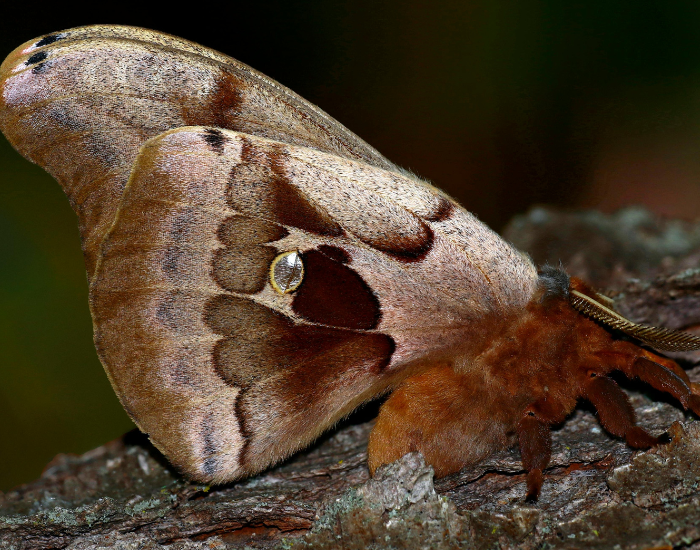
The Polyphemus moth earned this nickname from its thick, furry body that resembles a small mammal more than an insect. With eyespots that stare back at you, this moth truly deserves its reputation as one of nature’s most spectacular creatures.
Understanding Giant Silk Moths
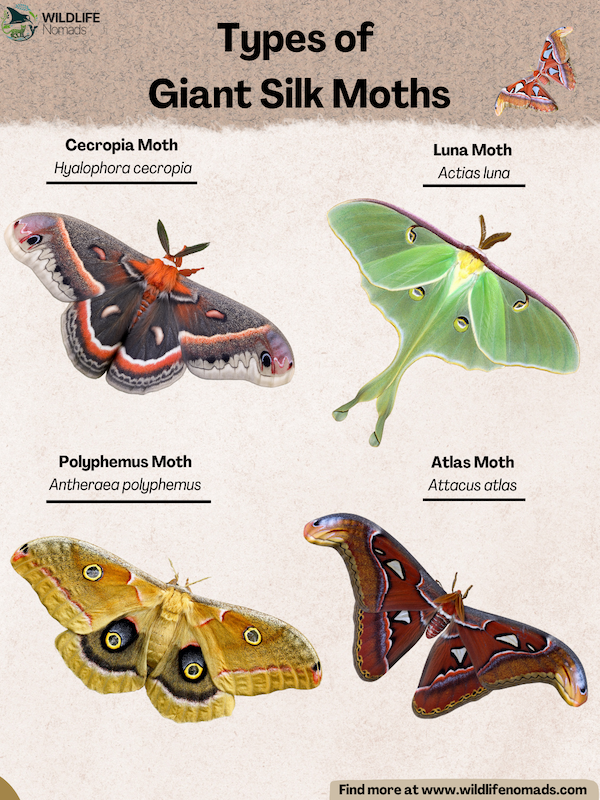
Polyphemus moths belong to the giant silk moth family, which includes the cecropia moth and luna moth. There are many species of giant silk moths in North America, such as the promethea and io moths, and these other giant silk moths share similar impressive size and striking features. These saturniidae species are the showstoppers of the insect world. Their wingspans routinely exceed six inches, making them some of North America’s largest moths.
Polyphemus Moth Size: A True Giant
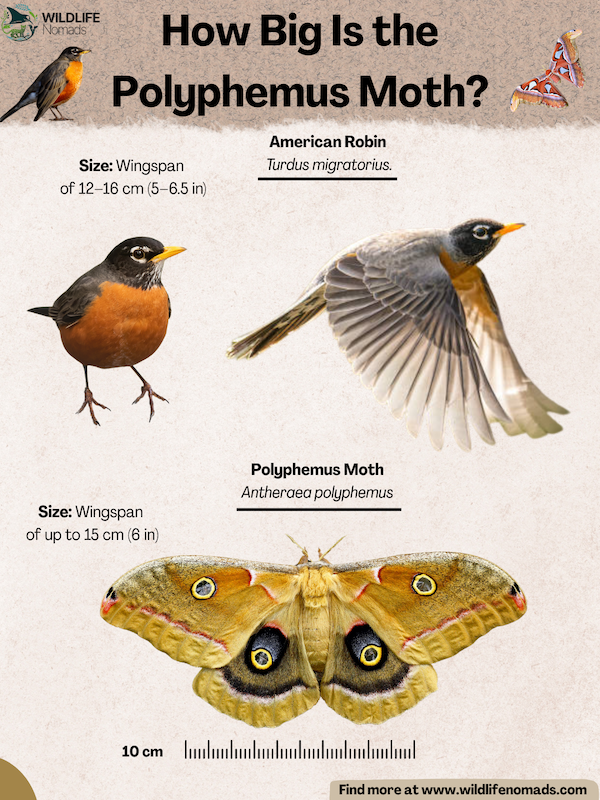
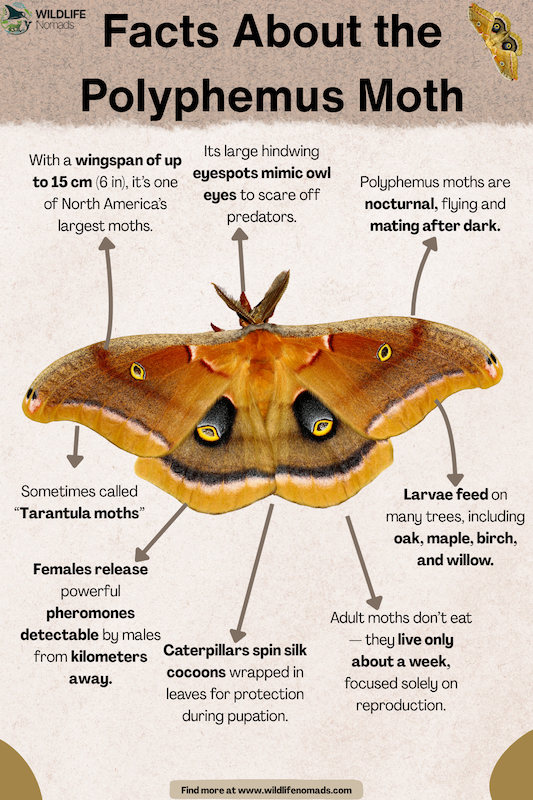
The Polyphemus moth size genuinely impresses anyone who sees one. With wingspans reaching six inches (15 cm), this giant brown moth rivals small birds of the US. Males typically display slightly smaller wingspans than females, and females are slightly larger in the abdomen because they are carrying eggs at this stage of their life cycle. However, both sexes have stocky bodies densely covered in hair, contributing to their “tarantula” appearance.
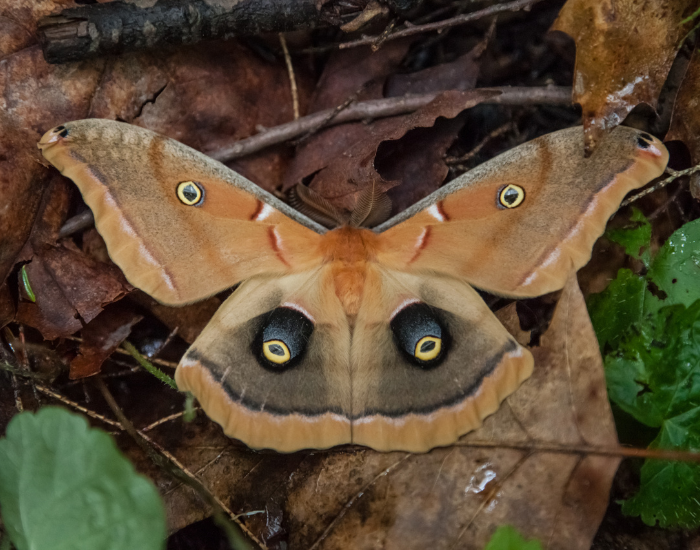
A key identification feature is the large yellow spot lined with blue and black on the hindwings, which helps distinguish the Polyphemus moth from other species.
12 Essential Facts About the Polyphemus Moth
1. Named After a Greek Cyclops
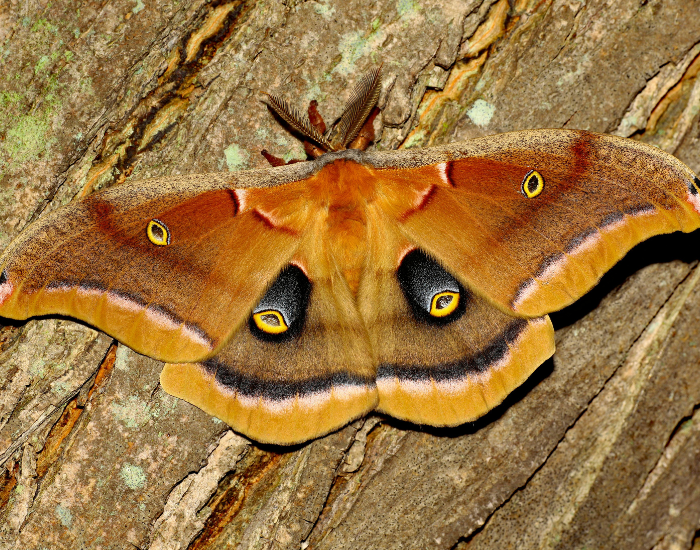
The scientific name Antheraea polyphemus references Polyphemus, the monstrous cyclops from Greek mythology. The moth earned this name for the enormous eyespots on each hindwing. These iridescent purple and black markings are its most distinguishing feature. The polyphemus moth resembles the eyes of a great horned owl with these eyespots, which helps deter predators.
2. Adults Never Eat
Adult Polyphemus moths live only one week and completely lack functioning mouths. They survive entirely on fat reserves stored during the caterpillar stage. Therefore, their sole purpose is reproduction—a true race against time.
3. Caterpillars Are Eating Machines
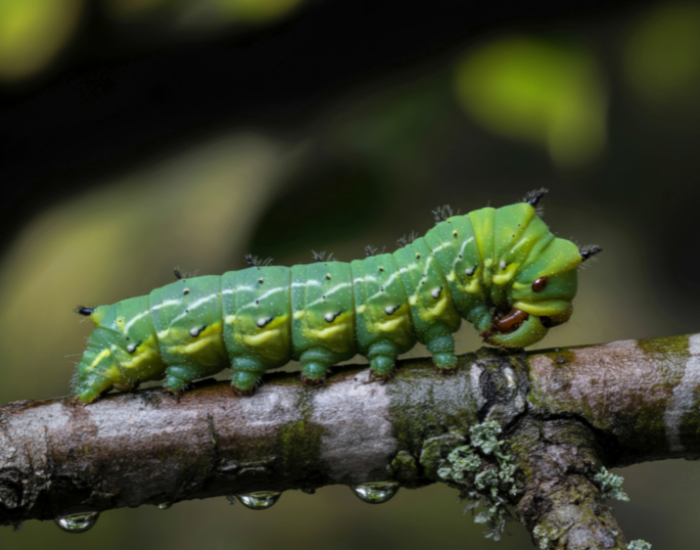
The bright green polyphemus caterpillars reach almost 4 inches long. After hatching, young caterpillars feed on a variety of food plants, including many species of trees and shrubs. They feature striking silver-yellow spots and spend weeks consuming vast quantities of leaves. This sustained feeding provides all the energy needed for adult life.
4. Eyespots Startle Predators
When threatened, the moth drops its forewings, suddenly flashing the purplish eyespots. These brightly colored areas serve as startle patterns that help misdirect predators, a strategy commonly used by camouflaged animals like the Polyphemus moth. The eyespots mimic those of Bubo virginianus (great horned owl), and the bright yellow appears suddenly to startle and confuse attackers, giving the moth a split-second escape chance.
Already camouflaged animals often rely on such visual displays, combining disguise with sudden flashes of color to enhance their defense. Caterpillars click their serrated mandibles as a warning, and their regurgitated fluid makes the caterpillar unappetizing to predators, further deterring attacks.

5. Males Have Super-Sensitive Antennae
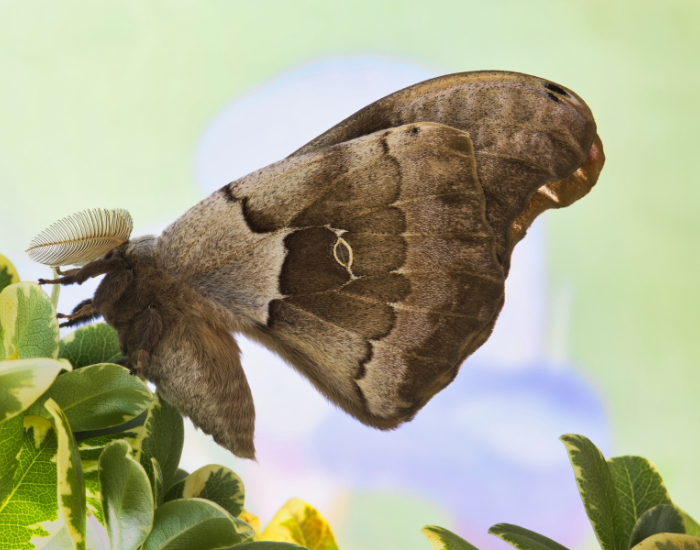
Polyphemus males have very bushy antennae, while females have moderately less bushy antennae, making this a key distinguishing feature between the sexes. The developing antennae of the male pupa become bushy and functional, allowing polyphemus males to detect pheromones released by unmated females over long distances.
The sensory organ protruding from the male’s antennae is specialized for detecting these chemical signals. The male pupa can be distinguished from the female pupa by the structure of the antennae, with the male’s antennae touching during development and appearing bushier. This biological super-detector proves essential for finding mates during their brief lifespan.
6. Not a Tarantula Hawk
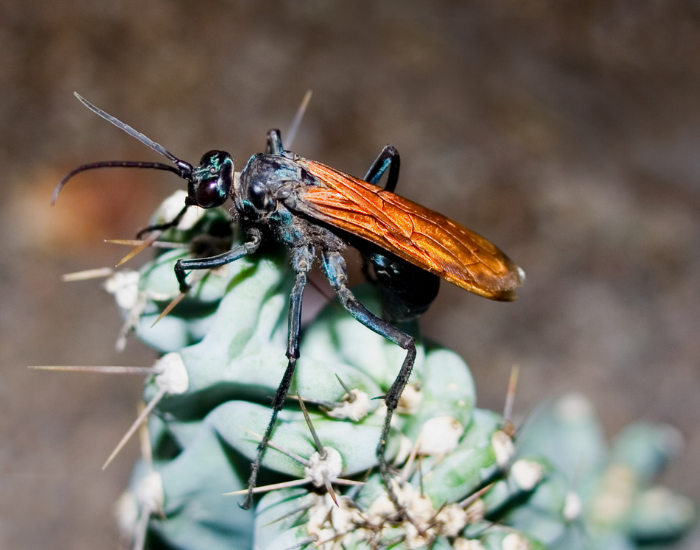
The tarantula hawk is actually a giant wasp that hunts tarantulas. In contrast, the Polyphemus moth is a completely harmless silk moth that doesn’t bite, sting, or hunt anything.
7. They Spin Brown Cocoons
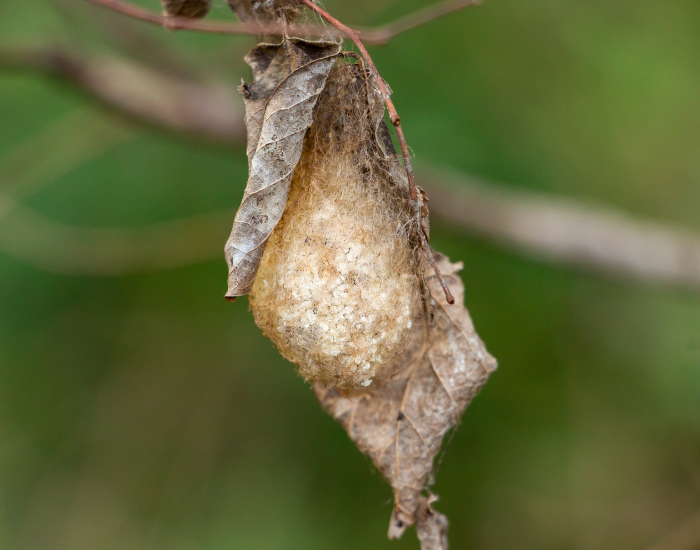
Polyphemus caterpillars create large, tough brown cocoons attached to branches or dropped in leaf litter. After reaching the fifth and final instar, caterpillars pupate inside the cocoon. The final instar caterpillar sheds its skin to reveal the pupal exoskeleton, which serves as a protective shell during metamorphosis.
The polyphemus pupa overwinters inside this protective fortress, emerging the following spring or summer. The adult moth escapes by splitting the pupal exoskeleton at the anterior end and pushing the top up. The female pupa can be identified by a longitudinal notch on the ventral side of the fourth abdominal segment, distinguishing it from the male pupa.
8. Widespread But Locally Uncommon
The Antheraea polyphemus inhabits most of North America from Canada to Mexico. However, populations are patchy. They thrive in deciduous hardwood forests, wetlands, and urban parks with suitable host plants, with their caterpillars feeding on a variety of trees, particularly oak leaves. Males and females from the same brood often emerge simultaneously, which facilitates mating.

9. Threatened by Parasitic Flies
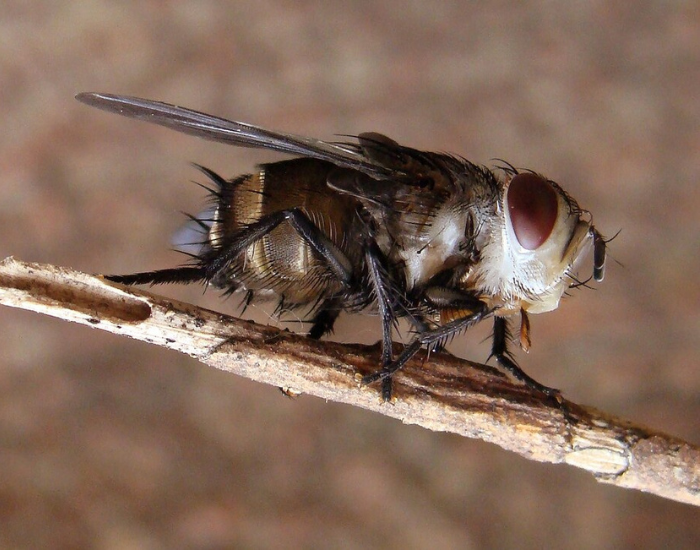
The introduced European parasitoid fly Compsilura concinnata devastates native caterpillar populations. As a tachinid fly, Compsilura concinnata is a major parasite of Polyphemus caterpillars, laying its eggs on the larvae and often causing their death. Originally brought to control gypsy moths, this fly now attacks polyphemus moth larvae across the eastern United States.
10. Light Pollution Kills
These nocturnal insects navigate using moonlight and starlight. Artificial lights act as fatal beacons, disorienting moths and wasting critical mating hours. In addition, artificial lights can attract predators, increasing the risk to moths. Light pollution represents a massive threat to all nocturnal insect populations.
11. Multiple Generations in Warm Climates
Northern populations produce one generation annually in late spring or summer. However, in southern regions, two broods generally hatch each year due to the longer growing season.
12. Completely Harmless
Are Polyphemus moths harmful? Absolutely not. Adults lack mouths and cannot bite. Caterpillars don’t sting and aren’t poisonous. You can safely admire and photograph these gentle giants.
What Polyphemus Caterpillars Eat: Essential Host Plants
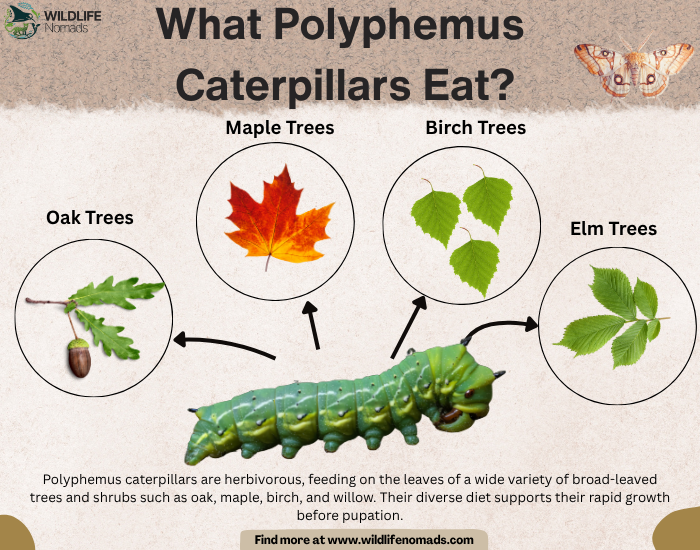
Polyphemus caterpillars feed on numerous deciduous trees. Understanding these food plants explains where you’ll find polyphemus moths.
Oak leaves serve as the primary food source across North America. Maple trees also provide excellent nutrition for developing larvae. Other important host plants include birch, willow, honey locust, elm, and hickory trees.
Spongy moth infestations can reduce the availability of suitable host trees for Polyphemus caterpillars, as these outbreaks trigger chemical defenses in trees like quaking aspen, making them less suitable for Polyphemus moths.
The availability of these host plants in deciduous hardwood forests determines where adult moths lay eggs. Urban environments with diverse tree plantings can also support healthy populations.
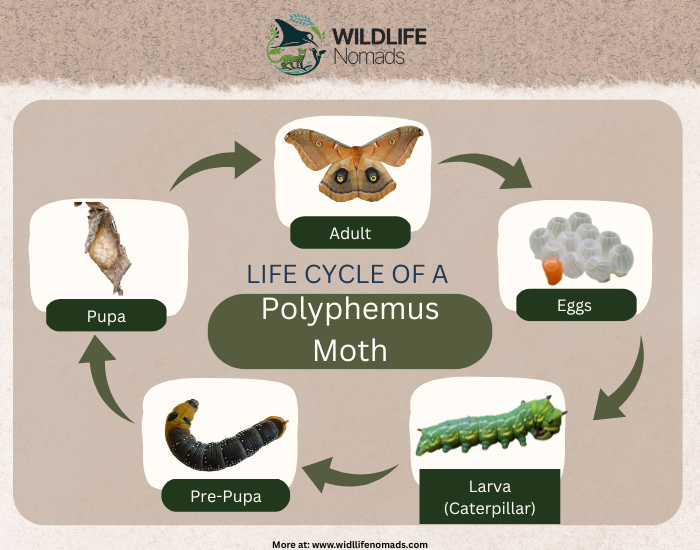
The Polyphemus Moth Life Cycle
The lifecycle begins when females lay light brown eggs on host plant leaves. Eggs hatch into small yellow caterpillars within two weeks and immediately begin feeding.
Polyphemus moths mate soon after emerging, with females emitting sex attractant pheromones from pheromone-producing scent sacs to attract males. Males detect pheromones released by females and can fly long distances to find and attract male mates. After mating, females lay eggs singly or in small groups on the underside of host leaves, a process known as life laying eggs. If females do not mate, they may lay unfertilized eggs, which do not develop.
Over several weeks, as caterpillars age, they grow through five molts, reaching nearly 4 inches. During this time, caterpillars drink regurgitated fluids as a defense mechanism. They then spin protective brown cocoons where they transform into pupae. The pupal stage lasts several months, often through winter.
Adult moths emerge in spring or summer, pump fluid into their wings, and begin their week-long adult life focused entirely on reproduction.
Comparing Giant Silk Moths
The cecropia moth is North America’s largest native moth with reddish-brown wings and distinctive markings. Luna moths showcase pale green wings with elegant tails. Polyphemus moths, in comparison, display color variations ranging from dark brown to reddish cinnamon, and their wings may feature a black and white stripe along the margins. Like polyphemus moths, neither species eats as adults.
All giant silk moths face similar threats from light pollution, habitat loss, and parasitic flies. Conservation efforts that help one species benefit others.
Frequently Asked Questions
They’re widespread but locally uncommon. Seeing one is special due to nocturnal habits and brief lifespans.
No. Adults lack mouths. Caterpillars don’t sting or produce venom.
Like many nocturnal insects, they use celestial light for navigation. Artificial lights disrupt this system.
Most emerge in late spring or early summer. Southern populations may produce a second generation in late summer.
es. The Polyphemus moth was once classified as Telea polyphemus before being reclassified as Antheraea polyphemus. This earlier name appears in historical taxonomy and scientific literature, including discussions of hybridization experiments and the species’ naming history.
Protecting Gentle Giants
The journey from frightening “Tarantula Moth” to magnificent Antheraea polyphemus shows how understanding transforms fear into wonder. These giant brown moths aren’t monsters—they’re ephemeral masterpieces living dramatic lifecycles in just one week.
Next time you encounter a huge moth with eyespots, pause and admire its impressive size and soft wings. These moths face genuine challenges from light pollution, habitat loss, and parasites.
Turn off unnecessary lights. Plant native trees. Leave leaf litter. These small steps ensure polyphemus moths continue gracing our night skies for generations.
The gentle giants of the night need our understanding and protection. By sharing their stories and taking action, we become partners in their survival.
Further Reading
- The Hidden World of the Insect Leaf: 11 Types
- 12 Facts About the Honeybee You Need to Know
- 13 Remarkable Facts About the Flower-Shaped Orchid Mantis