
Pine snakes (scientific name Pituophis melanoleucus) are among the most remarkable reptiles in North America. Pine snakes are also commonly known as the ‘black and white snake’, ‘white snake’, and ‘white gopher snake‘ due to their distinctive coloration. Non-venomous, heavy-bodied, and excellent burrowers, these snakes thrive in sandy soils and pine forests across parts of the United States. Although often overshadowed by more famous snakes like rattlesnakes or copperheads, pine snakes have their own extraordinary story to tell.
They have a very their hissing defense displays, as well as they have a crucial ecological role in controlling small mammal populations. Pine snakes are both fascinating and misunderstood. Let’s dive into 12 surprising facts about pine snakes that will give you a whole new appreciation for this powerful yet non-venomous reptile.
1. Pine Snakes Belong to the Genus Pituophis
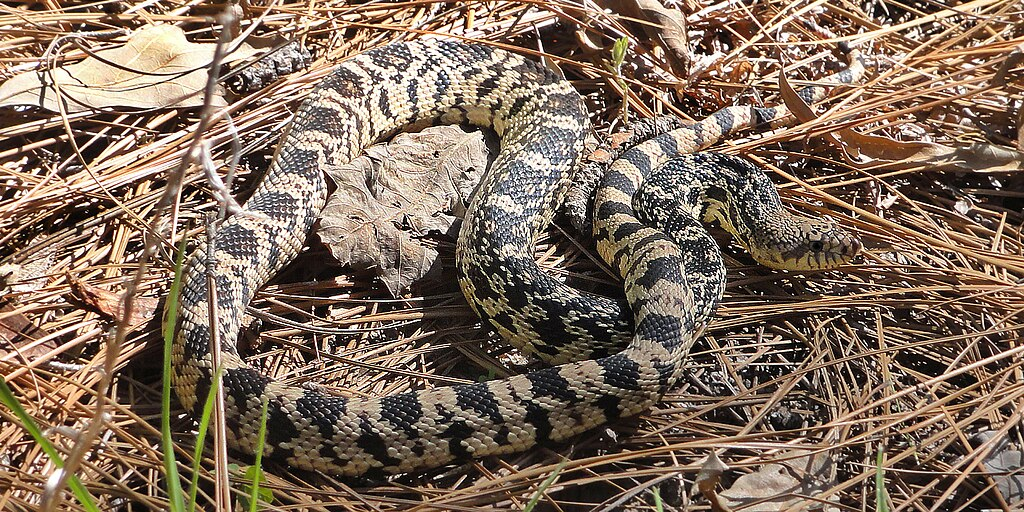
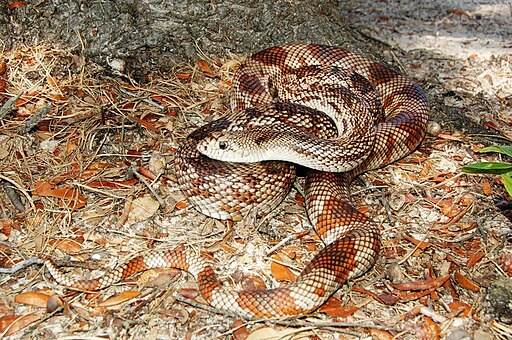
The species Pituophis melanoleucus is commonly known as the pine snake. The genus Pituophis also includes closely related gopher snakes and bullsnakes. The name comes from Greek roots: “melano” (black) and “leucus” (white), describing the striking black-and-white patterns seen on many individuals. Some members of species Pituophis melanoleucus also display dark brown or dark brown blotches, which help them blend into forest leaf litter and sandy environments.
This large snake family spreads widely across North America, but pine snakes occupy specific sandy habitats in the East and Southeast. People sometimes confuse them with bullsnakes, yet pine snakes remain their own distinct species.

2. They Are Heavy-Bodied and Among the Largest Snakes in Their Range
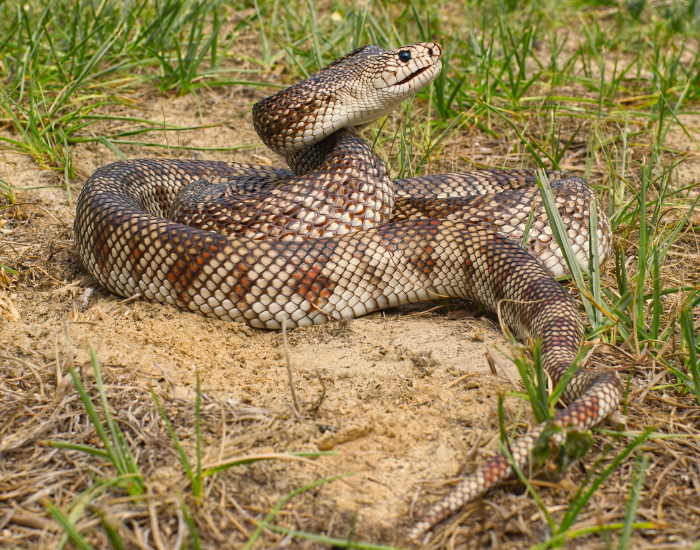
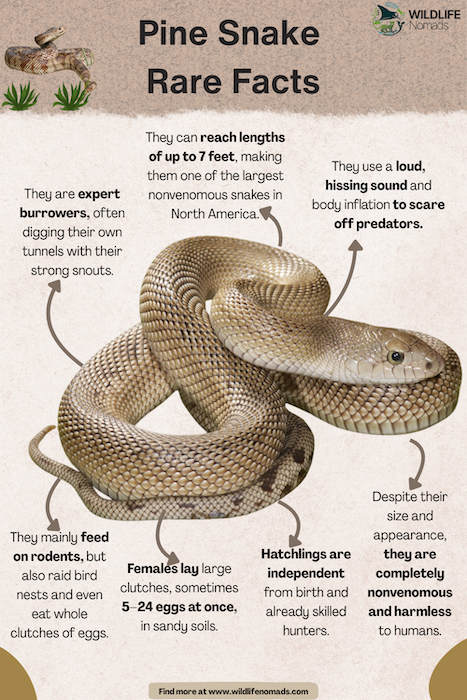
Pine snakes are heavy-bodied snakes that can reach impressive sizes. Adults typically grow between 4 and 7 feet long, with some reports of individuals approaching 8 feet.
That makes them one of the largest snakes in North America, certainly the largest non-venomous snake in the pine woods they call home. Despite their size, they are non-venomous and pose no real threat to humans.
3. Pine Snakes Are Masters of Sandy Soils
Pine snakes are a burrowing species adapted to life underground. With their pointed snout and four prefrontal scales, they are perfectly adapted for burrowing. Using muscular pushes and body coils, they carve into sandy soil, pine woods, and coastal plains, preferring these loose, well-drained environments.
Their burrowing ability helps them regulate temperature, avoid predators, and access prey underground. They spend a significant amount of time underground, which allows them to avoid predators and maintain optimal body temperature. In fact, they often take over underground burrows originally made by gopher tortoises or other animals, reshaping them into safe retreats.
4. The Species Is Divided Into Subspecies
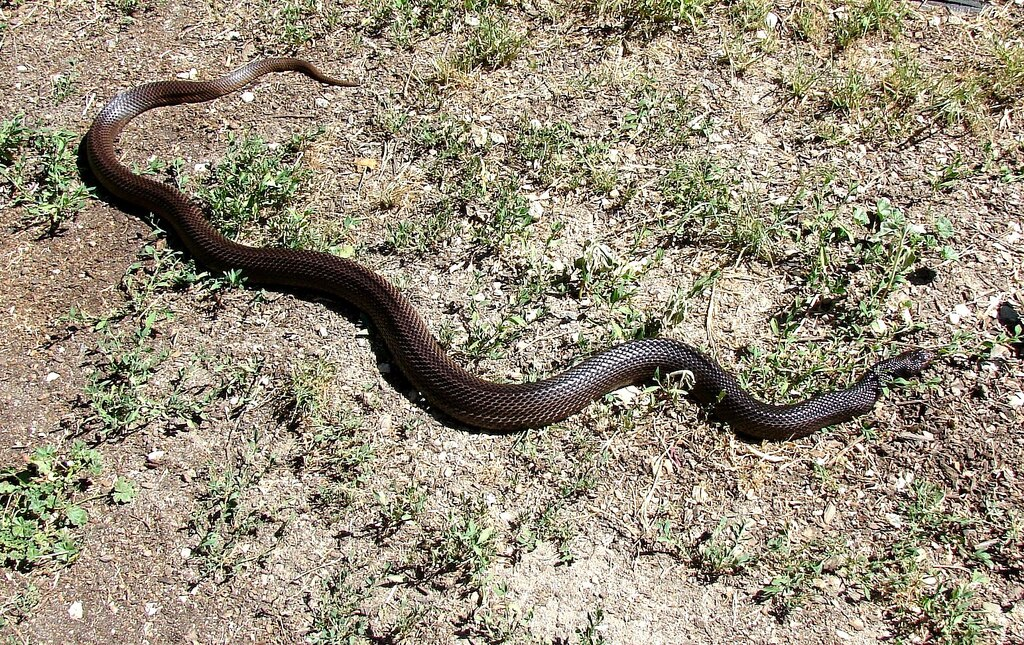
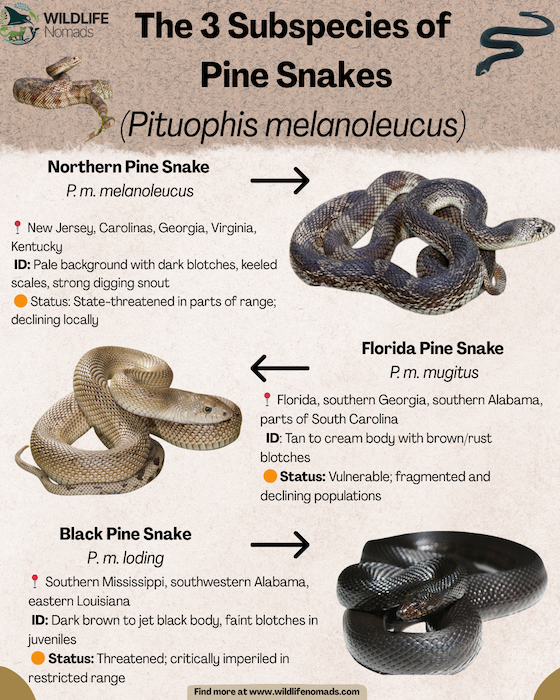
The pine snake is traditionally divided into three recognized subspecies:
- Northern Pine Snake (P. m. melanoleucus) – Found in New Jersey, North Carolina, South Carolina, Georgia, Virginia, and West Virginia.
- Florida Pine Snake (P. m. mugitus) (Pituophis melanoleucus mugitus) – Found in Florida, Alabama, and southern Georgia, often in the longleaf pine ecosystem.
- Black Pine Snake (P. m. lodingi) – A rarer form restricted to southern Mississippi, Alabama, and Louisiana.
Pine snakes live across eastern and central North America, thriving in pine forests and sandy soils. Some herpetologists also call them the eastern pine snake, southern pine snake, or pilot snake, although scientists continue to debate these classifications. Genetic studies suggest subspecies boundaries may be less distinct than once thought.
5. Pine Snakes Have a Rare Cousin: the Louisiana Pine Snake
One of the rarest reptiles in North America is the Louisiana pine snake (Pituophis ruthveni), a close relative of the common pine snake. It is now found only in western Louisiana and eastern Texas, within fragmented patches of longleaf pine forests.
This snake is considered critically endangered due to habitat loss, fire suppression, and declines in its prey species, the Baird’s pocket gopher. Conservationists are working on captive breeding programs and reintroductions in protected areas.
6. They Are Diurnal and Seasonal Snakes
Unlike many snakes that prefer night, pine snakes are primarily diurnal, active during the day. Their activity season typically runs from late March through October, depending on latitude.
In colder months, they retreat into winter hibernation, often in underground burrows or beneath large rocks. Communal hibernation has been observed, with several females and males sharing the same retreat.
7. Pine Snakes Use Mimicry to Scare Predators
When threatened, pine snakes put on quite a show. They inflate their bodies, hiss loudly, and even vibrate their tails in leaf litter to mimic rattlesnakes. The hissing sound is produced by forcefully expelling air from their lungs as a defensive display.
This bluff display, combined with their dark blotches and black markings, makes them appear more dangerous than they are. In reality, pine snakes are non venomous and generally avoid humans.
8. Pine Snakes Are Excellent Burrowers and Communal Nest Builders
Female pine snakes often build communal nests in sandy soils, where several females lay eggs together, depositing multiple clutches in the same chamber. They usually place these nests in well-drained soils beneath open-canopy pine forests.
They are also excellent burrowers, sometimes spending the majority of their lives underground. This unique lifestyle makes them difficult to study, which is one reason their populations are poorly understood.
9. They Lay Large Clutches of Eggs
Pine snakes are oviparous, and females lay 3 to 24 eggs in a clutch. In some cases, a communal nest can contain dozens of eggs laid by multiple females.
Eggs are usually deposited in early summer and hatch in late summer to early autumn. Hatchlings, or juvenile pine snakes, are about 12–18 inches long at birth and already resemble miniature adults.
10. Pine Snakes Play an Important Role in Their Ecosystem
Pine snakes are extremely beneficial to ecosystems. Their diet includes small mammals, rats, mice, rabbits, other rodents, lizards, bird eggs, and occasionally other snakes.
By controlling rodent populations, pine snakes help maintain balance in forest and agricultural habitats. In turn, they are preyed upon by hawks, larger snakes, coyotes, and even striped skunks or nine banded armadillos that may raid their nests.
11. Habitat Loss Is the Biggest Threat to Pine Snakes
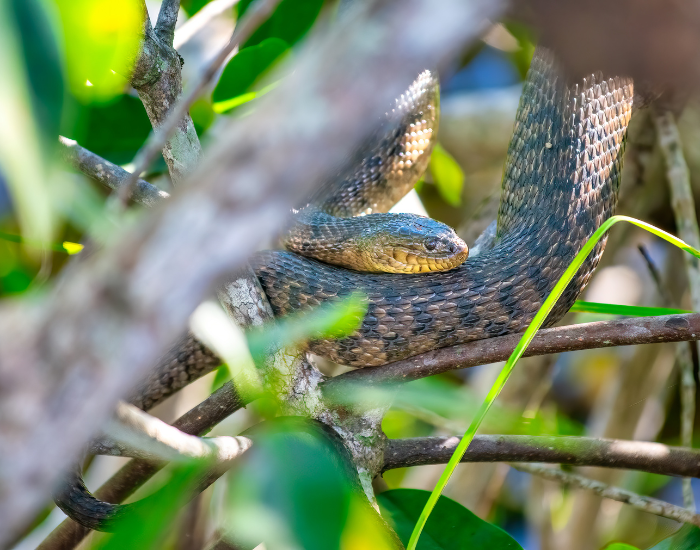
The biggest challenge for pine snakes today is habitat destruction. They depend on longleaf pine ecosystems, the coastal plain, pine forests, and open canopy areas with frequent fire to maintain suitable habitat.
Logging, agriculture, and urban development have dramatically reduced these ecosystems across the southeastern United States. As a result, populations now fragment and decline, especially in South Carolina, southern Kentucky, northern Georgia, and southern New Jersey
12. Conservation Efforts Are Underway
Although pine snakes as a species are listed as Least Concern on the IUCN Red List, many local populations are considered threatened species. Some states have listed them as protected, with efforts led by groups like the Virginia Department of Wildlife Resources.
Conservation strategies include:
- Preserving protected areas of longleaf pine forest.
- Encouraging frequent fire regimes that maintain open habitats.
- Building artificial hibernacula to support overwinter survival.
- Researching genetics to better understand subspecies boundaries.
Educating the public is equally important. Pine snakes are non-aggressive and non-venomous, but they are often killed out of fear or misidentification.
What Recent Research Reveals About Pine Snakes
Despite being a wide-ranging reptile, pine snakes remain one of the least-studied large snakes in North America. Much of what we know has come from recent scientific studies and genomic research.
- A recent research examined the population genetics of northern pine snakes in New Jersey and revealed that southern New Jersey populations fragment heavily because of habitat loss and road mortality. The study emphasized the need for more protected areas and long-term monitoring to prevent further decline.
- A scientific study challenged the long-standing idea of three distinct subspecies. The authors found that genetic differences between the northern pine snake, Florida pine snake, and black pine snake are subtle, suggesting that subspecific boundaries may not reflect evolutionary history.
This new research has major conservation implications. If pine snakes represent one continuous species rather than three isolated subspecies, conservation plans may need to shift from a subspecies-based approach to a more unified species profile.
FAQs About Pine Snakes
No, pine snakes are non-venomous and harmless to humans.
Some populations, like the Louisiana pine snake, are extremely rare and endangered. Others remain more stable but are declining.
Look for a large, heavy-bodied snake with dark blotches, a pointed snout, and a loud hiss when disturbed.
They are close relatives in the Pituophis genus but are separate species.
They are found across parts of the southeastern and central United States, especially in sandy soils and pine forests.
Pine Snakes Deserve Our Attention
Pine snakes may not get the same attention as venomous rattlesnakes or striking coral snakes, but they are vital pieces of the ecosystems they inhabit. As excellent burrowers, egg-layers, and rodent controllers, they embody the delicate balance of pine forests and sandy soils.
Their survival depends on preserving the longleaf pine ecosystem, maintaining open canopy habitats, and ensuring that human fear doesn’t lead to unnecessary killings. With ongoing research and conservation, we can ensure that these fascinating, non venomous giants continue to thrive in the southeastern United States.
Further reading about Florida Wildlife
🔗 Explore more Florida wildlife:
- Curly Tailed Lizard Secrets: Behavior, Diet & Florida Invasion
- Black Snakes in Florida: Everything You Need to Know – ID
- Unique Lizards of Florida: An ID Guide
- 10 Facts About the Florida Bobcat You Didn’t Know
- Ultimate Guide for the Sharks of Florida
- Birds of Florida: 15 Species You Should Know