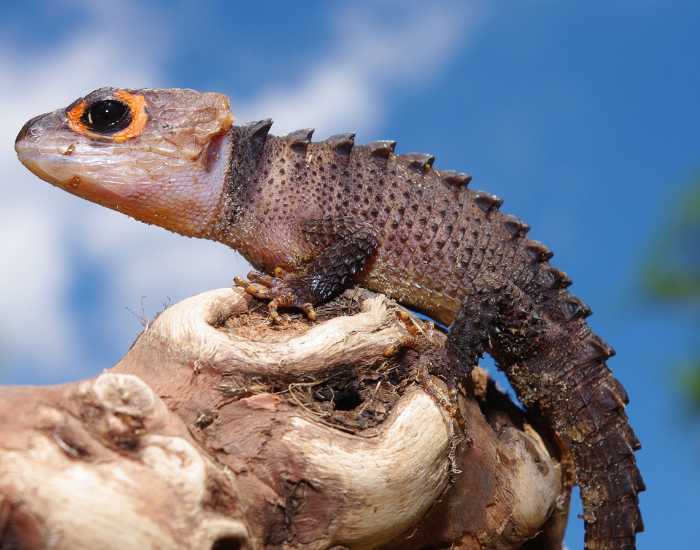
At first glance, you might think you’ve spotted a tiny dragon. Dark brown scales ripple like armor, an orange ring flashes around each eye, and a low hiss escapes as it vanishes into damp leaf litter. This is the red-eyed crocodile skink (Tribolonotus gracilis), one of the most captivating reptiles on Earth. Native to the steamy rainforests of New Guinea, this small, secretive lizard has become a symbol of reptile curiosity, part mythic creature, part evolutionary marvel.
While often admired in the exotic pet trade, the red-eyed crocodile skink is much more than an unusual terrarium inhabitant. In the wild, it’s a story of adaptation, patience, and survival, a reptile that thrives in shadows, hunts with stealth, and communicates with behavior more complex than most people realize. Let’s dive into the twelve most fascinating facts about this mysterious reptile.
1. They’re Armored Like Miniature Crocodiles
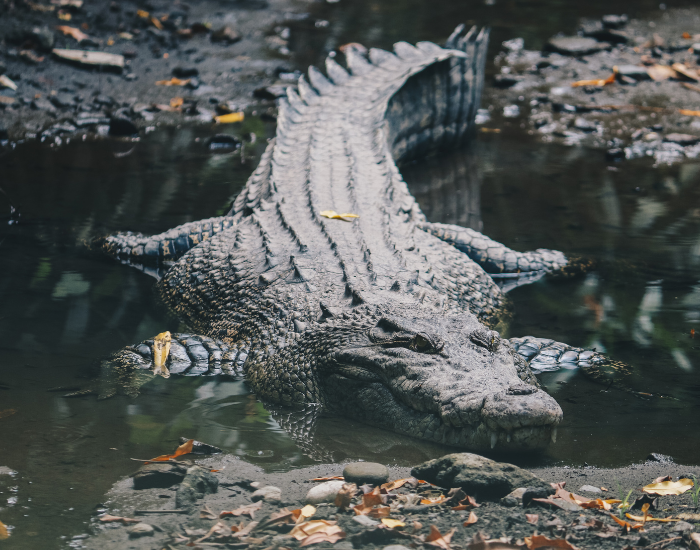
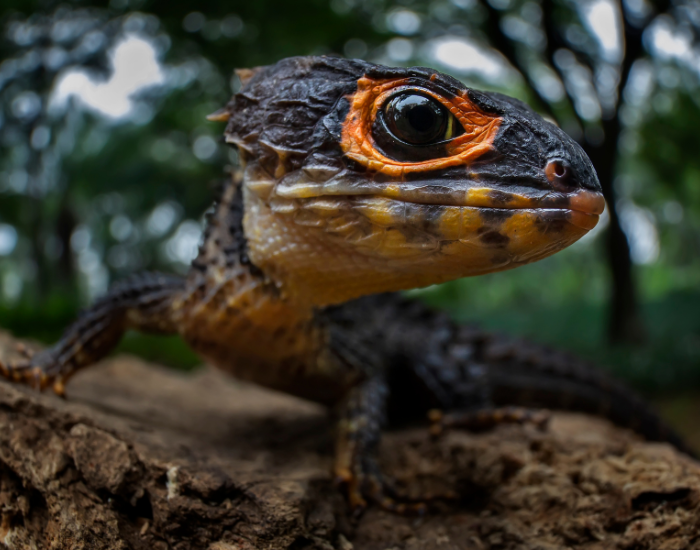
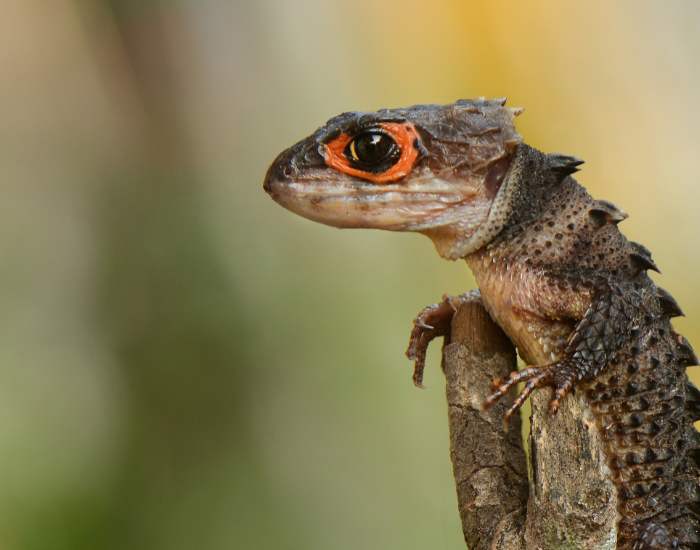
The red-eyed crocodile skink gets its name from the striking resemblance to a crocodile, down to its rough, keeled scales, triangular head, and four pronounced dorsal ridges. This armor isn’t just for show. Those dark brown scales may act as built-in protection against predators, summing to the whole arsenal of defensive behaviours, increasing their chances to survive attacks from birds and larger reptiles.
Interestingly, these scales are made of thickened keratin, the same protein that forms human nails. Beneath that armor, the skink’s body is compact and muscular, perfectly adapted for burrowing through substrate like bark, foliage, or soil in dense tropical undergrowth.
2. The Red “Eye Rings” Are Their Signature Feature
Nothing makes the species more recognizable than the bright orange or red ring surrounding its eyes. This coloration develops as juveniles mature, a warning signal that likely plays multiple roles: deterring predators and aiding communication between individuals.
In natural light, the red hue almost glows, especially against the skink’s dark brown body. This combination of contrast and camouflage allows it to blend seamlessly into rainforest shadows while still looking extraordinary up close.
3. They’re Native to the Rainforests of New Guinea
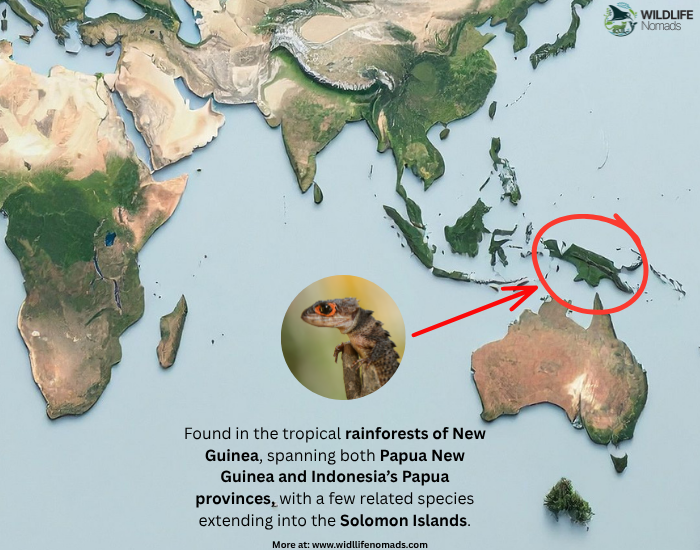
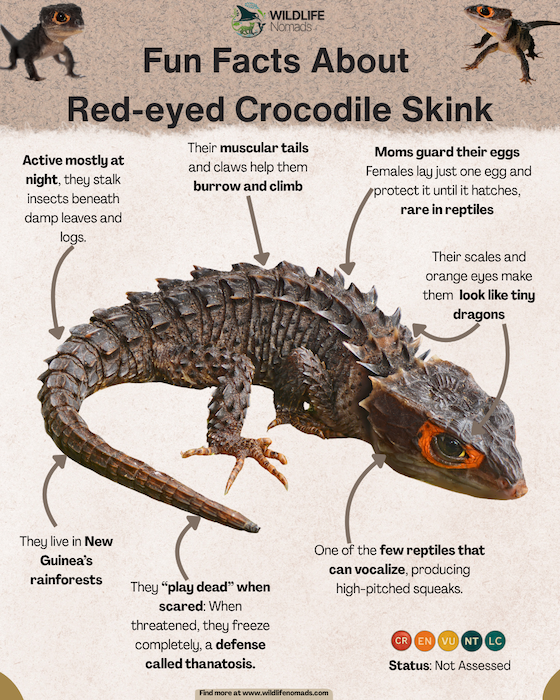
The red-eyed crocodile skink is found exclusively in the humid lowland forests of New Guinea, often near rivers, creeks, or damp forest floors. Their natural habitat rarely exceeds 30°C, with consistently high humidity, usually between 70% and 90%.
They thrive in areas with abundant leaf litter, logs, and rocks that provide both cover and foraging grounds. Despite their increasing popularity, much of their wild behavior remains understudied due to their shy nature and nocturnal lifestyle.
4. They Use “Play Dead” Tactics to Survive
When threatened, this skink performs a dramatic act known as thanatosis, or “playing dead.” It stiffens its body, closes its eyes, and remains motionless for several minutes, fooling predators into losing interest.
If that fails, they may emit a sharp startled squeak, an unusual sound for reptiles. Researchers believe this may mimic distress calls of small mammals or frogs, momentarily confusing predators. The behavior, combined with their armor and cryptic coloration, makes them surprisingly adept at evading danger.
5. They’re Masters of the Rainforest Microclimate
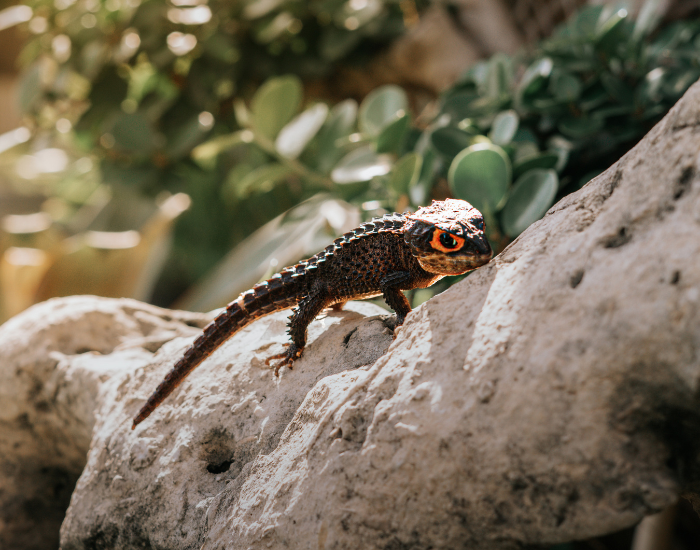
In their natural range, these skinks inhabit the dampest parts of the forest. They require constant humidity to maintain healthy skin and respiration. Excess dryness can cause shedding problems or dehydration.
In captivity, this is why keepers mimic the rainforest environment with frequent misting, live plants, and deep substrate, often coconut fiber or sphagnum moss. Maintaining 75–85% humidity is crucial for their survival, whether in a terrarium or their native jungle.
6. UVB Lighting Is Essential for Their Health
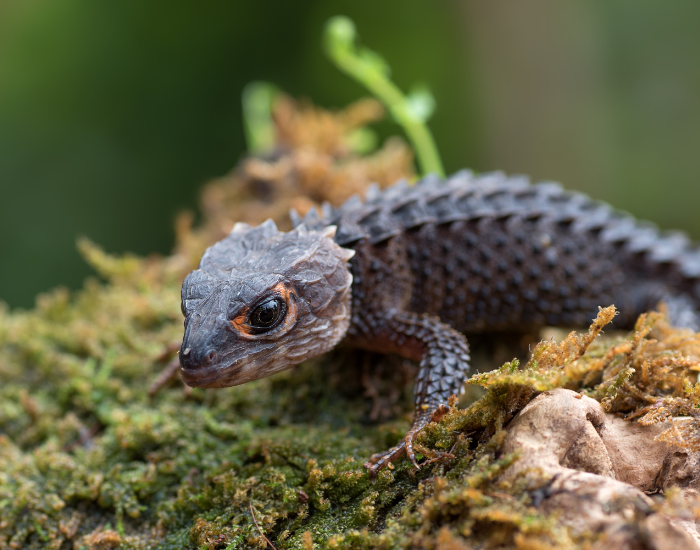
Like many cold blooded reptiles, the red-eyed crocodile skink depends on UVB lighting for proper calcium metabolism and to prevent metabolic bone disease. In the wild, dappled sunlight filtering through canopy foliage provides enough exposure.
In captivity, experts recommend a UVB light source that replicates this natural cycle, about 10 to 12 hours of light per day. A weak photoperiod or lack of UVB can cause severe bone deformities, muscle weakness, and lethargy. Proper lighting, alongside a balanced temperature gradient, supports both physical and behavioral health.
7. They’re Insectivores With a Varied Diet
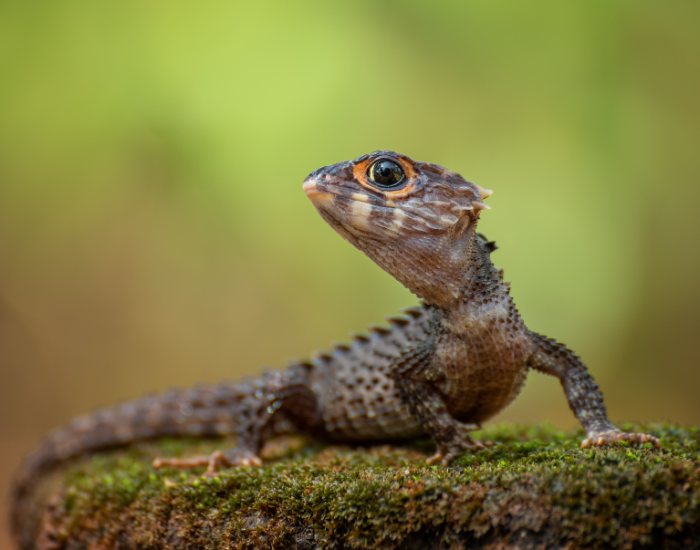
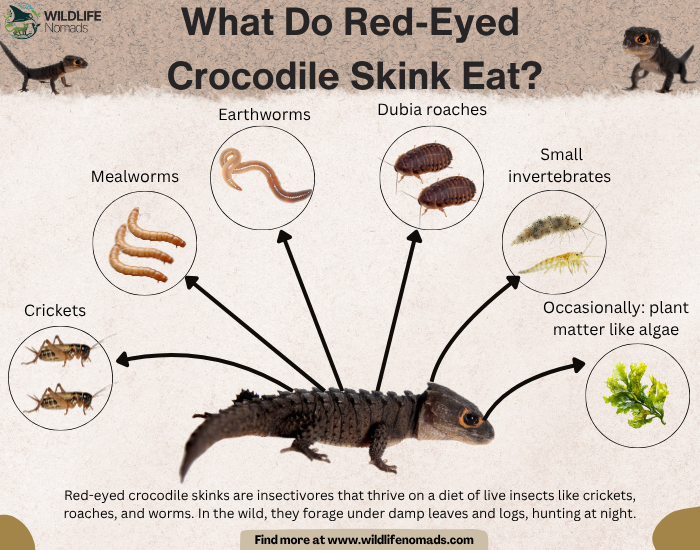
These reptiles are true insectivores, feeding primarily on feeder insects such as crickets, dubia roaches, mealworms, and earthworms. In the wild, they’ll also eat small invertebrates found under bark or in soil.
Their hunting method is stealthy, they stalk prey quietly, then strike with a quick snap of the jaws. Despite being small (around 16 to 20 cm long), they’re capable and efficient hunters. Juveniles often eat smaller prey more frequently, while adults feed every other day.
8. They’re Surprisingly Parental for Reptiles
Unlike most lizards, female red-eyed crocodile skinks exhibit rare parental behavior. After laying a single egg, the mother guards it diligently until hatching, sometimes for up to two months.
This instinct to watch over offspring is uncommon among reptiles and may improve hatchling survival rates in the predator-rich rainforests of New Guinea. The young are born with lighter coloration, including a pale dorsal stripe that fades with maturity.
9. They’re Solitary and Territorial
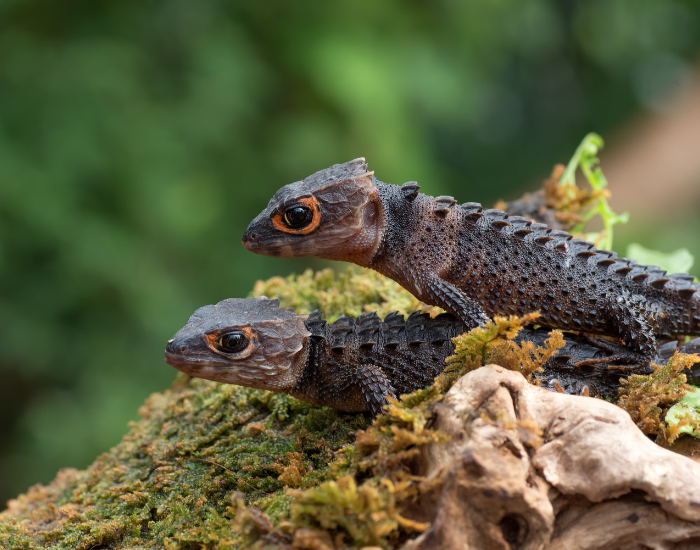
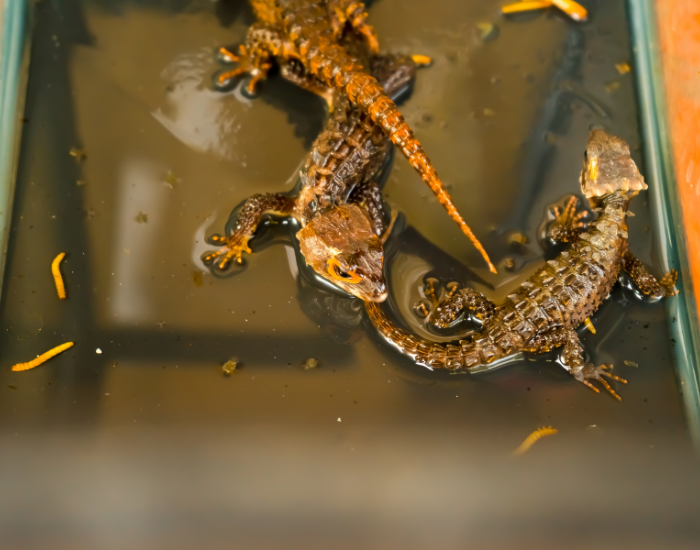
In the wild, each skink’s enclosure is its own small territory. They rarely share space except during mating (although some have been reported living in small groups consisting of male and two females). Males can become aggressive if confined together, often showing dominance by posturing or tail-waving.
Even in captivity, experts discourage housing multiple individuals in the same enclosure, as stress can lead to injury or illness. While they may tolerate limited visibility of others, they prefer solitude and plenty of hiding spaces.
10. They’re Crepuscular- Nocturnal Hunters and Shy by Nature
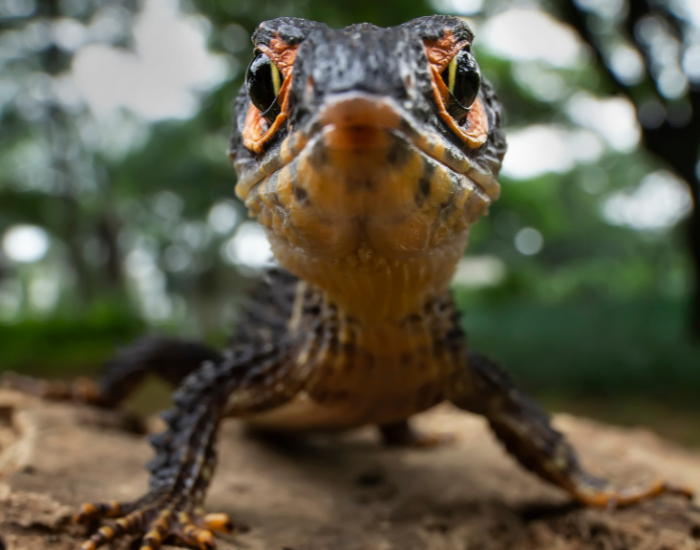
The red-eyed crocodile skink is mostly crepuscular- nocturnal, been very active at dawn and dusk to hunt for insects. During the day, they rest in cool, dark brown burrows or beneath damp bark and logs. Their activity peaks at dusk and dawn, when humidity is highest.
Their shy, secretive behavior explains why they’re rarely seen in the wild. They’re easily startled and will retreat rather than confront predators, unless cornered. For this reason, they’re not suitable for constant handling.
11. They’re Sometimes Kept as Pets—But With Caution
In recent years, crocodile skinks have gained popularity in the exotic pet trade due to their dragon-like appearance and manageable size. However, they’re best suited for experienced keepers familiar with reptile care and ethics. (Although we will advise not to keep exotic animals, unless the end goal is conservation).
They require strict environmental conditions, consistent humidity, UVB exposure, and proper temperature control, to stay healthy. Improper care often leads to metabolic bone disease, respiratory issues, or dehydration.
Beyond husbandry, it’s important to consider the ethical implications. Many individuals in the trade are wild-caught, which can harm local populations. It’s always best to admire these animals in their natural habitats, or source only from verified, captive-bred lines.
12. They Symbolize the Fragility of Tropical Ecosystems
The red-eyed crocodile skink represents the delicate balance of tropical ecosystems. Its survival depends on healthy forests, clean waterways, and intact microhabitats. Deforestation in New Guinea threatens not just skinks, but countless amphibians, reptiles, and insects that share their environment.
While the species is not currently classified as endangered (listed as Least concern by the IUCN), habitat loss and collection for the pet trade pose ongoing risks. Organizations like the Reptile Database and Contemporary Herpetology emphasize the importance of monitoring wild populations and promoting habitat conservation.
Protecting their rainforest homes helps secure biodiversity across the region, and preserves one of nature’s most extraordinary miniature dragons.
Quick FAQs About the Red-Eyed Crocodile Skink
Yes, but ownership should always prioritize welfare and come from captive-bred sources only.
No. They’re shy, reclusive, and rarely bite unless threatened.
They can swim short distances but prefer moist forest floors and shallow puddles.
No, like all skinks, they’re harmless to humans.
A Tiny Dragon’s Big Message for Nature
The red-eyed crocodile skink is a reptile that blurs the line between myth and biology, part dragon, part survivor, part mystery. From its intricate scales to its soft squeaks and parental instincts, every feature tells a story of adaptation in one of Earth’s richest ecosystems.
It’s a reminder that even the smallest creatures hold lessons in resilience and beauty. Whether you encounter them in a New Guinea rainforest or read about them in a biology journal, their alien-like charm invites one clear takeaway: protect the wild places they call home.
Further Reading
- 12 Fascinating Facts About the Boa Constrictor
- The Fascinating World of the Bull Snake
- The Chameleon: Amazing Facts + 12 Species