If you’ve never heard of a hellbender, you’re not alone. This secretive, flat-bodied aquatic salamander spends its entire life underwater, hidden beneath river rocks in the Appalachian Mountains, Ozarks, and parts of the central United States. As one of North America’s large aquatic salamanders, the hellbender is notable for its considerable size and fully aquatic lifestyle. With wrinkled skin folds, lidless eyes, and a face only a biologist could love, the hellbender is one of North America’s most fascinating, and misunderstood, animals.
Let’s dive into their story, from the hellbender habitat they depend on to their unique adaptations and the conservation efforts trying to save them.
Meet The the Eastern Hellbender Salamander
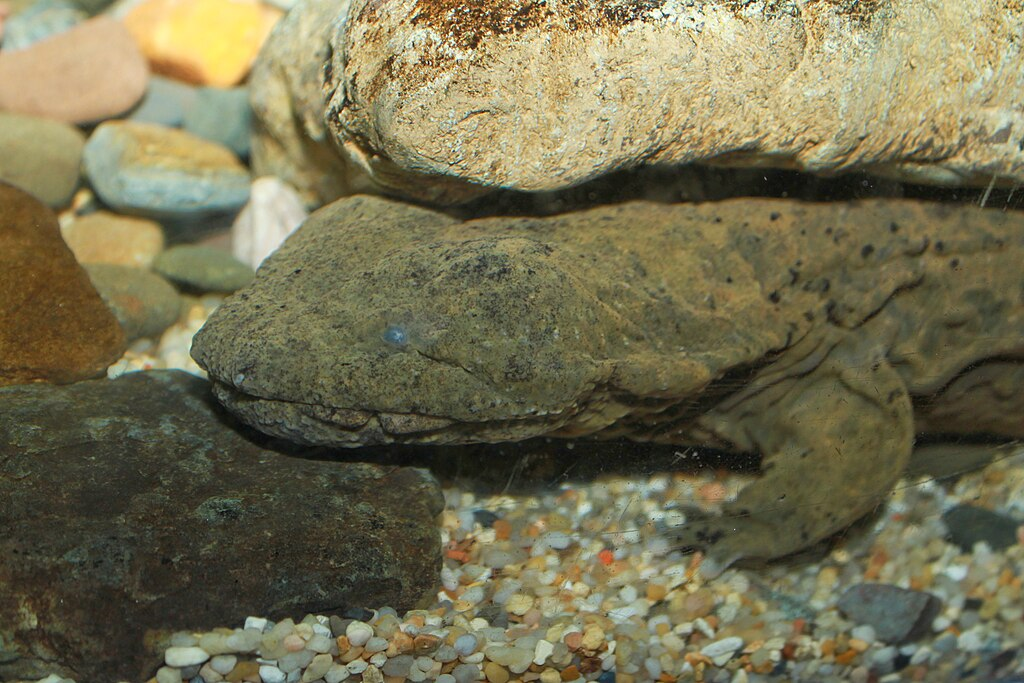
The eastern hellbender salamander (Cryptobranchus alleganiensis alleganiensis) is the largest salamander in North America and one of the most distinctive amphibians on the planet. Fully grown adults can reach nearly 29 inches (74 cm) in length and weigh up to 5 pounds (2.3 kg).
Hellbenders belong to the ancient Cryptobranchidae family, which also includes the Japanese giant salamander and Chinese giant salamander, both even larger relatives. This family has existed for over 65 million years, earning hellbenders the title of “living fossils.”
Unlike frogs or newts, hellbenders are fully aquatic salamanders, spending every stage of their life underwater. They rely on cold, oxygen-rich streams and rivers and breathe mainly through their skin. Those odd, rippling folds along their sides aren’t for show, they’re a biological marvel, designed to increase surface area for oxygen absorption. While hellbender larvae have external gills, adult hellbenders retain small gill slits as a vestigial feature, distinguishing them from other salamanders.
Physical Characteristics of the Hellbender
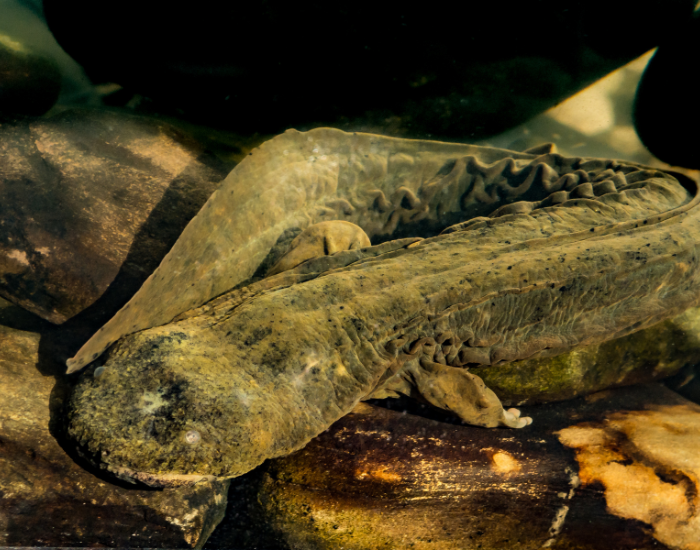
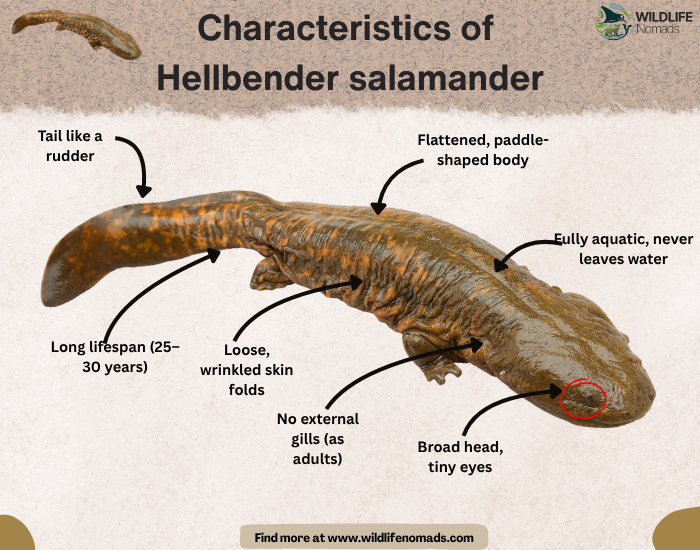
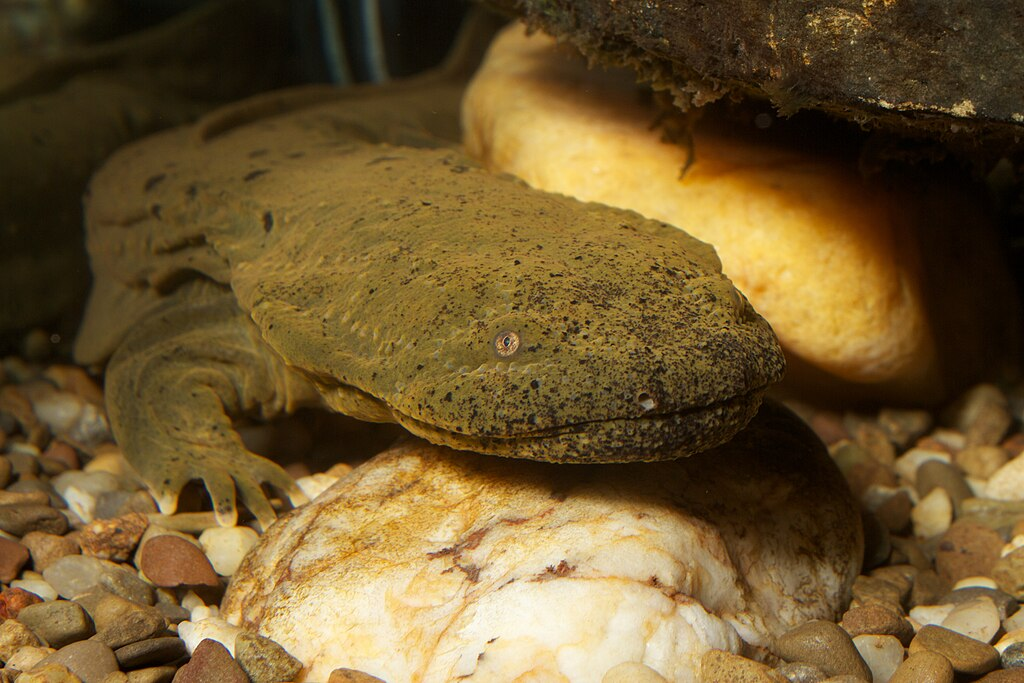
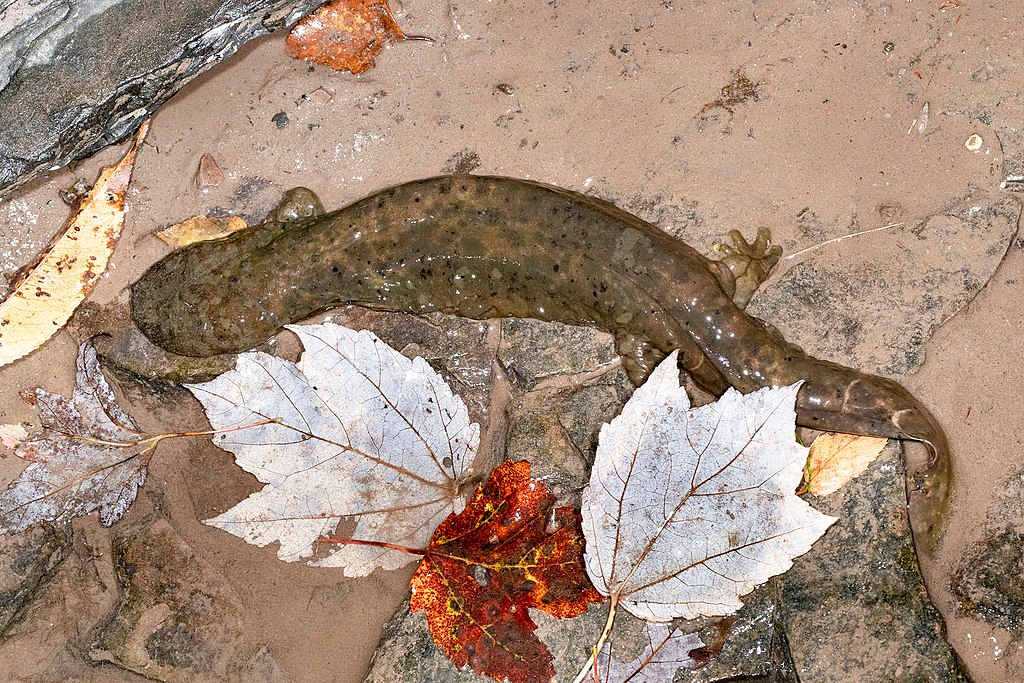
At first glance, a hellbender animal looks more like a creature from a prehistoric river than a modern amphibian. Their grayish-brown or mottled skin helps them blend perfectly into flat rocks and pebbled riverbeds.
They have flattened heads and rudder-like tails make them excellent swimmers. Their small, lidless eyes can detect movement even in dim water. Each hellbender salamander has four toes on its front feet and five on its hind limbs, a key difference from mudpuppies, which retain their external gills throughout life.
Despite sometimes being called a hellbender lizard, they’re not reptiles at all. They’re amphibians, more closely related to frogs and newts, thriving in ecosystems that few other creatures can tolerate.
When it comes to hellbender size, the average adult measures 12–29 inches, though rare individuals have exceeded that. With their soft skin and sturdy tails, they move fluidly under rocks, almost eel-like, hunting silently in the shadows.
Hellbender Habitat and Distribution
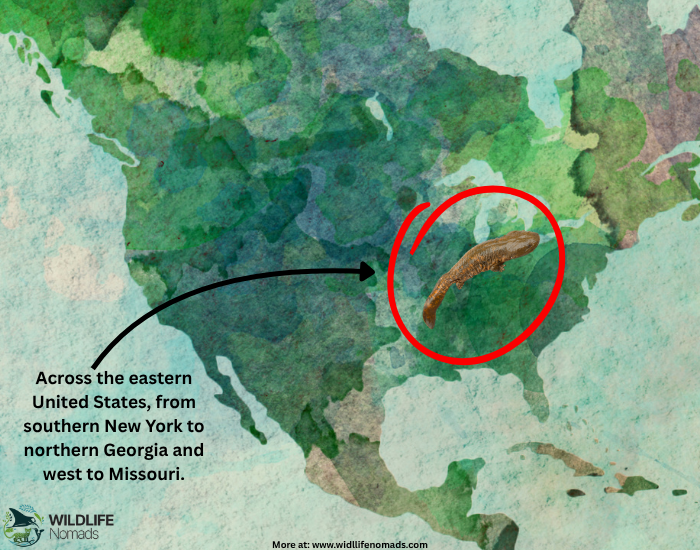
The eastern hellbender is found throughout the eastern United States, from southern New York to northern Georgia, west to southern Illinois, and down into extreme northeastern Mississippi. Populations also occur in east central Missouri and parts of southeastern Missouri, where the subspecies overlap with the Ozark hellbender. These Missouri populations represent a disjunct population, separated from the main range, which may have unique genetic or conservation significance.
The Ozark hellbender subspecies (C. a. bishopi) occupies only the White River and Black River systems of southern Missouri and northern Arkansas. This limited range makes them highly vulnerable to environmental changes.
Hellbenders are particularly common in Allegheny River drainages and associated tributaries across central North America, where flat rocks and large boulders create ideal refuges. However, those pristine habitats are becoming harder to find.
Similar Species: How to Tell Hellbenders Apart
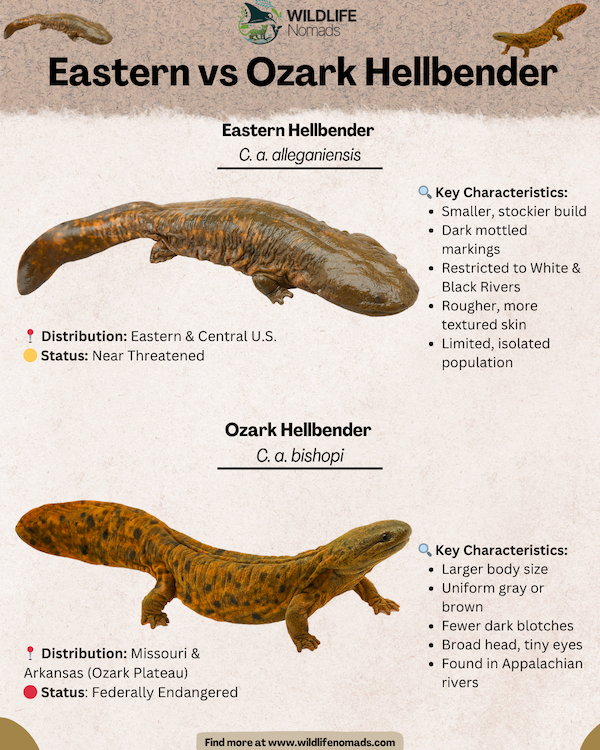
Telling the difference between the eastern hellbender and similar species is key. The eastern hellbender (Cryptobranchus alleganiensis alleganiensis) stands out thanks to its flat, broad head, small eyes, and long, paddle-shaped tail. Adult eastern hellbenders are usually grayish brown or olive, often with dark mottling along their backs and sides. One of their most distinctive features is the loose, wrinkled skin folds running down their flanks—these help with breathing and are not found on most other salamanders.
In contrast, the Ozark hellbender subspecies (Cryptobranchus alleganiensis bishopi) is generally smaller and sports a more pronounced pattern of large, dark markings on a grayish-brown background. While both subspecies lack external gills as adults, mudpuppies (Necturus species)—another large aquatic salamander, retain their feathery external gills throughout life and have a more heavily mottled appearance.
If you spot a large, flat-bodied salamander under a river rock, look for those signature skin folds and the absence of external gills in adults to confirm it’s a hellbender. Accurate identification is crucial, especially since both the eastern hellbender and Ozark hellbender are considered endangered species in many areas. Protecting these unique animals starts with knowing exactly who they are in the wild.
Life Cycle, Breeding Season, and Hellbender Nests
During the breeding season, which occurs in early autumn (September to October), male hellbenders establish territories under large flat rocks. They excavate a large nest chamber beneath the stone, creating the perfect spot for reproduction.
Once a receptive female enters, she lays between 200 and 400 eggs, which the male fertilizes externally. The female deposits her eggs onto the nest bed inside the chamber. These fertilized eggs stick together in long gelatinous strings inside the nest chamber.
The male, often called the “denmaster,” remains to guard the eggs, fanning them with his tail to ensure adequate dissolved oxygen and removing debris to prevent fungal growth. Males may defend their nest sites from other hellbenders during the breeding season. This rare parental behavior highlights the species’ sensitivity to degraded water quality; a polluted stream can suffocate an entire generation before it hatches.
After 45–75 days, the eggs hatch into larval hellbenders equipped with external gills. Over time, these young salamanders grow and develop lungs but still depend on their skin folds for oxygen exchange. Hellbenders reach sexual maturity at around 5–7 years; at this stage, they are considered sexually mature and capable of reproduction. In the wild, they can live up to 30 years.

Diet and Role in the Ecosystem
Hellbenders are opportunistic carnivores and ambush predators. Their primary prey includes crayfish populations, small fish, worms, and aquatic insects. Occasionally, they consume other amphibians.
Their slow metabolism means they don’t need to eat often. Instead, they wait patiently under rocks for unsuspecting prey to wander close. When they strike, it’s lightning-fast, they create suction with their broad mouths to pull prey in whole.
By feeding on crayfish and small fish, hellbenders help control these fish populations and maintain ecological balance. In turn, they become prey for river otters, raccoons, and large fish. Larval hellbenders are especially vulnerable to falling prey to fish and other aquatic predators during their early life stages.
Their presence signals healthy ecosystems. When hellbenders disappear, it’s often a red flag that the entire aquatic community is collapsing.

Threats to Hellbender Populations
The hellbender faces numerous environmental threats, including habitat degradation, pollution, and emerging diseases, which together create significant obstacles to its survival.
The hellbender conservation crisis stems largely from human activity. These amphibians are highly sensitive to environmental change, and their specialized habitat leaves little room for error.
The main threats include:
- Habitat Loss and Sedimentation: Deforestation and poor land management increase erosion, filling rivers with silt that covers nest sites and large rocks.
- Pollution: Agricultural runoff and sewage reduce oxygen levels. Even mild degraded water quality can suffocate eggs and larvae.
- Climate Change: Warmer waters hold less oxygen, shrinking suitable hellbender habitat and disrupting breeding cycles.
- Disease: Pathogens like chytrid fungus and ranavirus threaten both wild populations and captive colonies.
- Illegal Collection: Some individuals are captured illegally for the pet trade or as fishing bait.
Together, these pressures have led to sharp population declines across much of their historic range in the central United States.

Hellbender Conservation and Recovery Efforts
Thankfully, scientists and conservationists are working hard to prevent further losses. The U.S. Fish & Wildlife Service, Missouri Department of Conservation, and Saint Louis Zoo lead major recovery projects across the region.
Key Efforts Include:
- Captive Breeding: The Saint Louis Zoo’s Hellbender Conservation Program has released over 10,000 Ozark hellbenders into the wild.
- Habitat Restoration: Teams are rebuilding rivers by reintroducing large flat rocks, cleaning sediment, and improving water quality in east central Missouri and southern Illinois.
- Artificial Nest Boxes: Researchers are placing man-made shelters in streams to help increase breeding success, (althoug a recent study is questioning this approach).
- Public Awareness: Local outreach educates landowners about reducing runoff, protecting riparian zones, and maintaining unpolluted streams.
Protecting hellbender habitat safeguards not only this species but also countless fish, mussels, and insects that share the same streams and rivers.
Research and Study: Unlocking Hellbender Mysteries
Unlocking the secrets of the eastern hellbender salamander (Cryptobranchus alleganiensis) has become a priority for researchers and conservationists alike. Scientists have spent years studying the specific habitat needs of adult eastern hellbenders, discovering that these giant salamanders thrive in cool, permanent streams with abundant large flat rocks, essential for shelter and nesting sites. By comparing the eastern hellbender to other giant salamanders, such as the Japanese giant salamanders, researchers have gained valuable insights into their ecological roles and the challenges they face.
Studies have also explored how crayfish populations influence the diet and health of hellbender populations, as well as how degraded water quality can threaten their survival. As mentioned previously, the Saint Louis Zoo has played a leading role in breeding programs for both the eastern hellbender and the federally endangered Ozark hellbender subspecies, while the Missouri Department of Conservation has spearheaded efforts to restore habitats and monitor wild populations.
Despite these advances, many mysteries remain. Continued research is vital to understanding the life cycle, nesting sites, and long-term population trends of these remarkable salamanders. With so much still to learn, every new discovery helps inform more effective conservation strategies and brings us closer to securing a future for the hellbender.
Climate Change and the Road Ahead
As water temperatures rise and weather patterns shift, hellbenders face new challenges. Increased flooding can wash away nest chambers, while droughts reduce oxygen levels and habitat size.
Restoring forest cover along waterways, limiting agricultural runoff, and improving degraded water quality are critical next steps. Ongoing research on hellbender populations and habitat restoration is providing valuable insight into how climate adaptation can support future generations of these ancient amphibians.
10. Ten Fascinating Facts About the Hellbender
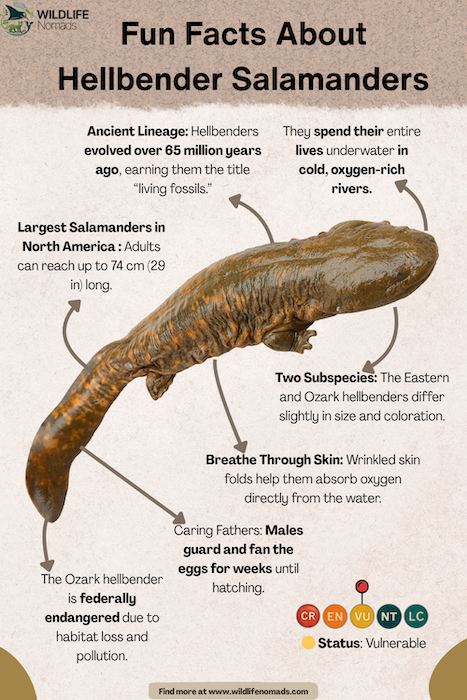
- Ancient Lineage: Hellbenders evolved over 65 million years ago.
- Largest Salamander in North America: Adults can reach nearly 29 inches long.
- Homebody Species: They live in the same stretch of river for life.
- Wrinkled Skin Folds: These folds allow skin-breathing in oxygen-rich water.
- Two Subspecies: The eastern and Ozark hellbender subspecies differ slightly in size and color.
- Sensitive Indicator: Their presence reflects clean, healthy water systems.
- Caring Fathers: Males guard and fan eggs during the breeding season.
- Long Lifespan: Some individuals live 25–30 years in the wild.
- Flat Rock Hideouts: They use flat rocks and large nest chambers for shelter.
- Federally Endangered: The Ozark subspecies remains one of the most endangered giant salamanders in the U.S.
Frequently Asked Questions (FAQs)
Yes, but only if provoked. Their small teeth are harmless and not venomous.
Yes. Both eastern hellbenders and Ozark hellbenders are protected, and disturbing them is prohibited.
Yes. Wild populations have declined drastically due to pollution and habitat loss.
No, they’re completely nonvenomous and safe for humans.
They’re found across southern New York, Pennsylvania, Kentucky, Tennessee, Missouri, Arkansas, and parts of northern Georgia.
Habitat destruction, disease, and sedimentation have reduced their numbers by more than 70%.
No. It’s illegal to own one — they need cold, flowing rivers with high oxygen levels.
Yes, river otters occasionally prey on smaller individuals.
The biggest recorded hellbender measured 29 inches (74 cm).
Protecting a Living Fossil
The hellbender salamander is more than a river oddity, it’s a symbol of how fragile freshwater ecosystems can be. Protecting hellbender habitat ensures cleaner water, healthier fish, and thriving biodiversity across streams and rivers of the eastern United States.
Every conservation action, from restoring associated tributaries to maintaining unpolluted streams, brings this ancient species one step closer to survival. With collaboration among scientists, conservation groups, and local communities, the hellbender conservation story can shift from loss to recovery, proving that even the most overlooked creatures deserve a place in our shared future.
Further Reading
- Sonoran Desert Toad
- 12 Fascinating Facts About the Toxic California Newt
- 12 Fascinating Facts About the Rare Blue Poison Dart Frog