Wildlife Nomads

We booked a three-day liveaboard to see the dragons of Komodo. Nobody warned me the ocean would steal the show.
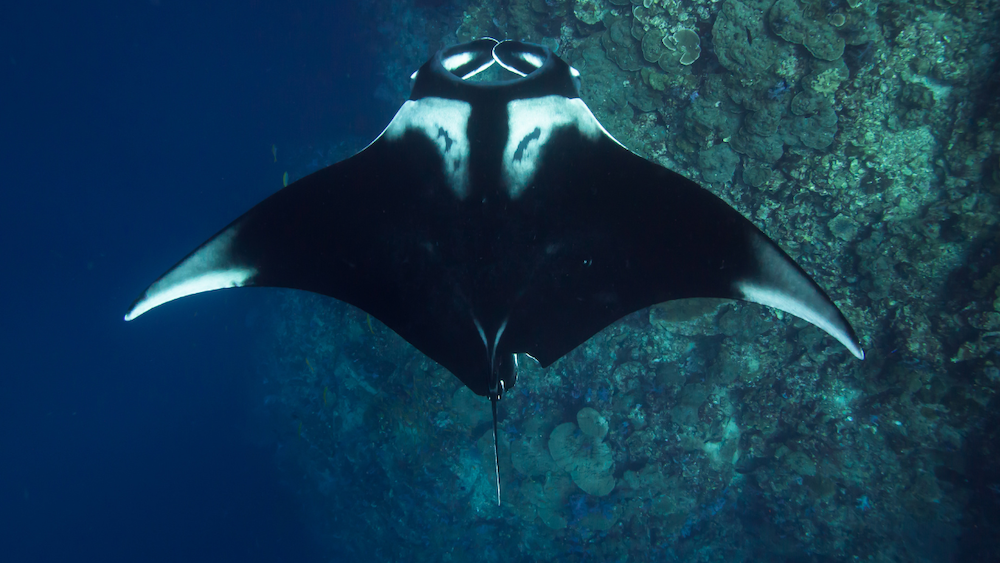
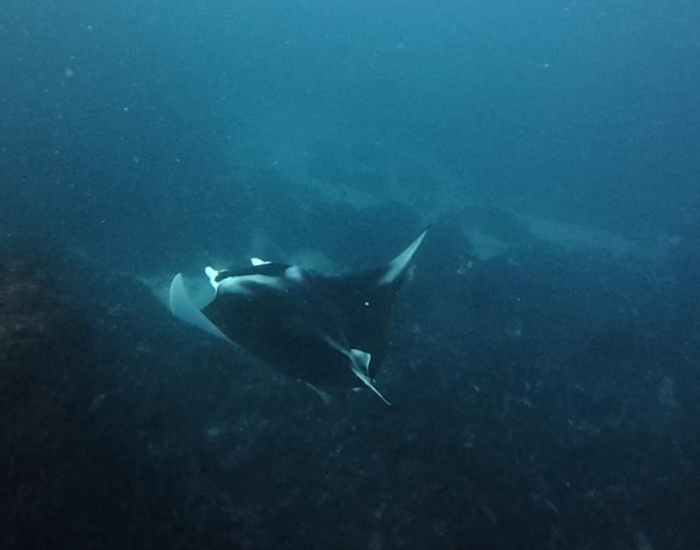
On the second morning, before we landed on the island, the crew sent all nine of us into the water. I put my face down, and there it was. One manta ray, truly massive, gliding below me. Then another appeared beneath it. Then a third.
I don’t think most people grasp how big these animals get, and I include myself in that. They moved fast, and a strong current ripped along the reef. We kicked hard to keewp up. Then they turned and swept back past us, slow and graceful, as if the current didn’t exist.
We spent less than 20 minutes in the water. I still think about it.
These are the 12 facts about manta rays I wish I had known before that swim. They cover size, brains, feeding and threats. They also cover how to share the water with these gentle giants without harming them.
1. There Are Two Manta Ray Species, and Possibly a Third
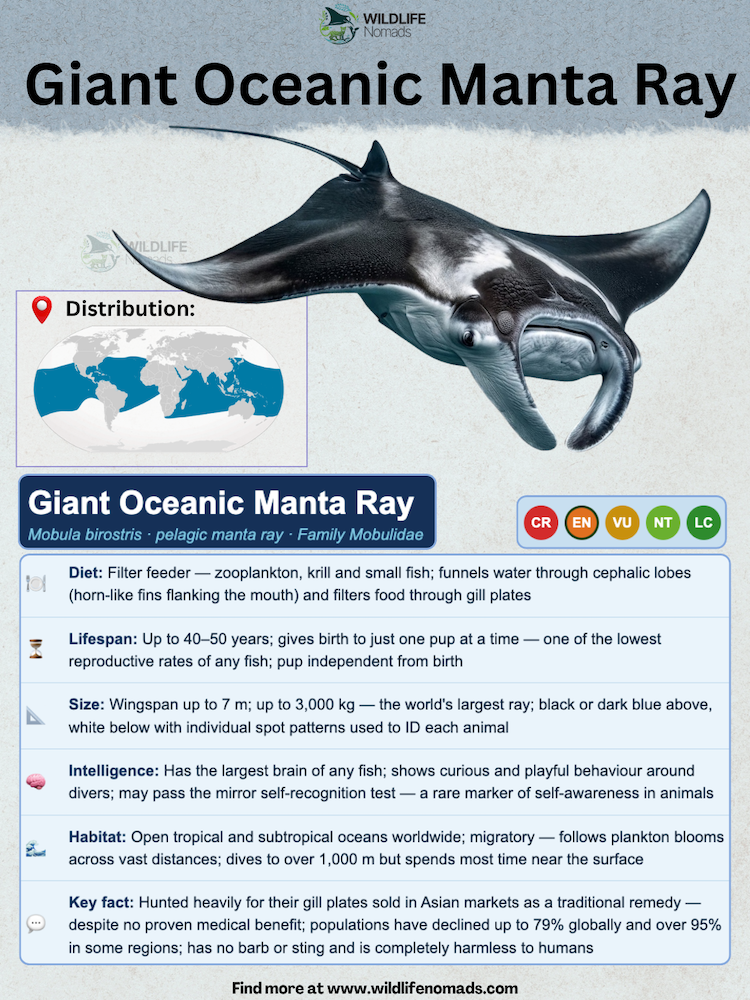
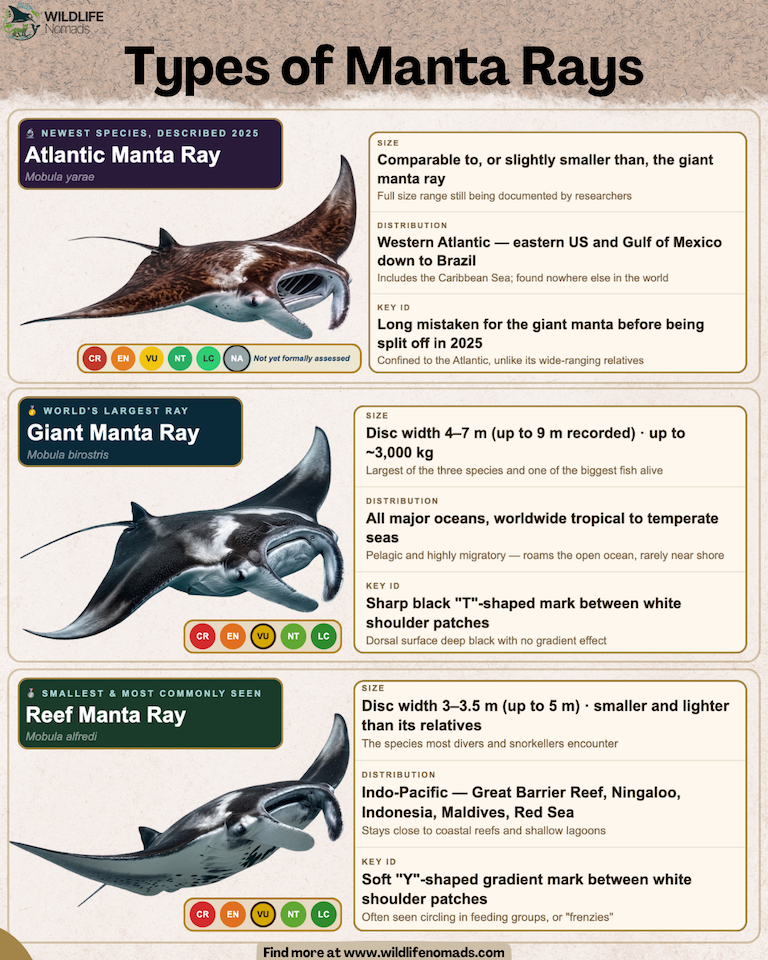
Science recognises two species of manta: the giant manta and the reef manta. Giant manta rays (Mobula birostris) roam the open ocean. Reef manta rays (Mobula alfredi) stay closer to coasts.
Many guidebooks still use the older names Manta birostris and Manta alfredi. In 2018, a genetic study by White and colleagues folded the genus Manta into Mobula. That move made mantas close cousins of the smaller devil rays. Together, manta and devil rays form the mobulid rays, a family related to eagle rays. Like sharks, they are cartilaginous fish, with skeletons of cartilage rather than bone.
A third species may be hiding in plain sight. Researchers have flagged a distinct Atlantic manta ray in the Caribbean and the Gulf of Mexico, but it still awaits formal description. The word manta means “blanket” or “cloak” in Spanish. Older sailors called them sea devils instead.
2. Giant Mantas Are Far Bigger Than You Imagine
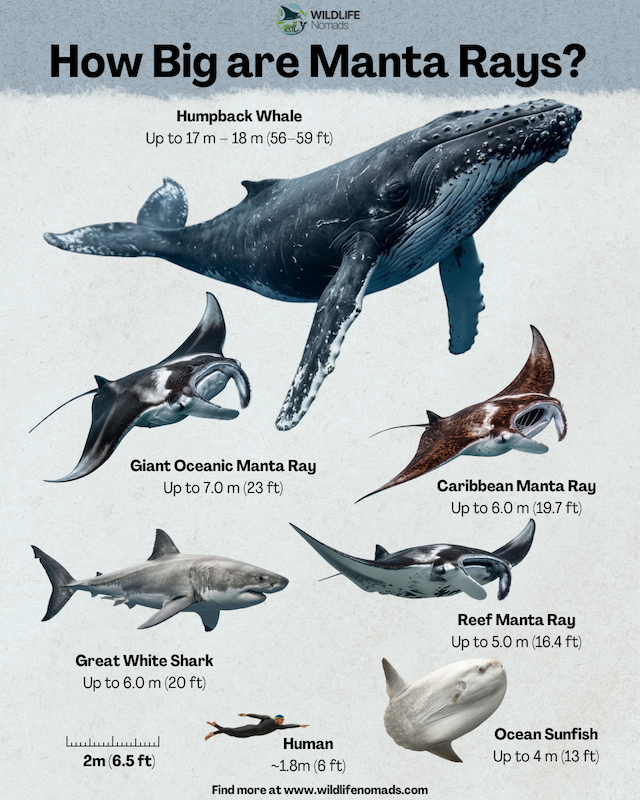
Giant manta rays usually span 4 to 5 metres across their two pectoral fins. Most scientists accept a maximum of about 7 metres. Some sources push that to 26 feet (8 metres). Reports of 9-metre giants exist, but nobody has confirmed one with a tape measure.
Reef manta rays run smaller, typically 3 to 3.5 metres (10 to 11.5 feet). Rare individuals approach 5 metres. The biggest giants weigh around two tonnes, which makes them the largest rays alive and among the widest fish in the ocean.
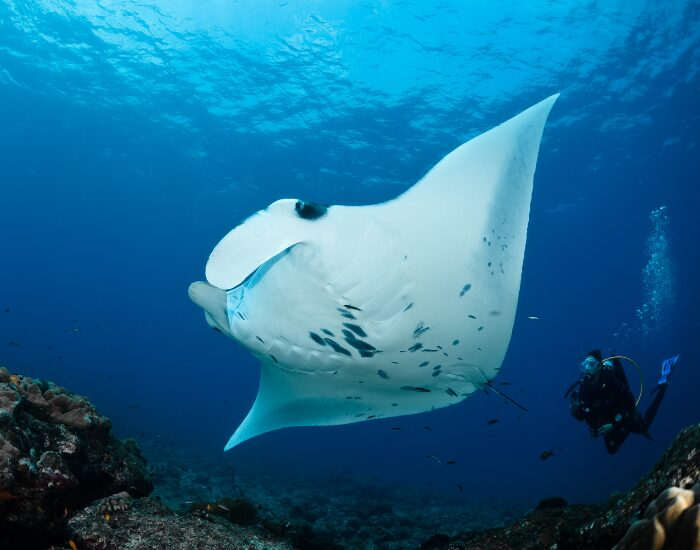
Next to a human, the scale gets absurd. A 1.8-metre diver could lie across a big reef manta twice. A record giant would need four divers lying head to toe. That explains my Komodo moment: your brain simply has no reference for a fish that wide.
3. Those “Horns” Are Actually Cephalic Fins
The two lobes beside a manta’s mouth are cephalic fins. When a manta cruises, it rolls them into tight spirals to reduce drag. When it feeds, it unfurls them into flexible paddles that funnel plankton-rich water straight into its mouth.
While popular guides sometimes claim mobulid rays are the only vertebrates with “three pairs of limbs,” this is an anatomical myth. Cephalic fins are not separate skeletal limbs; embryonic development shows they are forward extensions of the pectoral fins that split off during gestation to specialize in feeding. These horn-like structures earned them their historical “sea devil” nickname.
The rest of the body is built for hydrofoil-like efficiency. Large pectoral wings drive propulsion through rhythmic beating, while a small dorsal fin stabilizes the ray near the base of its whip-like tail. On the pale underside, five pairs of gill slits process oxygen and filter out the ingested seawater.
4. Manta Rays Eat Some of the Smallest Animals on Earth
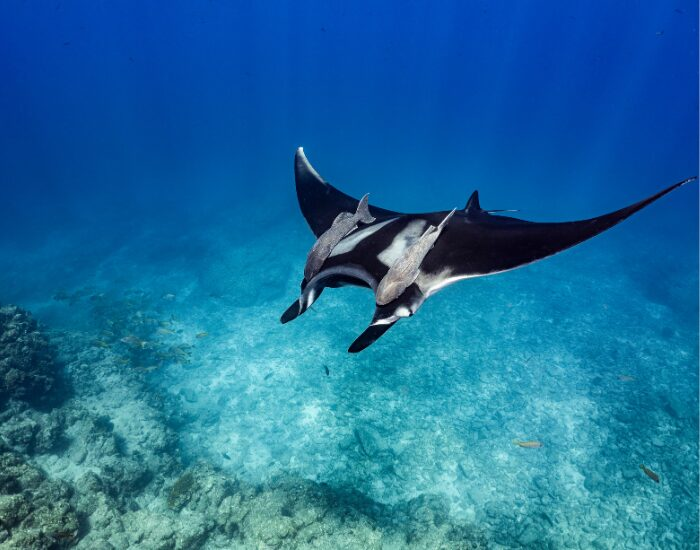
Manta rays eat mostly zooplankton: copepods, krill, shrimp larvae and fish eggs. Small fish sometimes end up in the mix. As filter feeders, they swim with their mouths wide open.
Inside the mouth, spongy filter plates called gill rakers trap the food. Water then escapes through the gill slits. Traders call these same structures gill plates, and that detail matters later in this list.
Feeding follows the clock. Many mantas feed heavily at night, when zooplankton rise toward the surface. Isotope studies suggest giant mantas also get much of their food at depth. When plankton gets dense, groups line up nose to tail in chain feeding. Researchers think this formation boosts each ray’s prey intake.
5. Mantas Queue Up at Cleaning Stations
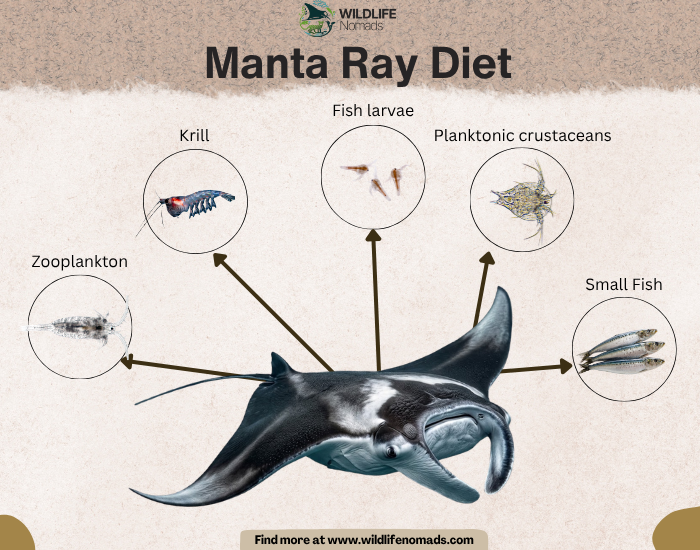
Reef mantas return again and again to cleaning stations. These are coral heads where cleaner wrasse pick off parasites and dead skin. The manta hovers, flares its gills and lets the cleaners work.
That habit makes them one of the most predictable animals in marine life to find. Komodo’s famous manta dives sit on cleaning stations. So does Lady Elliot Island, on the southern Great Barrier Reef. There, reef manta rays frequent the same bommies year after year.
If you snorkel or dive, hang back from the station itself. Crowd it, and the manta leaves.
6. Every Manta Has a Unique Belly Pattern
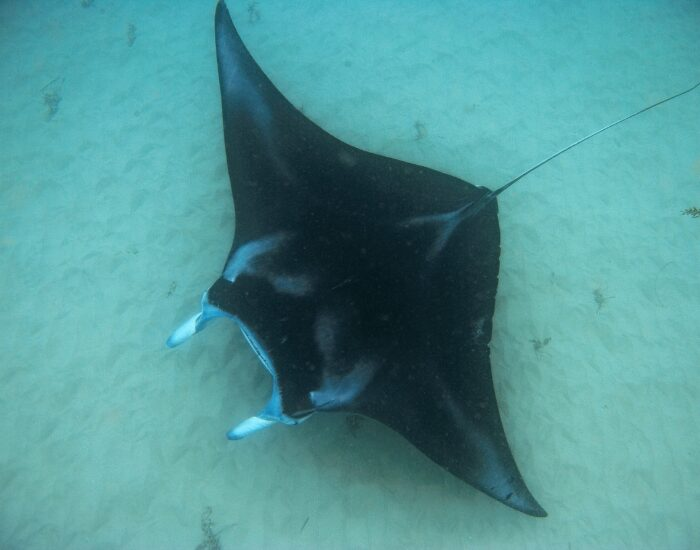
Look at a manta from below and you will see dark spots on its belly. No two patterns match, and each one stays stable for life. Researchers use it like a fingerprint.
Groups such as the Manta Trust and the Marine Megafauna Foundation catalogue individual manta rays from divers’ photos. In Komodo National Park, photo-ID work has identified more than a thousand individual reef mantas. Your holiday photo of a manta’s underside can feed that database.
This is how marine science knows mantas return to the same sites across decades. It’s citizen science with a snorkel.
7. Manta Rays Have Big Brains and Complex Social Lives
Manta rays carry one of the largest brain-to-body mass ratios of any fish. A network of blood vessels around the brain may also keep it warm during deep, cold dives.
In 2016, Ari and D’Agostino placed a mirror in a tank with two captive giant mantas. The rays circled it, blew bubbles and repeated unusual movements in front of it. Some researchers read that as a sign of self-awareness. Others argue mirror tests translate poorly to fish. I treat it as intriguing, not settled.
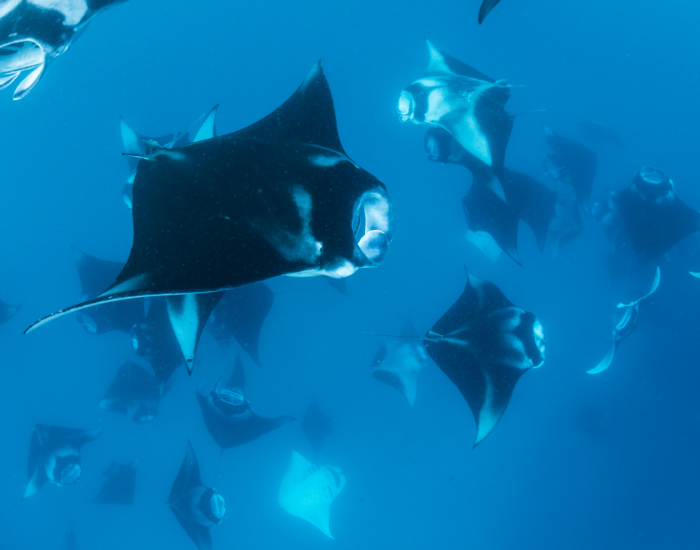
Their social lives rest on firmer data. Mantas often travel alone, yet they gather in groups of up to 50. A large aggregation is called a fever. In Raja Ampat, Perryman and colleagues found reef mantas actively choose to spend time with specific individuals.
8. Mantas Can Leap Completely Out of the Water
Manta rays breach. A fish weighing close to two tonnes can launch its whole body clear of the surface. The slap on landing carries all the way to the boat.
Nobody knows exactly why they do it. The ideas include courtship, communication, shaking off parasites, or simply play. Their smaller cousins, the Munk’s devil rays of the Sea of Cortez, leap by the thousands. It’s one of my favourite wildlife spectacles in Mexico.
9. Reef Mantas Stay Local While Giants Cross Oceans
Manta rays live in tropical and subtropical waters worldwide, plus some warm temperate seas. You will usually meet them in water between 19 and 30°C. Between the two species, their natural habitat spans the world’s major oceans outside the poles.
The two species divide that space. Reef mantas prefer shallow coastal areas across the Indo-Pacific, especially coral reefs and lagoons. Giant mantas favour the open ocean, around oceanic islands, seamounts and upwelling zones. Remote spots like Socorro Island attract them for exactly that reason.
Giant mantas are migratory species, and some tagged individuals have travelled more than 1,000 kilometres. They dive deep too. Tags have recorded giant mantas beyond 1,000 metres, and a reef manta off New Caledonia reached 672 metres.
10. Manta Rays Reproduce Slower Than Almost Any Fish
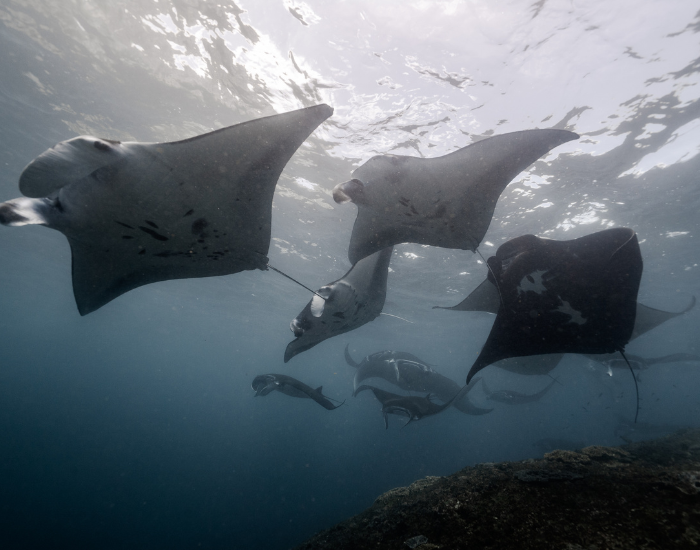
Manta rays reproduce more like whales than like most fish. Female mantas usually carry a single pup for 12 to 13 months. Many then wait two to five years before breeding again.
The development is unusual. Each embryo starts inside an egg, but the egg hatches within the mother. The pup then feeds on yolk and a nutrient-rich uterine fluid. Mantas never scatter fish eggs across the reef.
Females mature late, often after eight years, and manta rays live up to about 50 years. As a result, a female may produce only a few pups per decade. The Okinawa Churaumi Aquarium recorded the first captive manta birth in 2007. The Georgia Aquarium also kept mantas for research and display.
11. Gill Nets and Gill Plates Are Driving Manta Ray Populations Down
The IUCN lists the giant manta as an endangered species and the reef manta as vulnerable. Overfishing is the main reason behind both assessments.
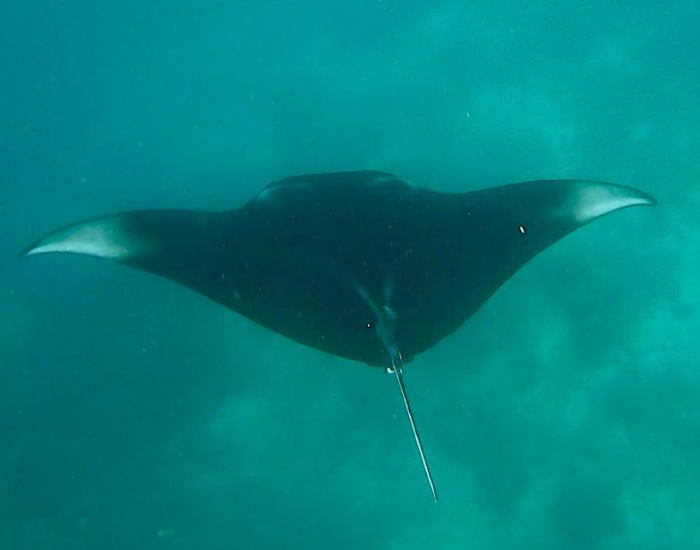
Most mantas die in gill nets, often as bycatch. Traders then sell the dried gill plates in Asian markets as a medicinal tonic. That demand turned unwanted bycatch into a profitable catch, feeding the wider illegal wildlife trade.
Sri Lanka shows the scale. Blue Resources Trust estimates 600 to 1,000 manta rays land there every year. Fernando and Stewart found the country’s small-scale fleet catches more mobulids than all industrial purse-seine fisheries combined.
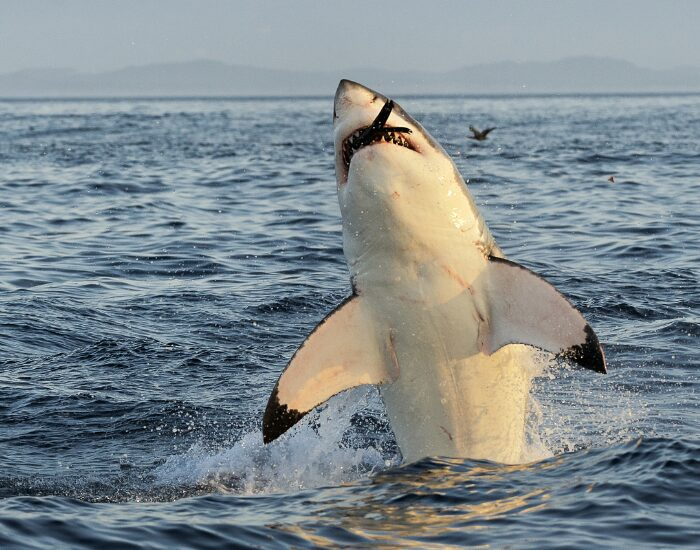
Plastic adds another layer. Germanov and colleagues estimated that mantas feeding in Indonesian waters may swallow up to 63 plastic pieces per hour. Marine debris, climate change and degraded coral reefs compound the damage. Large sharks like great white and bull sharks, as well as orcas hunt mantas too, but humans now kill far more.
12. A Living Manta Is Worth More Than a Dead One
Governments have begun to protect manta rays. CITES listed them on Appendix II, with trade controls taking effect in 2014. That same year, Indonesia gave both species full protection. In 2018, the United States listed the giant manta as threatened under the Endangered Species Act.
The economics support that protection. O’Malley and colleagues valued global manta ray tourism at about US$140 million a year. Conservation groups estimate a single living manta can generate around a million dollars in tourism over its lifetime. Dead, its manta ray products fetch a few hundred dollars.
Marine protected areas matter as well. The Flower Garden Banks National Marine Sanctuary in the Gulf of Mexico hosts a nursery for juvenile mantas. It’s one of the best US dive sites for that reason.
How to Swim With Manta Rays Without Harming Them
Manta rays have no functional stinger and never bite people. They pose no real threat to scuba divers or snorkellers. The risk runs the other way. The Manta Trust’s swim guidelines come down to a few rules:
- Keep at least 3 metres away, and never block a manta’s path.
- Never touch one. Touch strips the mucus layer that protects its skin from infection.
- Switch off your camera flash.
- Stay low and to the side of cleaning stations.
- Let the manta approach you, not the other way round.
Looking back, we broke that last rule in Komodo when we chased them. The current won the argument for us. The mantas came back on their own terms, and that pass was the best moment of the swim.
FAQs About Manta Rays
No global count exists. Blue Resources Trust estimates 600 to 1,000 manta rays land in Sri Lanka alone every year. Fisheries around the world catch many thousands more mobulid rays, mostly in gill nets. Manta rays, by contrast, have no confirmed record of killing a person.
Reliable measurements top out near 7 metres (23 feet) of wingspan for giant manta rays. Some sources cite 26 feet (8 metres). Reports of 9-metre individuals circulate, but none has been scientifically verified.
Giant manta rays commonly reach 4 to 5 metres across, with a maximum of about 7 metres. Reef manta rays usually measure 3 to 3.5 metres (10 to 11.5 feet). Large giants can weigh around two tonnes.
A large reef manta spans roughly twice the height of an average adult. A record giant manta would equal four adults lying head to toe. Seen from above in the water, a big one fills your whole field of view.
Go and Swim With One
Manta rays combine a huge body, a big brain and a very slow life history. That combination is exactly why fishing hits them so hard.
If you want to see them, my guide to the best places to see manta rays covers the top destinations. Komodo pairs mantas with Komodo dragons, and my list of Indonesia’s best wildlife destinations goes further. The same trips often turn up whale sharks, another plankton-eating giant. While you wait at the cleaning station, learn the coral reef fish doing the cleaning.
Have you swum with mantas? Tell me where in the comments.
Manta Ray Biology & Science Quiz
Ten fun study questions covering cephalic fin mechanics, belly pattern fingerprints, reproduction rates, social intelligence, and conservation economics. Test your retention!
Multiple Choice
References:
Ari, C., & D’Agostino, D. P. (2016). Contingency checking and self-directed behaviors in giant manta rays: Do elasmobranchs have self-awareness? Journal of Ethology, 34(2), 167–174. https://doi.org/10.1007/s10164-016-0462-z
Fernando, D., & Stewart, J. D. (2021). High bycatch rates of manta and devil rays in the “small-scale” artisanal fisheries of Sri Lanka. PeerJ, 9, e11994. https://doi.org/10.7717/peerj.11994
Germanov, E. S., Marshall, A. D., Hendrawan, I. G., Admiraal, R., Rohner, C. A., Argeswara, J., Wulandari, R., Himawan, M. R., & Loneragan, N. R. (2019). Microplastics on the menu: Plastics pollute Indonesian manta ray and whale shark feeding grounds. Frontiers in Marine Science, 6, 679. https://doi.org/10.3389/fmars.2019.00679
Perryman, R. J. Y., Venables, S. K., Tapilatu, R. F., Marshall, A. D., Brown, C., & Franks, D. W. (2019). Social preferences and network structure in a population of reef manta rays. Behavioral Ecology and Sociobiology, 73(8), 114. https://doi.org/10.1007/s00265-019-2720-x
White, W. T., Corrigan, S., Yang, L., Henderson, A. C., Bazinet, A. L., Swofford, D. L., & Naylor, G. J. P. (2018). Phylogeny of the manta and devilrays (Chondrichthyes: Mobulidae), with an updated taxonomic arrangement for the family. Zoological Journal of the Linnean Society, 182(1), 50–75. https://doi.org/10.1093/zoolinnean/zlx018