Who doesn’t like wolves? I haven’t met anyone that dislike them even a little bit. We love them in this blog and that’s the reason I’ve written extensively about them, like the endangered Mexican wolf’s struggle for survival, the reintroduction of wolves in California, the the controversial gray wolf reintroduction in Colorado. But this is the turn for the endangered ethiopian wolf.
When I was creating the ebook on animals in Africa: Ecosystem explorer, I knew I had to dedicate substantial space to one of the continent’s most extraordinary and overlooked predators: the Ethiopian wolf (Canis simensis). This sleek, russet-coated hunter represents everything I find fascinating about wolves, specialized evolution, complex social structures, and a precarious existence on the edge of extinction.
The Ethiopian wolf is a living fossil that holds the key to the health of one of the world’s most unique ecosystems. Often mistakenly called the Simien fox or Abyssinian wolf, this member of the genus Canis is also known as the ‘Ethiopian jackal’ and ‘horse jackal’ in various regions.
As a unique African canid, the Ethiopian wolf is facing a brutal fight for survival.
Here are 12 essential facts about the Ethiopian wolf that reveal why this magnificent animal is so unique, so threatened, and so deserving of our attention.
1. The Ethiopian Wolf is Africa’s Only True Wolf Species
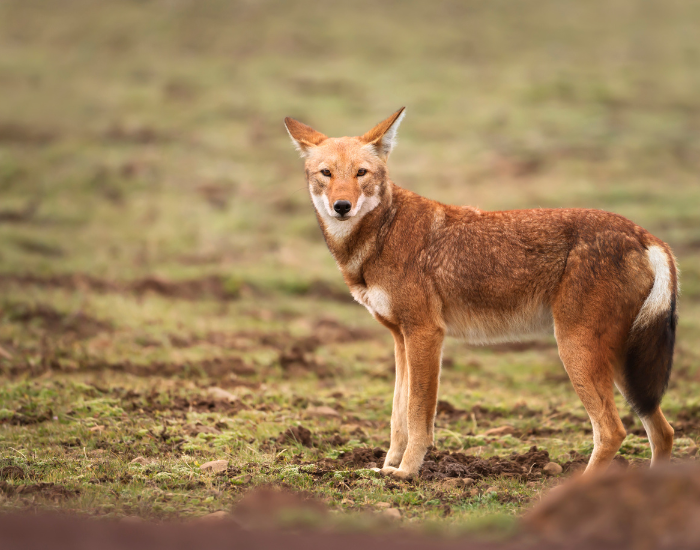
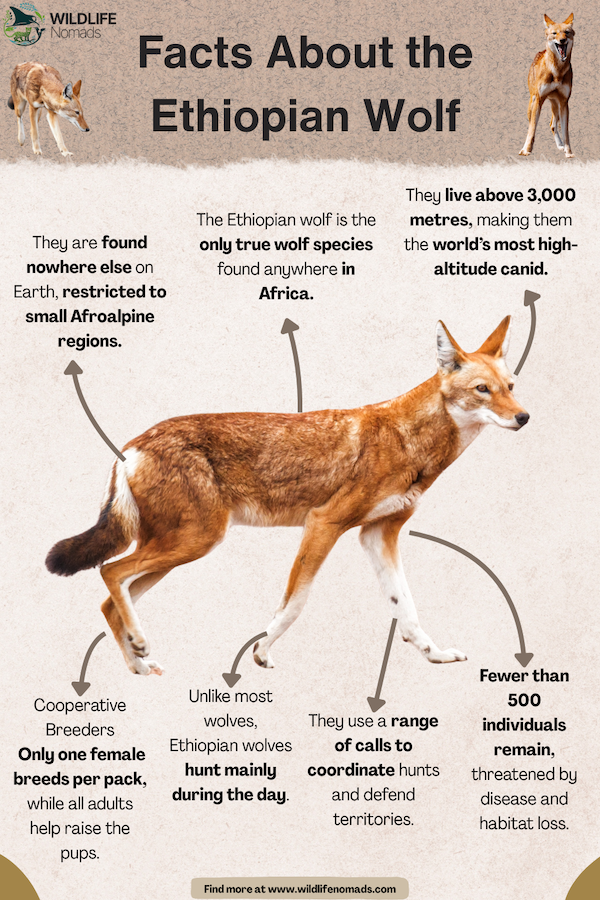
Forget the common misconceptions. While there are other wild canids in Africa, like the African wolf (formerly golden jackal), various jackal species, and wild dogs, the Ethiopian wolf (Canis simensis) is the only animal considered an Old World wolf in sub-Saharan Africa.
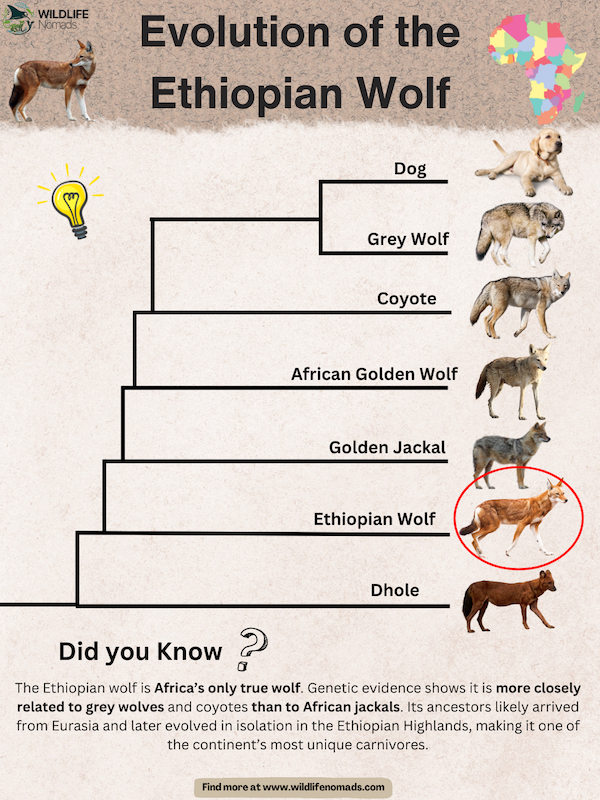
Molecular genetics have confirmed a fascinating evolutionary journey. The Ethiopian wolf is more closely related to the gray wolf and the coyote than it is to most other African canids. It is believed to have arrived in Africa through a single dispersal event from a Eurasian ancestor, adapting its body and behavior to the harsh, high-altitude environment it now calls home. Its ancestors likely migrated through northern Africa before establishing distinct populations and an evolutionary history in eastern Africa.
This unique species split from its gray wolf ancestors approximately 3-4 million years ago. Its very existence is a testament to natural selection’s power, carving a sleek, specialized predator out of a classic wolf species.
2. The Ethiopian Wolf is the World’s Rarest Canid
The reality is stark: there are approximately 454 adult Ethiopian wolves left in the wild as of 2024. This makes it not just Africa’s most endangered carnivore, but also one of the world’s rarest canids and one of the most endangered animals globally.
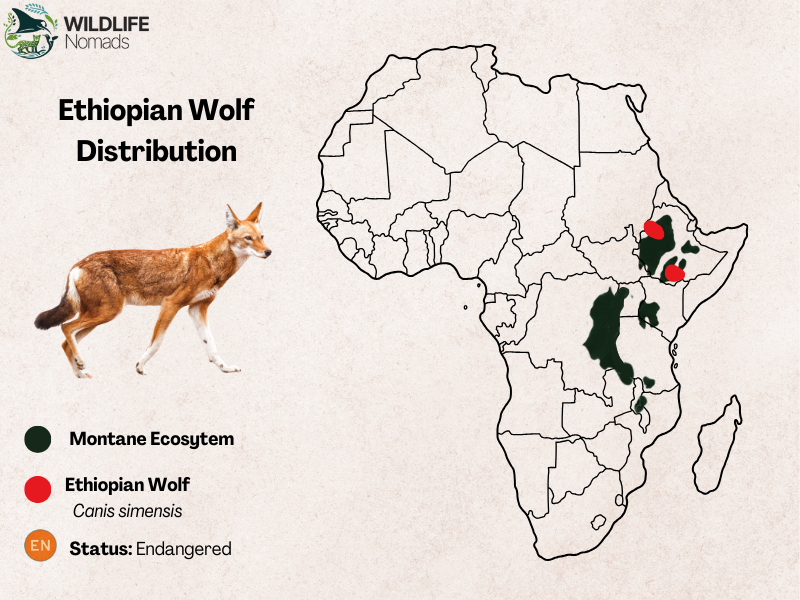
Their distribution is highly fragmented, existing in only six isolated populations across the Ethiopian highlands. The largest population of Ethiopian wolves resides within the Bale Mountains, with approximately 281 individuals. However, even this subpopulation faces constant threats from disease and habitat loss. Ongoing population decline, primarily due to diseases such as rabies and canine distemper, as well as continued habitat loss, further endangers the species. The sheer fragility of their numbers and their isolation paints a picture of extreme conservation urgency.
3. Their Scientific Name Tells an Old Story
The scientific name Canis simensis speaks to historical identity confusion. It was first described from the Simien Mountains (hence simensis). For a long time, it was called the Simien fox or Simien jackal. This was due to its slender build, long snout, and reddish fur.
Even its local name, ky kebero, meaning “red jackal,” reflects this confusion. In Oromo, it’s called jedalla farda. But modern taxonomy, informed by genetic studies, places it firmly in the genus Canis alongside the gray wolf, confirming its true identity as a wolf species.
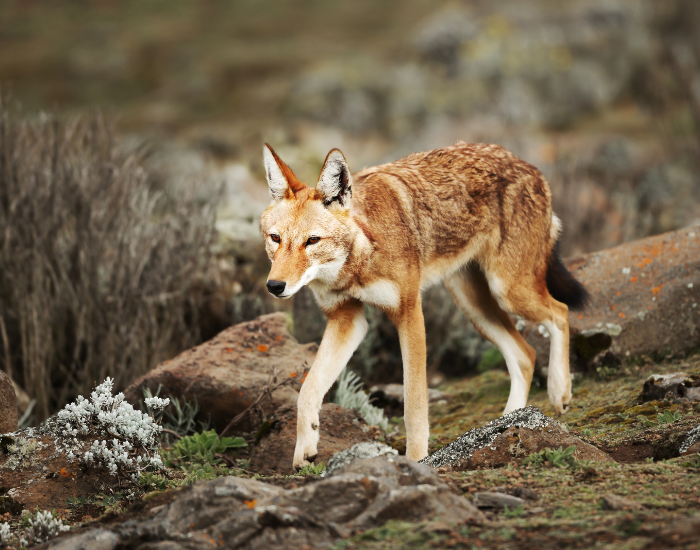
4. They Live Exclusively in the High-Altitude Afroalpine Ecosystem
Ethiopian wolves live in high-altitude regions. They inhabit unique ecosystems and typically survive up to 8–10 years in the wild.
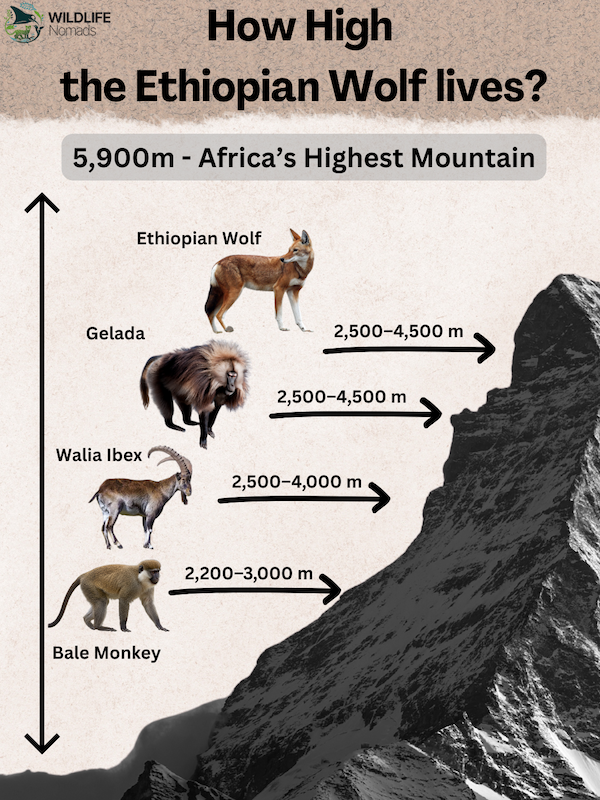
The Ethiopian wolf is an apex predator found in a habitat few people ever see. It is endemic to the Afroalpine environment of the Ethiopian Highlands. The species usually lives at elevations between 3,000 and 4,500 metres above sea level.
The Bale Mountains provide prime montane grasslands and heathlands. These areas offer ideal conditions and support abundant rodent prey.
Ethiopian wolves cannot survive at lower altitudes. There, they face stronger competition from other carnivores. Human density is higher, and their specialised prey is largely absent.
Because of these strict habitat requirements, the species is a true habitat specialist. It cannot easily adapt to changing conditions. This narrow and fragile range is a major factor in its vulnerability.
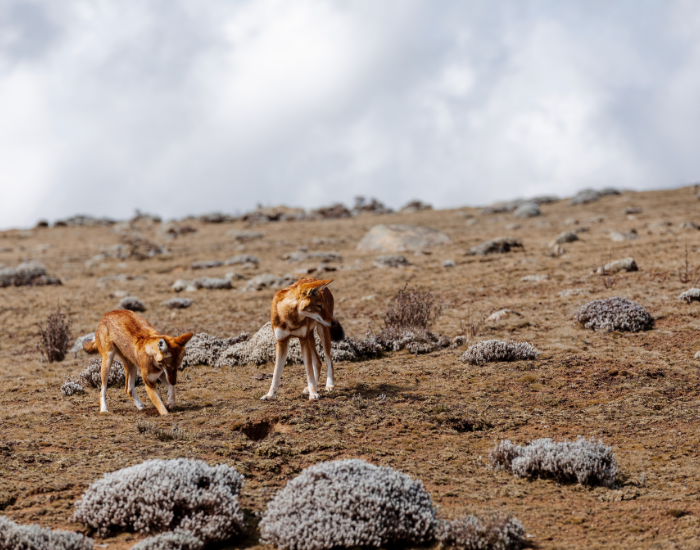
5. They are Solitary Hunters in Social Packs
One of the most biologically fascinating facts about Ethiopian wolves is their dual existence: they are the ultimate social loners.
Unlike the classic North American gray wolf, which hunts cooperatively for large prey like elk or moose, the Ethiopian wolf is a solitary hunter. Each wolf must stalk, chase, and capture its small, rodent prey alone to meet its daily nutritional needs. However, as the sun begins to set, they gather into close-knit family groups of up to 20 individuals to socialize, communicate, and collaboratively patrol their territory. Ethiopian wolves typically live in closely related packs, where limited dispersal and inbreeding avoidance strategies shape their social and reproductive behaviors.
Ethiopian wolf packs typically contain 3-13 members, with an average of 6 individuals. This cooperative social structure, complete with a strict dominance hierarchy and shared pup-rearing duties, is a characteristic inherited from their wolf ancestors. Packs conduct border patrols to defend their territory, using scent marking, vocalizations, and sometimes direct confrontations. When unfamiliar wolves approach the territory, vocalizations and confrontations are common, highlighting their strong territorial instincts. Their solitary hunting is a unique adaptation to the abundance of small prey in their restricted habitat.
6. Their Diet is Almost Exclusively Rodents
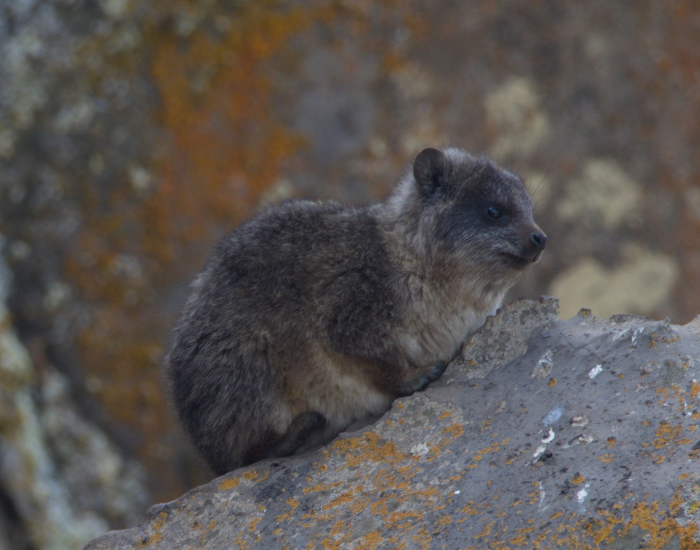
The Ethiopian wolf’s body is a finely tuned machine for catching one thing: rodents. Their diet is highly specialized, with rodents making up approximately 90% of their food intake.
Their primary and most preferred prey is the giant mole rat (Tachyoryctes macrocephalus), an endemic species of the Bale Mountains. These enormous, burrowing rats comprise about 40% of the wolf’s diet and are also a major reason the wolves are restricted to this area. They also prey on common grass rats, vlei rats, and brush-furred rats.
My anecdote here is always one of awe: I watched one wolf use its incredibly long snout—a key physical adaptation, to plunge into a burrow, emerging moments later with a fat, twitching giant mole rat. The speed and precision were incredible.
Ethiopian wolves employ various hunting techniques. They stalk their prey, creeping low to the ground in short bursts before pouncing. Also, they sometimes use rocks or bushes as cover, or even mingle with herds of cattle and goats, using the livestock as a mobile hide. They also dig rodents out of their tunnels, particularly when hunting giant mole rats.
This specialization is an ecological success story but a conservation risk; if rodent populations decline due to climate change or human activity, the wolves suffer immediately.
7. Rabies and Distemper are Greater Threats than Humans
While habitat loss due to agricultural expansion and overgrazing is a constant, chronic threat, the most immediate and devastating danger to Ethiopian wolf populations comes from disease.
The wolves share their high-altitude habitat with the domestic dogs of local pastoralists. These dogs act as a reservoir for highly contagious and lethal viruses, particularly rabies and canine distemper virus (CDV).
Rabies outbreaks in the 1990s and 2000s severely impacted Ethiopian wolves in the Bale Mountains. At their peak, these outbreaks caused the loss of up to 75% of the known population. Major outbreaks occurred in 1991 and again in 2008–2009.
Canine distemper also caused significant mortality. As a result, the Bale Mountains population declined by around 30% between 2008 and the early 2010s. This decline was driven by consecutive disease outbreaks.
These events led to the creation of the Ethiopian Wolf Conservation Programme (EWCP). The programme was established by conservation scientist Claudio Sillero-Zubiri.
The Bale Mountains Research Project began in the early 1990s. It became a foundation for studying and conserving Ethiopian wolves in this region. Sillero-Zubiri has played a key role in advancing research and protection efforts. His work has greatly improved understanding of the species.
The core strategy extends beyond vaccinating wolves. It focuses on mass vaccination of domestic dogs in and around the Ethiopian Highlands. This creates a protective buffer zone that reduces disease transmission. This proactive, community-focused approach is now a global model for conservation.
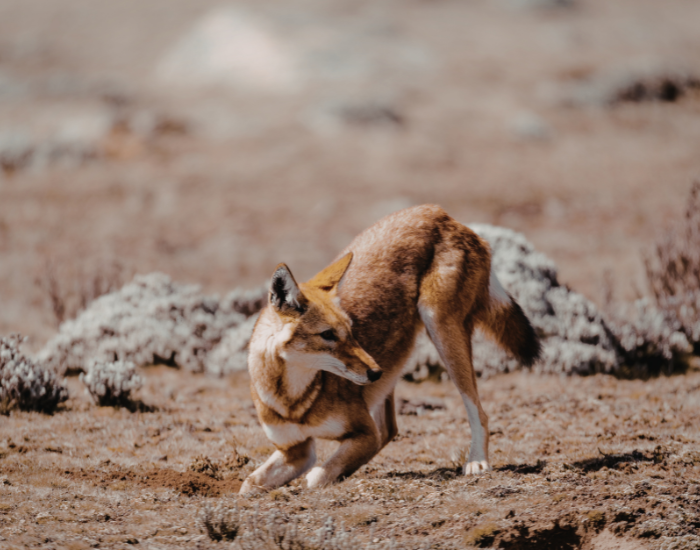
8. Hybridization with Domestic Dogs is a Real Problem
Another serious threat linked to domestic dogs is hybridisation. Genetic studies have confirmed this risk. Landmark research by Sillero-Zubiri and colleagues found evidence of hybridisation between female Ethiopian wolves and male domestic dogs. This was documented in at least one population in the Bale Mountains.
This is a major conservation concern. Hybridisation dilutes the unique gene pool of the Ethiopian wolf (Canis simensis). The species already shows low genetic diversity. Introducing dog genes further threatens long-term fitness and survival.
The Ethiopian Wolf Conservation Programme (EWCP) has responded with sterilisation programs for hybrid animals. These measures aim to prevent further genetic contamination.
However, scientists remain concerned about the underlying causes. In some cases, female wolves may struggle to find unrelated mates. This can increase the risk of mating with domestic dogs instead.

9. Pups are Reared Cooperatively and Born Dark
The tight-knit social structure of Ethiopian wolf packs becomes most visible during the breeding season. Typically, only the dominant female in each pack breeds. She gives birth to a litter of two to six pups in a rocky den, often hidden within a crevice.
Breeding usually occurs between August and November. After a gestation period of around 60–62 days, pups are born in underground dens. These dens are dug beneath boulders or inside rocky crevices.
Pups first emerge from the den at about three weeks old. At this stage, they have a sparse, dark coat that is often black or grey. This colouring helps camouflage them against the surrounding earth. During this time, pups are completely dependent on the pack.
All adult pack members help raise the young. This includes subordinate males and non-breeding females. Adults return from hunting trips to regurgitate food or carry prey back to the den.
As the pups grow, they gradually shift from milk to solid food. This transition usually begins around week ten and continues until about six months of age. Most of this food is provided by adult pack members.
This cooperative breeding system is essential to the pack’s success. It strengthens social bonds and supports reproduction. All adults help feed and protect the young, sharing responsibility for the next generation.
10. Their Striking Appearance is very Good Camouflage
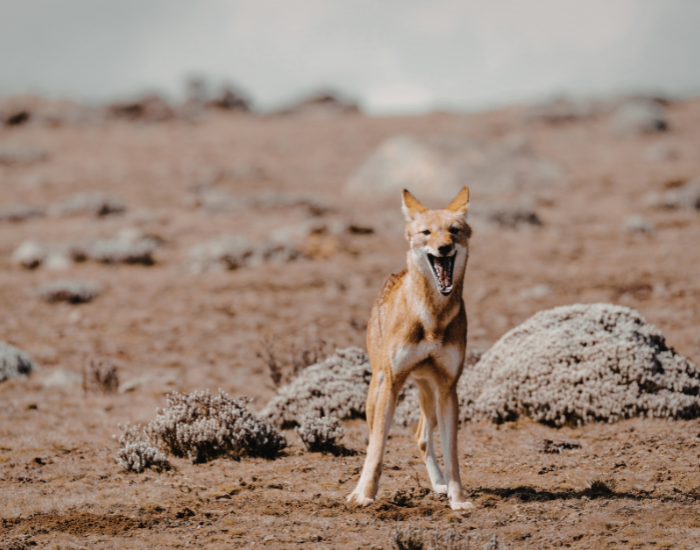
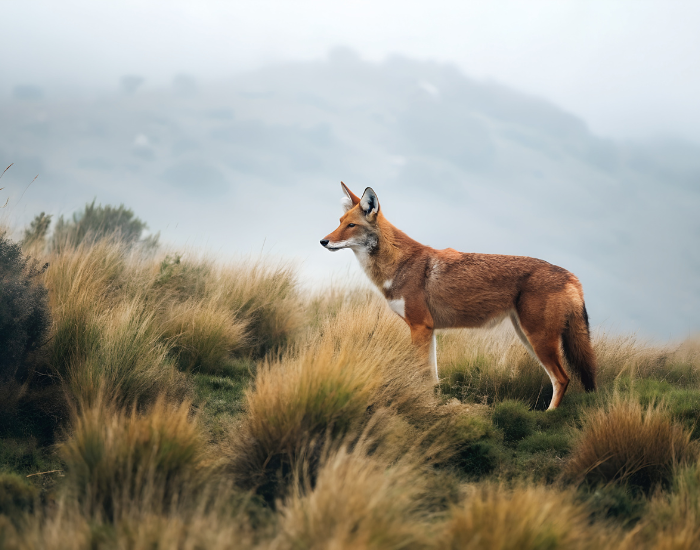
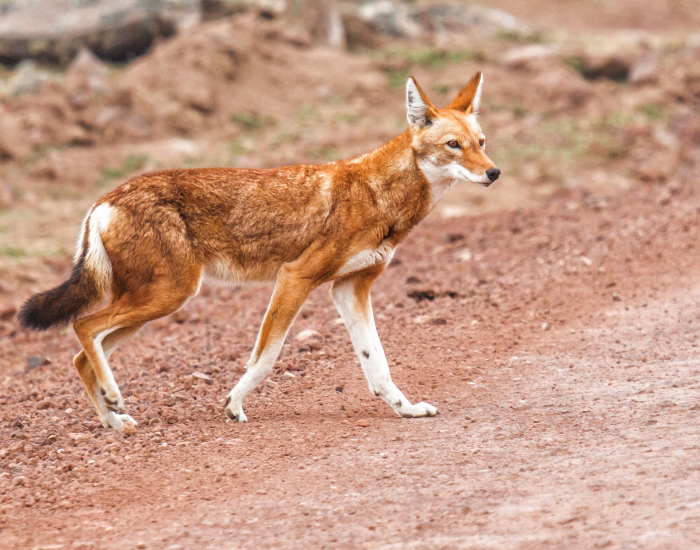
The Ethiopian wolf is often described as one of the most beautiful canids in the world. They are visually distinct from the heavily-built northern wolves and look far more like a large, long-legged fox.
Their coat is a brilliant, distinctive tawny rufous (rusty red), often set against a characteristic white crescent on the throat, chest, and underbelly. The sharp, well-defined line between the red and white fur is a striking characteristic. They also have white markings on the face and distinctive black markings on the tail.
This beautiful coloration is not just for show; it is expert camouflage, allowing the lanky, slender wolves to blend seamlessly with the reddish, brown, and ochre hues of the Afroalpine moorlands. This is crucial for their stealthy, solo hunting style.
Adult Ethiopian wolves stand about 60 cm at the shoulder and weigh between 11-19 kg, with males being larger than females. Their elongated muzzle and long legs are perfect adaptations for their specialized rodent-hunting lifestyle.
11. Conservation Success is Built on Community Engagement
The long-term survival of the Ethiopian wolf depends entirely on the people who live alongside them. Conservation efforts led by the Ethiopian Wolf Conservation Programme (EWCP) focus heavily on community engagement and building sustainable livelihoods.
Key conservation strategies include:
Education: Programs like Classroom Africa integrate conservation ethics into local schools, teaching children about the importance of protecting endangered animals.
Livelihood Support: Alternative livelihood projects are developed to reduce reliance on grazing land within prime wolf habitat. The Simien Mountains Cultural Tourism project, for example, is improving infrastructure and accommodations in and around the national park, creating income alternatives for local communities.
Disease Prevention: Mass dog vaccination campaigns in areas like Bale, Menz, and Simien have been critical. In Bale, there are over 8,500 households with more than 12,500 dogs, making disease prevention essential.
Conflict Mitigation: Community-led dialogue and forums help address tensions around livestock predation, which is rare but sometimes sensationalized.
This holistic, people-first approach is the strategic foundation of Ethiopia’s National Action Plan for Ethiopian wolf conservation, developed through workshops with conservation partners and the IUCN SSC Canid Specialist Group. Ethiopia’s wildlife conservation regulations, such as the Wildlife Conservation Regulations of 1974, provide legal protection for the Ethiopian wolf and support ongoing conservation efforts.
12. The Ethiopian Wolf is an Umbrella Species
The Ethiopian wolf holds a crucial place in its environment. It is both a keystone species and an indicator species. Its survival directly indicates the health of the entire Afroalpine ecosystem.
When we fight for the Ethiopian wolf, we are fighting to protect the vast, unique habitat of the Ethiopian highlands, which is a biodiversity hotspot recognized by the World Conservation Union. By conserving the wolf, we are simultaneously protecting dozens of other endemic species that share its home. The montane grasslands and moorlands of the Ethiopian highlands are similar to grassland biomes found in other regions of the world, such as South America, where comparable ecosystems support unique biodiversity.
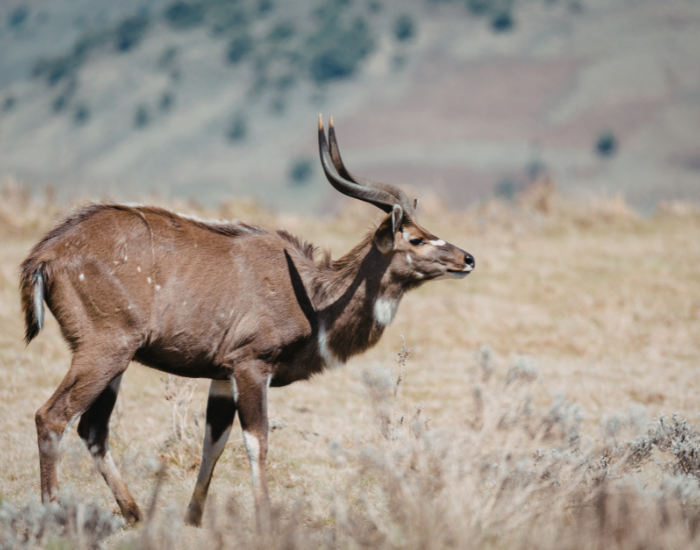
These include the spectacular mountain nyala (Tragelaphus buxtoni), the gelada baboon, the Walia ibex, the Bale monkey, and the massive populations of rodents that form the base of the food web. Protecting the wolf’s territory ensures the survival of all the unique flora and fauna of the high-altitude moorlands.
The Ethiopian highlands are part of the Eastern Afromontane biodiversity hotspot, and only 21% of potentially suitable habitat areas are actually available to Ethiopian wolves currently. The rest has been lost to agricultural encroachment and human settlement.
They Play a Surprising Role in Local Economies
The Ethiopian wolf’s presence in the Ethiopian highlands and the Bale Mountains National Park is more than just an ecological marvel, it’s an economic asset for local communities. By keeping rodent populations in check, these wolves help protect crops from the damage caused by pests like giant mole rats and common grass rats. This natural pest control supports the livelihoods of farmers and herders, reducing the need for chemical interventions and safeguarding harvests in the Bale Mountains and surrounding areas.
Beyond agriculture, the Ethiopian wolf is a magnet for ecotourism. Wildlife enthusiasts and researchers from around the world travel to the Bale Mountains National Park, hoping for a glimpse of one of the world’s rarest canids. This influx of visitors generates income for local guides, lodges, and service providers, creating jobs and supporting community development.
Conservation efforts, particularly those spearheaded by the Ethiopian Wolf Conservation Programme, further contribute to the local economy. These initiatives employ local people as wolf monitors, educators, and field staff, ensuring that the benefits of protecting wolves are felt directly by those living in the region. In this way, the survival of the wolves is closely linked to the economic well-being and sustainability of the communities in the Ethiopian highlands.
The Road Ahead: Protecting the Roof of Africa
Seeing an Ethiopian wolf is a humbling experience. It reminds you that the sheer diversity of life on this planet is often tucked away in the most remote, specialized corners of the earth, fighting against overwhelming odds.
The survival of these magnificent wolves is not a given; it is a daily struggle against the insidious creep of habitat fragmentation and the acute threat of disease carried by infected dogs. Human persecution, including direct killing and negative attitudes toward the wolves, continues to threaten their populations and hinder conservation efforts. Between 2019 and 2024, there has been a tenfold increase in human settlements inside Bale Mountains National Park, from 388 to 3,506 structures, with a corresponding 42% increase in farmland.
Now, it is up to the global community to ensure that this rarest of canids has the resources to run free on the Ethiopian highlands for generations to come!