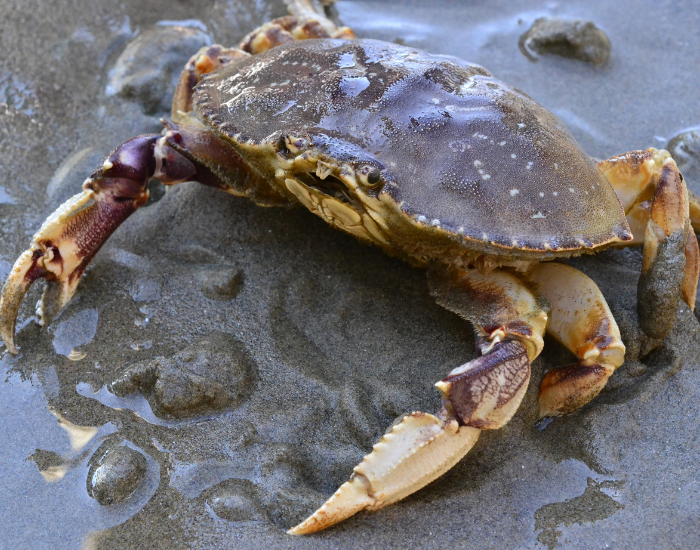
I still remember the salt spray hitting my face during my three-week field trip to Baja California. We were looking for grey whales in Baja and from Tijuana we headed to Guerrero Negro, where they have a fascinating story of survival from the brink of extinction. However, one of my best discoveries happened in a tide pool along the rugged coastline just in Ensenada. I saw a flash of purple shell and thought I’d found a Dungeness crab. My professor laughed, pointing out it was actually a local Shore Crab, reminding me that the legendary “Master” of the Pacific usually prefers the deeper, colder haunts of the North.
To most, Dungeness crabs are just the stars of a seafood platter, but they are actually remarkable survivors of the Pacific Northwest and beyond. Here is what I’ve learned about these “Masters” of the deep:

1. The Scientific Mess: When Cancer Became Master
For decades, scientists knew this species as Cancer magister. In addition, you’ll still see that name in older journals and textbooks. However, taxonomists eventually moved it to the genus Metacarcinus magister.
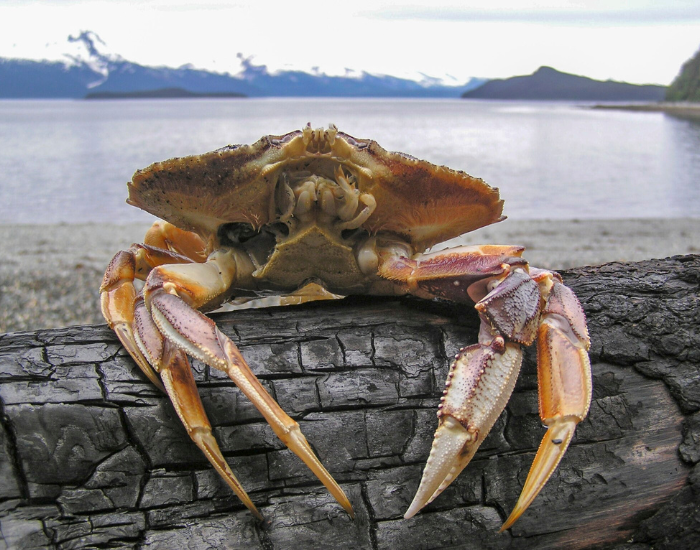
In Latin, magister means “master.” This fitting title reflects the crab’s dominance in the Pacific ecosystem. Moreover, the genetic structure sets it apart from cousins like blue crabs and green crabs. It is the largest edible crab native to its range.
2. From Alaska to Mexico: Where the Masters Roam
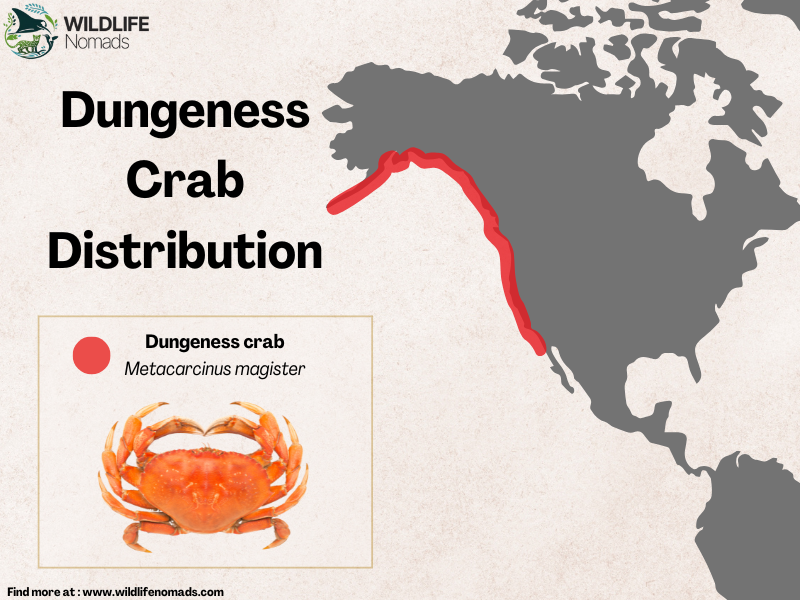
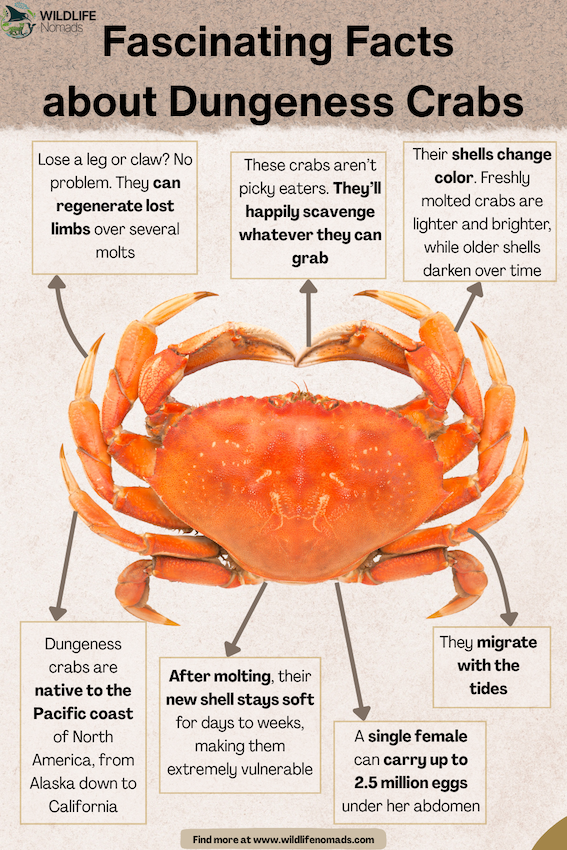
Where do you find dungeness crab? The range is staggering. While my professor showed them to me in Baja’s cooler upwelling zones, their primary habitat spans from Alaska to Santa Barbara, California.
More specifically, dungeness crabs are found from the Pribilof Islands in Alaska down to Magdalena Bay in Baja California, Mexico. They thrive in diverse environments including British Columbia, Washington State, and the Pacific Northwest.
These crabs are true habitat generalists. For example, you’ll find them in lush eelgrass beds of Puget Sound and Willapa Bay. Additionally, they’re comfortable on sandy bottoms of the continental shelf at depths up to 230 meters. This adaptability explains why they’ve thrived across diverse latitudes for millennia.
Key dungeness crab populations inhabit San Francisco, Monterey Bay, Bodega Bay, Morro Bay, and Southeast Alaska. In addition, healthy populations exist in shallow waters around the North Pacific.
2. The Violent Art of Growing: Life Cycle and Molting Explained
Growth for a crustacean is violent and vulnerable. Dungeness crabs don’t grow linearly, they molt. To grow, they must shed their entire exoskeleton and pump themselves up with water before the new shell hardens.
In their first two years, they might molt six times per year. However, as they age, this slows to once annually. Sexual maturity is reached after about 12 molts or two years.
How big are dungeness crabs? A large male crab can reach a shell width of nearly 10 inches (25 cm). In the wild, they can live 8 to 13 years. However, most crabs in heavily fished areas rarely see their tenth birthday.
I’ve seen old shells washed up on British Columbia beaches that look like small shields. This demonstrates the sheer caloric intake required to maintain that armor.
3. Love in a Hard Shell: The Mating Ritual
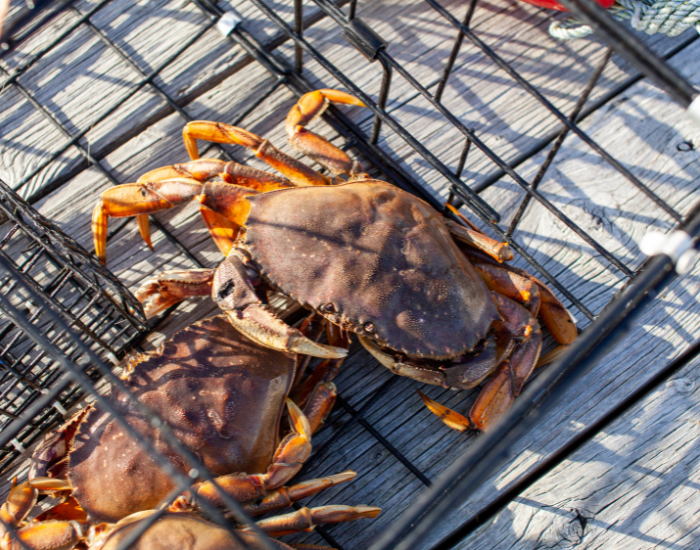
The mating season typically occurs from late spring through fall. During this time, female crabs release pheromones to signal readiness. Male crabs are polygamous and may mate with many partners each season.
A male will embrace a female in a pre-mating hug that can last for days. This protects her until she molts, the only time mating is physically possible. It’s a rare moment of crustacean tenderness driven by cold chemistry.
Females can store sperm for up to 2.5 years. A single female crab can carry 2.5 million eggs. The eggs are fertilized when females extrude them under their abdomen, where they’re carried until hatching.
After hatching in late winter or early spring, young crabs are free-swimming. The larval phase includes five zoeal stages and one megalopa stage. This juvenile stage typically takes three to four months. However, in Alaska, crabs may remain larvae for up to a year.
4. The 3-S Rule: How We Fish Responsibly
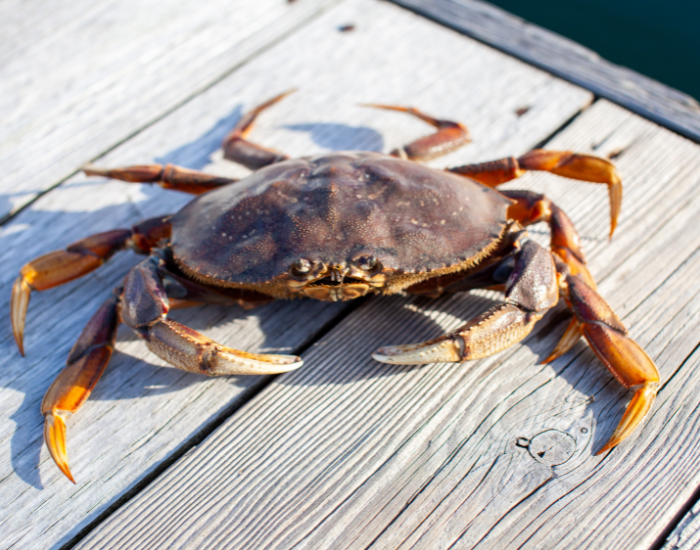
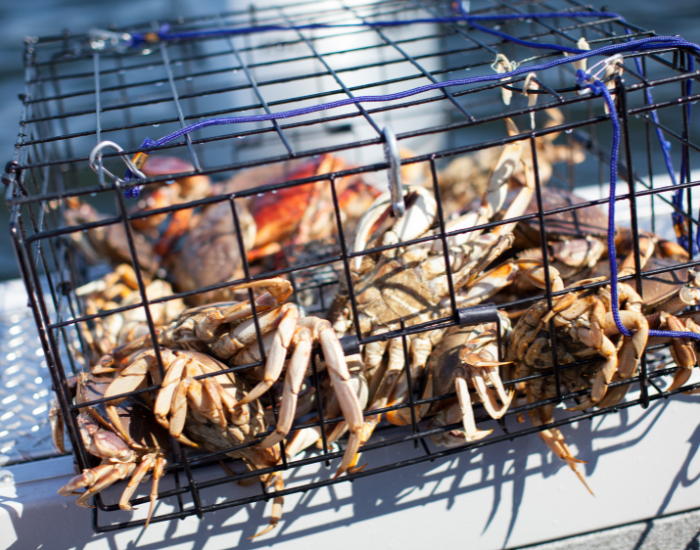
The dungeness crab fishery is the backbone of the West Coast economy. Commercial fisheries use a “3-S” management system: Size, Sex, and Season. Only large male crabs are harvested, ensuring females molt and reproduce.
Commercial fishing occurs primarily between November and July, depending on the region. Fishermen use circular crab pots and crab traps typically baited with herring, squid, or clams. These hoop nets sit on soft bottom areas where dungeness crabs forage.
In California, Oregon, and Washington, the legal harvest size is 6.25 inches in shell width for commercial fisheries. In Alaska and British Columbia, it’s 6.5 inches. This is one of the most successfully managed commercial fisheries in the world.
The dungeness crab populations are carefully monitored. Unlike many species, the dungeness fishery maintains sustainable practices that protect marine biodiversity.
5. Ocean Acidification Threatens Dungeness Populations
We cannot discuss dungeness crabs without addressing ocean acidification. As the ocean absorbs more carbon dioxide, the pH drops. This makes it harder for these crabs to build calcium carbonate shells.
Recent studies show increased acidity doesn’t just weaken the outer shell. It can dissolve the tiny sensory hairs (mechanoreceptors) crabs use to navigate. If a crab can’t feel its environment or smell its food, survival chances plummet.
This isn’t a future threat, it’s happening now in Glacier Bay and Monterey Bay. Therefore, marine science researchers closely monitor these changes.
6. Eat or Be Eaten: Dungeness in the Food Chain
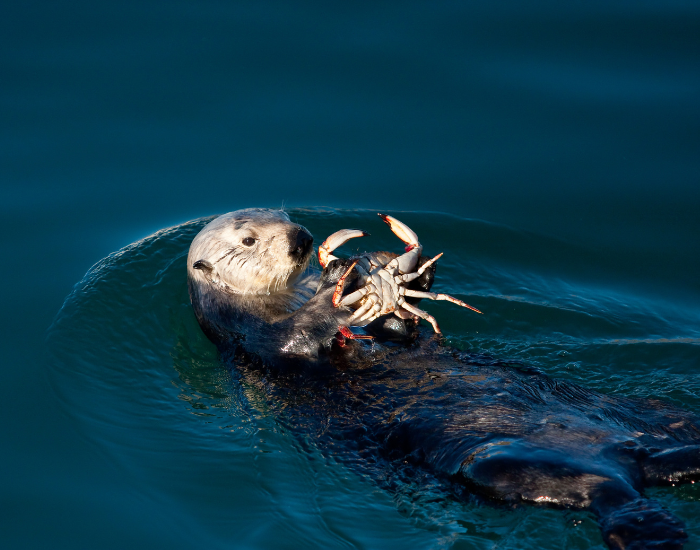
In the Pacific food web, dungeness crabs are both hunter and hunted. They use powerful claws to crush clams, mussels, small fish, and shrimp. In addition, they scavenge along the sea floor for worms and other crustaceans.
However, they’re a favorite snack for sea otters. In areas where sea otter populations have rebounded, we see fascinating ecological shifts. Otters keep crab populations in check, which affects the populations of organisms crabs eat.
Other predators include Pacific halibut, octopus, and larger dungeness crabs. Young crabs face threats from small fish during their larval phases.
7. Dungeness Crab Meat: A Culinary Delicacy
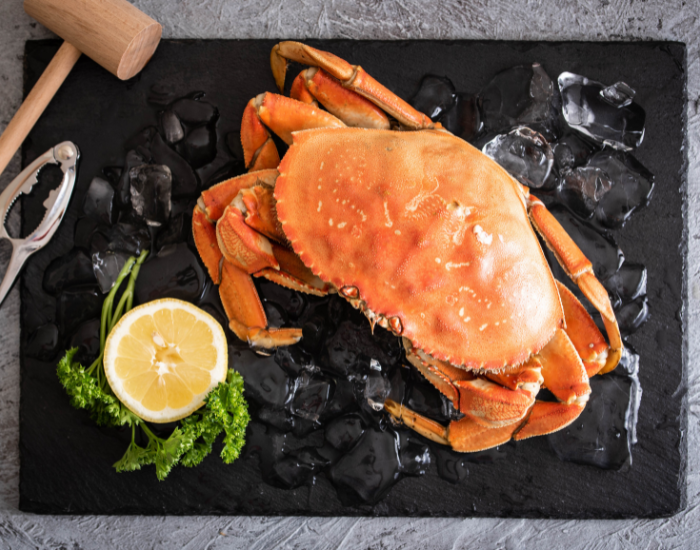
While I promised no recipes, it would be a disservice not to mention why dungeness crabs are culinary icons. Unlike the fibrous meat of king crabs, dungeness crab meat is sweet and tender.
This delicious crab supports entire coastal communities. Whether it’s a simple steam or complex crab cake, demand is high. The price per pound fluctuates wildly based on the season’s yield.
Female crabs, though not harvested commercially, play a crucial role in population sustainability. Male crabs provide the sweet meat consumers crave.
8. The European Invasion: Green Crabs vs. Dungeness
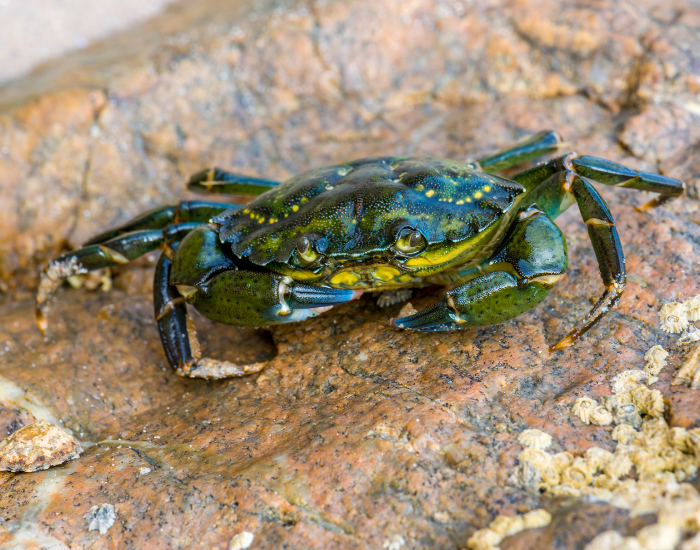
Conservation isn’t just about protecting a species, it’s about protecting from invaders. The green crab, an invasive species from Europe, has been creeping into dungeness territory.
These smaller, aggressive small crabs compete for the same eelgrass beds and food sources. As a biologist, I see this as a high-stakes turf war. Dungeness crabs usually have the size advantage. However, green crabs are more resilient to changing water temperatures.
Monitoring these interactions is vital for the future of marine biodiversity on the West Coast. In addition, other crabs in the intertidal zone face similar challenges.
9. Sideways? Not Quite: How Crabs Really Move
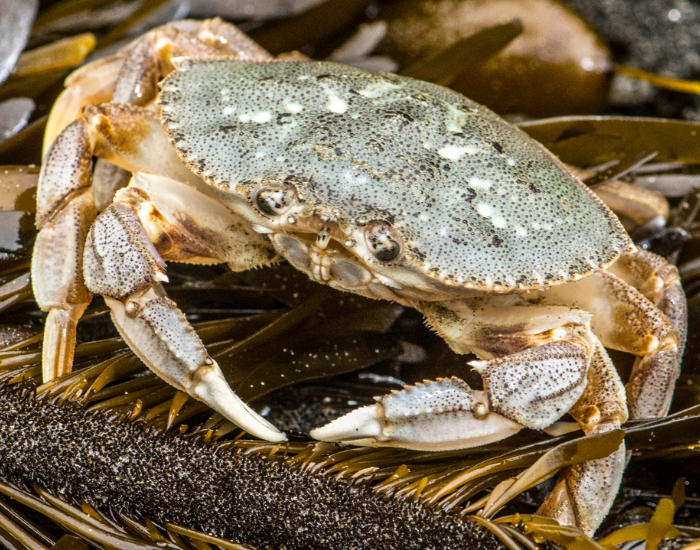
We often think of crabs as stationary tide pool residents. However, dungeness crabs are surprisingly mobile. They have four pairs of walking legs that allow movement in all directions, not just sideways.
Tagging studies show they can travel several miles in a single day. They move seasonally, often heading to deeper waters in winter to avoid turbulent coastal storms. Their ability to navigate featureless sandy bottoms suggests a sophisticated internal mapping system.
10. Smelling Underwater: The Chemistry of Survival
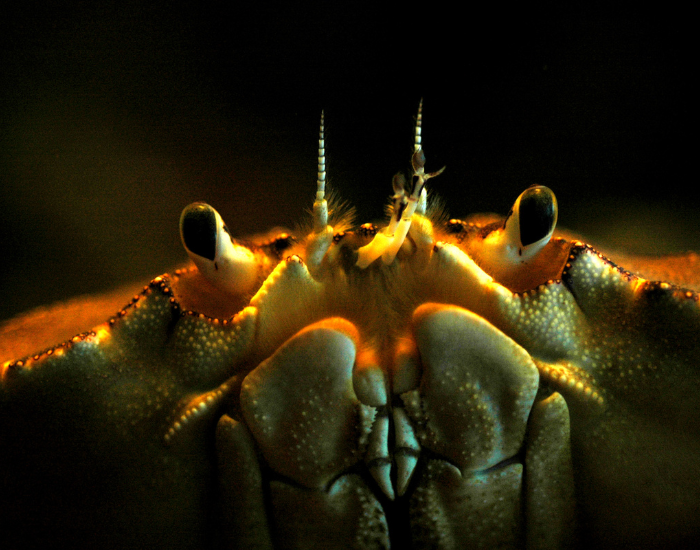
As a biologist, I’m fascinated by how these creatures “smell” their world. They don’t have noses, they use chemoreceptors on their antennae. They can detect decaying fish from incredible distances. This is why crab pots are so effective.
This sense isn’t just for food. During mating season, it’s essential for finding partners. Moreover, molecular ecology research reveals how genetic structure influences these behaviors.
FAQ: Your Burning Crab Questions Answered
Beyond their sweet flavor, they’re unique for their high meat-to-shell ratio. Biologically, they’re incredible survivors adapted to a massive range of temperatures and depths across the Pacific.
Price is driven by strict regulations that ensure sustainability. Because we only harvest mature male crabs and have limited seasons, supply is naturally capped. This protects the species from overfishing.
They’re found in the North Pacific from Alaska to Baja California, Mexico. They prefer sandy or muddy bottoms and estuarine environments like Puget Sound, Willapa Bay, and shallow bay areas.
The estimated maximum life span is 8 to 13 years. However, commercially caught crabs are usually about 4 years old. Most crabs caught in fishing occurs at four to five years of age.
What the Tide Pool Taught Me
You can’t look at an animal in isolation. Dungeness crabs are products of their environment, the cold currents, shifting sands, and complex ocean chemistry.
When we protect their habitat from ocean acidification and invasive species, we aren’t just saving seafood. We’re preserving a vital link in the Pacific’s biological chain.
The next time you see a crab on the beach or on a menu, remember the “Master” of the Pacific. It’s a creature of resilience, complex biology, and ancient lineage that deserves our protection and respect.