
The first time I saw a clown loach, I had no idea what I was looking at. I was halfway through a long drive from Medan to Kualanamu Airport in northern Sumatra, eyes still tired from a week of trekking through Gunung Leuser searching for orangutans, gibbons, and macaques and other monkeys. Our driver pulled over at a small roadside aquarium shop, and there, drifting between rocks in a dim tank, was this striped, orange-and-black fish that looked like it had wandered out of a coral reef and into the wrong river.
I snapped a photo and kept moving. Days later, back in my apartment scrolling through field images, I came back to that funny-looking fish. A few hours of reading turned into a small obsession. The clown loach turned out to be one of Indonesia’s most charismatic freshwater species, and I had been standing about 200 kilometers from its native habitat without knowing it. Here are 12 things every curious aquarist or naturalist should know about the clown loach, what I learned that night, and everything I have researched since.
1. The Clown Loach Has a Surprisingly Recent Scientific Name
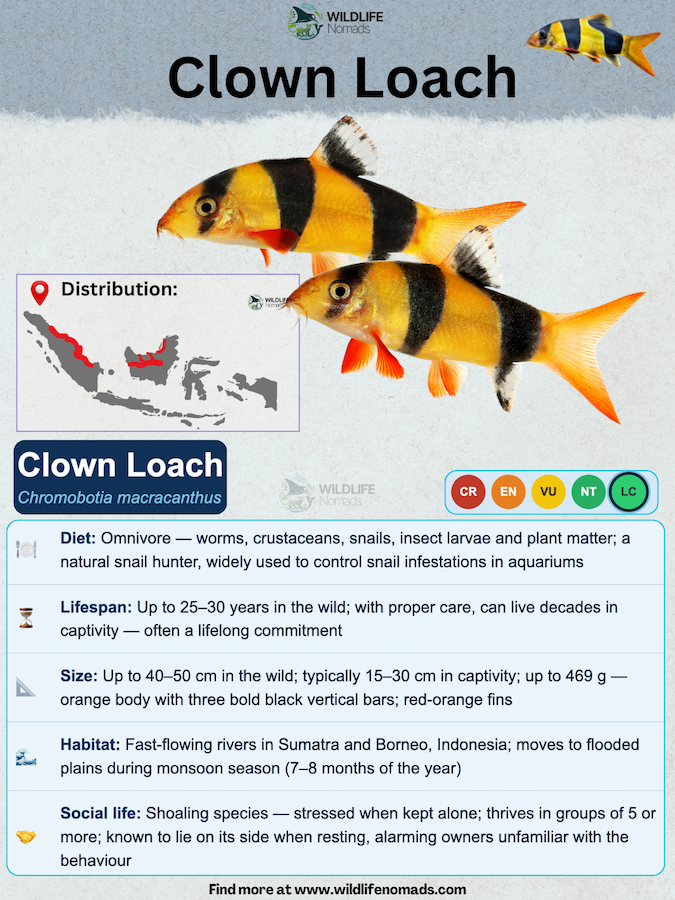
The clown loach scientific name is Chromobotia macracanthus, and the genus Chromobotia was only erected in 2004. Before that, this beautiful fish sat inside Botia, a sprawling group of Asian loaches. A reclassification by ichthyologist Maurice Kottelat moved it to its own genus, recognizing how genetically and morphologically distinct it is from its cousins.
It belongs to the family Cobitidae. The cobitidae family includes nearly all true loaches across Asia. Within that family the clown loach is now the sole member of genus Chromobotia, which makes the clown loach scientific position both unique and a little lonely on the family tree.
2. They Come from Two Specific Indonesian Islands
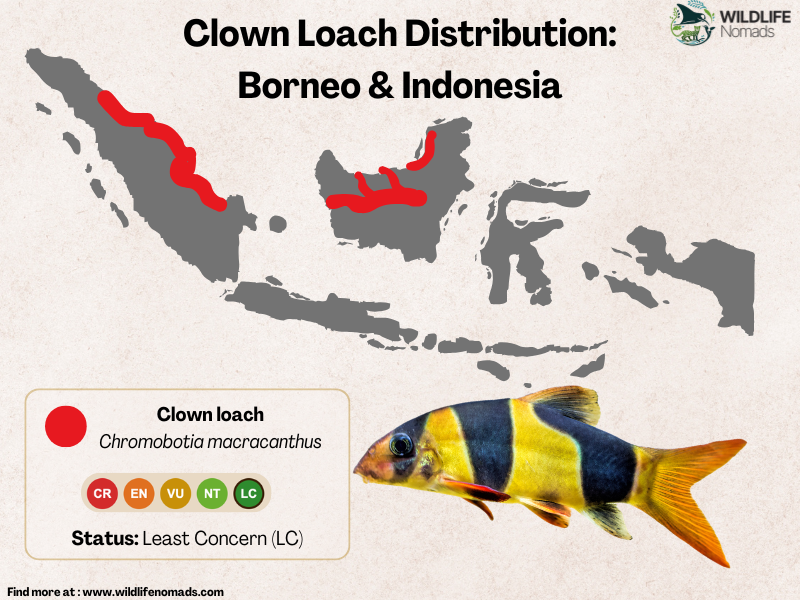
Wild clown loaches are commonly found in only two places on Earth: Sumatra and Borneo. As a tropical freshwater fish, they thrive in the slow, tannin-stained rivers cutting through hilly areas and lowland rainforest. Their native habitat overlaps almost perfectly with regions where palm oil expansion is now reshaping watersheds; a sobering thought I did not fully appreciate until I stood at the edge of Leuser and watched plantation roads creep up the foothills.
Most clown loaches sold in the global aquarium trade come from this tiny geographic range. That ecological footprint matters, because demand far outpaces what wild rivers can sustainably provide. Every wild clown loach you see in a fish store has traveled an unlikely path.
3. Their Habitat Shifts Dramatically with the Seasons
Clown loaches live in clear stream environments during the dry season and migrate into flooded flood plains during the wet months. These clear stream environments provide cool, oxygen-rich water with sandy substrate and abundant hiding spots beneath roots and fallen wood. Smaller waterways act as nurseries.
When the rainy season arrives, the rivers swell and spill across the flood plains. Breeding adults migrate out of the smaller waterways and into temporarily flooded forest. Biannual monsoon flooding forces this shift twice a year, and it is the trigger that sets up their entire reproductive cycle. Without those floods, the species cannot complete its life history.
4. They Almost Never Spawn in Captivity
Here is something that frustrates aquarists worldwide: clown loaches almost refuse to spawn in a tank. Breeding adults need huge swings in water level, temperature range, and water chemistry to come into condition. They spawn annually in the wild, riding monsoon-driven floods to find the right shallow, plant-filled nurseries where eggs can develop in safety.
Replicating that in a glass box is nearly impossible. A handful of commercial farms in the Czech Republic and Indonesia have managed it using hormone injections and massive recirculating systems, but most clown loaches in the trade are still caught wild as juveniles. That is a conservation issue worth chewing on every time you walk into a fish store.
5. They Grow Fairly Large: Much Larger Than Most Owners Expect
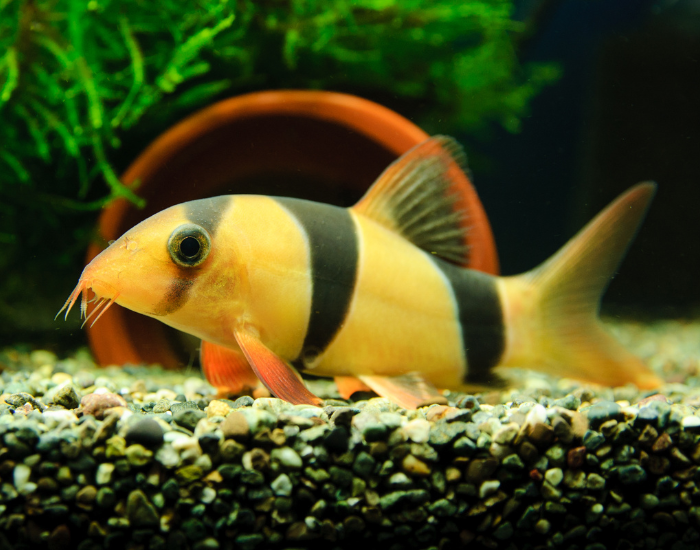
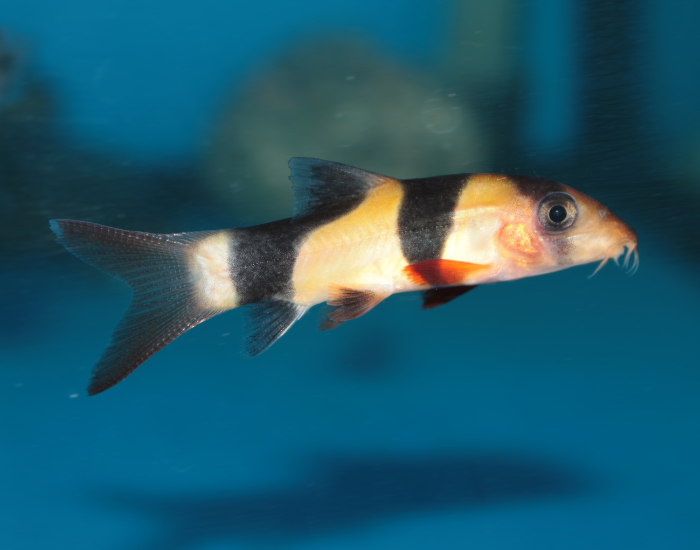
Walk into any pet store and you will see clown loaches the size of your finger. Cute, peaceful, perfect for a community tank. What the store often fails to mention is that this species can grow fairly large, up to 30 centimeters (12 inches) given excellent water quality, room, and time.
I have seen photos from European public aquariums where 25-year-old clown loaches dwarf the catfish swimming next to them. If you commit to a clown loach fish tank, you are committing to a fish that may outlive your dog, demand at least 75 gallons as it matures, and develop a personality you will come to recognize.
6. They Are Hardcore Schooling Fish
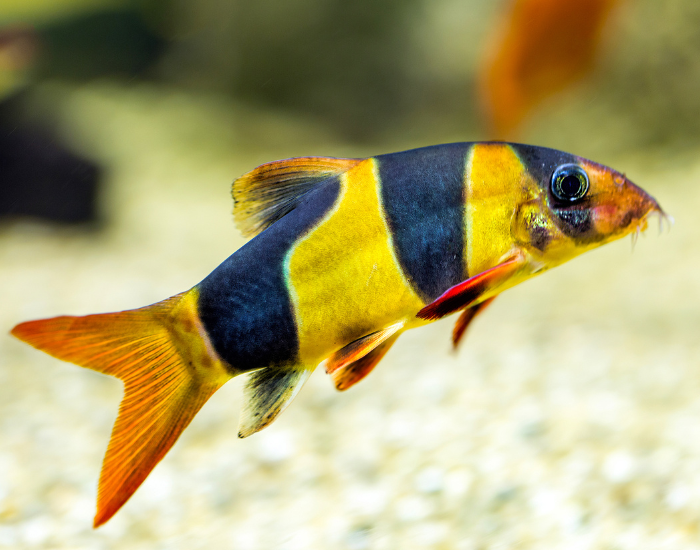
Clown loaches are schooling fish in the most literal sense, keep one alone and it will hide, refuse to eat, and slowly waste away. Keep them in active groups of five or more and they transform into the most charismatic fish in the tank, chasing each other through hiding places, “playing dead” on their sides, and clicking audibly when excited.
That clicking, by the way, is real. They produce sound by grinding pharyngeal teeth, and during feeding it can be loud enough to hear across a quiet room. I have watched five clown loaches in a friend’s tank turn feeding time into something that sounded like a tiny xylophone. By contrast, a lone fish stays silent and stressed.
7. They Are Scaleless Fish, Which Has Real Consequences
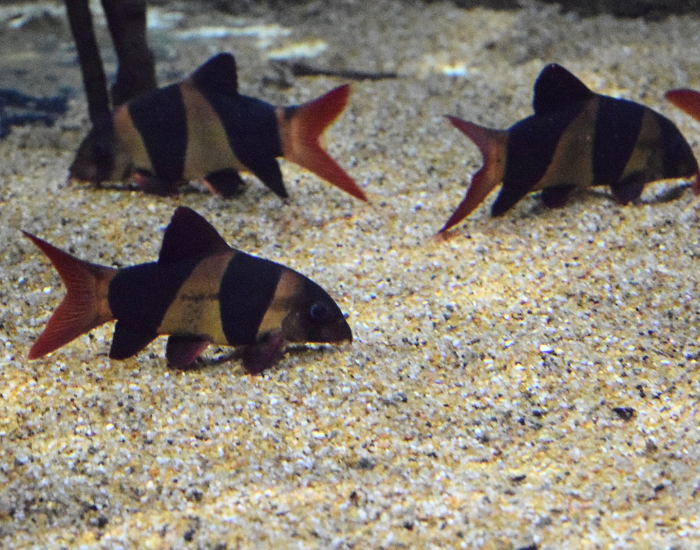
The clown loach is technically a scaleless fish, its scales are so small and embedded in the skin that the body feels smooth and slimy. That slime coat is its main defense against pathogens, and it makes the species unusually sensitive to medications.
Many common aquarium medications — particularly copper-based ich treatments and some antibiotics — can kill clown loaches outright at standard doses. If you treat a tank with clown loaches in it, you generally cut the dose in half and watch obsessively for stress. This is the single most common reason new fish keepers lose them in the first month after purchase.
8. They Hide a Switchblade Under Each Eye
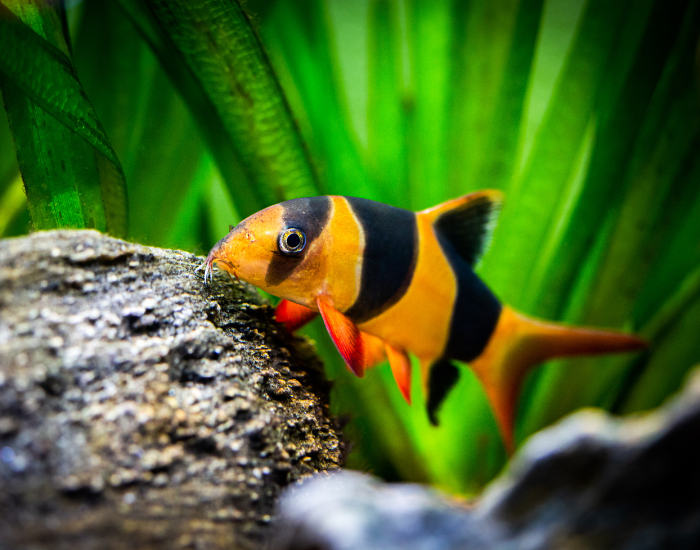
If you have ever tried to net a clown loach, you have probably heard a faint click and then watched it get tangled. That happens because the clown loach hides a sharp spine in a groove just below each eye. When threatened, the spine snaps outward and locks, a defense mechanism shared by most loaches in the cobitidae family.
The spine catches in nets, in mesh, and occasionally in human fingers. It is not venomous, but it can deliver a surprisingly painful nick. When moving them, I have learned to use a soft container with water rather than a net. Watch for that click before you reach in.
9. They Are Voracious Snail Hunters
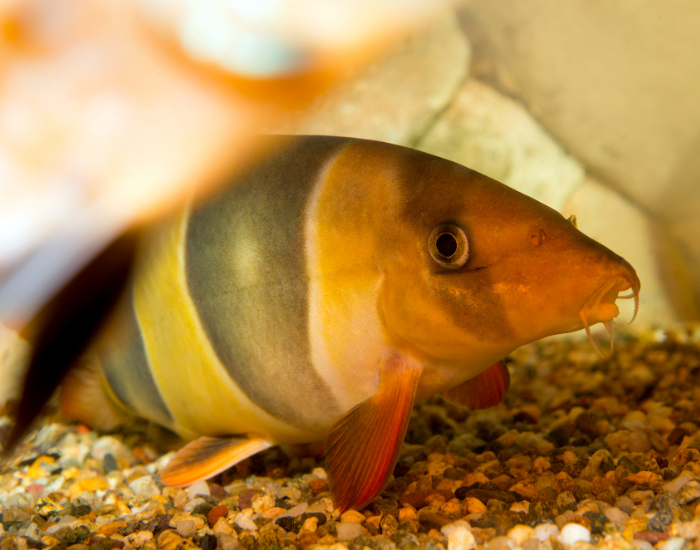
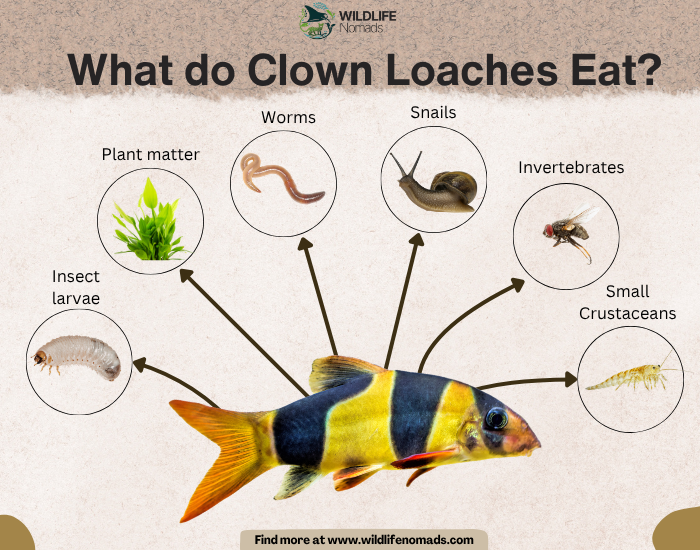
Clown loaches are bottom dwellers, and that means they spend most of their time hunting through the substrate for food. In the wild they eat plant matter, small invertebrates, worms, and crucially — snails. Lots of snails. Their conical mouths and crushing pharyngeal teeth are built for cracking shells.
Aquarists often add a few clown loaches specifically to control pest snails in planted tanks. Within weeks, a tank overrun with bladder snails or Malaysian trumpet snails becomes a tank with a few satisfied loaches and zero snails. They will also eat shrimp and pick at delicate plants, so plan accordingly.
10. Their Vibrant Colors Fade With Age and Stress
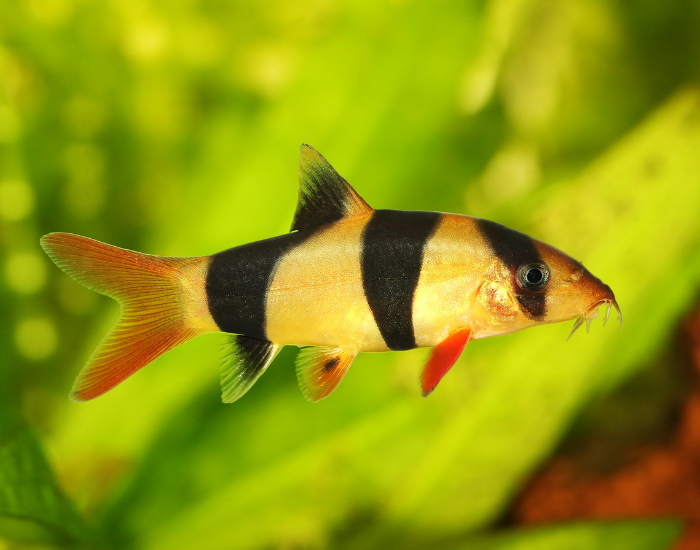
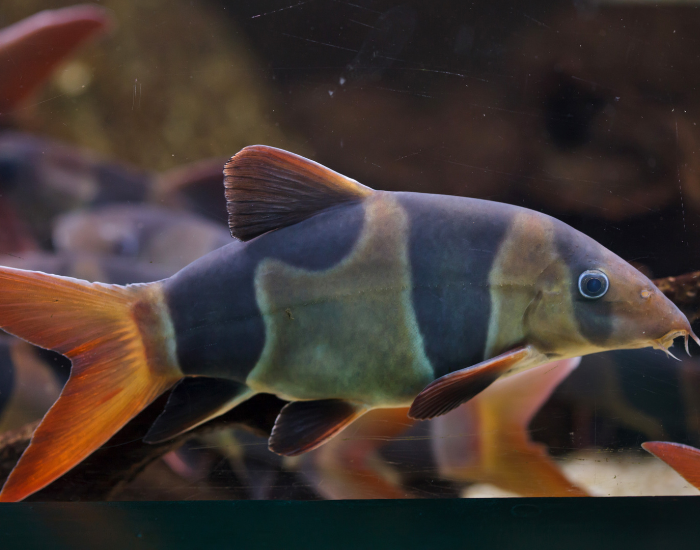
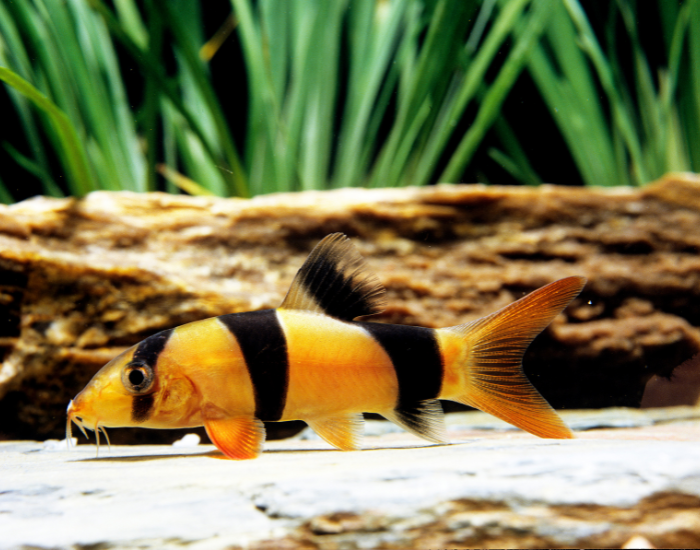
The vibrant colors that make this species so popular — three thick black bands across a fluorescent orange body, with red-tinged fins and tail fin — are most intense in juveniles and well-cared-for adults. Old fish, stressed fish, or those kept in poor water quality will fade dramatically.
The orange can dull to a tan-yellow, and the red on the tail fin and other fins can wash out almost completely. If you walk into a store and see washed-out clown loaches, that tank is telling you something. By contrast, a healthy freshwater clown loach in optimal habitat almost glows under aquarium lighting.
Online forums sometimes call them “rainbow loach” by mistake — that nickname actually belongs to a different cobitid species, but the confusion underscores how striking the clown loach’s coloration is when conditions are right.
11. They Live in Murky or Blackwater Rivers
Most field guides describe their natural water as murky or blackwater rivers stained dark with tannins from decaying leaves. That tea-colored water is slightly acidic, soft (low water hardness), and warm, generally a temperature range of 25–30°C (5-12 dGH).
Replicating those parameters in a home aquarium means soft, slightly acidic water, gentle filtration, and dim lighting. Excellent water quality matters more than fancy equipment. Many keepers use Indian almond leaves or driftwood to release tannins and bring tank chemistry closer to that of Sumatran rivers. The fish respond visibly, colors deepen, activity rises, and stress drops.
12. They Are Increasingly Threatened in the Wild
Clown loaches are still officially listed as Least Concern by IUCN, but that assessment is decades behind reality on the ground. In Sumatra alone, deforestation, palm oil expansion, hydropower, and continuous wild capture for the ornamental fish trade have hammered local populations.
Researchers report that the same rivers that produced huge numbers of juvenile loach clown stock in the 1990s now yield a fraction of that. Captive breeding programs help reduce wild capture pressure, but most clown loaches sold in shops worldwide are still pulled from the wild as fingerlings, then graded and shipped through Jakarta and Singapore. Buying captive-bred when possible is one small lever you have to pull, and asking the store about origin matters too.
Frequently Asked Questions
Clown loaches come from freshwater rivers and flooded flood plains in Sumatra and Borneo, Indonesia. They are a tropical freshwater fish endemic to that region, and despite decades of trade, very little information has shifted that core distribution. Wild populations face growing pressure from habitat loss and ornamental fish capture, so a wild clown loach today travels from a shrinking range.
In the wild, clown loaches can grow up to 30 centimeters (12 inches). In captivity they typically reach 20–25 centimeters depending on tank size and feeding. They grow fairly large much more slowly than most tropical fish, which is part of why so many owners underestimate their adult size and end up upgrading their fish tank twice.
Yes — clown loaches are obligate schooling fish and should be kept in groups of five or more. Keeping a single fish clown loach is the most common mistake new keepers make. In groups they show natural behavior, eat well, and display their full vibrant colors. Alone, they hide and decline. Watch them in a proper school and the difference is immediate.
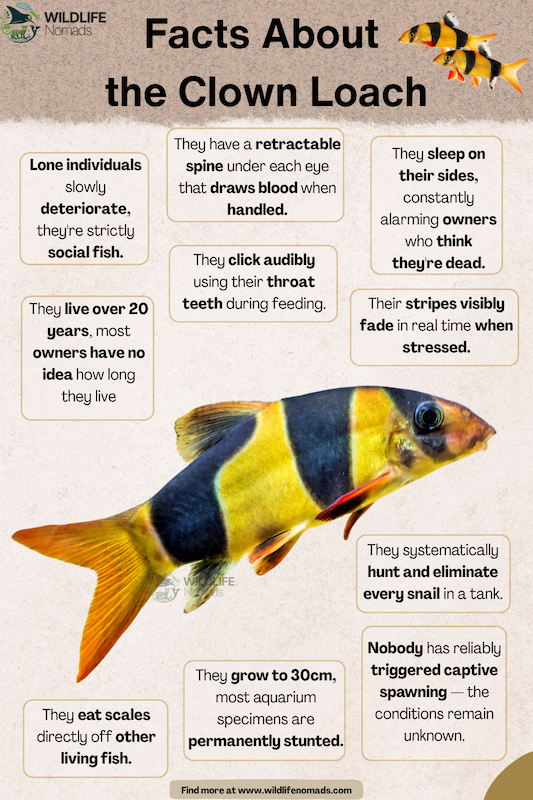
What I Took Away from That Roadside Aquarium
Looking back at that photo from Sumatra, I am struck by how easy it is to walk past a roadside aquarium and miss the entire ecological story behind a single beautiful fish. The clown loach is more than an orange-and-black showpiece — it is a long-lived, intelligent, deeply social species tied to one of the most threatened tropical river systems on Earth.
If you want to keep them well, give them a big tank, a real school, soft tannin-stained water, and decades of your attention. If you would rather see them in the wild, plan a trip to Sumatra — and while you are there, go find the gibbons, Thomas leaf monkeys and other primates, and macaques that share their forests. You can also browse my 10 best wildlife destinations in Indonesia to plan your own trip, or dive into more fish-focused stories on the blog if you want to compare the clown loach to other species I have written about. Drop a comment below if you have ever kept clown loaches yourself — I want to hear how big yours got.
References:
Kottelat, M. (2004). Botia kubotai, a new species of loach (Teleostei: Cobitidae) from the Ataran River basin (Myanmar), with comments on botiine nomenclature and diagnosis of a new genus. Zootaxa, 401(1), 1–18. https://doi.org/10.11646/zootaxa.401.1.1
Šlechtová, V., Bohlen, J., & Tan, H. H. (2007). Families of Cobitoidea (Teleostei; Cypriniformes) as revealed from nuclear genetic data and the position of the mysterious genera Barbucca, Psilorhynchus, Serpenticobitis and Vaillantella. Molecular Phylogenetics and Evolution, 44(3), 1358–1365. https://doi.org/10.1016/j.ympev.2007.02.019
Legendre, M., Satyani, D., Subandiyah, S., Sudarto, Pouyaud, L., Baras, E., & Slembrouck, J. (2012). Biology and culture of the clown loach Chromobotia macracanthus (Cypriniformes, Cobitidae). Aquatic Living Resources, 25(2), 95–108. doi:10.1051/alr/2012008
Tan, H. H., & Kottelat, M. (2009). The fishes of the Batang Hari drainage, Sumatra, with description of six new species. Ichthyological Exploration of Freshwaters, 20(1), 13–69.
Ng, H. H., & Tan, H. H. (2010). An annotated checklist of the non-native freshwater fish species in the reservoirs of Singapore. Cosmos, 6(1), 95–116. https://doi.org/10.1142/S0219607710000504