For most of my time in Sydney, my commute started with a lift ride. I walked out of my building in North Ryde and straight into the metro station. Across the road was a national park. On weekend walks there, I met an echidna.
I lived in Sydney from January 2022 to July 2023, studying a double master’s in environment and conservation biology. I also worked in the field as an ecologist, visiting parks and reserves across the city. In that year and a half, Sydney became one of the places where I have seen the most wildlife.
That still surprises me. Sydney is a city of over five million people. Yet it is the greenest big city I have ever lived in.
Why Sydney Surprised Me
I have visited many big cities, from London and Vancouver to Mexico City, Manila and Cairo. In most of them, nature lives at the edges. You leave the city to find it.
Sydney is different. Bushland runs through the suburbs, along creeks and up the gullies. The only place that rivalled it for me was Uppsala in Sweden, and Uppsala is tiny by comparison. Jackie felt the same when she first arrived. Neither Brisbane nor Melbourne felt this green to us.
It made more sense after an environmental planning class at Macquarie University. My professor explained that Sydney’s suburbs are planned so that daily needs sit within easy reach. That includes shops, transport, parks and trees. Suddenly the green made sense.
Sydney still has plenty to improve, from recycling to sustainability in general. But when it comes to nature on your doorstep, few big cities come close.
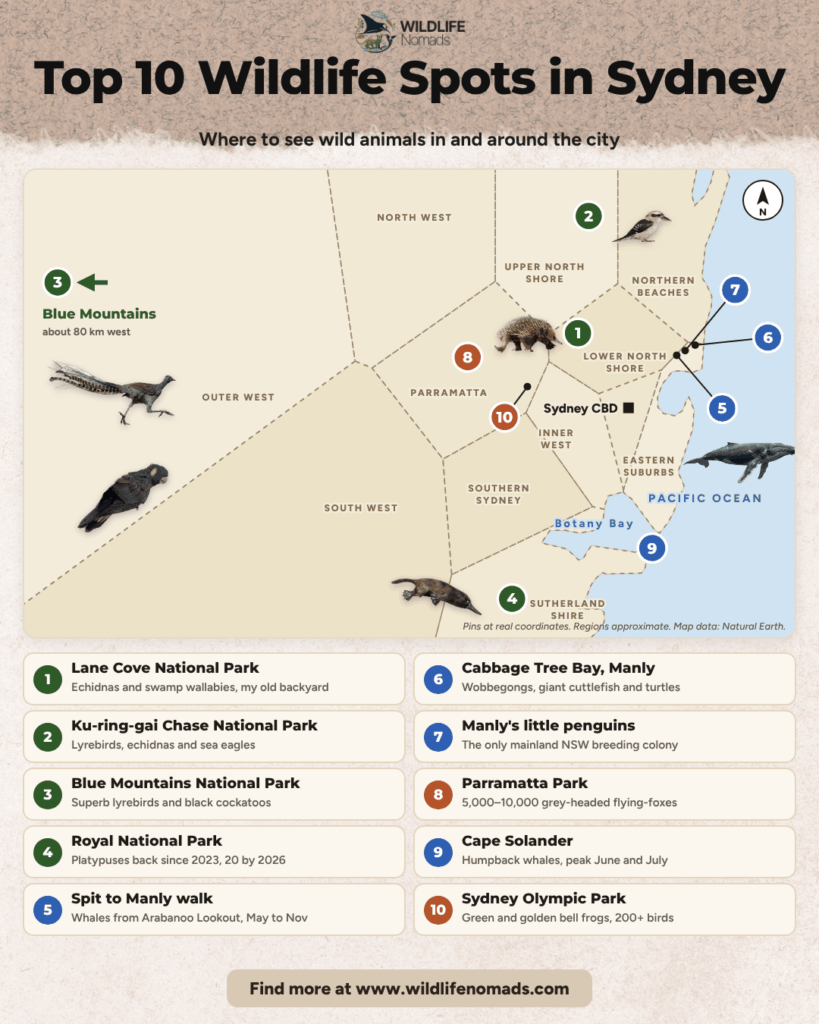
My Backyard: Lane Cove National Park
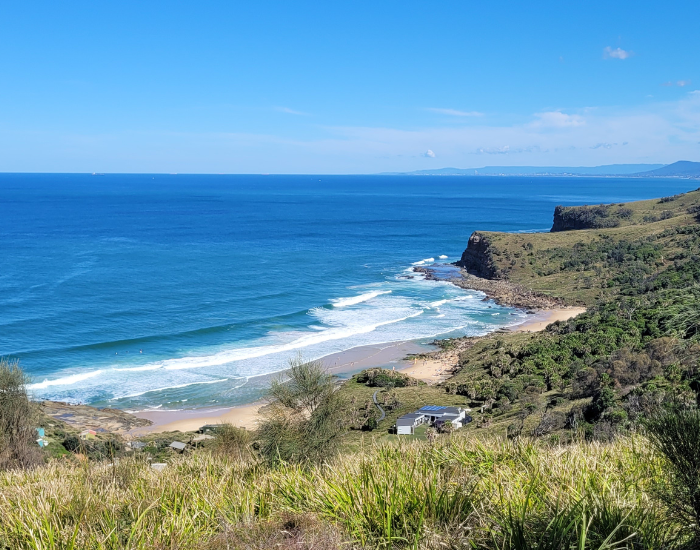
I first lived in Ryde, then moved to North Ryde after about seven months. From there, Lane Cove National Park was right across the road. It even has a caravan park inside it, which still amazes me for a park so close to the city.
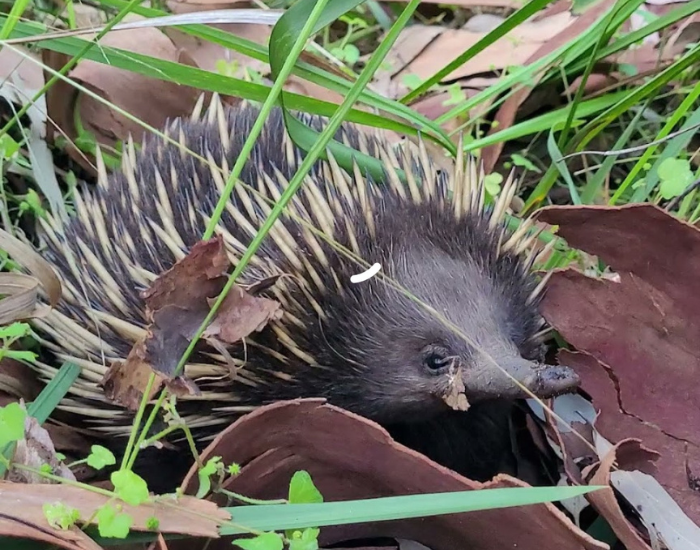
I walked there whenever I needed a break from study. That is where I saw the echidna, my favourite Sydney surprise. I also saw swamp wallabies and black cockatoos, plus the usual city regulars like kookaburras and brush turkeys. Crimson rosellas brightened many of those walks too. Common ringtail possums lived in the trees near my home too. I spotted them often at my field sites as well.
Having a national park as a neighbour changed how I saw the city. Wildlife was not a day trip. It was part of everyday life.
Wildlife on the Job
My fieldwork took me to bushland reserves all over Sydney. Part of the job was controlling invasive plants, which meant long days in the scrub. The wildlife kept showing up.
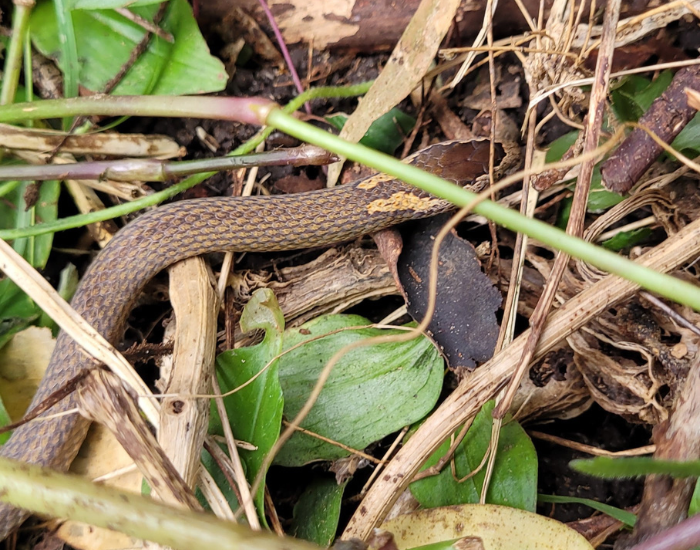
I saw my first black cockatoos on a job in north-west Sydney. Kookaburras also taught me to guard my lunch. One day, a gang of three stole my sandwich. Then they came back for my muesli bar. Red-bellied black snakes were common at some sites. One day, a small snake slid right across my hand while I was working. I grabbed a photo and later identified it as a golden-crowned snake. It is venomous, but not considered dangerous to people. When cornered, it usually strikes with its mouth closed and rarely bites. I still remember that moment clearly.
Near Malabar, south of Bondi, I found a broad-tailed gecko. This flat, rock-coloured lizard lives almost only in the sandstone of the Sydney Basin. It even turns up in suburbs and garages.
Working near Hornsby, I found my first bowerbird bower. It was decorated with blue objects, sadly mostly plastic. Male satin bowerbirds collect blue items to attract females. I didn’t see the bird itself until years later, at Gloucester River.
Wildlife in the Middle of the City
You don’t need to leave the city centre to see wild animals in Sydney. A few of my favourite encounters happened right in the busiest parts.
Parramatta Park has a large grey-headed flying-fox camp on the banks of the Parramatta River. It usually holds between 5,000 and 10,000 bats, and colonists recorded flying-foxes there in 1798. Watching them hang above the river is worth the trip west.
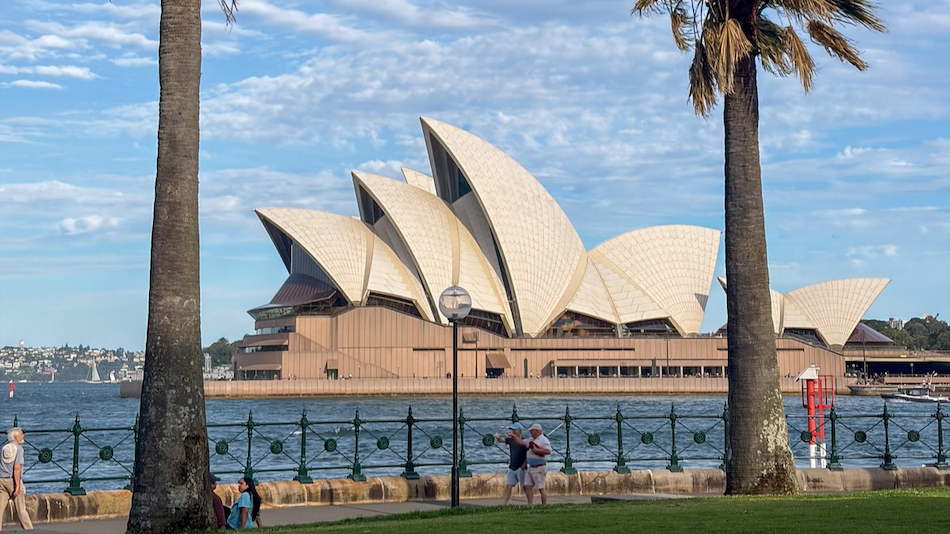
At the Sydney Opera House, I once saw Benny, the famous seal who suns himself on the steps. I thought he was a sea lion at first. He is actually a long-nosed fur seal, and he has visited since 2014.
On a university field trip, I visited Living Seawalls in Sydney Harbour. Researchers from Macquarie University, UNSW and the Sydney Institute of Marine Science designed 3D-printed panels for old seawalls. The panels copy the nooks of natural shorelines, giving marine life somewhere to live. More than half of the harbour’s natural shore has been replaced by seawalls, so this work matters.
Three National Parks Around One City
Sydney sits between three large national parks. The Blue Mountains rise to the west and Ku-ring-gai Chase lies to the north. The Royal National Park sits to the south.
I visited the Blue Mountains several times and Ku-ring-gai Chase often. The Royal National Park I only managed once, on a day trip, and it was beautiful. All three are reachable by train or bus, which mattered to me because I had no car back then.
Royal National Park has a great platypus story too. Platypuses disappeared from the park for more than 50 years. Scientists reintroduced them in 2023, and by 2026 the population had grown to about 20. Visitors now report sightings along the Hacking River.
The Northern Beaches
I rarely went to Bondi. It never really pulled me in. The Spit to Manly walk was more my style, with bush, beaches and harbour views the whole way.
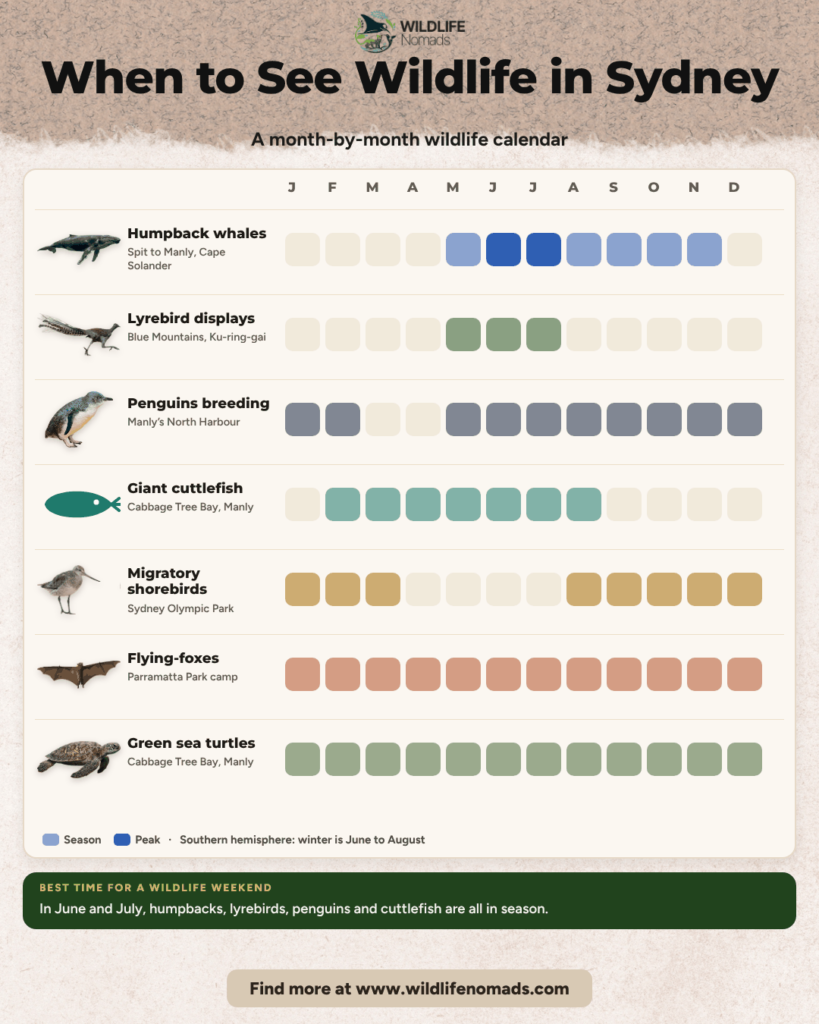
Now, on our Australia lap, we are back in Sydney at a house sit in Mona Vale. On a walk this week, I saw an eastern blue-tongued lizard and little wattlebirds. Australasian figbirds were there too, the males with red skin around the eye. Ringtail possums, grey-headed flying-foxes and passing humpback whales are on my list here too.
Sydney also has many shark warning signs on its beaches. I have never done much snorkelling here, which is something I want to fix next time.
What I Still Haven’t Seen in Sydney
Every good wildlife city leaves you with a wish list. Mine is still long.
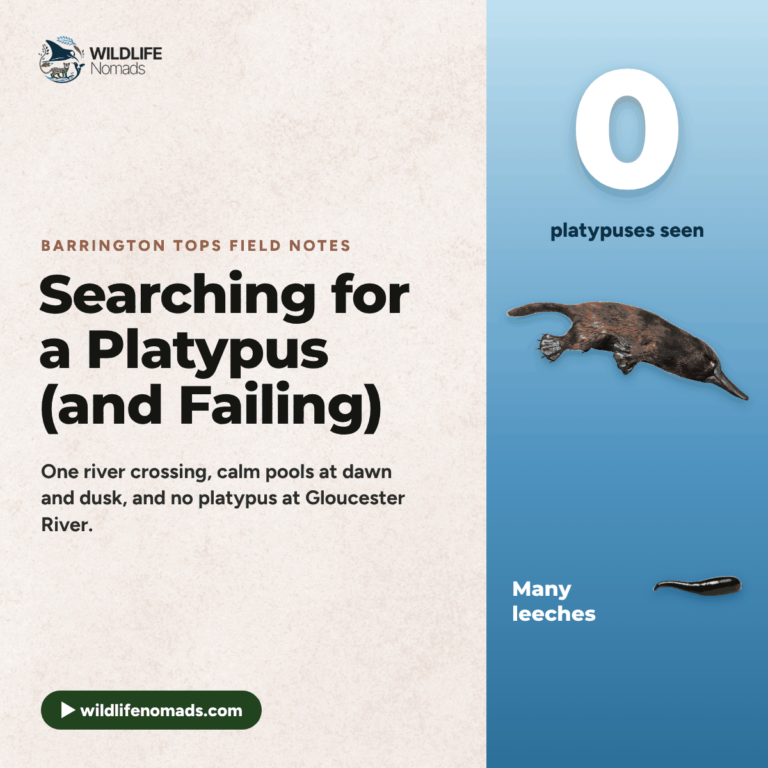
- A platypus. A friend of mine saw one in Sydney, but I never have. You can read about my failed platypus search in Barrington Tops.
- A powerful owl. Coworkers told me they had seen them at some of our sites. I never got lucky.
- Manly’s little penguins. I knew they lived there, but I never saw one.
My Tips for Wildlife Spotting in Sydney
- Start with the three big parks. The Blue Mountains, Ku-ring-gai Chase and the Royal National Park are all reachable by public transport.
- Don’t skip the suburbs. Lane Cove National Park and other bushland reserves hold echidnas, wallabies and black cockatoos.
- Visit Parramatta Park at dusk. That is when the flying-foxes leave the camp to feed.
- Check the Opera House steps. Benny is wild, so there are no guarantees, but it is worth a look.
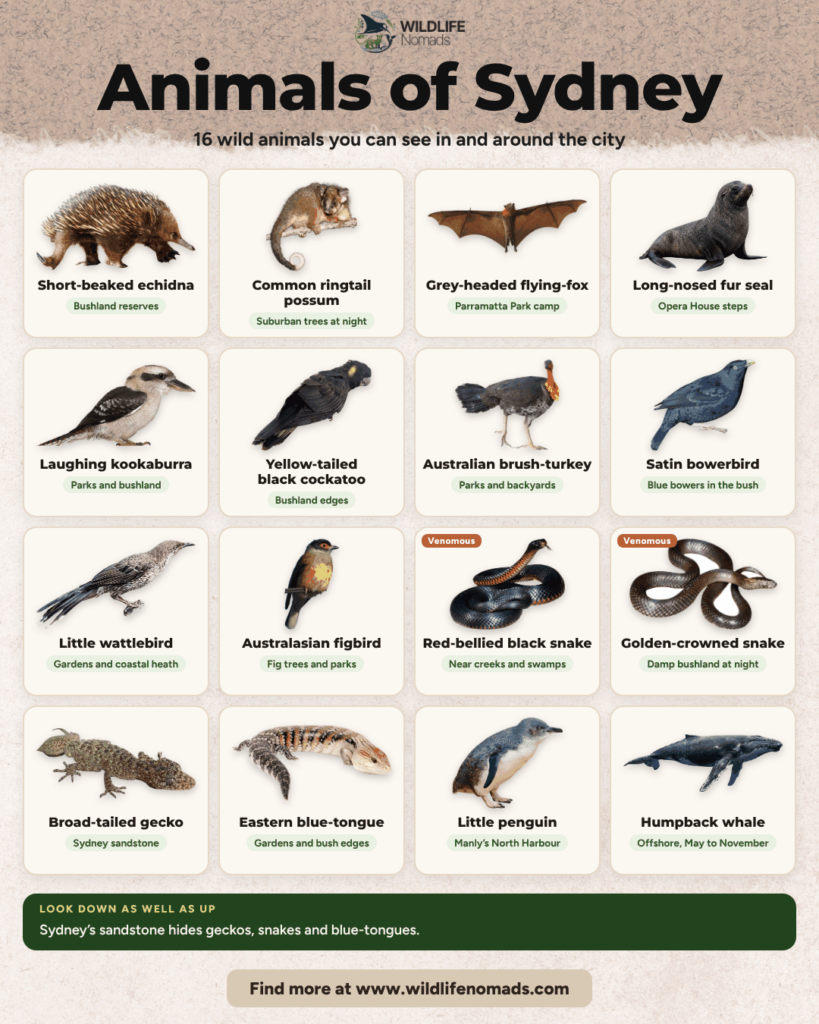
- Look down as well as up. Sydney’s sandstone hides geckos, snakes and blue-tongues.
- Walk Spit to Manly. It mixes bush, beaches and harbour in one long, easy day.
FAQs About Wildlife in Sydney
Yes. Sydney has bushland running through its suburbs and three large national parks around it. I saw echidnas, wallabies, black cockatoos, snakes and flying-foxes while living there.
Lane Cove National Park, Parramatta Park and the Royal National Park are all reachable by public transport. I relied on trains and buses for my whole time in Sydney.
Yes, though it takes luck. Platypuses were reintroduced to the Royal National Park in 2023, and visitors now report sightings along the Hacking River.
A City That Lets Nature In
Sydney taught me that a big city does not have to push nature out. It can let the bush run through it, if people plan for it and protect it.
This Friday, I am heading back to the Blue Mountains. Sydney still has a platypus, an owl and a penguin waiting for me. You can follow the rest of our Australia lap to see whether I find them.
References:
Greater Sydney Parklands. Grey-headed flying-fox camp, Parramatta Park. greatersydneyparklands.nsw.gov.au.
Sydney Opera House. Sydney’s seal of approval. sydneyoperahouse.com.
NSW Government. Living Seawalls case study. climatechange.environment.nsw.gov.au.
UNSW Sydney (2026). Platypus population expands to 20 in Royal National Park. unsw.edu.au.
Australian Museum. Southern Leaf-tailed Gecko, Phyllurus platurus. australian.museum.
Australian Museum. Golden-crowned Snake, Cacophis squamulosus. australian.museum.