
Wildlife Nomads · Play · Red List explorer
Endangered Animals: A Dive Down the Red List, From Safe to Extinct
Sink step by step from Least Concern to Extinct and meet 132 animals on the way. See how many are left, what threatens them and which ones are coming back.
By Cesar Medina, conservation biologist · Statuses from the IUCN Red List, checked October 2026 and updated automatically
I still remember my first visit to a monarch butterfly sanctuary in Michoacán, Mexico. I was about ten, and the sheer number of butterflies stunned me. Years later, I learned that the migratory monarch is now listed as Vulnerable. That memory followed me all the way to two master's degrees in conservation biology at Macquarie University.
Since then, I have released olive ridley hatchlings into the Pacific at Puerto Escondido. I have also watched a gray whale mother ease her calf towards our small boat in Baja California. Gray whales were once hunted close to extinction, yet today they are listed as Least Concern. So I wanted a tool that shows both sides: the endangered animals slipping away and the ones coming back.
Above, you can dive down the IUCN Red List, from animals doing fine to animals gone forever. Below, I explain how the Red List works, why species decline and what is bringing some of them back.
What makes an animal endangered?
Scientists at the IUCN (the International Union for Conservation of Nature) test every species against five sets of criteria. They check how fast a population is falling, how small its range is and how many adults remain. As a result, each assessed species lands on one step of the Red List.
Strictly speaking, "Endangered" is just one of those steps. However, most people say endangered animals when they mean any species at risk of extinction. On the Red List, that wider group is called "threatened". It covers three steps: Vulnerable, Endangered and Critically Endangered.
For example, a species with fewer than 250 adults that keeps declining counts as Critically Endangered. In contrast, fewer than 2,500 adults in decline makes it Endangered. Tap any step above to jump straight to those animals in the dive.
How many endangered animals are there?
The numbers are sobering. By its July 2026 update, the IUCN Red List had assessed 175,909 species. Of those, 49,505 are threatened with extinction, about 28% (IUCN, 2026). More than 10,700 of them are Critically Endangered.
Still, the risk is not spread evenly. Amphibians are hit hardest, with about 41% of species threatened. Reef-building corals and sharks and rays come close behind. Birds, by comparison, sit at about 11.5%.
Moreover, these figures only cover species that scientists have assessed. Most insects, fungi and plants have never been checked. Therefore, the real number of threatened species is certainly higher. Even common animals are vanishing from large parts of their range, a pattern that Ceballos et al. (2017) linked to an ongoing sixth mass extinction.
The most endangered animals in the world
Which animals are closest to the edge? Counting individuals gives one clear answer. Here are ten Critically Endangered animals with the smallest known wild populations in my explorer.
The vaquita is the most extreme case. Only about 7 to 10 of these small porpoises survive in Mexico's Gulf of California. They drown in illegal gillnets set for totoaba, a large fish whose swim bladder is smuggled to Asia. I wrote about the fight to save it in can the vaquita be saved?. Similarly, the Javan rhino and the Sumatran rhino each number about 50 or fewer. You can compare all five species in how many rhinos are left.
Why do animals become endangered?
Most endangered animals face several threats at once. Habitat loss is the biggest overall, as forests, grasslands and wetlands turn into farms, mines and cities. Next comes overexploitation, which means hunting, poaching and the illegal wildlife trade. Pangolins are a sad example, because they are among the most trafficked mammals on Earth.
Meanwhile, introduced predators and diseases wipe out island and Australian species. Cats and foxes have devastated small marsupials, while chytrid fungus has killed frogs around the world. Climate change then adds pressure on top, from bleaching reefs to shrinking sea ice.
Finally, tiny populations fall into a trap of their own. With fewer animals, genetic variety drops, and a single fire, storm or outbreak can finish them. Learn more in my guides to habitat destruction, invasive species and how climate change threatens animals.
Endangered species around the world
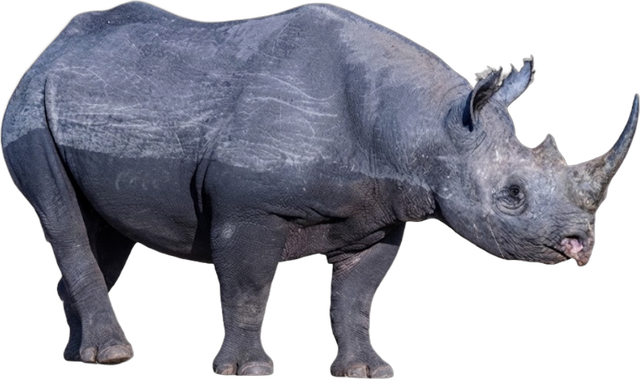
Every continent has its own story. In Africa, poaching drove black rhinos from about 65,000 in 1970 to just 2,410 by 1995. Today, they number about 6,800 and are slowly rising. Meanwhile, African forest elephants have fallen by more than 86% in 31 years, and wild dogs survive in scattered packs.
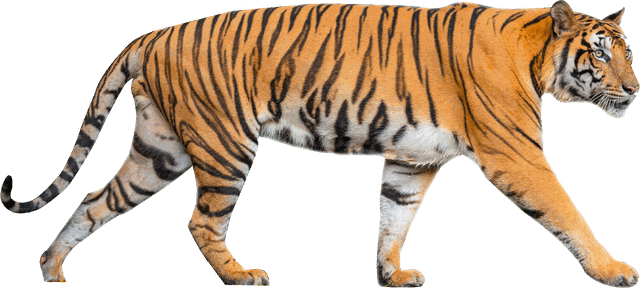
In Asia, forests are disappearing fastest. Sumatran orangutans, Sumatran tigers and Sunda pangolins all share the same shrinking island forests. You can read about tigers in are tigers endangered? and about the great apes in are gorillas endangered?.
The Americas hold both warnings and wins. The axolotl is Critically Endangered in the canals of Mexico City, while the bald eagle and the California condor show what protection can achieve. Australia, sadly, has lost more mammal species than any other country since European settlement. That is why I am building a separate explorer just for Australian wildlife. Until then, read about the most threatened animals in Australia.
The oceans need attention too. Overfishing and bycatch now threaten more than a third of sharks and rays. For the full picture, see my list of almost extinct sea animals.
From endangered to extinct
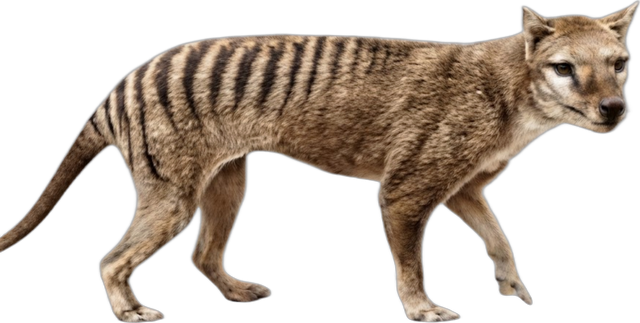
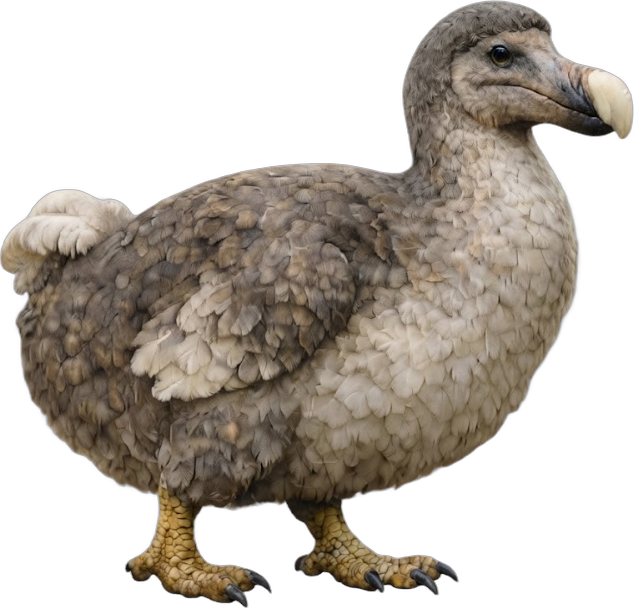
At the bottom of the dive, the colour drains away. The dodo vanished from Mauritius in the 1600s, after sailors and the animals they brought arrived. Similarly, the thylacine, or Tasmanian tiger, was hunted for a government bounty. The last known one died in Hobart Zoo in 1936.
Extinction is not only history, though. The Bramble Cay melomys, a small rodent from a Torres Strait island, was declared extinct in 2016. Rising seas and storm surges had swept over its tiny home. For more lost species, read about extinct birds and animals that went extinct recently.
Back from the brink: conservation works
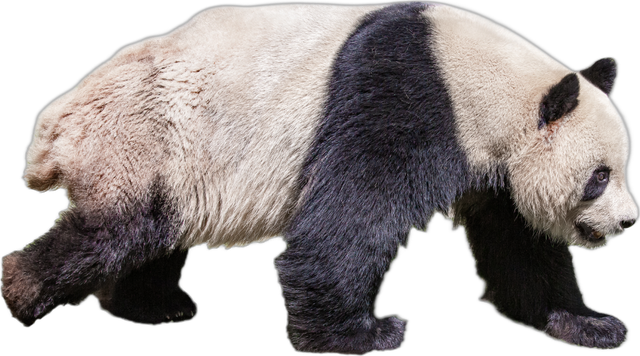
It is easy to feel hopeless. Yet the Red List also records real comebacks. Humpback whales moved from Vulnerable to Least Concern in 2008, after commercial whaling ended. Giant pandas improved from Endangered to Vulnerable in 2016. Mountain gorillas went from Critically Endangered to Endangered in 2018. Most recently, the green sea turtle moved to Least Concern in 2025.
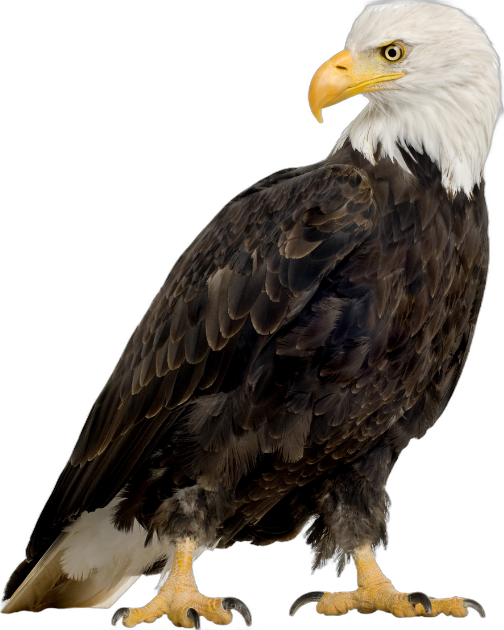
In the United States, bald eagles fell to only 417 nesting pairs in 1963. After the pesticide DDT was banned, they recovered so well that they left the endangered list in 2007. Likewise, the California condor dropped to just 22 birds in 1982. Captive breeding and releases have since lifted it to more than 600, as I describe in the condor's story. Overall, one study estimated that conservation action prevented between 21 and 32 bird extinctions and 7 to 16 mammal extinctions from 1993 to 2020 (Bolam et al., 2021).
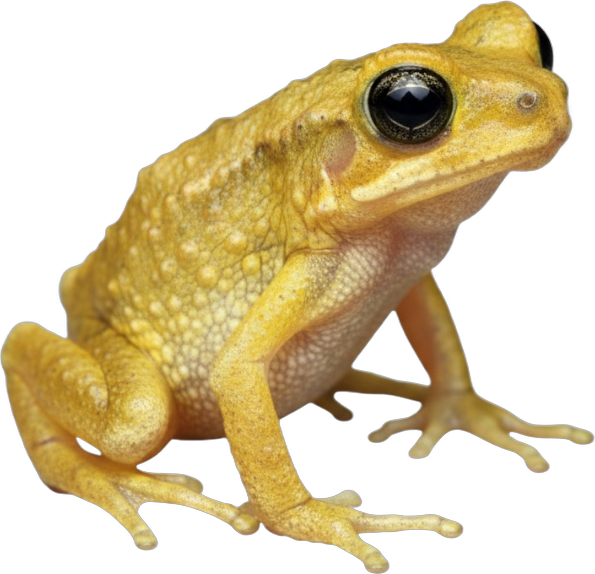
Zoos matter more than many people think. I saw that first-hand while working in a zoo reptile house, caring for crocodiles, snakes and Galápagos giant tortoises. Today, breeding programmes like these keep the Kihansi spray toad alive, even though it is extinct in the wild. Switch the explorer to Back from the brink to see each timeline.
Who decides which animals are endangered?
Here is where it gets confusing. The IUCN Red List is a global scientific assessment, but it is not a law. Instead, each country protects species through its own legislation.
In the United States, the Endangered Species Act of 1973 lists species as endangered or threatened. The US Fish and Wildlife Service runs it on land and in fresh water, while NOAA Fisheries covers the sea. In Australia, the EPBC Act (Environment Protection and Biodiversity Conservation Act 1999) does the same job. Many other countries keep national red lists, too.
As a result, one animal can carry several labels. For example, the koala is Vulnerable on the global Red List. Yet Australia lists it as Endangered in Queensland, New South Wales and the ACT. Likewise, the Mexican gray wolf has no separate Red List assessment, but the United States protects it as endangered. Read its story in my Mexican gray wolf facts.
How you can help endangered animals
You do not need to be a biologist to help. In fact, many of the comebacks above started with ordinary people who cared. Here are simple actions that make a real difference.
- Never buy products made from wild animals, such as ivory, turtle shell or exotic pets.
- Choose sustainable seafood, because bycatch drowns turtles, sharks and porpoises.
- Keep pet cats indoors at night, especially in Australia, where they hunt native wildlife.
- Support protected areas and the groups that run breeding and anti-poaching programmes.
- Record the animals you see through citizen science projects.
In 2025, I joined a coral restoration project in Pemuteran, Bali. Every coral fragment we planted felt small, yet together they added up. For more ideas, read my guide on how to save endangered animals.
Quick quiz: fact or myth?
Frequently asked questions
What are endangered animals?
Endangered animals are species at risk of extinction in the wild. On the IUCN Red List, "Endangered" is one category, between Vulnerable and Critically Endangered, but people often use the term for all threatened species.
How many endangered animals are there?
In the 2026-1 update, the IUCN Red List counted 49,505 threatened species out of 175,909 assessed, about 28%. More than 10,700 are Critically Endangered. These totals include plants and fungi as well as animals.
What is the most endangered animal in the world?
By numbers, the vaquita is the most endangered marine mammal, with only about 7 to 10 left in Mexico's Gulf of California. The Javan and Sumatran rhinos and the red wolf are also among the rarest.
What is the difference between endangered and critically endangered?
Both mean a species is threatened, but the risk differs. For example, fewer than 2,500 adults in decline makes a species Endangered, while fewer than 250 makes it Critically Endangered.
Can endangered animals recover?
Yes. Humpback whales, giant pandas, mountain gorillas, bald eagles and green sea turtles have all improved thanks to protection, hunting bans, habitat restoration and breeding programmes.
References
- Bolam, F. C., Mair, L., Angelico, M., Brooks, T. M., Burgman, M., Hermes, C., Hoffmann, M., Martin, R. W., McGowan, P. J. K., Rodrigues, A. S. L., Rondinini, C., Westrip, J. R. S., Wheatley, H., Bedolla-Guzmán, Y., Calzada, J., Child, M. F., Cranswick, P. A., Dickman, C. R., Fessl, B., . . . Butchart, S. H. M. (2021). How many bird and mammal extinctions has recent conservation action prevented? Conservation Letters, 14(1), Article e12762. https://doi.org/10.1111/conl.12762
- Ceballos, G., Ehrlich, P. R., & Dirzo, R. (2017). Biological annihilation via the ongoing sixth mass extinction signaled by vertebrate population losses and declines. Proceedings of the National Academy of Sciences, 114(30), E6089–E6096. https://doi.org/10.1073/pnas.1704949114
- IUCN. (2026). The IUCN Red List of Threatened Species (Version 2026-1). https://www.iucnredlist.org



