
A biologist friend rang me last month from Australia, voice still buzzing from his New Zealand trip. He had watched kiwi shuffle through ferns at dusk in a sanctuary. He had locked eyes with a kea in the south island. And he had even spotted some of those rare endemic dolphins along the Cook Strait coast. Then he mentioned seeing one of the tuataras at a sanctuary, and for one strange second my brain went blank.
A flashback hit me. Master’s degree, second year, conservation lecture. “Oh… the lizard that isn’t a lizard,” I blurted. He laughed and said exactly that.
That late-night chat sent me down a tuatara research rabbit hole. What I learned about tuataras genuinely surprised me, and I have spent two decades studying animals for a living. So here are twelve truths about tuataras that should reshape how you think about evolution, survival, and what counts as “ancient” in the natural world. Most readers walk away thinking tuataras are weird lizards. By the end of this article, I hope you see tuataras for what they really are.
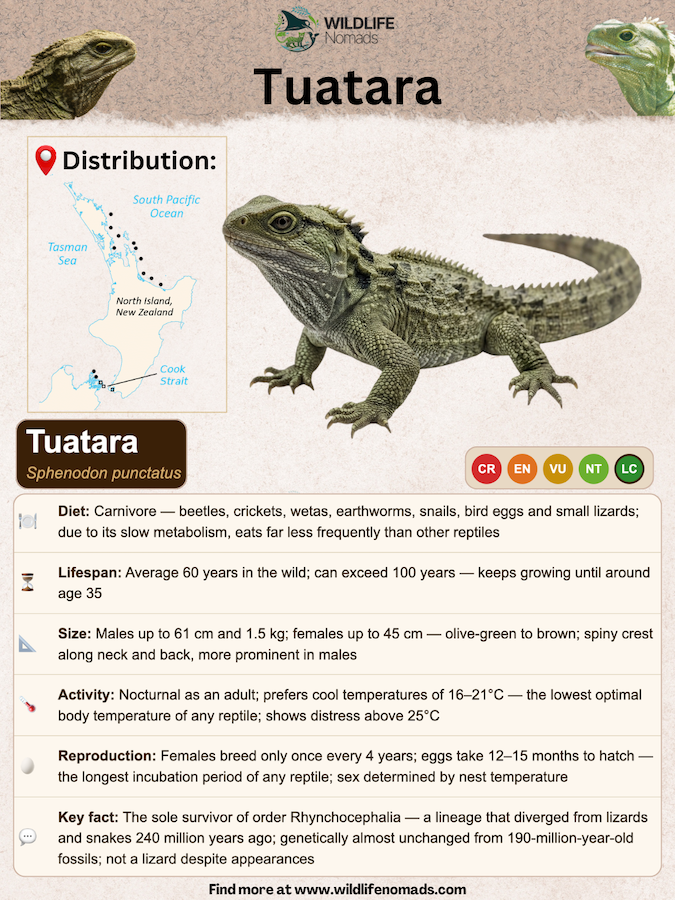
1. Tuataras Are Not Lizards (Even Though They Look Exactly Like One)
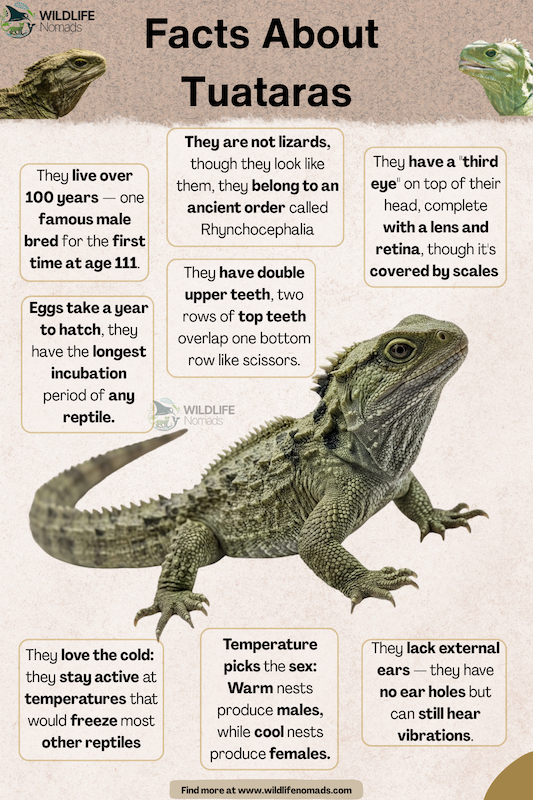
This is the headline fact. Tuataras, scientific name Sphenodon punctatus, are not lizards. Tuataras belong to their own order — Rhynchocephalia — completely separate from the order Squamata that contains every snake and lizard on Earth.
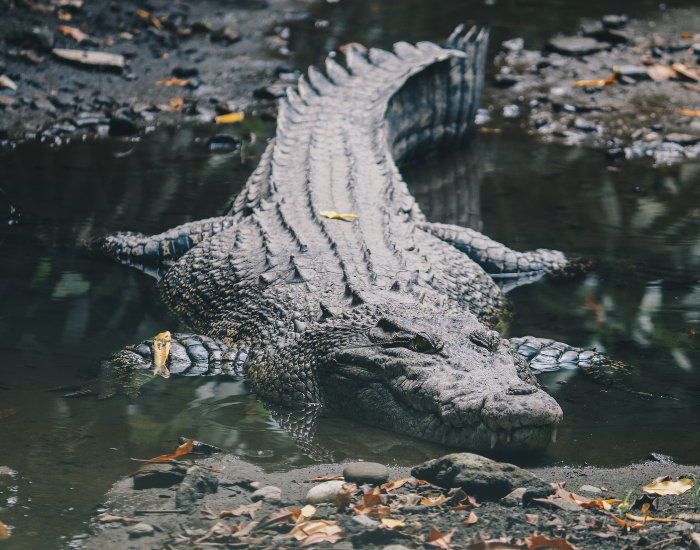
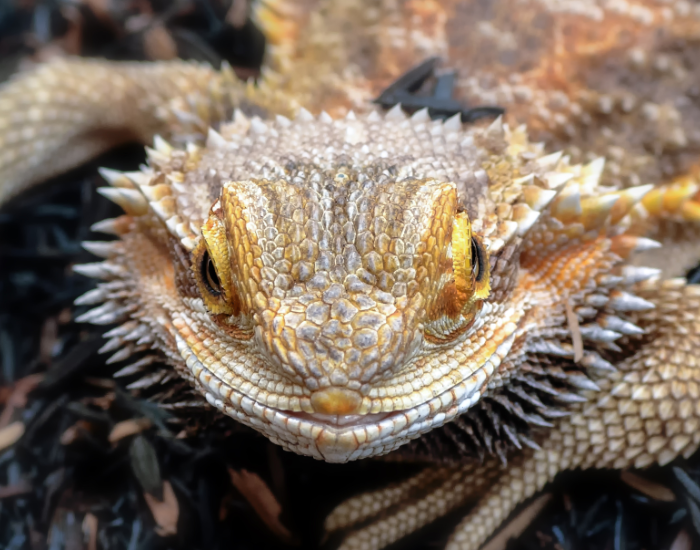
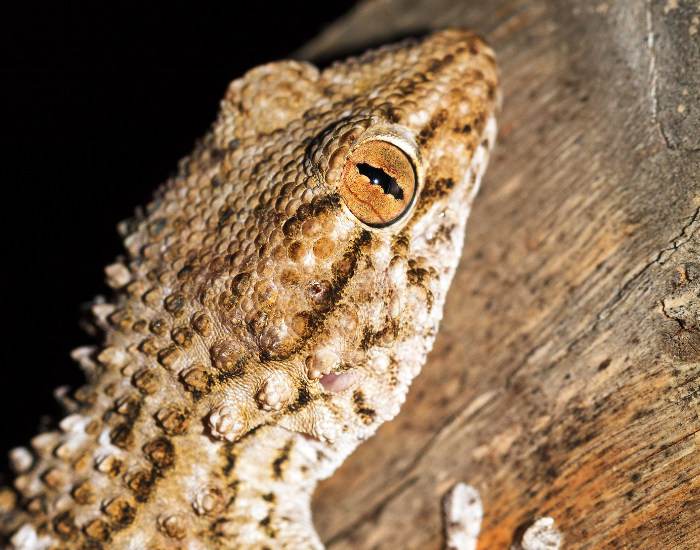
Picture a lizard looking tuatara on a mossy log and your brain insists it is a chunky iguana. Your brain is wrong. Tuataras and lizards split from a common ancestor over 240 million years ago. Calling tuataras lizards is like calling a kangaroo a rabbit. Tuataras simply look the part and nothing more.
Tuataras are the last surviving member of their order. Every other rhynchocephalian and its fossil relatives died out roughly 60 million years ago. That makes tuataras not just a separate species, but the sole surviving member of an entire branch of the reptile family tree. Among modern reptiles, tuataras truly stand alone.
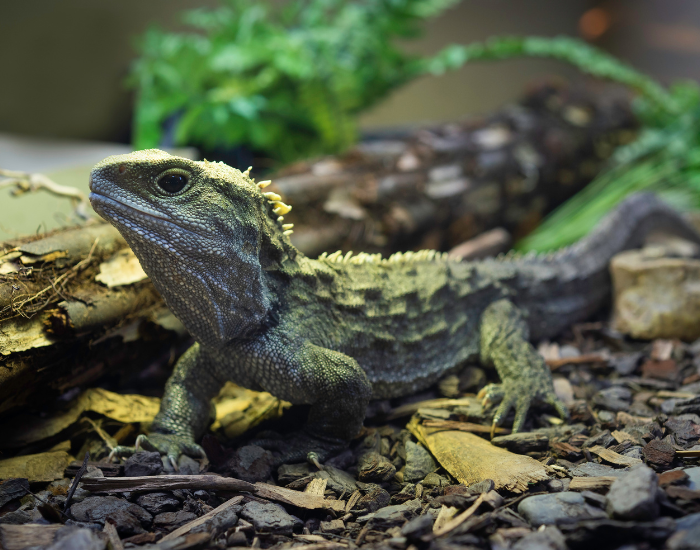
2. Their Lineage Outlived the Dinosaurs
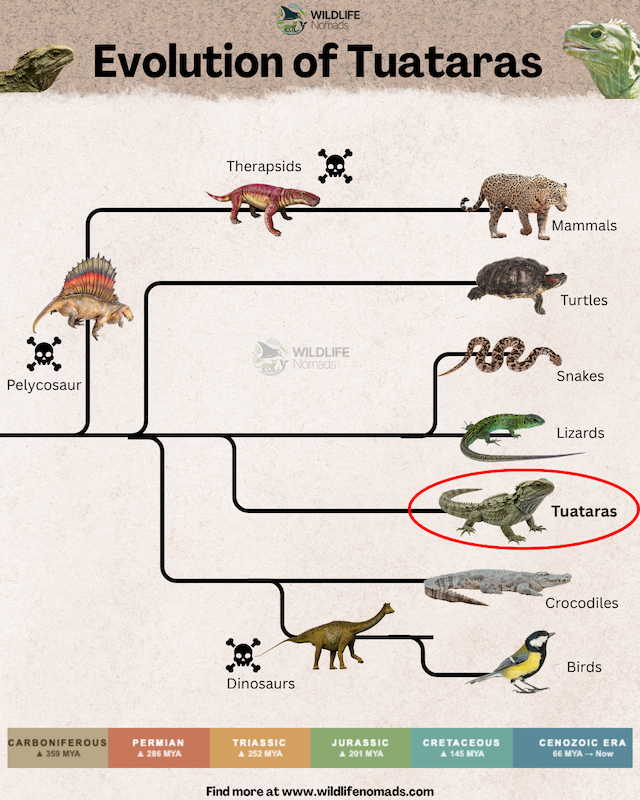
Rhynchocephalians appeared roughly 250 million years ago. They were everywhere during the Triassic and Jurassic — diverse, abundant, and globally distributed across what is now South America, Europe, Asia, and Africa. Then, slowly, the lineage collapsed. Squamates outcompeted them across continents over many species and many millions of years.
By the time the asteroid hit at the end of the Cretaceous, most rhynchocephalians had already vanished. Only the tuatara line survived, isolated on the proto-landmass that would become New Zealand. Tuataras have been there ever since.
When biologists call tuataras a living fossil, this is what we mean. Tuataras themselves are not 200 million years old, of course. But their body plan, their teeth, their behaviour, they preserve features rarely seen outside the rock record. That is why every paper on vertebrate genomes that looks at deep evolution eventually circles back to these strange, ancient reptiles.
3. They Live Only in New Zealand
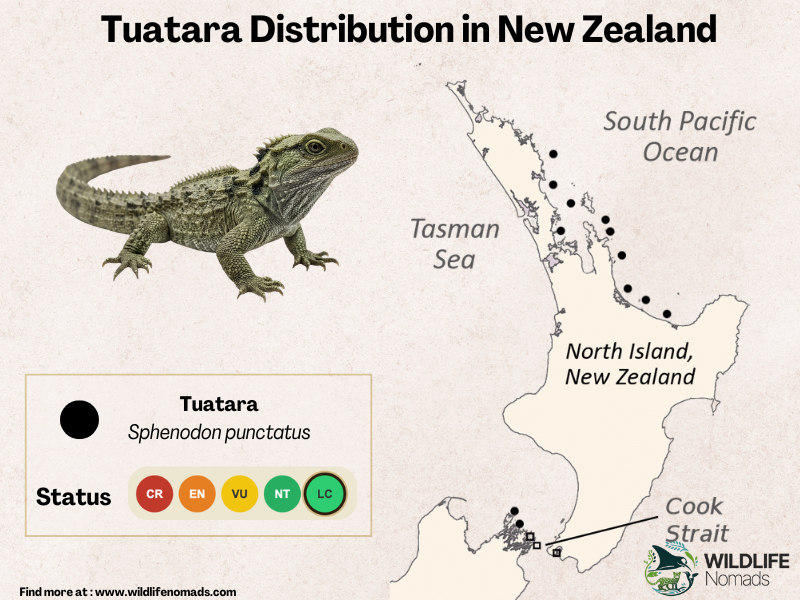
Tuataras are endemic to New Zealand and nowhere else. Before humans arrived, tuataras roamed the north and south islands in vast tuatara populations. Today, the new zealand tuatara survives on around 32 small offshore islands plus a handful of carefully managed mainland sanctuaries.
Most of these refuges are rat free islands scattered around the Cook Strait, the Bay of Plenty, and the northern coast. The largest stronghold is Stephens Island, home to roughly 30,000 to 50,000 adult tuatara. Brothers Island, smaller and more remote, hosts the famously distinct brothers island tuatara population. Together these islands shelter more than 95% of all wild tuataras and several other native species of reptiles and seabirds.
4. For Years, Scientists Argued About Two Species
For decades the New Zealand Department of Conservation managed tuataras as two species. The first, Sphenodon punctatus, covered most populations across the main islands. The second, Sphenodon guntheri, applied only to the North Brother Island population. Two species, one genus, both classed as a rare reptile under strict protection.
Then population genetic studies complicated the picture. Research in the 2010s comparing genetic diversity across captive populations and wild populations found the differences were smaller than expected. Today, most herpetologists accept there is only one species of tuatara, although the brothers island tuatara remains a genetically distinct lineage worth protecting separately. Tuataras across all islands share more DNA than the older two-species view suggested.
This kind of taxonomic debate matters. Species designation determines funding, legal protection, and conservation strategy. Get it wrong, and a small but unique gene pool can quietly disappear. The current Zealand department guidance treats all tuataras as Sphenodon punctatus but flags brothers island tuatara as a priority management unit. Genetic diversity within that population is unusually low.

5. They Have a Third Eye on Top of Their Head
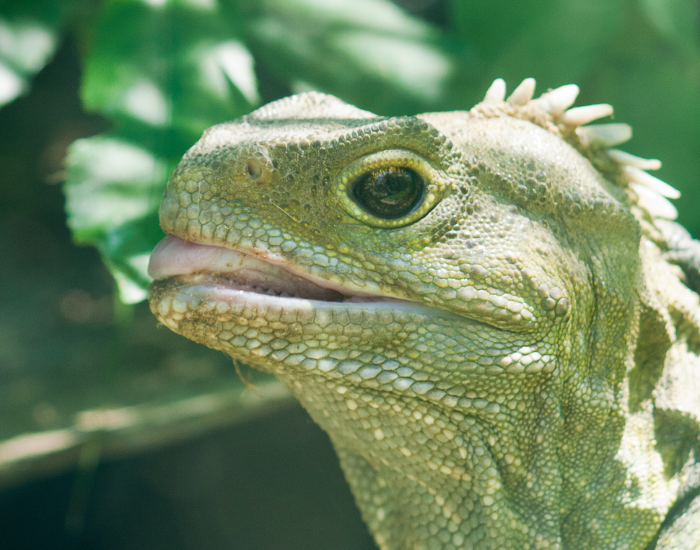
Yes, really. Tuataras have a parietal eye; a small, light-sensitive structure on the crown of the skull, complete with a lens, retina, and nerve connection to the brain. In a juvenile tuatara, you can see it clearly through translucent skin. In adult tuatara, scales gradually cover it. Older tuataras still keep the structure under those scales.
Plenty of other reptiles have parietal eyes, but tuataras have by far the most developed version. The eye cannot form images. It does, however, detect light intensity and helps regulate circadian rhythms and seasonal hormone cycles in tuataras.
It is one of those traits that, when you first learn about it, makes you suddenly aware of how strange evolution actually is. Most reptiles ditched this organ long ago. Tuataras kept it.
6. Tuatara Teeth Work Like Nothing Else on Earth
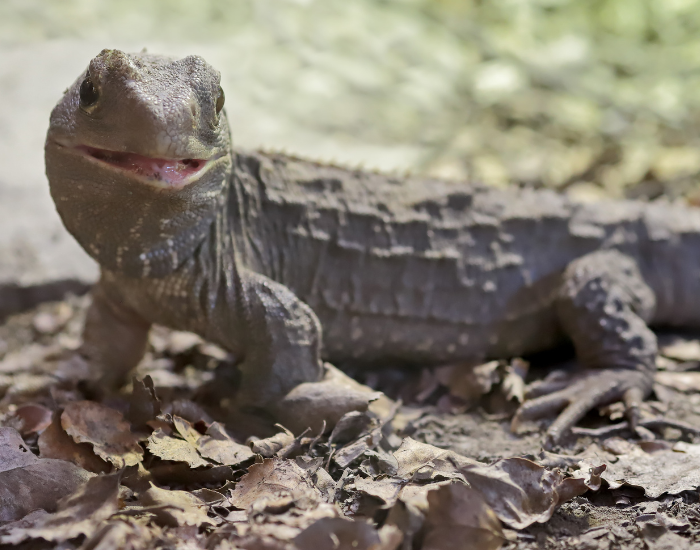
If you ever get the rare chance to see one yawn, look closely. Tuatara teeth are not separate structures slotted into sockets. They are projections of the jawbone itself. This is called acrodont dentition.
More remarkably, tuataras have two rows of upper teeth and a single row of lower teeth. When the jaw closes, the lower row slots between the two upper rows and slides forward, slicing prey like a pair of scissors. This unique oral food processing lets adult tuataras crush hard insect cuticles, lizard bones, and even the occasional bird skull. Among reptiles, no other group processes food this way.
Because tuataras shed no teeth and grow no replacements, the teeth wear down with age. Old tuataras essentially gum their food, surviving on softer prey. That is one quiet downside of an otherwise extraordinary tuatara age structure.
7. They Grow Slowly and Live Astonishingly Long
Tuataras have one of the slowest growth rates of any reptile. Young tuataras take 13 to 20 years to reach sexual maturity, and adult tuataras keep growing slowly for several more decades. Most lizards reach maturity within one or two years — tuataras run on a completely different clock from other reptiles.
Lifespan estimates for tuataras routinely exceed 60 years in the wild. In captivity, the famous Henry the tuatara at the Southland Museum fathered offspring at age 111. There is good evidence that tuataras can live well beyond 100 years, making them among the longest-lived vertebrates on Earth.
That kind of slow biology has consequences. Tuatara populations bounce back slowly from disturbance — one reason recovery work around tuataras moves carefully and conservatively. Quick fixes do not exist when your study species takes two decades to reach breeding age, and young tuataras need careful monitoring for years. Among long-lived reptiles, tuataras set the bar.
8. They Stay Active in the Cold
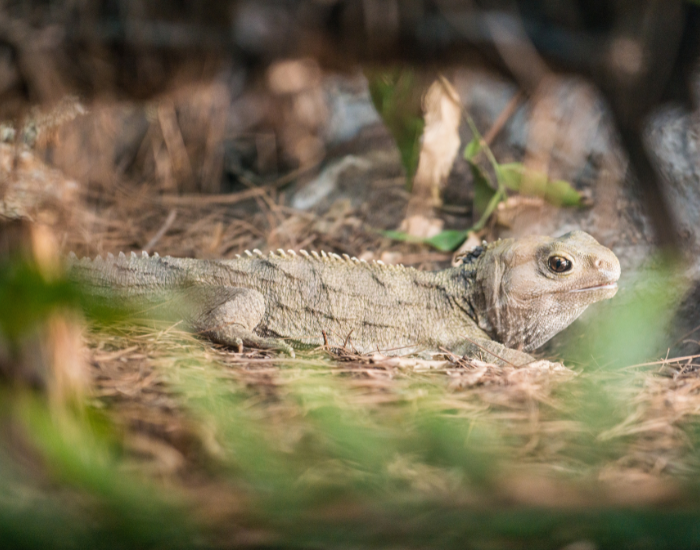
Most reptiles shut down below 15°C. Tuataras remain active at body temperatures of just 5 to 11°C. That is genuinely cold for any reptile. It is part of why tuatara thrive on windswept New Zealand offshore islands where almost nothing else with scales would last a winter, and why tuataras dominate cold rocky shores other reptiles cannot tolerate.
This cold tolerance shapes their basking behaviour. Rather than chasing high temperatures, tuataras bask briefly to warm slightly, then retreat to their own burrows. Most hunting happens at night, in conditions that would leave a tropical reptile immobile. Few other reptiles tolerate that kind of chill.
9. Egg Temperature Decides Their Sex
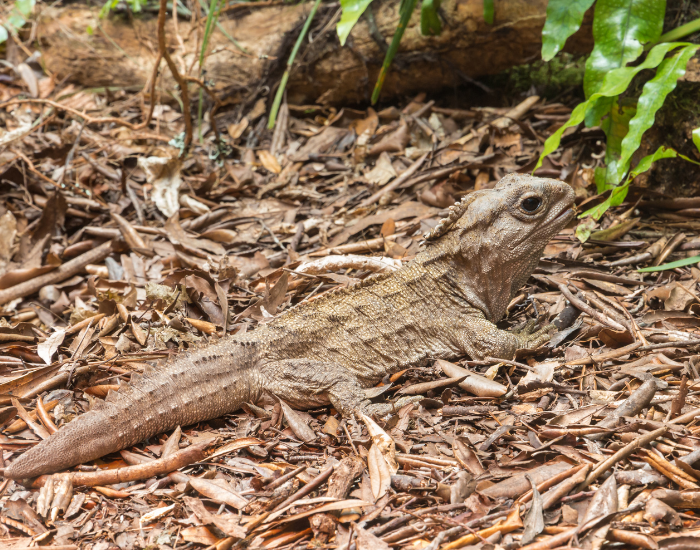
Like crocodiles and many turtles, tuataras use temperature dependent sex determination. Tuatara eggs incubated below 21°C produce mostly females. Above 22°C, male tuataras and adult males dominate among hatchling tuataras. Between those values, the ratio tips one way or the other depending on tiny shifts in nest temperature.
This makes climate change a direct threat to wild tuataras. Warmer soils could push entire islands toward all-male tuatara populations. A 2008 study modelling Cook Strait sites projected possible local extinctions within a few decades if temperatures keep rising and tuataras cannot move to cooler nesting habitat.
Females mate roughly once every four years and produce a small clutch of tuatara eggs that incubate for 11 to 16 months. That is the longest incubation period of any reptile. Combine slow incubation, slow growth, and skewing sex ratios, and you get a species walking a demographic tightrope.
10. Polynesian Rats Nearly Erased Them
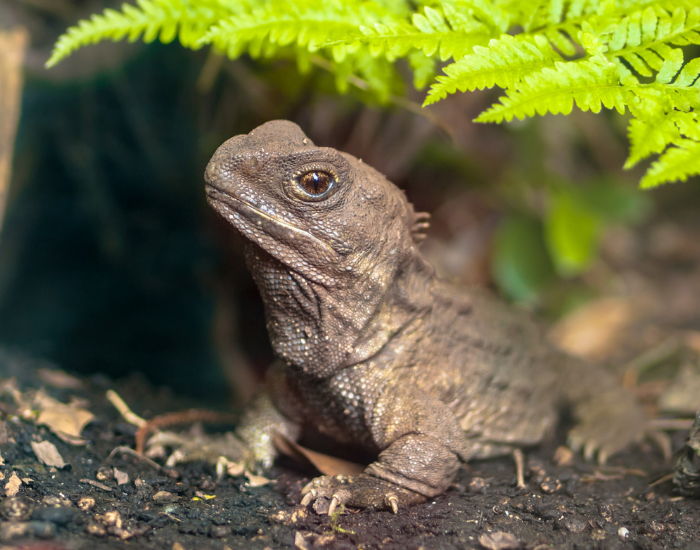
When humans arrived on New Zealand, they brought polynesian rats — kiore — with them. The rats found tuatara eggs and hatchlings irresistible. Within a few centuries of the time European settlers arrived, every mainland tuatara population was gone. Later, those european settlers brought ship rats and stoats, which finished off the survivors on most large islands.
By the time the Department of Conservation began intensive recovery work, tuataras had vanished from the North Island and South Island and clung to a scatter of rat free islands. Introduced predators had reduced wild tuataras, one of the world’s most evolutionarily distinct reptiles, to a handful of refuges. Saving the remaining tuataras became a national priority.
The recovery effort since then is one of the great quiet conservation success stories. New Zealand has eradicated rats from dozens of islands and a few mainland sanctuaries. Captive breeding programs at facilities like Wellington’s Zealandia (near Wellington Harbour) and the San Diego Zoo have produced healthy juvenile tuatara for reintroduction. The San Diego Zoo program is the only long-running captive tuatara colony outside New Zealand. Tuataras now live on rat-free habitat they had not occupied for centuries — including parts of New Zealand’s north island for the first time in 200 years.
11. Their Genome Rewrote Reptile Evolutionary History
In 2020, an international team finally sequenced the tuatara genome. The result was extraordinary. At roughly 5 billion base pairs, the tuatara sphenodon punctatus genome is one of the largest vertebrate genomes ever assembled. It contains a strange mosaic of genes — some shared with mammals, some with lepidosaurs, some entirely unique among reptiles.
The genome confirmed what cranial disparity studies had long hinted: the tuatara line split from squamates around 250 million years ago, far earlier than many had assumed. It also revealed unusual DNA repair genes that may help explain the extreme longevity of tuataras.
For evolutionary biology, this single tuatara sphenodon punctatus genome was like opening a window into the deep past. It is hard to overstate how rare a window like that is. We are not talking about a close cousin of lizards — we are talking about the closest living relatives of an entire extinct order. Australian Geographic and National Geographic both ran feature stories on the discovery, and rightly so.
12. They Share Their Burrows With Seabirds
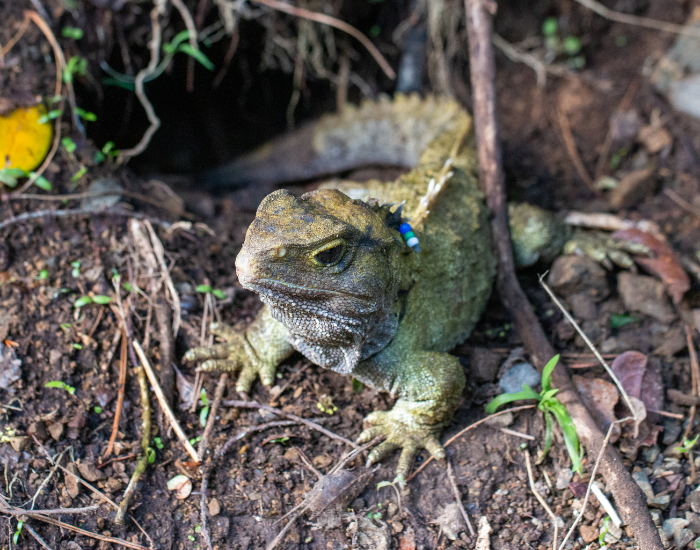
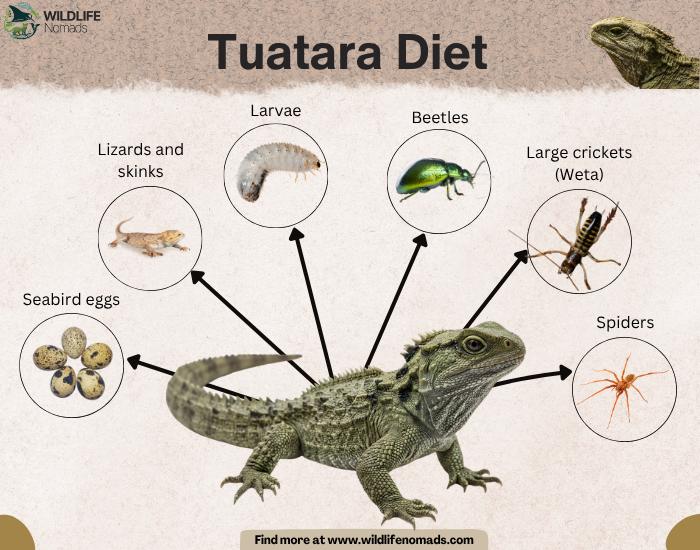
Tuatara prey ranges from beetles and weta (on of the biggest bugs out there by the way!) to skinks and small geckos. On islands where sea birds nest in dense colonies, tuataras also raid bird eggs and chicks. In return, the seabirds dig the burrows that tuataras then occupy and modify. It is a strange tenancy, but it works.
This relationship sustains entire island ecosystems. Sea birds bring marine nutrients ashore through guano, fertilizing soils and boosting insect biomass. The insects feed the tuataras, which control lizard and rodent numbers, which in turn protects seabird eggs from other predators. Pull tuataras out of that web and the whole island shifts.
FAQs About Tuataras
A tuatara is a medium-sized, lizard looking tuatara reptile endemic to New Zealand and the only living species of the ancient order Rhynchocephalia. Adult tuatara reach 60 to 80 centimetres long and feature a distinctive spiny crest along the back. The tuatara is sometimes called New Zealand’s largest reptile and is famous as a living fossil whose lineage predates the dinosaurs by tens of millions of years ago.
Tuataras are among the longest-lived reptiles on Earth. Wild tuataras routinely reach 60 to 80 years, and captive tuataras have surpassed 100. Henry, a male tuatara at New Zealand’s Southland Museum, fathered offspring at the age of 111. Slow metabolism, cool body temperatures, and unique DNA repair genes likely contribute to the extreme tuatara age potential.
No. Although tuataras look like lizards, tuataras are not lizards. Tuataras belong to a separate reptile order called Rhynchocephalia, while lizards belong to Squamata. The two groups split more than 240 million years ago. Tuataras differ from other reptiles in skull anatomy, tooth structure, and several internal organs, making them only distantly closely related to lizards.
The Guardians of a Lost World
If anything about tuataras blew your mind, you are in good company; even seasoned biologists never quite get over them. Tuataras are not lizards. They are not relics frozen in time. They are living, breathing animals running an evolutionary experiment that has lasted longer than most continents in their current form.
If you ever get the chance to visit New Zealand, prioritise a sanctuary that hosts tuataras. Watching one breathe slowly in the cool morning light is the kind of moment that recalibrates your sense of time. Drop a comment below if you have ever seen tuataras in the wild — I want to hear about it. Tuataras deserve every bit of attention they get.
For more strange and wonderful animals from the same corner of the world, dive into my pieces on the kiwi bird, the cheeky kea, and the broader wildlife of New Zealand. If long lifespans grabbed your attention, my round-up of the longest-lived animals is the natural next read. Bird people will also enjoy my guides to the world’s parrots and birds in general, and ocean lovers should browse the dolphins my friend was lucky enough to glimpse off the New Zealand coast.
References:
Cree, A., Daugherty, C. H., & Hay, J. M. (1995). Reproduction of a rare New Zealand reptile, the tuatara Sphenodon punctatus, on rat-free and rat-inhabited islands. Conservation Biology, 9(2), 373–383. https://doi.org/10.1046/j.1523-1739.1995.9020373.x
Gemmell, N. J., Rutherford, K., Prost, S., Tollis, M., Winter, D., Macey, J. R., et al. (2020). The tuatara genome reveals ancient features of amniote evolution. Nature, 584, 403–409. https://doi.org/10.1038/s41586-020-2561-9
Hay, J. M., Sarre, S. D., Lambert, D. M., Allendorf, F. W., & Daugherty, C. H. (2010). Genetic diversity and taxonomy: a reassessment of species designation in tuatara (Sphenodon: Reptilia). Conservation Genetics, 11(3), 1063–1081. https://doi.org/10.1007/s10592-009-9952-7
Mitchell, N. J., Allendorf, F. W., Keall, S. N., Daugherty, C. H., & Nelson, N. J. (2010). Demographic effects of temperature-dependent sex determination: will tuatara survive global warming? Global Change Biology, 16(1), 60–72. https://doi.org/10.1111/j.1365-2486.2009.01964.x
Jones, M. E. H., Tennyson, A. J. D., Worthy, J. P., Evans, S. E., & Worthy, T. H. (2009). A sphenodontine (Rhynchocephalia) from the Miocene of New Zealand and palaeobiogeography of the tuatara (Sphenodon). Proceedings of the Royal Society B, 276(1660), 1385–1390. https://doi.org/10.1098/rspb.2008.1785
Nelson, N. J., Keall, S. N., Pledger, S., & Daugherty, C. H. (2002). Male-biased sex ratio in a small tuatara population. Journal of Biogeography, 29(5–6), 633–640. https://doi.org/10.1046/j.1365-2699.2002.00712.x
Refsnider, J. M., Keall, S. N., Daugherty, C. H., & Nelson, N. J. (2013). Nest site choice and fidelity by Cook Strait tuatara (Sphenodon punctatus). Journal of Zoology, 290(2), 88–95. https://doi.org/10.1111/j.1469-7998.2009.00676.x
Towns, D. R., Parrish, G. R., Tyrrell, C. L., Ussher, G. T., Cree, A., Newman, D. G., Whitaker, A. T., & Westbrooke, I. (2007). Responses of Tuatara (Sphenodon punctatus) to removal of introduced Pacific rats from islands. Conservation biology : the journal of the Society for Conservation Biology, 21(4), 1021–1031. https://doi.org/10.1111/j.1523-1739.2007.00742.x