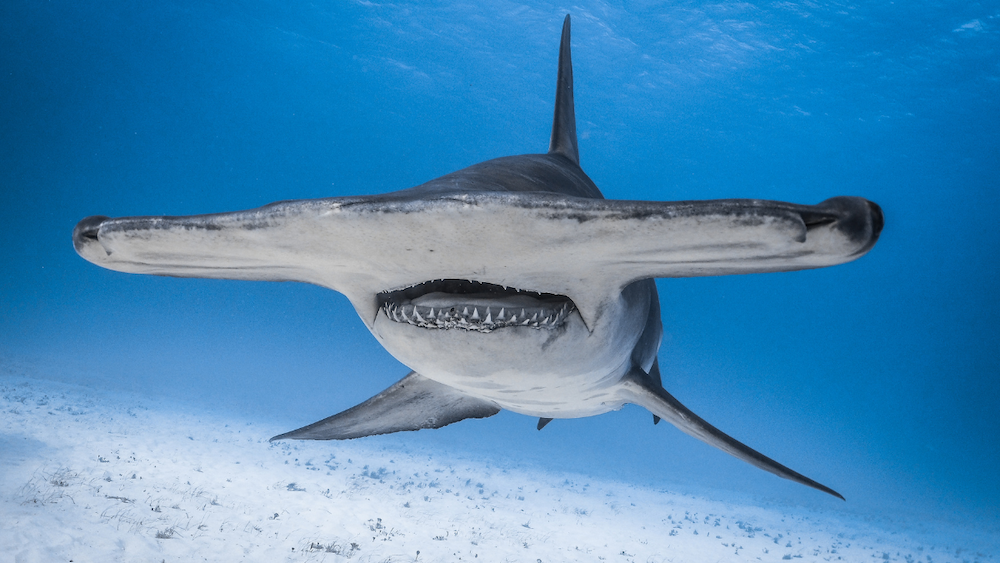
A couple of years ago, I got a text from my partner and Wildlife Nomads co-founder while she was trekking through the Galapagos. She’d already checked some of the iconic animals of Galapagos islands, sea lions, orcas, and even some small shark species, but she was buzzing about something else entirely.
While on a boat tour, she spotted a massive school of hammerhead sharks cutting through the water. Without a second thought, she grabbed her fins and free-dived nearly 10 meters down just to keep pace with them. Watching her footage later, I realized I had never truly dissected the alien-like mechanics of the hammerhead.
Their heads look like a glitch in evolution. However, as a biologist, I can confirm: there is not a single millimeter of that distinctive shape that is not a high-tech sensory tool. Here are the 10 most fascinating hammerhead shark facts, backed by science.
1. The “Hammer” Is a Biological Swiss Army Knife
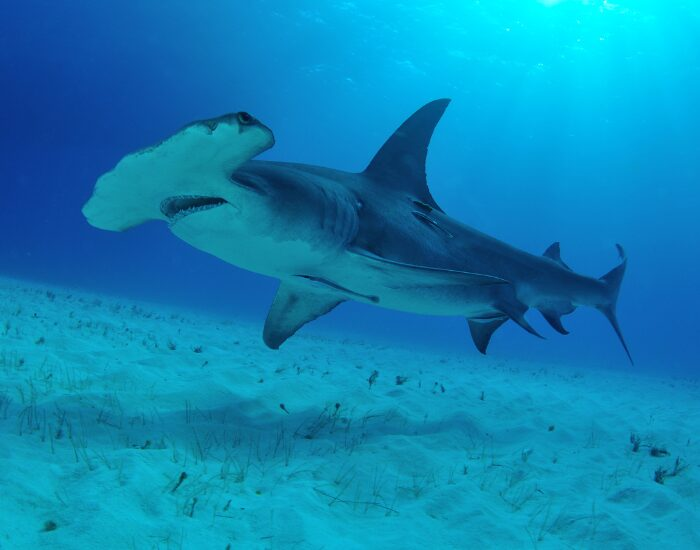
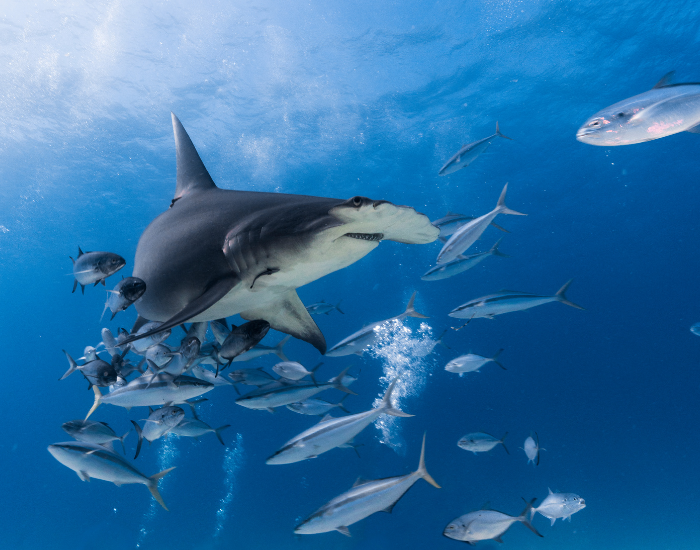
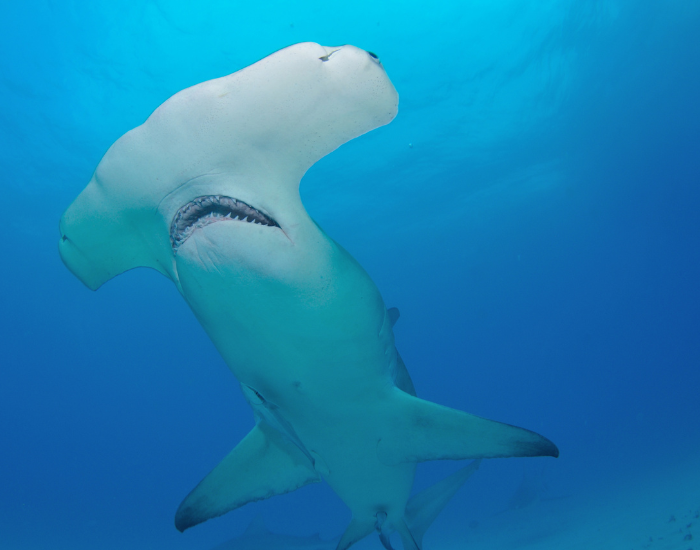
The hammerhead’s iconic head is called a cephalofoil. For years, researchers debated why evolution would produce such an unusual shape. The answer, it turns out, comes down to surface area.
By spreading sensory organs across a wide, laterally extended head, hammerheads effectively become swimming metal detectors. This unique head structure allows them to sweep the seafloor for the electrical signatures of buried prey, stingrays, crustaceans, and small fish. In short, it is a specialized hunting rig that gives hammerheads a massive advantage over most other sharks.
2. Hammerhead Sharks Have True 360-Degree Vision (almost)
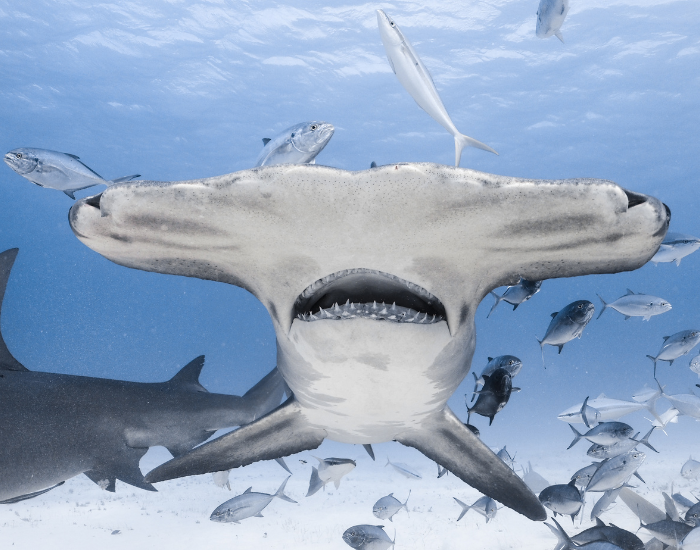
You may wonder if sharks could actually see what is directly in front of them?. Because the shark’s eyes sit at the far ends of the cephalofoil, hammerheads actually have better front-facing binocular vision than humans.
By swinging their head side-to-side as they swim, hammerheads can see 360 degrees around them at all times. They simultaneously see above and below their body. Therefore, if you are a squid trying to sneak up from any angle, good luck, with a hammerhead, there are no blind spots.
Worth to mention that while they can see 360 degrees, they have a hilarious biological irony: a massive blind spot right in front of their nose. Small fish have actually been observed ‘hiding’ in plain sight by swimming directly in front of the shark’s snout.
3. There Are Ten Different Hammerhead Species
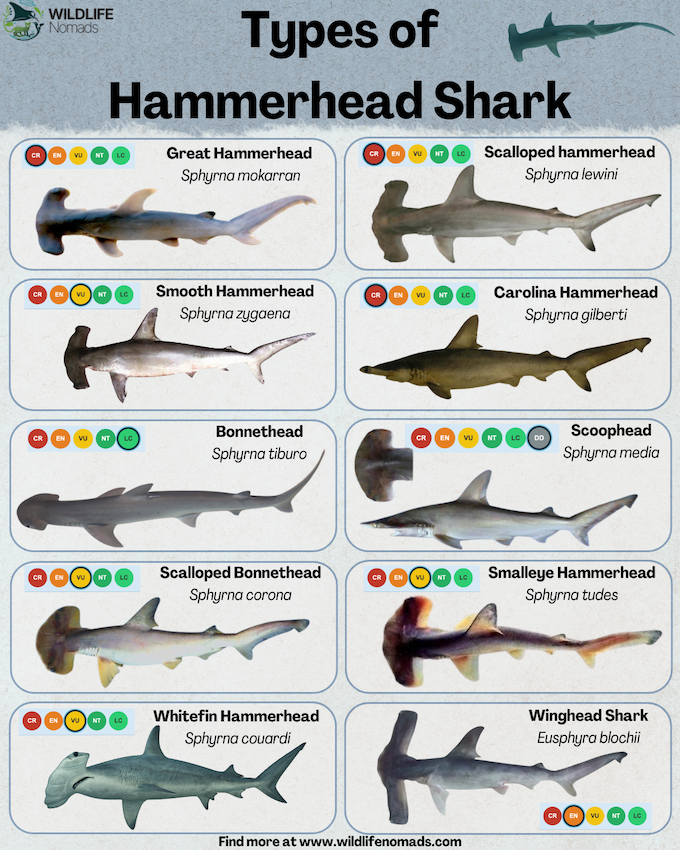
When people say “hammerhead sharks,” they typically picture the Great Hammerhead (Sphyrna mokarran). However, scientists recognize ten distinct hammerhead species in total , not nine. According to Encyclopaedia Britannica, the family Sphyrnidae comprises 10 shark species across two genera: Sphyrna (9 species) and Eusphyra (1 species).
These range from the tiny Bonnethead (Sphyrna tiburo), the smallest species and a surprisingly dedicated seagrass eater, to the Great Hammerhead, which can reach lengths of up to 6 meters (20 feet). The Scalloped Hammerhead (Sphyrna lewini) is the species most commonly found in massive schools, particularly around seamounts in the Galápagos, Cocos Island, and Malpelo — a region sometimes called the “Hammerhead Triangle
4. Hammerhead Sharks Can Actually Tan
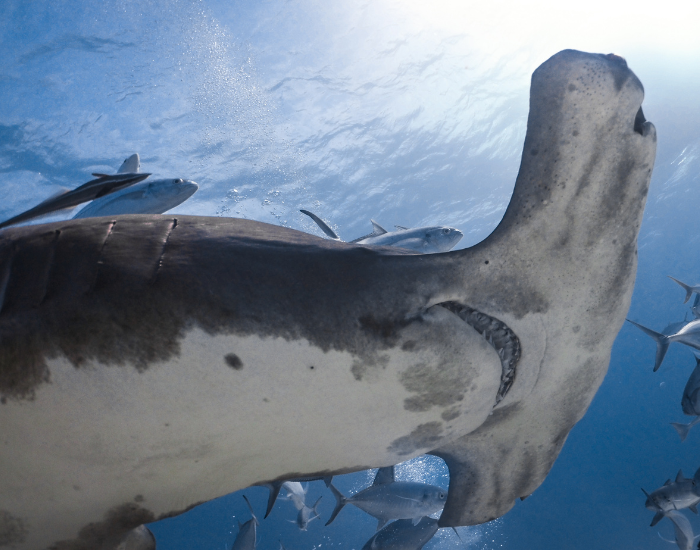
This is a genuine biological mic drop. Because hammerheads spend considerable time in shallow, sun-intense tropical waters, they have evolved the ability to darken their skin as UV protection. They are one of the few non-human wildlife species known to exhibit this tanning response.
Unlike humans, however, they do not develop skin cancer from sun exposure. They simply build a darker, more UV-resistant complexion over time. Researchers first described this phenomenon in scalloped hammerheads studied in Hawaii.
5. The Great Hammerhead Is a Stingray Specialist
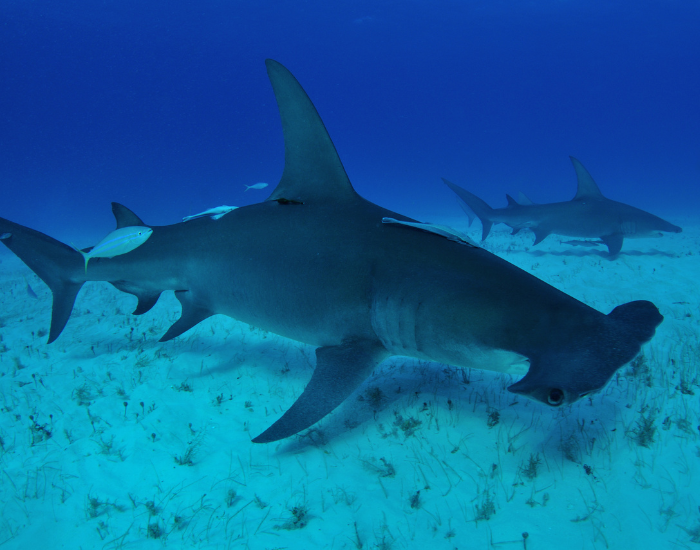
While many shark species are generalist predators, the Great Hammerhead has one clear dietary preference: rays. It uses the flat edge of its cephalofoil to physically pin a stingray to the seafloor, holding the prey down while it takes precise bites.
In addition, Great Hammerheads appear largely immune to the venomous barbs of their prey. It is common to find individuals with dozens of stingray barbs embedded in their jaws and faces, entirely unfazed. This specialist feeding strategy is unique among hammerhead species.

6. Scalloped Hammerheads Form Enormous Social Schools
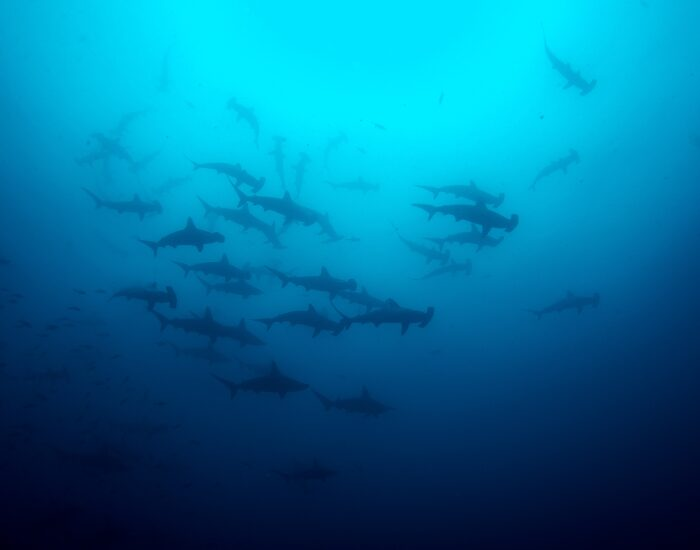
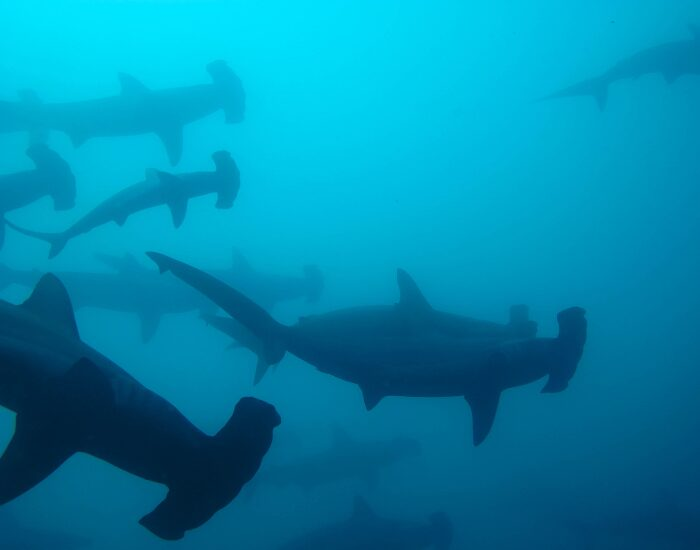
Most larger sharks are solitary hunters, but scalloped hammerheads are famous for gathering in massive schools of hundreds, sometimes thousands, of individuals during the day around seamounts.
These schools have a clear social hierarchy. Larger females dominate the center, using head-bumps and ritualized swimming patterns to maintain social status. When night falls, however, the school dissolves. Each shark then becomes a solitary hunter, pursuing prey independently until dawn. This daytime schooling behavior remains one of the most studied phenomena in shark biology.
7. Hammerheads Have Surprisingly Small Mouths
Despite their intimidating silhouette, hammerheads have notably small mouths compared to other large shark species like Tiger Sharks or Bull Sharks. This is by design, their diet consists mostly of smaller prey such as octopus, squid, and fish.
Because their mouth sits tucked underneath that wide head, hammerheads must be extremely precise when striking. This is precisely why that 360-degree vision is so critical. Accuracy, not brute force, defines how hammerheads feed.
8. The Cephalofoil Provides Hydrodynamic Lift
The cephalofoil acts similarly to an airplane wing. As the shark moves through the ocean, the shape generates hydrodynamic lift, allowing hammerheads to make far sharper turns than most other shark species of comparable size.
Watch a hammerhead chase a fish and the agility is immediately apparent. They do not simply swim forward, they maneuver with a grace that seems impossible for a creature this size. In Australian waters especially, this hunting technique has been captured on film in remarkable detail.
9. Hammerhead Sharks Are Critically Endangered
This is the hardest fact to write. The Great Hammerhead and the Scalloped Hammerhead are both listed as Critically Endangered on the IUCN Red List. The primary driver is fishing pressure, specifically, the international shark fin trade.
Their fins are among the most valuable in global markets, making hammerheads a frequent target of commercial fisheries. Furthermore, hammerheads are biologically sensitive animals. They experience extreme physiological stress when caught, meaning that even catch-and-release fishing often results in post-release mortality. Overfishing is devastating populations faster than these slow-reproducing sharks can recover.
Conservation efforts across the Galápagos Marine Reserve and Cocos Island National Park are among the most active in the world for hammerhead protection. Ecotourism in these regions directly funds marine protection and anti-poaching patrols.
→Related read: Best Places to Swim With Sharks


10. Are Hammerhead Sharks Actually Dangerous to Humans?
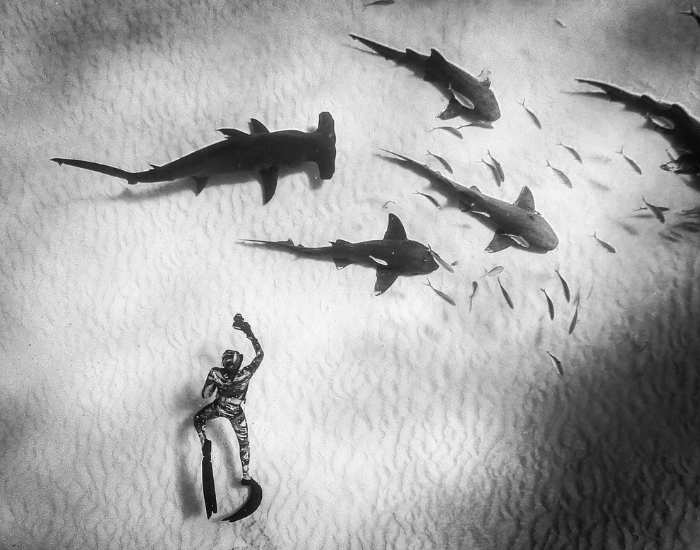
The short answer: no. Out of the hundreds of shark species that exist, hammerheads have an exceptionally clean safety record with humans. While the Great Hammerhead is technically capable of causing harm due to its sheer size, unprovoked attacks are extremely rare.
According to the International Shark Attack File, the overwhelming majority of incidents involving hammerheads were provoked, typically by fishermen or divers who cornered or handled a shark. In the open ocean, hammerheads are generally shy. They tend to swim away when approached by divers. In the Galápagos, my co-founder felt no aggressive behavior whatsoever, she was simply a curious observer passing through their world.
In my shark size comparison tool you can put a great hammerhead head to head with a great white, both at true scale.
Hammerhead Shark Reproduction: What You Need to Know
Hammerheads are viviparous, they give birth to live young, not eggs. A single litter from a Great Hammerhead can contain anywhere from 6 to 55 pups, depending on the female’s size and condition.
Gestation lasts approximately 9 to 10 months. Pups are born fully formed and receive no parental care after birth. This reproductive strategy, combined with their slow maturation rate, makes population recovery extremely slow after overfishing. A single generation may take over a decade to replace.
FAQ: Your Hammerhead Shark Questions
No. Hammerheads are generally considered timid toward humans. They are apex predators in their habitat, but they do not seek out conflict with divers or swimmers.
For snorkelers and divers, hammerheads are considered harmless provided you maintain a respectful distance. The vast majority of recorded incidents involved provoked or cornered sharks.
Hammerheads are found worldwide in warm, tropical, and subtropical waters. Top destinations include Florida, Western Australia, Ecuador, specifically the Galápagos Islands, Cocos Island (Costa Rica), and Malpelo Island (Colombia) — collectively known as the Hammerhead Triangle.
There are nine recognized hammerhead species, ranging from the small Bonnethead to the Great Hammerhead (Sphyrna mokarran), the largest of the group.
Hammerheads primarily eat stingrays, fish, squid, octopus, and crustaceans. The Great Hammerhead is a specialist ray predator, while smaller species such as the Bonnethead also consume seagrass.

A World Without Hammerheads Isn’t Worth the Risk
We must reduce fishing pressure immediately if we want these animals to survive this century. The critically endangered status of the Great Hammerhead and Scalloped Hammerhead reflects the broader health of our oceans.
When we lose an apex predator like the hammerhead, the entire food chain, from crustaceans to prey fish, destabilizes. As someone who has traveled from the cold waters of Scandinavia to the tropical reefs of Australia, I can tell you: spotting a hammerhead is a sign of a healthy, functioning ecosystem.
Supporting marine protected areas, choosing ethical ecotourism operators, and reducing demand for shark fin products are the three most impactful actions individuals can take right now.
Where to Dive with Hammerhead Sharks?
Here is a list of 3 tours where you could swim with hammerhead sharks. As a biologist, I only recommend tours that follow strict ethical guidelines to ensure we don’t disturb wildlife. These are the three tours/ partners I trust most based on their conservation records:
This blog is reader-supported. When you buy experiences through links listed on this site, we may earn an affiliate commission.
Hammerhead Shark Biology & Science Quiz
Ten fun study questions covering cephalofoil mechanics, 360-degree vision, skin tanning, stingray hunting, and daytime schooling behavior. Test your retention!
Multiple Choice
References:
Anderson, T., Meese, E. N., Drymon, J. M., Stunz, G. W., Falterman, B., Menjivar, E., & Wells, R. J. D. (2022). Diel Vertical Habitat Use Observations of a Scalloped Hammerhead and a Bigeye Thresher in the Northern Gulf of Mexico. Fishes, 7(4), 148. https://doi.org/10.3390/fishes7040148
Gallagher, A. J., & Klimley, A. P. (2018). The biology and conservation status of the large hammerhead shark complex: The great, scalloped, and smooth hammerheads. Reviews in Fish Biology and Fisheries, 28(4), 777–794. https://doi.org/10.1007/s11160-018-9530-5
Guttridge, T. L., Van Zinnicq Bergmann, M. P. M., Bolte, C., Howey, L. A., Finger, J. S., Kessel, S. T., Brooks, J. L., Winram, W., Bond, M. E., Jordan, L. K. B., Cashman, R. C., Tolentino, E. R., & Grubbs, R. D. (2017). Philopatry and regional connectivity of the great hammerhead shark, Sphyrna mokarran, in the U.S. and Bahamas. Frontiers in Marine Science, 4, Article 3. https://doi.org/10.3389/fmars.2017.00003
Lowe, C., & Goodman-Lowe, G. (1996). Suntanning in hammerhead sharks. Nature, 383(6602), 677. https://doi.org/10.1038/383677a0
Papastamatiou, Y. P., Cartamil, D. P., Lowe, C. G., Meyer, C. G., Weng, K. C., & Holland, K. N. (2011). Scales of orientation, directed walks and movement path structure in sharks. Journal of Animal Ecology, 80(4), 864–874. https://doi.org/10.1111/j.1365-2656.2011.01815.x
Schwab, I. R., & McComb, D. M. (2007). Keeping a cool head. The British Journal of Ophthalmology, 91(2), 138. https://doi.org/10.1136/bjo.2006.105791
Spaet, J. L. Y., Nanninga, G. B., & Berumen, M. L. (2016). Ongoing decline of shark populations in the Eastern Red Sea. Biological Conservation, 201, 20–28. https://doi.org/10.1016/j.biocon.2016.06.018