
I have spent a a good amount of time searching for animals, but I have never locked eyes with a sawfish in the wild. They are the ghosts of the estuary, critically endangered survivors of a lineage that has outlasted the dinosaurs. They are sometimes called ‘carpenter sharks’ because of their saw-like snouts.
Imagine a 25-foot ray that looks like it swapped its nose for a prehistoric hedge trimmer. Whether you call it a rostrum fish, a saw “mouth” fish, or simply the most bizarre cartilaginous fish on earth, the sawfish is far more than a curiosity. Sawfish are cartilaginous fishes, closely related to rays and sharks, sharing many anatomical and ecological traits with these groups. It is an apex predator on the edge of extinction.
Here are 12 weird facts about sawfish that every nature lover needs to know — backed by science, and packed with a few hard truths about why these animals desperately need our help. Their populations have experienced a drastic decline in recent decades due to habitat loss and fishing pressures.
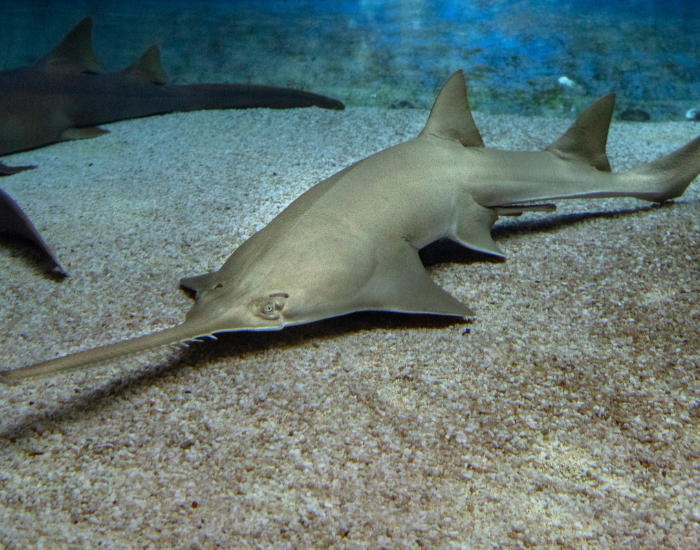
1. Sawfish Are Rays — Not Sharks
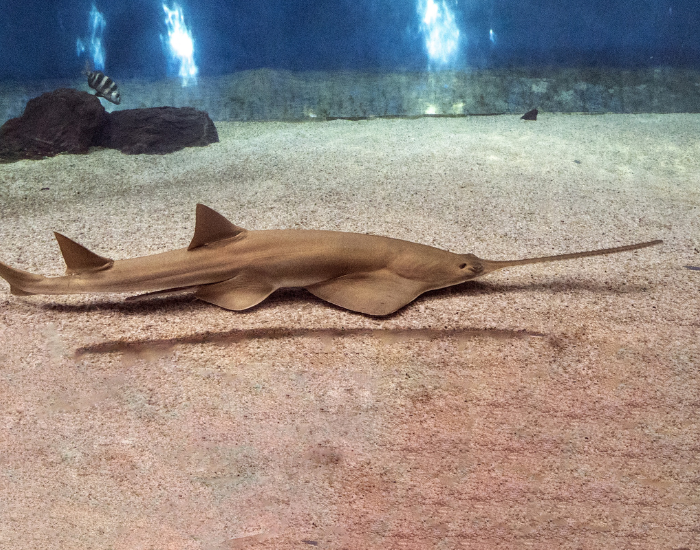
This is the most common mistake in the book. The sawfish looks sharky: it has dorsal fins, a powerful tail, and a torpedo-shaped silhouette. Sawfish are sometimes called ‘carpenter sharks’ because of their saw-like snouts, but they are not true sharks. However, the morphology tells a very different story.
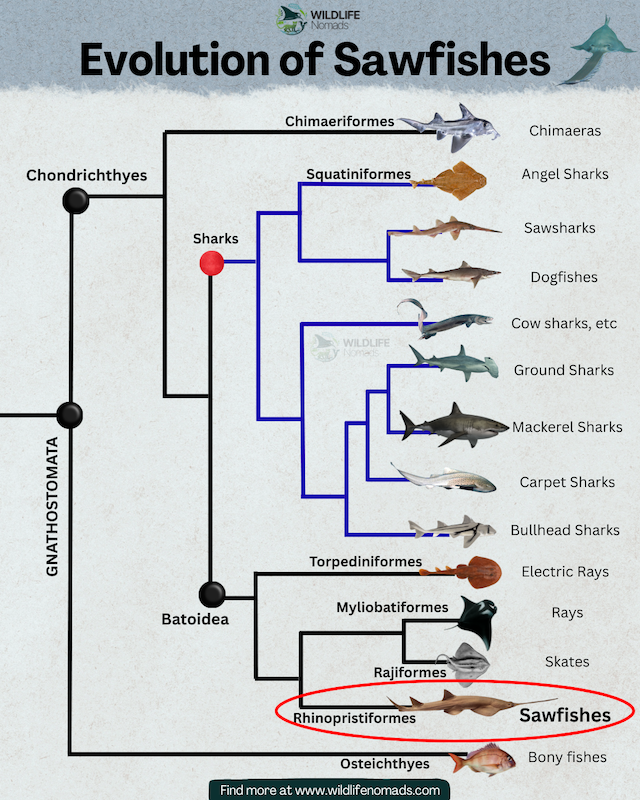
They are part of the cartilaginous fishes group (Chondrichthyes), which includes sharks and rays. In fact, one of the most highly modified rays on earth.
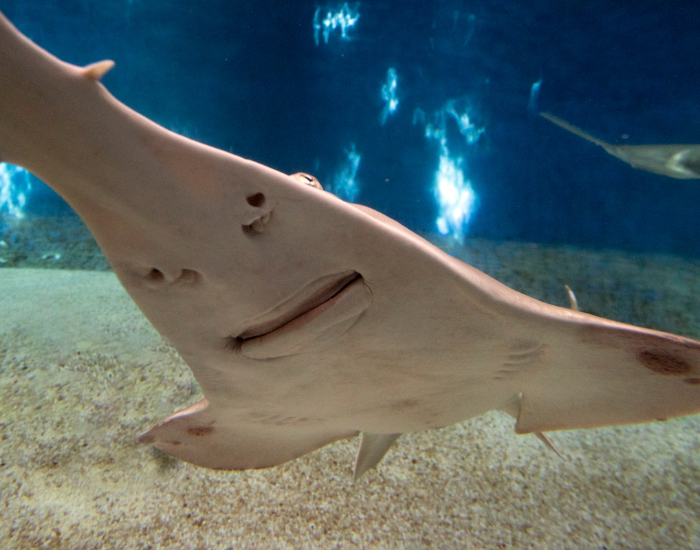
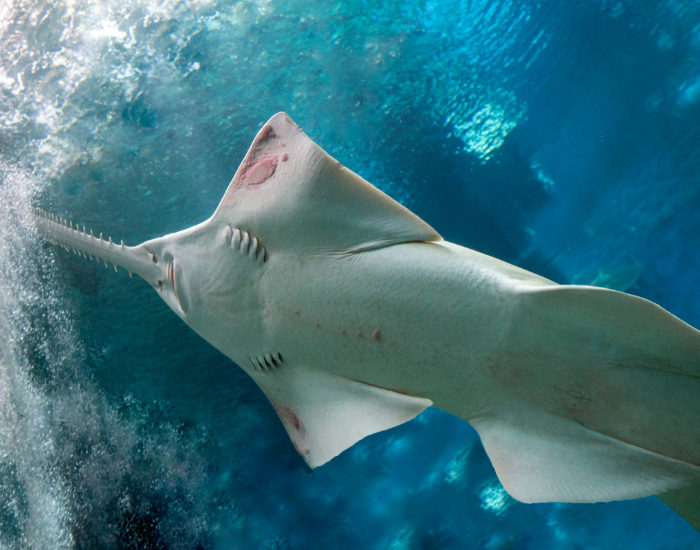
Flip a sawfish over and you will find five pairs of gill slits on its flat underbelly, a classic ray trait. Sharks carry their gills on the sides of their heads. They belong to the superorder Batoidea, making them closer cousins to stingrays and the manta ray than to any shark species.
2. The Rostrum Is a High-Tech Sensory Weapon
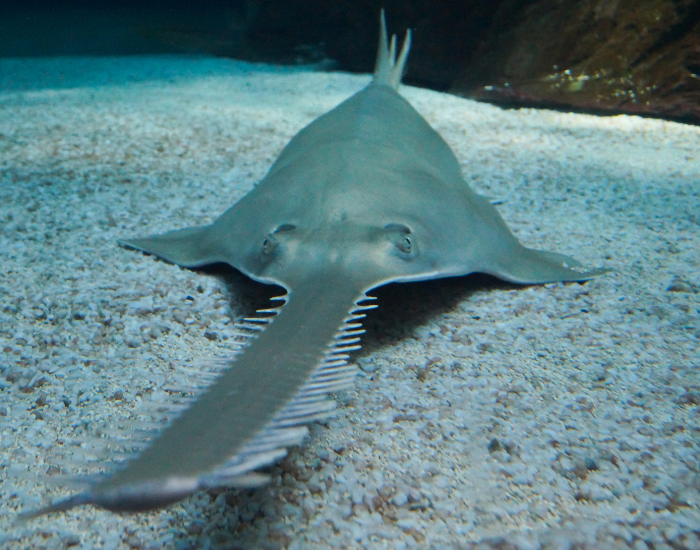
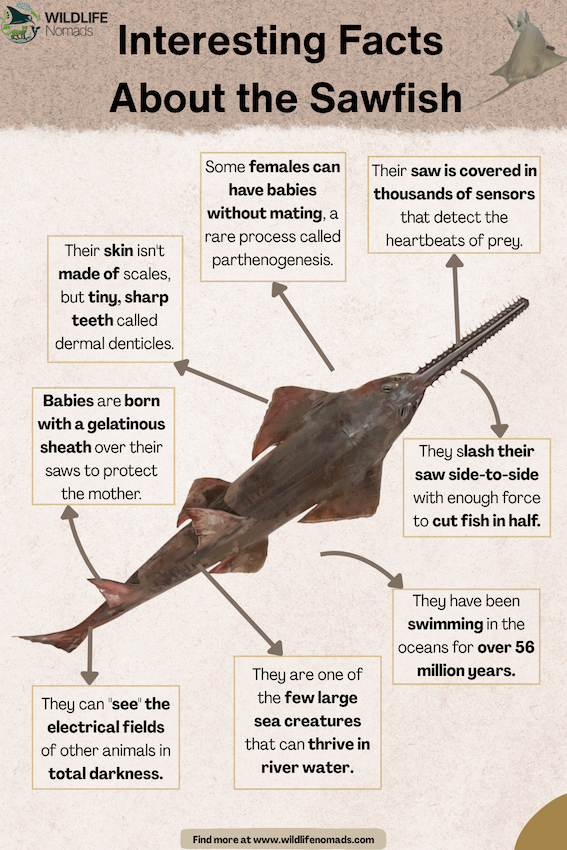
Their main defining feature — the rostrum — is a masterpiece of biological engineering. It is not bone but a cartilaginous extension of the skull, studded with electroreceptors called ampullae of Lorenzini. The smalltooth sawfish’s rostrum is covered in thousands of tiny, electro-sensitive pores that allow it to detect weak electric fields of prey. The rostrum can make up one-quarter to one-third of the sawfish’s total body length. These tiny pores detect the faint electric fields produced by living prey.
In murky coastal habitats and freshwater river systems, they do not need to see its dinner. It feels the heartbeat of a buried crab or senses a mullet moving nearby. The toothed rostrum functions as a 3D motion sensor and a hunting spear rolled into one extraordinary structure.
3. They Hunt Like Underwater Fencers
You might assume a sawfish uses its saw to chew through wood or attack boats — thanks to 19th-century myths. In reality, the hunting technique is far more tactical. When a sawfish locates a school of fish, it performs a rapid, lateral thrash.
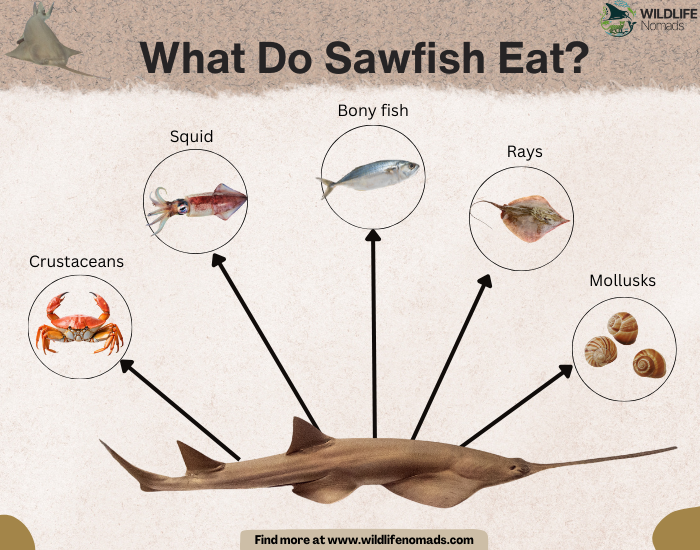
This side-swipe stuns or impales several fish at once. Once the prey sinks to the bottom, the sawfish pins it to the seafloor with its rostral teeth before manoeuvring its mouth — located on its flat underside, over the meal. They are predators that feed on small fish, crustaceans (crabs and crayfish), and mollusks. It is brutal, efficient, and highly specialised. Research published confirms that sawfish use their saws both to detect prey electrically and to slash at it actively.
4. There Are Only Five Species Left — And All Are Critically Endangered
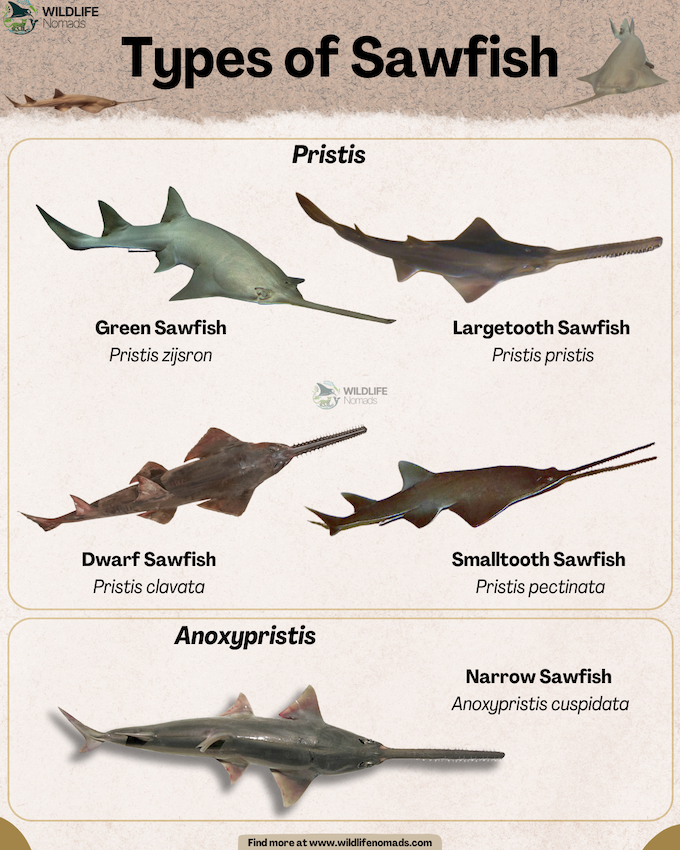
Taxonomy is straightforward here: five recognised species of sawfish exist globally, and every single one is listed as Critically Endangered by the IUCN Red List. The combined range of the five sawfish species once encompassed 90 countries, but today they have disappeared entirely from 20 of these countries. These are:
- Smalltooth Sawfish (Pristis pectinata)
- Largetooth Sawfish (Pristis pristis)
- Green Sawfish (Pristis zijsron)
- Dwarf Sawfish (Pristis clavata)
- Narrow Sawfish (Anoxypristis cuspidata)
The smalltooth sawfish is the only species still found in American waters. The smalltooth sawfish is one of five species of sawfishes. The dwarf sawfish is the runt of the family, reaching roughly 8–9 feet, pocket-sized by sawfish standards.
5. Southwest Florida Is Their Last Great Stronghold
Historically, the smalltooth sawfish habitat stretched from Texas to North Carolina. Today, that range has collapsed by nearly 95%. The core population now clusters in Southwest Florida, specifically Everglades National Park, the Florida Keys, and the Charlotte Harbor estuarine system. Smalltooth sawfish are now primarily found in the coastal waters and coastal areas of southern Florida, including Florida Bay.
The labyrinth of mangrove habitats in the Everglades provides the perfect nursery for juvenile sawfish. The tangled roots protect young animals from bull sharks and other predators while they grow. Juvenile smalltooth sawfish inhabit coastal areas such as estuaries, river mouths, and bays year-round. South Florida is now arguably the most important smalltooth sawfish habitat on the planet.
6. They Reach Monstrous Sizes
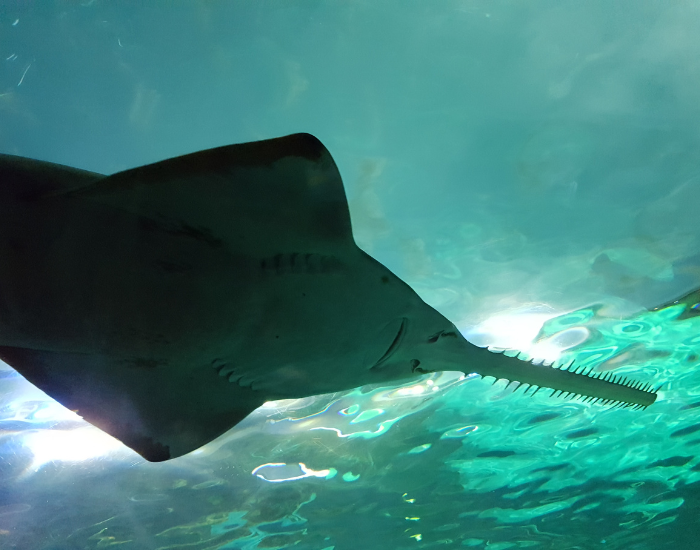
When it comes to sawfish size, we are talking about genuine sea monsters. Both the smalltooth and largetooth sawfish can reach lengths of 16 to 25 feet, longer than a standard pickup truck. Large sawfish can even reach lengths over 16 to 25 feet (6-7 meters), making them some of the largest rays in the ocean. The largetooth sawfish holds the record as the largest sawfish species.
Despite their intimidating scale, these animals are surprisingly docile. Their diet consists primarily of small schooling fish and crustaceans. They have no interest in humans, though you would not want to stray into the path of a thrashing rostrum.
7. Pups Are Born With Safety Caps on Their Saws
Sawfish are ovoviviparous, they give birth to live young rather than laying eggs. This creates an obvious problem: how does a mother deliver pups that are already equipped with toothed saws?
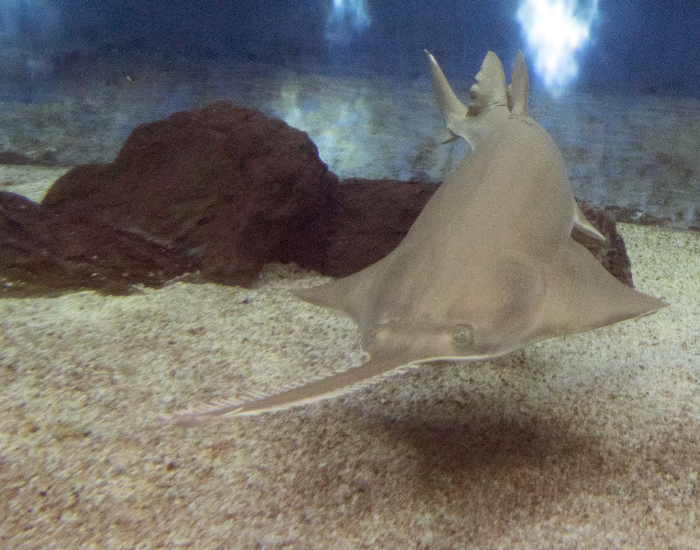
Nature solves this brilliantly. At birth, each pup’s rostrum is covered in a thick, gelatinous sheath that protects the mother during delivery. This biological safety cap dissolves within hours of the pup entering the water. Litter sizes typically range from around five to thirteen pups, depending on the species.
8. Some Females Reproduce Without a Male
In a landmark 2015 study published in Current Biology, researchers from Stony Brook University discovered that female smalltooth sawfish in Florida were occasionally reproducing via parthenogenesis, asexual reproduction requiring no male contribution. It was the first confirmed case of this phenomenon in a wild vertebrate population.
Scientists found that about 3% of sawfish examined were the product of these virgin births. All seven individuals were healthy and normal-sized. Researchers believe the behaviour is triggered when populations become so small and fragmented that females cannot find mates. It is a testament to their resilience, but also a somber signal of just how few sawfish remain.
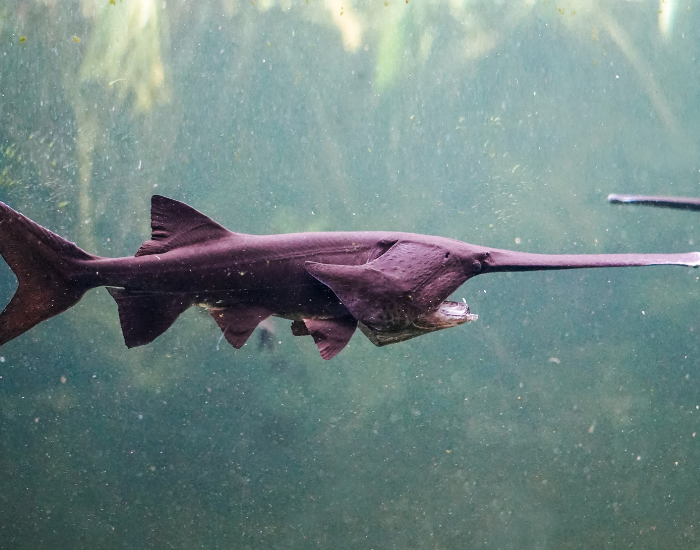
9. Their Rostral Teeth Never Grow Back
Unlike the teeth in their mouths — which sawfish replace continuously like sharks — the teeth lining the rostrum are permanent. These structures are actually heavily modified dermal denticles (the same type of scale that covers shark skin). If a rostral tooth is broken off by a fishing net or a fight, it is gone forever.
This is why old museum specimens often look gappy. In the wild, a sawfish with a severely damaged rostrum loses its primary tool for both sensing and securing food — a potentially fatal disadvantage. It is one of the many ways that bycatch in commercial fisheries causes lasting harm.
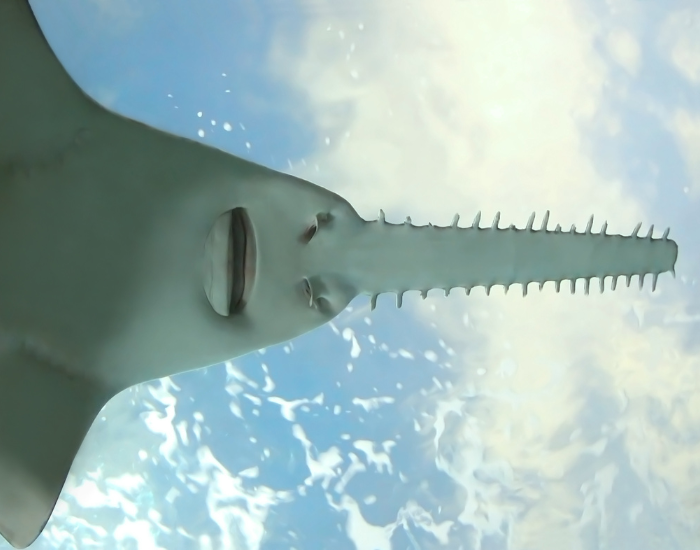
10. They Thrive in Both Salt and Fresh Water
Sawfish are euryhaline — they tolerate a wide range of salinities. The largetooth sawfish is particularly well-known for travelling hundreds of miles up freshwater river systems, including the Amazon and Australia’s Fitzroy River. The freshwater sawfish is especially adapted to freshwater habitats, often found far upstream in large rivers like the Amazon and Lake Nicaragua. Juveniles of several species regularly use freshwater river systems as nurseries.
Sawfish are primarily found in coastal marine and brackish waters, as well as freshwater rivers and lakes. This ability to navigate freshwater river systems gives them access to food sources unavailable to most large marine predators. However, it also places them directly in the crosshairs of river damming and coastal development, two of the leading drivers of their decline.
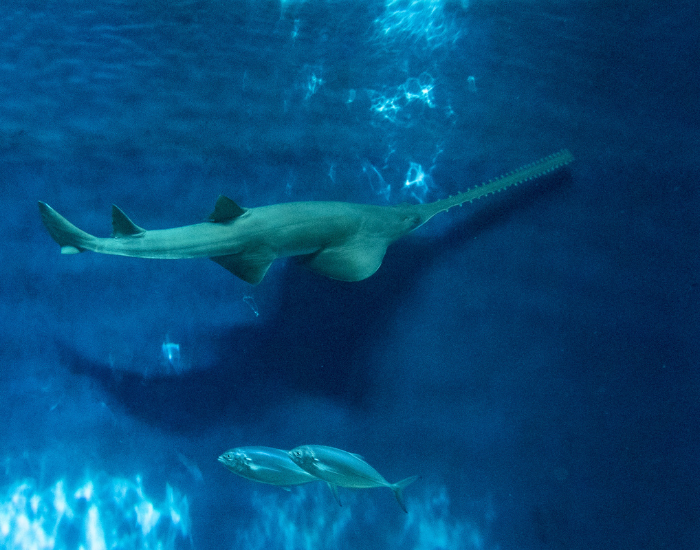
11. Why Are Sawfish Endangered? It Starts With Their Saw
Every sawfish species is Critically Endangered, and the primary reason is tragically ironic: their saw. When a sawfish swims into a gillnet or shrimp trawl, those lateral rostral teeth act like hooks. The animal becomes hopelessly entangled, and historically, fishermen would kill them just to free their gear. This accidental bycatch in commercial fisheries remains the single greatest threat to sawfish populations globally.
Add to that the destruction of mangrove forests — their critical nursery habitats — through coastal development, and the collapse of sawfish populations makes devastating sense. Twenty countries where sawfish once thrived now have none. Another 43 nations have lost at least one sawfish species entirely.
Conservation efforts are underway. NOAA Fisheries and the Florida Fish and Wildlife Conservation Commission lead recovery planning for the smalltooth sawfish. The species also receives international protection under CITES Appendix I, which prohibits commercial trade. However, illegal international trade in rostra and fins continues.
12. Sawfish Are Living Fossils — 60 Million Years in the Making
Indisputable sawfish genera emerged roughly 60 million years ago, shortly after the mass extinction event that wiped out the dinosaurs. Studies confirms the sawfish lineage first appeared between 59 and 62 million years ago. The design has barely changed since.
When you look at a sawfish, you are looking at an ancient predator that survived every major extinction and environmental upheaval for tens of millions of years — and is now losing its battle against a single species: us. We are the first generation in 60 million years that might actually watch these animals vanish.
The Critical Path Forward
Sawfish are not just weird fish. They are apex predators that keep estuarine ecosystems in balance. Lose them, and the ripple effects move through the entire food web.
If you spot a sawfish in Florida waters, report your sighting to the International Sawfish Encounter Database or contact the Florida Fish and Wildlife Conservation Commission directly. Your data helps researchers map critical habitat and prioritise conservation efforts. Agencies like the U.S. Fish and Wildlife Service and the smalltooth sawfish recovery team play a key role in monitoring and protecting smalltooth sawfish populations, which have experienced a drastic decline in recent decades due to habitat loss and fishing pressures.
Supporting organisations like the IUCN Shark Specialist Group and NOAA Fisheries — and advocating for the protection of mangrove habitats — gives these animals a fighting chance. The Florida Museum also plays a significant role in research, education, and public outreach for sawfish conservation.
FAQ: Your Quick Sawfish Guide
Generally, no. Sawfish are docile bottom-dwellers with no interest in people. However, they are powerful animals. If entangled or cornered, they thrash their rostrum defensively — and that can cause serious injury. Give them space and respect.
Population estimates are difficult in the wild. Smalltooth sawfish populations are now mostly found in the southeastern United States. Scientists believe the US smalltooth sawfish population numbers in the hundreds to low thousands of adults. The species is listed as Critically Endangered by the IUCN. Precise counts are ongoing through tagging programmes in Southwest Florida.
No. It is a ray. Smalltooth sawfish are considered a type of ray, as their gills and mouths are found on the undersides of their bodies. Look at the gills — five pairs on the flat belly, not the sides of the head. Their pectoral fins are wing-like and attached to the head, which is a distinguishing feature of their fish biology. Sawfish belong to the superorder Batoidea alongside manta rays and stingrays.
Yes. Southwest Florida — particularly Everglades National Park, the Florida Keys, and the Charlotte Harbor system — is currently the most important smalltooth sawfish habitat in the world.
Sawfish feed primarily on small schooling fish and crustaceans. They use their electrosensory rostrum to detect prey and their lateral thrashing motion to stun or impale it before consuming it.
References:
Constance, J.M., Garcia, E.A., Pillans, R.D. et al. A review of the life history and ecology of euryhaline and estuarine sharks and rays. Rev Fish Biol Fisheries 34, 65–89 (2024). https://doi.org/10.1007/s11160-023-09807-1
Nevatte, R. J., Wueringer, B. E., Jacob, D. E., Park, J. M., & Williamson, J. E. (2017). First insights into the function of the sawshark rostrum through examination of rostral tooth microwear. Journal of fish biology, 91(6), 1582–1602. https://doi.org/10.1111/jfb.13467
Welten, M., Smith, M. M., Underwood, C., & Johanson, Z. (2015). Evolutionary origins and development of saw-teeth on the sawfish and sawshark rostrum (Elasmobranchii; Chondrichthyes). Royal Society open science, 2(9), 150189. https://doi.org/10.1098/rsos.150189
Wilkinson, A. (2015, June 1). Sawfish spawn without sex. Nature. https://doi.org/10.1038/nature.2015.17671
Wueringer, B. E., Winther-Janson, M., Raoult, V., & Guttridge, T. L. (2020). Anatomy of the mechanosensory lateral line canal system and electrosensory ampullae of Lorenzini in two species of sawshark (fam. Pristiophoridae). Journal of Fish Biology, 97(6), 1642–1655. https://doi.org/10.1111/jfb.14567
Wueringer, B. E., Squire, L., Jr., Kajiura, S. M., Hart, N. S., & Collin, S. P. (2012). The function of the sawfish’s saw. Current Biology, 22(5), R150–R151. https://doi.org/10.1016/j.cub.2012.01.055