I’ve seen the hoopoe many times. On my current trip to Egypt, it keeps finding me. I spotted one in the middle of Cairo, right in the city, which feels strange for a bird that seems to belong somewhere else.
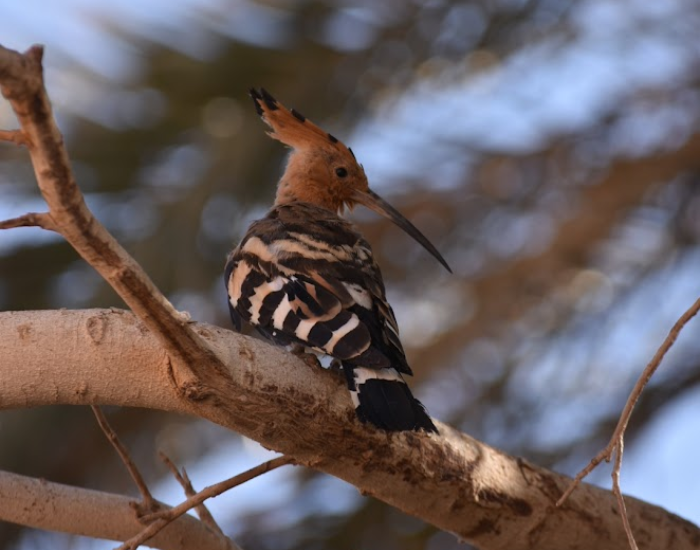
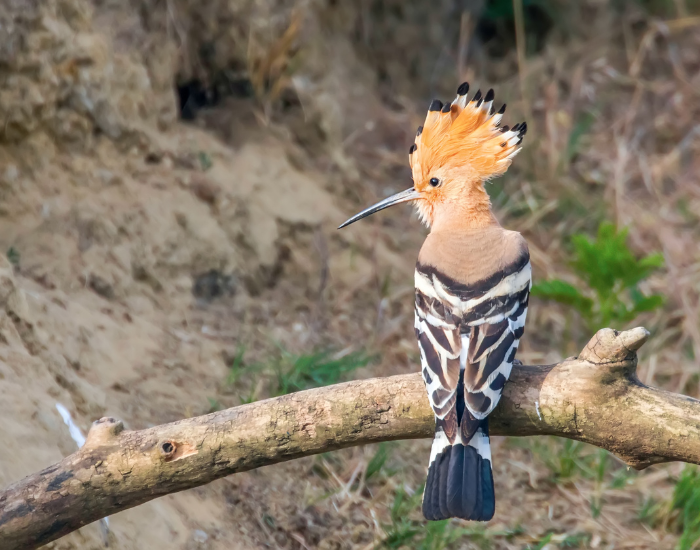
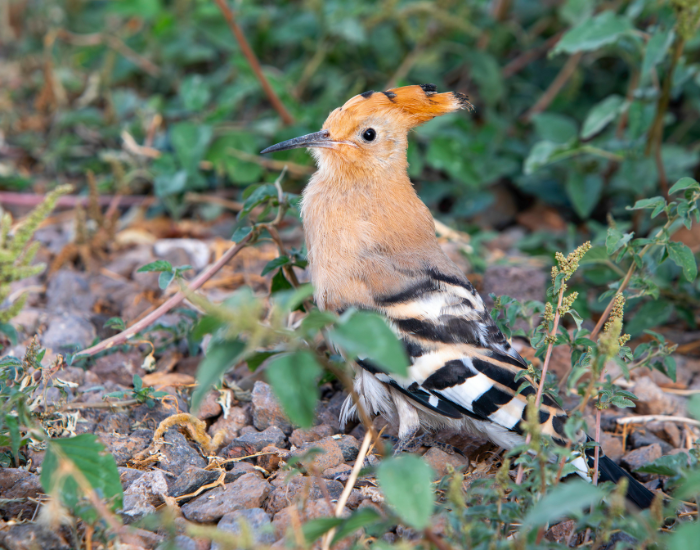
Then it happened again at Abu Simbel. I had just finished visiting the iconic temple, and on the way back, still inside the complex, one was sitting in a tree. That’s the photo you can see above. A few days after that, a hoopoe landed on the balcony of my accommodation in Luxor, calmly preening as if it owned the place.
In many cultures, it’s known as the abubilla, the dudek bird, or simply the hoopoe bird. However, to me, it was the bird that proved nature has a sense of humor. Despite its regal appearance, so regal it was chosen as the national bird of some cultures like Israel, the hoopoe hides some of the grittiest (and smelliest) secrets in the animal kingdom.
What is a Hoopoe?
The common hoopoe (Upupa epops) is a cinnamon-colored bird with black-and-white wings and a tall, erectile crest. The Common Hoopoe measures 25–32 cm long with a 44–48 cm wingspan. It belongs to the order Bucerotiformes, alongside hornbills and woodhoopoes, and ranges across southern Europe, north Africa, and Asia. The global population sits at roughly 5,000,000–10,000,000 individuals, though it is declining, at least locally.
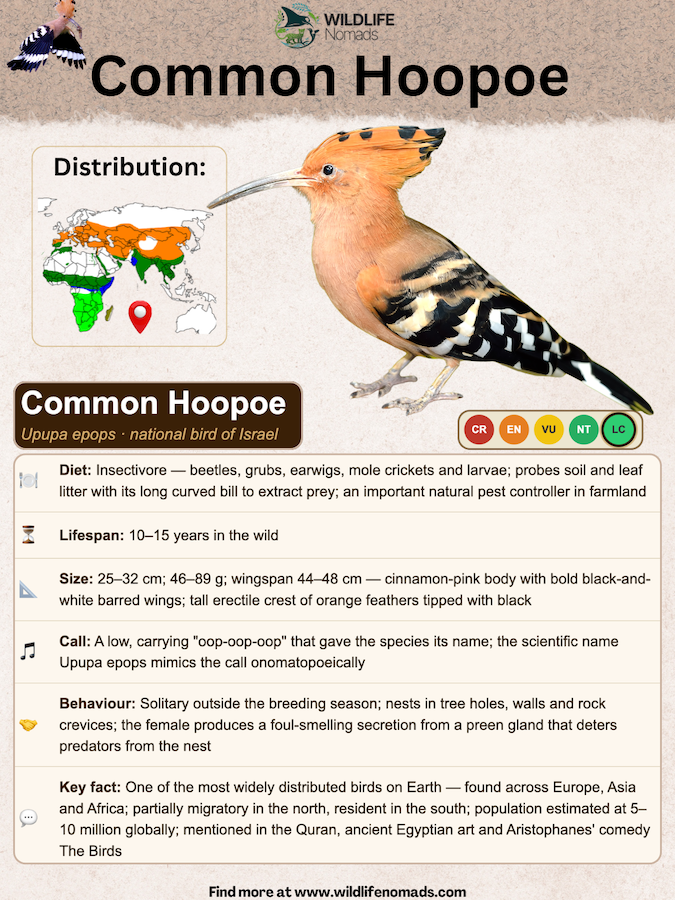
1. Is it a Woodpecker? The Identity Crisis of Upupa epops
No, the hoopoe is not a woodpecker. The Eurasian hoopoe is the only extant species in its own family, Upupidae, and sits in the order Bucerotiformes with hornbills and woodhoopoes.
Think of them as the “one-hit wonders” of evolution. They found a niche that worked and stayed there for millions of years. The hoopoe Upupa epops stands alone in the bird world, therefore making it one of the most distinctive birds of the world you’ll encounter in southern Europe, north Africa, or across Asia.
The family even includes one extinct species. The giant St Helena hoopoe (Upupa antaios) is an extinct species known only from fossils, wiped out after humans reached the island. Paleontologists have also described Messelirrisoridae, an extinct related family from the Eocene that links hoopoes to the woodhoopoes.
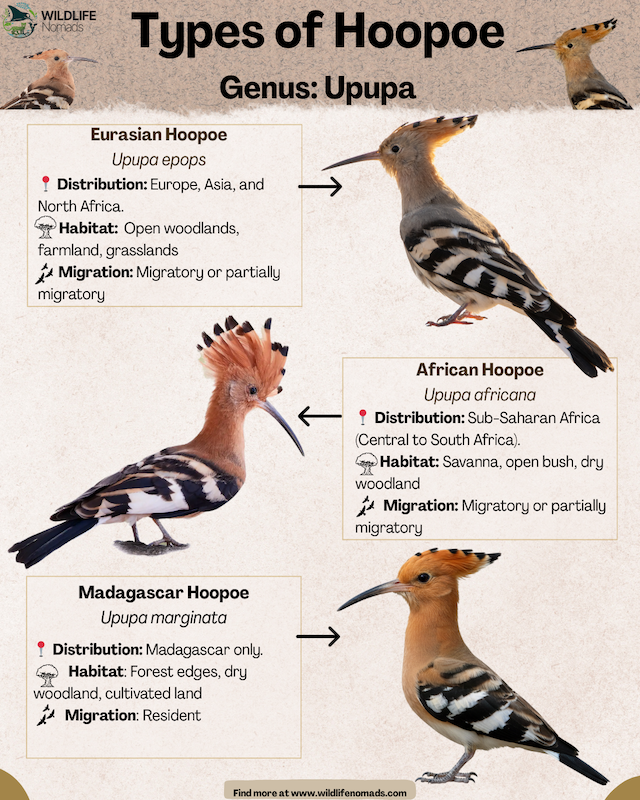
Interestingly, there are separate species now recognized by many ornithologists. The African hoopoe (Upupa africana) and the Madagascar hoopoe (Upupa marginata) were once considered subspecies. However, they are now accepted as separate species based on genetic studies and behavioral differences.
2. That Famous Crest: Not Just for Show
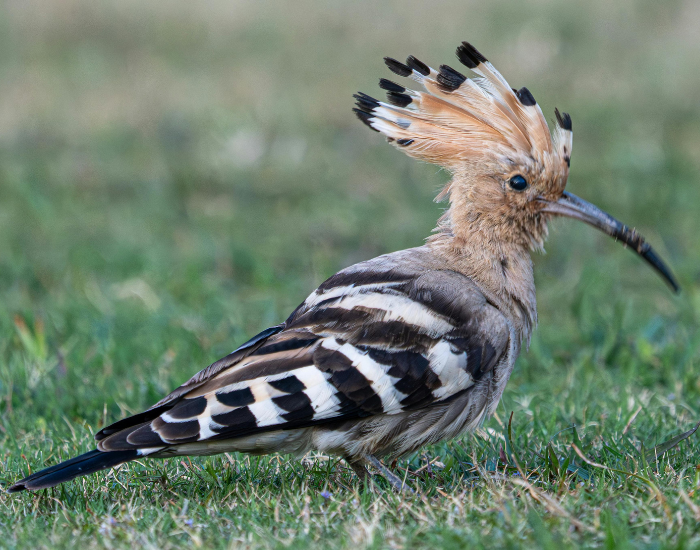
The most striking feature of the Eurasian hoopoe is undoubtedly its crown. This fan-like bird’s crest of cinnamon feathers tipped with black isn’t just a static ornament.
During my trip to Egypt I noticed that the crest acts like a biological mood ring. When the bird is calm, the adult feathers lie flat against the head, giving it a sleek, aerodynamic look. But the moment it lands or senses a predator, the crest snaps open like a Spanish fan. In addition, it’s a classic “deipmatic” display, a behavior intended to startle or deter predators. This distinctive visual signal helps the common hoopoe communicate alarm to nearby birds while simultaneously confusing potential threats.
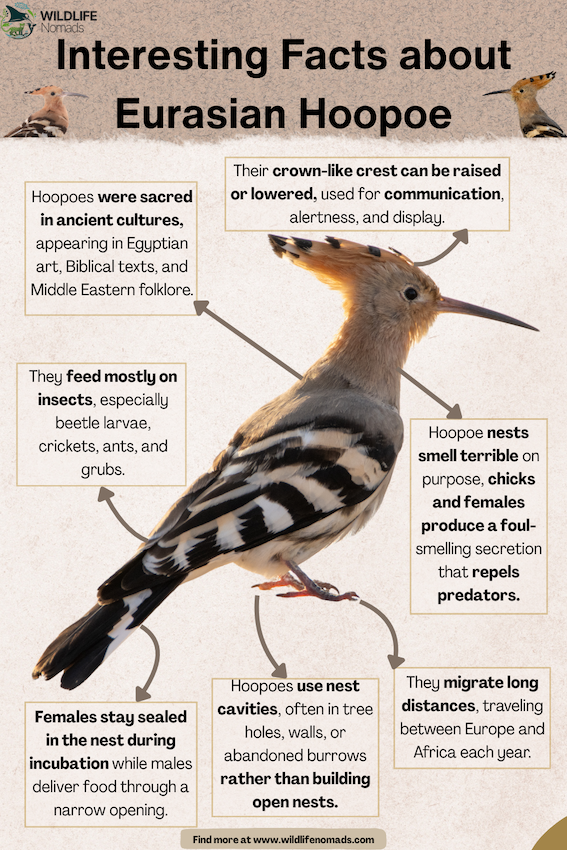
The bird’s crest can be raised and lowered at will. This makes it a powerful communication tool during breeding season when male calls frequently to establish territory and attract females. During courtship, the male feeds the female and displays by raising his crest.
3. The “Stink Bomb” Defense: Why Hoopoe Nests Smell Like Rotting Meat
This is where the common hoopoe loses its “pretty bird” reputation. If you ever find a hoopoe nest, my professional advice is: don’t sniff it.
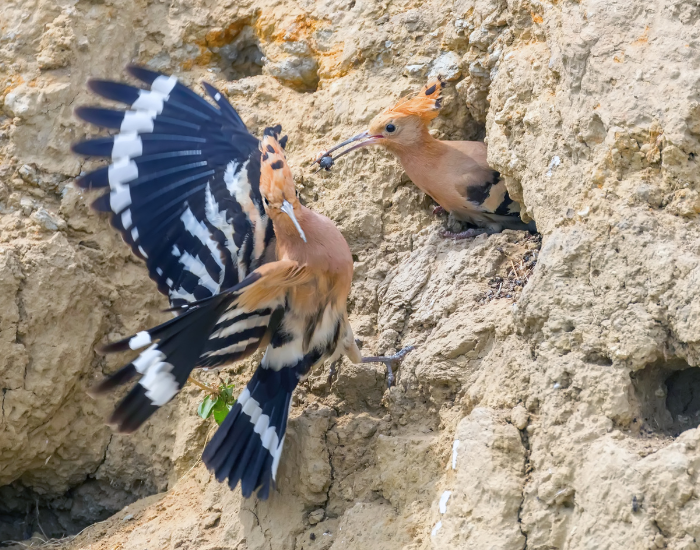
Breeding female hoopoes and their chicks hatch into a world of chemical warfare. The birds have a specialized uropygial gland (the preen gland) that produces a secretion with a violent nature. This substance smells precisely like rotting meat. When a predator, like a snake or a small carnivore, approaches the nest holes, the birds can actually squirt this foul-smelling liquid at the intruder.
But wait, it gets better. The nestlings are also known to perform “faecal-aim defense.” Chicks hatch with the ability to accurately shoot their droppings at an intruder’s face while emitting a loud, snake-like hissing sound. Therefore, it is one of the most effective “stay away” strategies I’ve ever seen in the field. This rotting meat odor combined with aggressive fecal targeting deters most predators effectively.
The symbiotic bacteria living in the uropygial gland produce this noxious secretion. However, this isn’t just about smell, the bacteria may also help deter parasites from the nest.
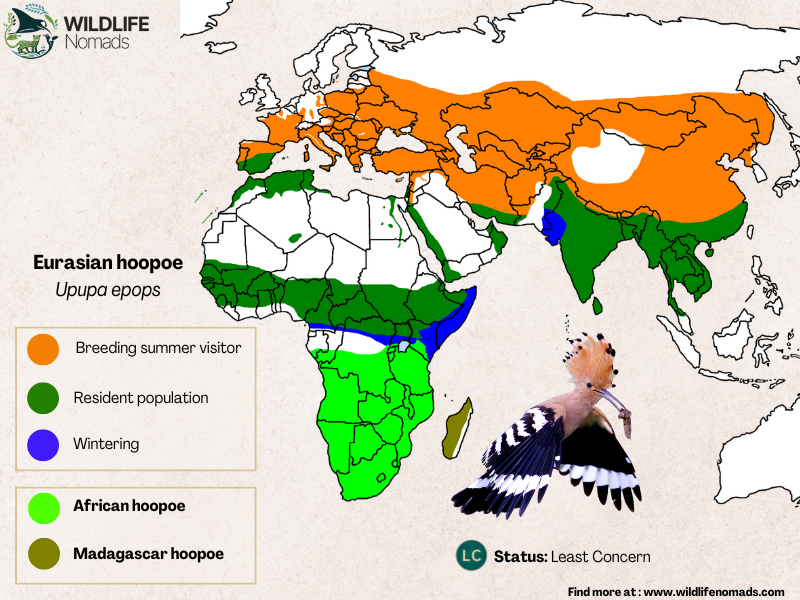
4. A Global Traveler: The Hoopoe Range Across Three Continents
These birds are serious travelers. They breed north in the northern hemisphere, then many species migrate across the Mediterranean and even the Sahara Desert to winter in the tropics of Africa. Light-level geolocators have tracked individual hoopoes year-round across the Sahara, confirming these long, staged crossings.
Interestingly, while the Eurasian hoopoe is the most widespread species, there are distinct species like the African hoopoe (Upupa africana) and the Madagascar hoopoe (Upupa marginata). The African hoopoe consists of African populations that don’t migrate like their Eurasian cousins. These central African populations remain year-round in suitable habitat, where local populations hold a fixed territory.
Are there hoopoes in America? No. Despite their wide range as widespread species, they haven’t naturally crossed the Atlantic, and the hoopoe is not an introduced species there either. Unlike more dense primary forest specialists, these birds seek open, sunlit ground, so any U.S. sighting would be a “vagrant” or an escapee from a private collection.
5. The Probing Hunter: Diet and Foraging Style
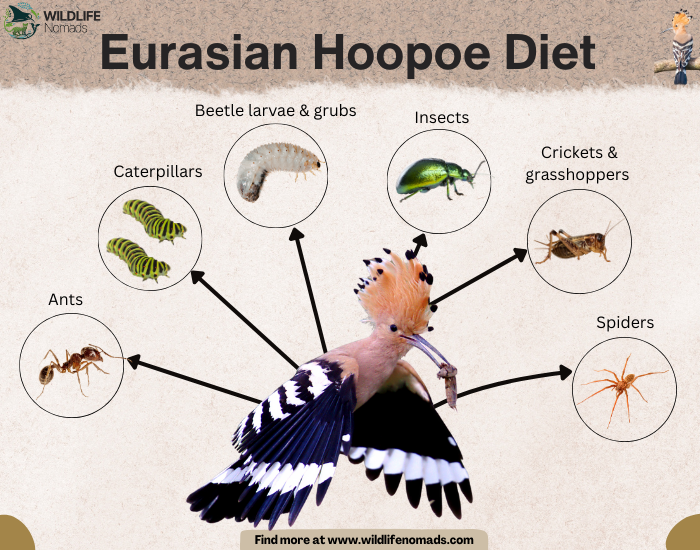
Watching a hoopoe bird forage is like watching a specialized surgical tool in action. They prefer relatively open ground with short vegetation, lightly vegetated ground, or even well-maintained lawns. The common hoopoe uses that long, decurved sharp beak to probe deep into the soil for creepy-crawlies.
As a solitary forager, each bird establishes its own feeding territory. Their preferred prey includes mole crickets, beetles and their larvae (insect larvae), ant lions, and occasionally small lizards or frogs. One of the coolest behaviors to watch is how they handle preferred prey size. If they catch a large beetle, they’ll beat it against a stone to remove the legs and strong and rounded wings before tossing it into the air and catching it in their throat.
The hoopoe Upupa epops has evolved this specialized foraging style over millions of years. Their bill acts like a pair of surgical tweezers, extracting underground insects with remarkable precision. They are particularly effective at finding numerous swarming insects in wooded steppes and open woodland areas.
6. Architecture of Convenience: Nesting Habits and Breeding Season
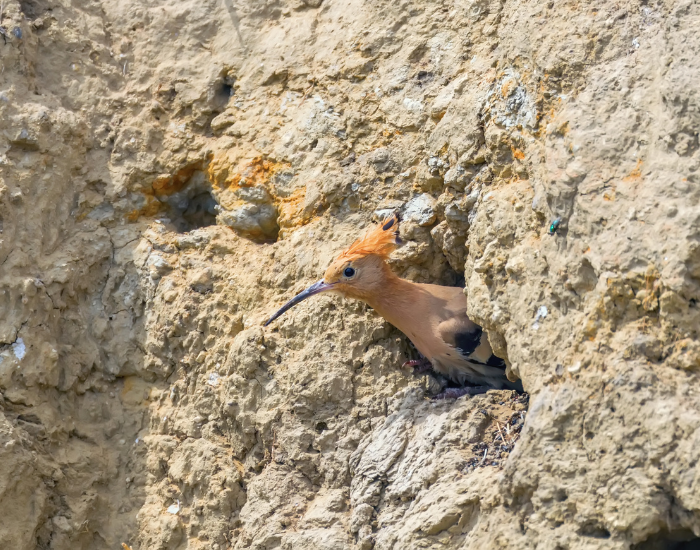
Hoopoes are “secondary hole-nesters.” This means they don’t build their own apartments from scratch. Instead, they look for existing nest holes in old trees, rock crevices, ancient stone walls, or the occasional abandoned building.
The breeding season typically begins in spring, when the common hoopoe returns to southern Europe and other breeding grounds. Males establish territories and male calls frequently with their characteristic “oop-oop-oop” sound to attract females. Male feeds the brooding female during incubation begins, which lasts about 15-18 days.
Chicks hatch helpless and require constant care. The female remains with the young while the male provides food. This period is when the increasingly dirty nest becomes most pungent, as both adults and chicks produce the defensive rotting meat secretion.
7. The Sound of the Name: Why “Hoopoe” Sounds Like That
If you say the name “Hoopoe” (pronounced HOO-poo), you are actually mimicking the bird’s call. The name is onomatopoeic across many species and languages.
The typical call is a soft, rhythmic “oop-oop-oop.” It’s a hauntingly beautiful sound that carries quite far across open fields. During my my trip in Egypt, I’d often hear the male calls frequently at dawn. They do it to advertise his ownership of the territory, and chases and fights between rival males are common and can be brutal. In addition, it’s a low-frequency sound, which is evolutionarily smart because low frequencies travel better through obstacles like trees and bushes without losing clarity.
The hoopoe appears most vocal during the breeding season when males are establishing territories. Later, a noted ornithologist I spoke with explained that the call can vary slightly between populations, with southern hemisphere birds having a slightly different cadence than northern hemisphere birds.
8. Those Zebra-Striped Wings: A Flight Pattern Like No Other
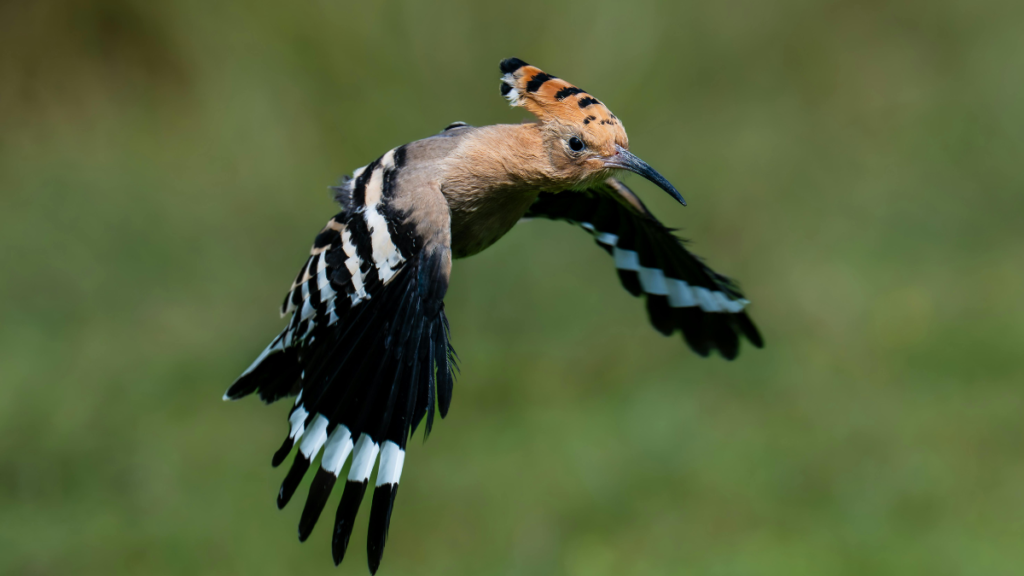
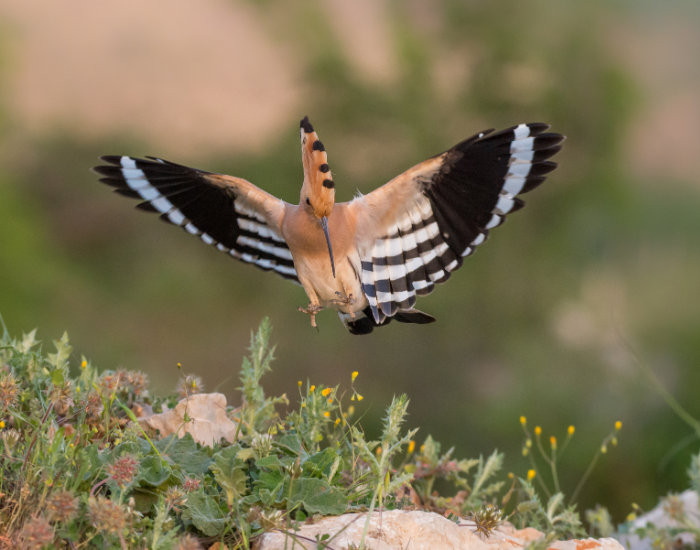
One of the most memorable sights is watching a common hoopoe in flight. Their zebra-striped wings create a distinctive black-and-white pattern that’s unmistakable. These strong and rounded wings aren’t just for show, they serve as a visual signal that helps hoopoes recognize each other from a distance.
The flight pattern is undulating, almost butterfly-like. They fly in a series of dips and rises, which makes them harder for aerial predators to catch. Therefore, those zebra-striped wings combined with the erratic flight pattern create an effective survival strategy. You’ll spot these distinctive wings most easily when the bird takes off from open ground or lightly vegetated areas.
Interestingly, the rounded wings provide excellent maneuverability. This allows the hoopoe to navigate through wooded steppes with remarkable agility. However, they are not built for sustained long-distance flight, which is why their migration occurs in stages with frequent rest stops.
9. Why the Hoopoe is the National Bird of Israel
In 2008, to celebrate the country’s 60th anniversary, the hoopoe was elected the national bird of Israel. Why? It beat out the warbler and the honey sucker because of its distinctiveness and its mention in ancient texts.
The hoopoe appears in the Bible and the Quran, often depicted as a messenger or a wise companion to King Solomon. The bird is sometimes portrayed as an “evil bird” in folklore due to its association with death and rotting smells. However, it’s also revered as a symbol of wisdom across the Middle East and Mediterranean regions.
Consequently, the hoopoe Upupa epops holds special cultural significance. In some traditions, it’s believed to have medicinal properties or to possess knowledge of hidden treasures.
10. Conservation Status and Modern Threats
Currently, the common hoopoe is listed as “Least Concern” by the IUCN. The current global population is estimated at 5,000,000–10,000,000 individuals, but it is declining, at least locally. Although not a globally threatened species, the Eurasian Hoopoe has been in continuous decline since 2008 because of habitat loss and over-hunting.
In my years of studying biodiversity, I’ve seen how quickly “common” birds can disappear. The intensification of agriculture, specifically the use of pesticides that kill off their primary food source (large insects and insect larvae), is a major threat. Climate change is also shifting their migration patterns, forcing them to arrive at breeding grounds earlier than the numerous swarming insects they rely on.
The picture is uneven across Europe. The hoopoe is a species considered extinct in Sweden, while Poland lists it as needing active conservation. In Switzerland, the species has recovered and stabilized, but remains vulnerable. In southern Europe and north Africa, habitat changes continue to impact local populations.
Practical fixes work. The most effective measures are leaving open swathes within and adjacent to forests, preserving snags (standing dead trees), providing nestboxes, and relying less on chemical insecticides. The Eurasian hoopoe needs natural habitats including open woodlands and traditional agricultural landscapes. As these habitats disappear, so do the hoopoes.
Your Hoopoe Questions Answered (FAQ)
Globally, the Eurasian hoopoe is not rare, with a population of 5–10 million widespread across three continents. However, it is highly seasonal. In southern England, only about 100 birds appear during spring migration, making it a rare visitor there. In southern Europe and north Africa, the common hoopoe is much more common during the breeding season.
Look for the Eurasian hoopoe in relatively open ground with scattered trees. Sunny hillsides, vineyards, olive groves, and old orchards across southern Europe and north Africa are your best bets. The European range extends through Spain, France, Italy, and into central and northern Europe during summer.
No, the hoopoe is not a woodpecker. The hoopoe belongs to the family Upupidae and the order Bucerotiformes (with hornbills and woodhoopoes), not Picidae. The hoopoe bird is the only extant species in its unique family. It does, however, share the undulating flight pattern common to some woodpecker species.
The African hoopoe and Eurasian hoopoe share the characteristic bird’s crest, zebra-striped wings, and probing bill. However, the African hoopoe consists of African populations that are slightly smaller and don’t migrate like the Eurasian hoopoe does. Both species use the same defense mechanisms involving rotting meat secretions and occupy similar ecological niches.
Yes. Natural predators of the hoopoe include snakes, small carnivores, and birds of prey. However, their rotting meat defense and the ability of chicks to shoot feces and hiss like a snake deters many predators. Adult feathers can also carry the scent, making them less appealing to some predators even outside the nest.
A Last Look at the Eurasian Hoopoe
Whether it’s their “stinky” survival tactics involving symbiotic bacteria and rotting meat, their world-class migration skills across three continents, or their status as accepted separate species from their African cousins, these birds are a testament to nature’s incredible adaptability. The hoopoe Upupa epops has survived for millions of years by being unique, specialized, and utterly unforgettable.
Next time you’re out in southern Europe, north Africa, or south east Asia, keep your eyes peeled for a flash of zebra-striped wings and a cinnamon bird’s crest. Watch for their distinctive undulating flight pattern over olive groves or wooded steppes.
References:
Bächler, E., Hahn, S., Schaub, M., Arlettaz, R., Jenni, L., Fox, J. W., Afanasyev, V., & Liechti, F. (2010). Year-round tracking of small trans-Saharan migrants using light-level geolocators. PLoS ONE, 5(3), e9566. https://doi.org/10.1371/journal.pone.0009566
Fournier, J., & Arlettaz, R. (2001). Food provision to nestlings in the Hoopoe Upupa epops: Implications for the conservation of a small endangered population in the Swiss Alps. Ibis, 143(1), 2–10. https://doi.org/10.1111/j.1474-919X.2001.tb04163.x
Martín-Vivaldi, M., Peña, A., Peralta-Sánchez, J. M., Sánchez, L., Ananou, S., Ruiz-Rodríguez, M., & Soler, J. J. (2010). Antimicrobial chemicals in hoopoe preen secretions are produced by symbiotic bacteria. Proceedings of the Royal Society B: Biological Sciences, 277(1678), 123–130. https://doi.org/10.1098/rspb.2009.1377
Martín-Vivaldi, M., Soler, J. J., Peralta-Sánchez, J. M., Arco, L., Martín-Platero, A. M., Martínez-Bueno, M., Ruiz-Rodríguez, M., & Valdivia, E. (2014). Special structures of hoopoe eggshells enhance the adhesion of symbiont-carrying uropygial secretion that increase hatching success. Journal of Animal Ecology, 83(6), 1289–1301. https://doi.org/10.1111/1365-2656.12243
Montemaggiori, A., et al. (2023). Predation attempts on Hoopoe Upupa epops nests in a rural Mediterranean area of central Italy. Rivista Italiana di Ornitologia, 93(1). https://doi.org/10.4081/rio.2023.658
Soler, J. J., Barón, M. D., Martínez-Renau, E., Zhang, L., Liang, W., et al. (2024). Nesting hoopoes cultivate in their uropygial gland the microbial symbionts with the highest antimicrobial capacity. Scientific Reports, 14, 30797. https://doi.org/10.1038/s41598-024-81062-1