The animals of Madagascar are some of nature’s most bizarre and weird creatures (think of the lemur or the tomato frog!). Among them, the bug known by the common name giraffe weevil (Trachelophorus giraffa) stands out as one of evolution’s most peculiar experiments. This small endemic beetle showcases an extraordinarily elongated neck that seems almost impossible.
During my undergraduate insect science studies, I encountered this fascinating species for the first time, not in real life, but in a book. The male giraffe weevil immediately captured my attention with its distinctive appearance and unique behaviors.
Let’s explore 12 remarkable facts about these creatures that make them one of nature’s most intriguing insects.
1. Male Giraffe Weevils Possess Extraordinarily Elongated Necks
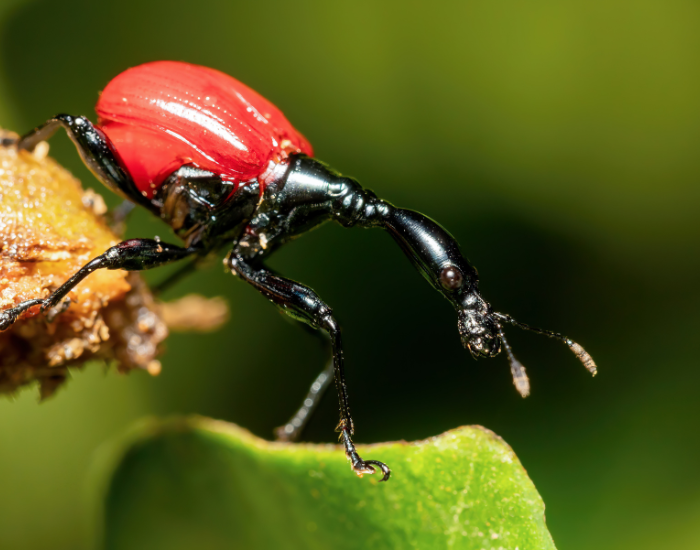
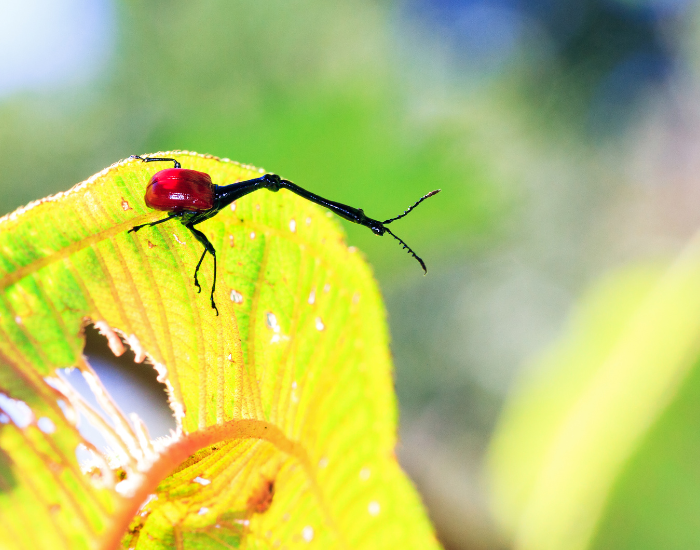
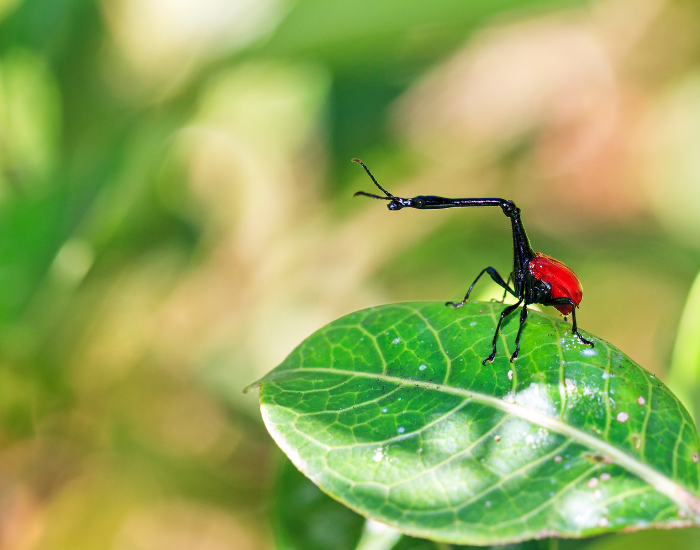
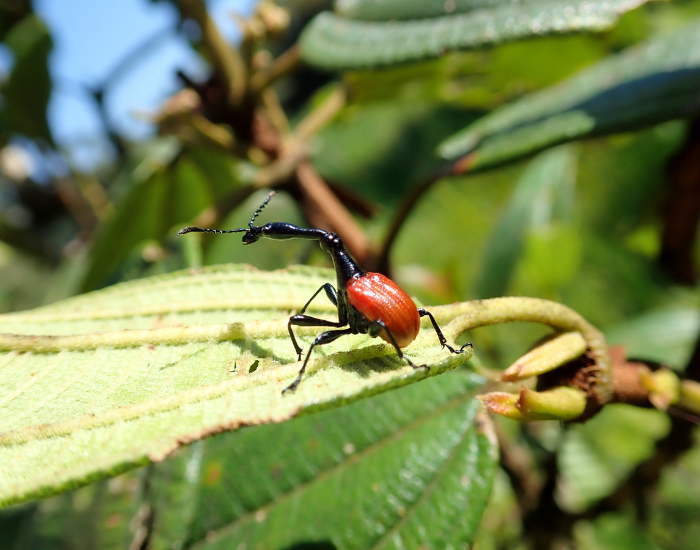
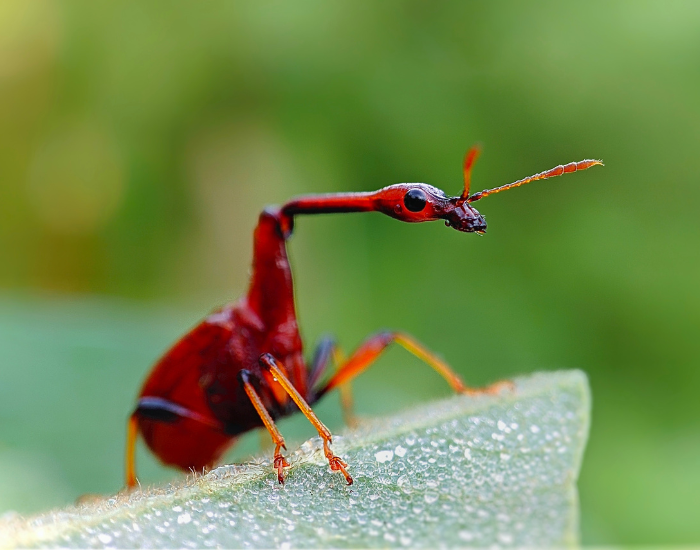
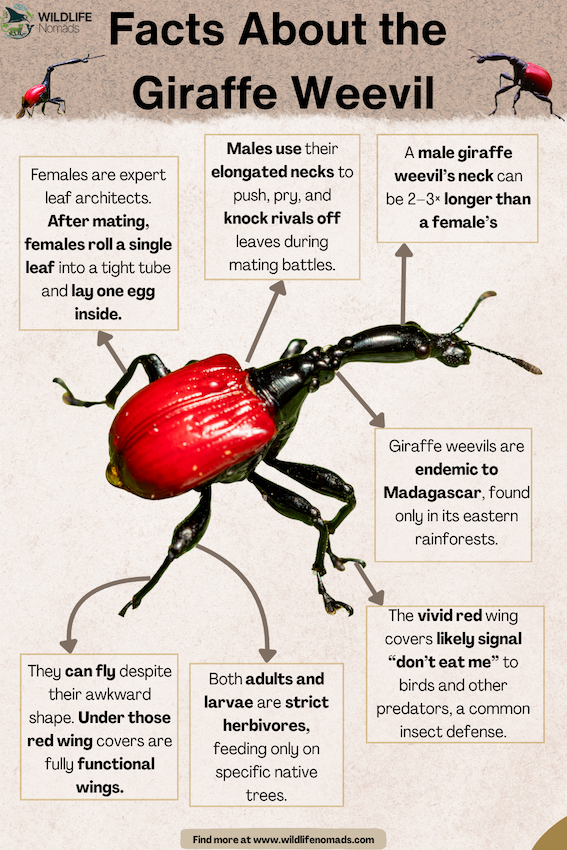
The giraffe beetle earns its common name from the male’s incredibly long neck. Males have necks two to three times longer than females. Females lack the elongated neck seen in males. This represents a classic example of sexual dimorphism driven by sexual selection.
The elongated neck serves multiple functions beyond mere appearance. Males use this extended appendage for fighting rivals and attracting mates. The male giraffe weevil’s neck is composed of a higher proportion of cuticle compared to living tissue, which reduces energy costs. The total body length of males reaches approximately 2.5 centimeters, with the neck comprising nearly half that measurement.
This exaggerated trait makes the species instantly recognizable among beetle species worldwide.
2. Neck Wrestling Determines Mating Success
Male giraffe weevils engage in ritualized combat when competing for females, which is a key aspect of their reproductive habits. They use their long necks as levers to push and bash rivals off leaves. In addition to neck wrestling, male giraffe weevils perform elaborate displays involving the swaying of their necks to attract a mating partner. The female giraffe weevil evaluates the male’s display and, if she approves, allows him to engage in courtship. This behavior showcases unique mating strategies rarely seen in other beetle species.
The winner gains access to female counterparts, while losers tumble to the forest floor below. Therefore, neck length directly correlates with reproductive success among males in this species. These elaborate displays demonstrate nature’s creativity in solving reproductive challenges.
3. Female Giraffe Weevils Build Elaborate Leaf Nests
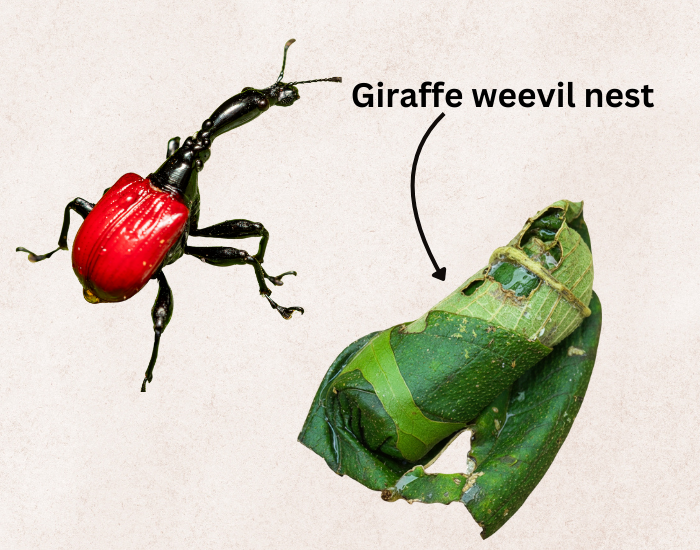
Females demonstrate incredible nest-building abilities. After mating, the female giraffe weevil rolls up a leaf and lays a single egg inside it. Females select leaves from specific tree species, primarily using Dichaetanthera arborea and Dichaetanthera cordifolia trees in Madagascar forest habitats.
The female uses her legs and shorter neck to roll each leaf into a tight tube. She then lays a single egg inside this protective leaf tube. This process takes approximately half an hour to complete. The rolled leaf tubes eventually fall to the forest floor, where the larvae begin their life.
The rolled leaf creates a fortified nursery for developing larvae. The larva feeds on the leaf tissue during its first days of life.
4. They Live Exclusively in Madagascar Forests
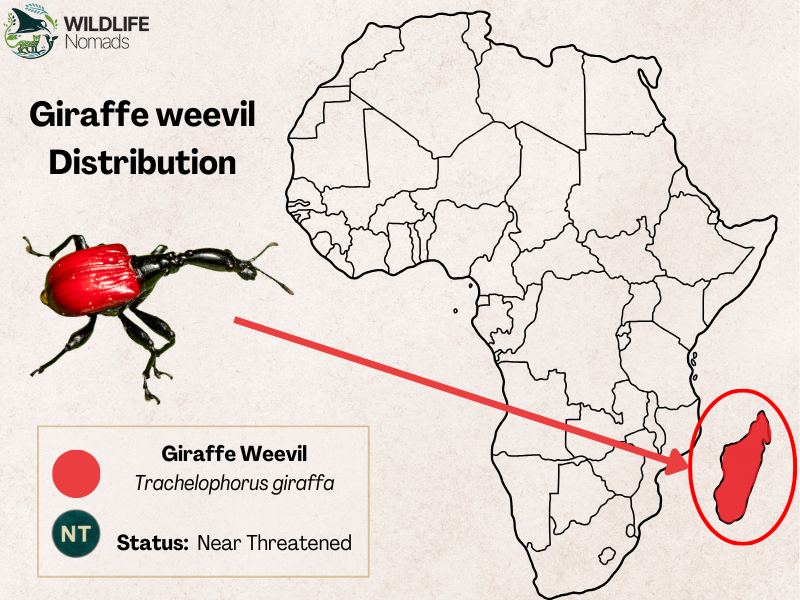
Giraffe weevils represents a small endemic species found only in Madagascar. The lifestyle giraffe weevils exhibit is highly specialized, as they are exclusively present in the eastern rainforests of Madagascar. They inhabit Dichaetanthera trees, specifically Dichaetanthera cordifolia and Dichaetanthera arborea, and depend entirely on these native tree species for survival. The lifestyle giraffe weevils spend the entirety of their lives on trees in the Madagascar forests, rarely if ever leaving their arboreal habitat. Such their diet consists mainly of the leaves of these trees, highlighting their ecological niche and adaptation to this unique environment.
Madagascar separated from mainland Africa approximately 88 million years ago. Therefore, its wildlife evolved independently over millions of years. This isolation created numerous unique species, including the giraffe beetle.
You can find these weevils in national parks like Andasibe-Mantadia, Marojejy, and Ranomafana. The best time to spot them is during spring months when adults are most active. If you wanna dive mor einto the Animals of Africa: have a look at our Ebook: the Ecosystem Explorer.
5. Two Different “Giraffe Weevils” Exist Worldwide
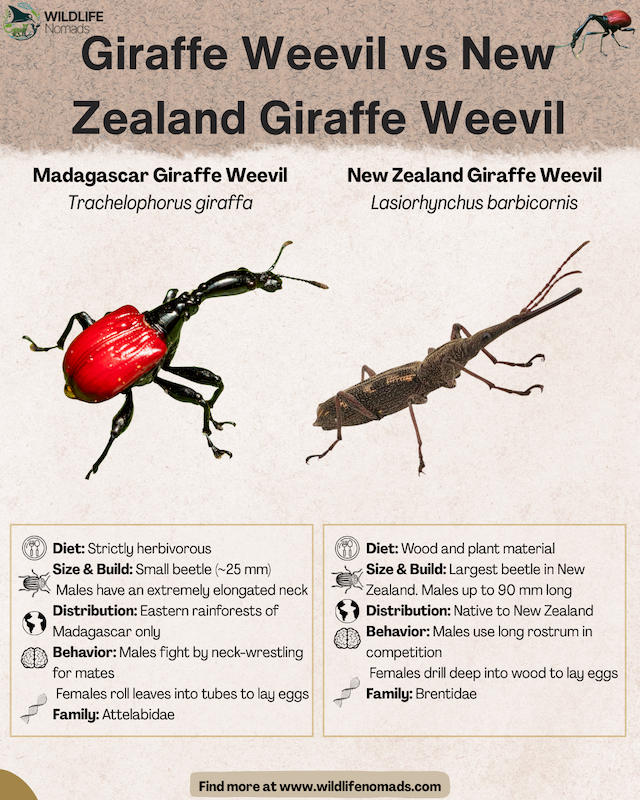
Common names often create confusion in insect science. While the Madagascar one Trachelophorus giraffa is the most famous, another “giraffe weevil” exists. The New Zealand giraffe weevil (Lasiorhynchus barbicornis) shares the nickname but little else.
Despite the shared name, these two are barely related. The New Zealand long necked weevil belongs to the Brentidae family (straight-snouted beetles). Meanwhile, the Madagascar version belongs to the Attelabidae (leaf-rollers).
The Madagascan giraffe beetle displays vibrant red elytra and a sleek black body. In contrast, the New Zealand species looks like weathered bark with legs.
The New Zealand giraffe weevil is that country’s longest beetle. Males can reach up to 90mm in total body length. However, unlike the leaf-rolling female giraffe weevil in Madagascar, New Zealand females drill deep into wood to lay eggs.
This represents convergent evolution at its finest. Two completely different lineages discovered that having an elongated head provides survival advantages.
6. Their Bright Red Covering Serves Multiple Purposes
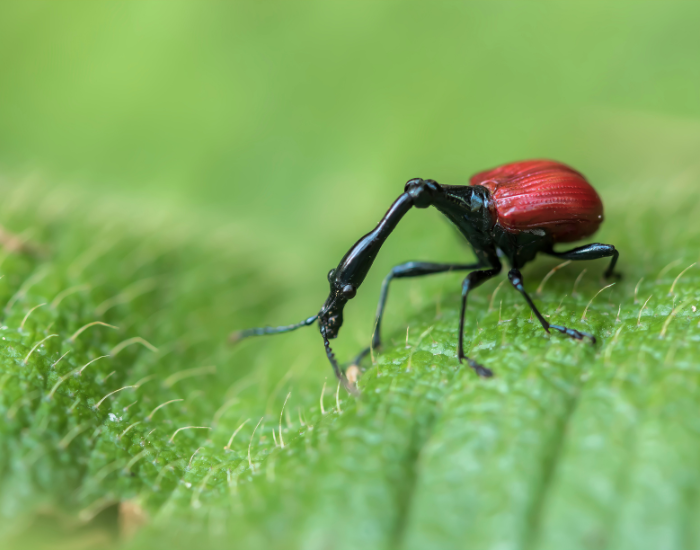
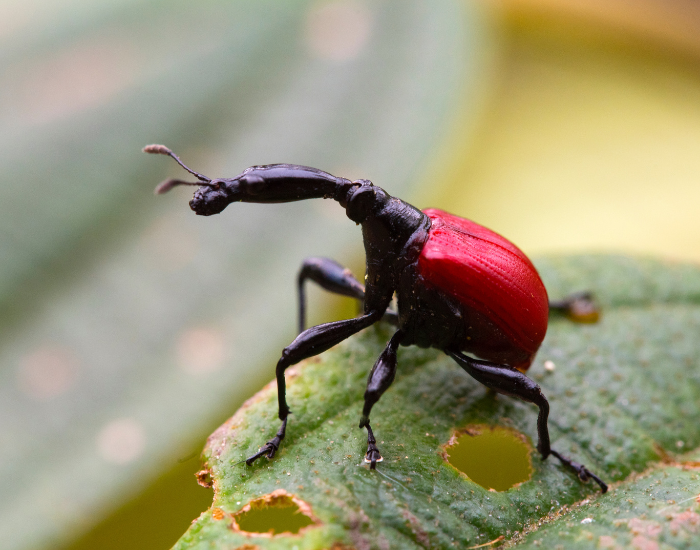
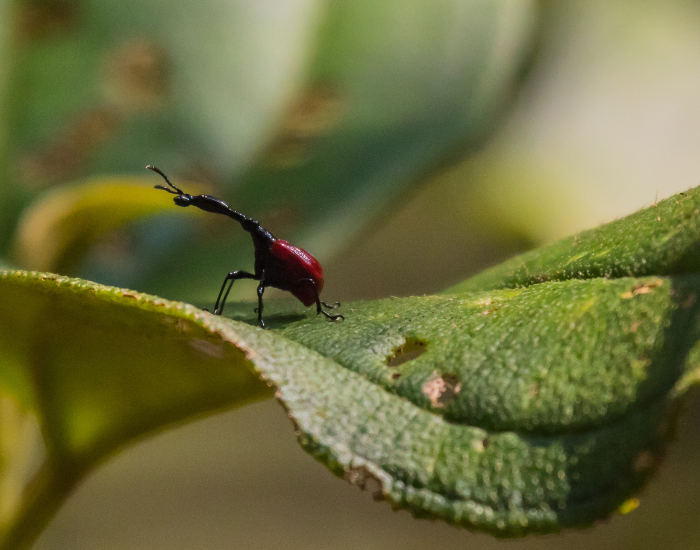
The giraffe weevil’s vivid appearance is impossible to miss. Its jet-black body contrasts sharply with brilliant crimson-red elytra (wing covers), a color combination that stands out dramatically against Madagascar’s green forest canopy.
While this striking coloration may help with species recognition, especially during mating and territorial interactions, there is likely more going on. In insects, bright red, orange, or yellow coloring is commonly associated with aposematism, a visual warning to predators that an animal may be toxic, distasteful, or otherwise unprofitable to eat.
Although no predator has been documented as specializing in giraffe weevils, generalist predators such as birds and small mammals (including lemurs) pose potential threats. The beetle’s bold coloration may help deter attacks by signaling unpalatability. Some researchers suggest giraffe weevils may sequester defensive chemicals from their host plants, particularly Dichaetanthera species, reinforcing this warning signal.
7. Giraffe Weevils Can Fly Despite Awkward Proportions
Beneath their red elytra, giraffe weevils possess functional wings. While their flight appears clumsy compared to other insects, they successfully navigate between tree branches. This mobility proves essential for their survival.
Males use flight to search for potential mates across the canopy. Females fly to locate suitable host plants for laying eggs. When disturbed, they extend their transparent wings and fly away like slow helicopters.
8. They Follow a Strict Herbivorous Diet
Giraffe weevils are entirely herbivorous, with both adults and larvae feeding exclusively on plant material. Adults feed on the fresh leaves of their host trees, particularly species in the Dichaetanthera genus, which they live on throughout their lives.
After mating, the female rolls a leaf into a tight tube and lays a single egg inside. When the larva hatches, it feeds on the decaying leaf tissue within this rolled leaf, using it as both food and shelter until pupation. The larva never leaves the leaf nest during development.
They are not scavengers, at no stage do giraffe weevils consume insects, carrion, or other animal matter. Their diet remains strictly plant-based from egg to adult.
9. Their Life Cycle Remains Partially Unknown
Scientists continue researching the complete life cycle of these creatures, and recent studies have shed light on previously unknown aspects of their development and reproductive habits. Most evidence suggests adult giraffe weevils live only a few weeks to months. They focus entirely on reproduction during this brief period.
However, larvae spend considerably longer inside their leaf nests. They gradually consume the decaying tissue before pupating. This extended larval period represents the majority of their total lifespan.
The lifecycle giraffe weevils spend in different stages mirrors the seasonal rhythms of Madagascar’s tropical forests. Each developmental stage is intricately adapted to optimize survival.
10. Males Reach Impressive Sizes for Weevils
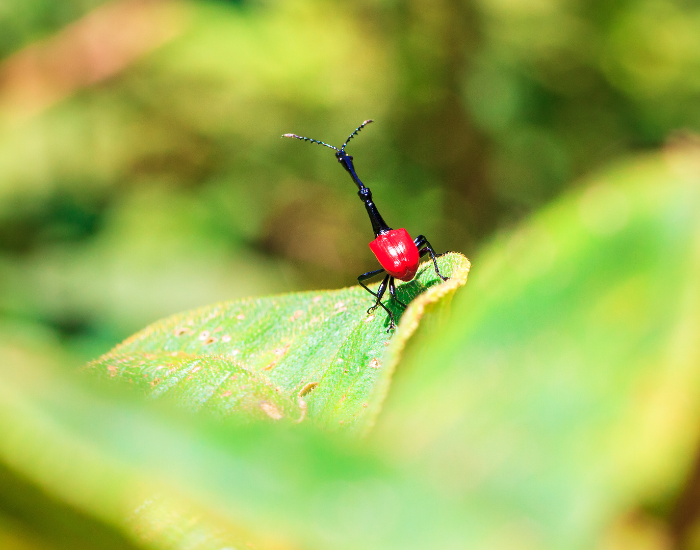
Male giraffe beetles can reach total body lengths of approximately 2.5 centimeters (about one inch). This measurement includes their characteristically long neck. The neck accounts for roughly half their overall length.
For comparison, female giraffe weevils measure noticeably smaller due to shorter necks. This size difference represents one of the most obvious examples of sexual dimorphism in beetle species.
Among the 60,000 weevil species globally, the giraffe weevil stands out as one of the longest members of the Attelabidae family.
11. Madagascar Communities Value These Beetles Culturally
Many cultures use beetles as forms of art and expression. In Madagascar communities, locals often sell giraffe weevils as decorative items or jewelry. This practice demonstrates the cultural significance of these unique creatures.
However, this raises conservation concerns. While the species appears relatively abundant within protected areas, excessive collection could threaten populations over time.
12. Conservation Status: Near Threatened
Despite its popularity online, the giraffe weevil is not immune to real-world pressures. According to the IUCN Red List (2021), Trachelophorus giraffa is officially classified as Near Threatened, meaning it is close to qualifying for a threatened category. This assessment reflects a continuing decline in the quality of its forest habitat rather than an immediate population crash.
The giraffe weevil is highly dependent on Madagascar’s eastern rainforests and specific host trees, making it especially vulnerable to deforestation, slash-and-burn agriculture, and ongoing habitat fragmentation. While the species still occurs across several protected areas, its area of occupancy is relatively small, and suitable habitat continues to shrink.
For now, populations appear stable within national parks where collection is strictly prohibited. However, long-term survival depends on sustained forest protection and continued research. The giraffe weevil’s status is a reminder that even famous and seemingly abundant species can quietly edge toward risk when their ecosystems are under pressure.
FAQs About Giraffe Weevils
Giraffe beetles live exclusively in the tropical eastern rainforests of Madagascar. They depend on specific tree species found only in these forest ecosystems. The best locations include Andasibe-Mantadia National Park, Marojejy National Park, and Ranomafana National Park.
While not necessarily rare within their specific Madagascar forest habitat, they’re considered vulnerable. They exist nowhere else on Earth, making them a small endemic species. Habitat destruction poses the primary threat to their populations.
The elongated necks result from sexual selection over millions of years. Males use these long appendages for combat with rivals and for attracting mates. Females possess shorter, more functional necks suited for building nests and laying eggs.
No. These beetles don’t bite, sting, or transmit diseases. They’re harmless herbivores that feed only on specific plant species in Madagascar. Humans pose far more threat to them than they do to us.
Adults typically live only a few weeks to months. Their primary goal involves mating and ensuring the next generation survives inside protective leaf nests. Larvae spend much longer developing—often many months—before emerging as adults.
Why the Giraffe Weevil Matters
Studying the giraffe weevil reveals fundamental principles about evolution, sexual selection, and ecosystem relationships. This small endemic species demonstrates how isolated environments like Madagascar produce extraordinary adaptations.
The lifecycle giraffe weevils exhibit shows nature’s remarkable creativity. From elaborate displays to intricate nest-building, every aspect of their behavior fascinates researchers.
As we face increasing habitat loss worldwide, protecting unique species like Trachelophorus giraffa becomes more critical. These beetles represent millions of years of evolutionary innovation. Without conservation action, they could vanish within decades.
The species serves as an ambassador for Madagascar’s incredible biodiversity. By protecting giraffe weevils and their forest habitats, we also protect countless other endemic species.
The next time you consider the diversity of life on Earth, remember Madagascar’s forests. There, tiny beetles with crane-like necks continue their ancient rituals. Nature’s creativity truly knows no bounds.
Plan Your Madagascar Adventure!
Here is a list of 3 safari tours where you can see not only giraffe weevils, but so many other creatures of Madagascar. As a biologist, I only recommend tours that follow strict ethical guidelines to ensure we don’t disturb wildlife. These are the three tours/ partners I trust most based on their conservation records:
This blog is reader-supported. When you buy experiences through links listed on this site, we may earn an affiliate commission.