When you see a gray heron standing quietly at the edge of shallow water, it’s easy to feel transported back millions of years, like looking at a dinosaur. There is something ancient about their silhouette, the hunched shoulders, the dagger-like bill, and those piercing eyes that don’t miss a single ripple.
Often referred to as the grey heron (depending on which side of the pond you’re on), Ardea cinerea is more than just a garden pond visitor or a “big bird” in the reeds. These are highly sophisticated predators and masters of patience. In this guide, we’re diving into the secret life of this widely distributed sentinel, separating fact from fiction and exploring why they are one of the most successful bird species on the planet. If you want to know more types of herons, have a look at our previous article!
1. The Master of “Standing Quietly” (The Ultimate Stakeout)
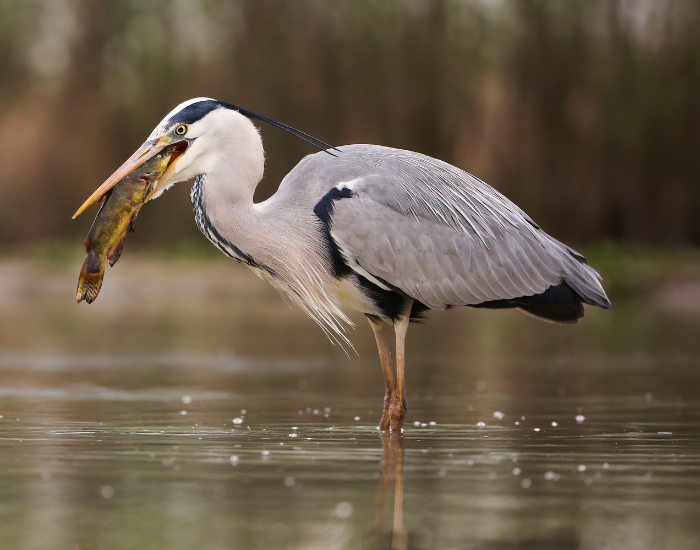
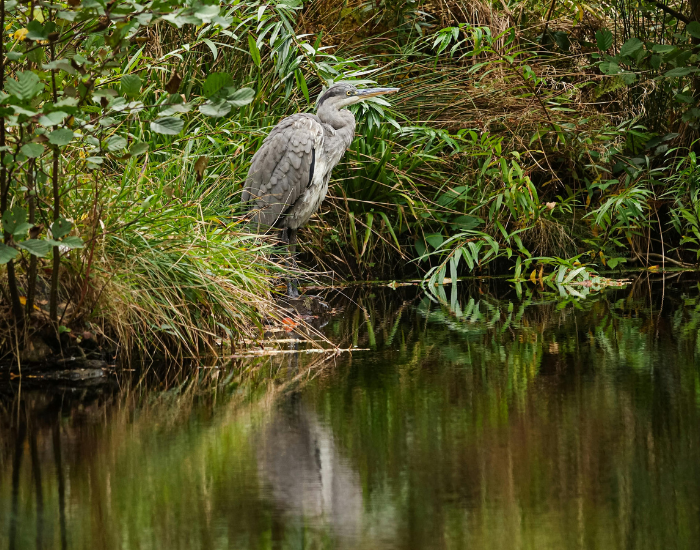
The gray heron is the undisputed king of the waiting game. Their primary foraging behaviour involves standing quietly in shallow water for hours on end. This is a high-stakes hunting strategy.
By remaining perfectly still, they become part of the landscape. Fish, amphibians, and small mammals lose their guard. This “wait and strike” method is incredibly energy-efficient.
When prey items swim within range, the heron’s neck, usually held in an S-shape, uncoils like a high-tension spring. The strike is so fast it’s often a blur to the human eye. This foraging behaviour makes them exceptional hunters in deeper water and tidal flats alike.
2. They Are Often Mistaken for the Great Blue Heron
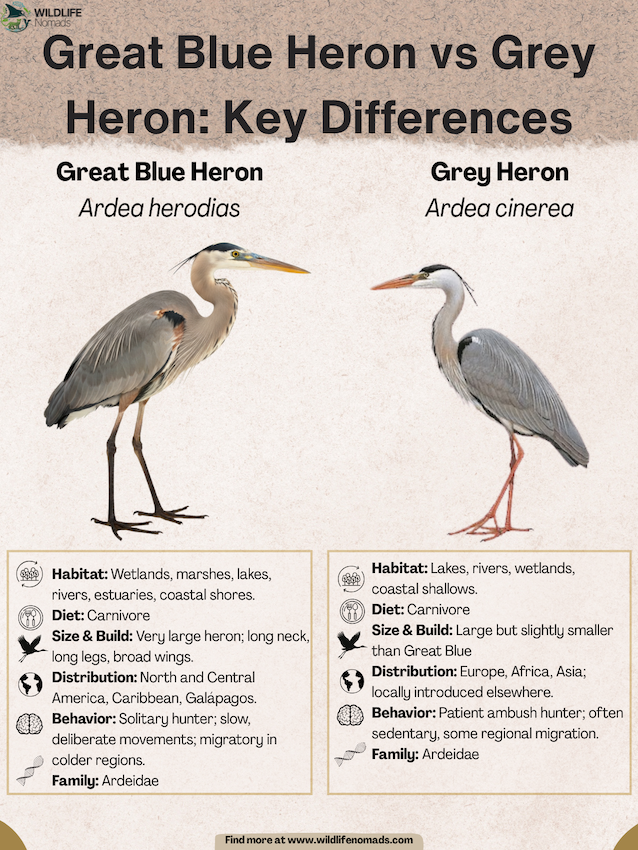
A common question among birdwatchers in the Americas is: Are there grey herons in the US? The short answer is: rarely. The gray heron is the Old World counterpart to North America’s great blue heron (Ardea alba).
While they look incredibly similar, the gray heron is slightly smaller. The great blue heron (Ardea alba) features warm rufous-brown tones on the neck and legs that the grey heron lacks. However, both species share the characteristic long legs and solitary birds hunting style. The gray heron is often confused with the great blue heron (Ardea alba), cocoi heron, purple heron, great egret, and western reef-heron.
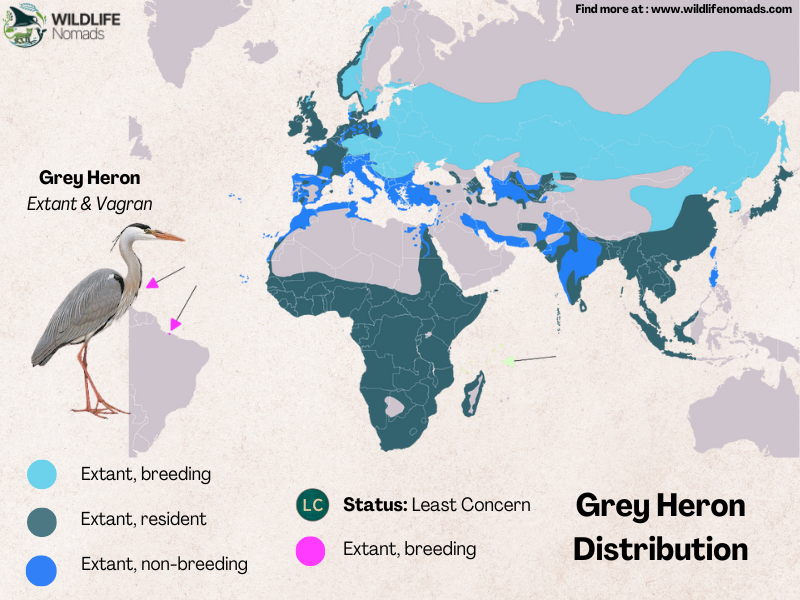
The gray heron range covers Europe, Southeast Asia, and sub-Saharan Africa. If you see a massive heron in the United States, you’re almost certainly looking at a great blue heron. However, occasional vagrants have been recorded in places like the Aleutian Islands and the Caribbean.
3. A Distinctive “Suit of Armor”
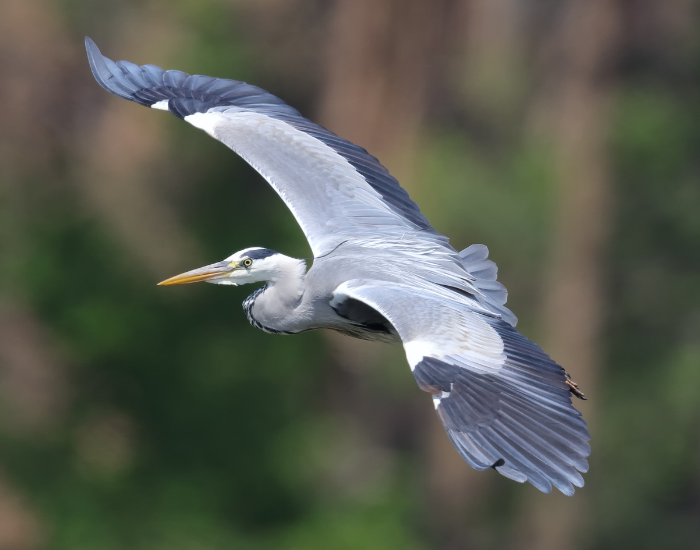
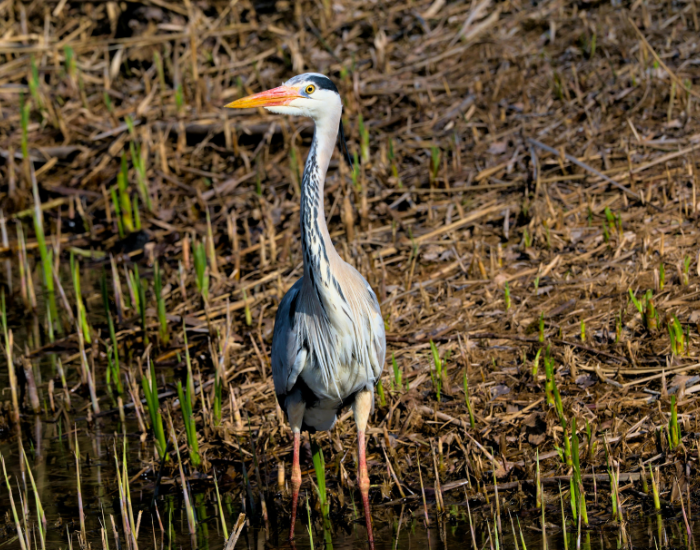
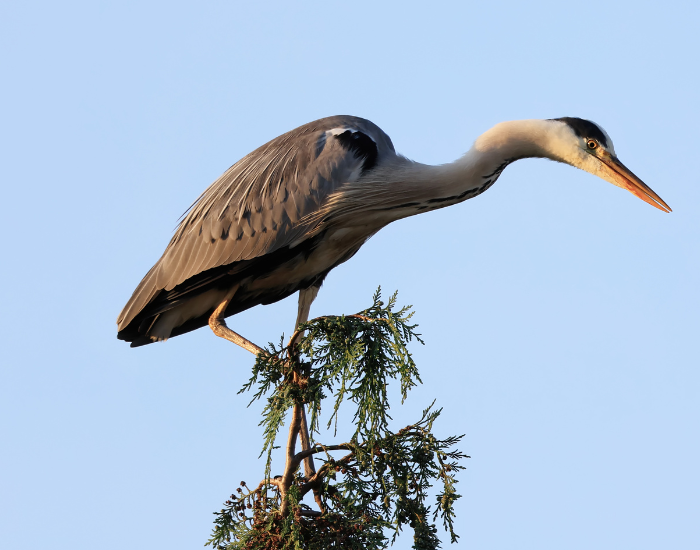
Identifying a grey heron is all about the details. Adult birds sport a white crown with a broad black stripe extending from the eye back to long, elegant black plumes. They also feature a prominent black shoulder patch that stands out against their light gray wing coverts.
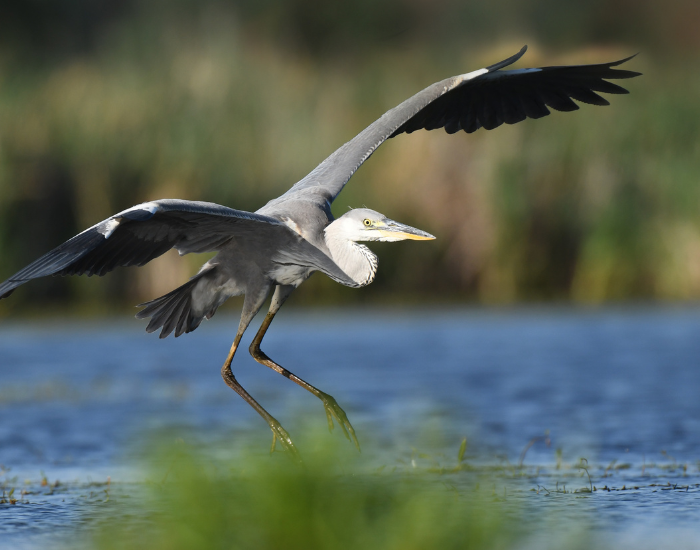
In flight, they are unmistakable. Unlike cranes or storks that fly with their necks outstretched, the gray heron flies with its neck pulled back in a tight “S.” This retracted posture, combined with slow, rhythmic wingbeats, gives them a heavy, prehistoric appearance in the sky.
The paler neck of juvenile birds contrasts with the bold black eyebrows of adults. Male and female birds look nearly identical, though males are slightly larger during the breeding season.
4. They Aren’t Just Fish Eaters
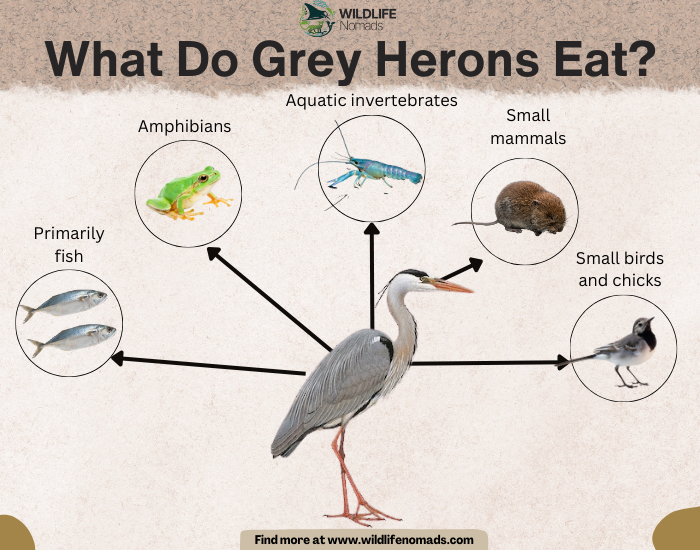
While fish make up the bulk of their diet, the gray heron is a surprisingly versatile carnivore. They are frequently spotted in wet fields or at the edge of rivers hunting for diverse prey items like voles, frogs, and even other birds.
There are documented cases of herons taking down adult water rails or ducklings. They have even been known to visit gardens to snatch goldfish or small rabbits. In addition, they hunt small mammals with remarkable efficiency.
This adaptability is exactly why they thrive in varied wetland habitats. From small ponds to lakes, rivers, and coastal areas, these birds exploit whatever food sources are available. Therefore, their conservation status remains stable across most of their range.
5. High-Rise Living: They Nest in Trees
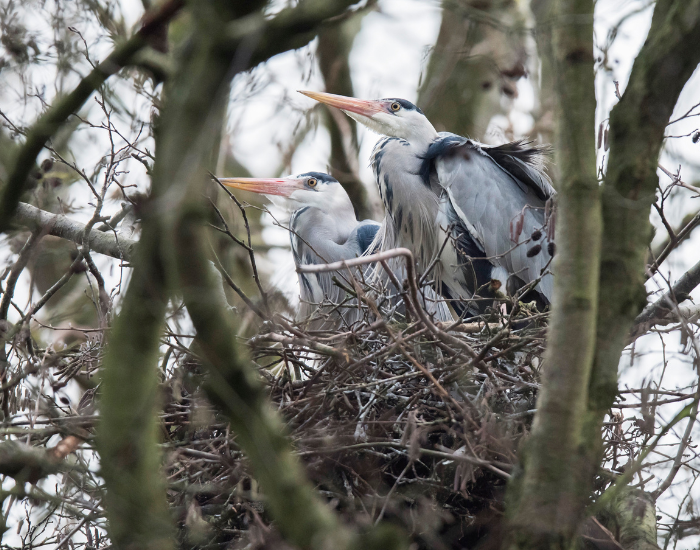
Despite spending their days in shallow water, grey heron birds prefer a room with a view for their nurseries. They nest colonially in groups called heronries. These colonies are often located in the tops of tall trees, sometimes quite far from their feeding grounds.
A grey heron nest is a bulky platform of sticks that can be used year after year. During the breeding season, these nesting sites become incredibly noisy, filled with prehistoric-squawking and rattling calls.
It’s a bustling community where adults fiercely protect the next generation from ground predators. The breeding grounds typically host multiple pairs, with birds returning to the same nesting site annually. In fact, some heronries in Europe have been active for over a century.
6. Identifying the “Teenagers” (Grey Heron Juvenile)
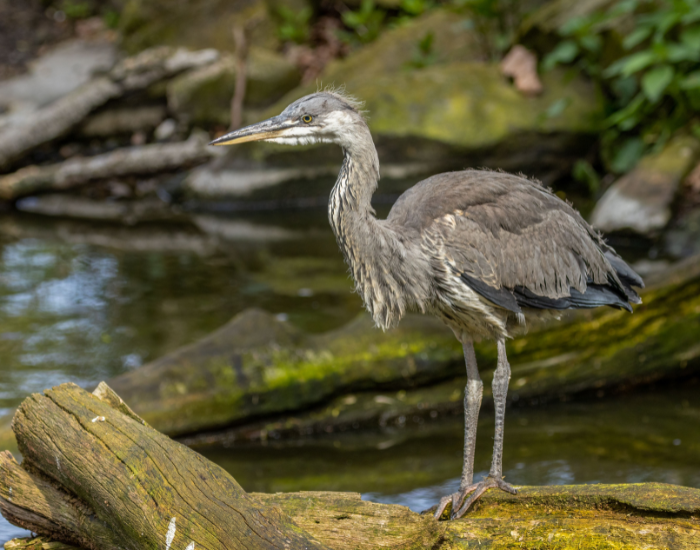
Spotting a grey heron juvenile requires a keen eye. Unlike the crisp, high-contrast markings of the adult, immature birds are much duller. They lack the white crown and the bold black eyebrows of their parents.
Instead, a first winter bird will have a paler neck, a more uniform light gray head, and lacks the long chest plumes. Juvenile birds appear more uniformly gray-brown with a darker beak.
If you see a bird that looks a bit “messy” and lacks the sharp black-and-white head pattern, you’re likely looking at a youngster learning the ropes. These immature birds often practice their hunting skills in wet fields before mastering the art of standing quietly in deeper water.
7. They Are Masters of the Tide
While we often think of them in small ponds, the gray heron is equally at home in tidal flats and other wetlands. They are highly tuned to the rhythm of the ocean. As the tide goes out, herons move onto the exposed mud to hunt for creatures trapped in tide pools. Gray herons are often seen alone or in small groups in these habitats.
This ability to exploit both freshwater and saltwater environments, as well as other wetlands and even urban environments where they are known to forage and scavenge for food, is a testament to their resilience. Whether it’s Southern Europe or the coast of Eastern Asia, as long as there is water and a steady supply of fish, the heron will find a way to thrive. The gray heron is also known to be vagrant in the Caribbean, Bermuda, Iceland, Greenland, and Newfoundland.
The habitat they occupy ranges from lakes to rivers, wet fields to breeding grounds near the coast, and other wetlands. Moreover, they adapt their foraging behaviour based on tidal patterns, making them one of the most versatile wading birds. The gray heron is resident in much of its range, but some populations from the more northern parts migrate southwards in autumn.
8. They Have a “Powder Puff” for Cleaning
Herons have a unique way of staying clean despite their muddy lifestyle. They possess “powder down” feathers, specialized feathers that never molt but instead crumble into a fine, talc-like powder.
The heron uses its middle toe (which has a serrated, comb-like edge) to apply this powder to its feathers. This absorbs fish slime and oils, which it then scrapes off. This keeps their grey plumage waterproof and pristine.
For example, after catching prey items in shallow water, a heron will preen extensively using this natural cleaning method. It’s one of the many fascinating adaptations that help these birds thrive in wetland habitats.
9. A Global Citizen with Many Cousins
The Gray Heron (Ardea cinerea) is a large, widespread wading bird found across Europe, Asia, and Africa. The Ardea cinerea is a truly international species. From the nominate subspecies found in Europe to variations in the northern part of their range, they are widely distributed across three continents. Rare vagrant sightings of gray herons have also been documented in South America, highlighting their occasional presence outside their primary Palearctic habitat.
They are closely related to several other large waders. In addition, they belong to the Pelecaniformes family (which, surprisingly, also includes pelicans). Bird species within this family share certain anatomical features and habitat preferences.
While they are solitary birds when hunting, their global conservation status is currently listed as “Least Concern” by the IUCN. However, organizations like the Cornell Lab, WWF, and environmental science groups emphasize that they are “indicator species.” Their health directly reflects the health of our wetland habitats.
The species includes several subspecies distributed across Eastern Asia, Southeast Asia, and sub-saharan Africa. Each population may show slight variations in body weight and plumage, but all share the characteristic hunting style of standing quietly in wait.
10. They Face Unique Threats
Even a top predator like the gray heron faces challenges. Habitat loss, specifically the drainage of wetlands for agriculture, is a constant threat. In the past, they were also persecuted by fish farmers who saw them as a threat to their livelihoods.
Today, they are protected in many regions, including the UK, where they are celebrated as British birds of great character. British ornithologists have studied grey heron populations extensively, tracking breeding season success and winter survival rates.
Modern environmental science shows that they actually help maintain healthy fish populations by weeding out the sick and weak. Therefore, conservation efforts focus on protecting wetland habitats rather than the birds themselves.
11. The Symbolism: What Does It Mean When You See a Gray Heron?
Well, depend under what culture you interpret it. I many cultures, seeing a gray heron is a powerful omen. Because of their solitary nature and stillness, they are often seen as symbols of patience, stillness, and self-reliance.
In Greek mythology, they were considered messengers from the gods. To see one today is a reminder to look beneath the surface, to be a critical thinker and wait for the right moment to strike at your goals.
For instance, watching a heron standing quietly for hours teaches us the value of patience in our fast-paced world. Moreover, their ability to adapt to different habitats reminds us of the importance of flexibility. So you can infer a lot of meanings, you just gotta reflect on it.

FAQ: Your Gray Heron Questions Answered
Size and color. The great blue heron is larger and has more brown tones on the neck and legs. The gray heron is more purely grey and white with a distinctive white crown and broad black stripe over the eye.
Look for the long legs, S-shaped neck, white crown, and the broad black stripe over the eye. In flight, look for the tucked-in neck pulled back in an “S” shape, unlike cranes that fly with necks outstretched.
In Europe, Africa, and Asia, they are quite common, especially near rivers, lakes, and wet fields. In North America, they are very rare visitors, with occasional sightings in the Aleutian Islands.
A grey heron juvenile lacks the black head plumes and white crown of the adult. Immature birds appear more uniformly gray-brown with a paler neck and darker beak. First winter birds are notably duller than adults.
Commonly confused bird species include cranes (which fly with necks outstretched), storks, and the little egret (which is much smaller and all white). The great blue heron is the most similar species.
The Enduring Allure of the Gray Heron
The Gray Heron continues to enchant birdwatchers and scientists alike, standing as a testament to the beauty and resilience of wetland habitats. As a widely distributed bird species, it thrives in environments ranging from shallow water to deeper water, adapting to both pristine and human-influenced landscapes. Its presence at key sites across continents is not only a delight for observers but also a vital indicator of water quality and ecosystem health.
By valuing the Gray Heron and supporting efforts to protect its habitat, we contribute to the preservation of countless other species that share these vital ecosystems. The enduring allure of the Gray Heron lies not only in its striking appearance and fascinating behaviors but also in its role as a sentinel for the health of our planet’s wetlands. As we continue to study and admire this remarkable bird, we are reminded of the importance of conservation actions and international cooperation in securing a future where the Gray Heron—and the habitats it represents—can flourish for generations to come.