When I first wrote about the animals of the Mongolian desert, one tiny creature caught my attention, the jerboa. These small rodents with impossibly long hind legs seemed almost cartoonish in their proportions. Their wide eyes, oversized ears, and hopping locomotion make them look like something straight out of an animated film.
However, beyond their cuteness, jerboas, are dwelling rodents very well adapted to desert life adapted desert dwelling rodents. Therefore, I found them so fascinating that I had to dig deeper, to truly understand these desert acrobats that thrive where few mammals dare. Let’s dive into 11 facts to know them better.
1. Jerboas Are Nature’s Desert Hoppers
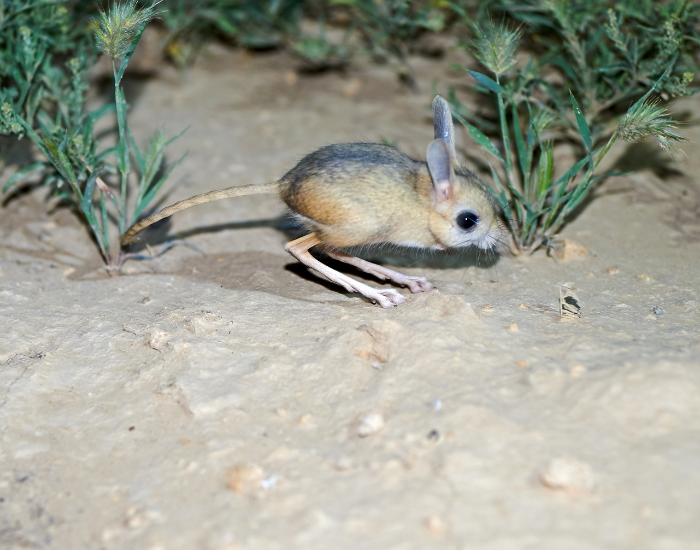
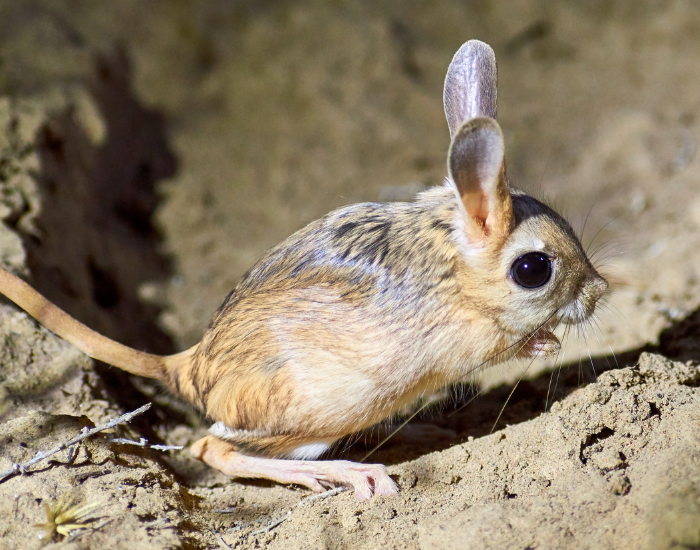
Jerboas are small desert rodents known for their extraordinary jumping abilities. Their long hind legs and short forelegs allow them to leap distances up to three meters in a single bound. This feat is impressive for an animal that can weight between 20 and 120 grams as adults.
Jerboas move exclusively on two legs, making them obligate bipeds and setting them apart from other rodents.
These incredible jumps help jerboas escape predators and navigate shifting sands with ease. Their style of movement, known as bipedal hopping, is similar to that of kangaroos, and they jump using powerful hind legs. However, they evolved this adaptation independently, a textbook example of convergent evolution.
Their long tail acts like a stabilizing rudder, keeping them balanced mid-air and steady on landing. The position of the jerboa’s head, with the foramen magnum at the base of the skull, helps maintain balance and enhances their ability to jump and climb effectively. Watching one hop across a moonlit desert is like watching a miniature athlete in motion. They’re perfectly engineered by nature for life in extreme heat and open terrain.
2. There Are Over 30 Species of Jerboas
Jerboas belong to the family Dipodidae, which also includes birch mice and jumping mice. Within this family, there are more than 30 recognized species across several genera. Each species is specialized for different desert habitats across northern Africa and central Asia.
Some of the best-known include the lesser Egyptian jerboa (Jaculus jaculus), the long-eared jerboa (Euchoreutes naso), and the Mongolian five-toed jerboa (Allactaga sibirica). In addition, the three-toed jerboa and comb-toed jerboa represent other woodland and meadow jumping mouse species within the family. The woodland jumping mouse is another member of Dipodidae, and serves as a useful comparison for understanding limb development and evolutionary adaptations among rodents.
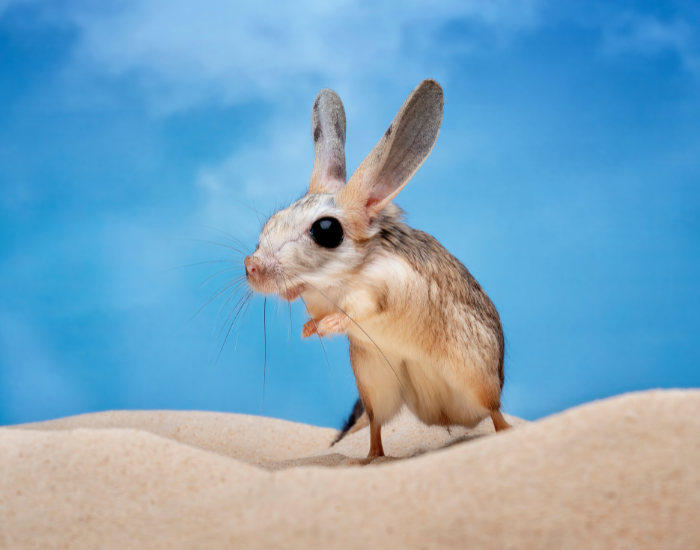
Each species has unique adaptations, from ear length and fur density to toe number. For example, the long-eared jerboa, found in Mongolia and China, has ears nearly one-third the length of its body. Some jerboa species have long ears similar to rabbits, and these long ears are a distinctive adaptation that may help with thermoregulation in their desert environment. In contrast, the lesser Egyptian jerboa, common across North Africa, has shorter ears and a sand-colored coat for camouflage.

3. They’re Desert Specialists Built for Survival
Jerboas thrive in arid deserts stretching from North Africa to central Asia, including the Gobi Desert, Sahara, and Arabian Peninsula. Unlike typical mice or rats, these small rodents with long legs can endure extreme temperature shifts. Therefore, they survive scorching days and freezing nights with remarkable efficiency.
Jerboas and other desert animals tend to evolve physical features, such as long hind limbs and large ears, to enhance survival in arid environments. Their sparsely haired bodies and large ears help dissipate heat during hot air conditions. Meanwhile, their efficient kidneys minimize water loss through concentrated urine production. Jerboas rarely drink, they obtain moisture from seeds, roots, and insects.
Some species have even been found to go their entire lives without direct access to water. In addition, their insufficient fat reserves require constant food sourcing. In these harsh desert environments, adaptation isn’t optional, it’s survival.
4. Jerboas Have a Unique Skeletal System for Jumping
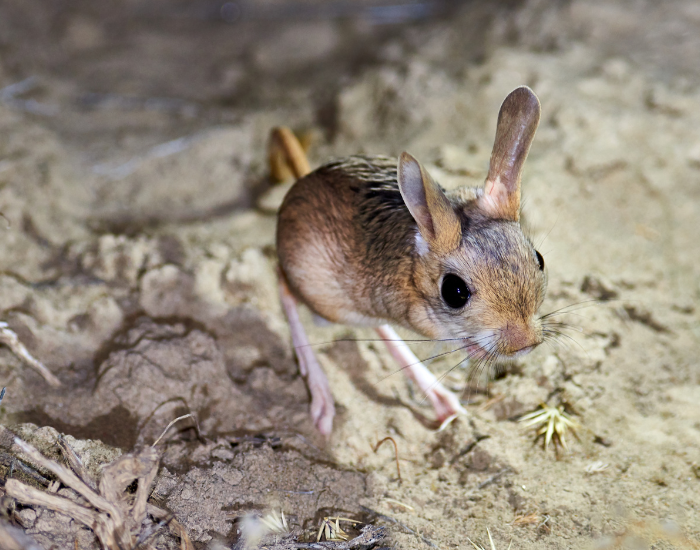
The jerboa’s jumping ability is rooted in its skeletal proportions and anatomy. Its hind legs contain a fused tibia and fibula, forming a “cannon bone” structure. This fusion is more commonly seen in fast-running animals like horses and provides the strength needed for explosive jumps.
Meanwhile, their front legs are short and delicate. They’re used primarily for digging burrows and handling food during sitting upright positions. Their long bones and powerful tendons act like springs, storing energy and propelling them forward with each hop.
In addition, their digit development and limbs show remarkable evolution for bipedal locomotion. The combination of long legs, flexible spine, and long tails for balance and stability during hopping and rest makes them one of the most efficient small jumpers in the mammal world.

5. They’re Expert Burrowers
By day, jerboas retreat into underground burrows to escape the desert sun and predators. These burrows can reach depths of up to two meters. Therefore, they provide insulation against both heat and cold throughout the range of seasons.
Each jerboa typically maintains several burrows, some used for nesting, others for hiding food or as emergency shelters. Their burrows are sealed from the inside with sand plugs to trap moisture and block intruders like snakes or desert foxes.
Inside, they create cozy chambers lined with dry grass and fur. This subterranean habitat is crucial to their survival. It allows them to conserve energy and avoid overheating during daylight hours while maintaining stable body temperature.
While jerboas nest in underground burrows, other jumping mice, such as the meadow jumping mouse, may use hollow logs as nesting sites in woodland environments.
6. Jerboas Are Nocturnal Foragers
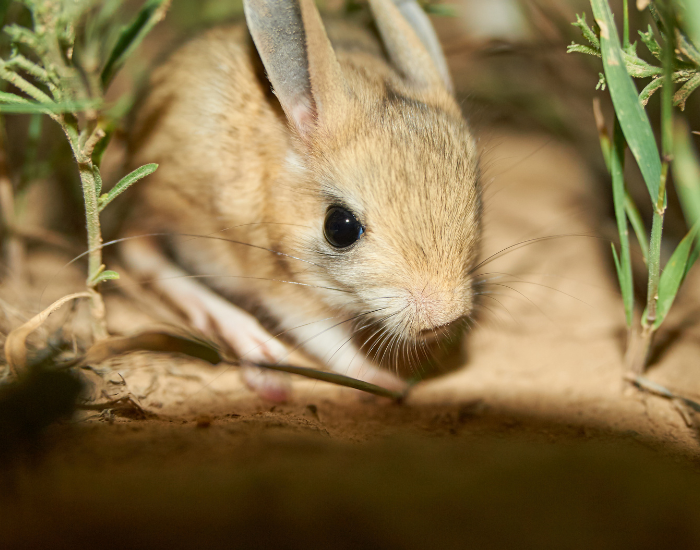
Jerboas are nocturnal animals, meaning they emerge only at night. When the desert cools, they begin their nightly foraging. They rely on their big ears and sharp vision to detect predators and prey in the darkness.
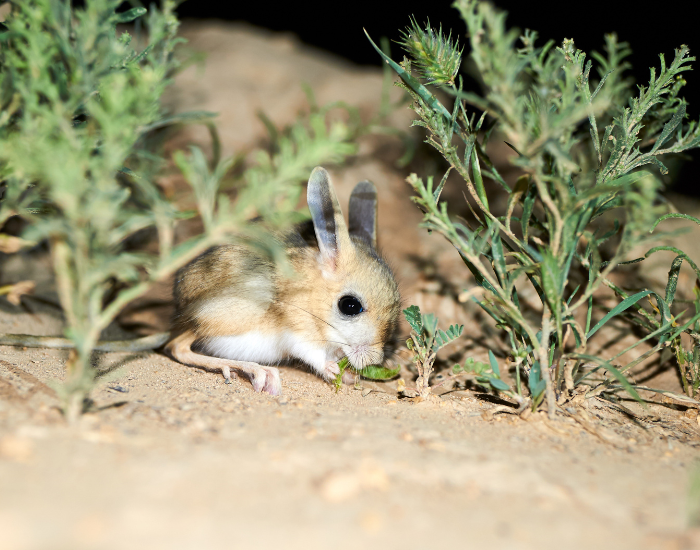
Their diet includes seeds, grasses, roots, and insects, making them opportunistic omnivores. In most cases, they consume food sources available seasonally. Related species, such as the meadow jumping mouse, consume a variety of foods including seeds, fruits, fungi, and small invertebrates, and may shift their diet seasonally. They’re known for their quick movements and almost ghost-like agility, darting across dunes and sniffing out food in silence.
In some regions, jerboas play an important role in seed dispersal. Therefore, they inadvertently help desert plants regenerate after rare rainfall events. This ecological function supports the broader desert ecosystem and plant diversity.
7. They Don’t Need to Drink Water
One of the most astonishing jerboa facts is that they never need to drink water directly. Their specialized kidneys and digestive systems extract all necessary moisture from their food sources. This adaptation allows them to live in areas where surface water may not exist for months, even years.
By minimizing water loss through concentrated urine and dry feces, jerboas conserve every drop of moisture they can. In addition, their bodies demonstrate perfect desert efficiency. However, this creates challenges during extreme drought when even seeds become scarce.
Their bodies are a remarkable example of how evolution shapes animals for survival. Water management becomes the difference between life and death in desert dwelling conditions.

8. They’re Not Mice or Rats, But They Look Like Both
Although jerboas resemble a mouse with long legs or even a rat with long legs, they aren’t closely related to either. Their convergent body form simply evolved because it’s effective for desert living across different mammalian species.
True mice belong to the family Muridae, while jerboas belong to family Dipodidae, an entirely different branch of the rodent evolutionary tree. Their mouse-like rodent features and appearance often lead to confusion among humans. However, genetically, they’re closer to jumping mice and birch mice than to house mice or rats.
So while you might hear people call them “long-legged mice” or “woodland mice,” these tiny creatures represent their own evolutionary masterpiece. Other animals like woodland jumping mice and meadow jumping mice are closely related species within the same family. Napaeozapus insignis, the meadow jumping mouse, and other woodland mice provide important points of comparison for understanding the evolution of limb development and skeletal proportions in jerboas.
9. Jerboas Hibernate and Aestivate During Long Periods
To survive the harsh extremes of their environment, jerboas can enter states of dormancy. In cold regions like Mongolia and northern China, they hibernate through the winter. During mating season ends, they slow their metabolism and conserve energy for survival.
In contrast, species in hotter climates may aestivate, a summer version of hibernation. This helps them avoid dangerously high temperatures when hot air makes foraging impossible. During these periods, jerboas retreat deep into their burrows and seal themselves inside.
Their body temperature drops, heart rate slows, and they remain in a semi-suspended state until conditions improve. These seasonal rhythms and long periods of dormancy are vital for survival in a world of climatic extremes across their home ranges.
10. Conservation: Small but Significant
While many jerboa species are listed as Least Concern by the IUCN, others face habitat threats. The Euphrates jerboa is classified as Near Threatened, and several species have declining populations despite their current Least Concern status
Jerboas play a key ecological role as seed dispersers and as prey for desert predators. Birds of prey, foxes, and snakes all depend on these small mammals for food. Therefore, protecting their fragile habitats benefits entire desert ecosystems across northern Africa.
Conservation efforts are helping monitor their populations. In addition, research programs study their locomotion, evolution, and world distribution patterns to better protect these remarkable desert specialists for most cases of environmental change. Scientists have conducted research on jerboa biomechanics and behavioral ecology, providing valuable insights into their adaptations. Talia Moore, a co-author of several scientific studies, has contributed significantly to research on limb development and evolutionary biology in jerboas.

11. Distribution: From Africa’s Sands to Asia’s Steppes
Jerboas are widely distributed across northern Africa, the Middle East, and central Asia, inhabiting deserts, semi-arid plains, and steppes. They range from the Sahara and Arabian deserts to the Gobi Desert of Mongolia and China, with species recorded in more than 30 countries.
While the lesser and greater Egyptian jerboas dominate North Africa, species like the long-eared and Mongolian five-toed jerboas represent their Asian counterparts. This vast distribution makes them one of the most successful small mammals in arid ecosystems, thriving wherever loose, sandy soil allows for burrowing and movement.

FAQs About Jerboas
No — jerboas are wild animals adapted to harsh desert conditions. They have specific dietary and environmental needs that are nearly impossible to replicate in captivity. In addition, keeping them as pets is illegal in many countries due to wildlife protection laws.
No. Although jerboas resemble mice, they belong to a different family (Dipodidae). True mice belong to Muridae. They’re often mistaken for long-legged mice, but genetically, they’re quite distinct from other rodents.
Both are rodents with long legs and similar hopping locomotion. However, they belong to separate families and evolved on different continents through convergent evolution. Jerboas live in Africa and Asia, while kangaroo rats are native to North America.
Jerboas typically breed during spring and early summer when food is most abundant. Females give birth to small litters of 2-6 young after a gestation period of about 25 days. The babies are born in underground burrows and remain with their mother for several weeks before becoming independent.

Small Creature, Big Wonder
The jerboa might be tiny, but it embodies the spirit of desert resilience. From their astonishing jumps to their waterless existence, these long-legged rodents are marvels of evolution. They’re living proof that nature always finds a way, even in the harshest environments on Earth.
For me, what started as a brief mention in an article about Mongolian desert animals turned into a deeper fascination. These agile, adorable survivors demonstrate how animals adapt to extreme conditions through millions of years of evolution.
Jerboas remind us that even in the world’s harshest landscapes, life can thrive with grace, balance, and an unexpected touch of charm. Therefore, protecting these remarkable mammals and their desert habitats ensures future generations can marvel at nature’s ingenuity.
References:
Daxner-Höck, G., Badamgarav, D., & Maridet, O. (2014). Dipodidae (Rodentia, Mammalia) from the Oligocene and Early Miocene of Mongolia. Annalen Des Naturhistorischen Museums in Wien. Serie A Für Mineralogie Und Petrographie, Geologie Und Paläontologie, Anthropologie Und Prähistorie, 116, 131–214. http://www.jstor.org/stable/43923073
Lebedev, V. S., Shenbrot, G. I., Krystufek, B., Mahmoudi, A., Melnikova, M. N., Solovyeva, E. N., Lisenkova, A. A., Undrakhbayar, E., Rogovin, K. A., Surov, A. V., & Bannikova, A. A. (2022). Phylogenetic relations and range history of jerboas of the Allactaginae subfamily (Dipodidae, Rodentia). Scientific reports, 12(1), 842. https://doi.org/10.1038/s41598-022-04779-x
Moore, T. Y., Rivera, A. M., & Biewener, A. A. (2017). Vertical leaping mechanics of the Lesser Egyptian Jerboa reveal specialization for maneuverability rather than elastic energy storage. Frontiers in zoology, 14, 32. https://doi.org/10.1186/s12983-017-0215-z
Peng, X., Cheng, J., Li, H., Feijó, A., Xia, L., Ge, D., Wen, Z., & Yang, Q. (2023). Whole-genome sequencing reveals adaptations of hairy-footed jerboas (Dipus, Dipodidae) to diverse desert environments. BMC biology, 21(1), 182. https://doi.org/10.1186/s12915-023-01680-5
Polechová, J., & Storch, D. (2019). Ecological niche. In B. Fath (Ed.), Encyclopedia of Ecology (2nd ed., pp. 115–123). Elsevier.
Zhang, H., Chu, D., Yan, H., Sun, S., Wu, X., Fu, H., & Yuan, S. (2025). The role of gut microbes in drought adaptation in the five-toed jerboa (Orientallactaga sibirica). BMC Microbiology, 25(1), Article 482. https://doi.org/10.1186/s12866-025-04204-z