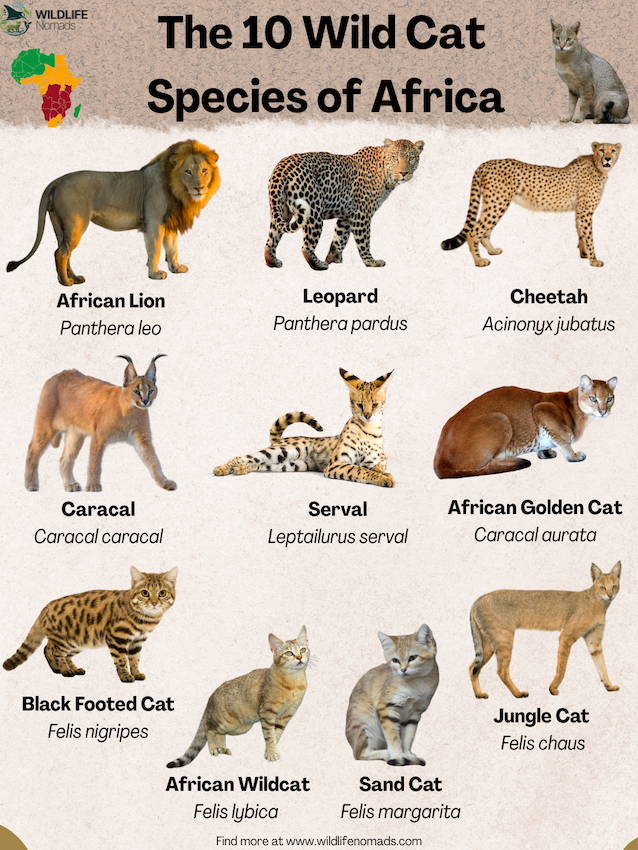
Ever found yourself squinting at a spotted cat on a zoo, or maybe a safari? Wondering about the differences between leopards and cheetahs? From all Africa’s wild cats (including caracal, servals, and black footed cats), these two guys can be hard to tell them apart for some us. But worry no more. Here you will learn how to tell them apart.
Picture this: a cheetah bolts across the savannah like a rocket, while a leopard lurks in a tree, eyeing its next meal, two big cats, two totally different vibes. African leopards, for instance, have unique coat patterns and genetic variations that set them apart from their Asian counterparts, as revealed by research on museum specimens.
At first glance, leopards and cheetahs might seem similar, both are sleek, spotted big cats that roam the African savannas. But look closer, and you’ll discover that these two species are as different as night and day.
From their physical traits to their hunting strategies, leopards and cheetahs have evolved to thrive in their own unique ways. These cheetah and leopard lookalikes trip up tons of folks, so let’s dive into the facts about leopards and fun facts about cheetahs to clear the air.

Leopards and Cheetahs Can be Confusing at the Start
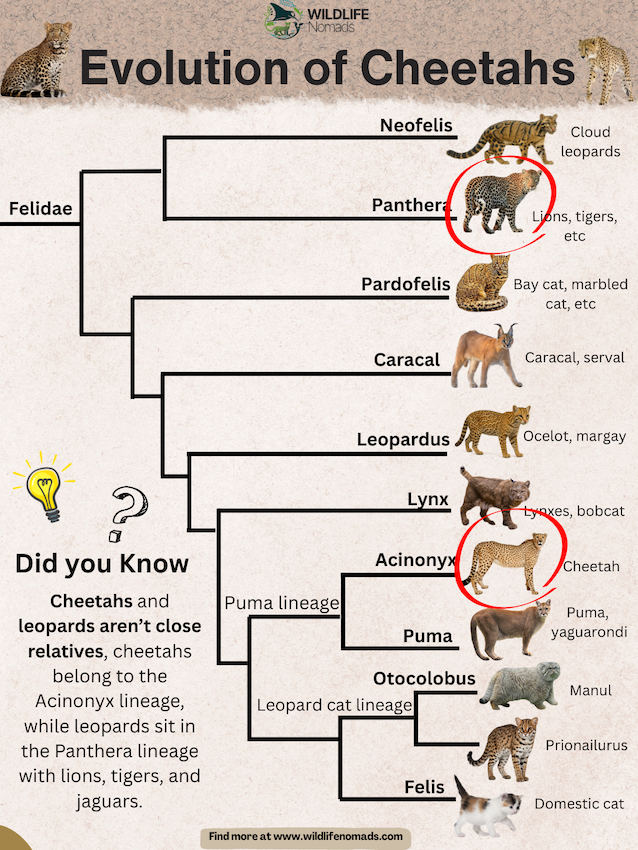
Before we dig into the differences between leopards and cheetahs, let’s vibe on why they mess with our heads. Both are spotted, both are African animals, two of Africa’s wildcats, and feline, check, check, check. But that’s where the similarities crash, these similarities are largely superficial. Their shared traits are a result of convergent evolution, where unrelated species develop similar features to adapt to similar environments. But leopards (Panthera pardus) and cheetahs (Acinonyx jubatus) split evolutionary paths 11 million years ago (see evolution tree infographic below). One’s a stealthy tank, the other’s a speed demon, let’s unpack the facts about leopards and fun facts about the cheetah!
Here’s why they look alike:
- Camouflage: Their spotted coats help them blend into their surroundings, whether it’s the dappled light of a forest or the tall grasses of the savanna.
- Habitat: Both species inhabit similar ecosystems, such as grasslands and open woodlands.
But that’s where the similarities end. Let’s dive into the key differences between leopards and cheetahs.

The Big Breakdown: Differences Between Leopards and Cheetahs
Physical Differences
1. Looks – Spots, Faces, and Frames
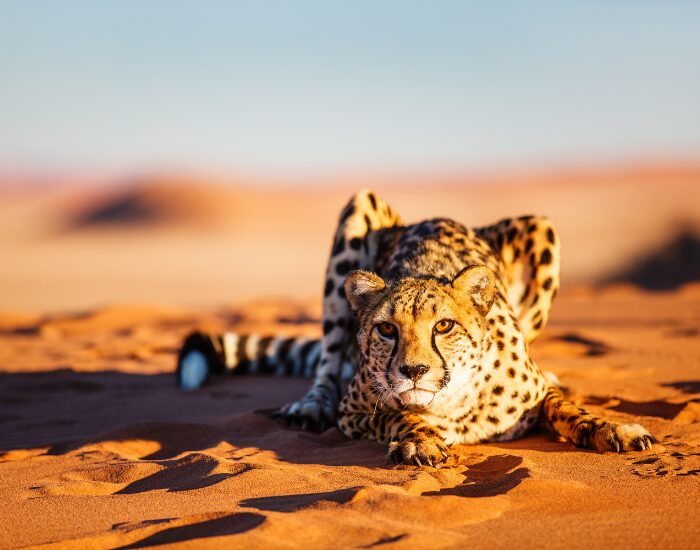
First up in the differences between leopards and cheetahs: their looks. Leopards rock rosettes—clustered spots like floral tattoos, while black leopards have a darker fur that makes their spots harder to see. Cheetahs flaunt solid, round dots. Cheetahs also sport “tear marks”, black streaks from eyes to mouth, perfect for sun glare. Leopards? No tears, just a beefier build.
2. Body Shape and Size
Leopards: Leopards are stockier and more muscular, with a robust build designed for strength. They weigh between 60–90 kg (132–198 lbs) and have a body length of 90–190 cm (3–6.2 ft). Leopards in Southern Africa have unique weight and measurement attributes, with the heaviest wild leopard recorded in the region reaching significant weight.
Cheetahs: Cheetahs are slender and lightweight, built for speed. They weigh between 34–72 kg (75–119 lbs) and have a body length of 110–150 cm (3.6–4.9 ft). Cheetahs’ lightweight frame hits 100 km/h (62 mph), fastest land animal

3. Coat Patterns
- Leopards: Most leopards are light-colored with dark spots, specifically rosette-shaped spots, dark spots with a lighter center. Their coat is also thicker and more suited to colder climates.
- Cheetahs: Cheetahs have solid, round spots. Their coat is thinner and more streamlined, ideal for their fast-paced lifestyle.
4. Facial Features
Cheetahs: Cheetahs have a smaller head with distinctive “tear marks” running from their eyes to their mouth, which help reduce glare from the sun.
Leopards: Leopards have a broader head and stronger jaw, perfect for taking down large prey.

Behavioral Differences
Speed vs. Strength
Here’s a huge cheetah and leopard divide: how they move. Cheetahs are speed kings—0 to 60 km/h (37 mph) in three seconds. Leopards lean on raw power, hauling prey twice their weight up.
1. Hunting Strategies – Cheetah Chase or Ambush
Cheetahs: Cheetahs are sprint hunters. They rely on their incredible speed, reaching up to 100 km/h (62 mph) making it one of the fastest animals in the world, in order to chase down prey in open grasslands. Cheetahs utilize their spotted coats for camouflage when stalking prey, allowing them to stealthily approach their targets. They are also diurnal (day hunter) with 60% success rate, speed’s their game. Cheetahs lose 50% of kills to bigger cats, leopards included!
Leopards: Leopards are ambush predators. They rely on stealth and strength, often dragging their prey up trees to avoid scavengers.

2. Social Structure
Leopards: Leopards are solitary animals, only coming together to mate or raise cubs. The reproductive behaviors and life cycle of male and female leopards include specific mating patterns, with males often competing for females during the mating season. Females reach sexual maturity around 2-3 years of age, with a gestation period of approximately 90-105 days. Cubs face numerous challenges in their first year, including the threat of infanticide by males, which can induce the female’s return to heat.
Cheetahs: Cheetahs are more social, with males often forming small groups called coalitions. Females, however, are solitary except when raising cubs.
3. Activity Patterns
- Leopards: Leopards are primarily nocturnal, hunting and moving under the cover of darkness.
- Cheetahs: Cheetahs are diurnal, preferring to hunt during the early morning or late afternoon.
Habitat and Distribution in Sub Saharan Africa – Savanna Sprinters vs. Forest Ninjas
Where they live is a big cheetah and leopard clue. Cheetahs love wide-open savanna, like the Serengeti grasslands, needing space to sprint. Leopards? They’re everywhere, forests, rocky hills, mountains, even deserts, they are super adaptable. They inhabit various regions worldwide, including Central Asia and Northeast Africa. And yes, both live in Africa, but leopards roam way beyond.
1. Leopards
They are incredibly adaptable and can thrive in a variety of habitats, including:
- Forests: African rainforests and Asian jungles, even Russia.
- Mountains: The rugged terrain of the Himalayas.
- Savannas: Open grasslands and woodlands.
Leopards are found across Africa and parts of Asia, from the Sahara Desert to the Russian Far East. In Kruger National Park, leopards face unique challenges and have developed specific adaptations to maintain distances from one another, establish territories, and employ distinct hunting strategies.
2. Cheetahs
Cheetahs prefer open landscapes where they can utilize their speed, 5,000 left, mostly sub-Saharan Africa with a small population in Iran, such as:
Deserts: The Kalahari Desert in Botswana.
Savannas: The Serengeti in Tanzania and the Maasai Mara in Kenya.
Survival Odds
Cubs highlight the cheetah and leopard struggle. Cheetah cubs face 90% mortality, lions and hyenas eat them. Leopard cubs? Tucked in trees, safer, 50% survival. Female leopards play a crucial role in this, with their reproductive behaviors including mating patterns, breeding age, gestation periods, and cub-rearing practices significantly impacting cub survival rates.
Fun Fact: Cheetah cubs’ fluffy “mantle” mimics honey badgers—scary disguise!
Cheetah: 4–6 cubs, open dens, tough odds.
Leopard: 2–3 cubs, hidden spots, better shot.
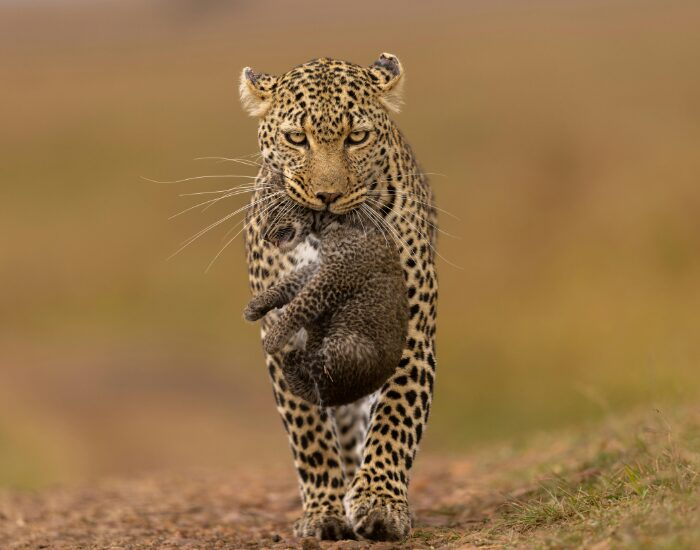
Fun Facts About Leopards and Cheetahs
- Leopards are excellent climbers and often drag their prey up trees to keep it safe from lions and hyenas.
- They have the strongest bite force relative to their size among big cats.
- Leopards are incredibly adaptable and can live in both rainforests and deserts.
- Cheetahs are the fastest land animals, capable of reaching speeds up to 100 km/h (62 mph).
- They can accelerate from 0 to 60 mph in just 3 seconds.
- Cheetahs have semi-retractable claws, which act like cleats for better traction while running.
Common Misconceptions
Are Cheetahs Part of the Panthera Pardus Family?
No, cheetahs and leopards belong to different families. Cheetahs are part of the Acinonyx genus, while leopards are part of the Panthera genus, which includes lions, tigers, and jaguars.
- Leopard: Panthera pardus—roars, big cat crew.
- Cheetah: Acinonyx jubatus—chirps, purrs, no roar—unique weirdo!
Do Leopards and Cheetahs Live Together?
While both species can be found in Africa, they rarely share the same territory. Unlike lions, which produce loud and intimidating roars, cheetahs make softer, more cat-like sounds such as meows and purrs. Leopards prefer denser habitats, while cheetahs thrive in open grasslands.
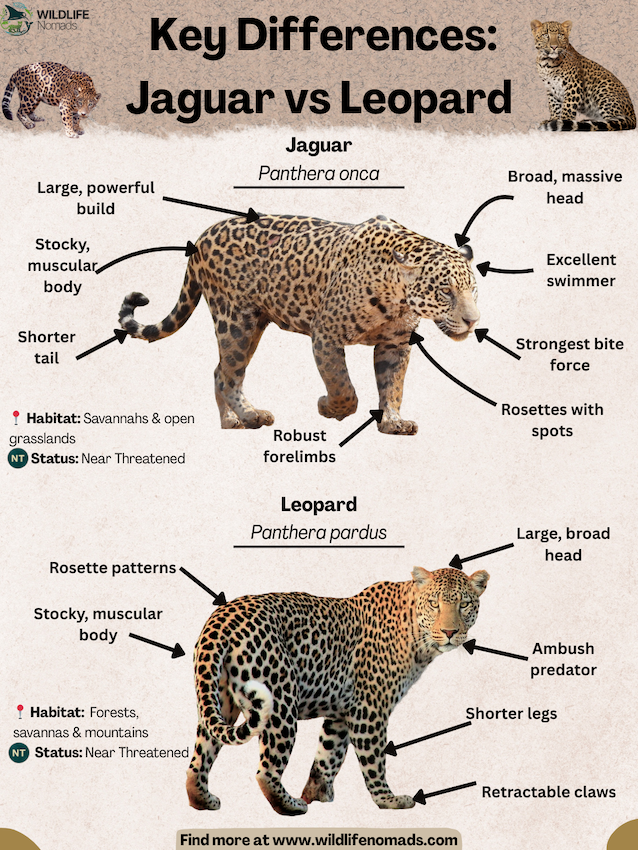
And What About Jaguars?
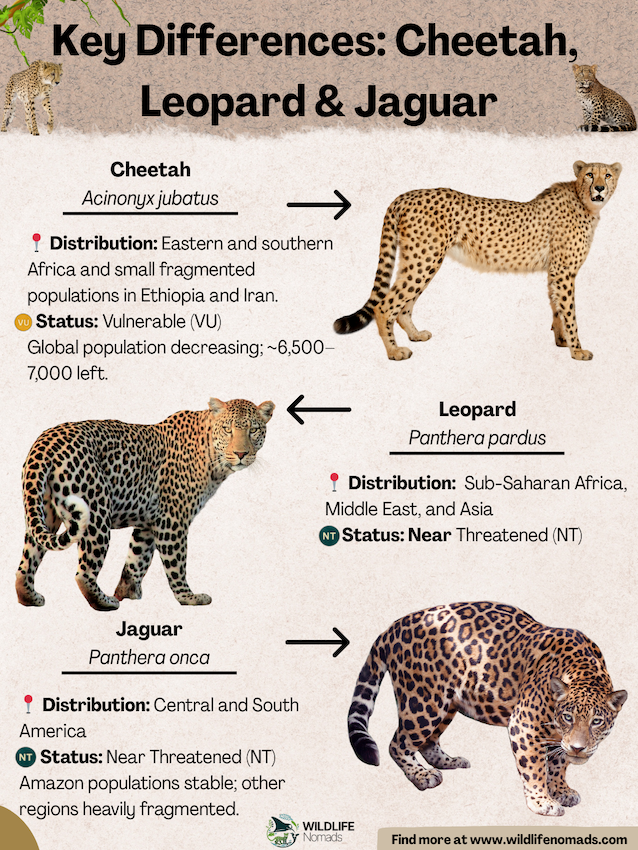
A common question from safari enthusiasts: “Can I see jaguars in South Africa?” The answer is no—jaguars don’t live anywhere in Africa. These powerful spotted cats are exclusively found in the Americas, from the southern United States through Central America and into South America, with their stronghold in the Amazon rainforest.
The confusion often arises because jaguars and leopards share remarkably similar appearances. Both feature beautiful rosette-patterned coats that provide camouflage. However, jaguars are stockier and more muscular, with broader heads and shorter, more powerful legs. Their rosettes contain central spots, while leopard rosettes are typically hollow. Jaguars also possess the strongest bite force of any big cat, capable of crushing turtle shells and caiman skulls, a hunting adaptation unique to their aquatic prey preferences.
While South Africa offers incredible leopard sightings, jaguar encounters require a trip across the Atlantic. The Pantanal wetlands in Brazil, parts of the Amazon basin, and certain protected areas in Costa Rica and Belize provide the best opportunities to observe these elusive American predators. Both cats represent apex predators in their respective ecosystems, playing crucial roles in maintaining ecological balance on their separate continents.
Conservation Status
Both leopards and cheetahs face significant threats, including habitat loss, poaching, and human-wildlife conflict.
- Leopards: Listed as Vulnerable, with populations declining due to habitat fragmentation and illegal wildlife trade.
- Cheetahs: Listed as Vulnerable, with fewer than 7,000 individuals remaining in the wild.
Conservation efforts, such as protected areas and anti-poaching initiatives, are crucial for their survival.
Questions You May Have in Case You Missed Them
No, leopards and cheetahs are distinct species with different physical traits, behaviors, and habitats.
Their similar appearances are due to convergent evolution, where unrelated species develop similar traits to adapt to similar environments. In this case, similar spots for camouflage in Africa’s patchwork wild. Rosettes blend leopards into trees; cheetah dots fade into grass. Same goal, different styles
Yes, both species are found in Africa, but they inhabit different types of ecosystems. Leopards often hunt during twilight when prey animals are most active, and the availability of these animals significantly affects their population density and home range sizes.
Quick Cheat Sheet: Leopard vs. Cheetah
Sound: Roar (leopard) vs. chirp (cheetah).
Spots: Rosettes (leopard) vs. solid dots (cheetah).
Build: Stocky (leopard) vs. slim (cheetah).
Hunt: Ambush (leopard) vs. chase (cheetah).
Habitat: Forests (leopard) vs. plains (cheetah).
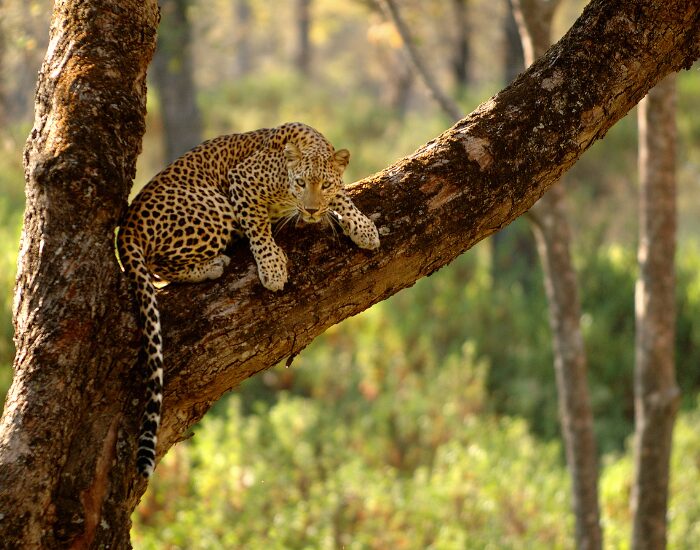
Now you Know How to Tell Them Apart
Leopards and cheetahs may share a few similarities, but they are fundamentally different in almost every way. From their physical traits to their hunting strategies, these big cats have evolved to excel in their respective niches.
From speed to stealth, the differences between leopards and cheetahs are crystal clear—leopards flex power, cheetahs flaunt pace. These cheetah and leopard icons rock their own wild worlds, packed with facts about leopards and fun facts about the cheetah. Spotted a fave yet? Dive into information on leopards or fun facts about cheetahs, plan a safari, and spill your big cat love below. Let’s keep these cats roaring, happy exploring, friends!
Further Reading:
- 12 Fascinating Facts About White Lions You Need to Know
- The Truth About Hippopotamuses: Africa’s Most Dangerous Giants
- The Cost Of Ivory: The Deadly Price Behind A Beautiful Lie