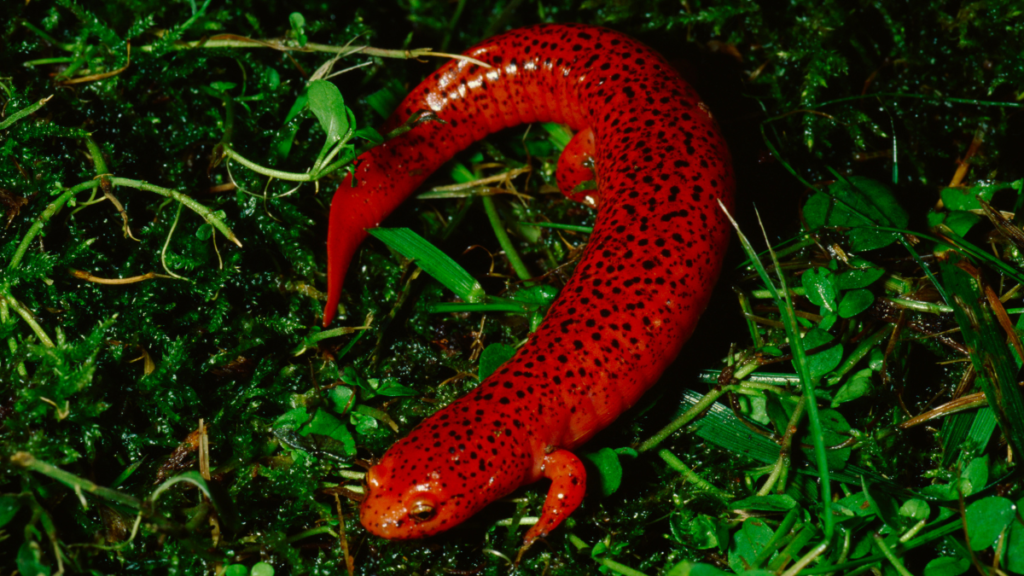
Salamanders belong to the amphibian order Caudata, an ancient lineage that has thrived for more than 150 million years. There are over 740 salamander species, from minute salamanders no longer than a paperclip to the Chinese giant salamander, which can reach 2 meters in length. Unlike frogs and toads, salamanders retain their slender bodies, long tails, and smooth skin throughout life, relying heavily on moisture for respiration.
Most salamanders live in the temperate regions of the Northern Hemisphere, particularly North America, where vernal pools, mountain streams, and shaded forested areas provide the damp microhabitats they need. They are both predators and prey, serving as key components of healthy ecosystems, small, silent guardians of the forest floor.
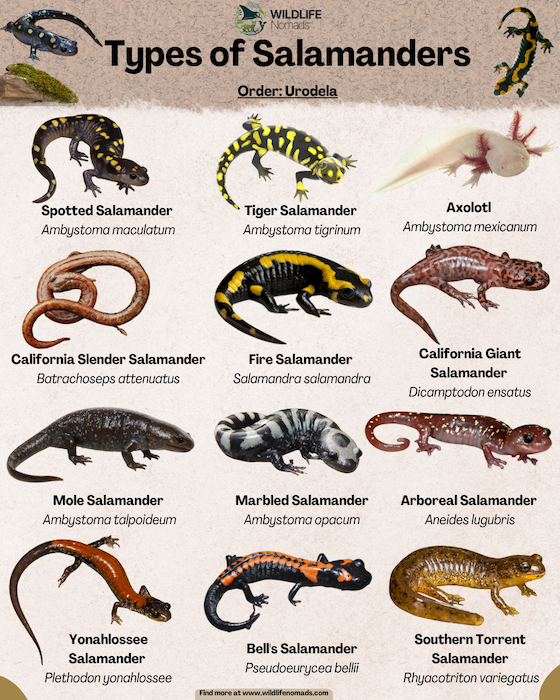
1. Spotted Salamander (Ambystoma maculatum)
During the first early spring rains, when snowmelt fills the vernal pools of eastern North America, spotted salamanders emerge from their burrows. Their black or blue bodies, dotted with brilliant yellow spots, are a welcome sight for anyone who loves the season’s renewal.
These adult salamanders migrate en masse to breeding pools under the cover of night. I once joined a group of biologists during one of these migrations, hundreds of salamanders live underfoot, moving silently across wet leaves. The hind feet of spotted salamanders have five toes, which are slightly elongated and well-adapted for pushing through damp leaf litter and muddy ground. Their eggs host green algae, creating an amazing symbiotic relationship where both species exchange oxygen and nutrients.

2. Tiger Salamander (Ambystoma tigrinum)
One of the largest salamander species in North America, the tiger salamander is a muscular burrower with bold yellow markings. These mature adults spend much of their time hidden beneath rotting logs and small animal burrows.
These terrestrial salamanders feast on insects, worms, and sometimes even small mammals. However, habitat loss and water pollution threaten their survival, as many breeding ponds have been drained or filled.
3. Chinese Giant Salamander (Andrias davidianus)
The Chinese giant salamander is the largest amphibian on Earth and among the most endangered. It inhabits flowing water in cool mountain streams and is known for its ancient lineage and haunting cry, said to resemble a human baby.
Sadly, this species has suffered a severe population decline due to overharvesting and habitat loss. Conservation programs led by the IUCN and Chinese researchers focus on captive breeding and restoration of natural habitats. Protecting these giant salamanders is not just about saving a species, it’s about preserving an evolutionary relic that has survived since the dinosaurs.

4. Japanese Giant Salamander (Andrias japonicus)
Closely related to its Chinese cousin, the Japanese giant salamander inhabits fast-flowing rivers in Japan’s mountainous regions. Revered in folklore, it symbolizes resilience and longevity. These fully aquatic creatures can live for more than 50 years, depending entirely on cold, oxygen-rich water.
When I visited a conservation center in Gifu Prefecture, I watched volunteers simulate natural river habitats, ensuring every rock and current mimicked the wild. The dedication reminded me that even ancient species depend on modern care.
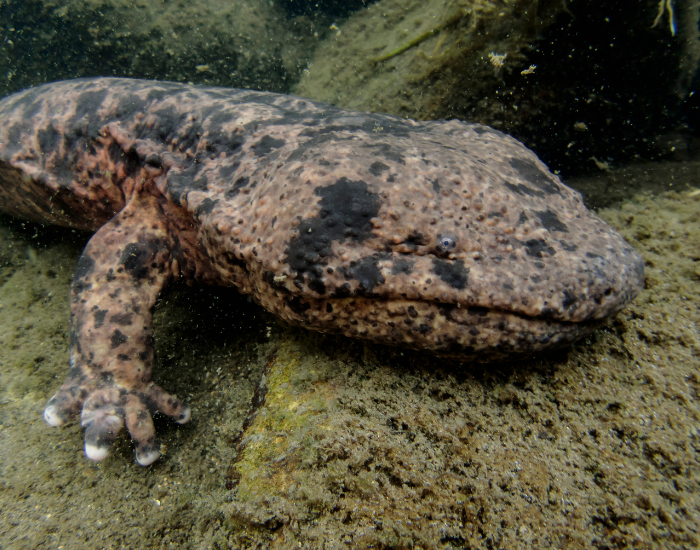
5. California Slender Salamander (Batrachoseps attenuatus)
This lungless salamander is one of California’s most fascinating creatures. With its slender body and incredible flexibility, it can fit into cracks narrower than a pencil. It is considered a small salamander, well-adapted to life in narrow crevices and moist microhabitats. Living primarily in coastal forests, it absorbs oxygen directly through its skin and the lining of its mouth, a remarkable adaptation that requires consistently moist environments.
These salamanders are often found beneath rotting logs and damp leaf litter. But with climate change and drought intensifying, even small changes in humidity can threaten their survival.
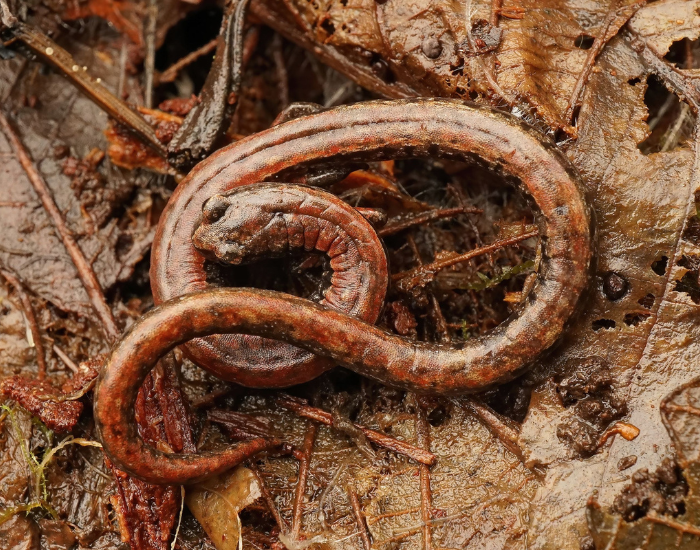
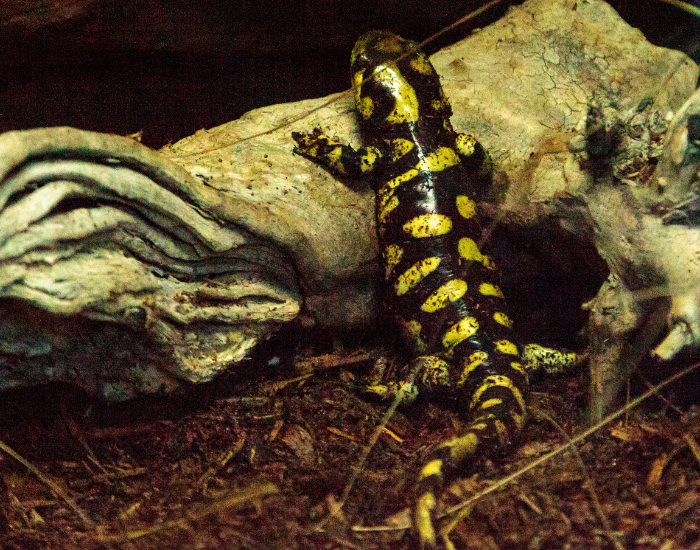
6. Fire Salamander (Salamandra salamandra)
The fire salamander, native to Europe’s forested areas, is a showstopper with its bright yellow spots and glossy black skin. It’s also mildly poisonous, producing alkaloid toxins that deter predators. Like the California newt, which uses vivid warning coloration to signal its toxicity, the fire salamander’s bright colors serve as a deterrent to would-be predators. Historically, people believed it was born from fire, a myth inspired by its tendency to flee burning logs.
Their habitats are under pressure from pollution and deforestation, but efforts across Europe are helping maintain populations through habitat restoration and public awareness campaigns.
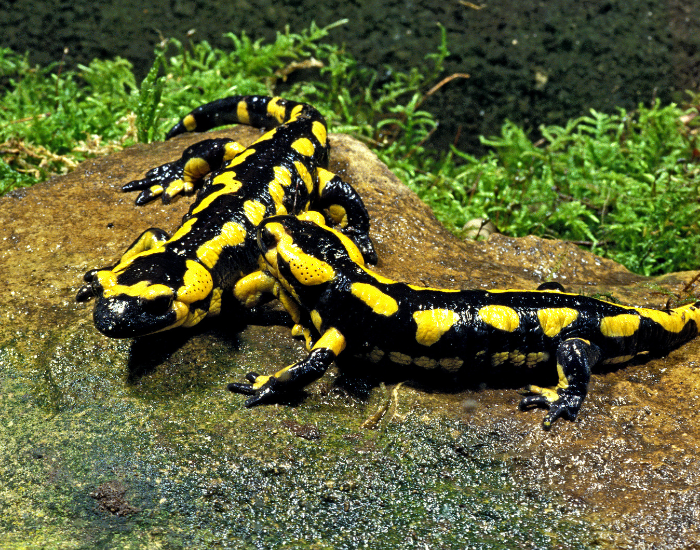
7. Arboreal Salamander (Aneides lugubris)
If you ever wander through California’s redwoods at night, you might spot an arboreal salamander clinging to moss-covered branches. They belong to the family Plethodontidae, another group of lungless salamanders that rely entirely on moist skin for respiration.
These tree-dwellers use prehensile tails and sharp teeth to navigate bark and defend territory. Their life on both the forest floor and canopy makes them one of the most unique salamander species in North America.

8. Mole Salamander (Ambystoma talpoideum)
The mole salamander is a burrowing species found across the southeastern United States. They often inhabit seasonal pools and vernal wetlands, breeding during the breeding season before returning underground.
What makes this species fascinating is its neoteny, some individuals stay in their larval stage and retain larval features such as external gills and finned tails into adulthood, yet still reproduce. It’s a brilliant evolutionary strategy for surviving temporary wetlands that dry quickly.
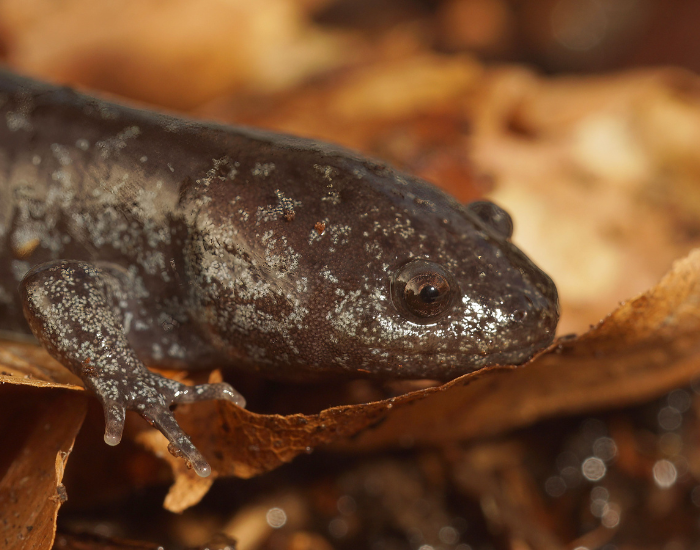
9. Torrent Salamanders (Family Rhyacotritonidae)
Torrent salamanders are small, elusive creatures found in the mountain streams of the Pacific Northwest. Their reduced lungs and streamlined bodies help them cling to rocks in flowing water. They are among the small salamanders adapted to life in cold, fast-flowing streams. I once found one under a slick stone in Oregon, a glimpse of life that thrives where most animals couldn’t survive.
They are among the most endangered species of the region, threatened by logging, sedimentation, and habitat fragmentation. Unlike other salamander species in the area, which may inhabit forests or wetlands, torrent salamanders have more specialized habitat needs, making the protection of clean, cold streams crucial for their continued survival.
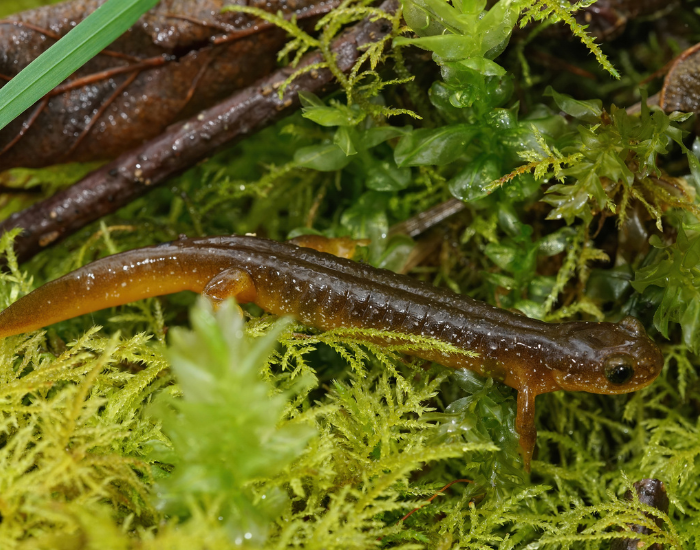
10. Rough-Skinned Newt (Taricha granulosa)
While technically a newt, the rough-skinned newt deserves a place among notable salamanders. Its grainy, warty skin and orange belly warn of potent toxins, the same tetrodotoxin found in pufferfish. Despite this defense, its primary predator, the garter snake, has evolved resistance.
Every spring, these amphibians gather in ponds to breed, their life cycle perfectly timed with rainfall. Watching hundreds migrate through forest floors during one of my field studies remains one of my favorite wildlife memories.

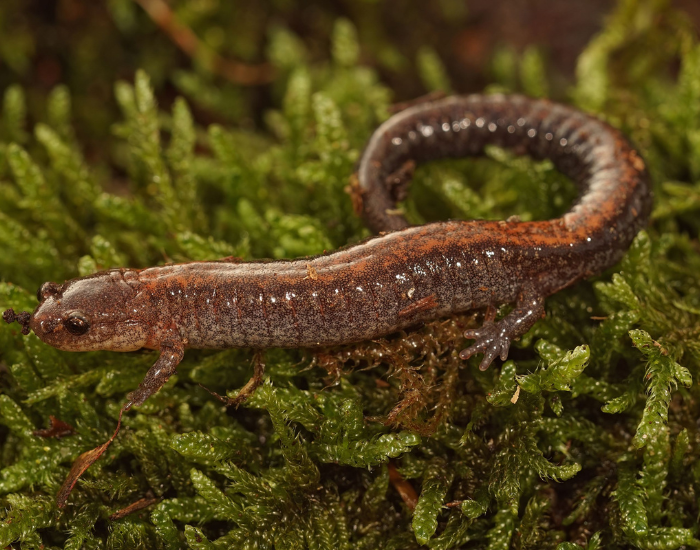
11. Eastern Red-Backed Salamander (Plethodon cinereus)
Common across northeastern forests, the red-backed salamander is another lungless species that breathes through its moist skin. It is one of the most common species of salamander in its range. It lives entirely on land, nesting under logs and stones. Unlike many other salamanders, females guard their eggs, a rare case of parental care in amphibians.
These salamanders play an essential role in forest ecosystems, consuming invertebrates that feed on decaying matter. Healthy populations indicate stable soil moisture and clean environments.
12. Axolotl (Ambystoma mexicanum)
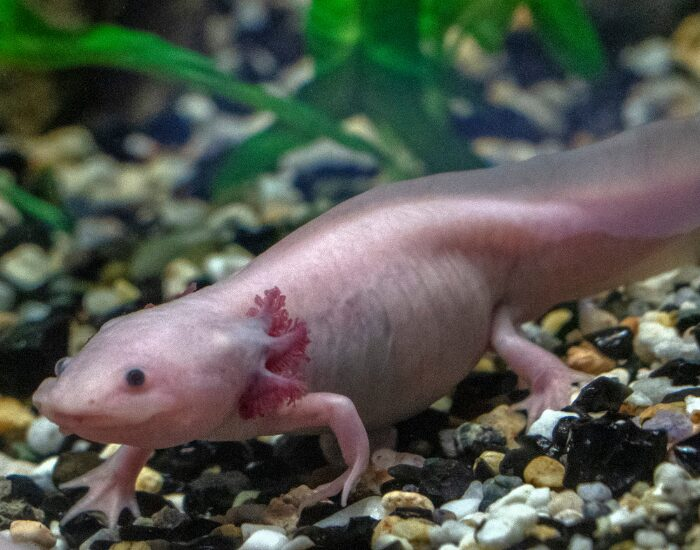
No list of salamander species would be complete without the axolotl, the “smiling” amphibian of Mexico’s Lake Xochimilco. This fully aquatic species never completes metamorphosis. It remains in its larval form with feathery external gills for its entire life. The axolotl is a classic example of a salamander that retains its larval forms, such as external gills and other juvenile features, throughout its lifespan.
During my visit to Mexico City, I observed conservationists rearing axolotls in restored canals. Once abundant, they now teeter on the edge of extinction due to pollution, introduced fish, and urban development. Local education projects are vital to reestablishing these endangered species in the wild.
Unique Characteristics of Salamanders
Salamanders are truly remarkable among amphibians, boasting a suite of unique characteristics that set them apart from other species. Perhaps the most astonishing is their ability to regrow lost limbs, a feat that has captivated scientists and inspired breakthroughs in regenerative medicine. Whether it’s a Chinese giant salamander or a tiger salamander, many salamander species can regenerate not only missing legs but also damaged tails, spinal cord tissue, and even parts of their heart and eyes. This extraordinary power makes salamanders invaluable models for studying tissue repair and healing.
Another defining trait is their moist skin, which plays a crucial role in their survival. Unlike most amphibians, many salamanders, especially lungless salamanders like the California slender salamander, rely entirely on their skin and the lining of their mouth for breathing. This adaptation allows them to thrive in damp, oxygen-rich environments where their skin can remain moist, but it also means they are highly sensitive to changes in humidity and water quality. The need to keep their skin moist ties salamanders closely to their habitats, making them excellent indicators of environmental health. These features, from limb regeneration to specialized respiration, highlight why salamanders are such a fascinating and important group within the amphibian world.

Salamander Behavior and Research
The world of salamander behavior is as diverse as the species themselves. Some, like the spotted salamander, are masters of stealth, spending much of their lives hidden underground and emerging only at night or during the breeding season. Others, such as the arboreal salamander, have adapted to life high above the forest floor, using their strong limbs and prehensile tails to navigate tree branches and bark. This behavioral variety allows salamanders to occupy a wide range of ecological niches, from burrowing in leaf litter to climbing in the forest canopy.
Research into salamander behavior has revealed just how vital the role these amphibians are to their ecosystems. As both predators and prey, salamanders help control insect populations and serve as food for larger animals, maintaining the delicate balance of forest and wetland habitats. Unfortunately, many salamander populations are declining due to habitat loss, disease, and climate change. Scientists studying salamanders have sounded the alarm about these threats, emphasizing the need for conservation efforts to protect not only salamanders but also other amphibians like frogs and toads that share their habitats. The insights gained from salamander research continue to deepen our understanding of amphibian biology and the interconnectedness of life in our natural world.
Salamander Distribution and Habitat Loss
Salamanders are found across a wide range of habitats, from the cool, shaded forests of North America and Europe to the fast-flowing mountain streams of Asia. Many salamander species, such as mole salamanders and torrent salamanders, are closely tied to specific environments like vernal pools, wetland habitats, and pristine mountain streams. These habitats provide the moisture and shelter that larval salamanders and adults alike need to survive and complete their life cycles.
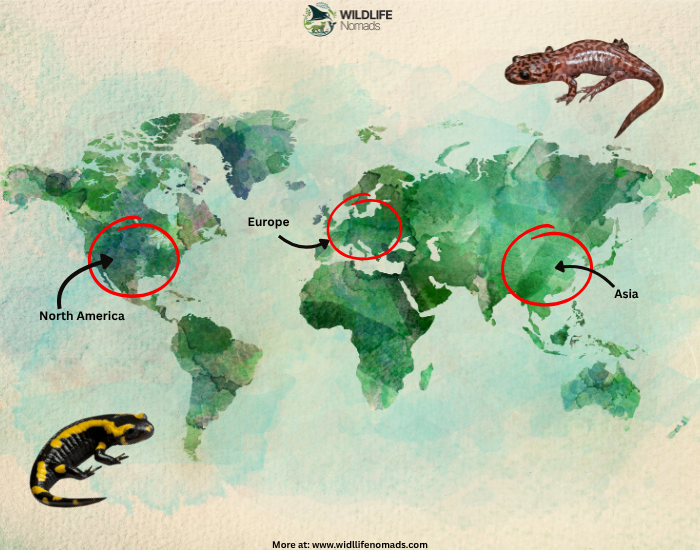
However, salamanders face mounting challenges as their habitats are lost or degraded. The destruction of vernal pools and wetlands for agriculture and development has had a devastating impact on species like the eastern newt and mole salamanders. Invasive species, pollution, and the effects of climate change further threaten salamander populations, especially those that depend on sensitive ecosystems like forested areas and mountain streams. Larval salamanders are particularly vulnerable, as they require clean, oxygen-rich water to develop. Conservation efforts focused on protecting and restoring these habitats are essential for the survival of salamander species. By safeguarding the places where salamanders live, from North America’s temperate regions to Asia’s mountain streams, we help ensure that these unique amphibians, and the ecosystems they support, continue to thrive.
The Salamander Life Cycle
Every salamander species shares the same four basic stages, though with unique twists:
- Egg Stage: Laid in vernal pools or flowing water, attached to plants or rocks.
- Larval Stage: Hatchlings develop external gills, hind legs, and finned tails for swimming.
- Metamorphosis: They lose their gills, grow front legs, and adapt to terrestrial or aquatic life.
- Adult Stage: Adult salamanders live in forests, caves, or streams, though species like axolotls remain permanently aquatic.
Internal fertilization is the norm among salamanders. Males deposit spermatophores, which females collect during intricate courtship dances. Some species, like the fire salamander, even give birth to live larvae in mountain springs.

Conservation and Population Decline
Across the world, salamanders face an accelerating population decline. Habitat loss, climate change, and pollution remain their biggest threats. In some regions, chytrid fungus outbreaks have decimated amphibian communities.
Conservation efforts are increasingly vital, from restoring forested areas to creating protected breeding sites like vernal pools. In North America, organizations such as the Amphibian Survival Alliance and WWF are leading initiatives to monitor and rewild sensitive habitats.
FAQs About Salamanders
It doesn’t turn into another animal — a salamander transforms from larva to adult but remains a salamander.
Yes, they help control insect populations and indicate a healthy environment.
Some, like fire salamanders or rough-skinned newts, produce mild toxins. Avoid handling with bare hands.
No, axolotls are their own species that remain in a larval stage for life.
Depending on the species, they can live between 5 and 50 years — giant salamanders often live the longest.
Observe respectfully. Never disturb or relocate it, especially during the breeding season.
Guardians of the Forest Floor
Whether it’s a fire salamander in Europe, a torrent salamander in Oregon, or an axolotl in Mexico, these amphibians remind us how ancient life still thrives quietly beside us. Each time I uncover one beneath the leaf litter or near a cold stream, I’m struck by its stillness, a living link to Earth’s deep past.
Protecting salamanders protects entire ecosystems: the forests, wetlands, and streams that sustain biodiversity. Their survival tells us whether our world remains balanced, moist, breathing, and alive.
Can You Name That Salamander? 🦎
A 12-photo identification challenge — the wrong answers are deliberately tricky look-alikes. Go back and change any answer before you score.
Which salamander is this?
References:
Adamson, C. J., Morrison-Welch, N., & Rogers, C. D. (2022). The amazing and anomalous axolotls as scientific models. Developmental dynamics : an official publication of the American Association of Anatomists, 251(6), 922–933. https://doi.org/10.1002/dvdy.470
Bonett, R. M., Ledbetter, N. M., Hess, A. J., Herrboldt, M. A., & Denoël, M. (2022). Repeated ecological and life cycle transitions make salamanders an ideal model for evolution and development. Developmental Dynamics, 251(6), 957–972. https://doi.org/10.1002/dvdy.373
Davic, R. D., & Welsh, H. H., Jr. (2004). On the ecological roles of salamanders. Annual Review of Ecology, Evolution, and Systematics, 35, 405–434. https://doi.org/10.1146/annurev.ecolsys.35.112202.130116
Lowe, W. H. (2012). Climate change is linked to long-term decline in a stream salamander. Biological Conservation, 145(1), 48–53. https://doi.org/10.1016/j.biocon.2011.10.004
Lee, D. E., Bettaso, J. B., Bond, M. L., Bradley, R. W., Tietz, J. R., & Warzybok, P. M. (2012). Growth, Age at Maturity, and Age-Specific Survival of the Arboreal Salamander (Aneides lugubris) on Southeast Farallon Island, California. Journal of Herpetology, 46(1), 64–71. http://www.jstor.org/stable/41515016