
The first time I hiked in the Arizona desert as a teenager, the guide’s opening safety talk wasn’t about heat or rattlesnakes… it was scorpions. “Shake out your boots, watch where you put your hands, and don’t reach under rocks,” he said before we’d walked ten feet. That warning stuck with me. Years later, as a conservation biologist who has spent a career studying how people and wildlife share space, I’ve come to see Arizona’s scorpions less as a threat and more as one of the desert’s oldest, most successful residents.
If you live in Arizona, chances are you’ve crossed paths with many animals, but few trigger as much fear as arachnids like tarantulas, spiders, or scorpions, in the garden, under a shoe, or glowing eerily during a midnight black-light walk. This guide covers the 10 most common scorpions in Arizona, how to identify them, their sting risks, and how to coexist safely with these remarkable desert animals. Every species below has been checked against current scientific literature, peer-reviewed research, and regional field guides, with outdated names and misidentifications corrected.
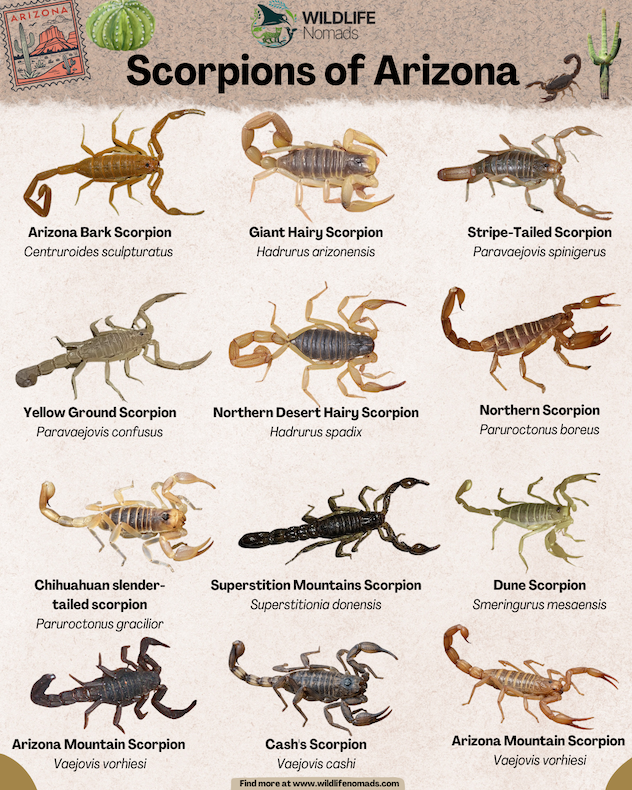
Arizona is home to more than 30 species of scorpions, ranging from the small but highly venomous Arizona bark scorpion (Centruroides sculpturatus) to the massive giant hairy scorpion (Hadrurus arizonensis), the largest scorpion in the United States. These terrestrial arthropods have adapted to diverse habitats across the state, from rocky outcrops and sandy soils to urban areas and irrigated lawns. Certain scorpion species are commonly found in both residential and natural environments throughout Arizona, and native scorpions play an important role in the state’s desert ecosystems as both predators and prey.
Quick Scorpion Facts:
- Scorpions are terrestrial arthropods, close relatives of spiders and ticks, with a segmented body, powerful pincers, and a venomous sting.
- Scorpions are predatory and primarily hunt insects and other small arthropods, helping keep pest populations in check.
- Scorpion desert habitats include rocky outcrops, sandy soils, urban areas, and irrigated lawns.
- Most Arizona scorpions are harmless, but a few can cause severe pain and, rarely, medical emergencies.
- Scorpion season in Arizona runs from March through October, though scorpions may stay active year-round indoors or during mild winters.
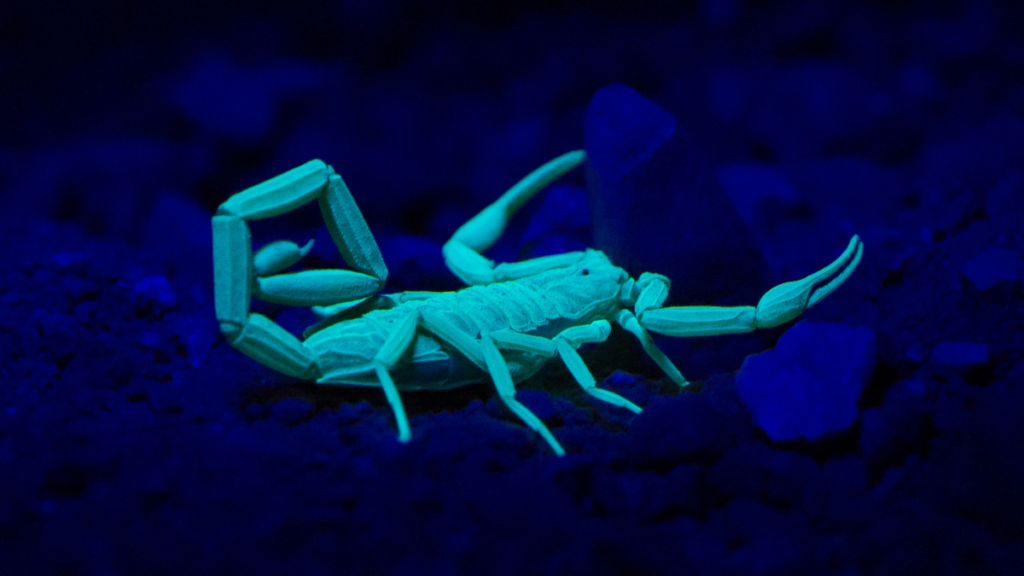
- All scorpions glow a bright blue-green under ultraviolet light, making black light detection possible.
Understanding scorpion behavior and habitat is the first step to reducing risks and appreciating these remarkable desert animals.
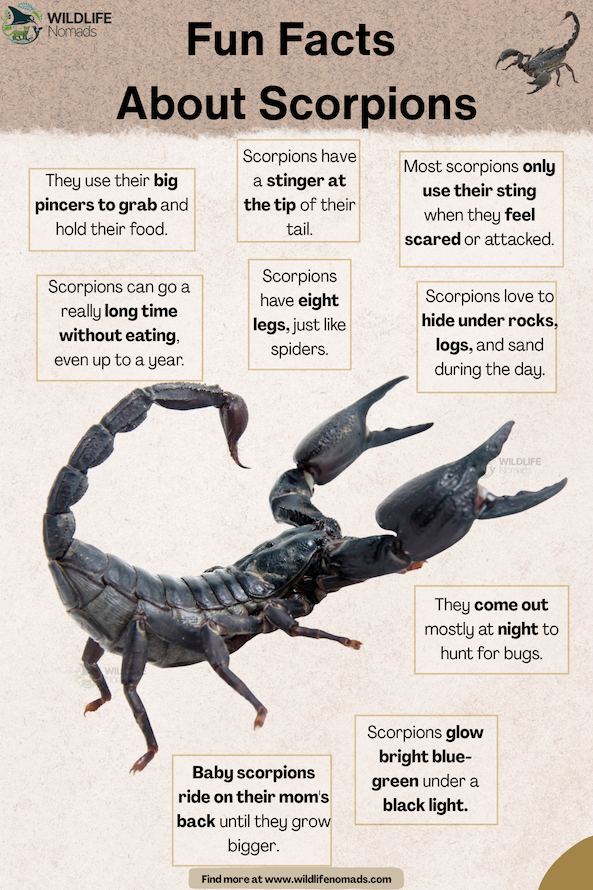
Complete Guide: 10 Types of Scorpions in Arizona
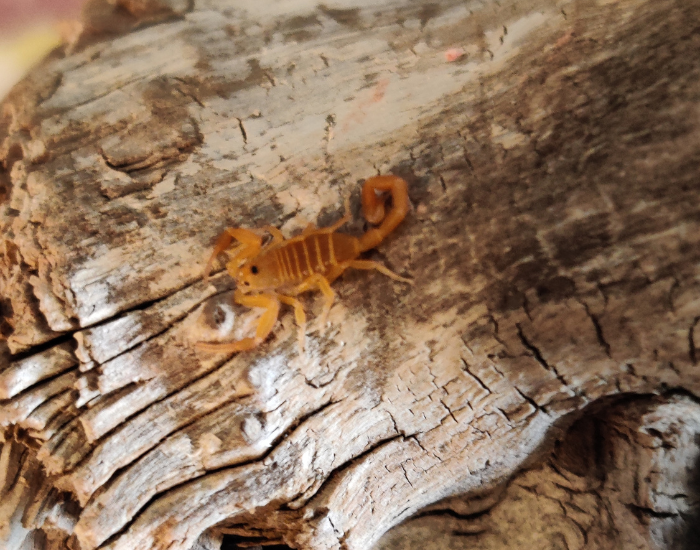
1. Arizona Bark Scorpion (Centruroides sculpturatus)
The Arizona bark scorpion is the most medically significant scorpion in North America. This slender, climbing species poses the greatest risk to humans in Arizona.
Identification:
- Size: Adults reach up to about 3 inches in length
- Color: Pale yellow to light brown, blending into desert sand
- Body: Slender build with long, thin pincers
- Tail: Thin, with a small bulbous stinger
Sting Risk: As the most venomous scorpion in North America, an Arizona bark scorpion sting can cause severe pain, numbness, muscle spasms, and (in rare cases involving children or vulnerable individuals) life-threatening symptoms such as difficulty breathing. Symptoms of a bark scorpion sting can worsen within four hours, so bark scorpion stings are medically significant and may require prompt medical attention. Effective antivenom is available, and death from scorpion stings is extremely rare in the U.S.
Behavior: Excellent climbers that can scale walls and ceilings and even hang upside down. Bark scorpions feed on other insects and are active mostly at night. Adults can live 5–7 years, and individuals have been recorded ranging well over 100 yards in a single night.
Habitat: Among the most commonly found scorpions in Phoenix, Tucson, and other desert communities. They shelter underneath things like rocks, wood piles, and outdoor furniture, and will seek cool, moist places such as bathrooms and garages when they enter homes.
2. Giant Hairy Scorpion (Hadrurus arizonensis)
The giant hairy scorpion, also called the Arizona giant hairy scorpion, is the largest scorpion in the United States and the largest scorpion in North America, making it an impressive sight in the Arizona desert. As the largest scorpion species in the region, it plays a significant role in the local ecosystem, both as a predator and as prey for larger animals.
Identification:
- Size: Commonly over 5 inches, with the largest individuals approaching 6 inches
- Color: Dark body with yellow legs
- Features: Distinctive brown hairs on the pincers and body that help it detect vibrations
- Tail: Thick and powerful
Sting Risk: The Giant Hairy Scorpion has very weak venom, making its painful sting comparable to a mild bee sting rather than a serious medical event.
Behavior: A ground-dwelling, burrowing predator that hunts insects, small lizards, and even other scorpions. Giant hairy scorpions usually remain outdoors and only wander inside by accident.
Habitat: Rocky outcrops and sandy soils across the western two-thirds of Arizona, generally away from dense urban development.

3. Stripe-Tailed Scorpion (Paravaejovis spinigerus)
The stripe-tailed scorpion is easily identified by its distinctive tail markings, making it one of the more The stripe-tailed scorpion (sometimes called the devil scorpion) is the most common scorpion in Arizona and is easily identified by the dark stripes running along its tail. A quick note on names: this species spent more than 100 years in the genus Vaejovis, was briefly placed in Hoffmannius, and now sits in Paravaejovis. It has carried the name “stripe-tailed scorpion” for at least 80 years. There is no separate “Arizona clouded scorpion”, that name referred to this same species under an outdated label.
Identification:
- Size: Around 2–2.5 inches
- Markings: Distinct dark stripes along the tail
- Color: Light brown to tan
- Build: Medium-sized with moderate pincers
Sting Risk: Mild, comparable to a bee sting. Causes localized pain but not severe symptoms.
Behavior: A nocturnal hunter that feeds on insects and small arthropods and spends daylight hours hiding under rocks and debris.
Habitat: Rocky outcrops, desert scrub, and occasionally urban areas throughout the state.
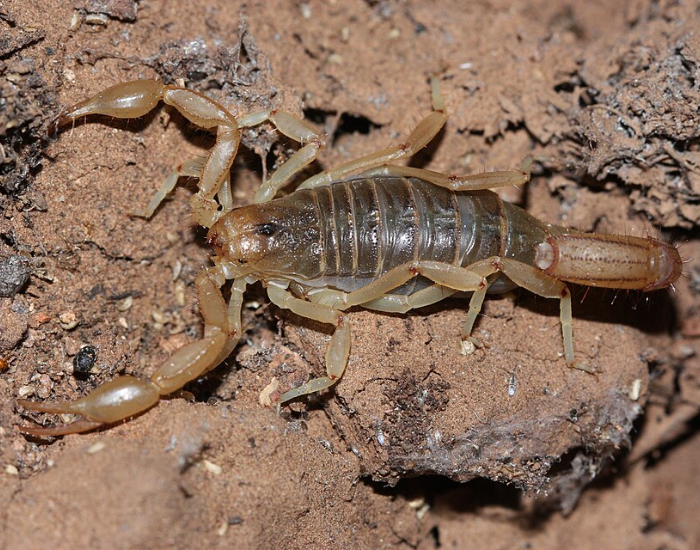
4. Northern Desert Hairy Scorpion (Hadrurus spadix)
A close relative of the giant hairy scorpion, the northern desert hairy scorpion is another impressive Arizona species built for burrowing.
Identification:
- Size: 4–5 inches
- Color: Dark back with lighter, yellowish legs
- Features: Hairy appearance, especially on the pincers
- Build: Robust and heavily built
Sting Risk: Painful sting, but it rarely causes severe cases requiring hospital treatment.
Behavior: A nocturnal predator that spends much of its life in deep burrows and feeds on insects, small lizards, and other scorpions.
Habitat: Higher, cooler desert of northern Arizona, in areas with sandy soils and desert washes.
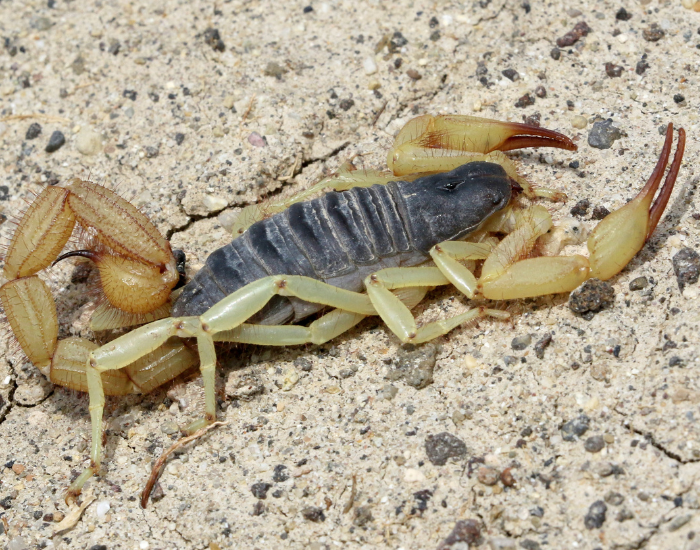
5. Northern Scorpion (Paruroctonus boreus)
Recognized as the northernmost scorpion species in the world, the northern scorpion is a small, cold-hardy species that thrives where most desert scorpions could not survive.
Identification:
- Size: 1.5–2 inches
- Color: Pale yellow-tan to light brown, sometimes with faint darker markings
- Features: A subtle darker V-shaped pattern near the median eyes on the carapace
- Build: Small and compact with slender pincers
Sting Risk: Not medically significant for most healthy adults. The sting is comparable to a bee sting, causing localized pain only.
Behavior: A nocturnal, burrowing hunter that shelters by day in shallow burrows, under rocks, and beneath wood, emerging after dark to hunt insects. It is remarkably cold-tolerant, withstanding temperatures that would be deadly to its desert relatives.
Habitat: Cold desert habitats across northern Arizona — including sagebrush steppe, rocky slopes, and sandy soils of the higher Colorado Plateau — with a range extending north through the Great Basin into Canada.
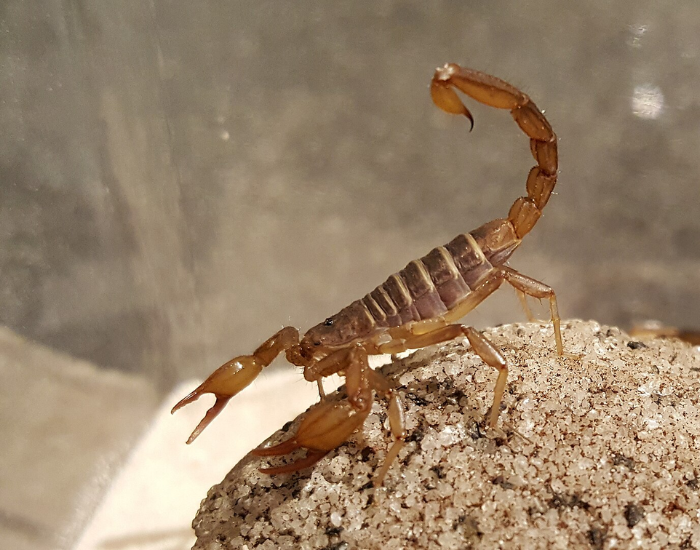
6. Yellow Ground Scorpion (Paravaejovis confusus)
Formerly known as Vaejovis confusus and sometimes called the yellow devil scorpion, this small species is native to Arizona’s rocky desert habitats and is often overlooked because of its size.
Identification:
- Size: 1.5–2 inches
- Color: Light yellow to tan, sometimes with faint striping
- Build: Slender body with narrow pincers
- Adaptations: Well suited for rocky outcrops and desert foothills
Sting Risk: Mild to moderate pain, not considered medically significant.
Behavior: Hides under rocks and debris during the day and emerges at night to hunt small insects.
Habitat: Rocky desert areas and foothills across central and southern Arizona.
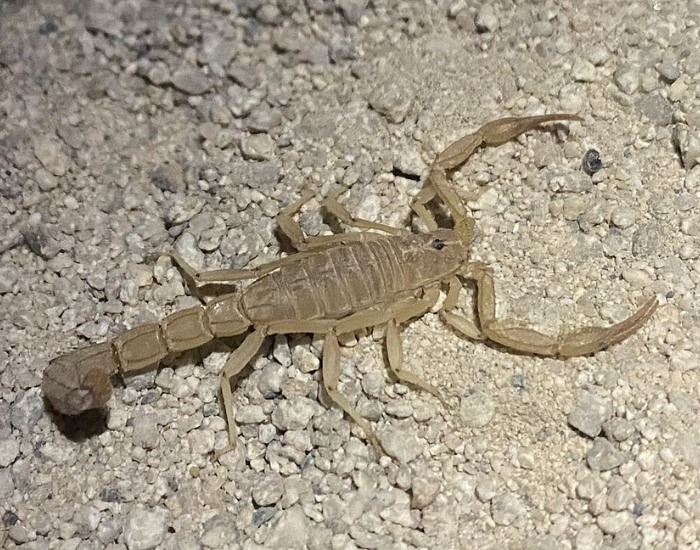
7. Sand Scorpion or Chihuahuan slender-tailed scorpion (Paruroctonus gracilior)
A pale, soil-dwelling scorpion often found with sand sticking to its waxy body, this species is a Chihuahuan Desert “marker” that reaches its western limits in southeastern Arizona.
Identification:
- Size: Around 2 inches
- Color: Pale yellow to yellow-brown
- Build: Slender body with fine pincers
- Features: Can resemble the bark scorpion but lacks its thin, whip-like tail profile
Sting Risk: Painful sting, but not medically significant for most people.
Behavior: A nocturnal, burrowing species that hunts small insects and arthropods at night.
Habitat: Sandy soils, scrubland, and desert grasslands of southeastern Arizona, extending east through New Mexico into Texas.
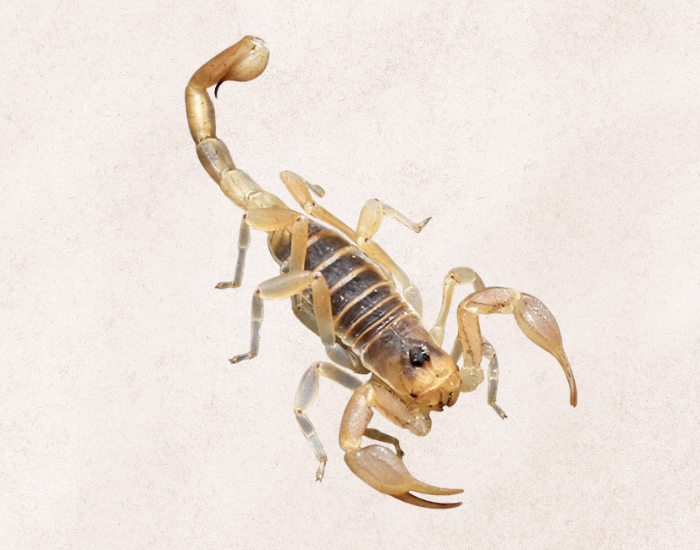
8. Dune Scorpion (Smeringurus mesaensis)
Also called the giant sand scorpion, the dune scorpion is a pale, sand-loving species common in the loose soils of Arizona’s western deserts.
Identification:
- Size: Roughly 2.5–3 inches
- Color: Sandy beige, sometimes so light it looks translucent, with darker back plates
- Build: Slender, with fine pincers suited to sandy terrain
- Tail: Slender and lightly marked
Sting Risk: Not medically significant, though this species will sting more readily than many of its calmer relatives.
Behavior: A fossorial (burrowing) hunter that spends the vast majority of its life underground, emerging on warm nights to ambush insects across open sand.
Habitat: Sandy soils and dune systems in western and southwestern Arizona.
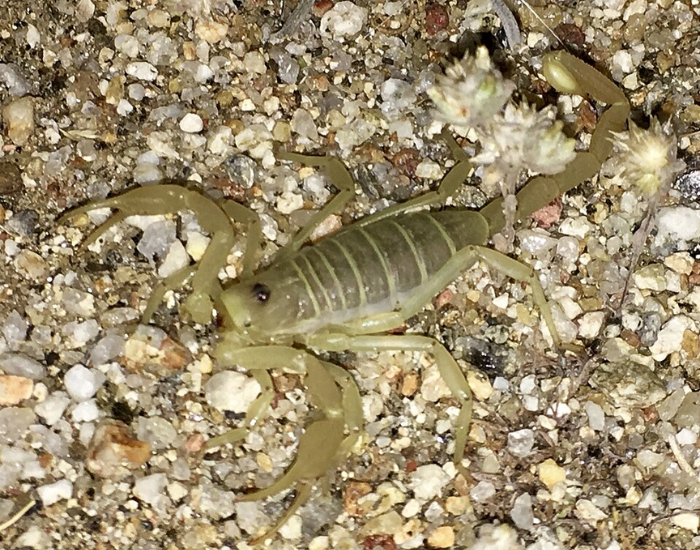
9. Superstition Mountains Scorpion (Superstitionia donensis)
First described from Arizona’s Superstition Mountains, this tiny, secretive scorpion is one of the most widespread native scorpions in the state despite rarely being noticed.
Identification:
- Size: About 1 inch (up to 30 mm)
- Color: Pale tan to light brown
- Build: Small and delicate with slender pincers
- Features: The only species in its genus, notable among scientists for its unusual eyes and venom chemistry
Sting Risk: Very mild; not considered a threat to humans.
Behavior: Hides under rocks and near plants during the day and hunts tiny insects at night.
Habitat: Mountain terrain and desert flats across much of Arizona, from the Superstition Mountains to the state’s southern and western deserts.
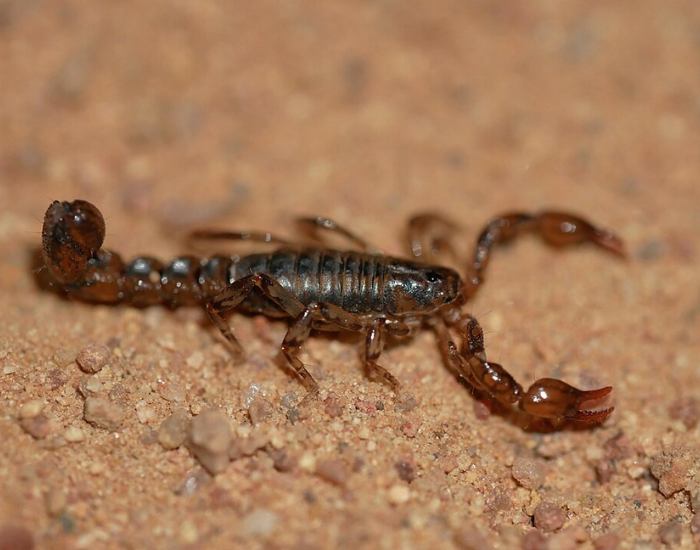
10. Arizona Mountain Scorpion (Vaejovis vorhiesi)
Unlike most species on this list, the Arizona mountain scorpion lives in the cool, moist “sky island” mountain ranges of southeastern Arizona rather than the open desert floor.
Identification:
- Size: 1.5–2 inches
- Color: Yellowish-brown to dark brown with darker mottling on the back
- Build: Compact and sturdy
- Features: One of a growing complex of closely related sky-island scorpions unique to the region
Sting Risk: Mild sting, comparable to a bee sting, causing localized pain only.
Behavior: A nocturnal forager that shelters under rocks, logs, and leaf litter during daylight hours.
Habitat: Higher-elevation forests and canyons of the Huachuca, Santa Catalina, and other sky-island ranges of southern Arizona.
Scorpion Behavior and Biology
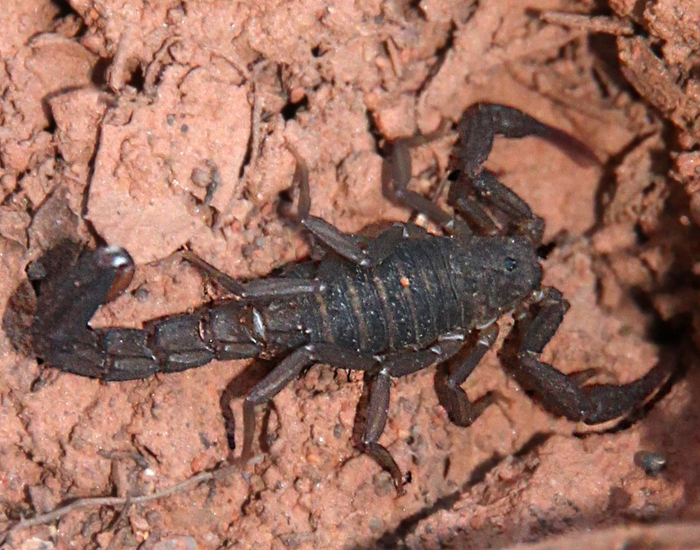
Understanding scorpion behavior is crucial for anyone living in Arizona. These remarkable arachnids have evolved sophisticated survival strategies over millions of years. Scorpions live in a variety of habitats, including under rocks, in burrows, inside wall voids, and around buildings, and scorpions may be active year-round, especially indoors or during mild winters.
Daily Activity Patterns
Most Arizona scorpions are nocturnal, becoming active after sunset when temperatures drop. During daylight hours, they seek shelter under rocks, in crevices, and underneath things like woodpiles, outdoor furniture, and debris. This behavior helps them avoid predators and conserve moisture in the harsh desert environment.
Reproduction and Life Cycle
Female scorpions give birth to live young rather than laying eggs, typically producing 25–35 offspring at a time. After this “birth to live” young, the female carries her brood on her back until they molt and can survive independently — a form of parental care unusual among arachnids. On average, scorpions live for three to five years, though some species live longer.
Diet and Hunting
Scorpions are opportunistic, predatory hunters that feed primarily on insects, small lizards, other scorpions, and various small arthropods. They use their pincers to capture prey and their venomous sting to subdue larger or more dangerous targets. Scorpions themselves are prey for owls, lizards, and specialized desert predators such as grasshopper mice, which are famously resistant to bark scorpion venom.
How to Keep Scorpions Out of Your Home
Because scorpions are attracted to moisture and will enter homes in search of water, prevention focuses on sealing entry points and removing habitat. A few practical steps make a real difference:
- Seal cracks and gaps: scorpions can squeeze through gaps as thin as 1/16 inch, so seal entry points around doors, windows, pipes, and the foundation.
- Shake out shoes, flip flops, and clothing before use to avoid scorpion stings.
- Reduce clutter and debris around the home to minimize scorpion habitats and hiding spots.
- Keep grass mowed and bushes pruned, and trim tree branches and shrubs so they don’t touch the house and give climbing scorpions a bridge indoors.
- Store firewood outside and away from the house to prevent scorpions from nesting near or indoors.
For persistent problems — especially with bark scorpions in urban areas — professional pest control can help identify entry points and reduce populations around the property.
FAQ About Arizona Scorpions
Arizona scorpions are venomous, not poisonous. Only the Arizona bark scorpion poses serious medical risks to humans. Most species of scorpions cause only mild stings comparable to bee stings.
Fatalities from scorpion stings are extremely rare thanks to available antivenom and improved medical care. Arizona has the highest incidence of scorpion stings in the country — its poison centers field on the order of 11,000+ exposures a year, and some communities report rates as high as 677 stings per 100,000 people — yet deaths are almost unheard of.
The stripe-tailed scorpion (Paravaejovis spinigerus) is generally the most abundant species statewide, while the Arizona bark scorpion is the one most often encountered inside urban homes.
Most dark or “black” scorpions in Arizona, including the desert hairy scorpion species, cause local pain and swelling but are not considered life-threatening to healthy adults.
Yes. All scorpion species fluoresce under ultraviolet light, which makes a black light an excellent tool for detection and identification.
Respecting Arizona’s Desert Neighbors
Arizona scorpions represent some of nature’s most successful desert survivors. From the medically significant Arizona bark scorpion to the impressive giant hairy scorpion, each species has evolved unique adaptations for thriving in harsh desert habitats.
While encounters with venomous scorpions call for caution and respect, these remarkable arachnids are integral parts of Arizona’s desert ecosystems. They’ve inhabited these lands long before human development spread across the desert, serving as both pest controllers and symbols of desert resilience.
Whether you’re a longtime Arizona resident or a newcomer to the desert Southwest — or a teenager on your first desert hike being told to shake out your boots — understanding these 10 common scorpions will help you coexist safely with your desert neighbors. Every glowing encounter under ultraviolet light or surprise discovery in a shoe is a glimpse into millions of years of evolutionary success in one of Earth’s most challenging environments.
Can You Name That Scorpion? 🦂
A 10-photo identification challenge — the wrong answers are deliberately tricky look-alikes of a similar size and build. Go back and change any answer before you score.
Which scorpion is this?
References:
Boyer, L. V., Theodorou, A. A., Berg, R. A., Mallie, J., Chávez-Méndez, A., García-Ubbelohde, W., Hardiman, S., Alagón, A., & Curry, S. C. (2009). Antivenom for critically ill children with neurotoxicity from scorpion stings. New England Journal of Medicine, 360(20), 2090–2098. https://doi.org/10.1056/NEJMoa0808455
Gaffin, D. D., Bumm, L. A., Taylor, M. S., Popokina, N. V., & Mann, S. (2012). Scorpion fluorescence and reaction to light. Animal Behaviour, 83(2), 429–436. https://doi.org/10.1016/j.anbehav.2011.11.014
Kang, A. M., & Brooks, D. E. (2017). Nationwide scorpion exposures reported to US poison control centers from 2005 to 2015. Journal of Medical Toxicology, 13(2), 158–165. https://doi.org/10.1007/s13181-016-0594-0
Skinner, J. S., Klotz, S. A., Yaeger, R., Walter, F. G., Curry, S. C., & Boesen, K. (2018). Study of factors contributing to scorpion envenomation in Arizona. Journal of Medical Toxicology, 14(4), 285–290. https://doi.org/10.1007/s13181-018-0690-4
Klotz, S. A., Yates, S., Smith, S. L., Dudley, S., Shirazi, F. M., & Klotz, J. H. (2021). Scorpion stings and antivenom use in Arizona. American Journal of Medicine, 134(8), 1034–1038. https://doi.org/10.1016/j.amjmed.2021.01.025
Santibáñez-López, C. E., Cid-Uribe, J. I., Batista, C. V. F., Ortiz, E., & Possani, L. D. (2016). Venom gland transcriptomic and proteomic analyses of the enigmatic scorpion Superstitionia donensis (Scorpiones: Superstitioniidae), with insights on the evolution of its venom components. Toxins, 8(12), 367. https://doi.org/10.3390/toxins8120367