
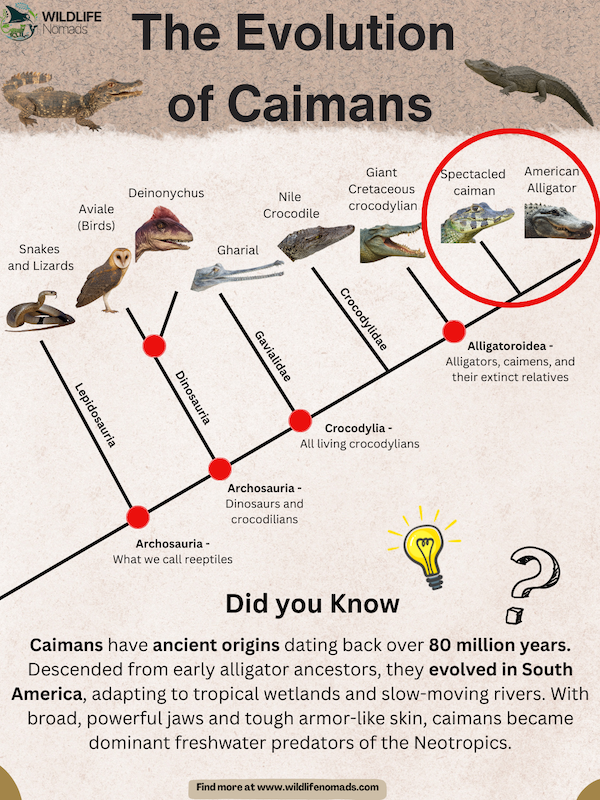
Caimans are one of the most fascinating reptiles of the Americas, often compared to both alligators and crocodiles. But what is a caiman animal exactly? Belonging to the family Alligatoridae, caimans are close relatives of alligators, and together they form part of the larger crocodilian group.
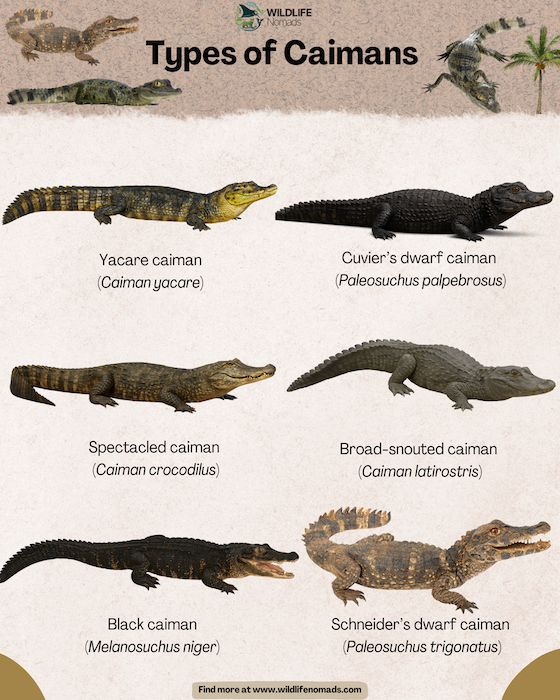
There are six different species, ranging from the tiny Cuvier’s dwarf caiman to the massive black caiman (Melanosuchus niger), the largest caiman species that can grow up to 4.5 meters long. Found in Central and South America, these reptiles thrive in freshwater habitats like rivers, lakes, wetlands, and swamps.
Here are 10 facts that will help you understand them better:
1. Caimans Are Part of the Alligator Family
They belong to the family Alligatoridae, making them closer to alligators than to true crocodiles. This leads many to ask: “Is a caiman a crocodile or an alligator?” The answer: neither, it’s its own branch of the crocodilian family, though they share many similarities.
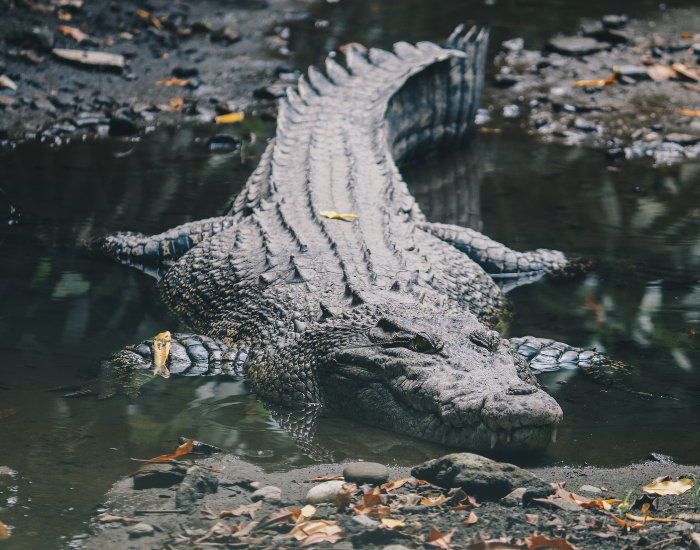
Some people even use the phrase “caiman alligator”, but while they are related, caimans are distinct. Caimans, generally have broader, blunter, more U-shaped snouts than the V-shaped snouts of true crocodiles. The defining dental difference between alligators/caimans (Alligatoridae) and crocodiles (Crocodylidae) is that the fourth tooth on the lower jaw of a crocodile fits into an external notch in the upper jaw, remaining visible when the mouth is closed. For alligators and most caimans, this tooth is hidden within a socket in the upper jaw.
2. There Are Six Different Species of Caiman
The recognized caiman species include:
- Spectacled caiman (Caiman crocodilus) – the most widespread, found from Mexico to South America.
- Black caiman (Melanosuchus niger) – the largest member, once endangered, now recovering.
- Broad-snouted caiman (Caiman latirostris).
- Yacare caiman (Caiman yacare) – common in the Amazon Basin.
- Cuvier’s dwarf caiman (Paleosuchus palpebrosus) – the smallest species.
- Schneider’s dwarf caiman (Paleosuchus trigonatus).
These six represent all types of caiman, spread across diverse habitats in Central and South America.
3. Black Caimans Are Giants
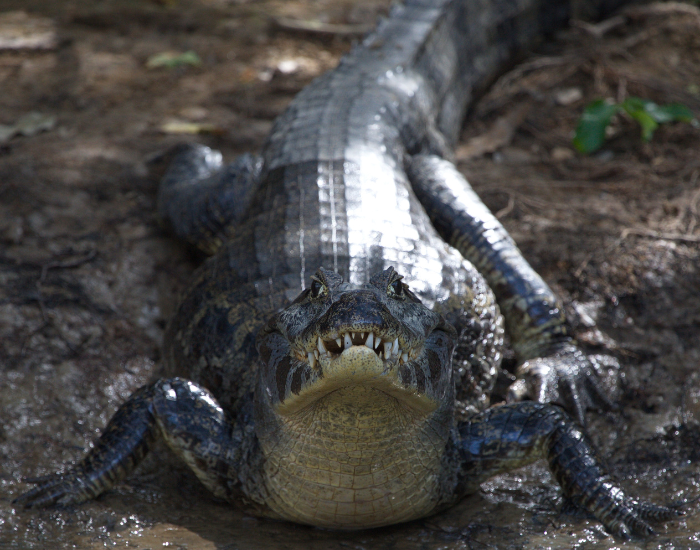
The black caiman (Melanosuchus niger) is the largest caiman species and one of the biggest crocodilians in the world, rivaling saltwater crocodiles.
- Adults can reach 4–5 meters in length.
- Once heavily hunted for skins, their numbers dropped drastically.
- Conservation efforts have helped populations recover in the Amazon Basin.
4. They Are Apex Predators
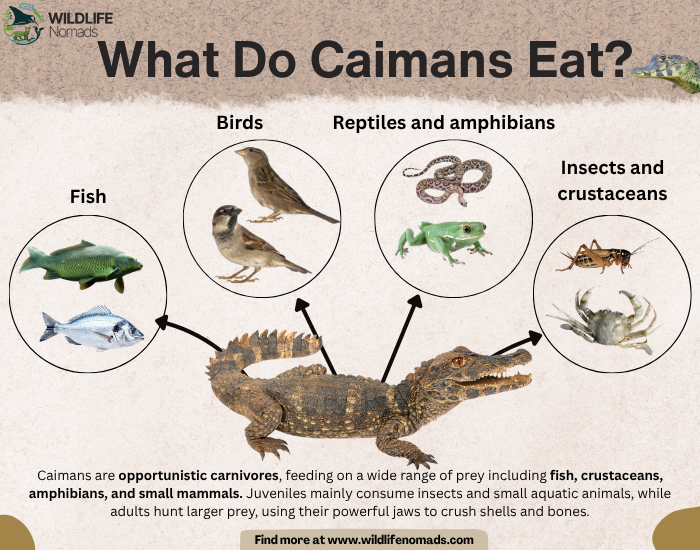
They are considered apex predators in their ecosystems. Depending on size and age, they feed on:
- Fish (their main diet)
- Birds
- Small mammals
- Reptiles and amphibians
- Insects and crustaceans
This varied diet makes them key to balancing populations of prey species.
5. Caimans Prefer Freshwater
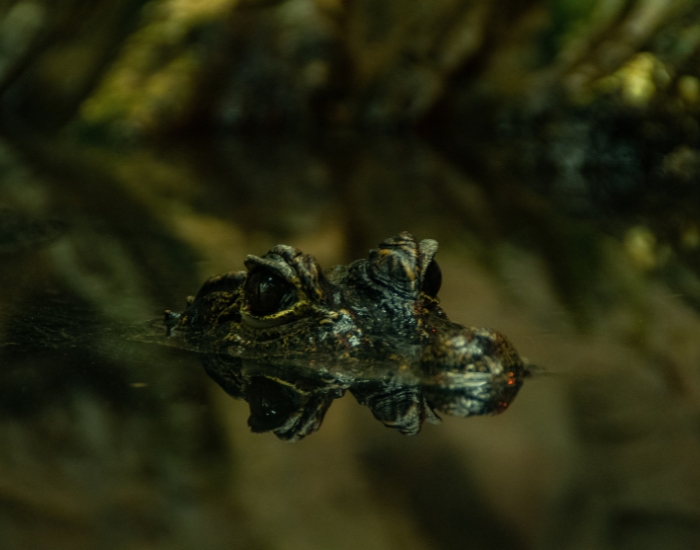
Most caimans live in freshwater habitats such as slow-moving rivers, swamps, lakes, and wetlands. They thrive in warm climates with dense vegetation where they can ambush prey.
Unlike true crocodiles, caimans are less adapted to saltwater habitats, though some, like the spectacled caiman, may occasionally venture into brackish waters.
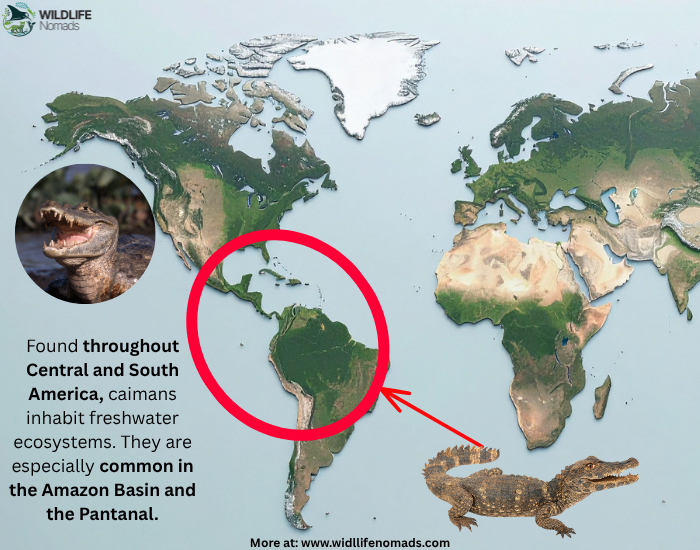
6. Native to Central and South America
They are found throughout Central and South America, from southern Mexico to Argentina. They are especially common in the Amazon Basin, where water-rich environments support large populations.
Different species dominate different regions: the yacare caiman in the Pantanal wetlands of Brazil, the spectacled caiman across Central America, and the black caiman in Amazonian rivers.
7. Amazing mother – Female Caimans Guard Their Nests
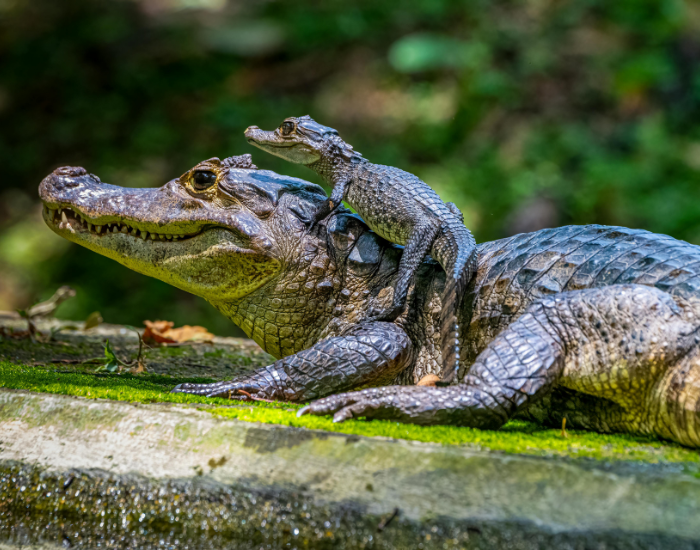
Breeding is a crucial time for caimans. Females build nests of vegetation where they lay eggs. They guard these nests fiercely until the young hatch, then may assist hatchlings in reaching the water.
This parental care, unusual for reptiles, increases survival rates in the wild.
8. How Big Is a Caiman? Bigger Than You Expected
One of the most common questions is: “How big is a caiman animal?” – Well the answer depends on the species, but the largest rivals crocodiles in size.
- Cuvier’s dwarf caiman: as small as 1.5 meters
- Spectacled caiman: 2–2.5 meters
- Yacare caiman: around 3 meters
- Black caiman: up to 4.5–5 meters

9. Caimans and Humans – Peaceful but Better Not To Mess Wit Them
Are caimans aggressive to humans? Generally, they avoid people, but large ones, especially black caimans, can be dangerous if threatened. In the wild, jaguars are one of their few natural predators, capable of preying on even adult caimans.
They are also sometimes kept as exotic pets, but this is unsafe and often illegal due to their size and danger.
10: Conservation of Caimans – Are They Enadangered?
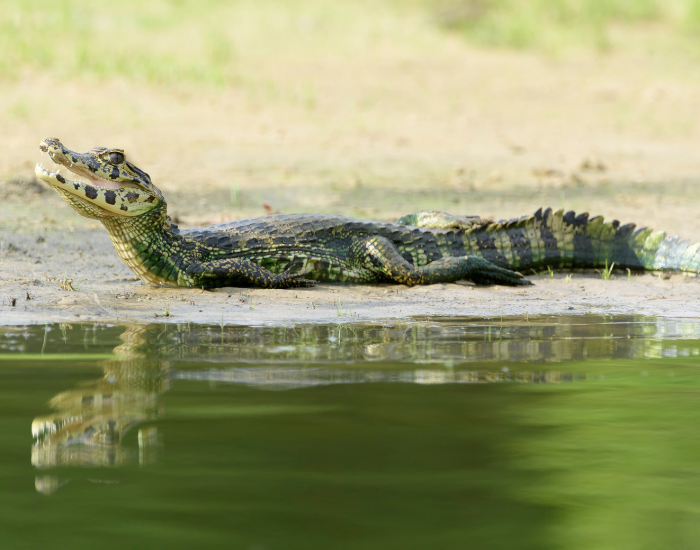
Caimans were once hunted extensively for their skins, leading to declines in many populations. The black caiman was nearly driven to extinction but has rebounded thanks to protection.
Today, conservation action plans focus on preserving wetlands, rivers, and lakes that they rely on, as well as enforcing hunting regulations. They remain an important part of their ecosystems, ensuring balance between fish, birds, and small mammals.
FAQ About Caimans
They are reptiles in the Alligatoridae family, closely related to alligators and distinct from crocodiles.
They are reptiles in the Alligatoridae family, closely related to alligators and distinct from crocodiles.
Wild caimans are native to Central and South America, but some have been introduced in Florida, where they occasionally appear.
Sizes range from 1.5 m (dwarf caiman) to 4.5–5 m (black caiman).
Most are not aggressive unless provoked, but larger species can be dangerous.
No. Although closely related, they are different genera and cannot interbreed.
Caimans are known for being apex predators of freshwater habitats, important for ecosystem health.
Caiman’s Future
Caimans, often confused with alligators and crocodiles, are unique reptiles with six recognized species across Central and South America. From the tiny dwarf caiman to the giant black caiman, these reptiles demonstrate incredible diversity.
They may resemble alligators, but they are distinct, adapted to rivers, wetlands, and lakes of the Amazon Basin. Understanding what a caiman animal is helps us appreciate their role as apex predators and the importance of protecting their habitats.