When you think of the Arctic’s most resilient creatures, the Arctic fox usually comes to mind. For years, I’d pictured them as a common sight in the far north, until I actually went looking for one.
While living and travelling through northern Sweden, including time spent around Kiruna — well above the Arctic Circle, where winter brings polar night and summer never truly gets dark, I searched constantly for Arctic foxes. I scanned tundra landscapes, followed tracks, and waited in silence more times than I can count. Yet despite being in prime territory, the only foxes I encountered were red foxes, along with martens moving confidently through the snow.
That absence tells an important story. Arctic foxes are incredibly well adapted to life in extreme cold, but they’re also elusive, climate-sensitive, and increasingly outcompeted by other species. Beyond their striking white winter coats and compact, insulated bodies lies a survival story shaped by evolution, climate, and human impact. In this guide, we’ll explore what makes Arctic foxes such extraordinary animals, from their ancient evolutionary roots to the challenges threatening their future.

1. Arctic Foxes Are Master Survivors in Extreme Cold
The arctic fox has evolved into nature’s ultimate cold-weather specialist, capable of surviving temperatures as low as -70°F (-56°C). Unlike many Arctic animals that migrate south or hibernate during the brutal winter months, these incredible creatures remain active year-round in some of the planet’s most unforgiving conditions.
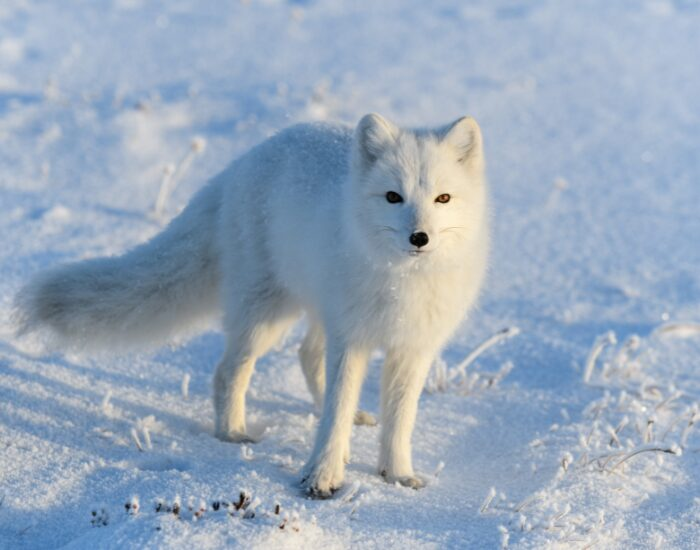
Their secret lies in their remarkable physiological adaptations. Arctic foxes possess the warmest fur of any mammal, with a winter coat that’s up to 140% warmer than their summer fur. This multi-layered insulation system includes dense underfur topped with longer guard hairs that trap warm air close to their bodies.
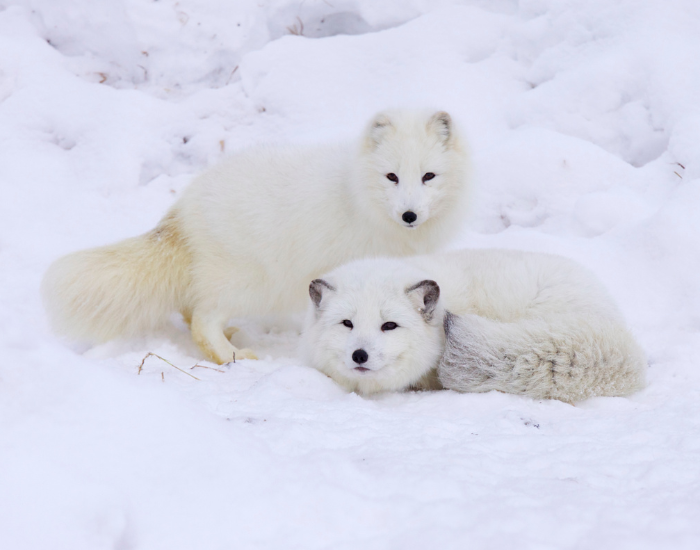
But their cold-weather adaptations don’t stop there. These foxes have proportionally shorter ears, legs, and muzzles compared to their temperate cousins – a feature that reduces heat loss through what scientists call the “Allen’s rule.” When sleeping, an arctic fox will curl into a tight ball and wrap its incredibly fluffy tail around its face and paws, creating a natural sleeping bag that conserves precious body heat.
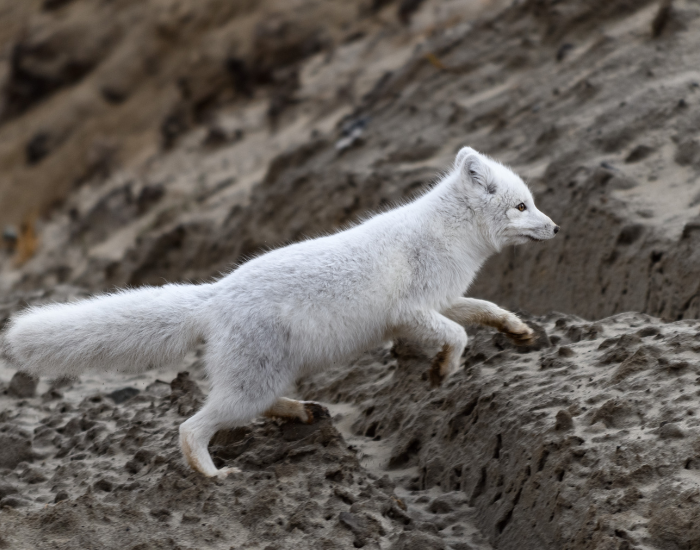
Their feet deserve special mention too. Covered in thick fur even on the pads, their paws act like natural snowshoes, providing both insulation against the frozen ground and traction on icy surfaces. This adaptation allows them to hunt effectively even when snow covers their territory for months at a time.

2. They Experience One of Nature’s Most Dramatic Color Changes
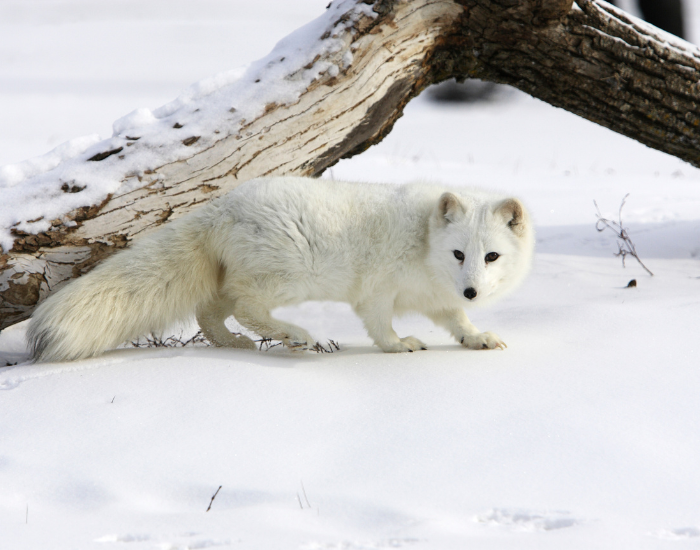
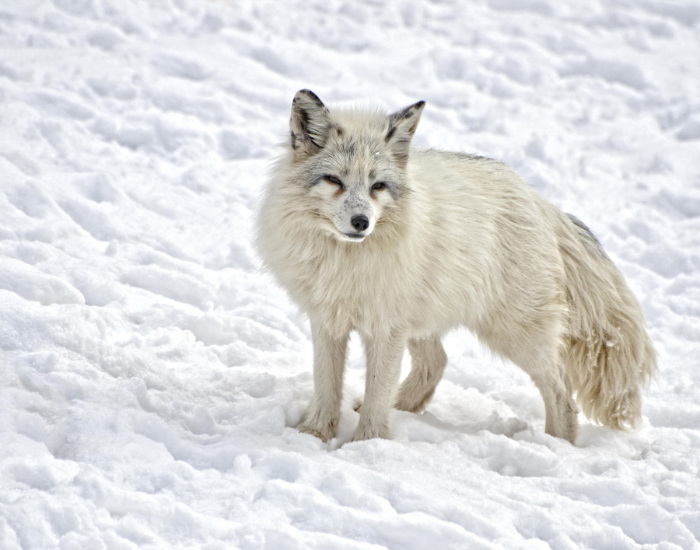
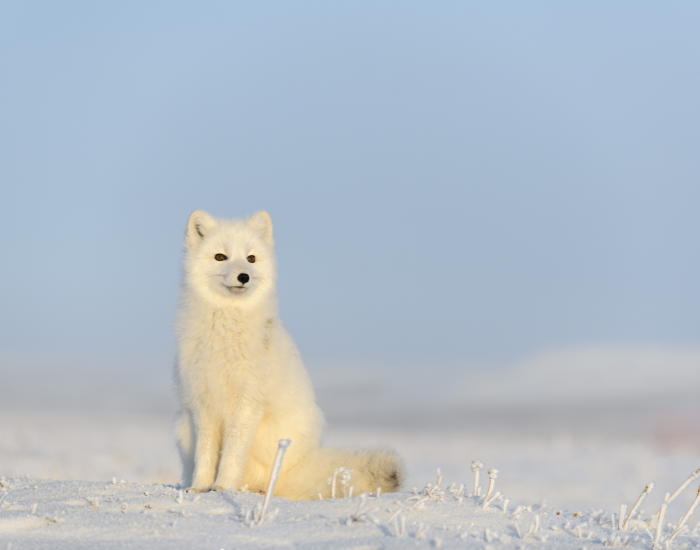
One of the most striking features of the arctic fox is its seasonal coat transformation, which represents one of the most dramatic color changes in the animal kingdom. During winter months, most arctic foxes sport pristine white coats that provide perfect camouflage against snow and ice, making them nearly invisible to both predators and prey.
As spring arrives and snow begins to melt, these foxes undergo a remarkable molting process. Their white winter fur gradually gives way to a brown, gray, or bluish summer coat that blends seamlessly with the rocky, vegetation-covered Arctic landscape. This seasonal camouflage is so effective that photographers and wildlife observers often struggle to spot them even when they know foxes are present.
Interestingly, not all arctic foxes follow this color pattern. Some individuals, known as “blue morphs,” maintain a dark bluish-gray coat year-round, though it may lighten slightly in winter. These blue morphs are more common in coastal areas and islands where the landscape doesn’t become completely snow-covered.
The timing of this color change is triggered by daylight hours rather than temperature, demonstrating the arctic fox’s incredible evolutionary fine-tuning to its environment. As days grow shorter in autumn, hormonal changes begin the process of growing their winter coat, ensuring they’re fully prepared for the harsh months ahead.

3. Arctic Fox Populations Face a Complex Conservation Picture
The question “How many arctic foxes are left?” doesn’t have a simple answer, as their conservation status varies dramatically by region. According to the IUCN Red List, arctic foxes are classified as “Least Concern” globally, with world populations estimated in the hundreds of thousands.
However, this global picture masks some serious regional concerns. The Scandinavian mainland population is critically endangered, with only about 120 adult individuals remaining in Finland, Norway, and Sweden combined. This dramatic decline has made the Fennoscandian arctic fox one of Europe’s most endangered mammals.
The primary reason for these regional differences lies in varying environmental pressures and human impacts. In vast Arctic regions like northern Canada, Alaska, and Siberia, arctic fox populations remain relatively stable and experience natural fluctuations tied to their prey cycles. These population fluctuations are normal and primarily driven by the boom-and-bust cycles of lemmings, their primary food source.
Climate change, however, is creating new challenges across their range. Melting Arctic ice due to climate change is contributing to population declines, while warmer temperatures allow more aggressive competitors like red foxes to expand northward into traditional arctic fox territory.
4. Arctic Foxes Call North America Home Too
Arctic foxes are indeed found in North America, with healthy populations thriving in Alaska and northern Canada. Alaska hosts some of the continent’s most robust arctic fox populations, particularly in the tundra regions and offshore islands.
In Alaska, arctic foxes are distributed across the state’s northern and western regions, including the North Slope, the Seward Peninsula, and various Aleutian Islands. The Pribilof Islands, in particular, support significant populations that have adapted to the unique maritime Arctic environment.
These North American populations generally face fewer conservation pressures than their European counterparts. The vast, sparsely populated wilderness areas of Alaska and northern Canada provide extensive habitat with minimal human interference. However, they still face challenges from climate change and occasional conflicts with human activities.
The foxes found in North America display the same remarkable adaptations as their Eurasian relatives, with perhaps even more dramatic seasonal migrations following food sources. Some Alaskan arctic foxes travel hundreds of miles between seasons, demonstrating the incredible endurance and navigation abilities that make these animals such successful Arctic survivors.
5. Understanding the Predators of the Arctic Fox
The question of what eats arctic fox reveals a complex web of Arctic predators that these small foxes must constantly evade. Despite being skilled hunters themselves, arctic foxes face numerous threats from various predators throughout their lives, with vulnerability changing dramatically from pup to adult.
Arctic foxes have multiple predators including birds of prey like golden eagles, bald eagles, , other mammlas such as wolves, wolverines, polar bears, brown bears, and red foxes. Each of these predators presents different challenges and hunting strategies that arctic foxes must navigate to survive.
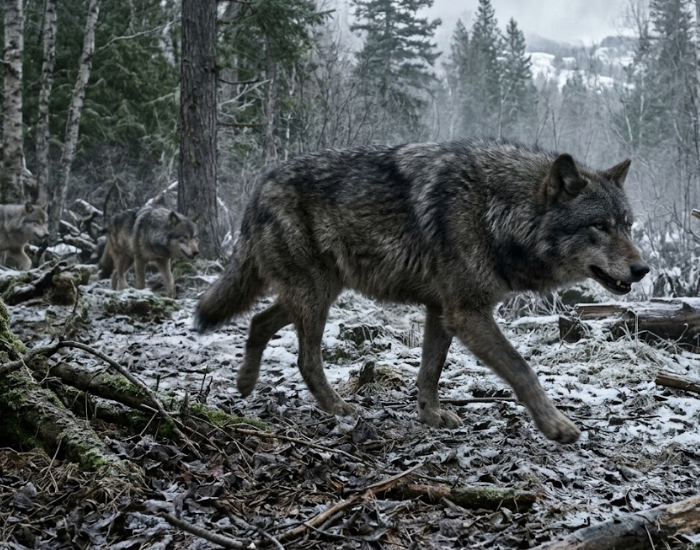
Predators of the arctic fox vary by habitat and season. In coastal areas, polar bears occasionally prey on arctic foxes, though this typically occurs opportunistically rather than as targeted hunting. Wolves will occasionally prey on arctic foxes, particularly when their usual prey is scarce, though the foxes’ small size makes them a less preferred target compared to larger ungulates.

6. The Growing Threat from Red Fox Competition
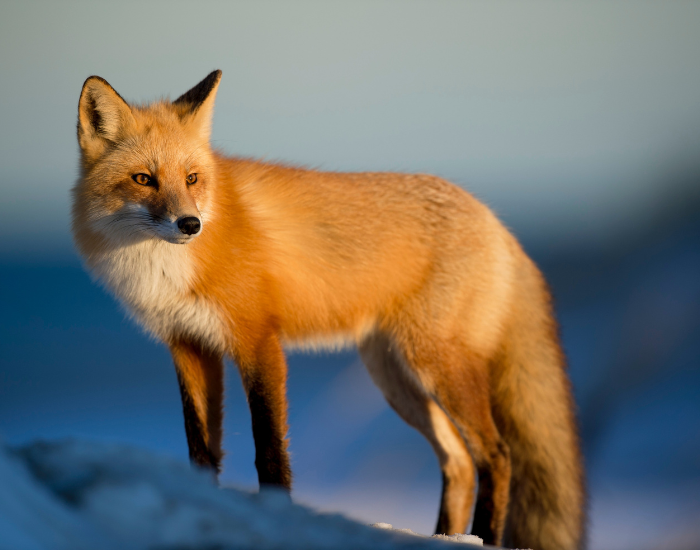
Perhaps the most concerning answer to what are arctic foxes predators in the modern world is the expanding presence of red foxes in Arctic regions. The Arctic fox’s main threat is the spread of the larger and more aggressive red fox, which has encroached on arctic fox territory largely due to climate change.
This isn’t traditional predation in the sense of one animal hunting another for food. Instead, it represents something potentially more devastating: competitive displacement. Red foxes are larger and more aggressive than arctic foxes, and tend to outcompete the smaller animals for food and resources.
As global temperatures rise, previously inhospitable Arctic regions become accessible to red foxes. These southern invaders bring several advantages in direct competition with arctic foxes. They’re roughly 30% larger, more aggressive in territorial disputes, and have less specialized dietary requirements, allowing them to exploit a broader range of food sources.
7. Arctic Foxes Are Opportunistic Survival Experts
The dietary flexibility of the arctic fox represents one of their greatest survival advantages in the harsh Arctic environment. While many Arctic animals specialize in specific food sources, arctic foxes have evolved as supreme opportunists, capable of switching between vastly different food sources as availability changes.
Arctic foxes prey on many small creatures such as lemmings, voles, ringed seal pups, fish, waterfowl, and seabirds. They also eat carrion, berries, seaweed, and insects. This incredible dietary diversity allows them to survive when their preferred prey becomes scarce.
Lemmings form the cornerstone of arctic fox diet across much of their range. These small rodents undergo dramatic population cycles, with numbers fluctuating wildly from year to year. During lemming boom years, arctic fox populations soar as breeding pairs can successfully raise large litters. When lemming populations crash, arctic foxes must rely on their opportunistic nature to survive.
Coastal arctic foxes have developed additional survival strategies, often following polar bears to scavenge seal kills. These “commensalistic” relationships demonstrate the foxes’ ability to exploit the hunting success of larger predators. They’ve even been observed catching fish in shallow waters and raiding seabird colonies for eggs and chicks.
8. Arctic Fox Social Structure Is More Complex Than You’d Think
Unlike the solitary lifestyle many people associate with foxes, arctic fox social behavior reveals surprising complexity that changes dramatically based on environmental conditions and resource availability. Arctic foxes are primarily monogamous, with both parents caring for offspring, but when resources are abundant, they may display more promiscuous behavior and complex social structures.
During harsh conditions when food is scarce, arctic foxes typically form simple family units consisting of a mated pair and their offspring. These nuclear families work together to hunt, defend territory, and raise young, with both parents actively participating in pup care and protection.
However, when prey is abundant, arctic fox social dynamics become fascinating complex. Larger packs consisting of breeding and non-breeding males or females can guard a single territory more effectively to increase pup survival. These extended family groups may include adult offspring from previous years who help care for new litters.
The formation of these larger social groups serves multiple survival functions. Additional adults provide more eyes to watch for predators, more hunters to secure food, and more defenders to protect valuable territory and den sites. This cooperative behavior significantly increases the survival rates of pups during their vulnerable early months.
9. Golden Eagles Present a Serious Aerial Threat
The relationship between golden eagles and arctic foxes provides a perfect example of the intense predator-prey dynamics that shape Arctic ecosystems. Golden eagles are confirmed predators of arctic foxes, with documented cases of predation, making them one of the most significant aerial threats these ground-dwelling mammals face.
Golden eagles possess several advantages when hunting arctic foxes. Their exceptional eyesight allows them to spot foxes from great distances, while their powerful talons and impressive size (wingspans can exceed 7 feet) make them formidable predators capable of taking adult foxes, not just pups.

10. Climate Change Is Reshaping Arctic Fox Habitat
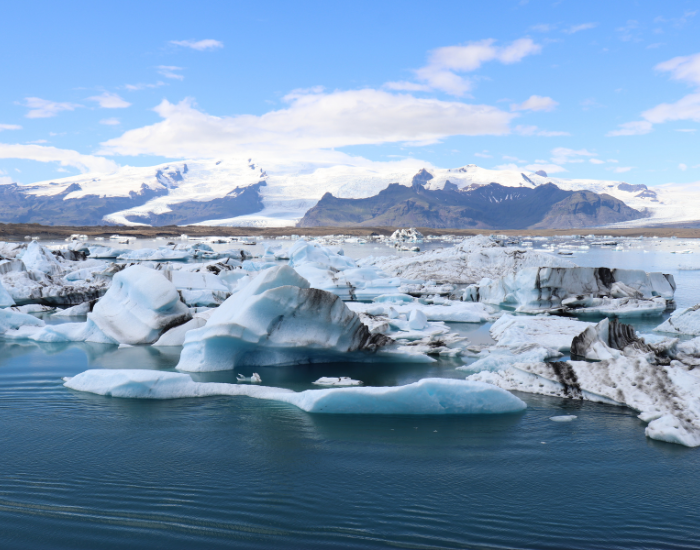
The Arctic is warming at twice the global average rate, creating unprecedented challenges for specialized Arctic species like the arctic fox. These temperature increases don’t just affect the foxes directly; they’re fundamentally altering the entire Arctic ecosystem upon which these animals depend.
One of the most visible impacts involves changes to sea ice extent and timing. Arctic foxes in coastal regions depend on sea ice for accessing new hunting grounds and following polar bears to scavenge seal kills. As ice forms later and melts earlier each year, these opportunities become increasingly limited, forcing foxes to rely more heavily on terrestrial food sources.
Changing precipitation patterns also significantly impact arctic fox survival. Increased rainfall during winter months can create ice layers that prevent foxes from accessing ground-dwelling prey like lemmings. These “rain-on-snow” events can devastate local fox populations by cutting off their primary food source during the most energy-demanding time of year.
The timing of seasonal changes presents another challenge. Arctic foxes have evolved their breeding cycles, molting patterns, and behavioral changes around predictable seasonal cues. As these patterns become less reliable, foxes may find themselves with winter coats during warm weather or attempting to raise pups when traditional food sources aren’t available.
Perhaps most concerning is the northward expansion of southern species into traditional arctic fox habitat. Warmer temperatures enable not just red foxes, but also new prey species, predators, and even disease vectors to colonize Arctic regions, creating entirely new ecological dynamics that arctic foxes must navigate.
11. Arctic Fox Reproduction Is Precisely Timed for Survival
The breeding strategy of the arctic fox represents a masterclass in evolutionary timing, with every aspect of their reproductive cycle precisely calibrated to maximize survival in the harsh Arctic environment. Understanding their breeding patterns reveals why these animals have been so successful in one of Earth’s most challenging habitats.
Arctic foxes typically mate in late winter or early spring, with the exact timing varying by latitude and local conditions. This timing ensures that energy-demanding gestation period, and pup-rearing occur during the brief Arctic summer when food is most abundant and weather conditions are least severe.
Arctic foxes form monogamous pairs during breeding season and stay together to raise their offspring. This partnership is crucial for survival, as raising pups in the Arctic requires the combined efforts of both parents to provide adequate food and protection.
Litter sizes vary dramatically based on food availability, particularly lemming abundance. During lemming boom years, arctic foxes may produce litters of 10-15 pups, while during lean years, they may not breed at all or produce very small litters. This reproductive flexibility allows populations to respond quickly to changing environmental conditions.
12. Conservation Success Stories Offer Hope for the Future
In Scandinavia, conservationists have implemented captive breeding, supplemental feeding, and predator control with success. WWF and other organizations monitor populations using GPS collars and trail cams.
Protected habitats in Svalbard and Canada have shown positive signs, but much work remains. International cooperation and ongoing research are essential.
13. Arctic Foxes Are a Cold-Specialist Branch of the Fox Family
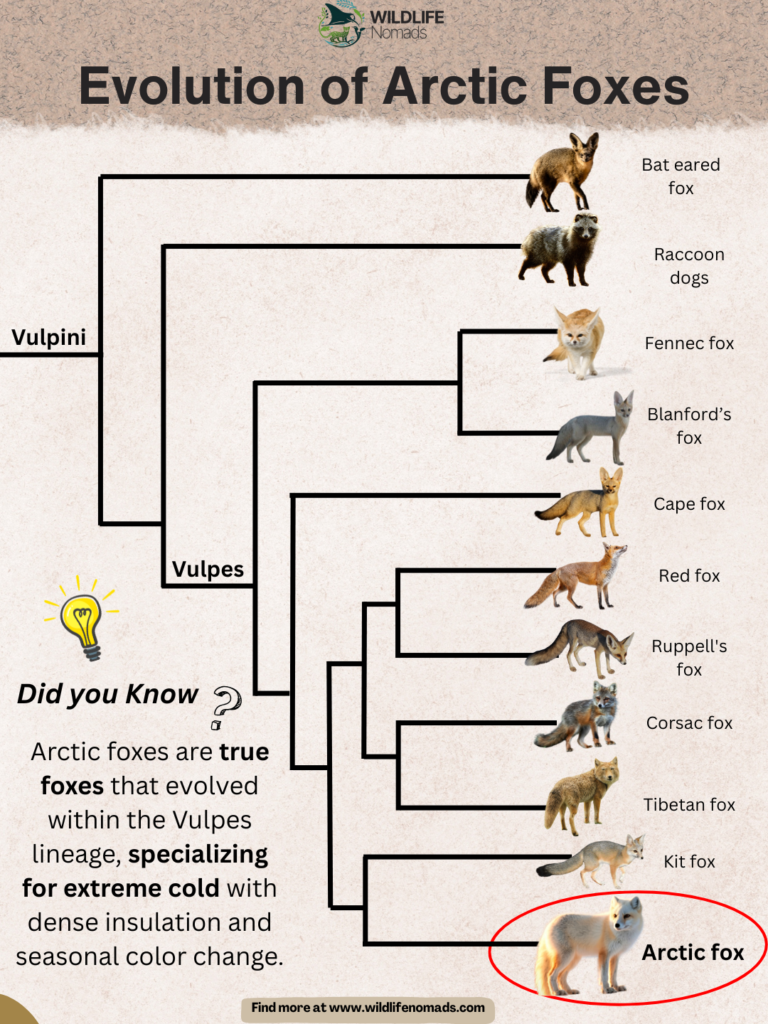
Arctic foxes evolved within the true fox (Vulpes) lineage, branching off as foxes began expanding into colder northern environments during the Ice Ages. While relatives like the kit fox and fennec fox adapted to heat and arid landscapes, the Arctic fox followed the opposite evolutionary path, developing dense insulation, compact ears, and a metabolism built for subzero survival. In contrast to early-diverging species like the bat-eared fox, which evolved for insect-rich savannas, the Arctic fox represents one of evolution’s most extreme cold-weather experiments within the fox family.
Habitat & Geographic Range of the Arctic Fox
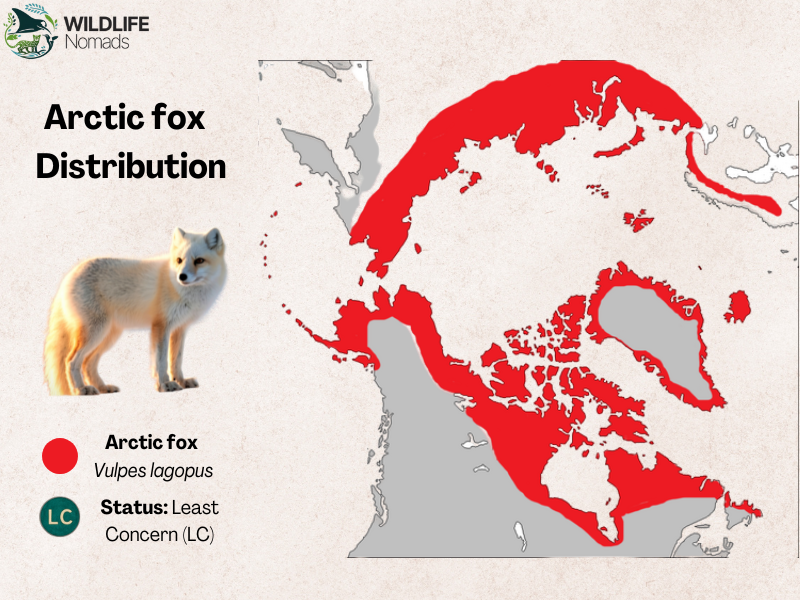
The Arctic fox (Alopex lagopus) is a true circumpolar species, found throughout the Arctic Circle in both the Eastern and Western hemispheres. Its range includes the vast tundra of northern Canada, Greenland, Iceland, Siberia, and Alaska, as well as remote islands like the Pribilof Islands and parts of the Aleutian Islands.
Within this range, Arctic foxes have adapted to remarkably different environments, from inland snow-covered plains to rugged coastal cliffs. Coastal foxes often differ in appearance and behavior from their inland counterparts, with “blue fox” morphs more common in maritime regions. These darker-coated foxes thrive year-round in areas where snow cover is less consistent, taking advantage of rocky shorelines, bird colonies, and marine food sources.
Their ability to occupy such a wide range of arctic regions is due to extreme adaptability, allowing them to establish dens and hunting routes in conditions that vary from barren ice fields to mossy tundra. In fact, their circumpolar distribution makes them one of the most widespread Arctic mammals.
Hunting Trips & Food Strategies
While opportunistic by nature, the Arctic fox is also a calculated hunter, often embarking on long hunting trips that can cover long distances in search of food. In winter, they dig into the snow to locate and capture small rodents like lemmings and voles, sometimes using a listening-and-pounce technique that allows them to pinpoint prey beneath thick snow cover.
When prey is scarce, they will scavenge seal carcasses left behind by polar bears or even follow other predators such as wolves, hoping to pick up scraps. Coastal foxes raid seabird colonies for eggs and chicks, while inland foxes rely more heavily on snow dens for storing surplus food.
Avoiding predators is as important as finding prey. Arctic foxes remain constantly alert to aerial hunters like golden eagles and ground threats such as wolves and red foxes. Their compact bodies, sharp reflexes, and cryptic coloration help them evade detection while on these essential hunting expeditions.
Protecting an Arctic Icon for Future Generations
The arctic fox stands as one of nature’s most remarkable survivors, having evolved incredible adaptations that allow them to thrive in conditions that would quickly kill most other mammals. From their seasonal color changes and ultra-warm fur to their flexible social structures and opportunistic feeding habits, every aspect of their biology reflects millions of years of fine-tuning to Arctic conditions.
As climate change continues to reshape the Arctic, the future of the arctic fox will depend largely on our ability to address both local and global environmental challenges. Supporting conservation organizations, advocating for climate action, and staying informed about Arctic wildlife issues all contribute to protecting these incredible animals.
The story of the arctic fox reminds us that even the most well-adapted species can face unprecedented challenges in our rapidly changing world. By understanding and protecting these remarkable animals, we help preserve not just a single species, but the entire Arctic ecosystem that they call home.
Every arctic fox that successfully raises a litter, survives a brutal winter, or adapts to changing conditions represents a small victory in the ongoing story of life in the Arctic. These victories matter, and they’re worth fighting for.