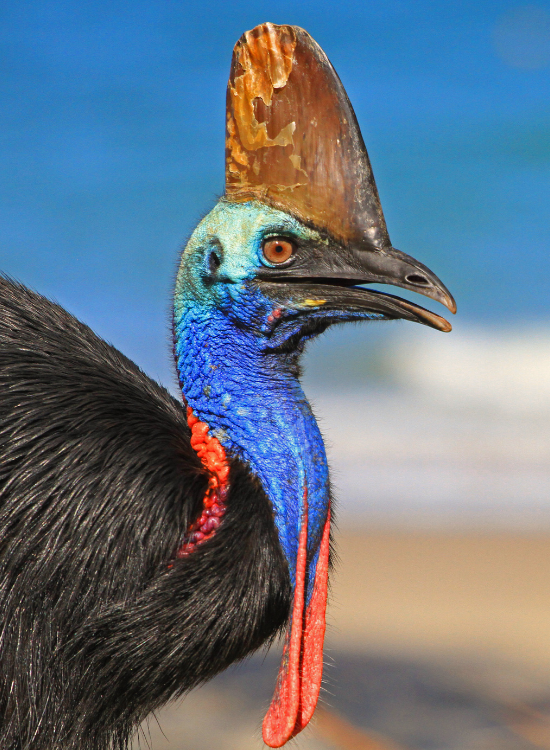
Picture this: you’re walking through the lush rainforests of northeastern Australia when suddenly, a towering black bird with a prehistoric-looking casque on its head emerges from the undergrowth. Its long, dense black feathers are specially adapted for life in the rainforest, helping to shed water efficiently and protect the cassowary as it moves through thick vegetation. Your heart races as you realize you’ve just encountered a southern cassowary – arguably nature’s most intimidating feathered creature.
The southern cassowary isn’t just another pretty bird. This magnificent yet formidable creature has earned the title of “world’s most dangerous bird,” and for good reason. Standing up to six feet tall with powerful legs that can deliver bone-crushing kicks, the southern cassowary bird represents one of nature’s most fascinating evolutionary success stories.
But here’s the thing that really gets me thinking: despite being labeled as dangerous, these remarkable birds are fighting for their survival. With fewer than 1,500 individuals remaining in the wild, the australian cassowary bird faces an uncertain future. It’s a classic case of humans fearing what we should actually be protecting.
Let’s dive into ten incredible facts about the southern cassowary that will change how you think about this extraordinary bird – and maybe inspire you to care about their conservation too.

1. The Southern Cassowary Is Indeed the World’s Most Dangerous Bird
When people ask “how aggressive are cassowaries?” or “are cassowary friendly to humans?” the answer is pretty straightforward: these birds command serious respect. The southern cassowary has legitimately earned its reputation as the world’s most dangerous bird, though the reality is more nuanced than sensational headlines might suggest. Notably, the southern cassowary is the heaviest bird in Australia and one of the heaviest living birds in the world, second only to the ostrich.
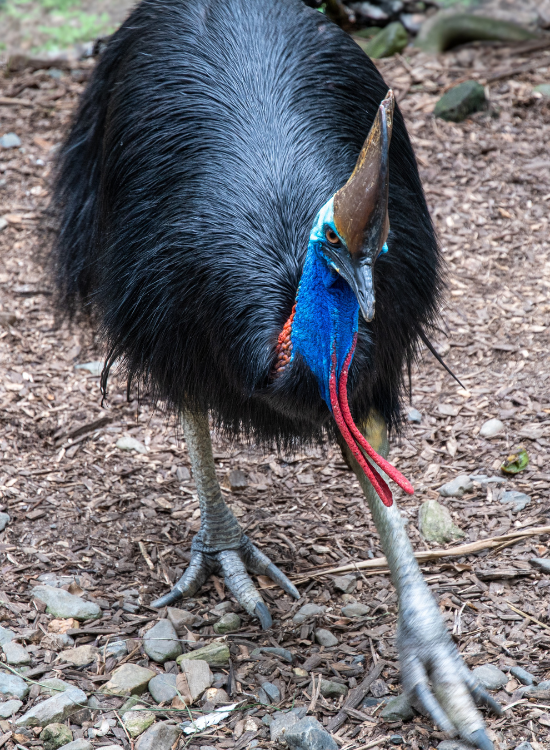
Here’s what makes them so formidable: those powerful legs can deliver kicks with incredible force, propelling their razor-sharp, dagger-like claws toward any perceived threat. Their legs are also used for delivering strong kicks, and they can use their sharp dagger-like claws, up to 4 inches long, to slice and puncture any animal that is a threat, including humans. We’re talking about claws that can reach up to 4 inches long – essentially nature’s switchblades.
The reality is that cassowaries are generally shy and prefer to avoid human contact. They become dangerous primarily when they feel cornered, threatened, or when people have unfortunately taught them to associate humans with food. It’s a classic wildlife management issue that we see with bears, alligators, and other potentially dangerous animals.
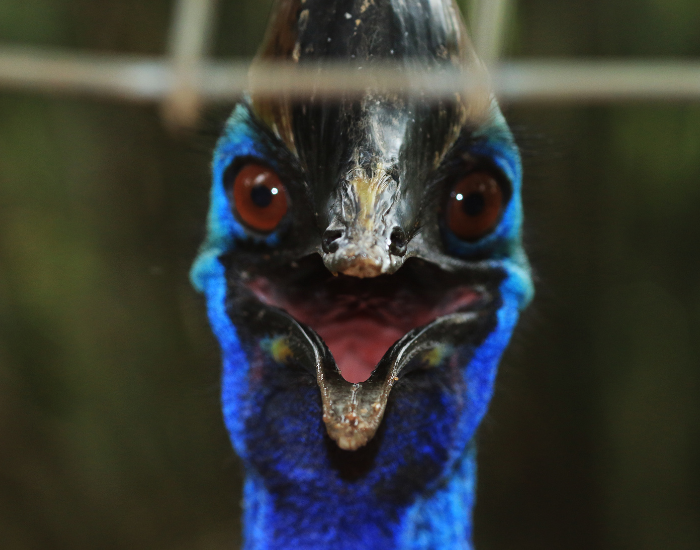
2. Their Kick Can Literally Kill
When people wonder “how powerful is a cassowary kick?” the answer is genuinely terrifying. Southern cassowary size and strength combine to create one of nature’s most devastating weapons. In fact, cassowaries have been known to chase their victims at speeds of up to 50kph and launch themselves up to 2 meters off the ground to deliver powerful kicks.
Think about that for a moment: a bird that can weigh up to 130 pounds, running at 30+ mph, launching itself 6 feet into the air to deliver a kick with 4-inch razor claws. It’s like being attacked by a feathered missile with built-in weaponry.
Their powerful legs also help them jump high, up to 7 feet straight into the air. This jumping ability isn’t just for show – it’s a crucial part of their defensive strategy. When threatened, a cassowary can leap up and kick forward, using gravity and momentum to maximize the impact of their strike.
What fascinates me as someone who studies animal behavior is that this incredible weaponry evolved not for attacking humans (obviously), but for navigating dense rainforest terrain and defending against natural predators. The fact that it’s so effective against humans is really just an unfortunate side effect.
3. Yes, They’re Basically Living Dinosaurs
One of the most common questions I encounter is “are southern cassowary related to dinosaurs?” or “is the southern cassowary a dinosaur?” The answer is absolutely fascinating and rooted in solid evolutionary biology.
Cassowaries are considered to be the dinosaurs’ closest living relative. But let’s be more specific about what this means. Some scientists speculate cassowaries may be the closest link between dinosaurs and modern birds, pointing to their three-toed feet and the horn-like casque on their head, which many dinosaurs are also believed to have had. Cassowaries are among the most ancient living birds, representing a direct lineage from prehistoric times.
When you look at a cassowary foot up close, the dinosaurian connection becomes undeniable. “Cassowaries won’t hesitate to kick at animals, and peopl, if they think they’re threatening them, and the claw is a very effective tool for self-defense,” Davis said. The exceptional size and heft of the foot also invoked “a very dinosaurian feeling”.
But here’s what really gets me excited about this connection: it’s not just superficial resemblance. Cassowaries are ratites, a group of flightless birds that includes ostriches and emus. Cassowaries are closely related to emus and other flightless birds, sharing a common evolutionary ancestry. Taxonomically, cassowaries belong to the genus Casuarius, which groups them with other large, flightless birds. Like the emu and ostrich, the southern cassowary is a ratite, a large flightless bird with unusual feathers and other features that distinguish it from all other birds.
4. They’re Exclusive to Australia and New Guinea (Not Coming to America Anytime Soon)
Let me clear up a common misconception right away: “do cassowaries live in America?” The answer is definitively no. The southern cassowary is exclusively native to the tropical rainforests of northeastern Australia, particularly north Queensland, and Papua New Guinea. Significant populations are found in north Queensland, where both a northern population and a southern population have been identified within the region. Cassowaries are also found on surrounding islands near New Guinea and Australia, further highlighting the full extent of their distribution.
This geographic limitation is actually part of what makes them so vulnerable. Unlike more widespread species, cassowaries have a relatively small range that’s under increasing pressure from human development. Fewer than 1,500 of these birds survive in Australia. Their survival is threatened by habitat fragmentation, which creates genetic bottlenecks that reduce long-term genetic diversity and population stability.
The australian cassowary bird specifically inhabits the Wet Tropics region, which is a UNESCO World Heritage area. This isn’t just any forest – we’re talking about some of the world’s most biodiverse rainforest ecosystems. The cassowary has co-evolved with this environment over millions of years, making them perfectly adapted to these specific conditions but also making them incredibly vulnerable to habitat loss.

5. These Birds Are Rainforest Gardeners (And Ecosystems Depend on Them)
Here’s where the southern cassowary story gets really interesting from an ecological perspective. These birds aren’t just impressive predators – they’re actually keystone species that entire rainforest ecosystems depend on for survival.
The cassowary plays an important role as rainforest gardener. The Wet Tropics rainforest would be a very different place without cassowaries. Cassowaries have been recorded eating over 238 species of plants, and they play an important role in maintaining the diversity of the rainforest.
Think about that statistic for a moment: 238 different plant species. That’s not just impressive dietary diversity – that’s ecosystem engineering at its finest. Cassowaries are frugivores, meaning they primarily eat fallen fruit from the forest floor. But here’s the crucial part: they swallow fruit seeds whole and deposit them in nutrient-rich cassowary scat, often in completely new locations, effectively dispersing fruit seeds throughout the rainforest and promoting plant diversity.
This seed dispersal service is absolutely critical for rainforest health. Many of the plants that cassowaries eat produce large seeds that other species simply can’t swallow or process. For example, the rare Australian rainforest tree Ryparosa relies on cassowaries for seed dispersal and regeneration, as its seeds are too large for most other animals to handle. Without cassowaries, these plants would have no way to spread to new areas, leading to reduced genetic diversity and eventual population decline.
6. Males Are the Ultimate Single Dads (Seriously Impressive Parenting)
One of the most fascinating aspects of southern cassowary behavior is their unique family structure. These birds completely flip traditional gender roles in ways that would make modern parenting experts proud.
Here’s how it works: female cassowaries are actually larger and more dominant than males. During breeding season (which runs from May to November), females will mate with males and then lay their large eggs in leaf litter nests. But here’s where it gets interesting – once those eggs are laid, males incubate the eggs and guard the chicks after hatching, taking full responsibility for their care.
Male cassowaries incubate the eggs for around 50 days, which is no small commitment. We’re talking about eggs that can weigh over a pound each, and the male rarely leaves the nest during this period. He’ll lose significant body weight while dedicating himself to keeping those eggs at the perfect temperature and humidity.
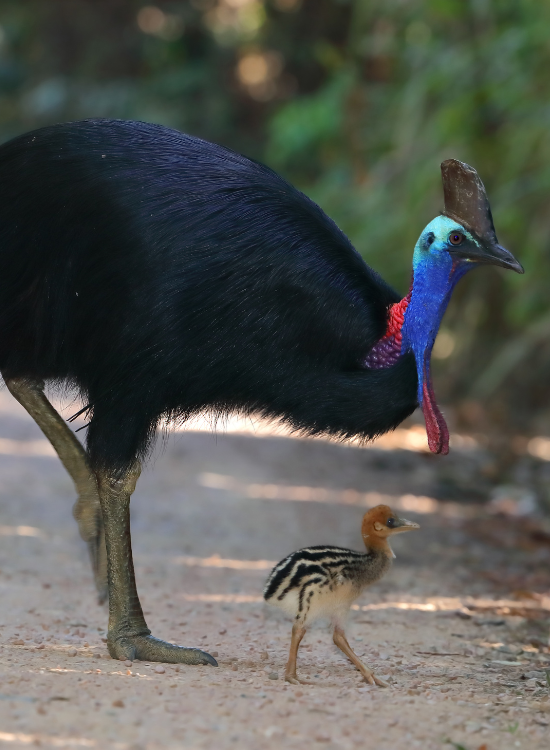
But the dedication doesn’t stop at hatching. Male cassowaries are incredibly protective parents who will teach their young cassowaries essential survival skills for up to nine months. During this time, they’ll show the chicks where to find the best fruit, how to navigate the dense rainforest, and most importantly, how to avoid danger. Young cassowaries are easily recognized by their brown-striped plumage, which provides camouflage in the undergrowth, and they tend to stay close to their father as they learn to forage and avoid predators.

7. Cassowaries vs. Emus: Size Really Does Matter
“What is bigger, an emu or a cassowary?” is a great question that touches on some interesting evolutionary biology. The southern cassowary is indeed larger than the emu in terms of weight and overall bulk, though the comparison is more nuanced than you might expect.
There are three species of cassowaries: southern, northern, and dwarf. Southern cassowary size typically ranges from 5 to 6 feet tall and can weigh between 75 to 130 pounds. Emus, while potentially taller (they can reach up to 6.5 feet), are generally lighter, weighing between 80 to 110 pounds. But here’s what’s really interesting: cassowaries are built more like heavyweight boxers, while emus are built more like marathon runners.
When comparing the three species, other cassowaries such as the northern and dwarf cassowaries differ from the southern cassowary in physical features like size, casque shape, and coloration, as well as in certain behaviors and habitat preferences.
The difference in build reflects their different ecological niches. Emus thrive in open grasslands and scrub; their tall, lean build lets them spot danger and run efficiently across open terrain. Cassowaries push through dense rainforest, relying more on bulk and power than pure speed.
This size difference also reflects their different behavioral strategies. Emus are fundamentally flight-oriented birds – when threatened, their first instinct is to run away at speeds up to 30 mph. Cassowaries, while also capable of impressive speeds, are more likely to stand their ground and fight when cornered.

8. Don’t Even Think About Touching One (For Everyone’s Safety)
“Can you touch a cassowary?” The short answer is absolutely not, and here’s why this question reveals some important misconceptions about wildlife interaction.
But beyond legal issues, there are serious safety and conservation concerns. Nearly 75% of cassowary attacks on humans result from humans trying to feed these animals. This statistic tells us something crucial: the more comfortable cassowaries become with human contact, the more dangerous they become for everyone involved.
Here’s what happens when people try to interact with cassowaries: these birds are incredibly intelligent and quickly learn to associate humans with food sources. Once they link people with food, cassowaries actively approach humans and may become aggressive, increasing the risk of dangerous encounters.

9. Endangered in Australia (and Still Under Pressure)
Globally, the southern cassowary is Least Concern on the IUCN Red List—but the Australian population is listed Endangered under national law. Numbers here are in the low thousands and fragmented. The biggest threats are habitat loss and fragmentation, vehicle strikes, and dog attacks (with hunting a concern in parts of New Guinea). Protecting and reconnecting rainforest, slowing down on cassowary roads, and responsible dog management are the fastest ways to help.

The threats facing cassowaries are unfortunately familiar to anyone following wildlife conservation issues globally:
Habitat Fragmentation and Loss: This is the big one. Urban development, agriculture, and infrastructure projects have carved up cassowary habitat into increasingly small patches. Roads are particularly problematic – not just because they fragment habitat, but because vehicle strikes are a major cause of cassowary mortality.
Climate Change: Rising temperatures and changing rainfall patterns are altering the rainforest ecosystems that cassowaries depend on. The fruit trees that form the basis of their diet are particularly sensitive to climate fluctuations.
Introduced Species: Feral pigs compete for food resources and destroy ground nests. Domestic dogs pose a direct threat to both adult cassowaries and their young.
Human-Wildlife Conflict: As human development encroaches on cassowary habitat, encounters become more frequent and often end badly for the birds.
10. No, You Definitely Cannot Eat Them
“Can you eat southern cassowary?” is a question that comes up more often than you might expect, and the answer reveals some important cultural and conservation issues.
From a legal standpoint, the answer is absolutely not. Australian law protects cassowaries; harming or taking one, including for food, is illegal and can bring heavy fines and even jail time. But let’s dig deeper into why this question matters for conservation.
In Papua New Guinea, many communities have long hunted cassowaries for ceremonial purposes. However, these traditional practices were sustainable because they occurred within intact cultural systems that included strong taboos and restrictions on hunting.
Modern hunting pressure is completely different. Commercial poaching, combined with habitat loss, creates unsustainable pressure on cassowary populations. Unlike traditional hunting, which targeted specific individuals at appropriate times, modern poaching doesn’t respect breeding seasons, territorial boundaries, or population dynamics.

Some Cassowaries Live in Captivity (And It’s Not as Simple as You May Think)
While the image of a cassowary striding through the dense forest of a tropical rainforest is iconic, not all cassowaries live wild and free. In fact, Zoos and wildlife parks around the world keep all three cassowary species (the southern, northern, and dwarf) in captivity. But keeping these threatened species in captivity is far from straightforward.
Cassowaries are not your average caged birds. Their natural habitat is the sprawling, humid rainforest, filled with fruiting trees, thick leaf litter, and plenty of space to roam. Female cassowaries defend large territories and live mostly alone, so zoos must build expansive, complex enclosures that mirror their wild habitat. Without enough space and environmental enrichment, cassowaries can become stressed or even aggressive.
Diet is another major challenge. Cassowaries specialize in fruit; they need a diverse mix of tropical fruits like those they forage from the forest floor. Reputable zoos and wildlife parks work hard to replicate this diet, often importing or cultivating rare fruits to ensure the birds get the nutrition they need.
Cassowaries in Safari Parks: Up Close with the World’s Most Dangerous Bird
If you’ve ever dreamed of seeing the world’s most dangerous bird up close—but from a safe distance—safari parks and wildlife reserves offer an unforgettable experience. These parks, especially in northeastern Australia and Papua New Guinea, are home to the double-wattled cassowary, a striking species known for its vivid blue skin and impressive casque.
Safari parks go to great lengths to recreate the cassowary’s natural habitat, providing large, forested enclosures filled with dense vegetation, leaf litter, and fruiting trees. Here, cassowaries can roam freely, foraging for fallen fruit just as they would on the forest floor of a tropical rainforest. This not only keeps the birds healthy and active but also allows visitors to witness authentic cassowary behavior in a setting that closely mirrors the wild.
The Bottom Line: Why Cassowaries Need Our Protection, Not Our Fear
After digging into these ten facts about the southern cassowary, one thing becomes crystal clear: these magnificent birds represent both the incredible adaptability of evolution and the urgent need for human responsibility in conservation.
Yes, cassowaries are dangerous. Yes, they demand respect and appropriate caution. But they’re also keystone species whose survival is critical for maintaining some of the world’s most biodiverse ecosystems. The australian cassowary bird isn’t just another charismatic megafauna – it’s a rainforest engineer whose work maintains plant diversity across millions of acres of tropical forest.
The reality is that we have a choice to make. We can continue to focus on sensational headlines about the “world’s most dangerous bird,” or we can recognize that the southern cassowary represents one of our planet’s most urgent conservation priorities.
Here’s what you can do to help:
- Support organizations like Rainforest Rescue and the Australian Wildlife Conservancy that work specifically on cassowary habitat protection
- If you live in cassowary habitat, follow guidelines for responsible behavior: never feed wild birds, keep dogs contained, and drive carefully on roads through cassowary areas
- Choose sustainable tourism operators that prioritize wildlife protection over dangerous encounters
- Support political candidates and policies that prioritize habitat protection and endangered species funding
The southern cassowary has survived for millions of years, outlasting the dinosaurs and adapting to countless environmental changes. It would be tragic if the species that considers itself the pinnacle of evolution – humans – became the one threat they couldn’t adapt to overcome.
These remarkable birds deserve better than extinction. They deserve a future where their prehistoric majesty can continue to inspire awe and wonder for generations to come. The question isn’t whether we can save them – it’s whether we have the will to do so.