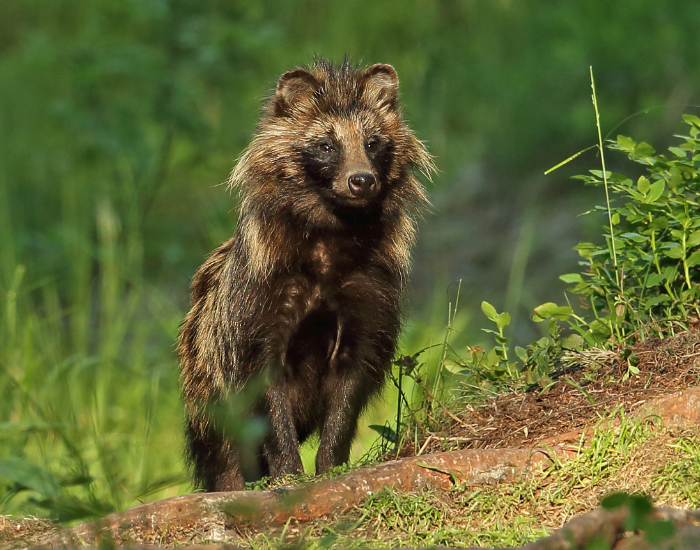
If you’ve followed wildlife research for any time, you know certain species defy easy classification. The raccoon dog represents one of nature’s most puzzling evolutionary achievements. These wild animals look like raccoons but are actually canids, making them one of the only canids with such distinctive masked features.
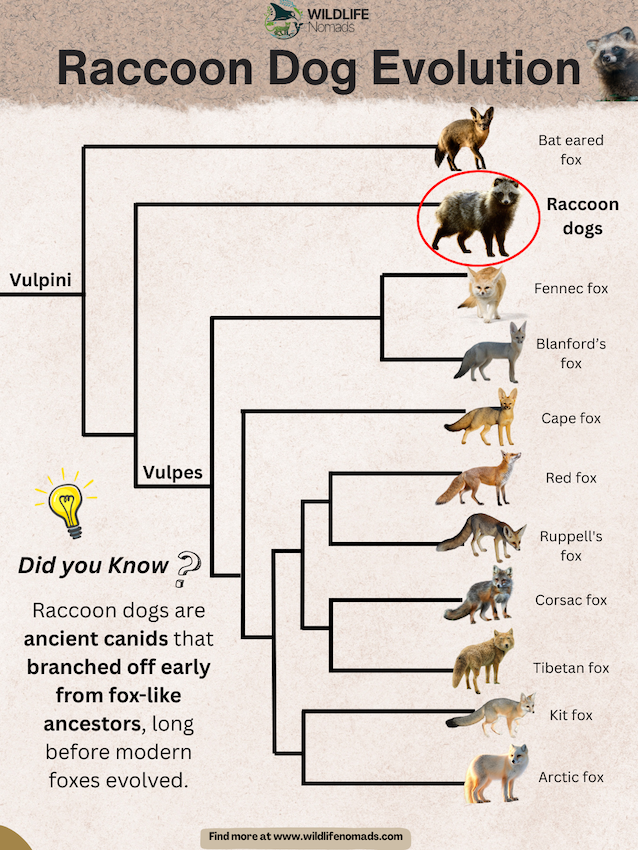
Despite their raccoon-like appearance, raccoon dogs are more closely related to foxes than to raccoons, sharing a closer evolutionary relationship within the Canidae family.
The Japanese raccoon dog, known locally as tanuki, has fascinated biologists for decades. However, beyond the folklore and cultural significance, the common raccoon dog (Nyctereutes procyonoides) remains one of the most misunderstood mammalian species on the planet.
Today, we’re exploring the real biology behind these fascinating animals. From their native range in northern China to their invasive species status in eastern Europe, raccoon dogs live surprisingly complex lives.
1. It’s Not a Raccoon (But It’s Not Just a Dog, Either)
Despite the mask-like markings and the name, raccoon dogs are not related to common raccoons. While American raccoons belong to the family Procyonidae, the common raccoon dog is a legitimate member of Canidae. This makes them distant cousins to wolves, domestic dogs, and foxes.
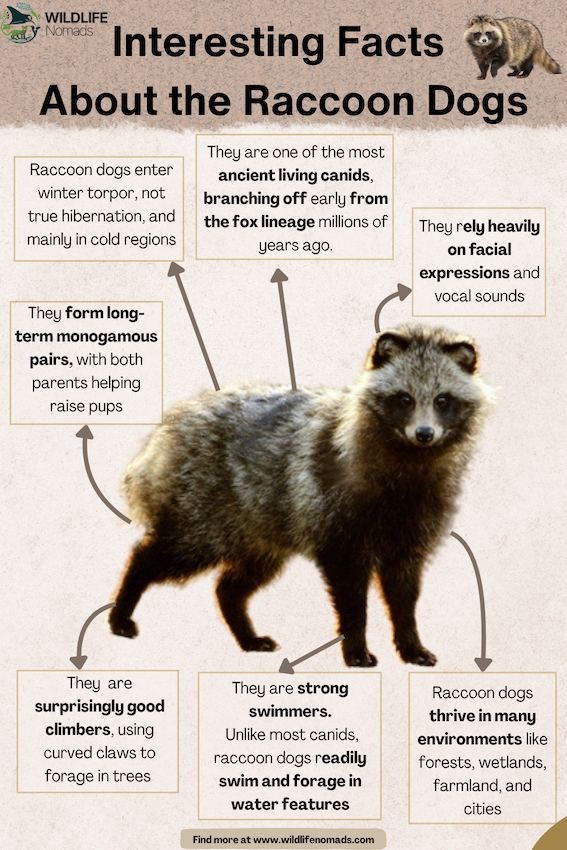
However, they differ significantly from the dog sitting on your couch. Raccoon dogs are considered one of the most ancient living canids. Therefore, they provide a living window into what early ancestors of all dogs might have looked like. Evolutionarily, they belong to the tribe Vulpini, which includes true foxes like the kit fox, fennec fox and arctic fox.
The resemblance to raccoons is a textbook case of convergent evolution. When two unrelated species develop similar traits because they occupy similar ecological niches, nature creates these remarkable parallels. For instance, the stocky body, short legs, and black facial mask allow both animals to thrive in abundant undergrowth despite having zero recent genetic overlap.
2. The Only Canids That Hibernate
Most canids simply grow thicker winter fur and keep hunting through cold winters. However, raccoon dogs are the only canids that enter torpor, a state of partial hibernation.
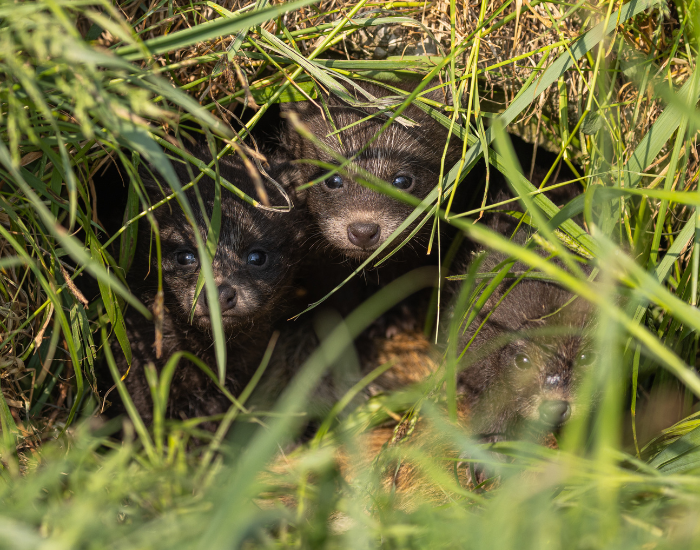
When temperatures drop and the northern limit of their range becomes frozen, raccoon dogs live off fat reserves accumulated during autumn. Their metabolism slows significantly, and they retreat into burrows. In addition, they often steal these burrows from badgers or other animals, demonstrating their opportunistic survival strategies.
This brilliant adaptation allows them to inhabit regions where other small mammals might starve. During early winter, they can lose up to 50% of their body weight while conserving energy in their dens.
3. Native Range and Invasive Species Status
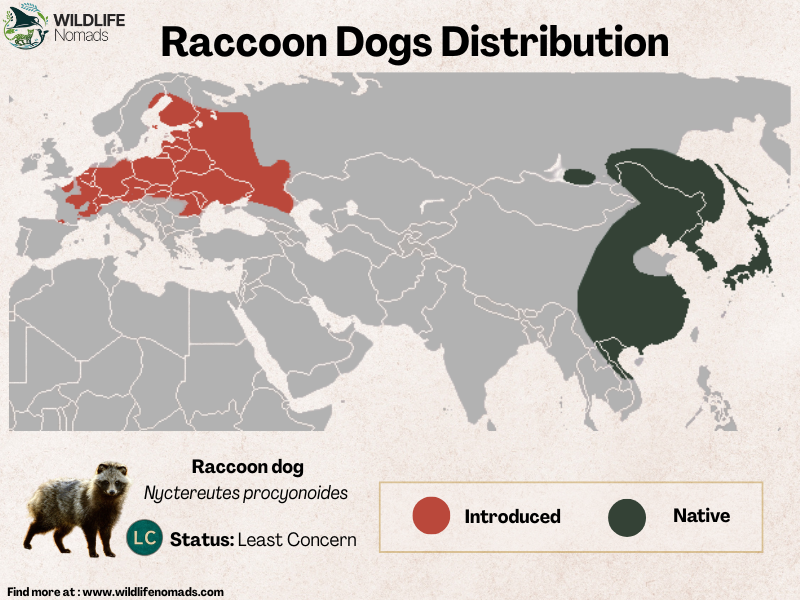
The native range of the common raccoon dog centers in East Asia. This includes northern China, Korea, and Japan, where the Japanese raccoon dog subspecies thrives. They also inhabit parts of northern Vietnam and southeastern Russia.
Nevertheless, the raccoon dog population expanded dramatically during the 20th century due to human intervention. Between 1928 and 1958, the Soviet Union introduced nearly 10,000 raccoon dogs into eastern Europe to establish a fur trade. These hardy animals began to spread rapidly across the continent.
Today, the European raccoon dog is considered invasive species across northern Europe, including Finland, Poland, and parts of Germany. In fact, researchers in Scandinavia express concern about how these wild dogs impact native species, particularly ground-nesting birds and small mammals.
Moreover, established populations now exist in regions far beyond their natural history. This expansion represents one of the most successful invasions by a carnivore in modern times.
4. Tree Climbing Abilities
If you see a dog in a tree, you usually assume it’s stuck. For adult raccoon dogs, regularly climbing trees is just part of their daily routine. Alongside the North American gray fox, they are the only canids that climb trees with such proficiency.
They have curved claws and specialized wrist structures that allow them to grip bark effectively. This arboreal talent gives them advantages when escaping predators like brown bears, eagle owls, or feral dogs. Furthermore, it opens access to bird eggs and fruits that ground-bound predators cannot reach.
During the hunting season, this ability also helps them avoid human hunters by ascending into the canopy of mixed forests.
5. Diet and Eating Habits
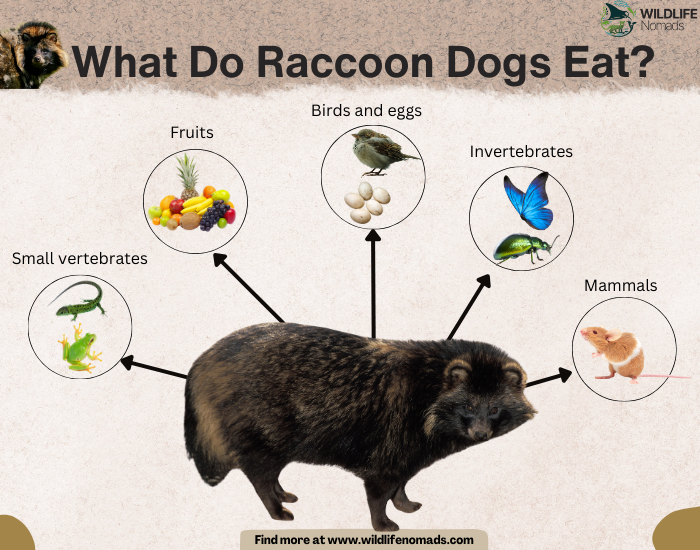
As opportunistic omnivores, raccoon dogs are not picky eaters. Their diet includes small mammals, insects, fruits, and seeds. However, one of their most impressive biological feats is their ability to eat toads despite toxic skin secretions.
Most predators avoid toads because of these dangerous compounds. In contrast, raccoon dogs produce large volumes of saliva to dilute the poison. Consequently, they exploit a food source most competitors must ignore. This dietary flexibility explains why the raccoon dog population remains stable even in disturbed agricultural land and other habitats.
In moist meadows and coastal areas, they also consume crustaceans and fish. Therefore, their adaptable feeding strategies contribute to their success across diverse environments.
6. Social Animals and Family Structure
Unlike solitary foxes, raccoon dogs are highly social animals. They are primarily monogamous and often live in small family groups with strong pair bonds. However, in captivity, captive males have been observed to mate with four or five females, which contrasts with their monogamous behavior in the wild.
When a pair mates, they stay together to raise their young. Paternal investment in this species is particularly notable. Males actively provide food, guard the den, and groom the pups. This cooperative parenting likely explains why litter sizes typically consist of six to ten pups, a high number for predators of their size.
The gestation period lasts approximately two months. After birth, both parents invest heavily in raising the young until they reach independence in early winter.
7. The Functional Facial Mask
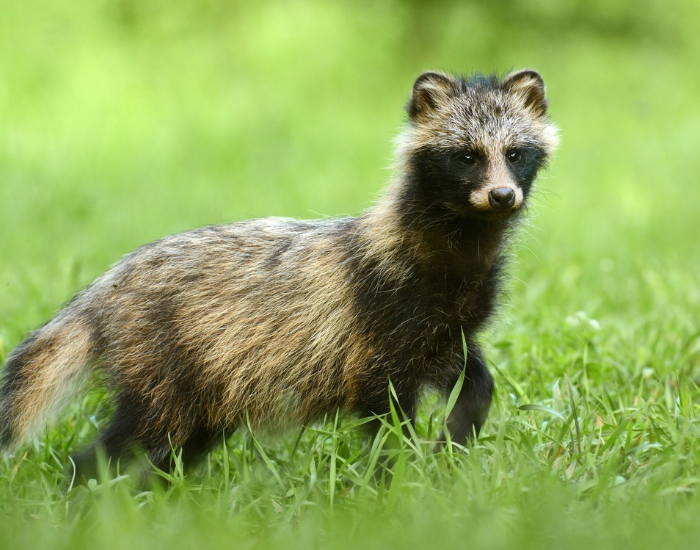
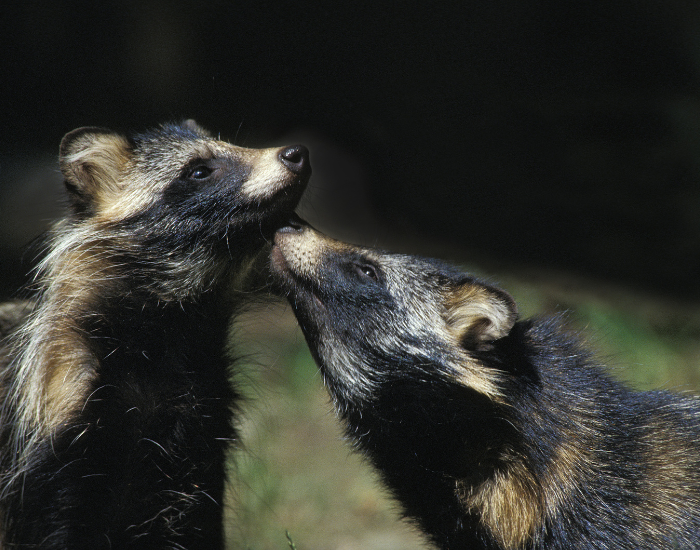
The distinctive dark stripe and mask of these guys isn’t merely decorative. In the world of wild animals, facial markings often serve as communication tools.
The contrast between black guard hairs around the eyes and the lighter muzzle helps other raccoon dogs read facial expressions in darkness. Since they are primarily nocturnal or crepuscular, having high-contrast facial features functions like built-in visual signals. This proves especially important during territorial disputes or when coordinating hunting activities.
Additionally, the dark brown and white muzzle patterns vary slightly between individuals, potentially allowing recognition among family members.
8. Human Conflict and Fur Trade History
The relationship between humans and raccoon dogs is complicated. In Japan, the tanuki symbolizes prosperity and good fortune. Conversely, in the Soviet Union and later eastern Europe, they were valued primarily for fur trade purposes.
Raccoon dog fur is often misrepresented as synthetic faux fur in clothing, and is marketed under various names such as ‘Asiatic raccoon’ in the U.S. and ‘Finn raccoon’ in Northern Europe. The Humane Society of the United States (HSUS) has filed complaints and investigated retailers for mislabeling real raccoon dog fur as faux fur, and Macy’s pulled jackets from its shelves after discovering they contained common raccoon dog fur instead of faux fur.
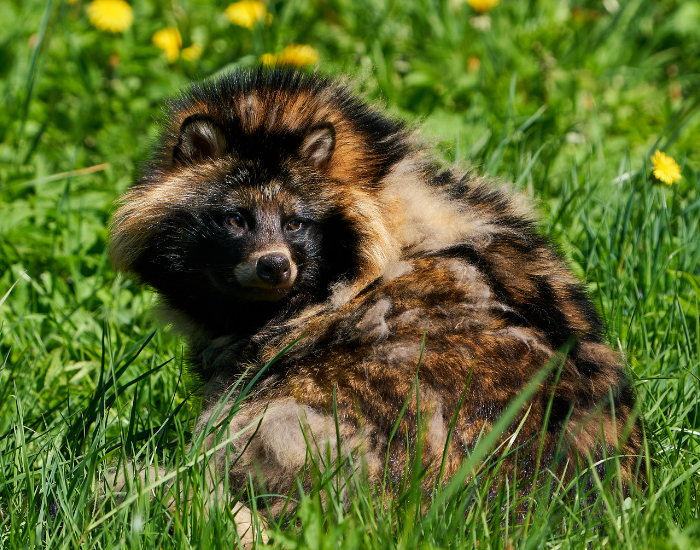
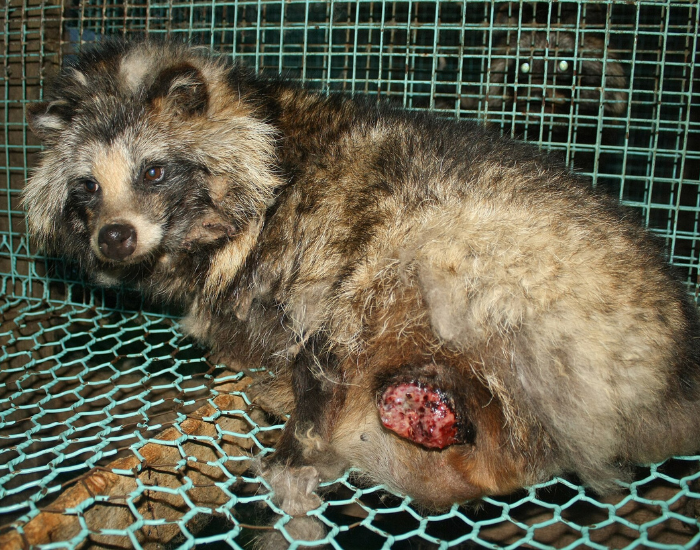
Their winter fur is incredibly dense and valued for its coarse guard hairs. Unfortunately, this led to them being labeled pest species in areas where they were introduced. Because they can carry canine distemper virus and rabies, and because they compete with native species, they are often trapped or hunted.
Moreover, in regions like north eastern Germany and northern Europe, wildlife managers implement population control measures. This reflects the ongoing challenge of balancing ecological concerns with the reality of invasive species management.
9. Poor Vision But Excellent Senses
If you encounter a raccoon dog face-to-face, you might notice they seem somewhat oblivious. They are known for not having the best sense of sight compared to other canids.
Instead, they rely on highly developed senses of smell and hearing. They navigate mixed forests and moist meadows by sniffing out prey and communicating through scent markers. In fact, they use communal latrines where multiple individuals defecate to leave territorial messages.
This scent-based communication system functions as their neighborhood information network. Therefore, it compensates for their visual limitations in dense vegetation and during nighttime activities.
10. The Cross Shape Marking
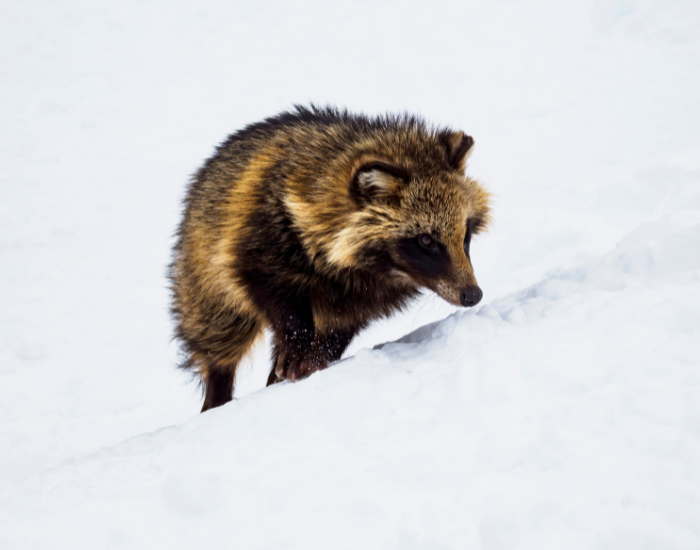
While the facial mask receives most attention, raccoon dogs also display a unique cross shape of darker fur across their shoulders. Most individuals have this distinctive marking on their withers.
This marking appears most prominent in their summer fur when the coat is shorter and dark brown pigments are more visible. As they transition into winter fur, the coat becomes much thicker. Consequently, the marking can become obscured by the sheer volume of guard hairs.
This seasonal coat change is triggered by shortening days. Moreover, it proves essential for surviving near-arctic circle temperatures they often face in their northern range.
Wild Animal Interactions: Friends, Foes, and Neighbors
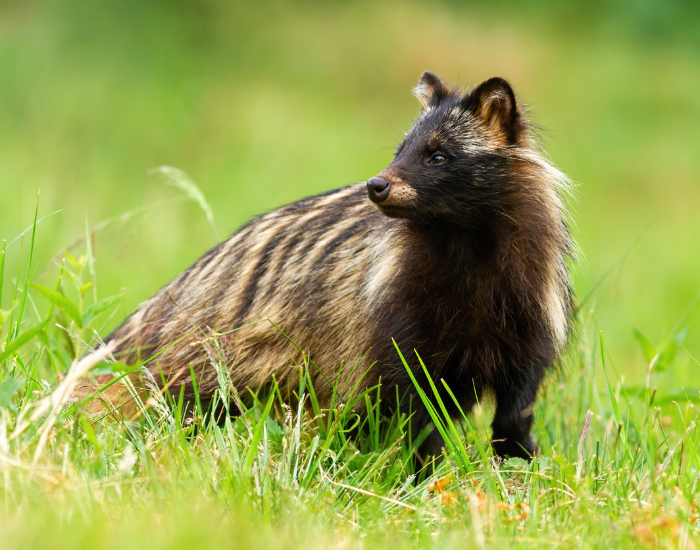
In the wild, raccoon dogs (nyctereutes procyonoides) are constantly interacting with a host of other animals. In their native range, they share the landscape with formidable predators and competitors like wolverines, brown bears and birds of prey, which may prey on young raccoon dogs or compete for similar food sources. They also coexist with a variety of native species, including small mammals and birds, sometimes preying on game birds and other wild animals.
In regions where raccoon dogs have been introduced, their interactions can have significant impacts on local ecosystems. They may compete with native species for food and habitat, and their presence can alter the balance of small mammal and bird populations. Additionally, raccoon dogs sometimes come into contact with domestic dogs, which can lead to conflicts and the potential spread of diseases.
FAQs about Raccoon Dogs
Yes, in most cases. The common raccoon dog is listed as an injurious species under the Lacey Act. Therefore, importing or transporting them across state lines is illegal because of the risk they pose as invasive species.
Technically, in some countries it’s possible, but it remains a terrible idea. They are wild animals with complex social needs, strong musky odors, and tendencies to bite when stressed. Unlike domestic dogs, they cannot be properly domesticated.
A common raccoon is a procyonid related to coatis. It has a ringed tail and uses its paws like hands. In contrast, a raccoon dog is a canid related to foxes. It has a solid-colored tail and dog-like paws. Despite similar appearances, they belong to completely different mammalian families.
They are currently listed as least concern by conservation organizations. Their global autumn population numbers in the millions, especially considering their massive expansion across Europe. However, local population density varies significantly between native range areas and introduced regions.
The Resilient Survivor
The raccoon dog Nyctereutes represents remarkable evolutionary adaptation. Whether worshipped as forest spirits in Japan or managed as invasive species in Finland, they continue adapting to new challenges.
From their ability to eat toads and climb trees to their unique hibernation patterns, these social animals demonstrate nature’s creativity. They remind us that biodiversity creates species that refuse to fit into neat categories.
Understanding the common raccoon dog requires appreciating both their biological marvels and their complex relationship with human society. As their population continues expanding in non-native habitats, the balance between conservation and invasive species management remains an ongoing challenge.
While raccoon dog populations are generally stable, they are threatened by extreme habitat loss and hunting for fur in some regions. These fascinating canids prove that sometimes the most interesting wild animals are those that challenge our expectations and rewrite the rules of what a species can be.