I have never seen a wild orca. They are still at the top of my list. The closest I’ve come was in Baja California in 2019. A gray whale mother pushed her calf toward our small boat.
Later I learned that Bigg’s killer whales hunt gray whale calves along that same Pacific coast. It made me wonder how the ocean’s top predator is doing. So, are killer whales going extinct?
Not as a species. But several populations are in real trouble, and one of them lives off the Pacific Northwest. Below are 12 facts on where orcas stand in 2026: the latest counts, the threats and the conservation efforts. For their biology, dialects and hunting, read our orca facts.
🐋 Could you help the orcas survive?
Twelve questions on salmon, census counts, oil spills and noise. Read on, then test yourself at the end.
Jump to the quiz ↓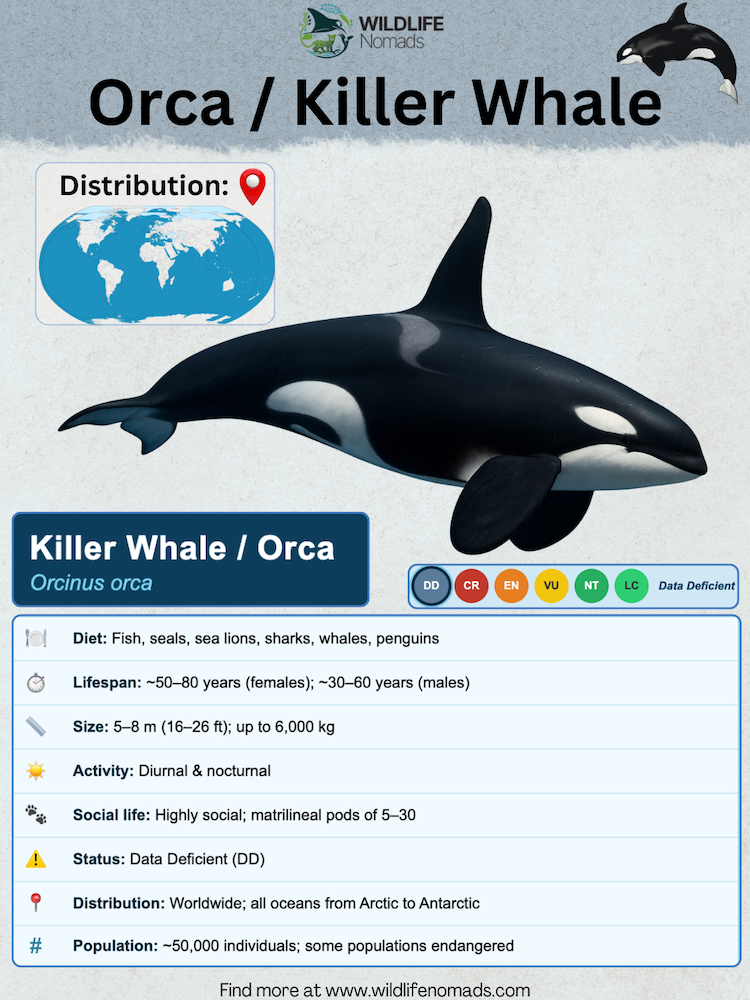
1. Killer Whales Are Not Going Extinct as a Species
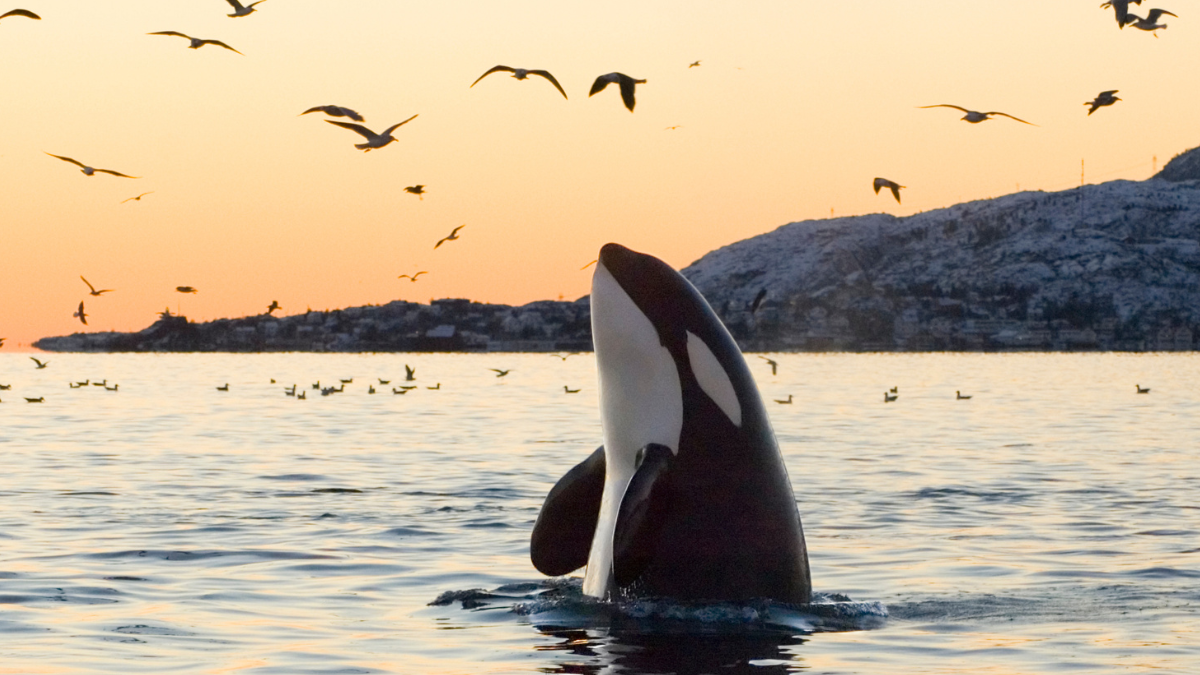
Orcas (Orcinus orca) live in every ocean, from the Arctic to Antarctica. Scientists estimate the global killer whale population at 50,000 or more. That makes them the most widespread mammal on Earth after humans.
Yet the IUCN Red List can’t give the species one clear status. It lists the orca as Data Deficient. Too many populations are still uncounted, and they differ too much to lump together.
That global number hides the real story. Orcas live in small, separate populations that rarely mix. Some number in the thousands. Others have fewer than 80 members, and a few have almost vanished.
So the honest answer is no, the species isn’t going extinct. But several populations could. Orcas are the largest members of the dolphin family and the biggest dolphin species. As a widespread cetacean species at the top, their loss would cut a hole in the food chain.
2. Orcas Are Split Into Ecotypes That Rarely Mix
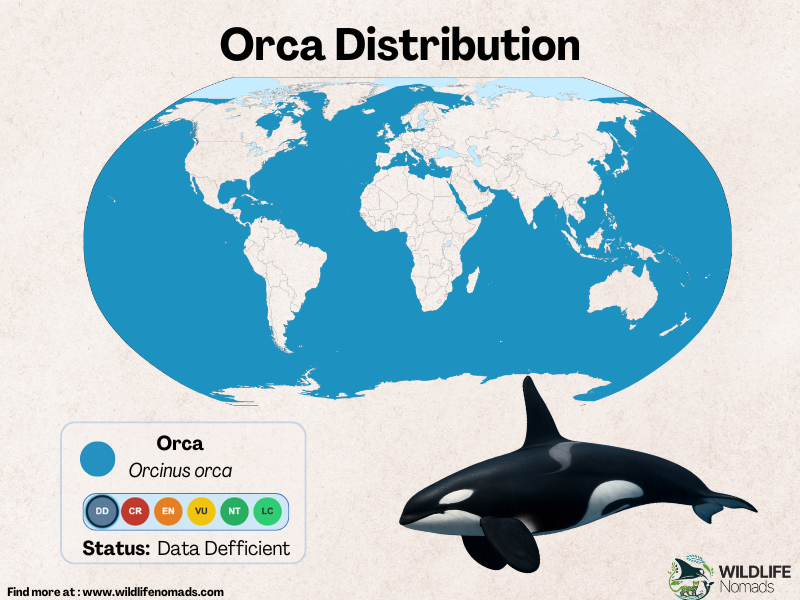
Biologists divide orcas into ecotypes. Each has its own diet, dialect, culture and genetics. Each ecotype targets different prey species. In the eastern North Pacific Ocean, the three best known are residents, Bigg’s (transient) orcas and offshores.
- Residents eat fish, mainly salmon. Daughters and sons, even adult males, stay with their mothers for life.
- Bigg’s orcas hunt seals, sea lions, porpoises and other marine mammals, even humpback whales. They travel in small, quiet groups.
- Offshores live in deeper water off the continental shelf. Worn teeth suggest they chew through tough shark skin.
Elsewhere, mammal-hunting orcas have even attacked sperm whales. Off South Africa and California, some kill great white sharks for their livers. These ecotypes share water but almost never interbreed. In 2024, a NOAA-led team proposed residents and Bigg’s orcas as two new species. The Society for Marine Mammalogy instead recognised them as separate subspecies.
That split matters for conservation. A healthy Bigg’s population can’t replace a dying resident one. Like great apes, orcas pass hunting skills and calls down the generations. Each population has its own culture to lose.

3. Only 76 Southern Resident Killer Whales Remain
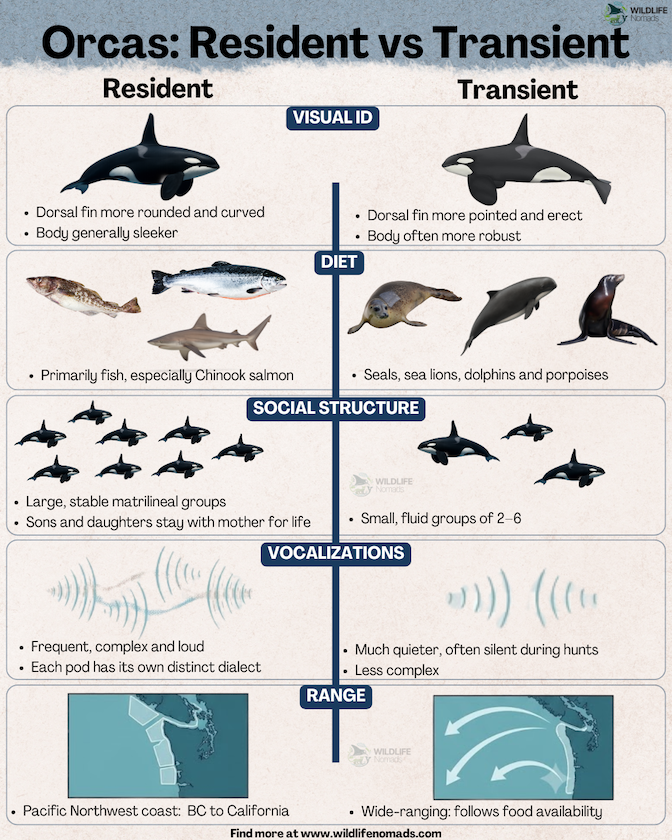
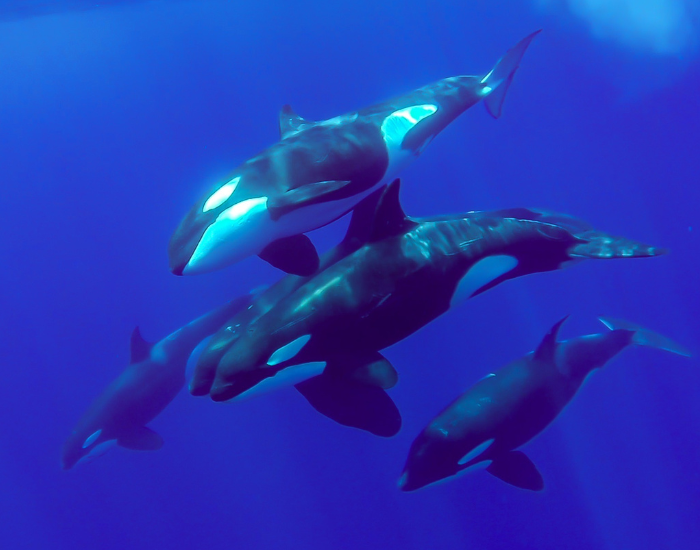
The Southern Resident killer whales are the most famous orcas on Earth, and the most at risk. They form three pods, J, K and L, in the Salish Sea between Washington and British Columbia.
The July 2026 census counted 76 whales. J pod had 27, K pod 15 and L pod 34. That is two more than in 2025. It was also K pod’s first increase in 21 years.
Still, the southern resident population peaked at nearly 100 in the mid-1990s. A slow population decline followed. Between the 1960s and 1970s, marine parks captured or killed about 48 of them. That loss still echoes today.
With so few whales, genetic diversity is low. A 2023 study found inbreeding lowers their survival.
The United States listed them as an endangered population under the Endangered Species Act in 2005. Canada had already listed them as endangered in 2003. They are the only endangered killer whales under US law.
4. They Are Starving for Chinook Salmon
Southern resident orcas are picky eaters. Their preferred prey is Chinook salmon, the biggest and fattiest salmon. In summer, Chinook makes up most of their diet.
That primary prey is in trouble. Overfishing, dams and habitat loss in spawning rivers have shrunk many Chinook runs. Several Chinook populations are themselves listed as a threatened species.
Scientists call this prey limitation: low prey availability caps the population. A 2010 study linked orca survival to Chinook abundance. Another linked poor salmon years to fewer orca births. Scarce prey means thin whales, weak immune systems and fewer calves.
Changing ocean temperatures also shift salmon migration patterns, so orcas must travel further to find food. You can see how one missing fish ripples outward in our food web game.
5. Most Southern Resident Pregnancies Fail
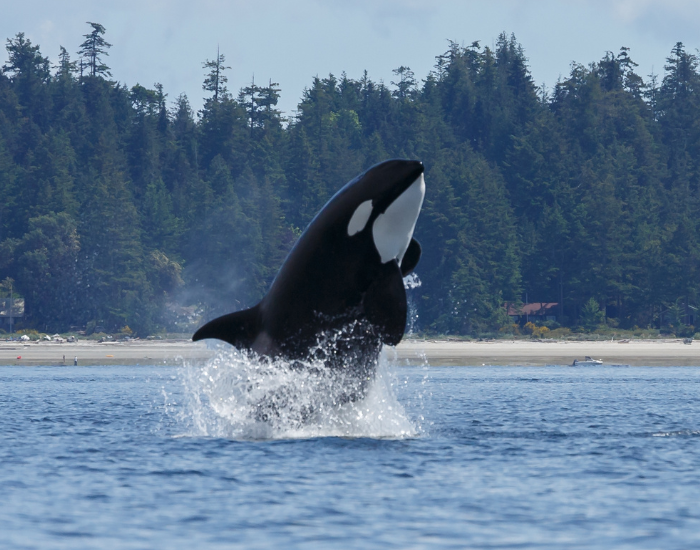
Hunger shows up in the next generation. Between 2007 and 2014, researchers tested hormones in orca scat collected by sniffer dogs. They found that 24 of 35 detected pregnancies failed. That is 69%.
Many losses happened late in pregnancy or just after birth. The team linked them mainly to nutritional stress in poor Chinook years.
The world saw that grief in 2018. A female named Tahlequah (J35) carried her dead calf for 17 days and about 1,600 km. She would not let the dead animal sink. Her 2024 daughter, J61, also died within weeks.
Mothers matter for life. Losing his mother is deadly for a male orca. Sons over 30 were 14 times likelier to die within that year, a 2012 study found.
There is hope, too. In October 2026, researchers confirmed that Tahlequah had a new male calf, J65. Every surviving calf counts.

6. Toxic Pollution Builds Up in Their Bodies
Orcas are apex predators, so pollutants concentrate in them. Each step up the food chain adds more. This process is called bioaccumulation. Read more on how apex predators shape ecosystems.
The worst culprits are PCBs. These industrial chemicals were banned decades ago, yet they persist in the marine environment. They weaken the immune system and harm reproduction. Adult orcas carry them for life. Mothers pass much of their load to their first calf through milk.
A 2018 study in Science modelled 19 orca populations. PCBs put more than half of them at risk of collapse. Populations near Brazil, the Strait of Gibraltar, the northeast Pacific and the UK fared worst.
Scotland’s West Coast Community shows where that leads. Only two males, John Coe and Aquarius, are still seen. No calf has been recorded in decades. Learn how ocean pollution affects sea animals.
7. Noise and Boats Make Hunting Harder
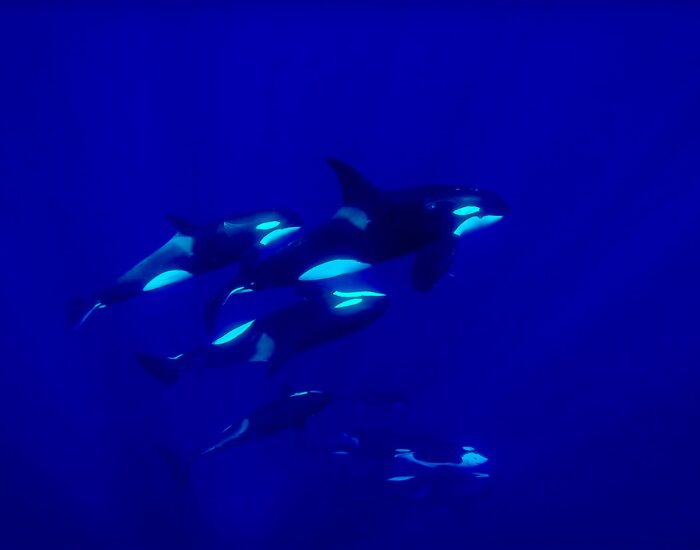
Orcas hunt with echolocation. They click, then listen for echoes off a salmon’s swim bladder. Noise pollution from ships, ferries and small boats drowns out those faint echoes.
Noisy water means less successful hunting and more stress. Researchers found that Southern Residents call louder near boats, which costs energy.
Both countries have acted. Since January 2025, Washington State requires boats to stay 1,000 yards from Southern Residents. Canada has used a 400 m buffer, slow-down zones and seasonal sanctuary areas.
Vessel strikes are an emerging threat too. Canada now lists them alongside noise and disturbance in its recovery plans.
8. Oil Spills Can Wipe Out a Pod
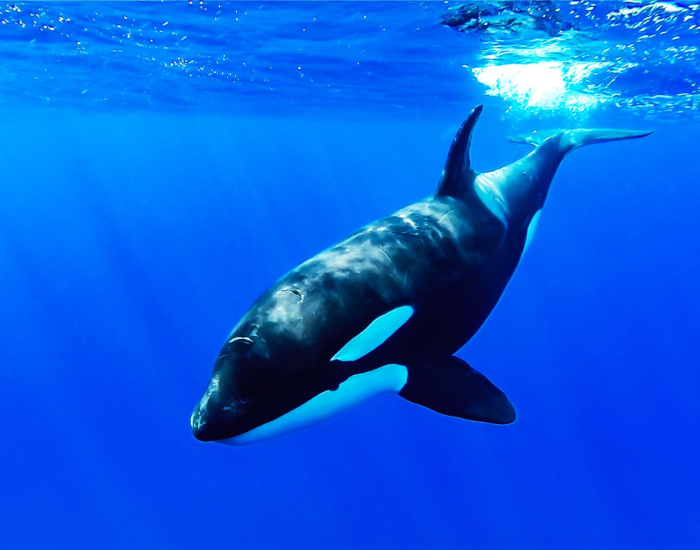
Oil spills are rare, but they can be catastrophic. In 1989, the Exxon Valdez spilled crude oil into Prince William Sound, Alaska.
Two orca groups swam through it. The resident AB pod lost 33% of its members. The AT1 transient group lost 9 of its 22 whales.
AT1 never recovered. It had no new calves even before the spill, and it is now listed as depleted under US law. When the last members die, their unique calls will die with them.
For small groups like the Southern Residents, one big spill in critical habitat could be devastating. Busy tanker routes run through their waters.

9. Climate Change Is Reshuffling Their Food
Climate change hits orcas mostly through their prey. Warmer rivers and marine heatwaves hurt young salmon. Drought leaves less cold water for spawning.
In the Arctic, the story flips. Shrinking sea ice lets orcas reach new hunting grounds. That can mean trouble for narwhals, belugas and seals that once used the ice as a shield.
Either way, warming adds pressure to populations already stretched by prey depletion and pollution.
10. Captivity Took Orcas From Wild Populations
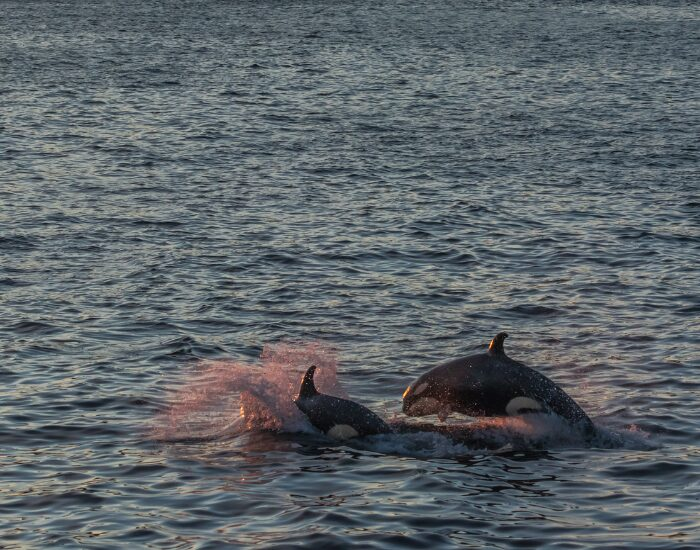
In the 1960s and 1970s, marine parks captured dozens of orcas in the Pacific Northwest. That trade removed a generation of young Southern Residents.
The last captive Southern Resident, Tokitae (also called Lolita), died at the Miami Seaquarium in August 2023. The Lummi Nation had hoped to bring her home. They call these orcas qwe’lhol’mechen, the people beneath the waves.
Today, there are about 50 to 55 orcas living in marine mammal parks, most of them in China. France’s Marineland Antibes closed in January 2025, leaving its two captive orcas without a clear future.
Wild orcas have never killed a person, as far as we know. Captive orcas have killed four people. Many scientists link those incidents to the stress of life in tanks.

11. Some Orca Populations Are Doing Well
Not every story ends badly. Other killer whales are doing better. Northern Resident killer whales, the Southern Residents’ neighbours, grew from about 303 in 2017 to 345 in 2023. Canada still lists them as threatened.
Bigg’s orcas are booming too. More seals and sea lions, protected since the 1970s, mean more food for them. Populations off Norway, Iceland, Alaska and Antarctica also appear stable or growing.
Other populations are tiny and fragile. Fewer than 40 Iberian orcas live around the Strait of Gibraltar, and the IUCN lists them as critically endangered. Since 2020, some have rammed sailboat rudders, though they have never harmed a person.
| Population | Latest count | Status |
|---|---|---|
| Southern Residents | 76 (July 2026) | Endangered (US and Canada) |
| Northern Residents | 345 (2023) | Threatened (Canada) |
| Iberian (Strait of Gibraltar) | Fewer than 40 | Critically Endangered (IUCN) |
| AT1 transients (Alaska) | Fewer than 10 | Depleted (US) |
| UK West Coast Community | 2 males | Effectively lost |
12. Recovery Efforts Are Finally Gaining Ground
Species recovery starts with habitat. In 2021, NOAA Fisheries expanded critical habitat for the endangered Southern Resident orcas. It now covers about 15,600 square miles of coastal waters, from Washington down to Central California.
Salmon come next. In 2024, four dams came down on the Klamath River, the largest dam removal in history. Chinook swam into the newly open river within weeks. Projects like this restore salmon habitat for the whales’ future.
Canada has closed some salmon fisheries in key feeding areas. It has also committed to ending open net-pen salmon farms in BC by 2029. Washington has funded hatchery Chinook and habitat work for the orcas.
Coastal First Nations and tribes have long called for protecting the whales and their salmon. Learn more about marine protected areas and why they work.
FAQs About Endangered Killer Whales
No, not as a species. Scientists estimate at least 50,000 orcas worldwide. However, several small populations could disappear, including the Southern Residents, Iberian orcas and the UK’s West Coast Community.
The species is listed as Data Deficient by the IUCN, not endangered. Some populations are. The Southern Residents are endangered under US and Canadian law, and the Iberian orcas are Critically Endangered.
The July 2026 census counted 76 Southern Resident killer whales. J pod had 27, K pod 15 and L pod 34. In October 2026, researchers also confirmed a new male calf, J65.
Three main threats hold them back. They lack Chinook salmon, carry toxic pollutants such as PCBs, and suffer noise and disturbance from boats. Earlier live captures for marine parks also removed many young whales.
Scientists estimate at least 50,000 orcas worldwide. Many populations, especially in the open ocean and the tropics, have never been counted properly.
There is no confirmed case of a wild orca killing a person. Captive orcas have killed four people. Iberian orcas that ram sailboats have damaged boats but never harmed anyone.
Choose sustainable seafood, support river and salmon habitat restoration, and cut your use of plastics and chemicals. On the water, give orcas plenty of space and follow local distance rules.
Give Them Salmon and Silence
Orcas don’t need much from us. They need fish, clean water and quiet. Every one of those is within our reach.
Choose sustainable seafood. Support dam removal and river restoration. Keep chemicals out of drains. On the water, slow down and give whales space.
You can also support groups such as the Center for Whale Research, Ocean Wise or WWF. See how orcas compare with other giants in our whale size comparison. Or explore other species at risk in our Endangered Animals Explorer.
Want to see them yourself? Start with our guide to the best places to go whale watching. Would you rather see orcas in the Salish Sea, Norway or Patagonia?
Find Killer Whale Experiences Worldwide
Find some of the best destinations to see killer whales. Book with operators that follow local distance rules.
This website is reader-supported. When you book a wildlife experience through links listed on this site, we may earn an affiliate commission.
References:
Desforges, J.-P., Hall, A., McConnell, B., Rosing-Asvid, A., Barber, J. L., Brownlow, A., De Guise, S., Eulaers, I., Jepson, P. D., Letcher, R. J., Levin, M., Ross, P. S., Samarra, F., Víkingson, G., Sonne, C., & Dietz, R. (2018). Predicting global killer whale population collapse from PCB pollution. Science, 361(6409), 1373–1376. https://doi.org/10.1126/science.aat1953
Ford, J. K. B., Ellis, G. M., Olesiuk, P. F., & Balcomb, K. C. (2010). Linking killer whale survival and prey abundance: Food limitation in the oceans’ apex predator? Biology Letters, 6(1), 139–142. https://doi.org/10.1098/rsbl.2009.0468
Matkin, C. O., Saulitis, E. L., Ellis, G. M., Olesiuk, P., & Rice, S. D. (2008). Ongoing population-level impacts on killer whales Orcinus orca following the ‘Exxon Valdez’ oil spill in Prince William Sound, Alaska. Marine Ecology Progress Series, 356, 269–281. https://doi.org/10.3354/meps07273
Morin, P. A., McCarthy, M. L., Fung, C. W., Durban, J. W., Parsons, K. M., Perrin, W. F., Taylor, B. L., Jefferson, T. A., & Archer, F. I. (2024). Revised taxonomy of eastern North Pacific killer whales (Orcinus orca): Bigg’s and resident ecotypes deserve species status. Royal Society Open Science, 11(3), 231368. https://doi.org/10.1098/rsos.231368
Ward, E. J., Holmes, E. E., & Balcomb, K. C. (2009). Quantifying the effects of prey abundance on killer whale reproduction. Journal of Applied Ecology, 46(3), 632–640. https://doi.org/10.1111/j.1365-2664.2009.01647.x
Wasser, S. K., Lundin, J. I., Ayres, K., Seely, E., Giles, D., Balcomb, K., Hempelmann, J., Parsons, K., & Booth, R. (2017). Population growth is limited by nutritional impacts on pregnancy success in endangered Southern Resident killer whales (Orcinus orca). PLOS ONE, 12(6), e0179824. https://doi.org/10.1371/journal.pone.0179824