
Wildlife Nomads · Play · Ecology
What Is Ecology? An Interactive Journey Through the Web of Life
Ecology is the science of how living things interact with each other and with their environment. Zoom from one zebra to the whole planet, run famous experiments and see how everything connects.
By Cesar Medina, conservation biologist and former field ecologist · 13 interactive stops
What is ecology?
Ecology is the branch of biology that studies how living organisms interact with each other and with their physical environment. Ecologists ask where organisms live, how many there are and why. They also study how energy and nutrients move through the natural world.
The German zoologist Ernst Haeckel coined the word in 1866. He built it from the Greek oikos, meaning house or home. So ecology is the study of life’s home, and of everyone sharing it.
Ecology is a science, not a movement. Environmentalism is about protecting nature, while ecology is about understanding it. That said, good conservation plans need good ecology. Early natural historians described what they saw. Modern ecologists also test ideas with experiments, field data and computer models, and other scientists check their work.
I first fell for ecology at university in Mexico. I helped a professor plant a pollinator garden of native Mexican flowers. Within months, bumblebees, moths, other insects and spiders moved in. That small patch became a tiny ecosystem in front of us, and I’ve been hooked on these connections ever since.
The levels of ecology
Ecologists study life at several nested levels. Each level contains the one before it. You can zoom through all six in the first stop of the tool above.
Each level has emergent properties, which are new properties that only appear once the parts combine. One kangaroo has no birth rate, but a population of red kangaroos does. A single species has no food web, but a community does. That’s why ecologists can’t simply study one animal and add up the answers.
Abiotic and biotic factors
Abiotic factors are the non-living parts of an environment. They include sunlight, temperature, water, soil, salinity and atmospheric conditions. Biotic factors are the living parts, such as plants, animals, fungi, bacteria and other organisms.
Every species can only survive within a certain range of each factor. Victor Shelford called this the law of tolerance in 1913. Brook trout, for example, do best in water of about 11 to 16 °C and die above about 25 °C. Meanwhile, the factor in shortest supply limits growth, even when everything else is plentiful. That’s the law of the minimum, which you can test with Liebig’s barrel in the tool.
Habitat vs ecological niche
A habitat is where an organism lives. Its ecological niche is the role it plays there. That includes what it eats, when it’s active, what it tolerates and how it affects others. Ecologists often say the habitat is the address and the niche is the job.
In 1961, Joseph Connell used barnacles on a Scottish shore to separate the fundamental niche from the realized niche. One species could live across the whole shore, but competition pushed it into a narrow band at the top. Earlier, Georgy Gause found that two species competing for the same food in a lab can’t coexist for long. Today we call this the competitive exclusion principle.
How organisms interact
Species interactions shape every community. Ecologists sort them by whether each partner gains (+), loses (−) or isn’t affected (0).
| Interaction | Effect | Example |
|---|---|---|
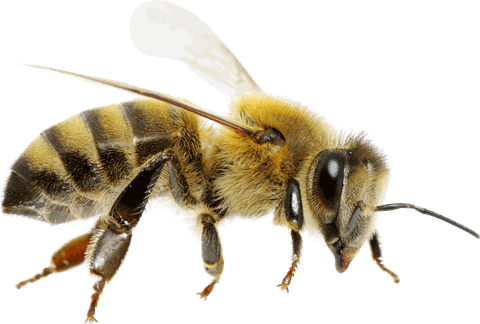
| Mutualism | + / + | Bees get nectar, flowers get pollinated. 87 of the 115 leading food crops benefit from animal pollinators. |
| Commensalism | + / 0 | Remoras ride along with sharks and eat their scraps. |
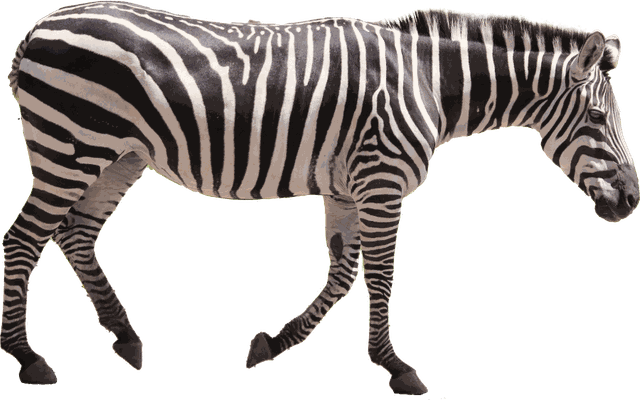
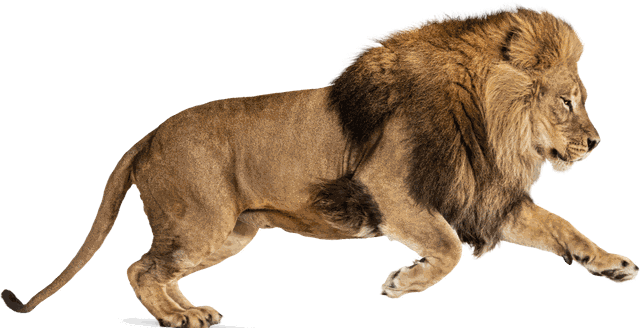
| Predation | + / − | Lions hunting zebras and wildebeest. |
| Parasitism | + / − | Ticks feeding on a host, or a cuckoo chick raised by other birds. |
| Competition | − / − | Lions and cheetahs chasing the same prey. |
| Amensalism | − / 0 | Black walnut roots release a chemical that stops other plants growing nearby. |
Population ecology
A population is a group of the same species living in one geographic area. Population ecologists measure its size, density, age structure and spread. Individuals can be clumped, uniform or random, and clumped is by far the most common pattern in nature.
With unlimited resources, a population grows exponentially in a J-shaped curve. In reality, food, space and disease slow it down, so growth levels off at the carrying capacity. Carrying capacity is the largest population an environment can support over the long term. When reindeer were released on St. Matthew Island in Alaska, they shot past it. The herd grew from 29 animals in 1944 to about 6,000 in 1963, then crashed to 42 by 1966.
Predators and prey can also drive each other in cycles. Snowshoe hare and Canada lynx numbers rise and fall roughly every 10 years. A long experiment in Yukon, Canada, showed that both food and predators drive the hare cycle.
Behaviour matters too. During an ecology course in Sweden, a few friends and I ran a small experiment on an open plain. We measured how a predator’s presence changed how long birds spent foraging. That’s behavioural ecology in a nutshell: animals constantly trade food against safety.
Food chains, food webs and energy flow
Energy flows in one direction through ecosystems, from producers to consumers. A food chain follows a single path, such as phytoplankton, krill, fish and then a whale. A food web links all the chains together. On average, only about 10% of energy passes from one trophic level to the next. Real values range from about 5% to 20%. The rest is used for living or lost as heat, which is why top predators are rare compared with their prey.
Some species hold a whole web together. Robert Paine called them keystone species. When sea otters disappear, sea urchins multiply and strip kelp forests bare. You can build and break your own web in my food web game.
Matter behaves differently. Carbon, nitrogen, water and phosphorus cycle through living things, soil, air and water again and again. Burning fossil fuels moves ancient carbon into the air far faster than nature can return it. That drives climate change.
Ecological succession
Ecological succession is the gradual change in species that live in a place over time. Primary succession starts on bare rock, such as new lava or ground left by a retreating glacier. Lichens and mosses arrive first, then grasses, shrubs and finally forest. Secondary succession follows a disturbance like a fire, flood or abandoned farm, where soil survives, so it’s much faster.
Many ecosystems actually depend on disturbance. Here in Australia, many eucalypts resprout from buds under their bark after a bushfire. Many banksias keep their seeds sealed in woody cones that open after fire.
Biodiversity and ecosystem services
Biodiversity includes genetic diversity, species diversity and ecosystem diversity. It covers everything from microorganisms to plants and animals. Scientists have named around 2.1 million species. One estimate puts eukaryotic species, such as plants, animals and fungi, near 8.7 million.
Biodiversity is essential for human wellbeing and ecosystem health. It underpins ecosystem services, the benefits people get from nature. They include food, clean water, pollination, flood control and medicines. The cancer drug paclitaxel, for instance, was first found in the bark of the Pacific yew tree. Studies also show that more diverse ecosystems tend to cope better with disturbances such as droughts.
Wetlands are a perfect example. They filter nutrients and toxins, reducing the burden on water treatment plants, and they soak up floodwaters. Yet 22% of wetlands have disappeared since 1970. I spend a lot of time in the wetlands of Coombabah Lakelands, where migratory bar-tailed godwits refuel. Wetland edges are also great places to see an ecotone, the transitional area where two ecosystems meet.
Branches of ecology
How behaviour, like foraging, mating and migrating, helps animals survive and breed.
How and why the numbers of a single species change over time.
How different species compete, prey on and help one another.
How energy and nutrients move through ecosystem processes.
Life in oceans, estuaries, swamps and marshes.
Bacteria and fungi that recycle nutrients and partner with plants and animals.
Using ecology to protect endangered species and ecosystems.
Natural resource management, pest control, restoration and ecosystem management.
Global patterns, such as why species richness peaks in the tropics.
How ecology solves real problems
Ecology isn’t just theory. It helps solve problems related to species abundance, pollution and climate change.
- Cleaner lakes. In the 1970s, Canada’s Lake 226 experiment showed that phosphorus triggers algal blooms. Its results helped tighten phosphorus limits, including in detergents.
- Natural pest control. Biological control uses natural predators, parasites or diseases to manage crop pests.
- Healthier rivers. Ecologists restore streams and wetlands and design fishways that help fish get past dams and weirs.
- Smarter fire management. Studies show many forests and grasslands are fire-adapted, so carefully planned burns can keep them healthy.
- Saving species. Conservation plans for endangered species, like those in my endangered animals explorer, rely on ecological research.
Humans, invasive species and climate change
Human activities now shape almost every ecosystem on Earth. The global IPBES assessment ranked the main direct drivers of nature loss. In order, they are land and sea use change, direct exploitation, climate change, pollution and invasive species. Monitored wildlife populations have fallen by an average of 73% since 1970.
From my field notebook: after studying conservation biology, I worked almost two years as a field ecologist in Australia. Much of that job meant controlling some of the most invasive plant species around Sydney. Non-native species compete with native ones for light, water and space. Invasive species played a major role in about 60% of recorded global extinctions.
Still, ecology also shows how to fix things. Australia’s east coast humpback whales recovered from a few hundred animals to tens of thousands after whaling ended. Protected areas, restored habitats and smarter management work when we give them time. That’s why ecology matters for future generations.
Frequently asked questions
What is ecology in simple words?
Ecology is the study of how living things relate to each other and to their surroundings. It explains who eats whom, why species live where they do and how nature stays in balance.
What are the 5 levels of ecology?
The five classic levels are organism, population, community, ecosystem and biosphere. Many textbooks add biome between ecosystem and biosphere, which makes six.
What is the difference between ecology and environmental science?
Ecology is a branch of biology focused on organisms and their interactions. Environmental science is broader. It also includes chemistry, geology, economics and policy.
What is an example of ecological succession?
After the 1980 eruption of Mount St. Helens, pioneer plants recolonised the bare ash. Shrubs and young trees followed over the next decades. That’s a classic example of succession in action.
What is the difference between a habitat and a niche?
A habitat is the place where a species lives. A niche is its role in that place. It covers what the species eats, when it’s active and how it interacts with others.
Why is ecology important?
Ecology helps us manage natural resources, protect endangered species, control pests and diseases, and predict the effects of climate change. Our food, water and health all depend on healthy ecosystems.
What do ecologists do?
Ecologists study organisms in the field and the lab. They count populations, run experiments, track animals and model ecosystems. Many work in conservation, natural resource management, research or environmental policy.
References
Connell, J. H. (1961). The influence of interspecific competition and other factors on the distribution of the barnacle Chthamalus stellatus. Ecology, 42(4), 710–723. https://doi.org/10.2307/1933500
Estes, J. A., & Palmisano, J. F. (1974). Sea otters: Their role in structuring nearshore communities. Science, 185(4156), 1058–1060. https://doi.org/10.1126/science.185.4156.1058
Klein, A.-M., Vaissière, B. E., Cane, J. H., Steffan-Dewenter, I., Cunningham, S. A., Kremen, C., & Tscharntke, T. (2007). Importance of pollinators in changing landscapes for world crops. Proceedings of the Royal Society B, 274(1608), 303–313. https://doi.org/10.1098/rspb.2006.3721
Krebs, C. J., Boutin, S., Boonstra, R., Sinclair, A. R. E., Smith, J. N. M., Dale, M. R. T., Martin, K., & Turkington, R. (1995). Impact of food and predation on the snowshoe hare cycle. Science, 269(5227), 1112–1115. https://doi.org/10.1126/science.269.5227.1112
Lindeman, R. L. (1942). The trophic-dynamic aspect of ecology. Ecology, 23(4), 399–417. https://doi.org/10.2307/1930126
Mora, C., Tittensor, D. P., Adl, S., Simpson, A. G. B., & Worm, B. (2011). How many species are there on Earth and in the ocean? PLoS Biology, 9(8), e1001127. https://doi.org/10.1371/journal.pbio.1001127
Schindler, D. W. (1974). Eutrophication and recovery in experimental lakes: Implications for lake management. Science, 184(4139), 897–899. https://doi.org/10.1126/science.184.4139.897
Tilman, D., & Downing, J. A. (1994). Biodiversity and stability in grasslands. Nature, 367, 363–365. https://doi.org/10.1038/367363a0
IPBES. (2019). Global assessment report on biodiversity and ecosystem services. IPBES Secretariat. https://doi.org/10.5281/zenodo.3831673
Ramsar Convention on Wetlands. (2025). Global Wetland Outlook 2025. Secretariat of the Convention on Wetlands. https://www.global-wetland-outlook.ramsar.org/
WWF. (2024). Living Planet Report 2024: A system in peril. WWF. https://www.worldwildlife.org/pages/living-planet-report-2024



