There’s something magical about spotting a roe deer in the wild. During my exchange year at Uppsala University, I spent countless mornings at 5:00 AM trekking through Swedish forests. The roe deer, or Capreolus capreolus, became my most frequent companion. In addition, they taught me more about wildlife behavior than any textbook ever could.
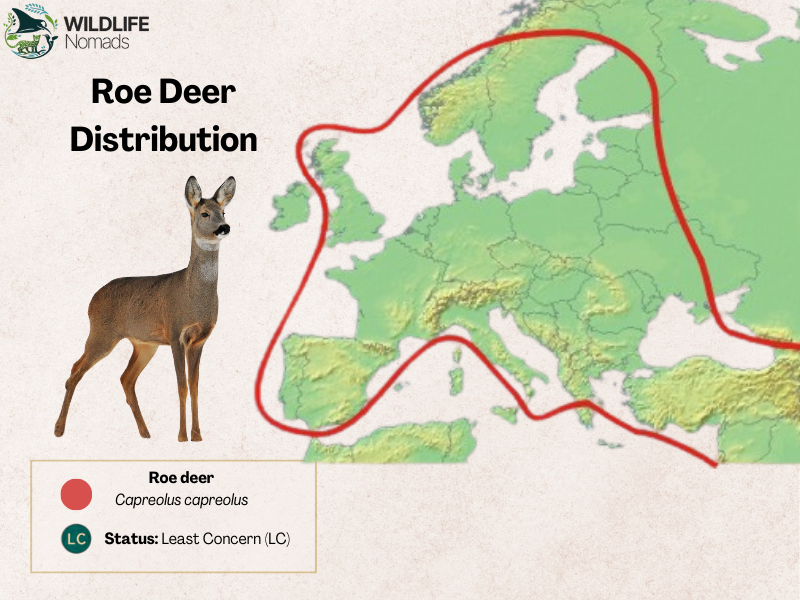
These deer species are common throughout the UK and Europe. The European roe deer is widespread across the continent, ranging from the Mediterranean to Scandinavia, and is classified as Least Concern by the IUCN. However, they remain elusive enough to earn their nickname: “ghosts of the forest.” Therefore, understanding these fascinating creatures requires patience, observation, and a bit of insider knowledge.
1. Roe Deer Are True European Natives
The roe deer (Capreolus capreolus) is one of the most widespread native species in Europe. Unlike fallow deer, which were introduced by the Romans, they have lived in Britain for thousands of years.
Their range stretches from the Atlantic coast to the Urals. The western population is a key population in Western Europe, while other populations and subspecies are found across Eurasia, including hybrid zones and distinct groups important for taxonomy and conservation. In addition, they inhabit northern Iran and parts of Asia Minor. This makes them one of the most successful deer species globally.
In the UK, they’re found across England, Scotland, and Wales. However, they’re absent from Northern Ireland unless specifically introduced to private estates. Interestingly, they were once extinct in southern England but were successfully reintroduced in the 19th century.
2. They’re Smaller Than You Think
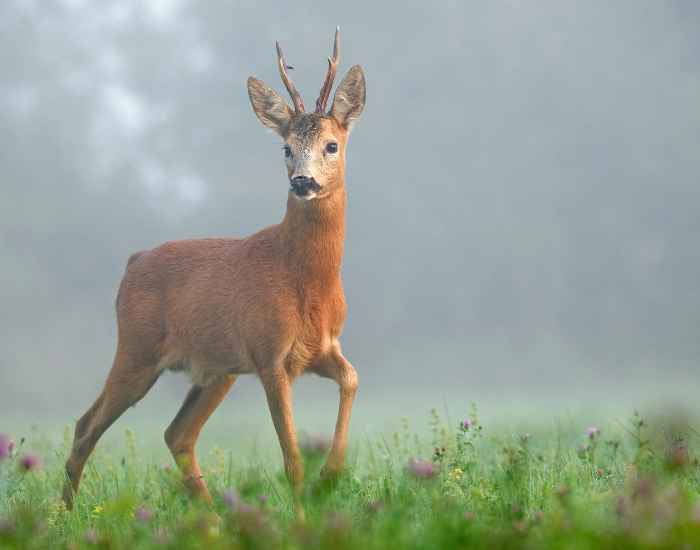
Many people mistake roe deer for young red deer. In reality, they’re much smaller and stockier in build. Roe deer are a medium sized deer species and are considered small deer compared to other UK deer.
Adults stand just 60–75 cm at the shoulder. Their body length ranges from 95–135 cm, making them roughly goat-sized. In comparison, red deer tower over them at nearly twice the height.
Males (called roebucks) typically weigh 15–35 kg. Females (does) are slightly lighter at 15–30 kg. This small size helps them navigate dense woodland floor vegetation with ease. Therefore, they can disappear into the brush in seconds when threatened.
3. The Distinctive White Rump Patch
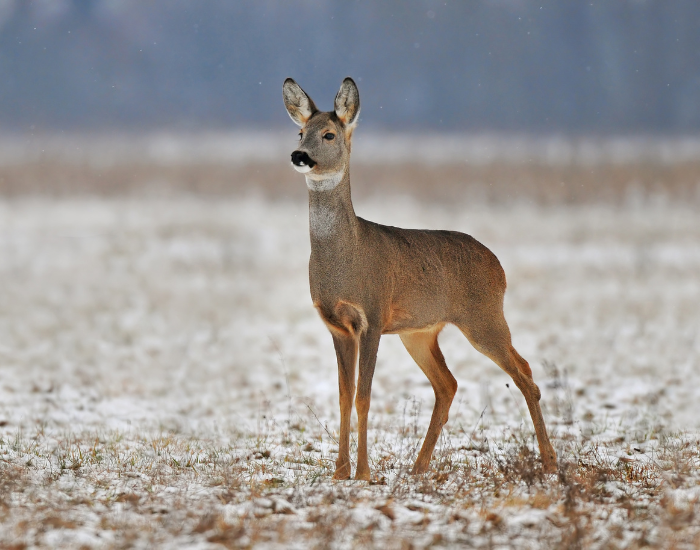
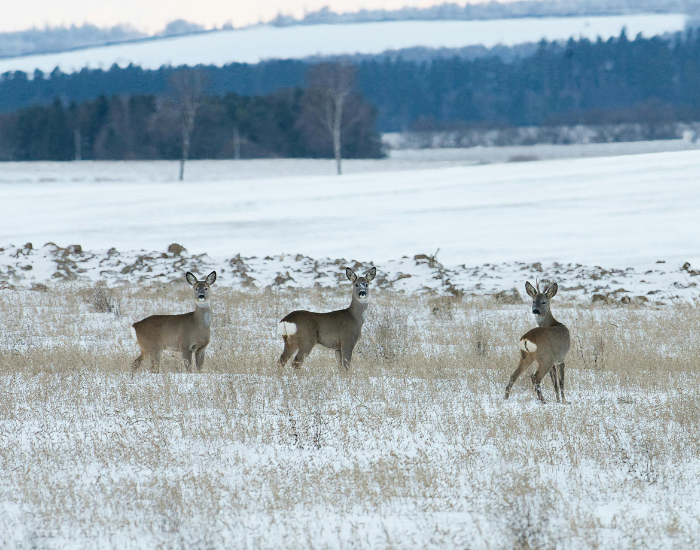
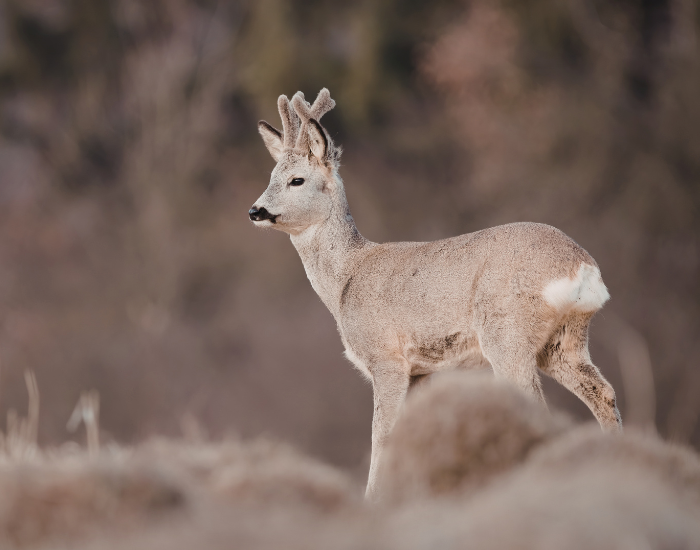
One of the easiest ways to identify a roe deer is by looking at their rear end. They sport a distinctive pale rump patch. In winter months, this patch appears bright white. During summer, it transitions to a pale buff color. Interestingly, the shape differs between the sexes.
Female roe deer have a kidney-shaped rump patch with a downward-pointing tuft of hair. Male roe deer display a more heart-shaped patch. This feature is especially useful during roe deer live observations in the wild.
4. Male Roe Deer Have Short Antlers
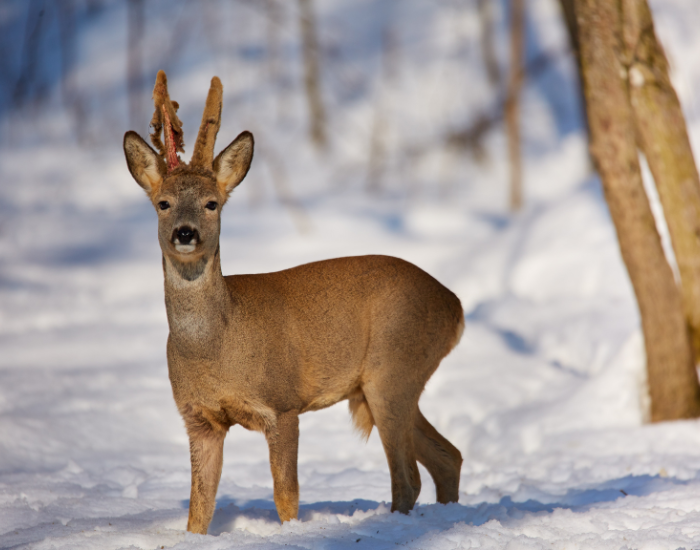
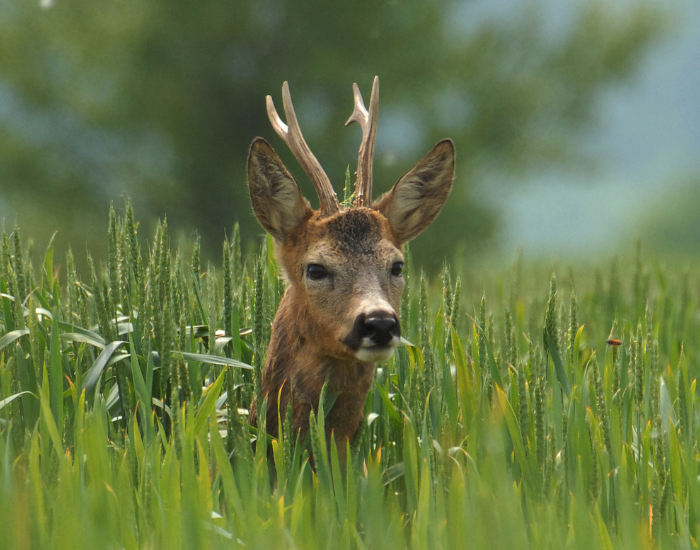
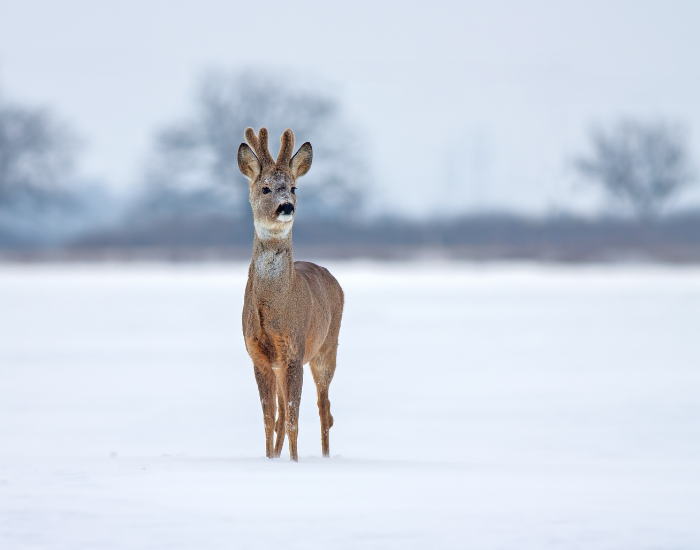
Unlike the impressive antlers of red deer, roebucks grow relatively short antlers. These antlers typically have no more than three points per side, reaching just 20–25 cm in length.
What makes roe deer unique is their antler cycle timing. Most UK deer shed their antlers in spring. However, roe deer shed their antlers between October and November. Therefore, they’re antler-free during the harsh winter months.
They begin growing new antlers in mid-winter, covered in soft velvet. By spring, the velvet is rubbed off against small trees and shrubs. These rubbing marks, called “frayage,” are excellent signs for tracking roe deer territory.
5. Masters of Forest Camouflage
Roe deer earn their “ghost of the forest” nickname through remarkable seasonal camouflage. Their coat changes dramatically between seasons to match their woodland environment.
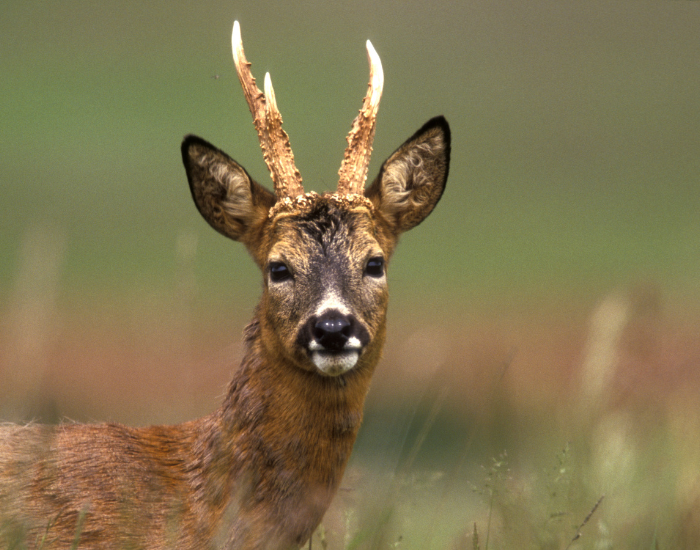
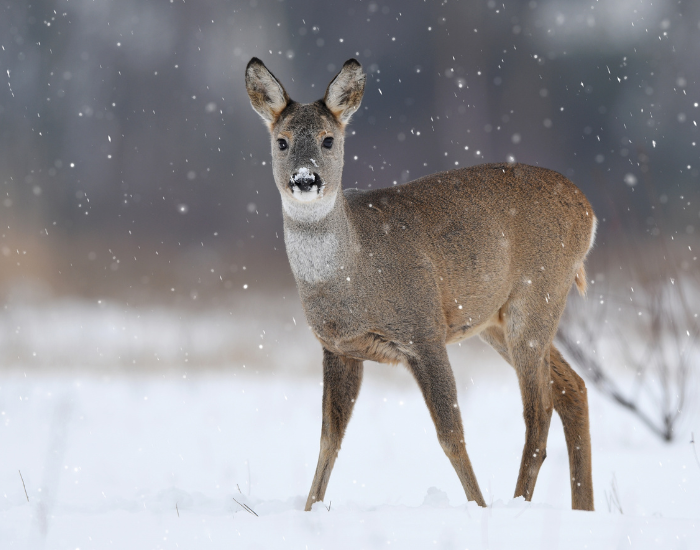
During July and August, they wear a bright reddish brown coat. This helps them blend into sun-dappled summer foliage. As autumn arrives, their coat transitions to darker grey or grey brown. This darker winter coat provides perfect camouflage against the grey brown woodland floor.
In addition, their white chin and black nose bridge create a distinctive facial pattern. This helps them recognize each other while remaining camouflaged to predators. Furthermore, juvenile males and young females develop white spotted coats during their first summer. These spots disappear as they mature.
6. Where Does the Roe Deer Live?
While many people associate roe deer with dense forests, their habitat preferences are remarkably flexible. They thrive in coniferous woodlands, mixed countryside, and even heathland habitats.
I’ve observed roe deer establishing ranges close to urban areas. Roe deer are highly adaptable and are increasingly found in urban areas such as parks, large gardens, and cemeteries. They’re increasingly common in parks, golf courses, and suburban gardens. In fact, encounters with vehicles have become their biggest threat in eastern Kent and other developed regions.
7. The Mysterious “Roe Rings”
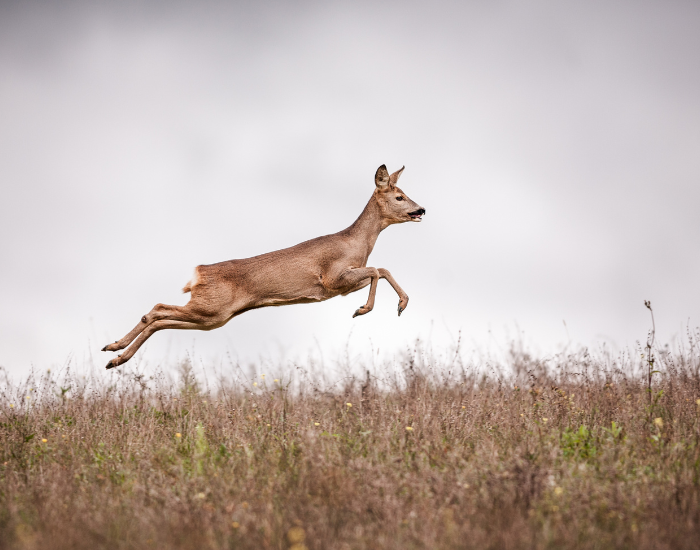
One of the most fascinating roe deer behaviors occurs during the rutting season, which is the breeding season for roe deer. The breeding season takes place from mid-July through late August, and it is during this period that mating occurs, creating a unique phenomenon called “roe rings.”
During courtship, the male roe deer chases the female in tight circles around trees or bushes. This chase can last for extended periods, creating visible circular paths in long grass and undergrowth. During the rut, males become highly territorial and may fight for territory and mating rights, sometimes resulting in serious injury or death. These rings can remain visible for months after the mating season ends.
Interestingly, the same trees are often used year after year. Therefore, finding roe rings is an excellent indicator of breeding territory. In addition, these circular chases serve multiple purposes beyond courtship, including territory defense and pair bonding.
8. Delayed Implantation – Nature’s Perfect Timing
Here’s where roe deer biology becomes truly remarkable. They’re one of the only deer species, and one of very few mammals, to practice delayed implantation ( a common phenomena among arctic animals, like the ermine).
After the July-August mating season, the fertilized egg doesn’t immediately attach to the uterus. Instead, it remains dormant for approximately five months. This delay ensures that young roe deer, called kids, are born in May or June when conditions are optimal.
This timing is critical for survival. Early summer provides abundant young shoots for nursing mothers. In addition, warm weather gives kids the best chance of survival. Females typically give birth to twins, though single kids and triplets occur occasionally.
The doe leaves her white spotted kids hidden in tall grass for long periods. This behavior protects them from natural predators. Many people mistakenly believe these kids are abandoned. However, the mother returns regularly to nurse them.
9. Solitary Lifestyle Unlike Other Deer
While red deer form large herds and fallow deer gather in loose groups, these deers are notably solitary. They prefer to live alone or in very small groups of 2–4 individuals.
This solitary nature makes roe deer particularly challenging to study. You might spot a single roe deer one moment, and then it vanishes completely into the forest.
During winter, small groups may form temporarily in areas with good food sources. However, these gatherings are opportunistic rather than social. By spring, roe deer return to their solitary lifestyle. Male roe deer, in particular, are highly territorial and will aggressively defend their ranges from other males.
10. What Natural Predators Do They Face?
In their native range across Europe, roe deer once faced significant natural predators. Wolves, lynx, and bears historically kept populations in check. However, the UK lacks these large apex predators entirely.
Today, foxes pose the primary threat to young ones during their first few weeks of life. Unfortunately, farm machinery has become a major killer. Many kids hiding in tall grass are killed during hay cutting and harvest operations in spring.
Vehicle collisions represent the biggest threat to adult individuals. As they increasingly establish ranges close to human settlements, road mortality continues to rise.
Without large predators, roe deer populations have exploded beyond the natural carrying capacity of many habitats. Therefore, sustainable management through controlled culling is sometimes necessary to prevent overgrazing and protect other species.
11. How to Distinguish Them From Fallow and Red Deer
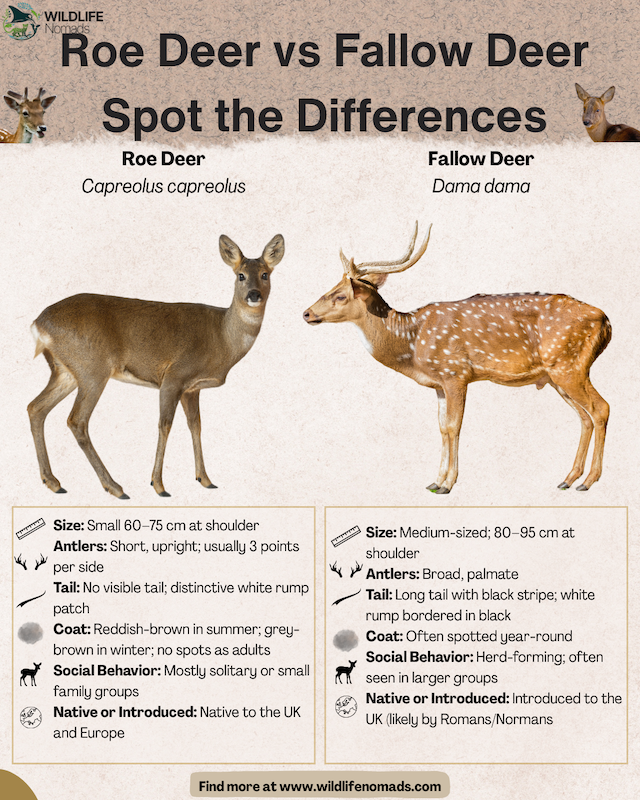
Knowing the differences between UK deer species helps with proper identification. Roe deer are the smallest of the three common native deer species.
Red deer are massive by comparison, standing nearly twice as tall at the shoulder. They have large, multi-tined antlers and a short visible tail. In addition, red deer typically live in large, obvious herds on open moorland.
Fallow deer fall between roe and red deer in size. They’re easily identified by their distinctive palmate (flattened) antlers and often spotted coats. Furthermore, fallow deer have a long tail with a black stripe running down it.
They lack a visible tail, have simple three-pointed antlers, and display that distinctive kidney-shaped white rump. Their solitary nature and preference for woodland cover also set them apart.
12. Conservation Status and Population Management
The roe deer is currently thriving across Europe. Their population has increased dramatically over the past century.
This success story has a complicated side. Without natural predators like wolves or lynx, roe deer populations can exceed sustainable levels. Overgrazing damages woodland ecosystems, affecting other species from ground-nesting birds to rare wildflowers.
Sustainable management programs aim to keep populations balanced with habitat capacity. In addition, these programs help prevent overgrazing that harms biodiversity. Deer stalking and controlled culling play important roles in modern conservation
FAQs about Roe Deer
Roe deer are one of the only deer species to practice delayed implantation, where the embryo remains dormant for months before developing. This ensures kids are born in optimal early summer conditions.
No, roe deer are actually the most common native deer species in the UK. Their population has increased significantly over the past century, making them relatively easy to spot in suitable habitats.
No, “roe” refers to the species name (Capreolus capreolus). A female is called a doe, a male is called a roebuck, and their offspring are called kids.
?A roebuck is simply the male roe deer. The term “roe deer” refers to the species as a whole, while “roebuck” specifically identifies males, and “doe” identifies females.

Still Watching from the Tree Line
Whether you’re exploring coniferous woodlands in Scotland or walking through mixed countryside in southern England, the roe deer remains one of the most iconic animals in the United kingdom. These elegant animals have adapted remarkably well to life alongside humans. However, they’ve retained their wild, elusive nature.
From their unique delayed implantation to those mysterious roe rings, every aspect of roe deer biology tells a story of adaptation and survival. Next time you see that distinctive pale buff patch disappearing into the trees, you’ll know exactly who you’re looking at. Furthermore, you’ll appreciate the complex biology behind these remarkable “ghosts of the forest.”