
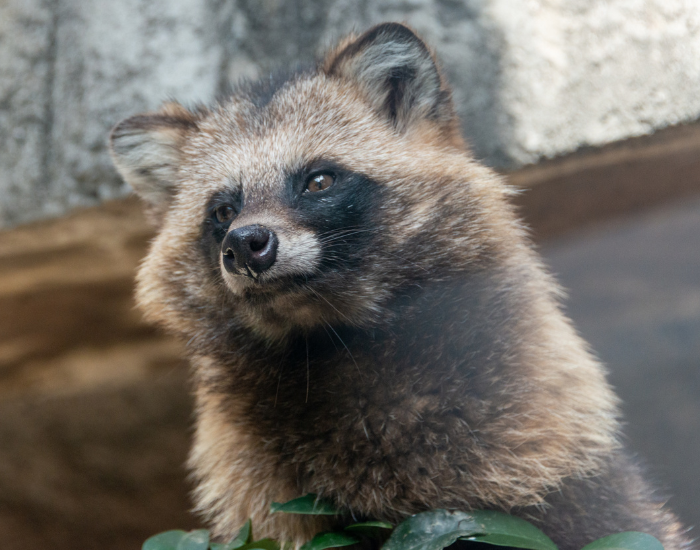
IIf you’ve ever strolled through the streets of Kyoto or popped into a Japanese restaurant, a belly-thumping, hat-wearing, slightly tipsy-looking statue likely greeted you. Meet the tanuki.
In the West, people often mistake them for chubby raccoons or perhaps a very fluffy badger. However, in Japan, the tanuki is a cultural icon that blurs the line between a real animal and a mystical creature with magical powers. From the shape shifting mischief of Japanese folklore to the real-life Japanese raccoon dog prowling the forests, this creature is a master of disguise.
But what exactly is it? Is it a dog? A raccoon? A spirit? Let’s dive deep into the tanuki lore to separate the biological facts from the ancient legends.
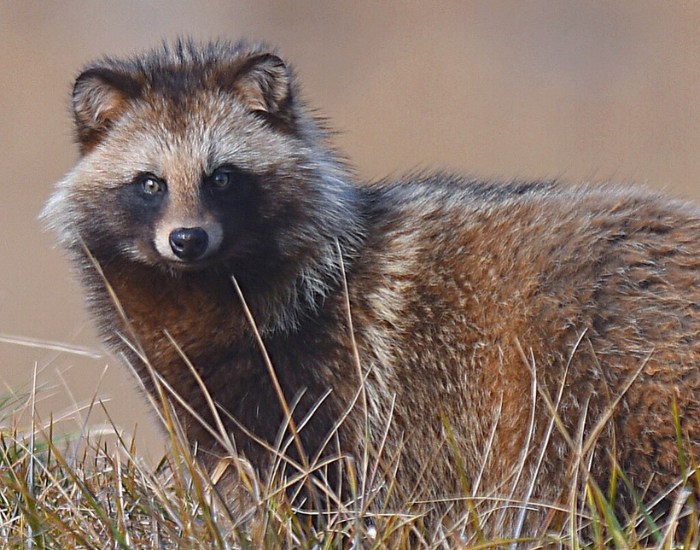
1. It’s Not a Raccoon (But It’s Not Just a Dog, Either)
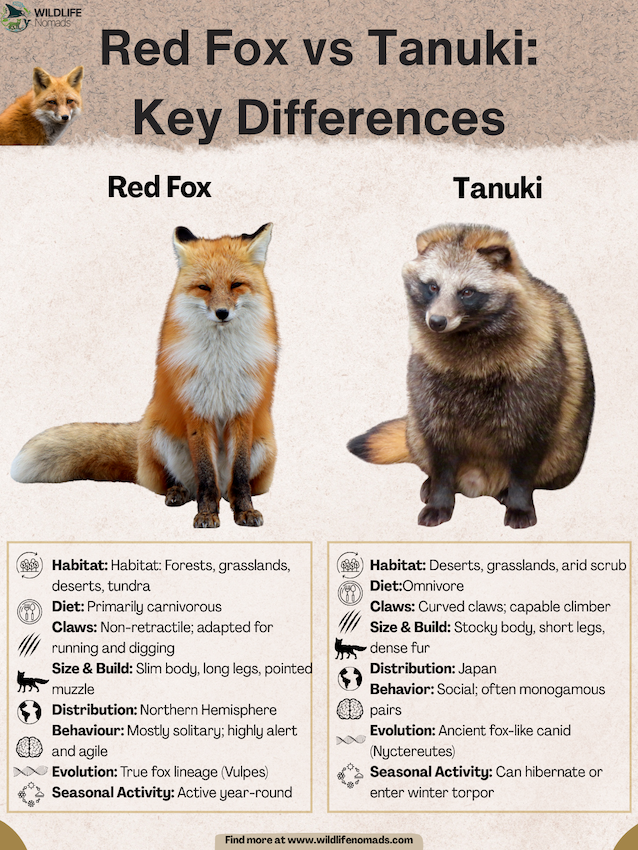
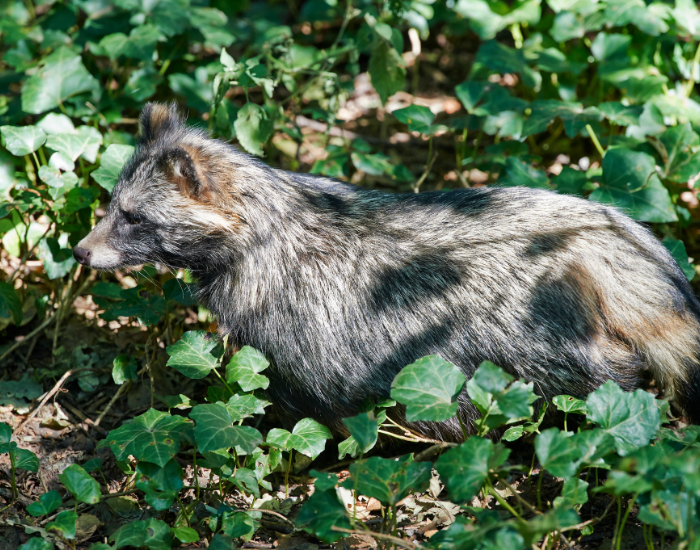
First, despite the mask-like markings, the tanuki is not a raccoon. The Japanese raccoon dog (Nyctereutes procyonoides viverrinus), also called tanuki, is a species of canid. While raccoons belong to the family Procyonidae, the tanuki is a member of the Canidae family. This makes it a distant cousin to the wolves, the sly foxes, and the domestic dog.
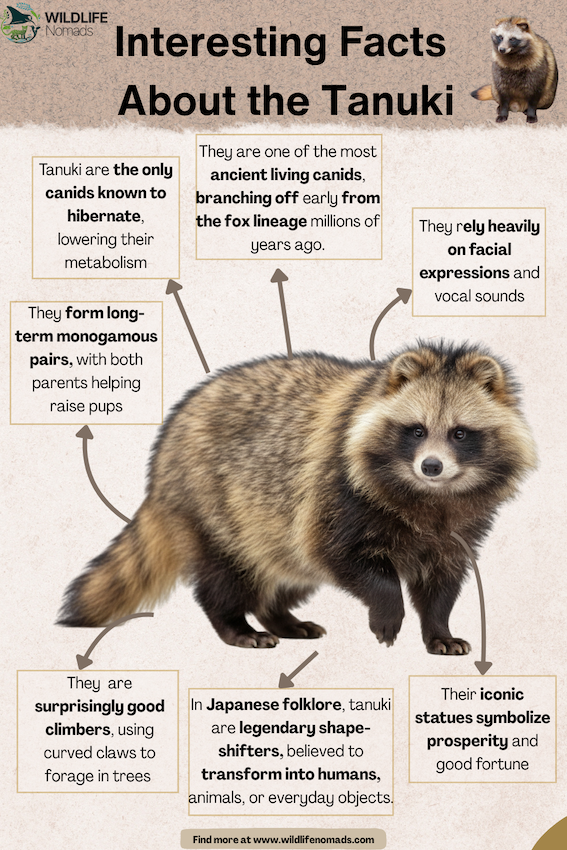
There is ongoing debate among scientists over whether the Japanese raccoon dog should be classified as a separate species or a subspecies of the mainland raccoon dog (N. p. procyonoides and N. p. albus). What sets it apart is its unique karyotype, which differs from mainland populations and supports its distinction. The tanuki is also considered one of the most ancient living canids, offering rare insight into early canine evolution.
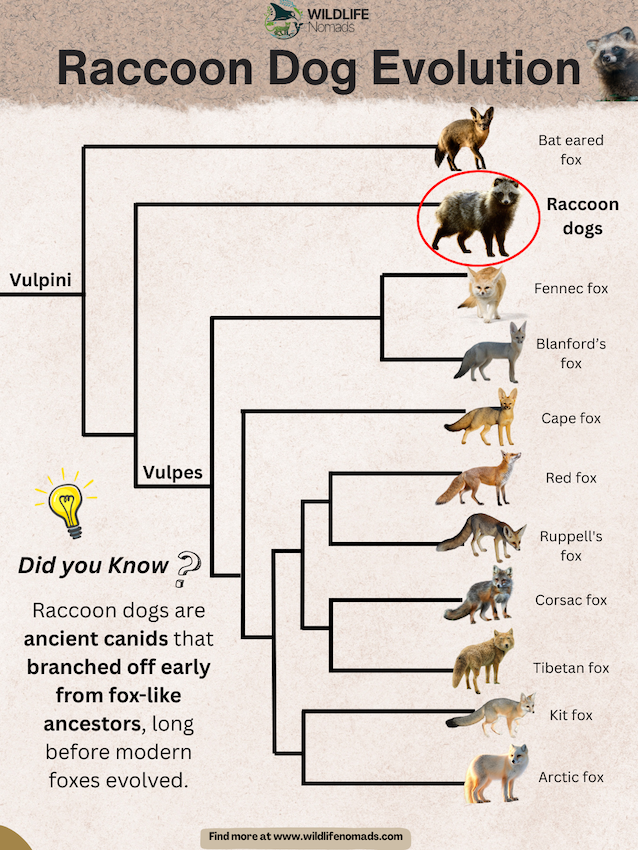
Evolutionarily, tanuki sit near the base of the “fox-like” branch of the canid family tree (just below the bat eared fox). They belong to the tribe Vulpini, the same group that includes all true foxes (Vulpes), such as the red fox, Arctic fox, fennec fox, and kit fox. While tanuki aren’t foxes themselves, genetic evidence shows they split early from the lineage that later produced modern fox species, preserving traits closer to early canids.
Their raccoon-like appearance is a classic case of convergent evolution. A stocky body, short legs, dense fur, climbing claws, and a black facial mask allow tanuki to fill a similar ecological niche to raccoons, despite having no close genetic relationship. Evolution, it seems, sometimes arrives at the same solution using entirely different ancestors.
2. The Shape-Shifting Trickster of Japanese Folklore
Tanuki have had a significant role in Japanese folklore since ancient times.
In Japanese folklore, the tanuki is a legendary yokai. The version of tanuki often referred to in Japanese folklore is a mystical creature known as bake-danuki, which possesses supernatural abilities. Much like the foxes (kitsune), the mythical tanuki is a master of shape shifting. According to many legends, they use their supernatural abilities to transform into humans, trees, or even various objects like a tea kettle.
This trope was famously captured in the Studio Ghibli film Pom Poko. In the movie, a litter of tanuki uses their transform abilities to fight urban development. In ancient times, the tanuki in Japanese culture wasn’t always “jolly.” The Nihon Shoki depicts them as creatures that would trick a person by turning leaves into fake money to buy sake and food. In folklore, tanuki are often depicted as jovial, bumbling pranksters who enjoy drinking, gambling, and leading travelers astray.
3. The Symbolism of the “Eight Special Traits”
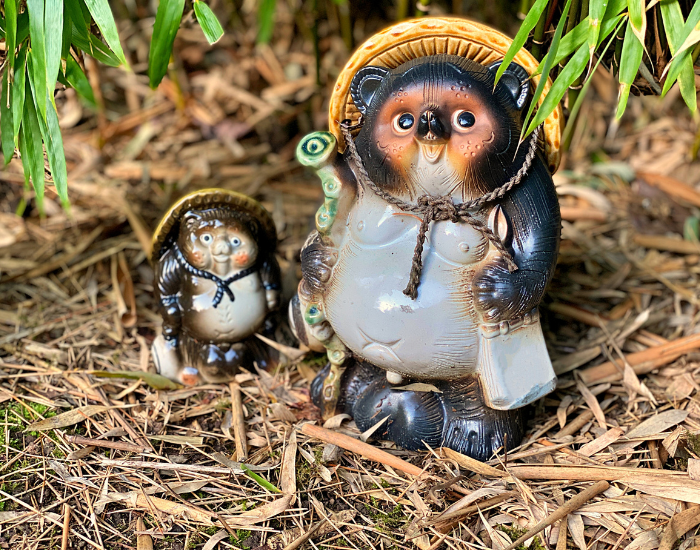
If you see a tanuki statue today, it’s likely a “Shigaraki-yaki” style. These statues act as a good fortune charm for businesses. Each part of the tanuki’s anatomy has a meaning in tanuki symbolism:
- The Straw Hat: Worn to protect against bad luck and bad weather.
- Big Eyes: To see the world clearly and make good decisions.
- The Sake Bottle: Represents virtue and a jolly personality.
- The Big Tail: Provides stability and strength until success is achieved.
- The Promissory Note: Represents trust and confidence.
- The Big Belly: Symbolizes bold, calm decisiveness.
- The Friendly Smile: To encourage a party atmosphere and kindness to customers.
- The… Oversized Scrotum: Wait, what?
Key traits represented by tanuki statues include a straw hat for protection, a big belly for generosity, and a sake flask for thankfulness.
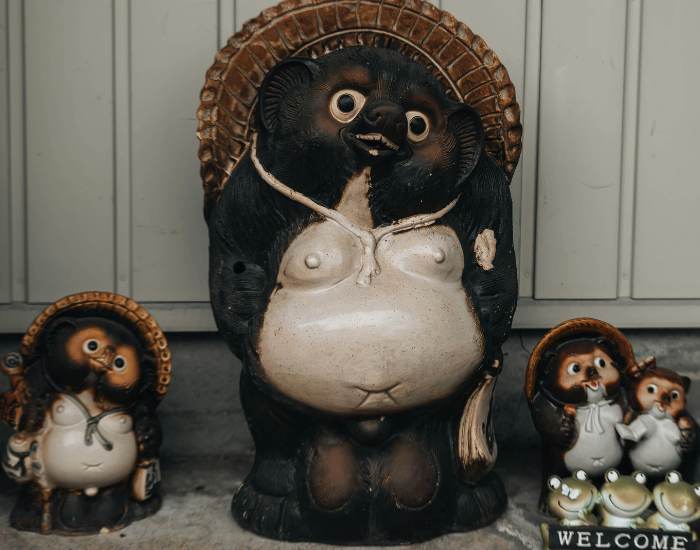
Tanuki statues are commonly found outside Japanese restaurants and bars, where they symbolize prosperity and business success.
4. The “Golden” Truth Behind the Oversized Testicles
Let’s address the japanese word in the room. In Japanese art and folklore, the tanuki is famously depicted with an oversized scrotum. To the Western eye, this seems crude, but in Japanese culture, it has nothing to do with fertility or libido. Tanuki’s testicles are often depicted as being large and are associated with granting wishes and bringing good fortune.
It started with metal workers. In ancient times, goldsmiths in Tokushima Prefecture and beyond used tanuki fur or skin to wrap gold when hammering it into thin leaf. Because tanuki skin was so incredibly durable and elastic, a small piece of gold could be stretched to a massive size.
Naturally, this led to the tanuki legend that their “bags of gold,” called kintama in Japanese, could stretch to the size of eight tatami mats. Thus, the tanuki meaning shifted: they became a god like symbol of stretching your money—literally a mascot for wealth and abundance.
5. Tanuki vs. Fox: The Great Rivalry
In Japanese folklore tanuki and Kitsune (foxes) are the ultimate rivals. While both are masters of shape shifting, they have different vibes.
There is a famous japanese word phrase, Kitsune-tanuki-gassen, referring to the legendary wars of trickery between these two species. While the fox tries to deceive for power, the tanuki usually just wants a free meal or a party.
6. The Real Animal: A Conservation Success and a Global Nuisance
While the Japanese raccoon dog is a beloved native in Japan, they have a complicated reputation elsewhere. In the mid-20th century, they were brought to Russia and Europe for the fur trade. Many raccoon dogs are bred and kept in captivity for their fur, raising concerns about animal welfare.
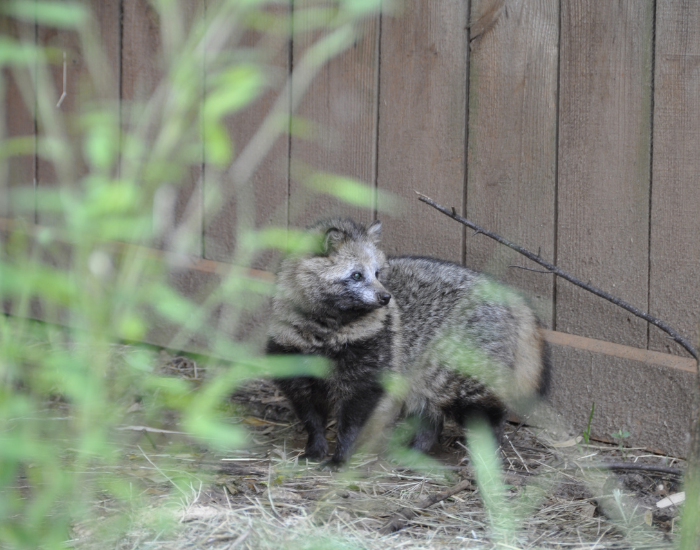
They escaped (or were released) and, being highly adaptable animals, they spread like wildfire. After their introduction, tanuki are considered an invasive species in many European countries due to their rapid population growth and adaptability. In several European countries, it is legal to hunt raccoon dogs to control their population and protect local biodiversity. Today, they are mistaken for raccoons and blamed for spreading diseases like rabies. This is one reason why they are illegal in the US and other regions—they are so hardy they could easily outcompete local wildlife.
7. Tanuki in Popular Culture: From Mario to Tom Nook
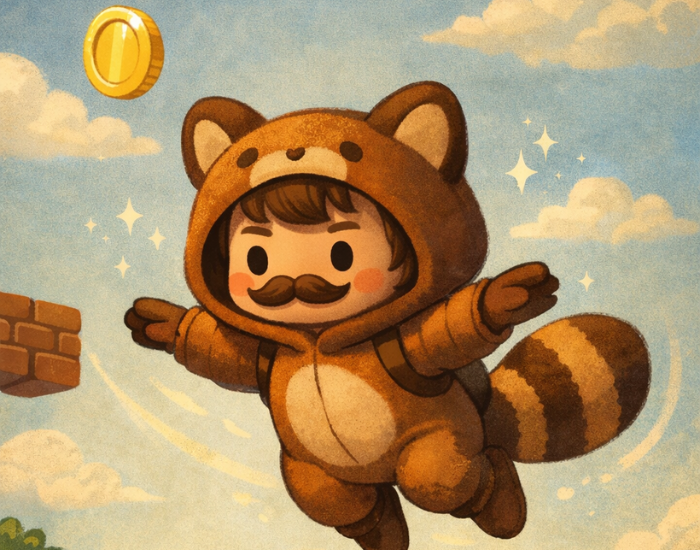
You don’t have to live in Japan to know a tanuki. If you’ve played Super Mario Bros. 3, and if you are like me, you probably wondered what was that thing Mario used to become when he could fly. Remember? Well you used the “Tanooki Suit” to transform into a statue and fly. That’s a direct nod to tanuki lore. The image attached is a reference to avoid copyright.
In Animal Crossing, the character Tom Nook is a tanuki (though the English translation often calls him a raccoon). Think about it: he runs the shop, he’s obsessed with kin (money), and he’s always looking for a promissory note (your mortgage). He is the modern embodiment of the mythical tanuki.
Even in Naruto or One Piece, you’ll see characters influenced by this japanese raccoon spirit. The tanuki cute aesthetic has become a global phenomenon.
8. Diet, Habitat, and Survival
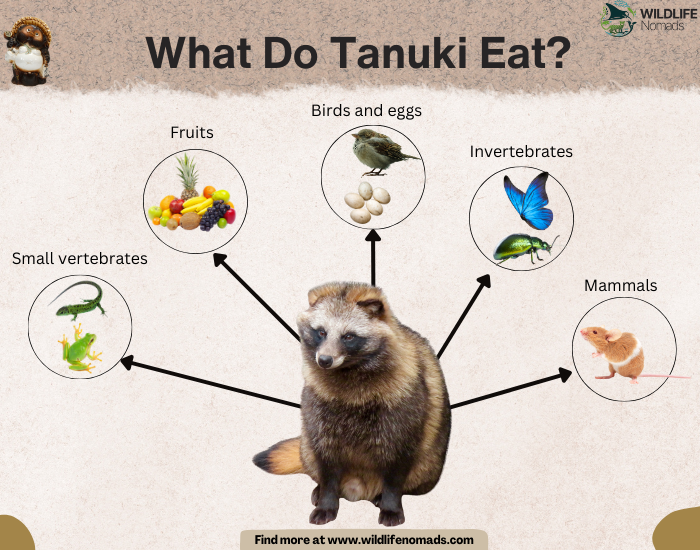
In reality, tanuki are omnivorous opportunists with incredibly adaptable eating habits. Their diet changes seasonally based on what food is available. They forage for a wide variety of food, including berries, rice, and small animals. Their natural habitat includes forests and areas near water, where they can easily find fish.
Adult tanuki typically weigh between four and ten kilograms. Their fur grows particularly thick in the winter to prepare for their unique hibernation. They are highly social and often form monogamous pairs that wear well through the years, raising their pups together in the wild.
In spring and summer, they feast on amphibians such as frogs, insects, small rodents, fish, and lizards. During autumn, they shift focus to fruits, nuts, seeds, and rhizomes to build up fat reserves for winter.
Those living in coastal areas supplement their diet with marine species and crabs. Thanks to their dexterous front paws and curved claws, they can even climb trees to reach food sources, an unusual ability for a canid.
9. The Only Hibernating Canid in the World
Here’s a fascinating fact about this special animal: tanuki are the only members of the dog family known to hibernate.
During winter, these creatures can reduce their metabolism by up to 25 percent. Before hibernation begins in November, tanuki must increase their body weight by 18-23 percent in subcutaneous fat and 3-5 percent in internal fat. Animals failing to reach these fat levels usually don’t survive the winter.
The tanuki is known to be a nocturnal animal, primarily active at night and avoiding human contact. The Japanese raccoon dog is mainly nocturnal and is known to vocalize by growling or groaning, especially as part of its defensive behaviors.
However, hibernation isn’t always necessary. In warmer regions or during mild winters, tanuki may not hibernate at all. Even in colder areas, they sometimes emerge on warm winter days to forage for food if their fat reserves are running low.

10. Monogamous Pairs That Hibernate Together
Unlike many wild animals, tanuki form monogamous pairs that typically last for life. Male and female tanuki share a den during winter months and work together to raise their young.
Both parents actively participate in caring for their pups, a rare trait among canids. This family-oriented behavior has contributed to their reputation in Japanese culture as loyal and dependable creatures.
During breeding season (February to April), females give birth to litters averaging 5-7 pups after a gestation period of 59-64 days. The pups are born in dens and become independent by autumn.
This social behavior sets tanuki apart from many other dog-like species and adds to their unique character.
FAQ: Everything You Wanted to Know About the Tanuki
The USDA and Fish and Wildlife Service classify them as “injurious wildlife.” Because they are highly adaptable and can carry diseases, they pose a threat to local ecosystems and the agricultural industry.
The tanuki myth depicts them as yokai with supernatural abilities. They are believed to be mischievous tricksters who can transform into anything from humans to inanimate objects.
In stories, they are jolly, mischievous, and a bit clumsy. They aren’t “evil” demons, but rather tricksters who love sake, food, and playing harmless pranks on unsuspecting humans.
As mentioned, this stems from metal workers using their skin to stretch gold. It became a symbolism for “stretching your wealth” and bringing good fortune.
The Spirit of the Wild and the Imaginary
The tanuki is a rare example of a real animal that has been almost entirely eclipsed by its own legend. Whether you see them as a japanese raccoon spirit, a mischievous trickster, or a biological marvel that hibernates through the winter, there is no denying their cultural significance.
They remind us of a time when the line between nature and the supernatural was thin, where a rustle in the trees might be a dog, or it might be a god looking for a party.