
When we talk about the great apes that mirror the human experience, we usually jump straight to chimpanzees or gorillas. They’re the heavyweights of the primate world, the ones with the big Hollywood contracts, and the stars from many Jane Goodall adventures. However, there’s a third sibling in our evolutionary family tree that is arguably the most fascinating of them all: the bonobo.
Often nicknamed the “pygmy chimpanzee,” the bonobo (Pan paniscus) is anything but a “mini” version of its more aggressive cousin. Found exclusively in central Africa, specifically the Democratic Republic of Congo (DRC), these great apes offer a window into a world where peace, matriarchy leadership, and social intimacy rule.
In my book, Animals of Africa, I dive deeper into how these primates challenge our understanding of nature. Today, let’s get into the nitty-gritty. Why is the bonobo animal so different? And why are bonobos endangered to the point of crisis?
Here are 12 incredible facts about the bonobo ape that will change the way you look at our closest living relatives.
1. They Are Our Closest Living Relatives (Along with Chimps)
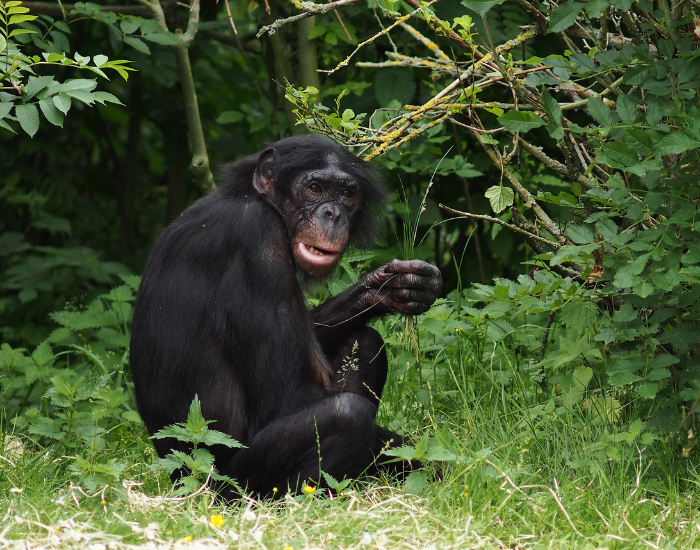
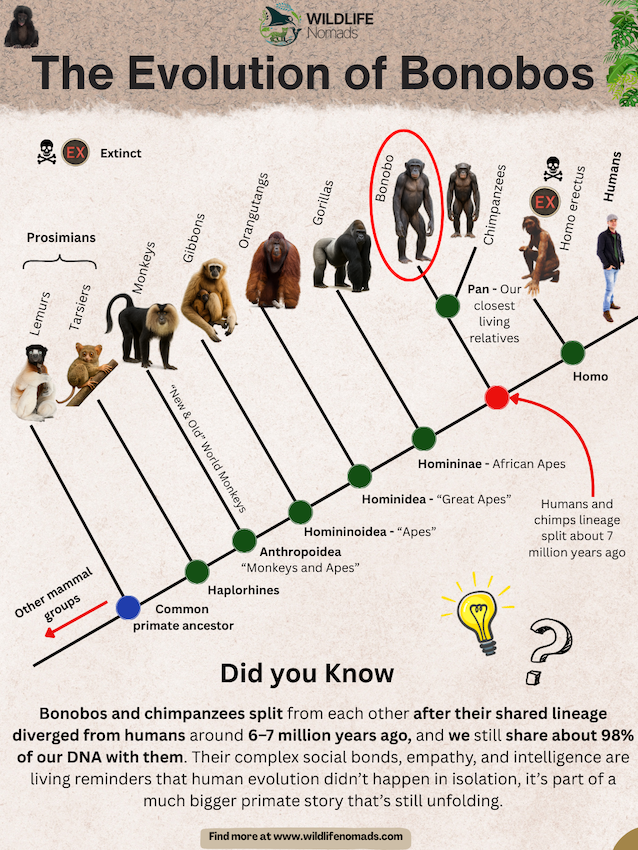
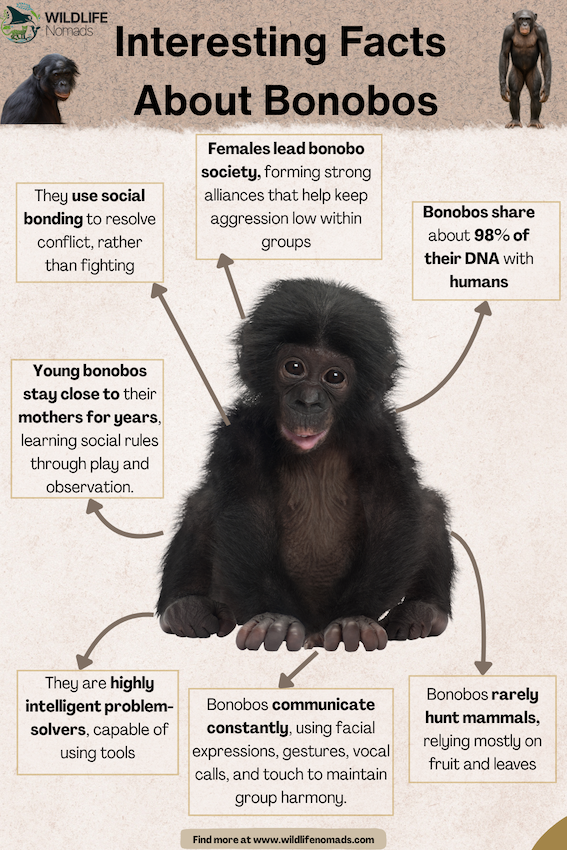
If you looked at your DNA and a bonobo’s DNA side-by-side, you’d find a 98.7% match. While we share that same percentage with chimpanzees, bonobos often feel more “human” in their temperament. They are one of the four great apes (alongside chimps, gorillas, and orangutans) and are considered a distinct species from the common chimpanzee. Bonobos are about the same size as chimpanzees, but are more slender and have smaller heads and ears.
Bonobos share approximately 98.7% of their genetic material with humans. This remarkable genetic similarity makes them, together with chimpanzees, our closest living relatives. They didn’t just “evolve from” chimps; they branched off about two million years ago when the Congo River formed a permanent geographic barrier.
2. A Society Led by an Alpha Female
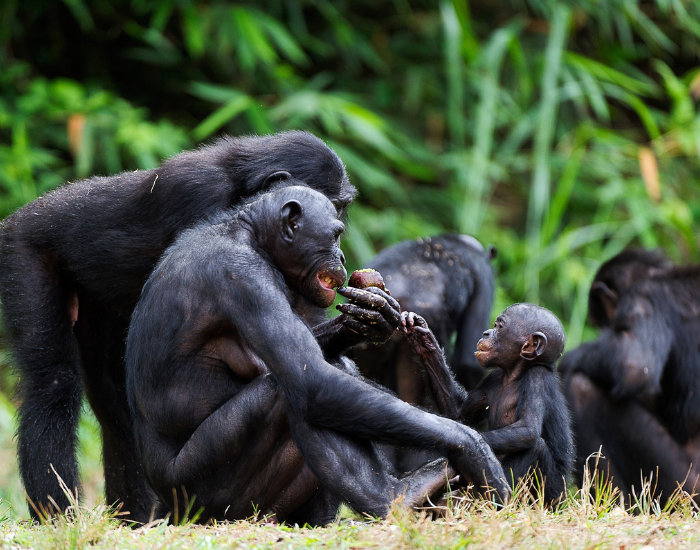
In most primate societies, including humans and chimpanzees, males tend to run the show through physical dominance. The bonobo society flips the script entirely. Bonobo females are the dominant force in society, shaping a matriarchal world where their leadership and social alliances guide the group. Her status is maintained through close-knit alliances with other females.
Even the adult males derive their social standing from their mothers. Bonobos have a unique matriarchal social structure, where bonobo females are dominant and maintain lifelong bonds with their sons, and males derive their social status from their mothers. If a male bonobo gets too aggressive, the female bonobos band together to put him in close proximity to submission. It’s a masterclass in “stronger together.” Other females rally around the dominant female to maintain peace and order.
3. The “Make Love, Not War” Philosophy
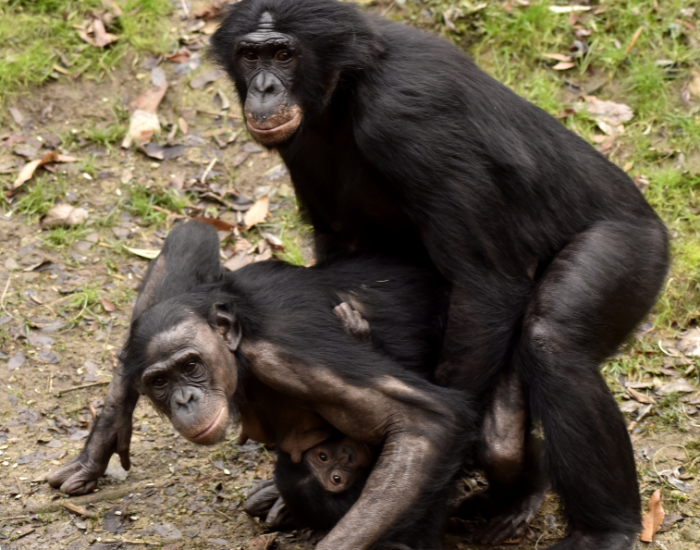
You’ve probably heard that bonobos are “hypersexual.” While that’s a bit of a clickbait term, it’s true that sexual behavior is the glue of their society. Unlike chimpanzees, who might use violence to resolve a dispute over food or territory, bonobos use sexual contact to diffuse tension.
Sexual behavior among bonobos includes interactions between males and females, as well as same-sex encounters among both sexes. For a bonobo, sexual contact is like a handshake or a “sorry” hug. It keeps the peace and prevents the lethal warfare seen in other living primates.
4. They Are the Only Great Apes Found Exclusively in the DRC
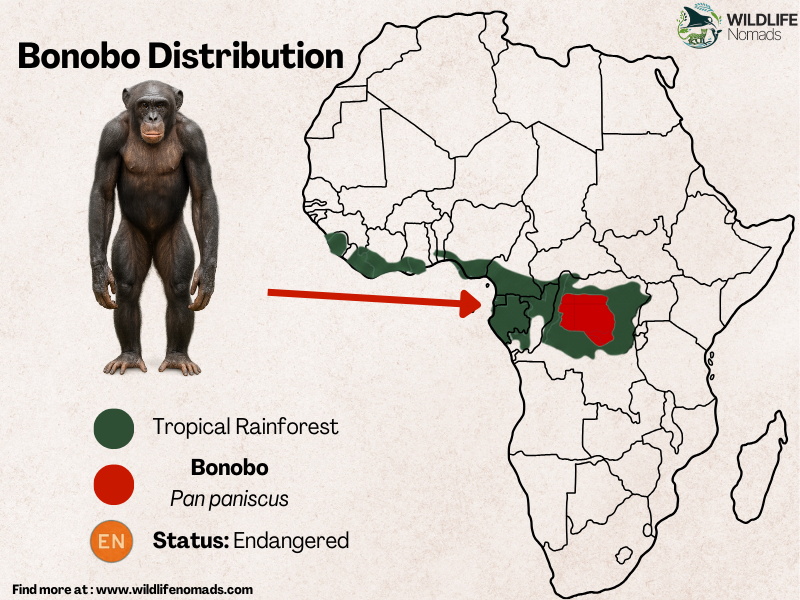
The bonobo habitat is incredibly specific. You won’t find them in West Africa or across the continent like other mammals. They live only in the Congo Basin of central Africa, specifically the Democratic Republic of Congo, south of the Congo River. The bonobo’s range is restricted to a 500,000 km2 area within the Congo Basin, making their geographic distribution very limited.
This limited bonobo’s range is a double-edged sword. It kept them isolated (and “undiscovered” by Western science until 1929), but it also means that political instability in one single country can threaten the entire species. The Congo Basin provides the dense, swampy rainforests where wild bonobos populations thrive. Bonobos do not have a defined territory; their communities travel over a wide range, which influences their social structure.
5. They Look More Human Than You’d Expect
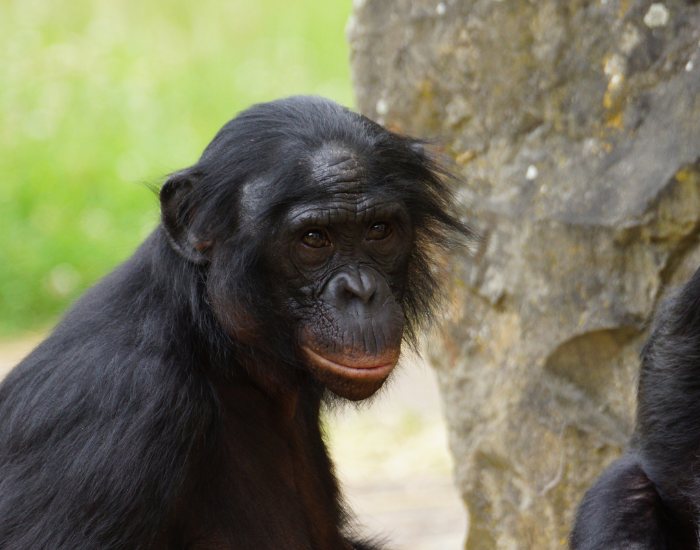
Why do bonobos look so human? Compared to chimpanzees, adult bonobos are more slender, have longer legs, and narrower shoulders. They often walk bipedally (on two legs) more comfortably than other apes. Bonobos exhibit unique social and behavioral traits, including cooperation, peace, altruism, female dominance, and frequent sexual behaviors, which set them apart from other primates.
Their facial expressions—from pouting to wide-eyed curiosity—are hauntingly familiar. Bonobos have a black face with pink lips, and are distinguished from chimpanzees by relatively long limbs, pinker lips, a darker face, a tail-tuft through adulthood, and parted, longer hair on their heads. They even have distinct “hairdos,” with hair that naturally parts down the middle of their foreheads. When you observe bonobos in captive settings like the San Diego Zoo, their human-like gestures become even more apparent. Bonobos are also known for their high-pitched vocalizations, which differ from those of chimpanzees.
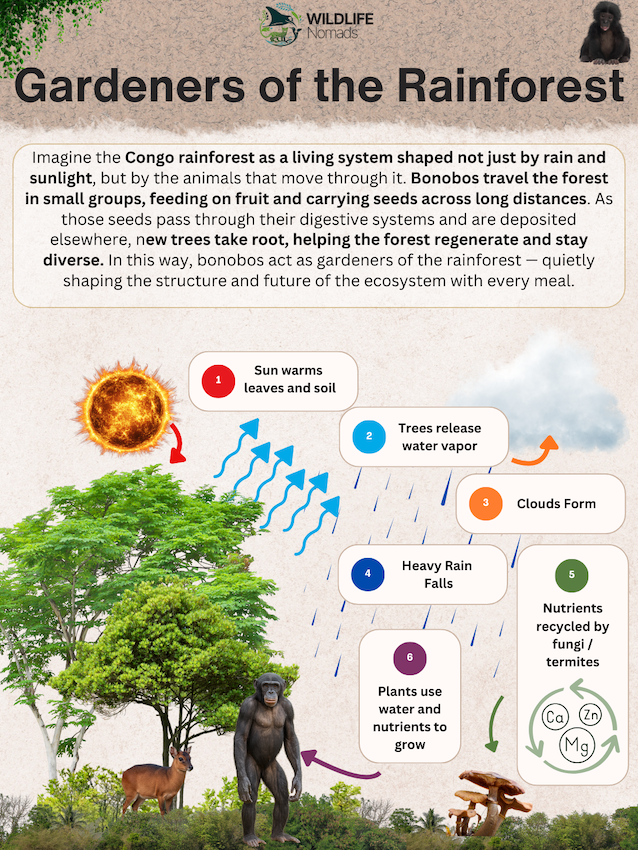
6. Bonobos Are the “Gardeners” of the Congo Basin
Bonobos forage for a wide variety of foods, but they are primarily frugivores (fruit eaters). Because they travel in small groups and consume massive amounts of fruit, they play a vital role in seed dispersal.
Many plants in the Congo Basin rely almost entirely on bonobos to pass their seeds through their digestive tracts to germinate. Without them, the very structure of the rainforest would change dramatically. Therefore, bonobo conservation isn’t just about saving one species, it’s about preserving an entire ecosystem.
Unlike chimpanzees, who are known for their coordinated hunts and taste for meat, bonobos rarely hunt mammalian prey. Instead, they’re opportunistic feeders, occasionally snacking on small mammals, insect larvae, earthworms, honey, eggs, and even a bit of soil when the opportunity arises. At some research sites, wild bonobos have even been spotted washing their food before eating, a behavior that sets them apart from their great ape cousins.
This diverse diet is closely tied to the seasonal rhythms and abundance of their natural habitat. When fruit is scarce, bonobos forage for whatever the forest provides, showing their adaptability.
7. Their Population Is Dangerously Low
How many bonobos are left? Estimating the bonobos population is notoriously difficult because they live in dense, remote swampy rainforests. However, researchers suggest there are between 10,000 and 50,000 individuals remaining in the wild, with many estimates clustering around 15,000 to 20,000.
This makes the bonobo endangered, a status that reflects a high risk of extinction in the near future. Free ranging populations are fragmented across the Congo Basin, making conservation efforts more challenging.
8. They Face “The Big Three” Threats
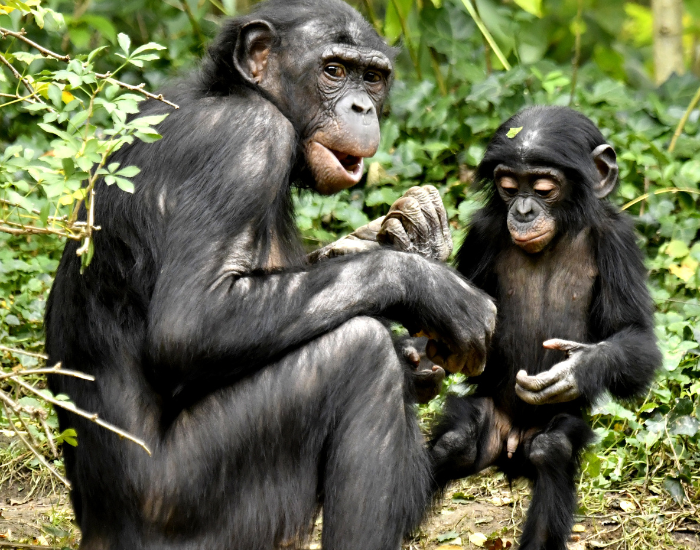
Why is the bonobo animal at risk? It boils down to three things:
Habitat destruction and habitat loss: Driven by subsistence agriculture and logging. As human encroachment increases, bonobo habitat shrinks. Commercial logging operations create new roads that facilitate hunting and capture of bonobos.
Bushmeat Hunting: Despite being a “taboo” meat in some local communities, the bushmeat trade and bonobo meat consumption have increased due to food insecurity. Bushmeat hunting remains the greatest threat to wild bonobo populations.
Disease Transmission: Because bonobos share 98.7% of their DNA with human beings, they are susceptible to our respiratory viruses and other pathogens.
Population growth contributes to habitat destruction, poaching, and increased threats to bonobo survival. As the human population expands, pressures on bonobo habitats intensify, making conservation efforts even more challenging.
9. They Are Highly Empathetic
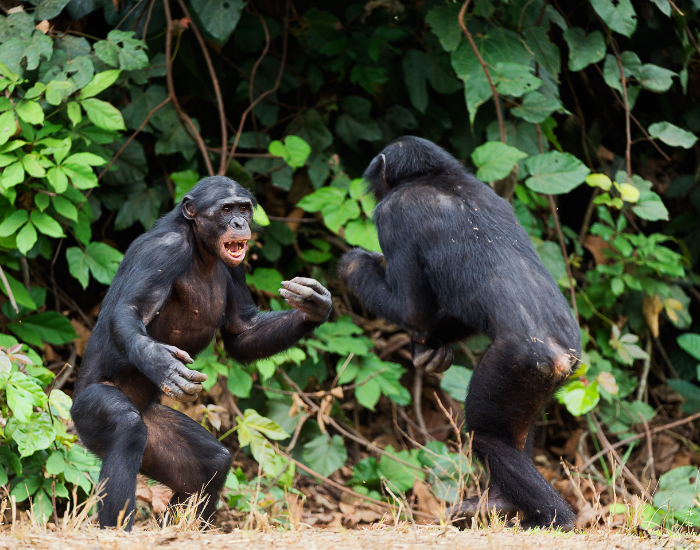
In captive settings, such as the famous “Lola ya Bonobo” sanctuary, studied bonobos have shown remarkable levels of empathy. They have been observed helping strangers (other bonobos they don’t know) obtain food, even when there is no direct benefit to themselves.
This “prosocial” behavior is a trait we often think is unique to humans, but bonobos prove that kindness is an ancient evolutionary strategy. Congolese researchers and international scientists continue to study this fascinating aspect of bonobo behavior.

10. Slow Reproduction Makes Recovery Difficult
How often do bonobos have babies? Not very often. A female won’t reach sexual maturity until she is about 12 years old. Once she does, she only gives birth every five to six years, typically after a gestation period of around eight months.
This slow birth rate means that if a population is hit by bushmeat hunting or an outbreak, it takes decades for the numbers to recover. Adult females spend years nurturing their young, and female bonobos form strong bonds with their offspring. Young bonobos stay close to their mothers for several years, learn social skills through play, and develop within a nurturing, female-led society.
11. They Are the “Forgotten Ape”
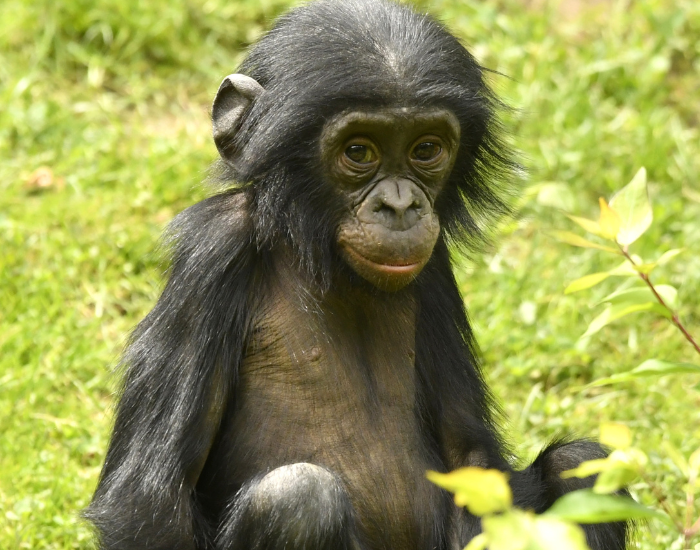
Despite being our closest living relatives, the bonobo is often left out of the conversation. In fact, many people still refer to them as the pygmy chimpanzee, a name that is technically outdated since they are a separate species.
They are the “forgotten ape” of the scientific world, but through bonobo conservation and community involvement, that is slowly changing. Conservation efforts in places like Salonga National Park involve Congolese researchers, local communities, and international organizations working together.

12. Conservation Is a Human Effort
Protecting the bonobo isn’t just about fences and national parks; it’s about people. Successful conservation efforts in places like Salonga National Park involve Congolese researchers and local communities working together.
Organizations like the WWF and the San Diego Zoo are working to create sustainable livelihoods for people living in close proximity to bonobo habitat. Therefore, protecting the forest is more profitable than destroying it. Community involvement is essential for long-term success.
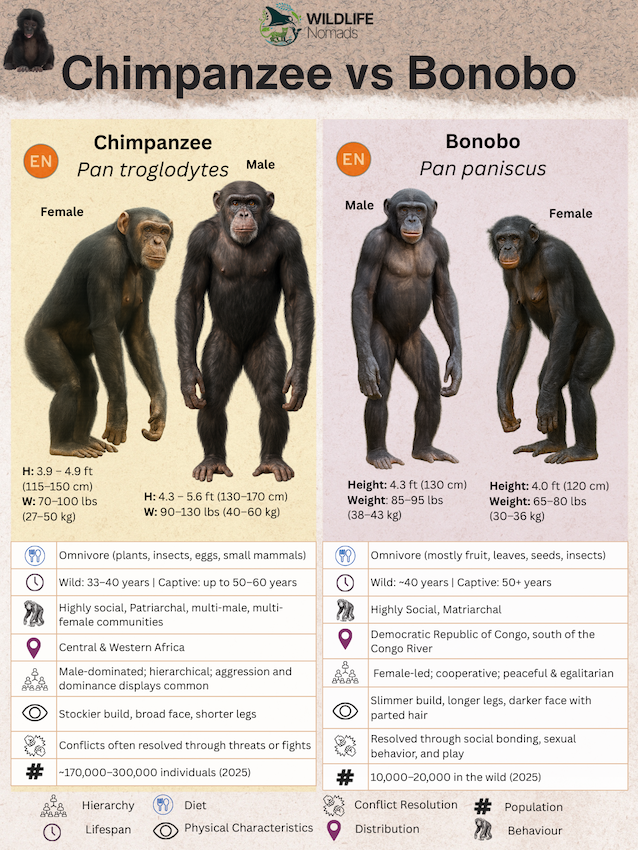
Comparison: Bonobos vs. Chimpanzees
| Feature | Bonobo (Pan paniscus) | Chimpanzee (Pan troglodytes) |
|---|---|---|
| Social Structure | Matriarchal (Female-led) | Patriarchal (Male-led) |
| Conflict Resolution | Sexual behavior & affection | Aggression & dominance |
| Physicality | Slender, longer legs, dark face | Stocky, stronger, lighter faces (young) |
| Location | Only DRC (South of Congo River) | Across Equatorial Africa |
| Conservation Status | Endangered Species | Endangered Species |
FAQ: Everything You Wanted to Know About Bonobos
Yes. Both male and female bonobos engage in same-sex sexual behavior. In females, this is often called “GG-rubbing” (genito-genital rubbing) and is used to strengthen social bonds and alliances between immigrant females and the resident group. Sexual behavior in bonobo society serves multiple social functions beyond reproduction.
In wild bonobos populations, they are generally shy and avoid human encroachment. However, they are not naturally aggressive toward humans. In captive settings, they are known for being highly interactive and emotionally intelligent, though they are still powerful great apes that require respect.
In the wild, these apes have a long life. They typically live into their 30s or 40s. In captivity, with medical care and a steady diet, they can live into their 50s or even early 60s—similar to the lifespan of chimpanzees and gorillas.
They are found only in the Congo Basin of central Africa, specifically the Democratic Republic of Congo. They live in the humid, low-altitude forests south of the Congo River. Their habitat includes swampy rainforests and dense tropical forests.
First, a quick correction: are bonobos apes? Yes! They are apes, not monkeys (apes don’t have tails). They are best known for their female-dominant societies and their use of sexual contact as a social tool for peace. Bonobo society demonstrates a unique approach to conflict resolution.
While bonobos share many characteristics with the common chimpanzee, including being among our closest living relatives, they differ significantly in social structure and behavior. Bonobos live in matriarchal societies where females lead, whereas chimpanzees have male-dominated hierarchies. Additionally, bonobos use sexual behavior to resolve conflicts, while chimpanzees are more likely to use aggression.
We (humans) Must Act Now
The bonobo is a mirror for the best parts of humanity: empathy, cooperation, and the power of community. However, the reality is that human beings are currently the biggest threat to their survival. With habitat destruction and the pet trade still looming, the future of the “hippie ape” is in our hands.
By supporting bonobo conservation initiatives and spreading awareness about this endangered species, we can ensure that the Congo River continues to echo with the calls of our peaceful cousins. Conservation efforts must include community involvement, protection of national parks, and addressing the root causes of bushmeat hunting and political instability.
The studied bonobos in sanctuaries and research sites have taught us invaluable lessons about empathy, cooperation, and peaceful coexistence. Now it’s our turn to ensure that wild bonobos populations continue to thrive in central Africa for generations to come. The forgotten ape deserves to be remembered and protected before it’s too late.
See Bonobos in the Wild in Africa!
Here is a list of our recommended tours with trusted partners so you can spot a cheetah and many other animals in the wild:
This blog is reader-supported. When you buy experiences through links listed on this site, we may earn an affiliate commission.