
The highways of Mexico carry a distinct smell, diesel mixed with sun-baked asphalt and the sweet scent of scrubland. Growing up, I spotted them constantly during family road trips: large birds perched on fence posts with striking orange faces and sharp black caps. Later, as a biologist, I learned these weren’t eagles at all. They were caracaras.
If you’ve wondered about that unusual bird you saw in central Florida or Texas, you’re in the right place. Here are 15 captivating facts about the caracara.
1. The Crested Caracara Is a Falcon That Forgot How to Fly Fast
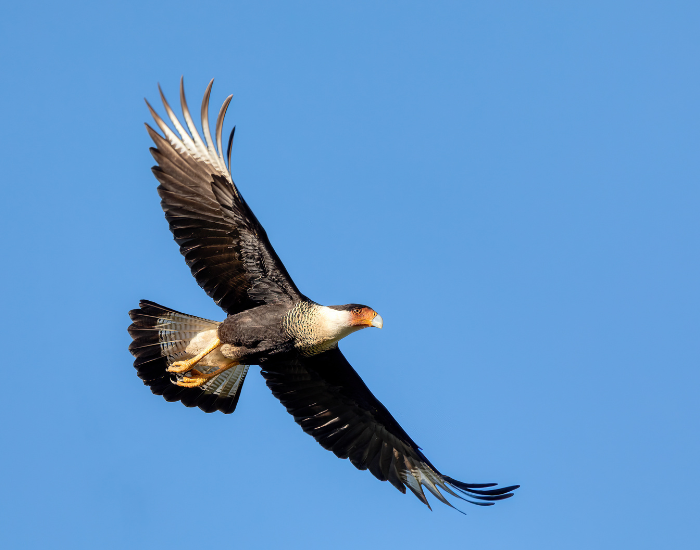
The crested caracara (Caracara plancus) belongs to the falcon family (Falconidae). Despite this, it behaves very differently from the high-speed aerial hunters the group is known for. Unlike a Peregrine Falcon (or even powerful raptors like the bald eagle) you won’t see a crested caracara performing dramatic sky-high dives. Instead, this falcon family member is a highly adaptable, ground-dwelling specialist, often seen walking, scavenging, and opportunistically hunting on open landscapes.
The caracara bird ranges from the southern United States through central and south america. It is a non migratory species throughout its range, meaning once it finds suitable habitat, it remains there year-round and does not migrate like other birds.
2. The “Mexican Eagle” Debate Continues Among Historians
Many people ask: is the caracara on the Mexican flag? The official bird is the Golden Eagle (Aquila chrysaetos) one of the most iconic animals in Mexico. There is some debate about Mexico’s national bird, with some historians and ornithologists arguing that the Crested Caracara, rather than the Golden Eagle, is more accurately recognized as Mexico’s national bird due to its depiction in Aztec codices and cultural significance.
However, scholars believe the original Aztec codices actually depicted the crested caracara.
This bird’s prevalence across Mexico and its habit of killing snakes on the ground fits the ancient legend. Consequently, some call it the Mexican eagle. In addition, its regal appearance reinforces this nickname.

3. Three Features Make Caracaras Instantly Recognizable
The northern crested caracara displays distinctive characteristics:
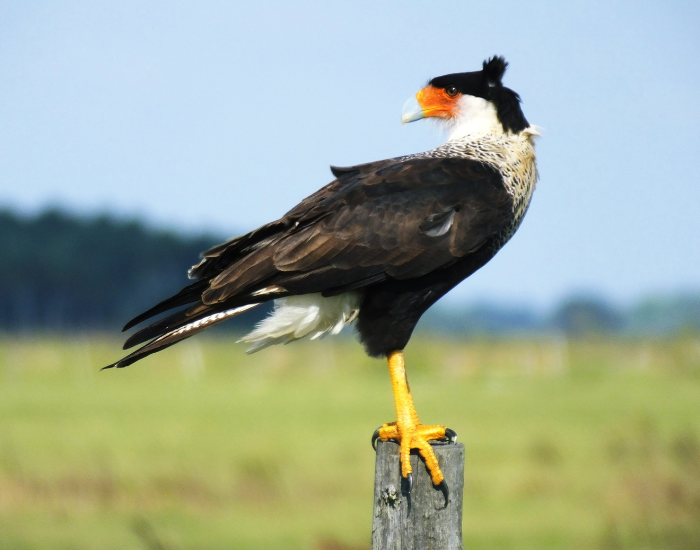
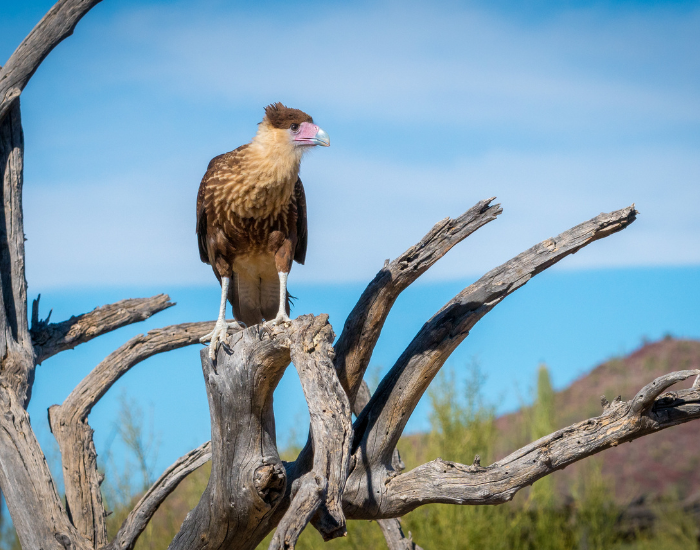
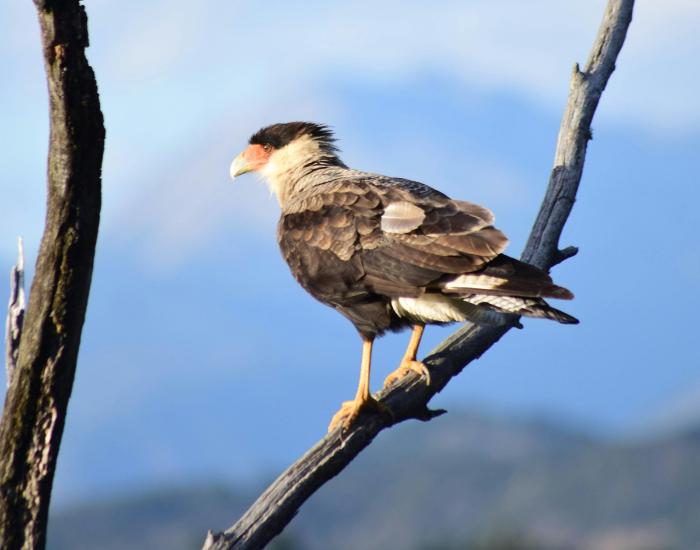
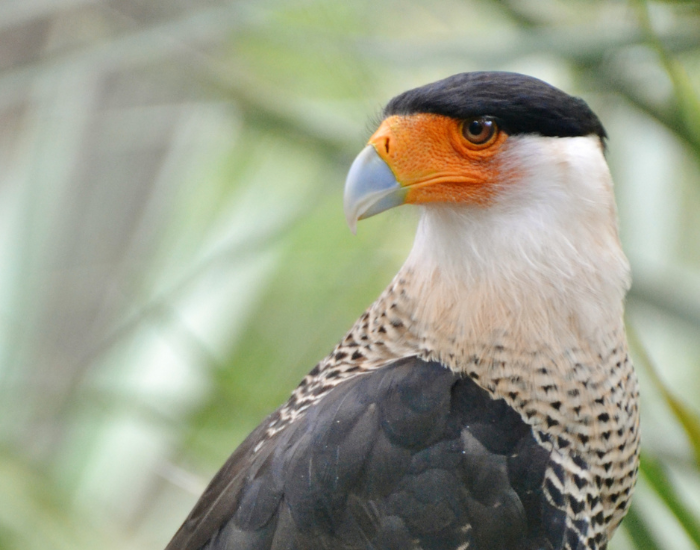
First, a yellow-orange face features bare facial skin that changes color when stressed or excited. The crested caracara has a large bill and a large, colorful facial skin area that can change color from pale blue-gray to pinkish-red and bright red. Second, long legs built for walking contrast sharply with typical falcons’ short legs. Third, a shaggy black cap gives it a sophisticated appearance. The crested caracara has a distinctive black patch of feathers on the top of its head, and its crest is dense and shaggy.
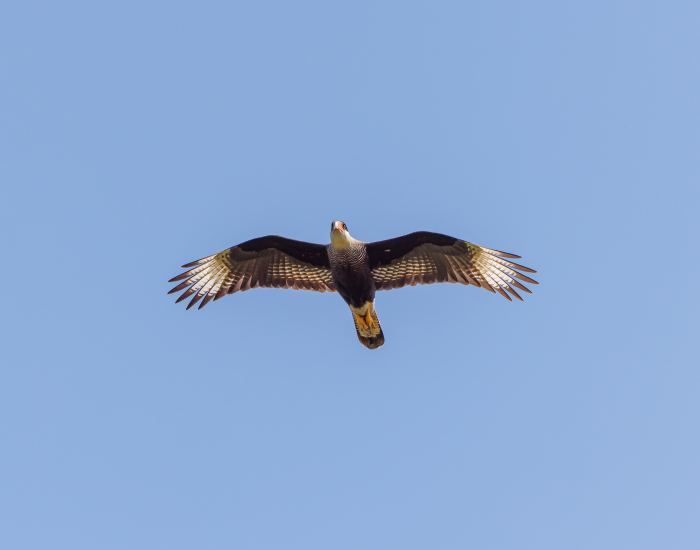
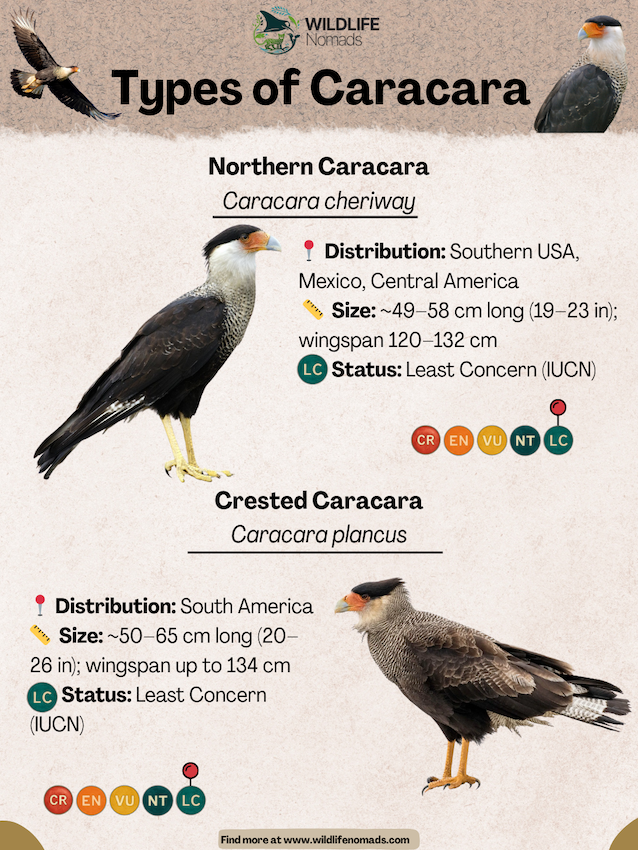
The body length reaches 20 to 25 inches. Moreover, the wingspan can extend to 4 feet. (The crested caracara has a total length of 50–65 cm (20–26 in) and a wingspan of 120–132 cm (47–52 in).) The crested caracara has a dark brown-black belly, wings, back, and crown, and a white lower belly, head, and throat. Its wings are notable for their striking plumage, which includes white wingtips and conspicuous patches visible in flight. The crested caracara is known for the ‘four points’ of white markings on its wings, tail, and neck, which are key identification features that set it apart from other birds. The white tail shows dark crossbars and a prominent black terminal band.
4. Caracaras Love Open Country and Open Landscapes
Where do crested caracaras live? These birds avoid dense forests. They prefer open landscapes, open country, and semi-arid regions.
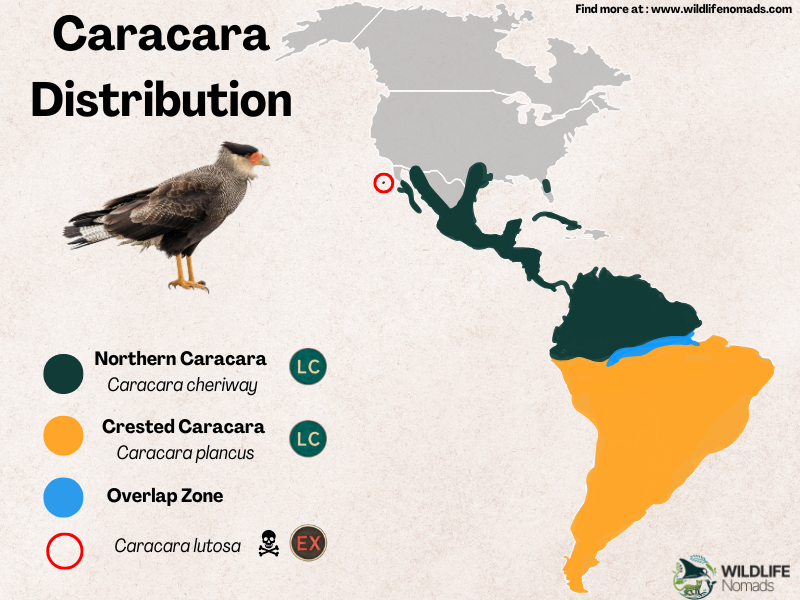
Their crested caracara range spans vast territory. In the southern United States, they inhabit Texas, Arizona, and Florida. Throughout Central America and Mexico, they occupy nearly every region. In South America, they dominate the pampas and open fields of Brazil, Argentina, and Chile.
5. The Florida Caracara Population Needs Protection
Central Florida serves as a northern stronghold for the species. The Florida caracara thrives in wet prairies and cattle ranches. However, habitat loss threatens these birds severely.
The United States federally lists the Florida population as Threatened, making them one of the endangered birds in the US. When prairies convert to shopping malls, caracaras don’t simply relocate. They are permanent residents with strong site fidelity.
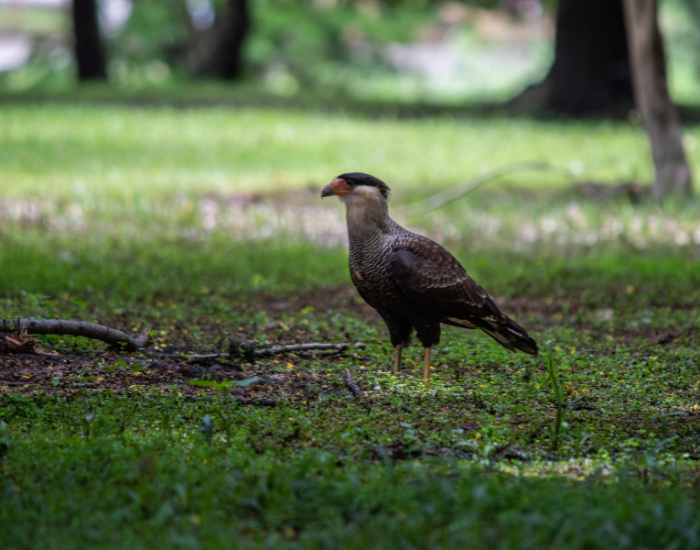
6. Their Scientific Name Is Caracara Cheriway in North America
For a long time, scientists split the caracara into two species: the Northern Crested Caracara (Caracara cheriway) found in the U.S. and Central America, and the Southern Caracara (Caracara plancus).
However, recent genetic studies and taxonomic updates (such as those by the American Ornithological Society) have merged them back into a single species: the Crested Caracara (Caracara plancus). While the names may still appear differently in older bird guides, they are now widely recognized as one resilient, wide-ranging species.
7. Caracaras Are Built for Life on the Ground
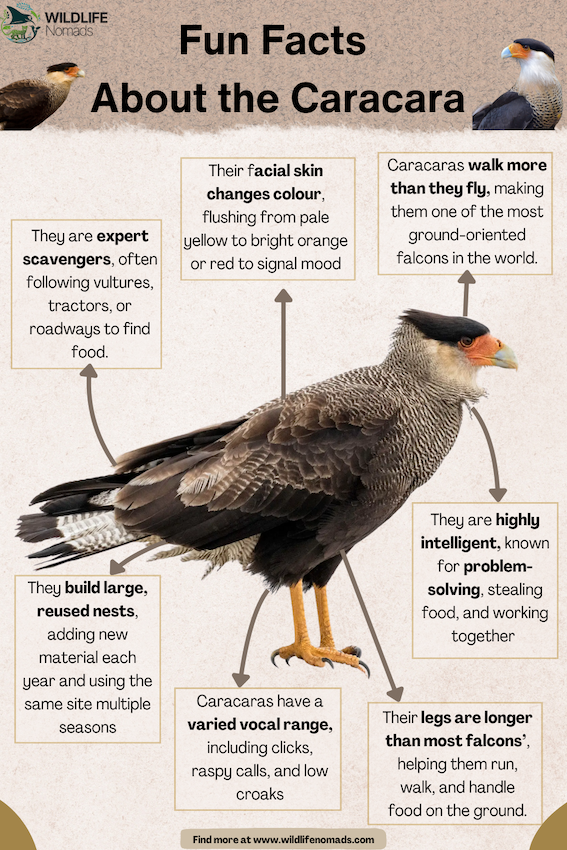
Unlike most falcons, caracaras spend a significant amount of time walking rather than soaring. Their long legs are well adapted for a terrestrial lifestyle, allowing them to walk behind tractors to collect insects unearthed by plows, patrol roadsides for fresh carrion, run down lizards, and even dig for eggs.
Their heavy bluish-gray bill is designed for tearing flesh, while their bare facial skin plays a dual role in thermoregulation and communication. This skin can flush from pale yellow to bright red within seconds. Because they spend as much time on the ground as in trees, caracaras are behaviorally unique among falcons, with habits that more closely resemble ground-oriented birds like secretarybirds.

8. What Does a Crested Caracara Eat? Almost Everything
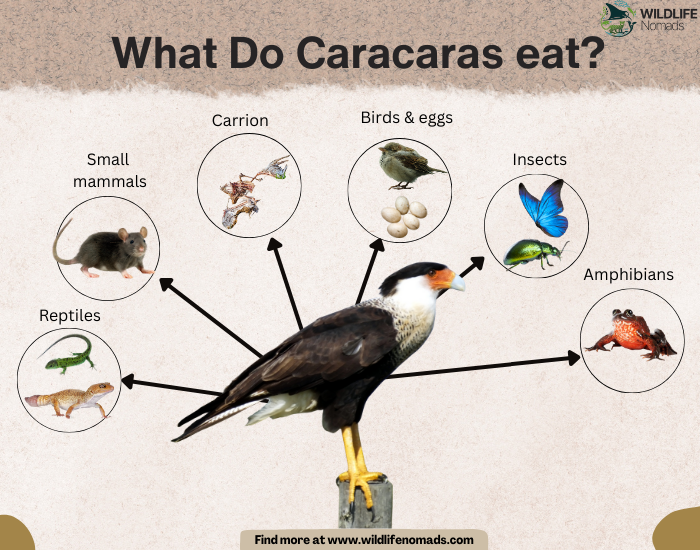
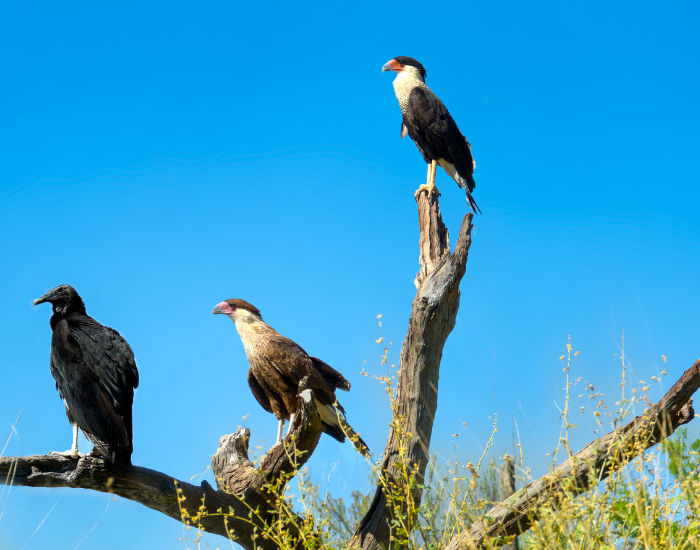
These opportunistic omnivores consume a varied diet. They compete with turkey vultures and black vultures for carrion. However, they also hunt live prey including small mammals, reptiles, amphibians, and turtles.
Fish appear on the menu regularly. Furthermore, insects constitute a significant food source. They eat small mammals when available. Therefore, their diet adapts to whatever food sources exist nearby.
9. Caracaras Display Remarkable Intelligence and Aggression
Are caracaras aggressive? To their prey, absolutely. They employ sophisticated hunting strategies. For example, they gang up to steal food from other raptors through kleptoparasitism.
I’ve watched them harass much larger birds until they drop their catch. Their intelligence rivals that of corvids. In addition, they show bold curiosity around humans rather than fear.
10. The Breeding Season Reveals Complex Social Behaviors
Caracaras collect sticks, grass, and moss to build their own nests, usually placing them in the tallest available tree or structure for maximum visibility. In Texas, they often nest in tall trees, while in Florida, cabbage palms are a common choice. Nests are typically built at the top of trees or palms, giving pairs a clear vantage point for foraging and surveillance.
Pairs frequently reuse the same nest site for several years, adding new material each breeding season and gradually creating large, substantial nests. As a result, established territories may contain multiple potential nest sites. The breeding season in Florida and Texas generally runs from November through March. The average clutch size is two eggs, with both parents sharing incubation duties. Eggs hatch after about 30 days, and juveniles, recognisable by their brown plumage and pinkish facial skin, remain dependent for several months after fledging.
11. Caracaras Face Multiple Conservation Threats
Climate change affects prey availability and breeding timing. Habitat loss continues as development expands into open fields and wet prairies. In some regions, misconceptions about livestock predation persist.
Is it legal to shoot a caracara in Texas? Absolutely not. The Migratory Bird Treaty Act protects caracaras. Killing one results in massive fines and potential jail time. The Wildlife Service monitors populations closely.
Organizations work to ensure caracaras remain common in their core range, depending on the country. However, in Florida, they are considered rare and threatened. Therefore, conservation efforts focus heavily on that region.
12. Caracara Plancus Differs From Golden Eagles and Vultures
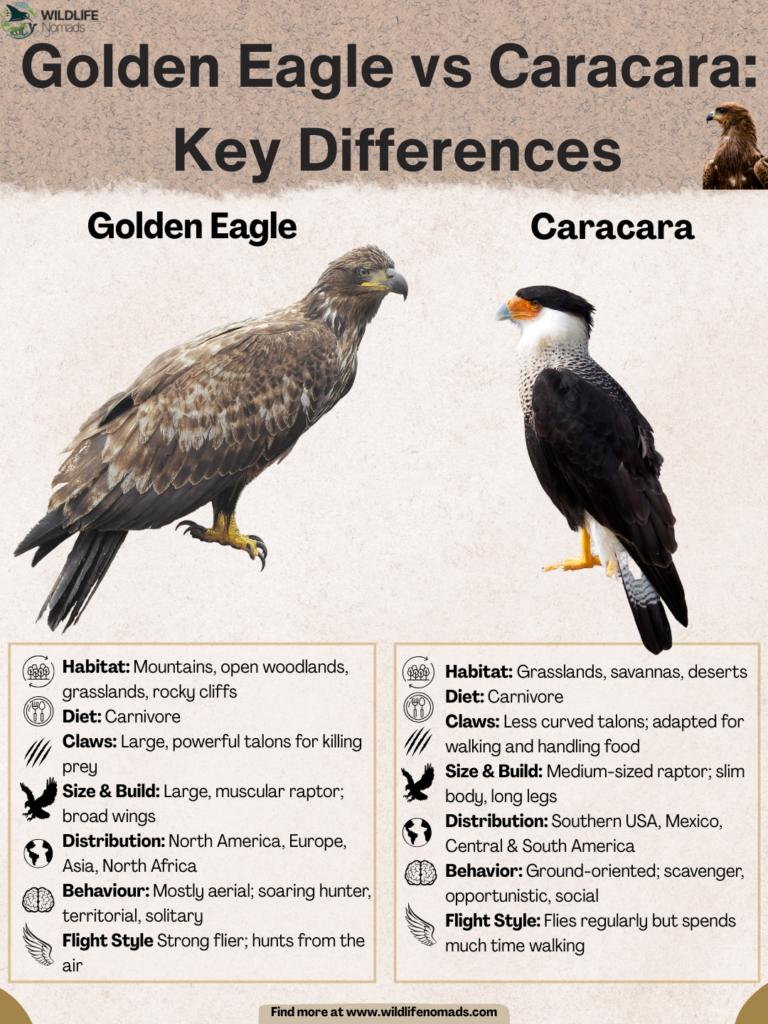
People often confuse caracaras with golden eagles or vultures. A crested caracara flying low can resemble a young golden eagle. However, several differences exist. The crested caracara is a raptor, a large bird of prey.
Caracaras hunt both from the air and ground. Golden eagles (Aquila chrysaetos) primarily hunt aerially. Turkey vultures only scavenge carrion. Moreover, caracaras possess much longer legs than either species. The crested caracara is a bird of prey in the falcon family Falconidae.
Their brown plumage and wing patterns create confusion in flight. Nevertheless, the distinctive facial skin and cap identify them clearly. The crested caracara is native to the southern and southeastern United States, Mexico, and the majority of mainland Latin America.
13. Finding Caracaras Requires Patience and the Right Habitat
Want to spot these birds? Look in open country with good vantage points. In central Florida, visit Kissimmee Prairie Preserve State Park. In south Texas, drive backroads near cattle ranches.
Use the Cornell Lab’s eBird to find recent sightings. Watch fence posts and open fields carefully. Early morning offers the best viewing opportunities. Moreover, areas near livestock often attract caracaras.
Understanding Other Species and Their Relationships
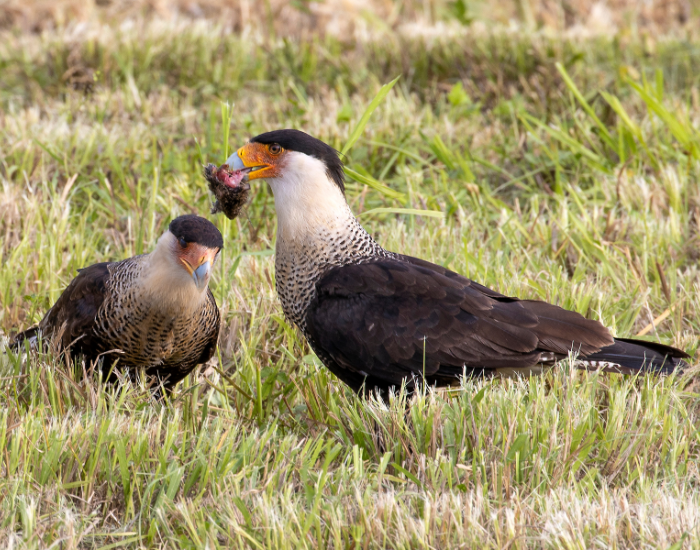
Caracaras coexist with various other birds across their range. Turkey vultures and black vultures compete for carrion. However, caracaras’ aggression often wins these confrontations. Crested caracaras are typically solitary but may gather in groups at large food sources.
Small birds avoid caracaras, which occasionally prey on them. Crested caracaras are known to exhibit allopreening behavior, where they clean each other’s feathers (other’s feathers) as part of their social interactions. In addition, caracaras sometimes eat other species’ eggs. Nevertheless, they rarely cause significant impact on other birds’ populations.
FAQs to Common Caracara Questions
No, it belongs to the falcon family, though it’s often called the Mexican eagle. The Crested Caracara is the only falcon in its region that gathers nesting material and is distinctive for its ground foraging behavior.
In Texas and Mexico, they’re common. In Florida, they’re rare and threatened.
While “Cara Cara” is also an orange variety, the cara cara animal refers to this specific bird of prey.
No, they hunt live prey including reptiles, amphibians, small mammals, and fish. They’re opportunistic omnivores.
Central Florida’s wet prairies and south Texas ranches offer the best viewing opportunities in the United States.
The Resilient Rebel: A Conclusion
The caracara defies categorization. It’s a falcon that prefers walking to flying. It’s a predator unashamed to scavenge. Moreover, it symbolizes the rugged, open landscapes of the Americas.
Every time I spot one today, I’m transported back to those hot car rides through Mexico. These birds seemed to own the road. They remain survivors, opportunists, and remarkably charismatic creatures.
Their long legs carry them across the open fields and ranches of three continents. Their intelligence allows them to thrive where other species struggle. Therefore, caracaras earn their place among North America’s most fascinating birds.
Have you spotted one of these “highway eagles”? Perhaps you’ve watched a crested caracara flying low over a Florida prairie? These encounters create lasting memories for birders and casual observers alike.
The caracara’s future depends on our willingness to protect open country and wet prairies. As development pressure increases, these permanent residents need advocates. Consequently, sharing information about caracaras helps build support for conservation.
Next time you drive through caracara territory, watch the fence posts carefully. Look for that distinctive orange face and black cap. Listen for their loud, rattling calls. In addition, appreciate these remarkable birds that blur the lines between falcon, vulture, and eagle.