Few creatures command as much respect as the badger. It’s a tireless architect whose digging abilities surpass many human tools. Whether you picture the striped Eurasian badgers or the grey American badger, this animal symbolizes tenacity.
I first encountered a badger in an animal physiology class in Uppsala, Sweden. We dissected a European badger (Meles meles). Examining its skeletal structure was fascinating (and kind of gross at some moments). Feeling the density of its musculature revealed why it’s so powerful. Those famous long claws made me appreciate its reputation. Its thick skin and powerful jaws showed its life as a digger and hunter. That encounter sparked a fascination that stayed with me through years of conservation work. In the UK, for example, the Badgers Act provides legal protection for badgers, helping to prevent cruelty and hunting.
Let’s explore this incredible creature. Here are 12 things you should know about badger species, their behaviors, and why they’re vital to ecosystems worldwide.
1. What Exactly Is a Badger? Member of the Weasel Family
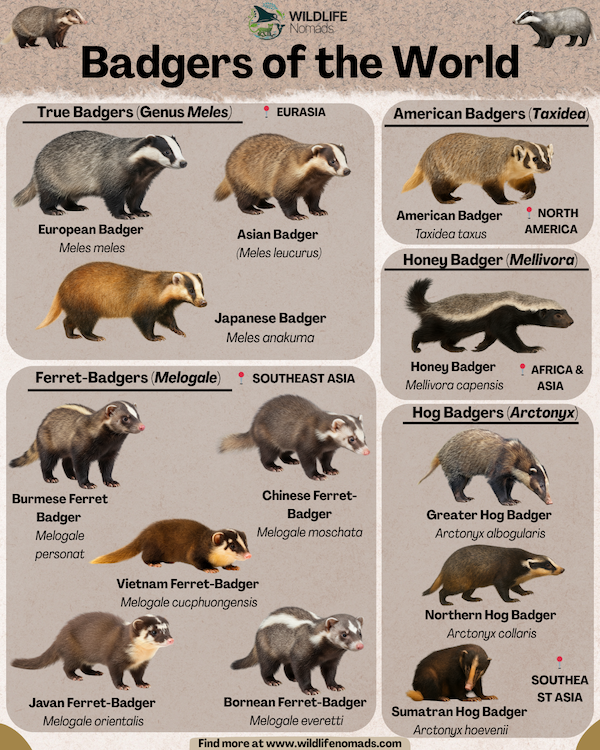
The badger isn’t a single species. Instead, it describes about 11 different species. All belong to the family Mustelidae, the weasel family.
The main groups include:
American Badger (Taxidea taxus): A large, solitary digger native to North America.
European Badger (Meles meles): The social, striped species found across Europe and Asia. Also called Eurasian badgers.
Hog Badger (Arctonyx spp.): Found in Southeast Asia. Known for their pig-like snout.
Ferret Badger (genus Melogale): Smaller, slender species across Southeast Asia. The genus Melogale includes four species: Chinese, Burmese, Everett’s, and Javan ferret badgers, which are distributed from northeast India to Southeast Asia.
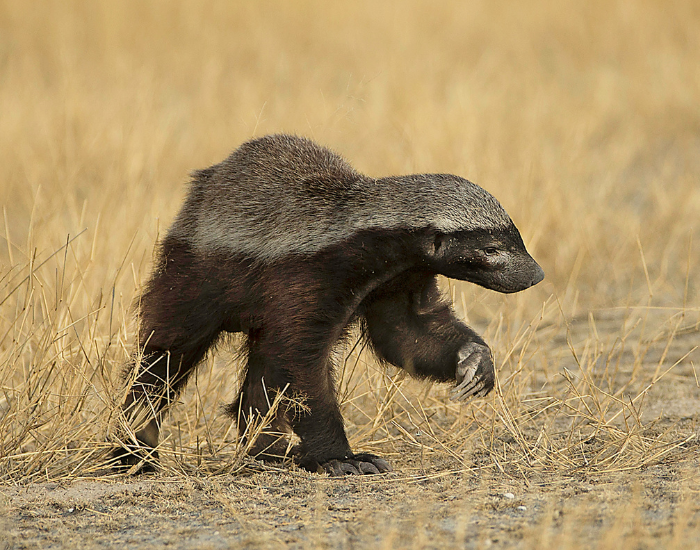
Honey Badger (Mellivora capensis): The fearless fighter of Africa and Asia.
Among badgers, the two species most commonly discussed are the American badger and the European badger. The American badger prefers open grasslands and is mostly solitary, while the European badger is more social and inhabits woodlands and pastures.
Other notable species include the Japanese badger (Meles anakuma), found throughout Japan, and the Asian badger (Meles leucurus), which ranges across parts of Asia. Both are classified within the genus Meles and have unique adaptations to their environments.
Stink badgers (also called stink badger) are now classified in the skunk family (Mephitidae) rather than Mustelidae. Stink badgers are known for their strong scent glands, which produce a powerful defensive spray.
2. Are Badgers Carnivores? Understanding Their Diet
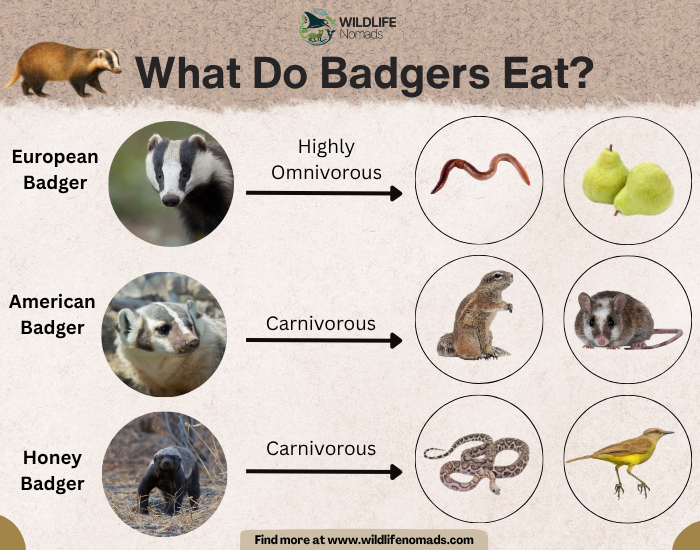
Are badgers carnivores? Actually, they’re omnivores. However, their diet consists heavily of meat and prey.
| Badger Species | Primary Diet | Key Prey/Food |
|---|---|---|
| European Badger | Highly Omnivorous | Earthworms (main food), insects, plant foods, fruits, small mammals |
| American Badger (Taxidea taxus) | Carnivorous | Ground squirrels, pocket gophers, mice, other small mammals |
| Honey Badger | Carnivorous | Snakes, rodents, birds, bee larvae |
The American badger digs rapidly to catch prey. Therefore, the diet consists mainly of what they unearth from burrows. Their role in controlling rodent populations makes them critical for agricultural areas and grasslands.
European badgers eat more plant foods than other species. Their diet consists of earthworms, insects, berries, roots, green beans, and sunflower seeds. In addition, they occasionally hunt small mammals when available.
Organizations such as the U.S. Fish and Wildlife Service provide further information on badger diets and conservation.
3. Habitat: Where Badgers Live in the US
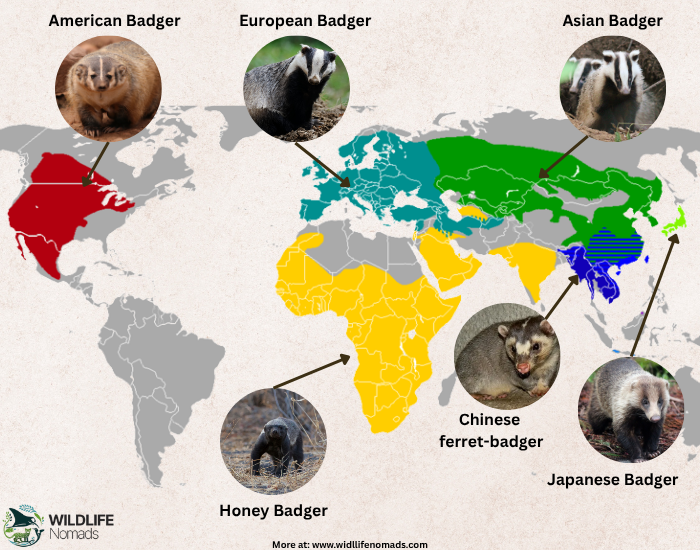
The American badger (Taxidea taxus) is the only species in North America. The badgers range covers a wide geographic area, and American badgers are commonly found in treeless areas such as grasslands, prairies, and open country. Their range extends from Northern Mexico to western Canada, including southwestern British Columbia.
They prefer open country like grasslands and prairies, where digging is easy and prey is plentiful. Badgers also inhabit brushy areas and forest glades, which provide cover and suitable burrowing conditions. However, they also inhabit mountain meadows and some forest habitats. This species is highly adaptable.
In contrast, Eurasian badgers occupy forests, woodlands, and farmland across Europe and Asia. Southeast Asia hosts hog badgers and ferret badgers in forested and mountainous areas.
4. Social Behavior: The European Badger’s Family Life
While many species are solitary, the European badger is social. They live in family groups called clans.
A clan consists of 2 to 20 individuals. These clans center around a dominant breeding pair. They occupy massive, multi-generational burrows called setts. These setts feature hundreds of meters of tunnels. This intricate network is an engineering marvel.
Clans mark their home range using scent glands. They also use distinctive head markings with black patches for recognition. Family members groom each other and share food resources.

5. Master Diggers: Badger Burrows as Ecosystem Engineering
All badger species are defined by their digging. Their burrows serve multiple purposes beyond shelter.
Badger burrows provide protection from predators and extreme temperatures. European badgers rely on them for warmth in winter. American badgers use them to escape desert heat. A single burrow entrance can lead to complex tunnel systems.
The burrowing patterns of American badgers are remarkable. The burrows dug by badgers are often large and complex, created both for shelter and as a means to pursue prey underground. They can dig rapidly to pursue prey into underground tunnels. They virtually disappear into the earth in seconds. Furthermore, abandoned burrows become homes for countless other species. This includes owls, foxes, rabbits, and snakes.
Badgers also improve soil health. Their digging aerates the ground and redistributes nutrients. However, this sometimes brings them into conflict with farmers who view the burrows as problematic.
Have a look at other ecosystem engineers:
- Prairie Dog: The Ecosystem Engineers of the Grasslands
- The Beaver Effect: How One Species Rebuilds Entire Landscapes
6. Distinctive Features: Stripes and Markings
You can identify different species by their facial markings. This is especially true for American and European badgers.
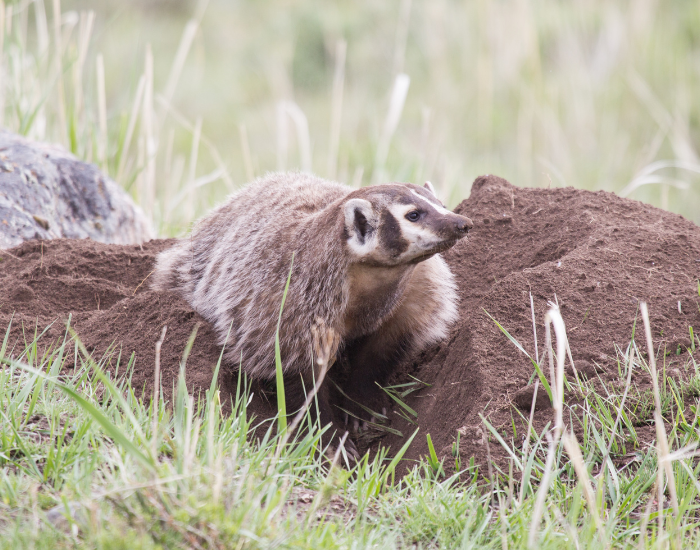
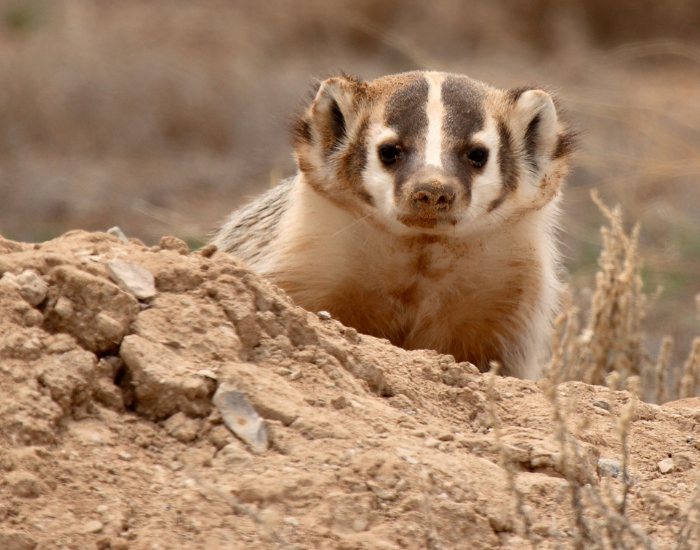
The American badger (Taxidea taxus) displays a narrow white stripe extending from its nose over its head. This contrasts with black patches on the cheeks. Scientists believe this marking serves as a warning signal to other species.
The European badger (Meles meles) shows iconic black and white stripes. Two thick black stripes run from the nose, over the eyes, and meet the black patches on the ears. These distinctive head markings help with species recognition and communication within clans.
The honey badger features a wide, silver-grey mantle running from head to tail. This coloration makes it instantly recognizable across its range in Africa and Asia.
7. Powerful Claws: Tools for Survival
The long claws of badgers are their most important tools. These non-retractable claws grow continuously throughout their lives.
American badgers use their long claws to excavate burrows and dig out prey. They can dig through hard-packed soil faster than a person with a shovel. The claws act like pickaxes, breaking through tough ground.
European badgers use their claws for digging setts, foraging for food, and defending territory. The claws also help them excavate earthworms from soil and tear apart rotting logs for insects.
In addition, the claws serve as weapons. When threatened, badgers use them defensively against predators.
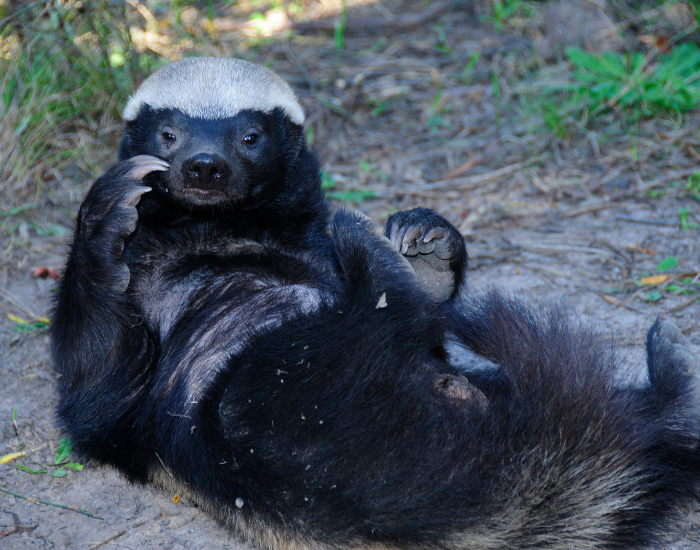
8. The Honey Badger: Nature’s Fearless Fighter
When people ask about the most aggressive type, the answer is the honey badger (Mellivora capensis). Though called a badger, its evolutionary lineage differs slightly from other species.
Native to Africa and Asia, the honey badger is legendary. It takes on opponents much larger than itself. Its thick, loose skin protects against bites and stings. Therefore, they successfully raid bees nests for larvae.
Many wonder: who is bigger, wolverine or honey badger? A wolverine typically weighs more and measures longer. However, the honey badger is arguably more ferocious. It earned a Guinness World Record for “World’s Most Fearless Creature.”
9. Predators and Defense: Who Eats Badgers?
Despite their fierce reputation, badgers face natural predators.
In North America, predators of the American badger include coyotes, mountain lions, and some birds of prey like golden eagles. Interestingly, badgers sometimes hunt cooperatively with coyotes. This rare behavior drives ground squirrels from burrows for mutual benefit.
Adult European badgers have few natural predators due to their size and aggressive defense. However, young badgers face threats from foxes and large birds of prey. When threatened, a badger hisses, growls, and performs bluff charges. Their main defense is digging themselves into the ground rapidly.
The presence of badgers also affects ground nesting birds. However, they rarely target these nests as primary prey.
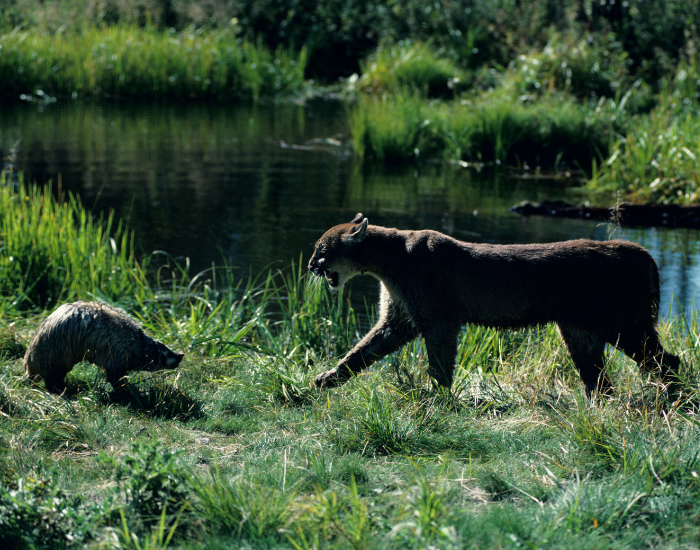
10. Hunting Strategies: How Badgers Catch Prey
Hunting badgers employ various strategies depending on species.
American badgers are specialized hunters of burrowing rodents. They locate prey holes by scent and sound. Then they dig rapidly to catch ground squirrels, pocket gophers, and prairie dogs. Their powerful front legs and long claws make excavating prey burrows efficient.
European badgers hunt differently. They forage for earthworms at night using their keen sense of smell. They also hunt insects, small mammals, and consume plant foods when available.
Honey badgers are opportunistic hunters. They eat everything from snakes to bee larvae. Their thick skin allows them to raid bees nests without serious injury.

11. Conservation Status: Protecting Badger Populations
While European and American badgers are listed as Least Concern, other species face threats.
Asian badger groups, including ferret badgers and hog badgers, are vulnerable in Southeast Asia. Habitat fragmentation limits their home range. Some may become endangered species without intervention.
Human conflict is a major issue. In agricultural areas, farmers view badgers as pests due to their burrowing patterns. This leads to persecution. However, badgers provide ecological benefits by controlling rodent populations and aerating soil.
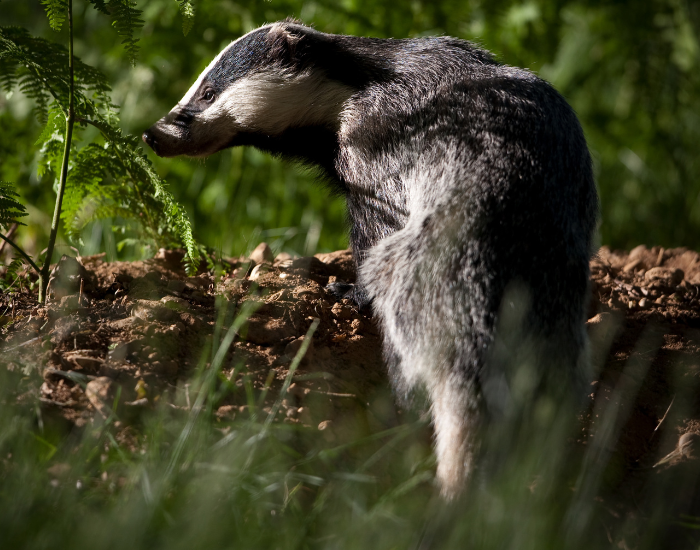
12. Reproduction: Young Badgers and Delayed Implantation
Badgers have fascinating reproductive strategies for timing births.
Mating occurs in late summer for the female American badger, who exhibits delayed implantation as part of her reproductive strategy. Female American and European badgers exhibit delayed implantation. They breed in late summer. However, the fertilized egg remains dormant. The embryo only implants and develops later. This ensures young badgers (called kits) are born in winter or early spring.
At birth, food resources are adequate for nursing. Young badgers spend their first weeks deep in burrows. The mother protects them from predators and harsh weather. Kits emerge after several weeks to explore near the burrow entrance.
The breeding season timing varies by species and location. However, delayed implantation is common among many badger species.

Quick FAQ About Badgers
No. A badger is a mammal in the weasel family (Mustelidae). Rodents belong to a different order, Rodentia.
No. Wolverines belong to the weasel family but are a different genus (Gulo gulo). They’re distinct from badger species.
While badgers are predators, they primarily eat small mammals and insects. Attacks on cats are extremely rare. They prefer avoiding conflict with other animals.
The American badger (Taxidea taxus) is more carnivorous and solitary. The European badger (Meles meles) is more omnivorous and lives in social clans in large burrows.
The diet consists of small mammals, insects, earthworms, and plant foods. American badgers focus on prey like ground squirrels. European badgers eat more earthworms and plant matter.
A badger may have multiple burrows throughout its home range. European badger setts can have dozens of entrances and hundreds of meters of tunnels.
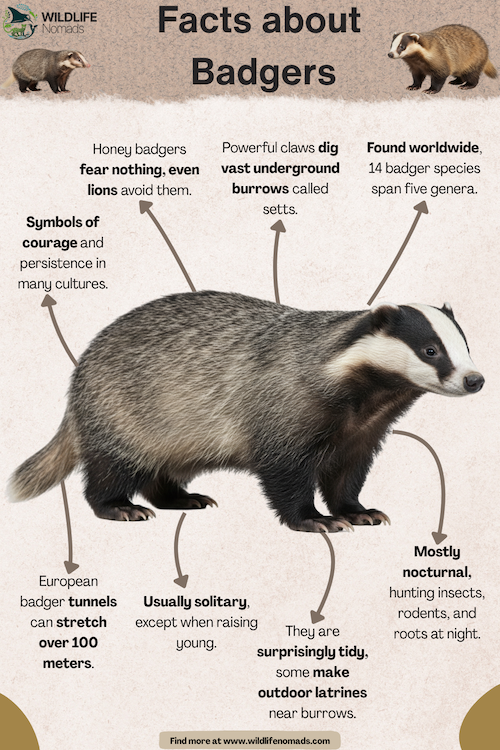
Protecting Nature’s Resilient Digger
The badger—in all its forms—demonstrates evolutionary resilience. They’re vital predators of small mammals and insects. They’re essential soil aerators. Furthermore, they’re architects providing shelter for other animals in their ecosystems.
My examination of badger anatomy in that Swedish lab revealed an animal built for survival. Its powerful muscles, long claws, and robust skeleton are perfectly adapted for its lifestyle. As conservationists, we must ensure badger populations continue to thrive. We must address human conflicts threatening them.
Let’s work to keep our world a place where the tenacious badger continues emerging from its burrows for generations to come.