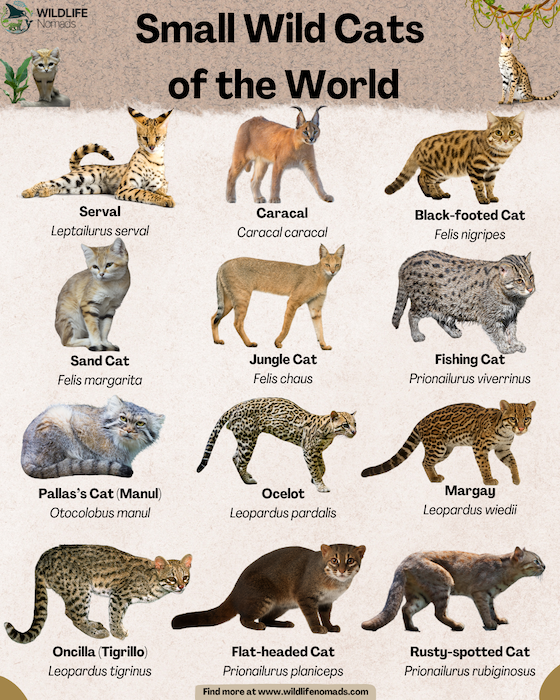
When it comes to Africa’s wild cats, the spotlight often falls on either the big cat like leopards and cheetahs, or the elegant serval and the athletic caracal, both admired for their beauty and agility. Yet hidden in the dry grasslands of southern Africa lives a far smaller, fiercer predator, the black-footed cat (Felis nigripes). This small spotted predator prowls the dry grasslands of southern Africa, where it lives unseen by most humans.
Despite its delicate build and tiny size, this fierce little feline ranks among the most efficient hunters on Earth. Compared to the African wildcat, which is generally larger and occupies a broader range of habitats, the black-footed cat is smaller, more secretive, and highly specialized for arid environments. These elusive “anthill tigers” often rest inside aardvark burrows or hollow termite mounds by day, emerging at night to stalk rodents and birds with unmatched precision.
Meet the Black-Footed Cat
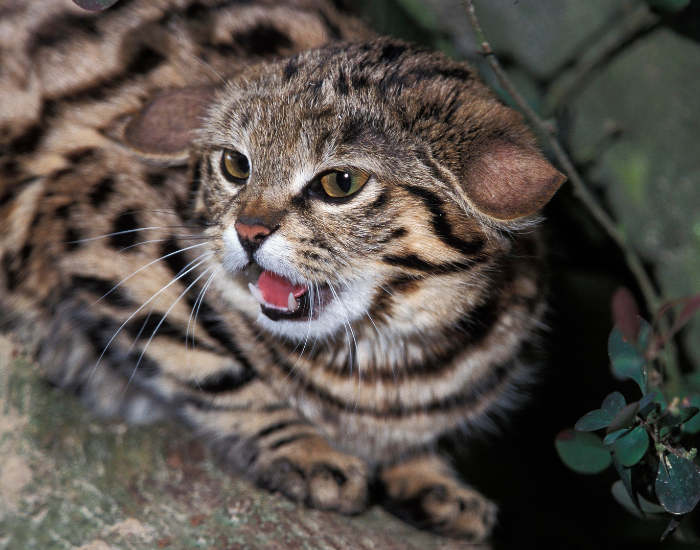
The black-footed cat, also known as the small spotted cat, is unique among wild cats. As one of the tiniest cat species in Africa, this wild feline is instantly recognizable by its compact build, tawny coat adorned with bold black spots, and a distinctive black-tipped tail. Belonging to the genus Felis, the black-footed cat is a solitary hunter, with males roaming territories that often overlap with those of one to four females. Despite its small size, this wild cat has earned a reputation as one of the deadliest hunters in the animal kingdom, boasting a remarkable hunting success rate of around 60%.
The following 10 facts reveal why the black-footed cat, sometimes called the anthill tiger, is one of nature’s most remarkable creatures, blending scientific insight with the kind of wonder that makes wildlife so endlessly captivating. Unlike other cats, the black-footed cat is exceptionally solitary, nocturnal, and elusive, with unique hunting strategies and adaptations that set it apart from its feline relatives.
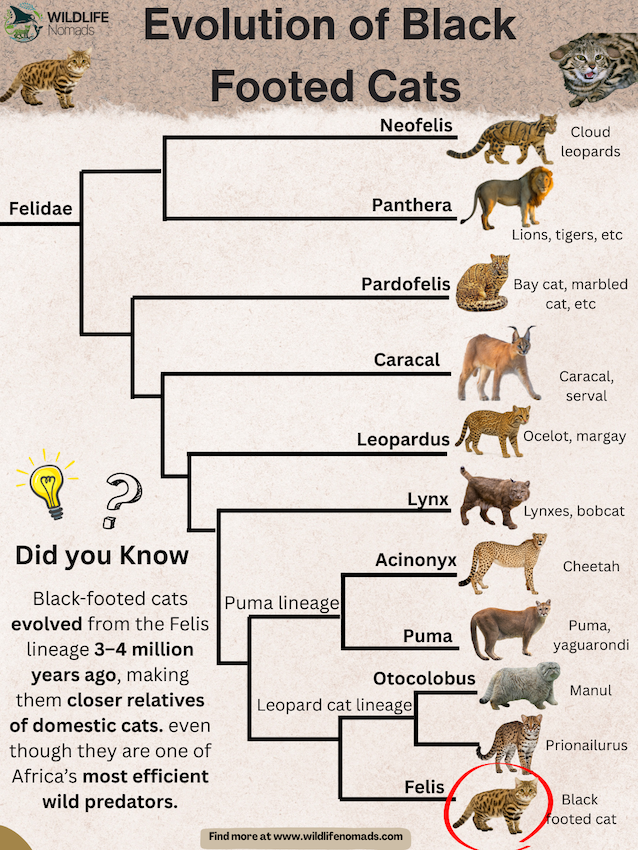
1. The Smallest Cat in Africa, and One of the Smallest in the World
We often think of wild cats as large, powerful hunters, but the black-footed cat breaks that mold entirely.
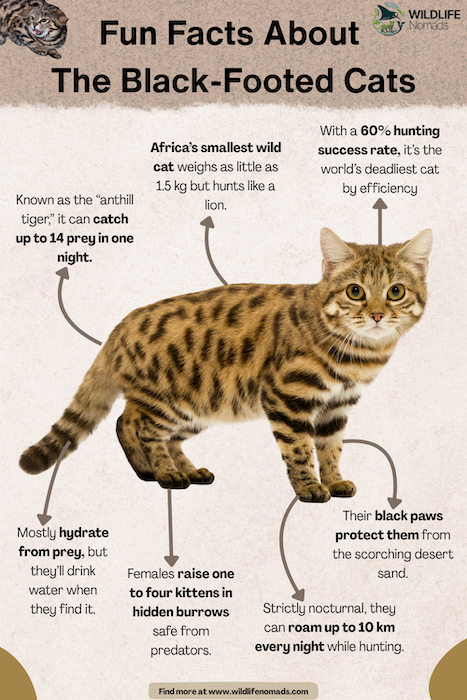
- Adults weigh just 1.5 to 3 kilograms, making them lighter than most domestic cats.
- Their body length rarely exceeds 50 centimetres, with a short tail that adds another 12 to 20 cm.
- Compared to a house cat, they appear almost kitten-sized even when fully grown.
This small body size not only sets them apart visually but also plays a crucial role in their survival, influencing their hunting behavior and ability to thrive in harsh environments.
Its compact, stocky body helps it conserve heat and move efficiently through its dense cover of shrubs and grasses. In an ecosystem of jackals, owls, and snakes, small size is a survival advantage—allowing it to vanish at a moment’s notice.
2. They’re True to Their Name: Look at Those Feet!
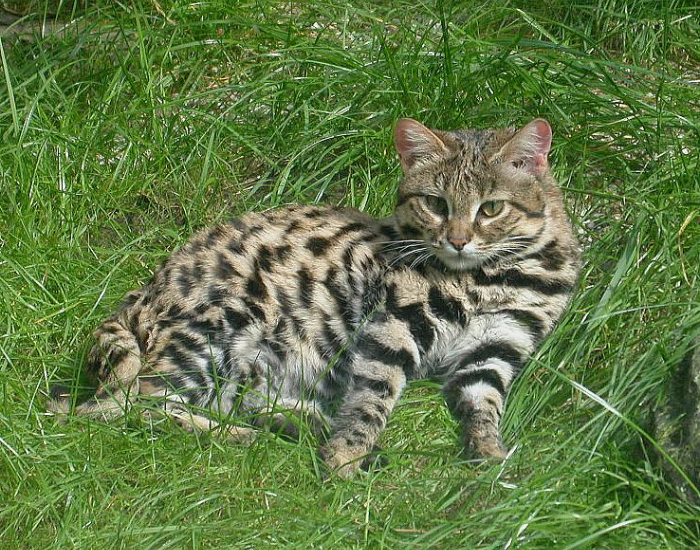
The “black-footed” part isn’t metaphorical. The undersides of their paws are covered in dark brown or black fur, protecting them from the hot sand and allowing them to walk silently. This adaptation helps with stealth and insulation, key for a species living in semi-arid landscapes.
Those black paws are so distinctive that they inspired the scientific name Felis nigripes, literally meaning “black-footed cat.” It’s a simple detail, but one that instantly sets them apart from other small cats in the region.

3. Endemic to Southern Africa’s Harsh Landscapes
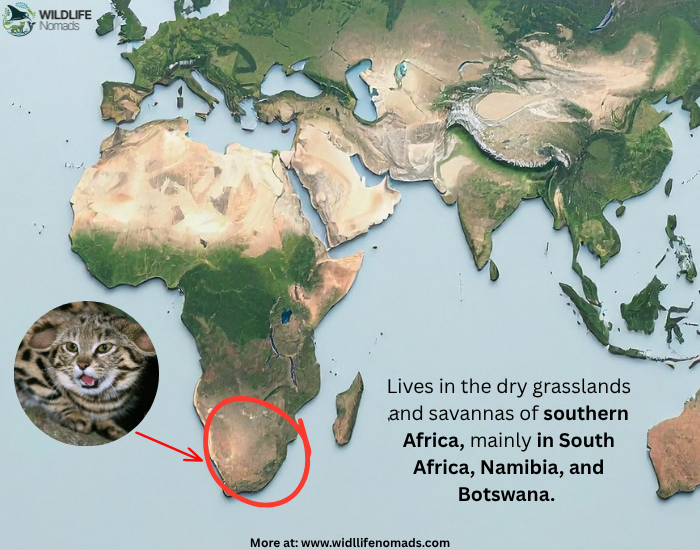
The black-footed cat is endemic to southern Africa, found mostly in South Africa, Namibia, and Botswana. It inhabits the southern parts of Africa, such as Namibia, Zimbabwe, and Angola, favoring arid, semi-arid, and savannah regions within these areas. It thrives in semi-arid shrublands, grass plains, and scrub desert, areas often dismissed as lifeless. Yet within this harsh terrain, it has carved out a niche of its own.
Their natural habitat includes regions dotted with hollow termite mounds and unoccupied burrows, which provide refuge from predators and extreme heat. The Benfontein Nature Reserve in South Africa’s Northern Cape Province is one of the few places where these elusive cats are studied in detail.
Every dune and mound tells a story of adaptation, resilience, and perfect design.
4. A Tiny Cat With a Deadly Reputation
The black-footed cat has earned an astonishing title: “the deadliest cat in the world.%60%”But not because of aggression, because of its hunting success rate.
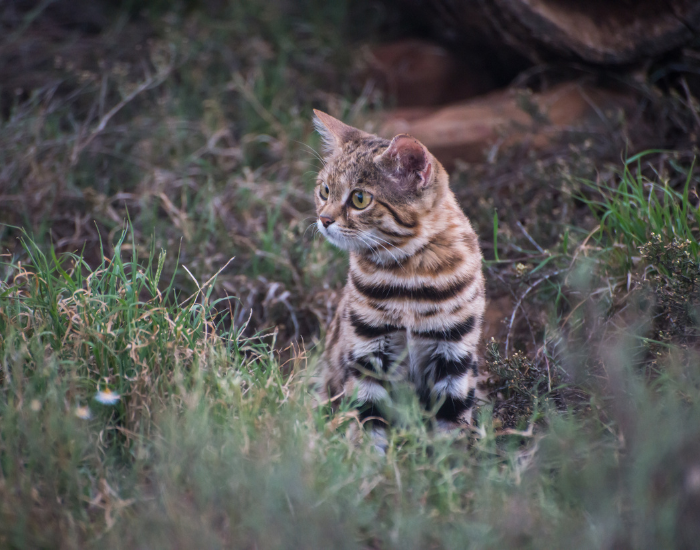
Field studies using radio collars found that black-footed cats achieve a kill success of up to 60 percent, far surpassing lions or leopards. In a single night, one may capture and eat up to fourteen small mammals or birds, including small rodents, sometimes nearly one-fifth of its body weight. Black-footed cats are often found in areas with high rodent populations, as these high rodent density habitats support their hunting success.
Their technique is masterful:
- Fast hunt – swiftly chasing rodents and small birds through grass.
- Slow hunt – patiently stalking prey with low, calculated movements.
- Sit-and-wait – lurking motionless near burrow entrances.
Their unmatched precision has earned them a new level of respect among scientists and wildlife filmmakers alike.
5. Strictly Nocturnal and Secretive by Nature
Few people will ever see a black-footed cat in the wild, and that’s no coincidence. They are strictly nocturnal, preferring the cool safety of night to the punishing heat of the African sun.
During daylight hours, they engage in day resting in abandoned termite mounds, porcupine burrows, or aardvark tunnels. Here, they rest, groom, and avoid larger carnivores. At sunset, they emerge to patrol their territories, covering relatively large distances, often up to 10 kilometres per night, in search of prey.
This secretive lifestyle explains why they remained so little-known for so long, despite being widespread across parts of southern Africa.
6. The Anthill Tiger: Small but Ferocious
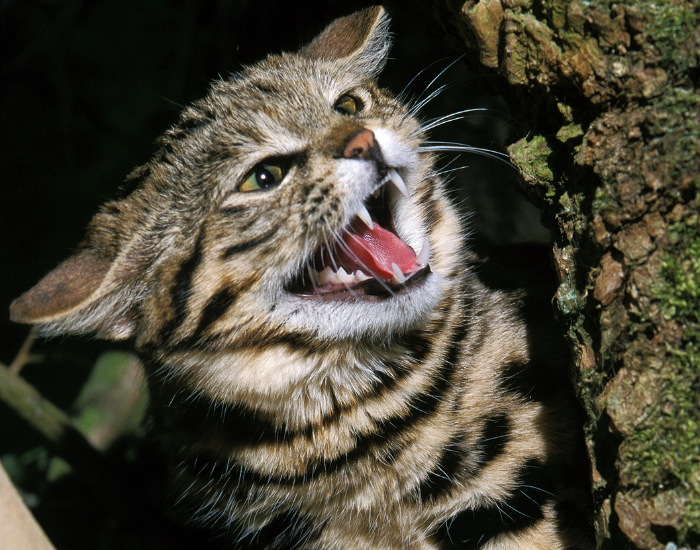
Locals sometimes call this cat the “anthill tiger.” In parts of the South African Karoo, the black-footed cat is called miershooptier, which also means “anthill tiger,” reflecting its reputation for fierceness and tenacity when threatened. It’s not hard to see why. Despite its small size, the black-footed cat displays courage out of proportion to its body. When threatened, it hisses, growls, and puffs up like a miniature lion.
Unlike many other wild cats, it rarely backs down. This boldness is critical to survival in a landscape filled with predators like black-backed jackals and domestic dogs.
Researchers observing them in the field have noted that even when cornered, these cats will defend themselves fiercely, a true tiny cat with a tiger’s heart.
7. Scent Marking and Solitary Habits
Social life isn’t their style. Black-footed cats live alone, meeting only briefly to mate. They maintain territories that can overlap slightly but are marked constantly with scent.
Using scent marking, through urine, faeces, and gland secretions, they send chemical messages that define boundaries and signal readiness to breed. The male black footed cat typically has a larger home range than females, roaming wider to seek out one to four females within his territory and actively defending his area from other males.
This solitary behaviour keeps competition low and ensures that scarce prey resources are shared efficiently across the landscape.
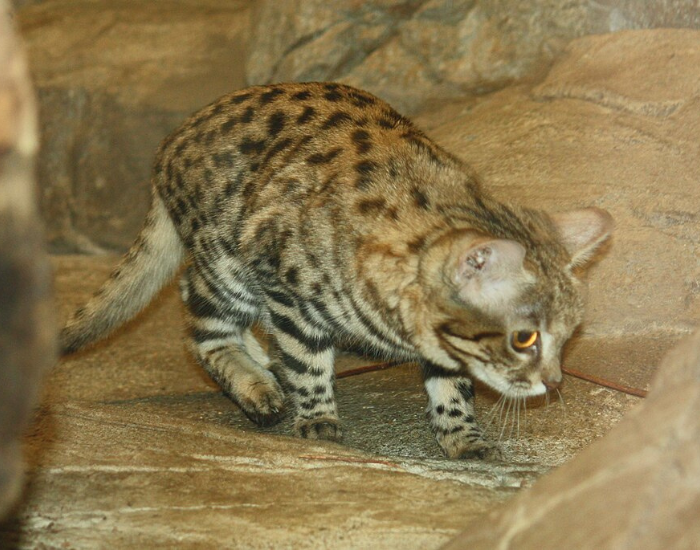
8. Family Life in a Termite Mound
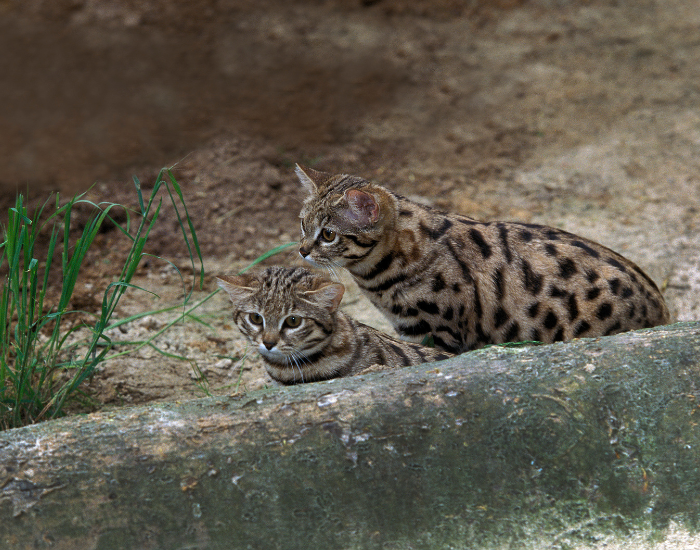
Breeding peaks during the southern-hemisphere summer. After a gestation period of about two months, the female gives birth to one to four kittens, sometimes described as dependent kittens because of their early vulnerability. Females can have up to two litters per year, each with one to four kittens.
The nursery is typically a hollow termite mound or burrow, hidden from predators. Females are fiercely protective, moving their kittens frequently to new dens to avoid detection.
The kittens begin exploring at around six weeks old and may start eating solid food soon after. In the wild, very few reach adulthood, but those that do inherit generations of finely tuned survival instincts.
9. Masters of Adaptation in Arid Environments
How do they survive in such dry conditions? Through a remarkable suite of adaptations:
- They rarely drink water, obtaining moisture from their prey, and can survive for extended periods without direct access to water due to their metabolic adaptations.
- Their tawny coat and black spots provide perfect camouflage against desert grasses.
- Their low-set ears and large eyes enhance excellent night vision and hearing.
- Their compact frame helps minimize water loss and retain heat at night.
Because they depend on natural burrow systems and healthy small-mammal populations, any habitat loss, through farming or poisoning, can have devastating consequences.
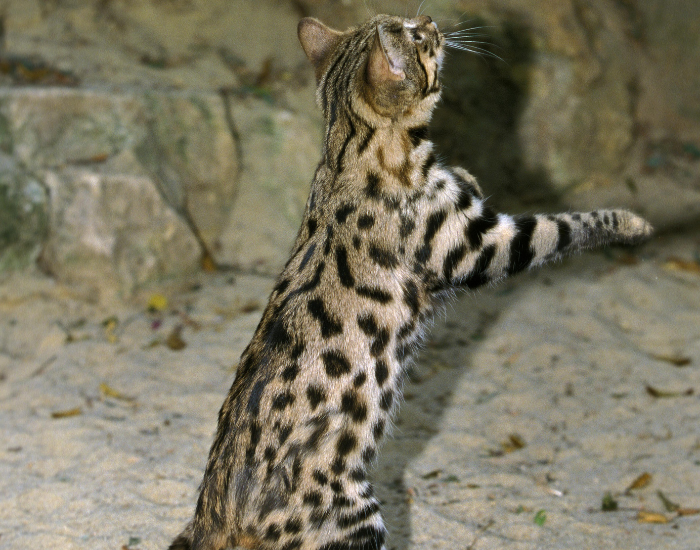
10. Conservation: Small Cat, Big Challenges
The black-footed cat is currently listed as Vulnerable, with population estimates likely under 10 000 mature individuals. Their survival is threatened by:
- Loss of optimal habitat to over-grazing and agriculture.
- Poisoning of prey species through rodent control.
- Attacks by domestic dogs and predation by black-backed jackals.
- Low genetic diversity and limited range.
These are just some of the dangers the black footed cat faces, including habitat loss, predation, and human-related threats that impact their survival.
Fortunately, conservation organisations are working hard to protect them. The Cat Specialist Group and dedicated researchers in South Africa monitor populations using radio collars and camera traps. Programs at reserves such as Benfontein Nature Reserve have revealed valuable insights into their hunting success rate, home ranges, and breeding cycles.
Protecting these cats means protecting the fragile arid ecosystems they represent.
Bonus Fact: No…They’re Not Suitable as Pets!
It’s tempting to imagine keeping such a cute wild cat at home, but black-footed cats cannot be pets. They are wild animals with specialised diets, instincts, and space needs that domestic settings can’t meet.
Owning or trading them is illegal in many countries, and even conservation breeding is restricted to expert facilities. If you admire them, the best way to help is by supporting small-cat conservation programs instead.
Facing the Threats: What Endangers Black-Footed Cats?
Despite their fierce reputation and remarkable adaptations, black-footed cats face a host of challenges that threaten their survival in the wild. Habitat loss is a major concern, as overgrazing and the expansion of agriculture steadily erode the natural habitat these cats depend on. This not only reduces the availability of prey species but also fragments the landscape, making it harder for black-footed cats to find food and safe shelter.
Human-wildlife conflict further complicates their existence. Farmers often use poison baits and traps to control other carnivores like black-backed jackals, but these measures can unintentionally harm black-footed cats as well. The spread of disease from domestic dogs and cats poses an additional risk, while climate change threatens to disrupt the delicate balance of prey populations and habitat conditions.
Recognized as an endangered species and listed as Vulnerable on the IUCN Red List, the black-footed cat is the focus of dedicated conservation efforts. Organizations like the Cat Specialist Group are working tirelessly to protect this unique species, supporting research, education, and the creation of protected areas. Captive breeding programs, such as those at We Wild Africa, offer hope for the future by helping to bolster population numbers and safeguard genetic diversity. Through these combined efforts, there is hope that the black-footed cat will continue to prowl the wild landscapes of southern Africa for generations to come.
FAQs About Black Footed Cats
No. They’re solitary, strictly wild felids with defensive temperaments and do not behave like domestic pets. They avoid people and will fiercely defend themselves when cornered.
They have exceptional hunting efficiency (often cited ~60% success) and can take up to ~14 small animals in a night, using stalk-and-ambush tactics perfectly adapted to open, arid habitats.
If your “black-pawed” cat is a pet, it’s almost certainly not a black-footed cat. Felis nigripes is a wild species endemic to southern Africa with distinct ecology and is not kept as a domestic breed.
“Deadliest” refers to kill rate, not size, field studies and documentaries report ~60% hunting success, the highest recorded among cats.
Tiny, Cute, but Ferocious
The black-footed cat proves that power in nature isn’t about size, it’s about adaptation. This smallest cat species of southern Africa has evolved to thrive where few others can, relying on stealth, precision, courage, and distinctive rounded ears that enhance its survival in harsh environments.
From its scent-marked territories to its strictly nocturnal hunts, every aspect of its behaviour reflects an evolutionary masterpiece. In a world where attention often goes to lions and leopards, this humble small spotted cat reminds us that even the tiniest creatures can carry the wild heart of Africa within them.
Next time you hear of the “deadliest cat in the world,” remember, it might just be one that could fit in your backpack, quietly prowling beneath the moonlit grasses of southern Africa
If you’re intrigued by small but powerful cats, you might also enjoy reading about the puma or cougar, North America’s stealthy mountain lion, and the elusive Puma yagouaroundi, a strange, long-bodied wild cat that roams Central and South America.
Spot a Black Footed Cat in the Wild… if you are Lucky
Black-footed cats (Felis nigripes) are the hardest African cat to see in the wild, far rarer than servals, caracals, or even leopards.
They are tiny, nocturnal, extremely cryptic, and avoid open areas.
BUT… there are a handful of places in southern Africa where sightings are genuinely possible.
Below are the top 6 locations in Africa with the highest real chance of seeing a black-footed cat in the wild, based on long-term researcher data, camera-trap studies, and tourist sightings.