
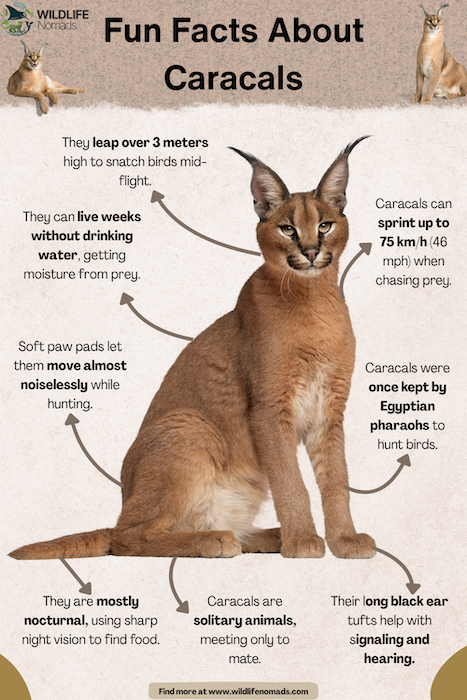
More than 3,000 years ago, caracals were prized companions of Egyptian pharaohs, trained to hunt birds and small game in royal courts. Their agility, long legs, and lightning-fast reflexes made them symbols of power and precision.
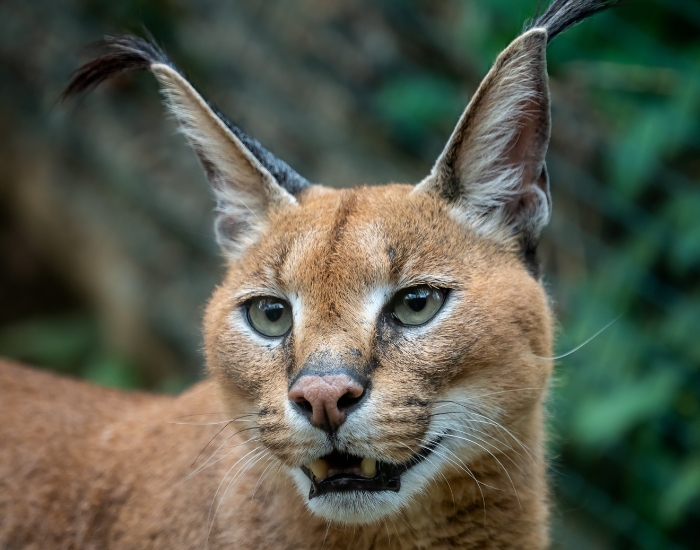
Today, the same caracal cat, sometimes called the desert lynx, still prowls through the deserts of Africa, the mountains of the Middle East, and the dry plains of South Africa. With its tufted black ears, reddish-brown fur, and piercing golden eyes, the caracal animal stands among the most captivating wild cats on Earth, a perfect balance of grace, speed, and mystery.
Often mistaken for a lynx or domestic hybrid, they are one of Africa’s wild cats. They truly embody the resilience of nature’s finest predators.cLet’s explore 12 remarkable facts about caracals that reveal what makes this feline both mysterious and extraordinary.
1. The Caracal Is Often Called the Desert Lynx, but It’s Not One
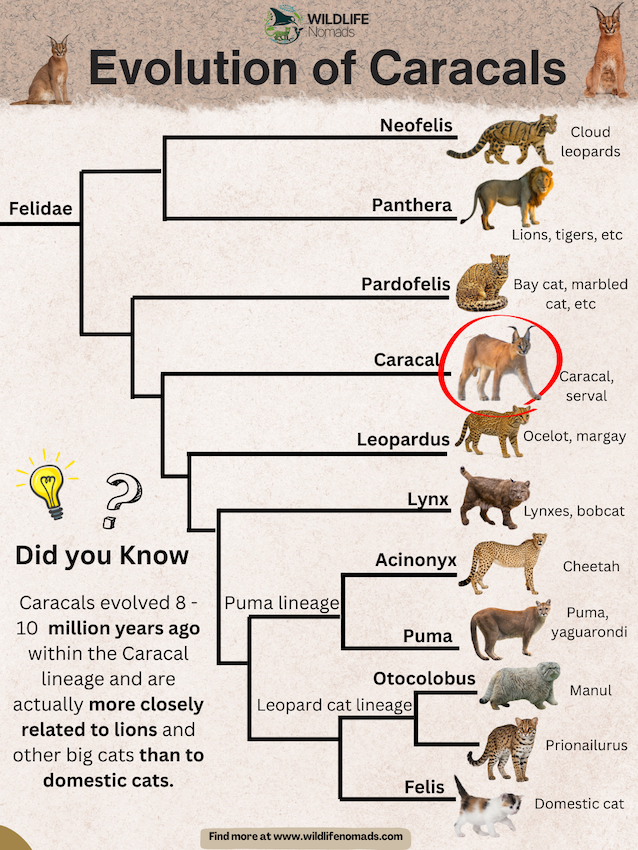
Despite the nickname “desert lynx,” the caracal (Caracal caracal) is not a true member of the lynx family. Its resemblance, short tail, long legs, and signature ear tufts, is due to convergent evolution.
Genetically, caracals belong to the Felidae genus and are more closely related to the African golden cat and serval. Unlike lynxes found in colder climates, caracals thrive in arid and semi-arid regions, from the Middle East to North Africa and West Africa.
The Turkish word “karakulak” literally means “black ear,” a nod to their striking appearance. Though often grouped with most cats in the “small wild cat” category, their power, grace, and solitary nature make them one of the most iconic wild cats among caracal species alive today.
2. Distinctive Black Ear Tufts Make Caracals Instantly Recognizable
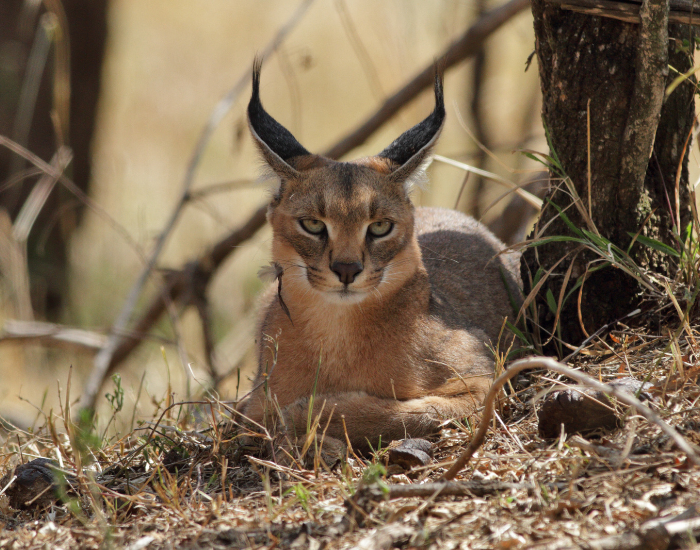
If one feature defines the caracal animal, it’s the pair of long tufts reaching up to five centimeters. These black ear tufts aren’t just decorative, they probably play other roles in communication between animals.
Researchers suggest they help caracals send subtle visual signals during hunts or between mothers and kittens, but this would need more research to confirm it. Combined with excellent hearing, these tufted ears would allow caracals to detect the faintest movement of prey in dense vegetation or open scrub.
Each ear is covered in short reddish fur with a bold black patch on the back. This helps camouflage its shape against predators and prey alike. Whether stalking through montane forests or desert regions, those upright, twitching ears are always alert, a perfect adaptation for one of Africa’s most agile hunters.
3. Reddish-Brown Fur and White Markings Provide Perfect Camouflage
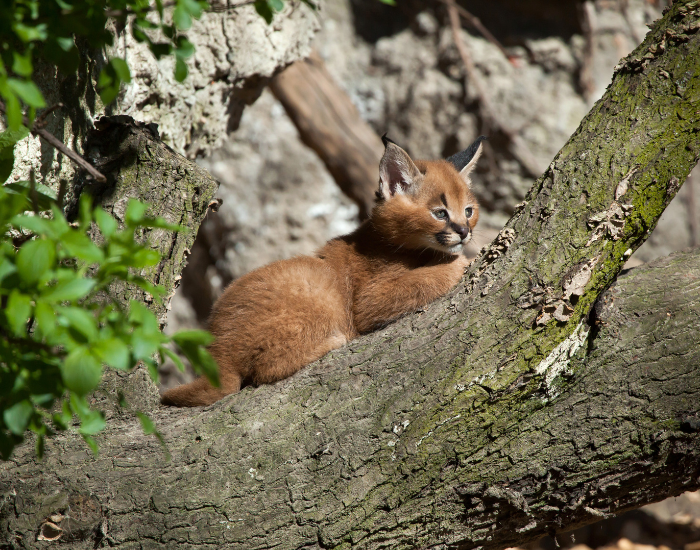
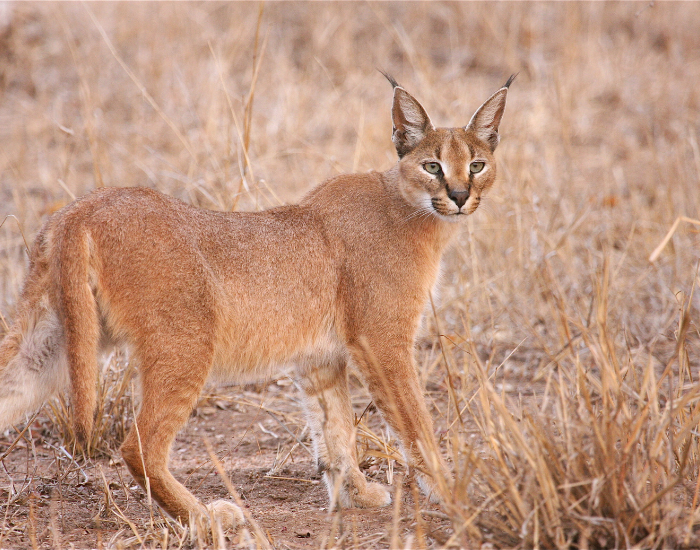
Caracals are truly beautiful animals, with their reddish-brown fur that makes them blend into savannas and rocky hillsides. The short, dense coat transitions from rusty gold on the back to white fur on the chin, throat, and belly.
Some individuals have faint white spots above the eyes or a pale line down the face. This enhances their stealthy look. The coloration helps them disappear against dry grass and dense vegetation, making them almost invisible until they move.
In colder or wetter regions like montane forests, their coats can be slightly thicker and darker. Therefore, this combination of form and function allows caracals to remain nearly undetectable, whether hunting at dusk or resting in the shade of an acacia tree.
4. Caracals Are Expert Hunters Capable of Mid-Air Precision
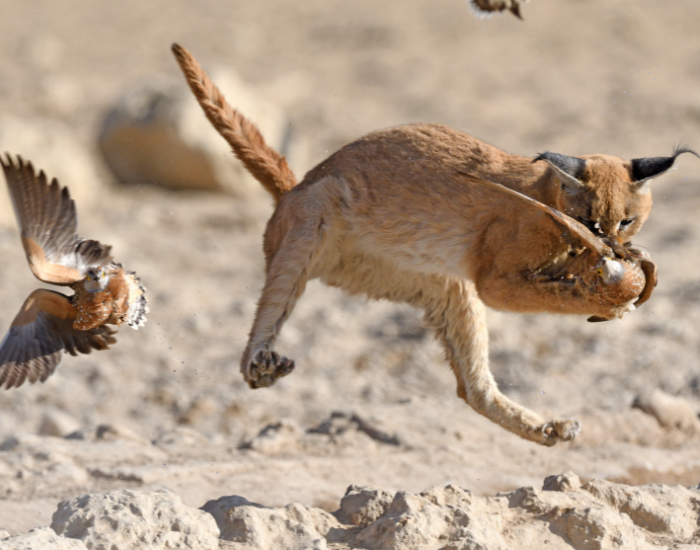
One of the most jaw-dropping abilities of the caracal cat is its vertical leap. Using extraordinarily strong hind legs and longer legs built for power, these agile hunters can jump more than three meters (around ten feet) into the air to hunt birds mid-flight.
This behavior has been captured in both the wild and captivity. It shows their precision in striking prey out of the sky. Caracals also hunt small mammals, rodents, small antelope, and occasionally even small monkeys.
However, caracals rely on stealth rather than pursuit. They creep close to their prey before exploding forward in a burst of speed and power. In areas where livestock overlaps with caracal habitats, they may occasionally target small livestock. This leads to conflict with humans and raises concerns among farmers.
5. They Are Solitary Animals With Massive Large Territories
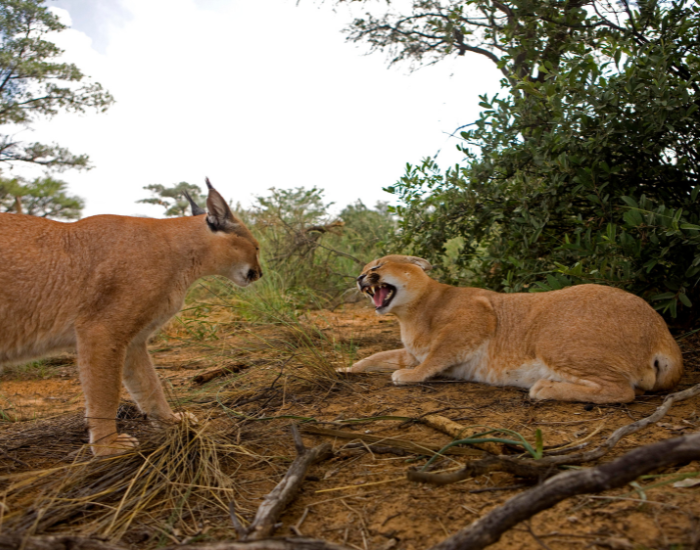
Like most cats, caracals prefer solitude. They are solitary animals that mark their territories through urine marking and claw scraping on trees or rocks. Males defend areas that may overlap with those of several females. However, they rarely tolerate other males in their range.
A caracal’s habitats can vary widely. They inhabit evergreen and montane forests, desert regions, and protected areas with thick vegetation or rocky cover. Despite this variety, each individual requires a large range to find enough prey, males usually requiere way more than females, and it also depend son region. In Africa they have smaller ranges, but in Aisa, the could have up to 300 square kilometers (maybe even more)..
Their ability to adapt across so many environments is remarkable. From southern Africa to northwest India, this flexibility is one reason the species continues to thrive despite human encroachment and habitat loss in several regions.
6. The Caracal’s Range Spans Three Continents
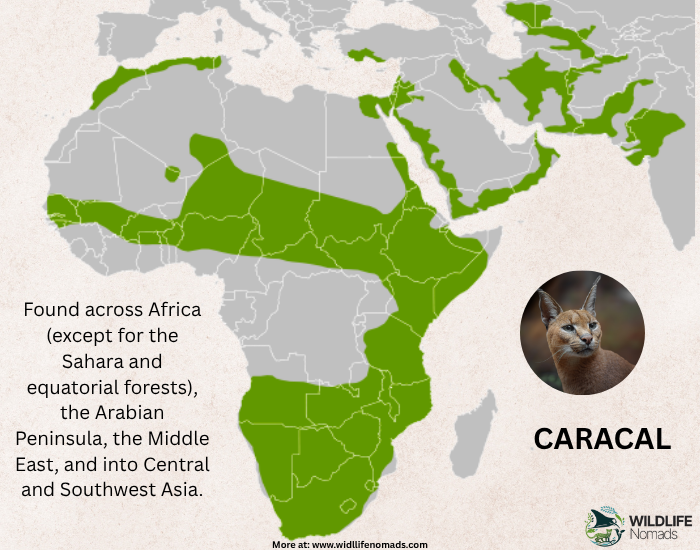
Caracals have one of the widest distributions among small African cats. They are found across Africa, the Middle East, and parts of Asia, including northwest India and the Arabian Peninsula.
In South Africa, they live in grasslands and fynbos regions. In West Africa, they occupy savanna mosaics. Further north, they adapt to dry desert regions and rugged mountains. Their range also extends into Turkey and Iran, demonstrating remarkable ecological flexibility.
Few other wild cats exhibit such adaptability to both arid and montane environments. However, in parts of Asia and North Africa, fragmentation and habitat loss have caused serious local declines.
7. Caracals Are Medium-Sized Cats With Impressive Strength
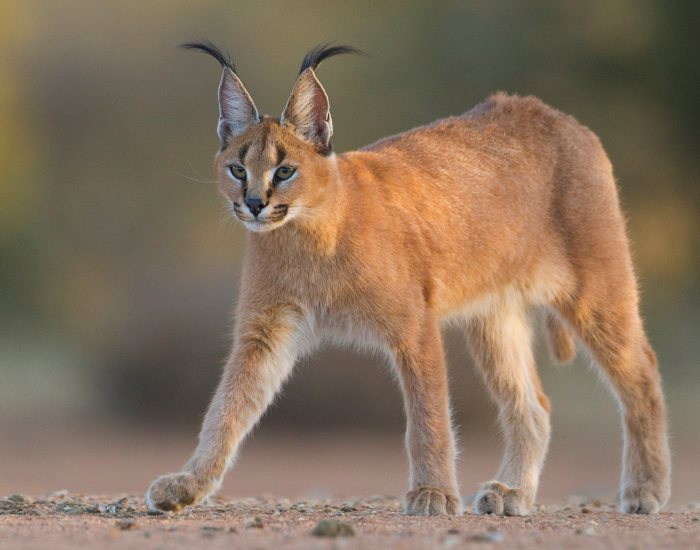
In terms of size, the caracal animal falls between domestic cats and leopards. Adult males typically weigh between 11 and 20 kilograms (24–44 pounds), while females average slightly less. This medium-sized build gives them the perfect balance between speed and power.
They have long legs, muscular shoulders, and a short tail, all designed for bursts of speed and explosive jumping. Their longer legs and flexible spine help them pivot quickly. This allows them to chase small mammals or leap at flocks of birds with precision.
Despite their compact frame, caracals can take down prey heavier than themselves. For example, they can hunt young kudu or small antelope. Their strength and agility make them one of Africa’s most efficient predators within the Carnivora family.
8. Caracals Are Born in Hidden Dens and Grow Fast
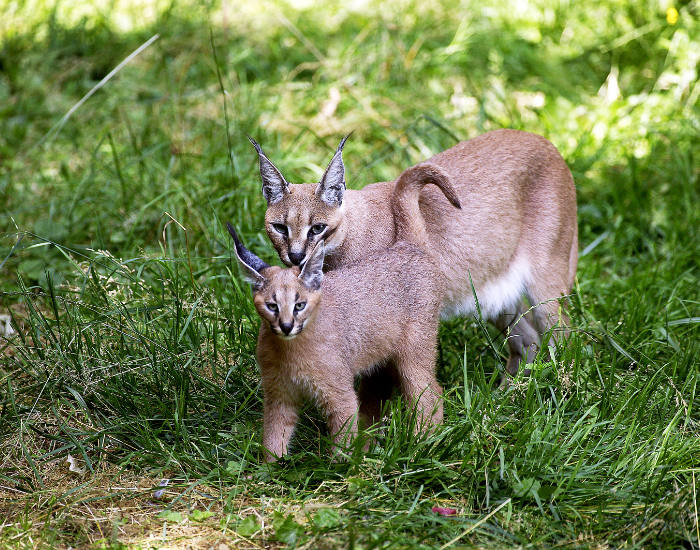
After a gestation period that lasts about62-81 days (~2-3 months), the female gives birth to one to six kittens in a secluded den. The litter is often hidden in rocky crevices or abandoned burrows. The litter size usually averages three kittens per birth.
Kittens are blind for the first week and dependent on their mother’s milk for up to two and three months. Around nine to ten months of age, they begin to explore the den and eat solid food. By four to six months, they leave their mothers and establish their own small territories.
Females may raise up to two litters per year depending on food availability. Their average lifespan is 10–12 years in the wild. In captivity, they can live up to 17 years, impressive longevity for such an active hunter in challenging environments.
9. Caracals Play a Vital Role in Their Ecosystem
As mid-sized predators, caracals occupy an important ecological niche. The have the same role as all predators, by preying on rodents, birds, and small mammals, they help regulate populations that might otherwise overgraze or spread disease.
They are also staple food for larger predators like leopards and hyenas. This links multiple trophic levels within African and Asian ecosystems. In addition, their presence indicates healthy biodiversity in protected areas.
In agricultural regions, this role can benefit humans by naturally controlling pests. However, when their prey becomes scarce, they may turn to livestock. This creates tension between conservationists and farmers. Therefore, promoting coexistence strategies, such as predator-proof enclosures, is crucial to balance both interests effectively.
10. Despite Their Resilience, Caracals Face Human Threats
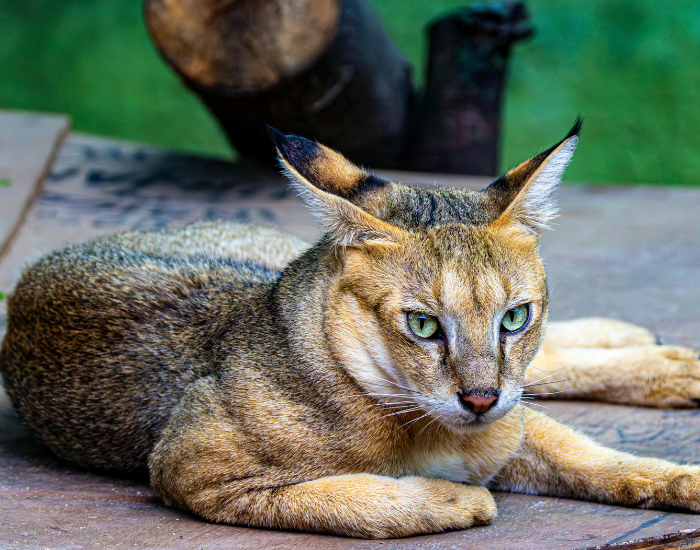
While the caracal’s adaptability earns it a Least Concern status on the IUCN Red List, several local populations are in decline. Expansion of agriculture, habitat fragmentation, and persecution are major issues threatening their survival.
They are sometimes trapped, poisoned, or shot due to human–wildlife conflict. This particularly occurs when they’re accused of killing goats or poultry. In some regions, the use of poisons and rodenticides has become a major threat. These substances indirectly kill caracals and other wildlife in the area.
Recent research adds another layer of concern. A 2023 climatic habitat modelling study predicted that rising global temperatures could drastically reshape the caracal’s range. According to these models, warming trends of 1.5 – 5.8 °C this century may cause local extinctions across the Mediterranean, while populations could shift further east and south within Africa where climates remain suitable. The authors suggested that the species’ conservation status may warrant reassessment if current climate trajectories persist.
Fortunately, conservation programs and protected areas across Africa and Asia now aim to secure key habitats. In addition, these conservation efforts educate communities about the caracal’s ecological importance. This helps reduce conflicts between humans and wild cats.
11. Caracals Are Protected by International Conservation Laws
To safeguard populations, caracals are listed under Appendix II of CITES (the Convention on International Trade in Endangered Species) for all populations, withe xception of the Asian population, which is listed in Appendix I. This status regulates trade to prevent exploitation of wild cats globally.
In many countries, caracals are protected by national wildlife acts. Hunting them is restricted or banned in most regions. Conservationists also encourage conservation efforts that include community-based education and livestock management programs.
In regions such as the Arabian Peninsula and southern Africa, these initiatives are helping to reduce persecution. They also promote tolerance among local communities. Therefore, supporting these programs helps ensure this wild cat remains part of the landscape for generations to come.

12. The Caracal Has Become an Internet Icon: the “Floppa Cat”
The world first met the “Floppa cat” (or Floppa animal) through viral memes featuring a pet caracal named Gosha. He was affectionately dubbed “Big Floppa.” His oversized ears and majestic expression made him an online sensation across social media platforms.
While amusing, this fame has a downside. It sparked global curiosity about keeping caracal cats as pets. However, experts warn that despite their beauty, they remain wild at heart. They require specialized care far beyond the capacity of an ordinary household.
Still, the Floppa phenomenon has unintentionally raised awareness about the species. It inspires new interest in facts about caracals and conservation. Sometimes, internet fame can help reconnect people with nature, if paired with education and responsibility toward wild animals.
FAQs About Caracals
Not exactly. Even hand-raised caracals remain unpredictable. They can bond with caretakers but retain wild instincts. Therefore, they should never be treated as domestic pets or household animals.
Ownership varies by region, but experts discourage it. These cats are active, territorial, and potentially dangerous. They belong in the wild or professional sanctuaries designed for wild cats.
Legality differs across states. Some permit ownership with a license, others ban it outright. Always check local wildlife regulations before considering exotic species as pets.
Attacks are extremely rare. Caracals prefer to avoid humans, and conflicts usually arise only if cornered or provoked. However, they remain wild predators with strong instincts.
They can sprint at up to 75 km/h (46 mph) in short bursts. This is fast enough to chase small mammals or outpace predators across open terrain.
Over three meters (ten feet) straight up. This makes them one of the highest vertical jumpers in the animal kingdom relative to body size. Their long legs provide incredible power.
Because of their large, expressive ears that “flop” in certain positions. This was popularized through memes of “Big Floppa” on social media platforms worldwide.
Preserving the Enduring Legacy of the Caracal
The caracal stands as a symbol of wild beauty, graceful, elusive, and endlessly adaptable. From the deserts of Africa to the mountains of the Middle East, this medium-sized wild cat thrives where few others can. Its story is one of balance: fierce predator and ecological ally, meme legend and misunderstood hunter.
By learning about the caracal cat, sharing accurate facts about caracals, and supporting conservation efforts, we can ensure this tuft-eared marvel continues to roam freely through protected areas worldwide. The future of caracals depends on our commitment to coexistence and habitat preservation.
Further Reading:
- The Fascinating World Of The Puma Yagouaroundi
- 12 Fascinating Facts About the Oryx Animal
- 12 Fascinating Facts About the Mysterious Cougar
See Caracals in Africa!
These are our recommendations with our trusted partners:
This blog is reader-supported. When you buy experiences through links listed on this site, we may earn an affiliate commission.