If you’ve spent any time on wildlife TikTok or Instagram, you’ve likely come across a cat with impossibly long legs, a slender build, and those intense, almond-shaped eyes. That’s a serval, one the animals you will find in Africa. The serval (Leptailurus serval) is one of Africa’s most fascinating yet often misunderstood Africa’s wild cats. Those long legs combined with oversized ears and a spotted coat make it a symbol of perfect adaptation and stealth. Let’s dive into the facts so you can get to know them better.
1. The Longest Legs Relative to Body Size
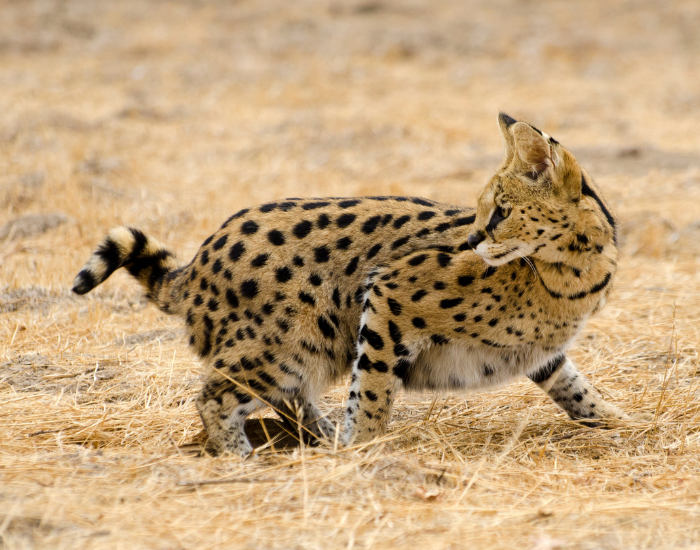
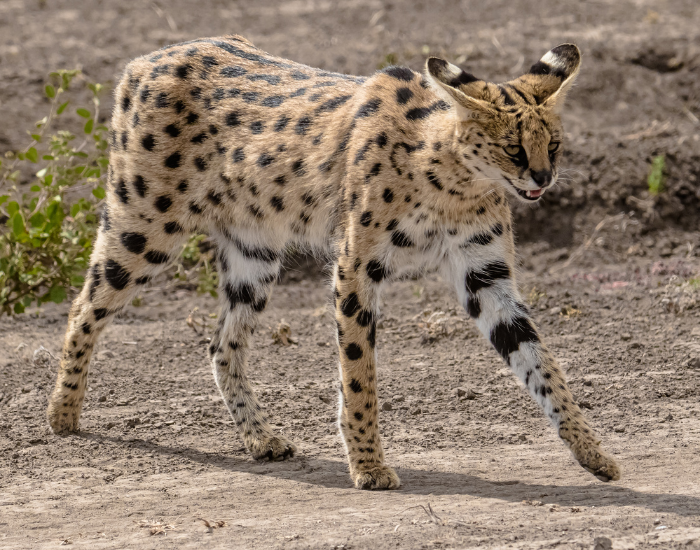
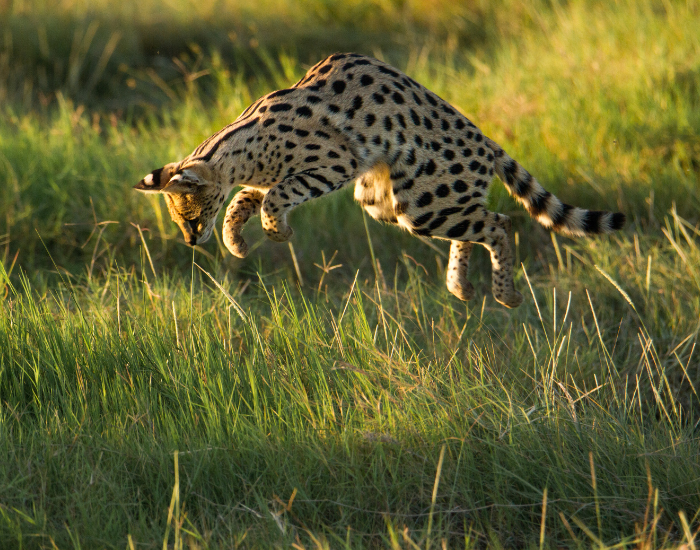
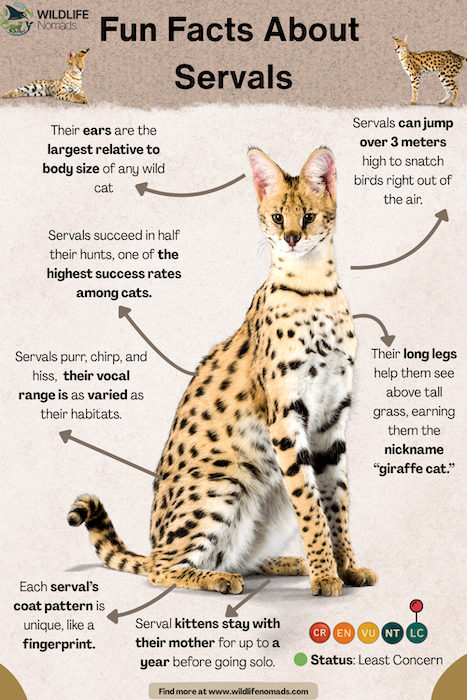
Servals are medium sized wild cats and have the longest legs relative to body size among all wild cats. Sometimes called the ‘giraffe cat’ because of their long legs and small head, servals stand out for their distinctive appearance. This adaptation evolved for a specific purpose: seeing above tall vegetation and making spectacular leaps during hunts. A serval, with its small head relative to its body and large ears, can jump up to 3 meters (10 feet) into the air, often plucking birds straight from flight.
These very long legs enable silent movement through dense grass without wasting energy. They provide the height advantage servals need to spot prey in their grassland habitat—a crucial edge among medium sized wild cats, highlighting their unique adaptations when hunting in environments where other predators struggle.
2. Oversized Ears and Masterful Hearing
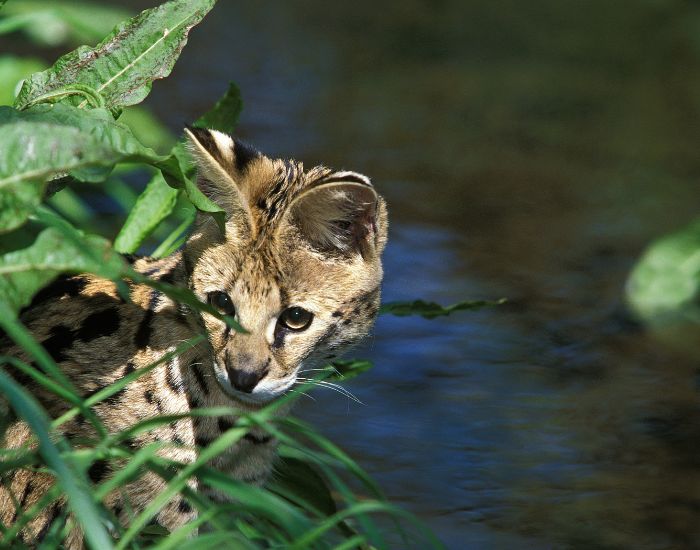
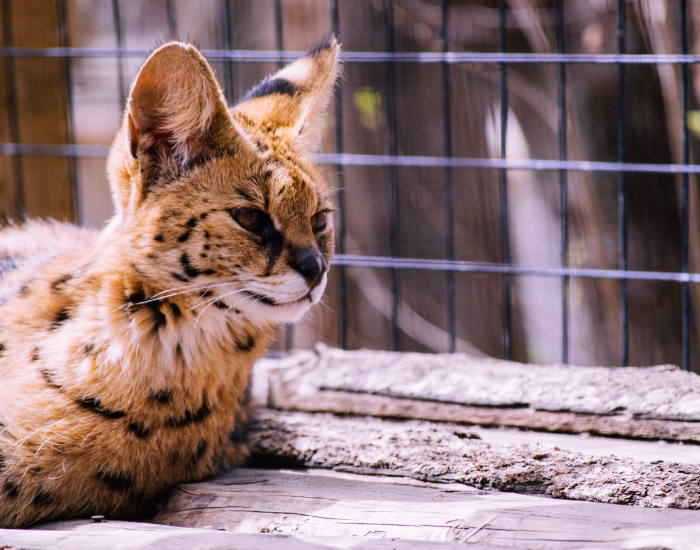
Servals are known for their big ears, which are among the largest of any cat relative. These large, rounded ears rotate independently, pinpointing sounds with near-perfect precision.
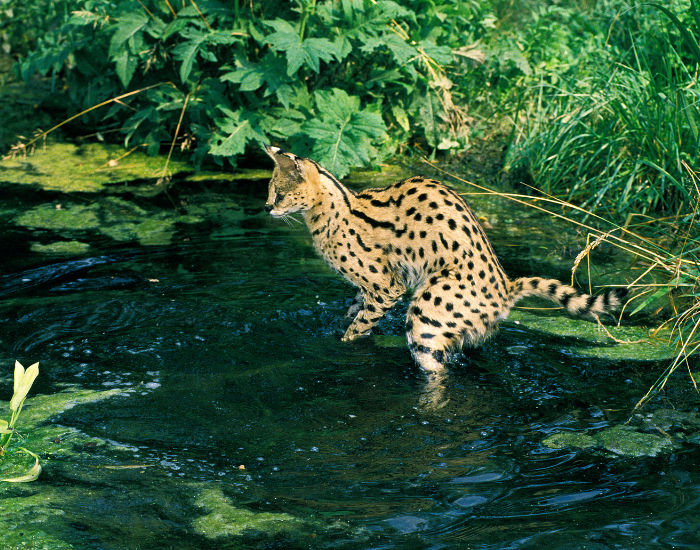
They’re perfectly tuned for detecting the faint rustle of rodents beneath dense vegetation. This exceptional hearing ability is essential for hunting in tall grass where sight alone is limited. Their sense of hearing is remarkably acute, allowing them to detect prey underground with stunning accuracy. This sensory adaptation, especially the serval’s large ears, sets it apart from other cat relatives, such as the caracal, highlighting its unique evolutionary advantage among wild cats.

3. Distinctive Spotted Coat and Camouflage
Their golden-yellow coat marked with bold black spots and stripes provides ideal camouflage in the African savanna. The serval’s beautiful fur is highly valued in the illegal fur trade, making them a target for hunters. Each serval’s pattern is unique, like a fingerprint. This striking appearance blends seamlessly into tall grass and bamboo thickets, making servals nearly invisible to unsuspecting prey.
The serval’s spotted coat can closely resemble that of young leopards, sometimes leading to confusion between the species.
4. Native to Sub-Saharan Africa
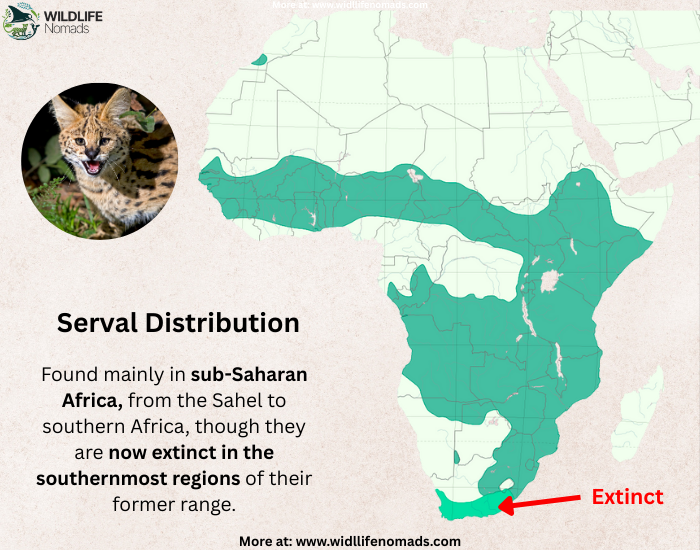
Servals thrive in sub-Saharan Africa, particularly in wetlands and grasslands. Their natural habitat includes African savannas with tall grasses, which provide essential cover for stalking prey and hiding from predators. You’ll find them across southern Africa, eastern Africa, and West Africa in countries like South Africa, Zambia, Botswana, and Kenya. In West Africa, populations are more fragmented due to deforestation, but small populations persist in Guinea and Nigeria.
Unlike arid habitats preferred by cheetahs or lions, servals rely on moist environments that support large populations of small mammals and birds, their primary prey.
Understanding the serval’s natural history is crucial for appreciating its ecological role and supporting effective conservation efforts.
5. Solitary and Territorial
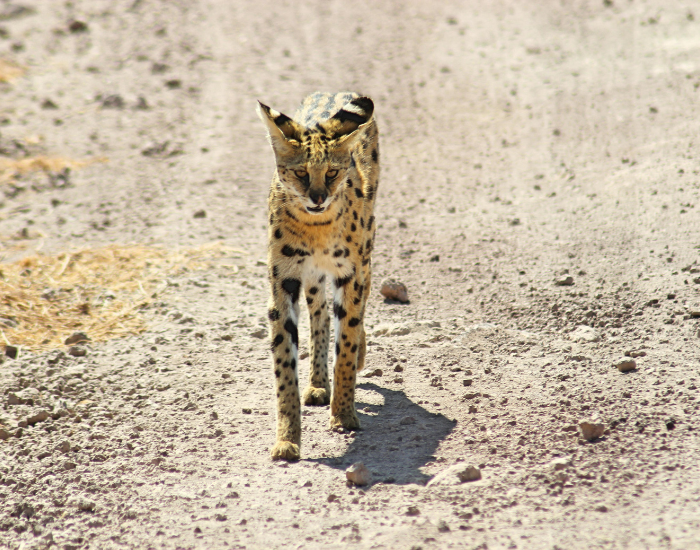
Servals are solitary creatures with distinct territorial behavior. Each adult maintains its own territory stretching over 20 square kilometers, depending on prey abundance. They mark boundaries with scent and vocalizations, subtle reminders to other servals that this patch of wilderness is spoken for.
6. Thriving Near Wetlands
Servals show a strong preference for wet environments like reed beds and marshes. These ecosystems provide abundant prey and essential cover. However, these habitats are increasingly vulnerable to human drainage and farming. The loss of wetlands has become one of the biggest threats to serval populations today.
7. Exceptional Hunting Success Rate
Servals have one of the highest hunting success rates among wild cats, around 50% according to conservation research. This means roughly half their hunting attempts result in a catch, far exceeding most other feline predators. Their ability to catch birds, thanks to their impressive leaping skills, is a key part of their hunting success.
Servals typically use a specialized strategy: listening intently for prey beneath grass, then performing a dramatic vertical leap. They land directly on the target with remarkable accuracy, pinning rodents or small birds under their paws before delivering a quick bite. Servals can catch birds mid-air with these leaps, and they often pluck feathers from their avian prey before eating, demonstrating a methodical approach to feeding.
8. Diet Consists Mainly of Small Mammals
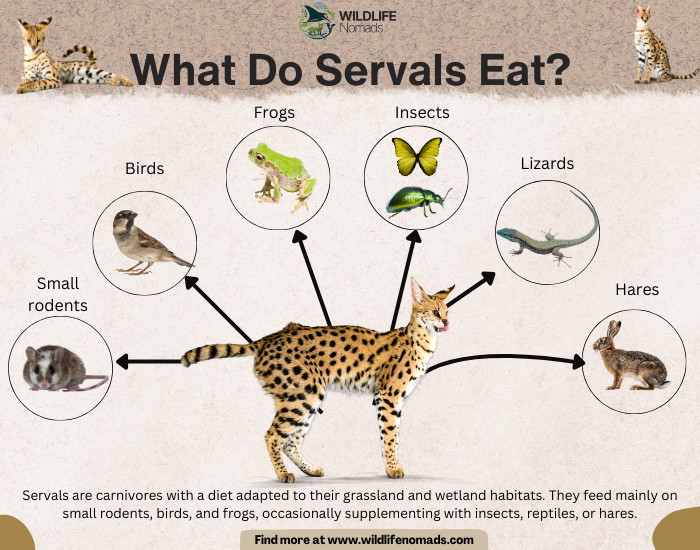
Small mammals make up over 90% of the serval’s diet. They also hunt birds including quail and weavers, reptiles, amphibians, and occasionally fish or insects depending on availability. Their ability to catch fish and frogs gives them an edge in wet habitats where other wild animals might struggle.
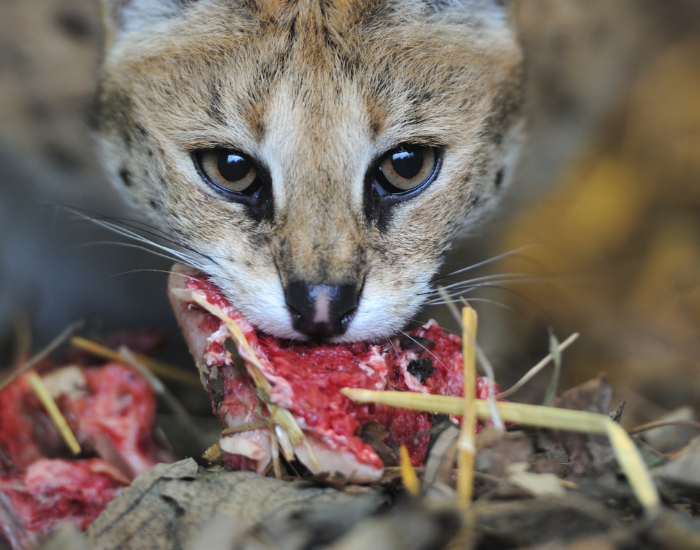
A single serval can catch between 3,000 up to 4,000 rodents annually, making them a natural ally for farmers controlling agricultural pests. This dietary specialization explains why servals thrive in specific environments while struggling in others.
9. Complex Communication and Social Behavior
Though solitary, servals communicate through scent markings, growls, hisses, and distinctive high-pitched calls during mating season. Body language, arched backs, raised fur, or ear movements, plays a significant role in asserting dominance or showing submission.
During the breeding season, females exhibit urine-marking, vocalizations, and increased social interaction. Males maintain solitary territories that may overlap with several females’ ranges, interacting only for mating. This system allows them to reproduce while maintaining their preferred solitary lifestyle.
10. Reproduction and Kitten Development
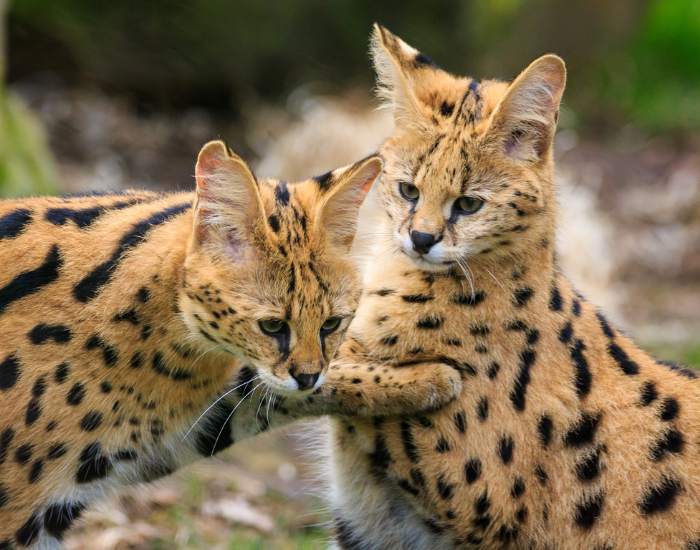
Servals reach sexual maturity between 18–24 months. Mating peaks during the breeding season when prey is abundant. The male serval roams a territory that may overlap with several females, playing a key role in the reproductive process. After a 70-day gestation period, the female serval gives birth to 1–3 kittens, usually in hidden dens of tall grass or abandoned aardvark burrows, and provides all maternal care for the young.
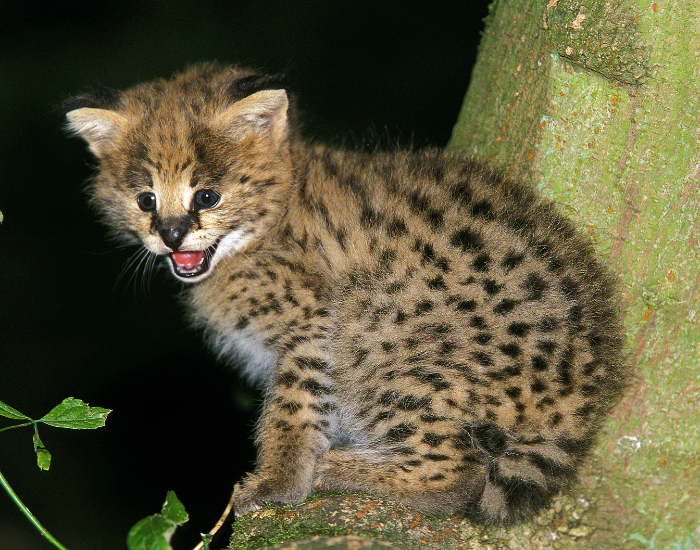
Young servals are born blind and helpless, relying entirely on their mother’s care. They double their birth weight within the first two weeks and begin to open their eyes around 9–13 days. As they grow, young servals start exploring and learning to hunt through play. Female offspring often stay with their mother longer before becoming independent, while most young servals are fully independent by one year. In the wild, servals live up to 10 years; in captivity with proper care, they can reach 20 years.
11. IUCN Status and Major Threats
According to the IUCN Red List, servals are classified as Least Concern, not yet endangered. However, this shouldn’t create complacency. Several serious threats endanger populations in localized regions. It is crucial to conserve wild populations of servals to maintain ecological balance and protect their role in their natural habitats.
Habitat destruction remains the most pressing threat. Expanding agriculture and wetland drainage rapidly shrink serval territory, reducing prey availability and safe shelter. Poaching targets servals for the illegal fur trade, with pressure increasing in certain regions. Vehicle strikes occur as highways cut through natural corridors in southern Africa. Illegal pet trade fuels demand for servals as exotic pets, supporting illegal breeding operations.
Additionally, farmers sometimes kill servals mistaking them for livestock predators, often stemming from misunderstanding their true diet and ecological role. The serval is a wild animal and not suited for domestication.
12. Servals Share Similarities with Other Wild Cats
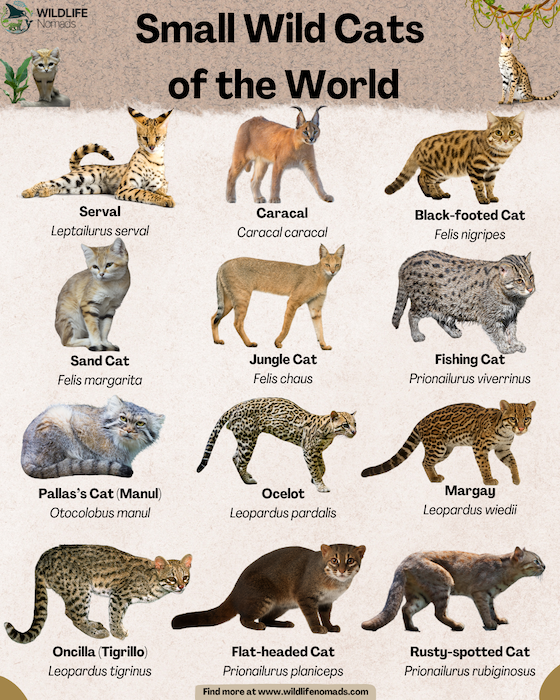
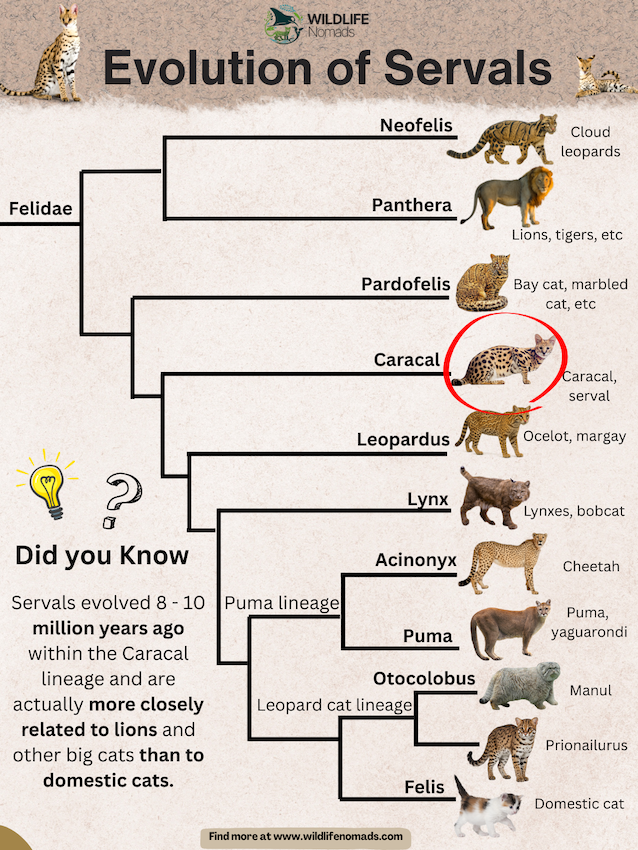
Servals belong to the small wild cat family that includes ocelots, margays, and other slender-bodied predators. They belong to the Caracal lineage, a branch of the cat family (Felidae) that split from other wild cats around 8–10 million years ago. They share a closer ancestor with caracals and African golden cats than with leopards, cheetahs, or domestic cats.
Like servals, ocelots are medium-sized wild cats with spotted coats, exceptional hearing, and strong predatory instincts that make them unsuitable as pets. Margays share similar adaptations, they’re agile tree climbers and specialized hunters native to Central and South America.
All these wild cats share common traits: solitary behavior, territorial marking, specialized diets focused on small prey, and behavioral complexity that defies domestication. Servals’ combination of very long legs, oversized ears, and hunting success rate makes them distinctive within this group, but their fundamental nature as wild animals places them squarely with ocelots, margays, and other untamable felines.
13. Servals Don’t Make Good Pets!
I get it. You have seen tiktok videos of people with serval cats. And of course, they look magnificent and beautiful. If you are a cat person, servals look like a must have. But as you saw on the previous image, servals are more closely related to Lions than domestic cats.
Despite their stunning appearance, serval cats are increasingly marketed as “tame” or “playful” exotic pets in the U.S., Europe, and Australia. In reality, serval cats are wild animals with complex needs and powerful instincts that domestic cats completely lack.
Owning a serval is illegal or heavily restricted in most U.S. states, parts of Europe, and Australia. Even where legal, strict permits are required. Many pet servals are declawed, which raises significant welfare concerns.
Behavioral challenges include territorial spraying far more intense than unneutered cats, strong predatory instincts, and aggression when stressed or confined. Space requirements are prohibitive: they need large outdoor spaces for mental and physical health that typical homes can’t provide. Even hand-raised servals retain wild instincts and may lash out unpredictably. Servals can also pose risks to other pets in the household due to their size, strength, and hunting instincts.
Many owners underestimate their strength and energy, leading to abandonment or surrender. Sanctuaries frequently receive former “pets”, animals that can’t return to the wild but never adjusted to captivity. These situations harm both animals and owners.
Unlike domestic cats, which underwent thousands of years of selective breeding for human companionship, the serval cat is a wild animal, not a domesticated animal. Servals evolved to thrive in solitude and independence. Keeping them in captivity denies their natural behaviors: hunting, roaming, and territorial maintenance.
Conservation Efforts and Ecological Significance
Organizations like the African Wildlife Foundation, Panthera, and the Endangered Wildlife Trust work actively to protect servals through wetland restoration, population monitoring, and community education. Conservation projects in Namibia and South Africa have successfully reintroduced servals to safe, managed reserves.
Ecologically, servals play an important role in controlling rodent populations and balancing ecosystems that human activity often disrupts. In African folklore, servals symbolize grace, independence, and intuition. Their agility and poise have inspired traditional proverbs and artistic motifs throughout the continent.
FAQs about Servals
Ownership laws vary significantly by state. Many states prohibit owning servals outright, while others require permits. Always check your local wildlife regulations.
While they can recognize and tolerate handlers, servals don’t form the affectionate bonds seen in domestic cats.
Exact population numbers remain unknown. The species remains widespread across Africa, though populations are declining in localized regions due to habitat loss and human pressure.
The Beauty of the Wild Serval
The serval embodies everything extraordinary about Africa’s wildlife, elegant, elusive, and endlessly adaptive. It thrives not because it’s the strongest, but because it’s perfectly designed for its ecological niche.
During my fieldwork, I watched one serval disappear into the grass as quietly as it appeared. That moment stayed with me, a reminder that true wildness isn’t something we can own or tame. It’s something we protect, respect, and let be free.
Further Reading
Find an Experience to see Servals in Eastern and South Africa!
This blog is reader-supported. When you buy experiences through links listed on this site, we may earn an affiliate commission.