Calm Giants of the Reptile World
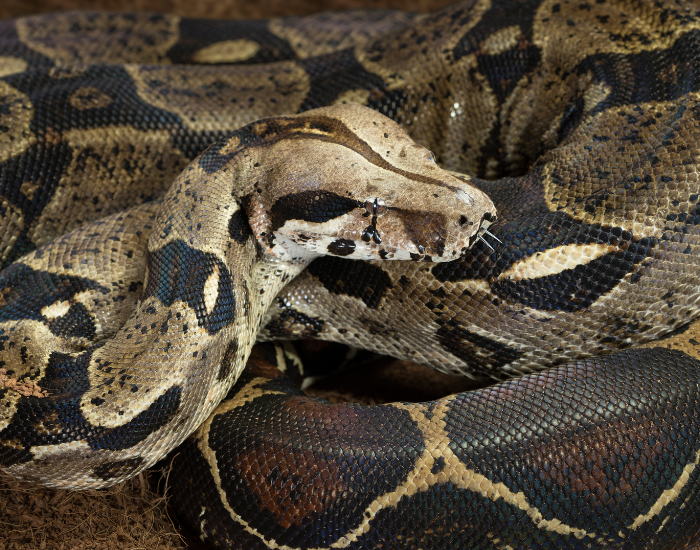
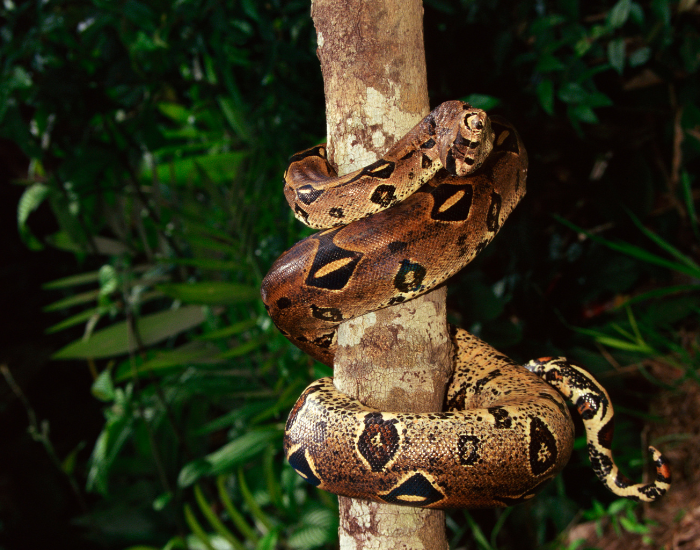
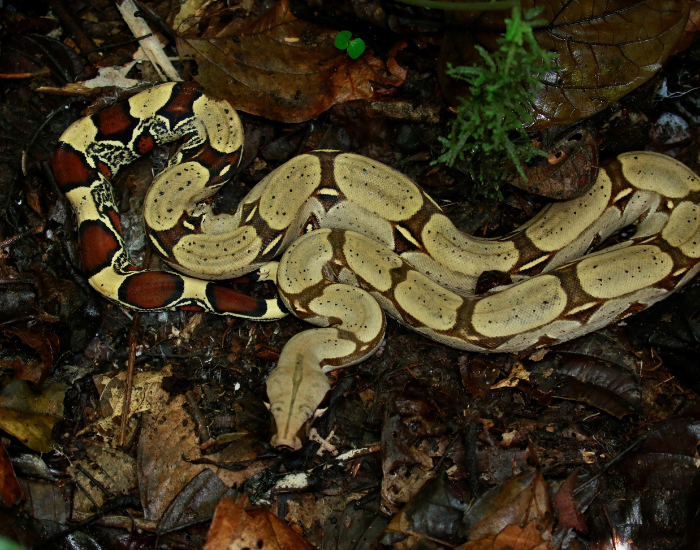
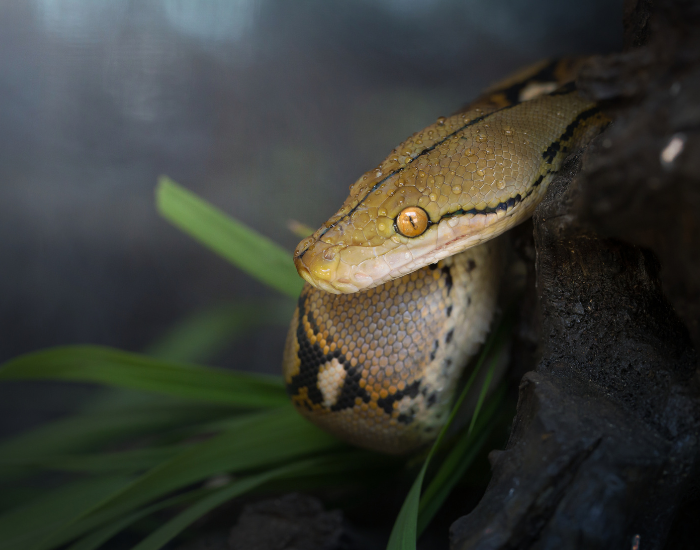
When I worked in a zoo early in my career, one of the most surprising things I learned was just how gentle large snakes could be. I remember holding a boa constrictor for the first time. Its smooth, cream-colored scales shifted lightly over my hands as it adjusted its weight. Along with the cream color, I noticed striking dark brown hourglass-shaped saddles and subtle yellow tones along its body, which contribute to its effective camouflage. Despite its immense strength, the snake remained calm and deliberate, more curious than threatening.
The boa constrictor, often misunderstood as a dangerous predator, is actually one of nature’s most fascinating animals. These nonvenomous snakes are found across Central and South America, from the rainforests of Brazil to the dry savannas of Peru.
As ambush predators, boa constrictors play a crucial role in maintaining ecosystem balance. They control rodent populations and quietly shape the environments they inhabit. Therefore, understanding these remarkable constrictors helps us appreciate their ecological importance.
1. Boa Constrictors Are Masters of the Squeeze
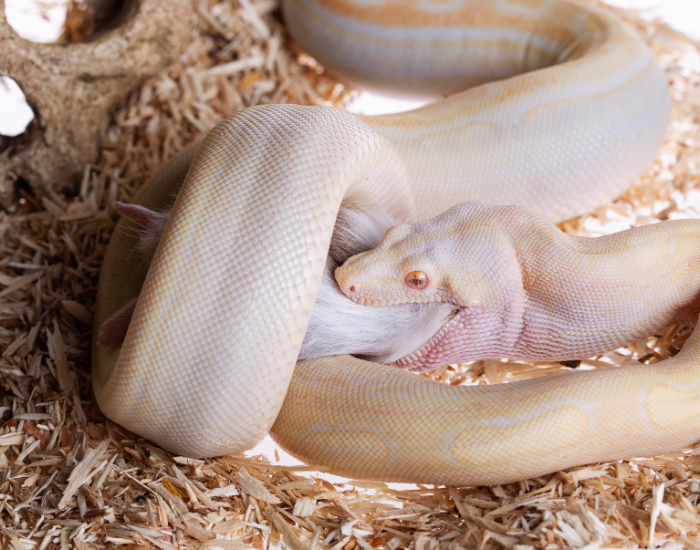
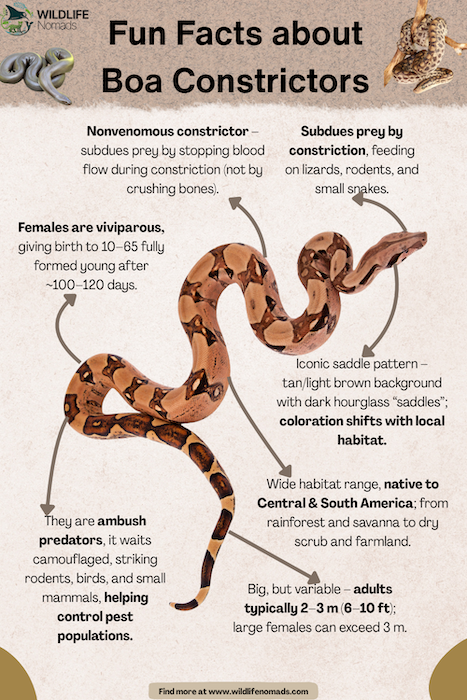
Despite their name, boa constrictors don’t crush their prey to death. Instead, they suffocate it through constriction. Recent research shows that constrictors kill by halting blood circulation, not by breaking bones.
Using powerful muscles, the snake wraps its body around its victim. It tightens with each exhale, stopping blood flow within seconds. The prey is dead before the boa constrictor begins to swallow it. This efficient technique ensures a quick kill with minimal energy use.
The constrictor’s hunting method represents nature’s engineering at its finest. Strength perfectly balances with precision. In addition, this technique allows boas to take down prey much larger than other snakes of similar size.
2. Found Across Central and South America
Boa constrictors are native to Central and South America. They thrive in various habitats from humid tropical forests to arid grasslands. These snakes range from sea level to moderate elevations and adapt remarkably well to different environments.
In Brazil, boas often inhabit dense rainforests. Meanwhile, in Peru and Colombia, they may live in dry savannas or along riverbanks. Some populations even exist near human settlements, where they hunt rodents that thrive in agricultural areas.
These reptiles are also strong swimmers. They can be found near rivers and wetlands, although they prefer to remain on land. However, habitat loss and illegal pet trade have led to population declines in several regions.
3. Multiple Species and Subspecies Exist
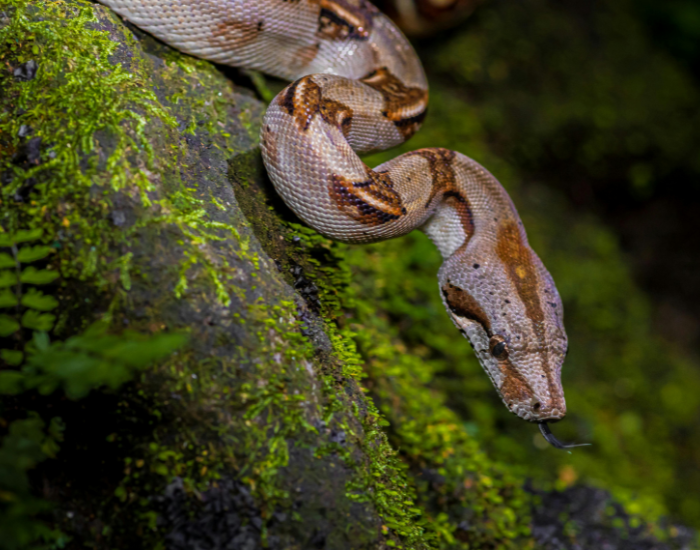
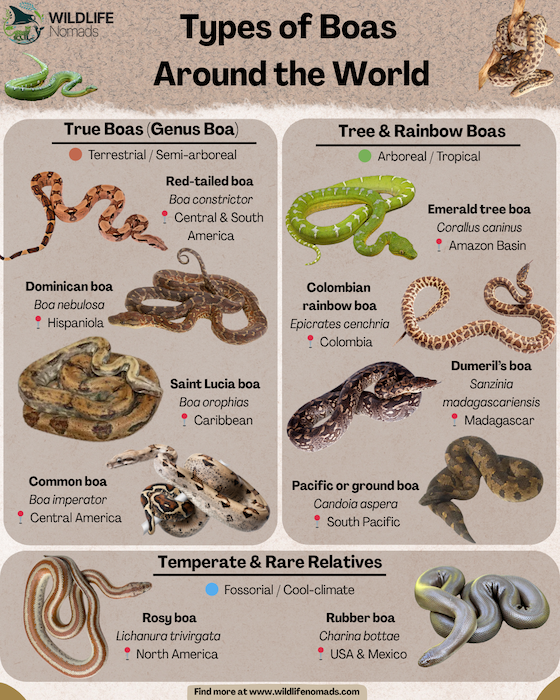
Most people think “boa constrictor” refers to a single species. However, there are actually several species and subspecies within this group. Scientists recognize variations across their range, with differences in size, color pattern, and behavior.
Common Boa (Boa constrictor imperator)
The common boa is the classic species often kept in zoos. This subspecies features prominently in wildlife documentaries. Adults typically display tan or light brown coloration with dark spots running down their body, along with dark brown hourglass-shaped saddles and yellow tones that enhance their distinctive color pattern.
Rubber Boa (Charina bottae)
The rubber boa is a smaller, cooler-climate cousin native to North America. This species is known for its smooth, rubbery skin. Unlike other boas, rubber boas prefer northern habitats with lower temperatures.
Hog Island Boa (Boa imperator)
Found on the Hog Islands off Honduras, this subspecies is smaller and paler. Island dwarfism has shaped its evolution. These snakes rarely exceed six feet in length.
4. They Can Grow Over Three Metres Long
Boa constrictors are large snakes, often growing between eight and ten feet in length. Some females can exceed three metres. Females are typically larger than males, a trend known as sexual dimorphism. In addition to size, males generally have longer and thicker tails than females, which is an anatomical feature used to distinguish between the sexes.
Their color pattern varies depending on their habitat. Most boas have a light brown or tan background with dark, saddle-like markings. In rainforest habitats, they tend to be darker. Conversely, in drier areas, they appear paler and more olive green.
This variation provides perfect camouflage for ambush hunting. The dark spots help them blend into forest floors or rocky terrain. Heavy-bodied snakes like these need excellent camouflage to remain undetected by prey.

5. Calm Yet Powerful: Their True Temperament
Despite their intimidating size, boa constrictors are remarkably calm animals. During my time handling them in captivity, I found them patient and deliberate. They move slowly, tongue flicking to sense the air.
In the wild, these reptiles are secretive. They avoid confrontation whenever possible. Boas rarely bite unless threatened or mishandled. Their composed demeanor is one reason they’ve become popular among experienced herpetologists.
Zoo educators often use boas to dispel myths about snake aggression. When handled properly, these snakes rarely show defensive behavior. However, they should always be treated with respect due to their strength.
6. Heat-Sensing Predators With Extraordinary Senses
Boa constrictors use heat-sensing pits along their jaws to detect warm-blooded prey. This adaptation is shared with pythons and other constrictors. These pits sense infrared radiation emitted by mammals and birds.
The heat-sensing ability allows boas to strike with pinpoint accuracy, even in total darkness. They’re true ambush predators, waiting motionless for hours. Once an unsuspecting rodent, bird, or lizard passes by, the boa strikes in less than half a second.
This hunting strategy requires minimal energy. Therefore, boas can survive long periods between meals. The dry season often sees reduced hunting activity as prey becomes scarce.
7. Boa Constrictors Give Birth to Live Young
Unlike many snakes that lay eggs, boa constrictors are viviparous. They give birth to live young instead. After a gestation period of about 100 to 120 days, females produce between 10 and 65 offspring.
During the breeding season, the female boa constrictor emits pheromones to attract males and later gives birth to live young. The male boa constrictor actively seeks out females, competes with other males, and participates in copulation to ensure reproductive success.
Newborn boas are fully independent from birth. Measuring around 40 to 60 centimeters, they start hunting small mammals immediately. The breeding season typically occurs during the cooler months.
Most young snakes don’t survive to adulthood due to predation. However, those that do can live 20 to 30 years in the wild. In captivity, with proper care, they can live even longer.
This reproductive strategy offers a survival advantage. It’s especially beneficial in unpredictable environments where egg predation is high. Giving birth to live young ensures better survival rates for offspring.
8. Ecological Balancers of the Tropics
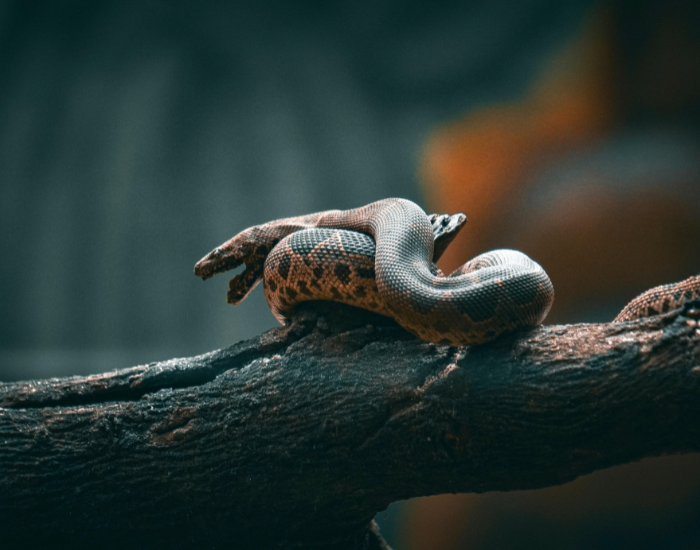
Boa constrictors play a crucial role as population regulators. By feeding on small mammals, birds, and other reptiles, they keep rodent populations under control. This prevents outbreaks that can damage crops or spread disease.
They act as natural pest control. Their presence indicates a healthy, functioning habitat. In turn, boas are preyed upon by larger animals such as jaguars and birds of prey.
This creates an important link in the food web. The genus of boa constrictors has evolved to fill specific ecological niches. Without these snakes, many tropical ecosystems would face serious imbalances.
9. Rubber Boas: The Gentle Northern Cousins
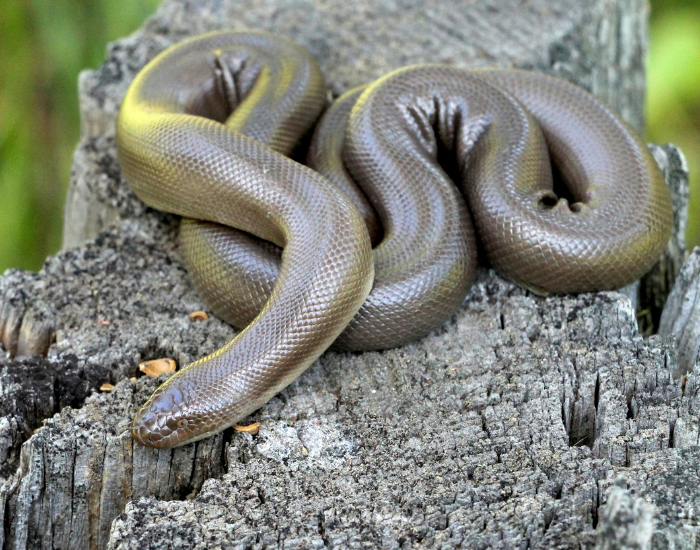
The rubber boa (Charina bottae) is a fascinating relative of the tropical boa constrictor. Native to North America, this species prefers cooler climates. It spends much of its life underground or hidden under logs.
Its skin is unusually smooth and soft, giving it the rubbery feel that inspired its name. Growing only up to about 80 centimeters, it’s one of the smallest living snakes in the constrictor family. The northern rubber boa and southern rubber boa are recognized subspecies.
Despite being rare to see, rubber boas are harmless. They’re known for their docile nature. These nonvenomous snakes are excellent examples of evolutionary adaptability. They thrive in Washington and other northern regions where few other snakes can tolerate the local temperature.
10. The Rare and Pale Hog Island Boa
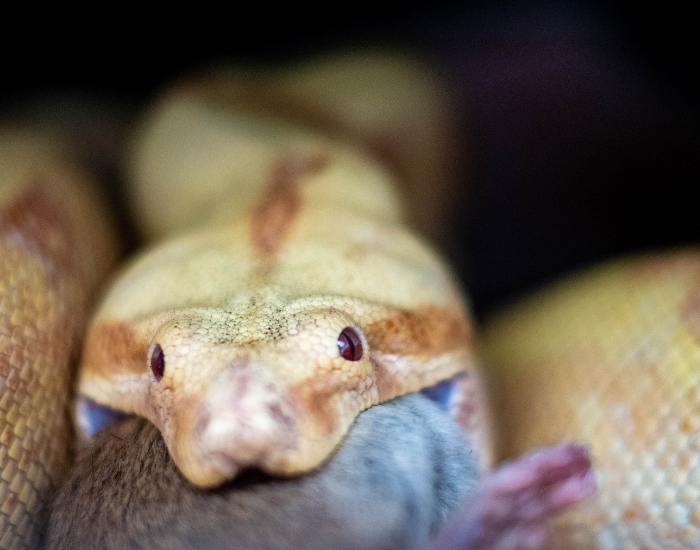
The Hog Island boa is a subspecies of Boa imperator. It’s found on small cays off the northern coast of Honduras. These snakes exhibit island dwarfism, meaning they’ve evolved to be smaller than their mainland relatives.
Adults often measure less than six feet long. They also have beautiful pale coloration, ranging from cream to light pink. This adaptation suits their sunlit island habitat perfectly.
Unfortunately, their rarity has made them targets in the exotic pet trade. Conservationists monitor wild populations closely. Though often bred in captivity, wild populations remain vulnerable. Habitat changes and collection pressures continue to threaten these unique animals.
11. Nonvenomous Yet Formidable Hunters
Boa constrictors are nonvenomous snakes. However, that doesn’t make them any less formidable. Their efficiency as constrictors means they can take down suitable prey as large as monkeys or opossums.
Once they’ve subdued their victim, they swallow it whole, head first. Backward-curved teeth guide the prey down. With a slow metabolism, boas can survive for weeks or even months between meals.
This energy-efficient lifestyle explains why boa constrictors have thrived for millions of years. The natural history of these reptiles shows minimal evolutionary change. Their body plan and hunting strategy remain highly effective.
12. Conservation and Coexistence
Boa constrictors are listed under Appendix II of CITES. This designation regulates international trade. While not currently endangered, their species status faces threats from habitat loss, hunting, and the pet trade.
The full species status varies by region. Some local populations have declined significantly. Conservation organizations and researchers, including the Smithsonian Institution Press, continue to study their natural history.
Recent research has provided enough evidence to support better protection measures. However, there is not enough evidence yet to determine the exact impact of climate change on populations. Protecting these snakes means protecting the delicate balance of tropical ecosystems.
The next time you see a boa featured in a documentary or zoo exhibit, remember its importance. Behind its silent, steady gaze lies millions of years of evolutionary brilliance.
Boa Constrictor FAQs
The name comes from its hunting method. The boa constricts its prey by wrapping around it and applying pressure. This stops blood circulation until the animal can no longer survive.
Not usually. Boa constrictors are naturally calm animals. They’re defensive only when provoked. In the wild, they prefer to retreat rather than attack. Snake strikes are rare unless the animal feels threatened.
No. Although both are constrictors, boas and pythons belong to different families. They have distinct reproductive methods. Boas give birth to live young, while pythons lay eggs. This is one of the key differences between these other snakes.
Juveniles often climb trees. However, adults spend more time on the ground or low branches. Their smaller size compared to other subspecies makes them more agile climbers than heavy bodied snakes.
Rubber boas are small, typically growing to about 60 to 80 centimeters. This makes them one of the smallest members of the constrictor group. They’re much smaller than their tropical relatives in South America.
Boa constrictors feed primarily on small mammals such as rodents. They also hunt birds, lizards, and other animals. Larger boas can take down suitable prey like opossums or even small deer. Their diet varies based on habitat and available prey.
Look for a large, heavy-bodied snake with a tan or light brown base color. Dark spots or saddle-like markings run down the tail and body. The head is distinct from the neck. Color pattern varies by subspecies and habitat. If you’re unsure, consult local wildlife guides or experts.
A Misunderstood Snake
The boa constrictor is far more than a powerful predator. It’s a symbol of balance and adaptability. From the pale Hog Island boa to the elusive rubber boa, these snakes reveal how evolution shapes life.
Multiple species within this genus demonstrate remarkable diversity. Each subspecies has adapted to its unique habitat, whether tropical rainforests or cool northern forests. This adaptability has allowed boas to thrive for millennia.
During my time working with these animals, I learned that fear often comes from misunderstanding. Up close, their movements are slow, rhythmic, and almost meditative. They offer a quiet reminder that nature’s most intimidating creatures are often its most essential.
If you ever come across one in the wild, keep your distance but take a moment to appreciate it. The boa constrictor isn’t an enemy. It’s an ancient guardian of the ecosystems we all depend on.