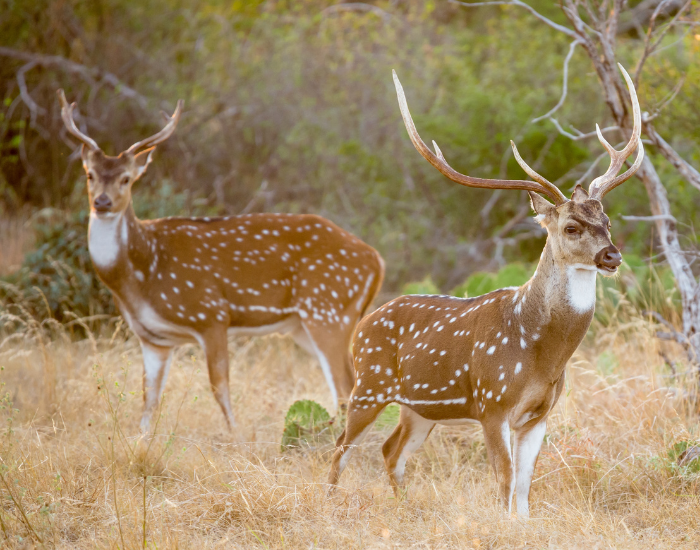
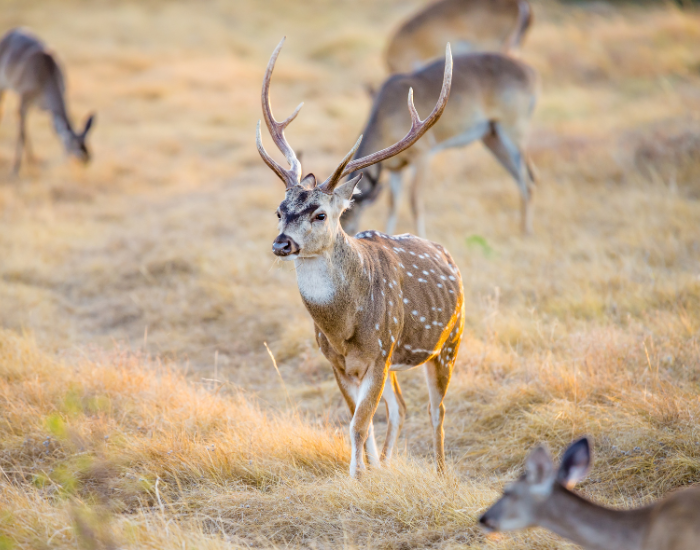
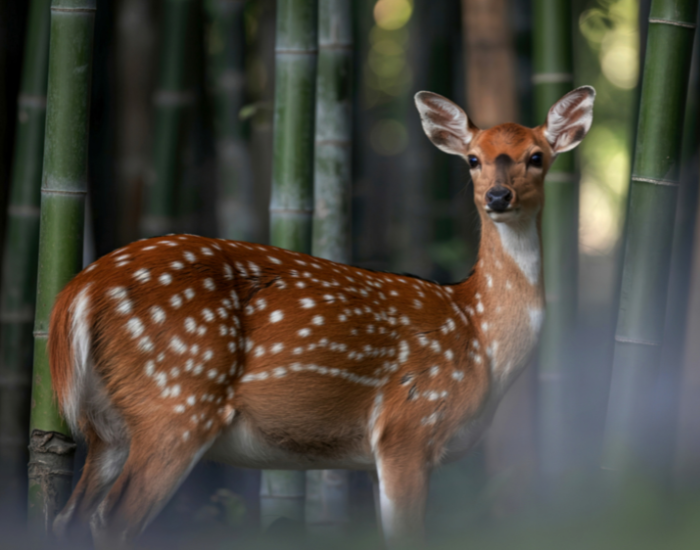
The axis deer (also known as the chital or spotted deer) is one of the most recognizable deer species in the world. As a mammal, the axis deer displays several distinctive features. With its bright, cinnamon-colored coat scattered with white spots, it resembled a giant fawn frozen in perpetual youth. A black dorsal stripe runs along its back, adding to its unique appearance. The legs are slender, with the inner legs covered in white fur, which is another notable marking that helps identify the species.
12 Key Facts About Axis Deer
1. Axis Deer Are Distinctively Spotted Among All Deer Species
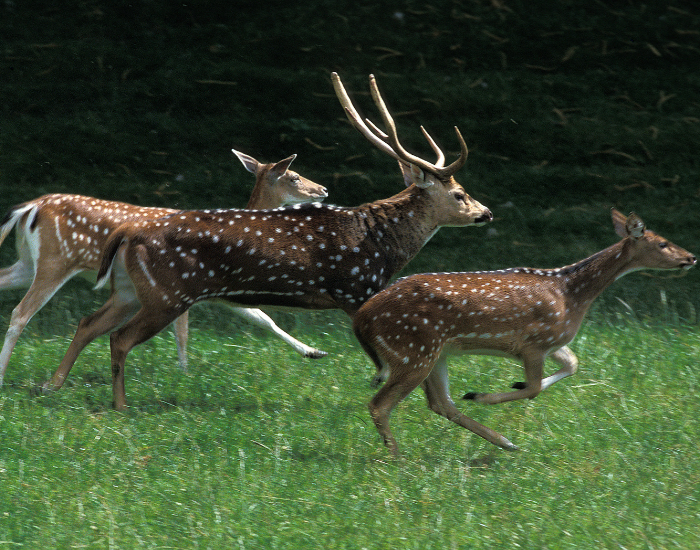
Axis deer, also known as chital, are one of the most recognizable deer species due to their permanent white spots scattered across their reddish coat. Unlike other deer species that lose spots after youth, axis deer retain their distinctive white spots throughout their entire lives. These white spots make axis deer easily distinguishable from other deer species like the Indian muntjac, northern red muntjac, and southern red muntjac that inhabit similar dense vegetation.
2. Adult Male Axis Deer Develop Impressive Three-Pronged Antlers from Small Bony Knobs
Adult male axis deer grow distinctive three-pronged antlers that can reach up to a meter in length. These impressive antlers develop from small bony knobs during their first year, eventually becoming one of the most spectacular antler formations among Asian deer species. Axis deer shed antlers annually, regrowing new ones each year as part of their natural life cycle. Male muntjac, in comparison, develop much smaller, short antlers from their small bony knobs, rarely exceeding simple spikes.

3. Axis Deer Have Superior Body Length and Size Compared to Muntjac Deer
With their impressive body length of 3-4 feet plus tail, axis deer are significantly larger than muntjac deer species. Adult male axis deer typically weigh 160-210 lbs with substantial body length and a shoulder height of about 35 inches, making them much larger than the Indian muntjac, northern red muntjac, or southern red muntjac, which have a shoulder height of only 18-20 inches and weigh just 20-35 lbs.

4. Conservation Status of Axis Deer Varies Dramatically by Geographic Region
The conservation status of axis deer is “Least Concern” in their native range according to IUCN standards, where populations thrive in dense vegetation habitats. In India, regions such as Madhya Pradesh are notable for significant axis deer and muntjac populations, making them important for conservation efforts. However, their conservation status becomes complex in introduced ranges where they’re considered invasive species affecting local ecosystems. This contrasts with the varied conservation status of other deer species like different muntjac deer populations across Asia.
5. Axis Deer Differ Dramatically from Barking Deer (All Muntjac Species)
While barking deer (including Indian muntjac, northern red muntjac, and southern red muntjac) are small, solitary muntjac deer known for their distinctive barking calls in dense vegetation, axis deer are large, social animals. Barking deer get their name from their dog-like alarm calls echoing through forests, while axis deer communicate through grunts and bellows, showcasing the remarkable diversity among Asian deer species.
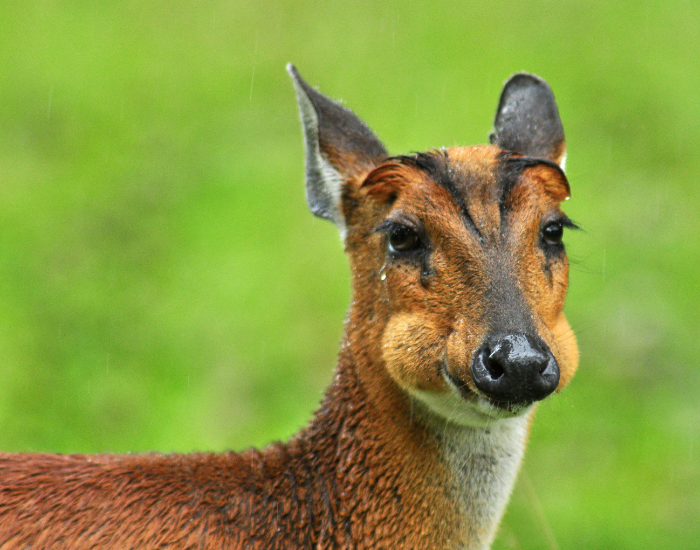
6. Northern Red Muntjac and Southern Red Muntjac Share Different Habitats with Axis Deer
In overlapping territories, northern red muntjac prefer cooler, denser vegetation while southern red muntjac occupy warmer regions with different forest types. Both species are also widely distributed throughout Southeast Asia, which is a primary habitat for their populations and contributes significantly to their genetic diversity and evolutionary history. Both muntjac deer subspecies are much smaller than axis deer and represent different ecological niches among deer species. The northern red muntjac and southern red muntjac have distinctly different conservation status ratings compared to axis deer across their respective ranges.
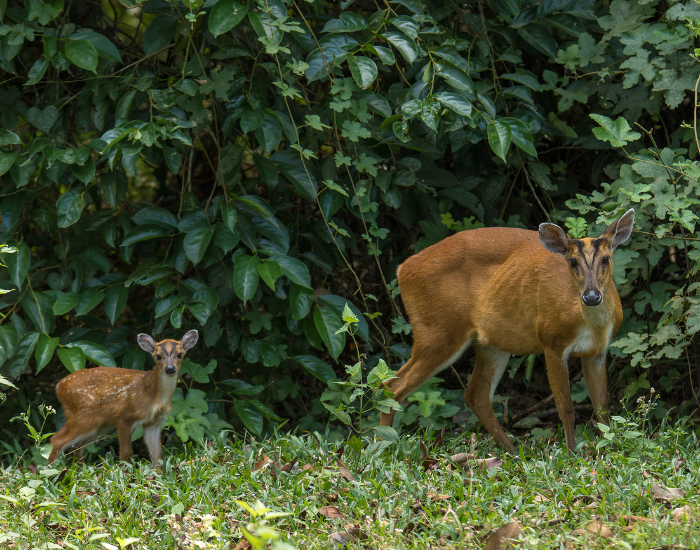
7. Axis Deer Form Large Social Groups Unlike Solitary Muntjac Deer Species
Unlike the Indian muntjac and other muntjac deer that live solitary lives in dense vegetation, axis deer form large herds of up to 100 individuals in open grasslands and forest edges. These herds typically include females and their offspring, along with adult males. This highly social behavior distinguishes axis deer from barking deer and other deer species that prefer solitude. Adult male axis deer often compete for dominance within these complex social structures.
8. Indian Muntjac (Barking Deer) Successfully Coexist with Axis Deer in Native Dense Vegetation
The Indian muntjac, commonly called barking deer, shares forest habitats with axis deer but occupies different ecological niches within the same dense vegetation areas. While Indian muntjac are small, secretive deer species preferring thick undergrowth, each individual typically maintains its own territory within this environment, exhibiting territorial behavior to establish dominance and attract mates. Axis deer, on the other hand, prefer more open grasslands and forest edges. Both deer species have successfully adapted to coexistence despite their vastly different conservation status needs and habitat preferences.
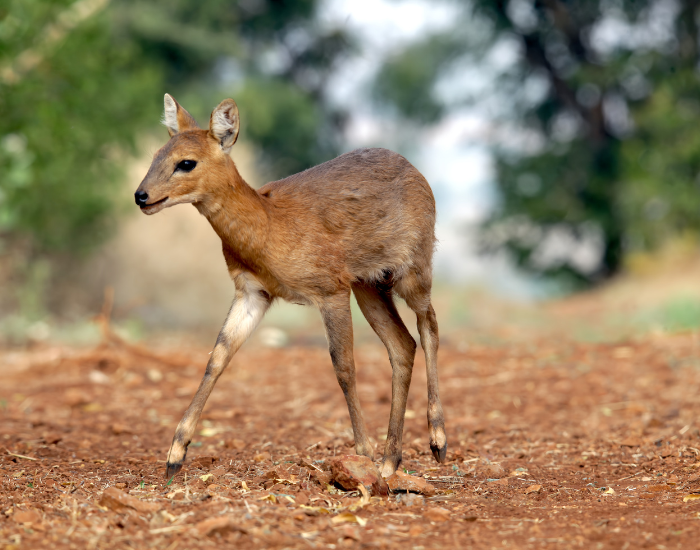
9. Axis Deer Have Become Highly Successful Invasive Species in Texas and Other States
Introduced to Texas in the 1930s, axis deer now number over 40,000, making them one of the most successful invasive deer species in North America. These Texas axis deer compete directly with native deer species for resources and have significantly impacted local ecosystems, affecting the conservation status of native wildlife. Studies of axis deer in captivity have provided valuable insights into their behavior and adaptability, supporting management and research efforts. Similar populations have established in other states, demonstrating their adaptability outside native dense vegetation habitats.
You might find interesting the following articles about Texas:
10. Male Muntjac Differ Significantly from Adult Male Axis Deer in Size and Antler Development
A male muntjac weighs only 20-35 lbs with simple antlers growing from small bony knobs, compared to adult male axis deer at 160-210 lbs with complex three-pronged antlers. Male muntjac have simple spike antlers and prominent facial scent glands, while adult male axis deer sport impressive antler formations with substantial body length. In contrast, female muntjac and axis deer lack antlers and are generally smaller in size. These dramatic differences highlight the incredible diversity among Asian deer species.
11. Axis Deer Display Permanent White Spots Throughout Their Lives Unlike Other Deer Species
The distinctive white spots on axis deer remain clearly visible throughout their entire lives, unlike most other deer species that lose spots after infancy. These permanent white spots, combined with their reddish-brown coat and impressive body length, make axis deer one of the most beautiful and recognizable deer species in the world, easily distinguishable even in dense vegetation.
12. Conservation Status Management Requires Different Strategies for Various Deer Species
Managing the conservation status of axis deer requires fundamentally different approaches than other deer species due to their dual nature as both native and invasive populations. While axis deer maintain stable conservation status in their native dense vegetation habitats, invasive populations require active control measures. Conversely, various muntjac deer (Indian muntjac, northern red muntjac, southern red muntjac) face different conservation status challenges in their native ranges. In particular, the Western Ghats region is recognized as a biodiversity hotspot with unique genetic lineages of muntjac deer, presenting distinct conservation and taxonomic challenges that require targeted management strategies.
Beyond the Basics: What Makes These Deer Species Truly Fascinating
Where You’ll Actually Find These Amazing Deer Species
The Asian Homeland Adventure Picture this: you’re trekking through India’s dense vegetation, and suddenly you spot both axis deer grazing in a sun-dappled clearing while Indian muntjac dart through the shadows nearby. In south India’s Garo Hills, the northern part of their range showcases incredible genetic diversity among red muntjac populations. Sri Lanka remains the ultimate axis deer stronghold, while smaller populations across Bhutan, Bangladesh, and southern China create a living tapestry of deer species diversity.
The Great American Deer Invasion
Texas wasn’t content with just cattle, they wanted exotic deer species too! Now over 40,000 axis deer roam the Lone Star State, making it the largest population outside Asia. Hawaii’s islands host their own axis deer colonies, while Florida and California are seeing growing herds that compete with native deer species.
The Deer Species Size Olympics
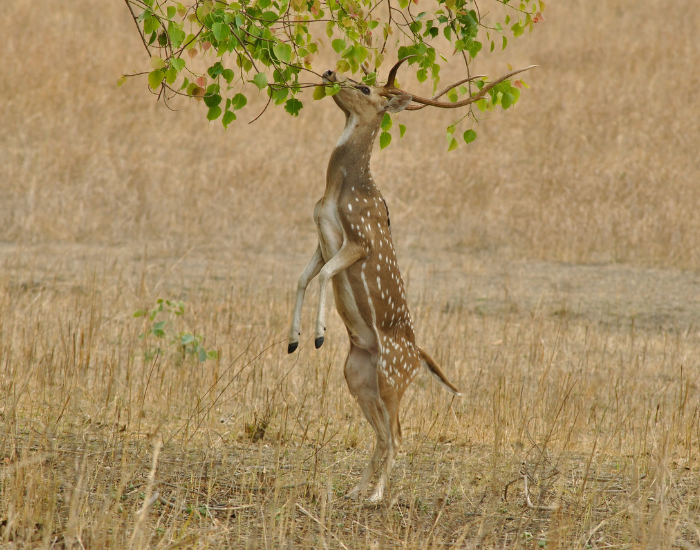
Meet the Heavyweight Champion: Axis Deer At 160-210 lbs with impressive body length reaching 3-4 feet, adult male axis deer are like the linebackers of the deer world. Those permanent white spots? They’re like nature’s polka dots that never go out of style.
The Featherweight Division: Muntjac Deer Indian muntjac (our famous barking deer) tip the scales at just 20-35 lbs—you could practically carry one! Male muntjac develop simple antlers from small bony knobs, but what they lack in size, they make up for in attitude. These even-toed ungulates belong to the Muntiacinae subfamily, while axis deer represent the Cervinae subfamily of the deer family.
Regional Variations: Northern red muntjac prefer cooler dense vegetation (they’re the mountain lovers), while southern red muntjac adapted to warmer climates (the beach-goers of the deer world).
Conservation Status: The Good, The Bad, and The Complicated
Axis Deer: Living Their Best Life (Mostly) In their native Asian homes, axis deer enjoy “Least Concern” conservation status, basically the wildlife equivalent of living stress-free! But as invasive species in places like Texas, they’re like that houseguest who won’t leave and keeps eating all your food.
The Muntjac Situation
Indian muntjac are generally doing okay, but northern red muntjac and southern red muntjac face different challenges across their ranges. Recent research has identified several new species within the deer group, proving these animals are more diverse and complex than we ever imagined! The fossil record also provides fascinating insights into their evolutionary journey.

FAQs About All Deer Species Discussed
Both axis deer and muntjac are mammals and share common animal behaviors. Axis deer show permanent white spots and larger body length, while muntjac deer (Indian muntjac, northern red muntjac, southern red muntjac) are smaller, lack spots, and are often heard before seen due to their barking calls.
Axis deer are “Least Concern” in native ranges but problematic as invasive species. Indian muntjac, northern red muntjac, and southern red muntjac have varying conservation status ratings depending on location and habitat quality.
Adult male axis deer develop impressive antlers from small bony knobs over several months, while male muntjac grow simpler antlers from their small bony knobs, typically remaining as spikes.
Yes, in areas where ranges overlap, axis deer can compete with native deer species including various muntjac deer, though they often prefer different microhabitats within dense vegetation areas
Muntjac deer (Indian muntjac, northern red muntjac, southern red muntjac) are most specialized for dense vegetation, while axis deer prefer forest edges and more open areas adjacent to dense vegetation.
Asian Deer Species Conservation
Understanding axis deer alongside other deer species like the Indian muntjac, northern red muntjac, southern red muntjac, and other barking deer reveals the complexity of Asian wildlife conservation. Each species – from the smallest male muntjac developing antlers from small bony knobs to impressive adult male axis deer with substantial body length – plays unique ecological roles in dense vegetation environments.
The diversity within Asian deer species is further highlighted by examples such as the black muntjac, Muntiacus vaginalis, and Chinese muntjac, each exhibiting unique chromosome numbers and genetic characteristics that contribute to our understanding of species differentiation and evolutionary processes.