Discover the Striped Hyena in East Africa and Beyond
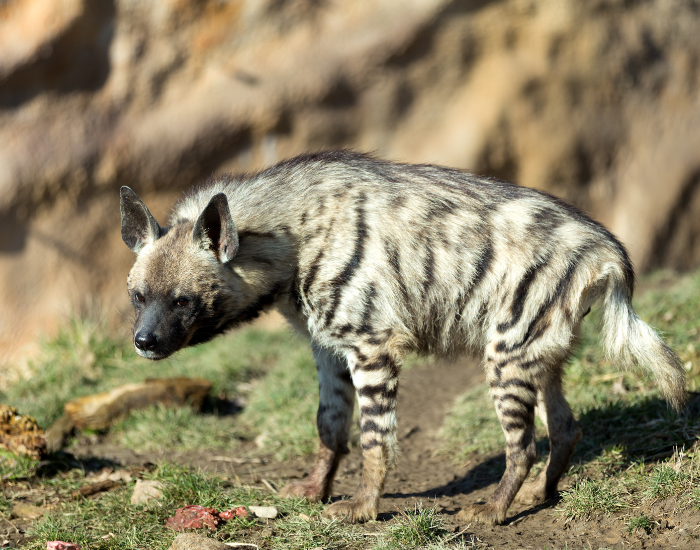
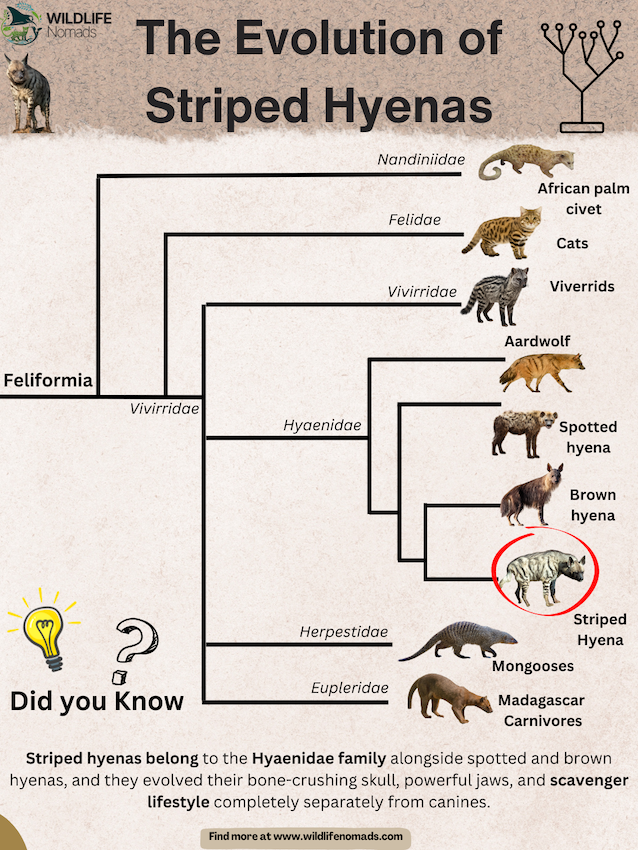
The striped hyena (Hyaena hyaena) is the only extant species in its genus and has roamed Earth for thousands of years. In comparison, the brown hyena (Parahyaena brunnea) differs in physical characteristics, such as a shaggier coat and shorter mane, and occupies a more southern range in Africa, and the aardwolf (Proteles cristatus) is the smallest and most insect-specialized hyena, with reduced teeth and a termite-based diet, making it the most distinct member of the family. The striped hyena’s coat can appear brownish grey or light grey, especially in winter, with a dense, coarse texture and a mane featuring lighter hues at the base.
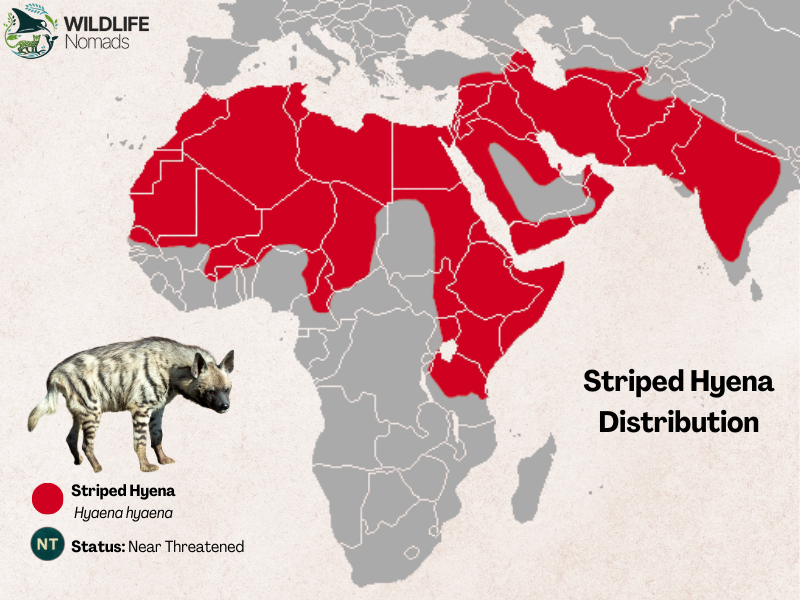
From northern Africa through the Middle East and Central Asia to the Indian subcontinent, this animals species demonstrates incredible adaptability across diverse habitats. Its species distribution is patchy, with isolated populations in regions such as West Africa and eastern Africa south into countries like Tanzania, reflecting its fragmented but extensive range.
1. A Survivor Across Continents: From Africa to Central Asia
Striped hyena’s range extends from northern Africa through East Africa, across the Middle East and Arabian Peninsula, through Central Asia, and into the Indian subcontinent. These animals have established populations in rocky scrublands, semi-deserts, savannas, and mountainous regions.
In Africa, the Middle East, and Central Asia, striped hyenas demonstrate remarkable habitat flexibility. They create dens in natural cave systems or burrow into hillsides, often taking over abandoned burrow dug by other animals. Striped hyenas also use dense thickets for shelter and denning, providing protection from predators and extreme weather. This adaptability across different climate zones explains why they remain extant species while other hyena species have disappeared.
2. Masters of Scavenging: Understanding Striped Hyena’s Diet
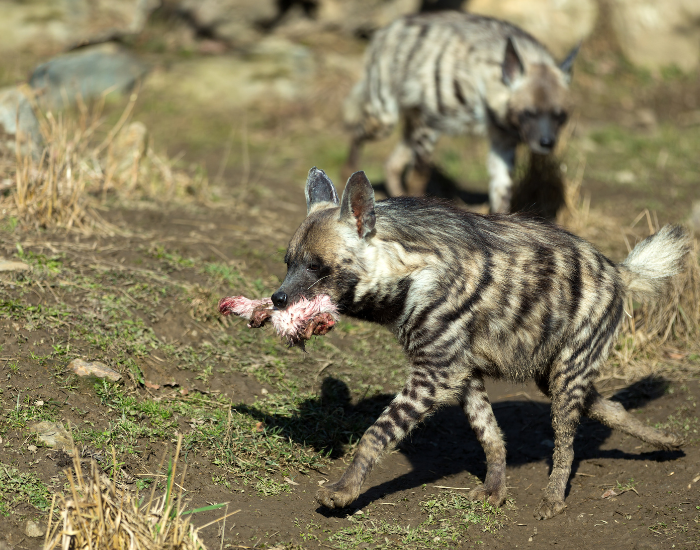
Striped hyena eats mammalian carrion as their primary food source, but their diet varies significantly across seasons and regions. These skilled scavengers consume:
- Mammalian carrion (their preferred striped hyena’s diet)
- Body parts and bones that other predators cannot digest
- Small animals including rodents and birds
- Fruits and plant matter during scarce periods
While striped hyenas are primarily scavengers, large individuals have been known to hunt and kill their own prey, including relatively large prey such as sheep or goats.
Their hyena’s digestive system is uniquely adapted to allow them to swallow bones and digest tough materials, extracting nutrients that most carnivores cannot access. This specialized ability to process body parts makes them essential ecosystem cleaners, reducing disease risk from rotting carcasses.
3. Quiet Shadows: How Striped Hyenas Communicate
Unlike their noisy cousins known for cackling howl vocalizations, striped hyenas are generally silent creatures. They communicate primarily through:
- Scent marking using anal glands
- Subtle body language and postures
- Soft growls and occasional vocalizations
- Distinctive walk patterns that signal territory
The striped hyena’s loudest call, a cackling howl, is rarely heard in the wild. On rare occasions, you might hear a cackling howl, but these instances are uncommon compared to the social chaos of spotted hyena communities.
4. Small Groups and Solitary Behavior
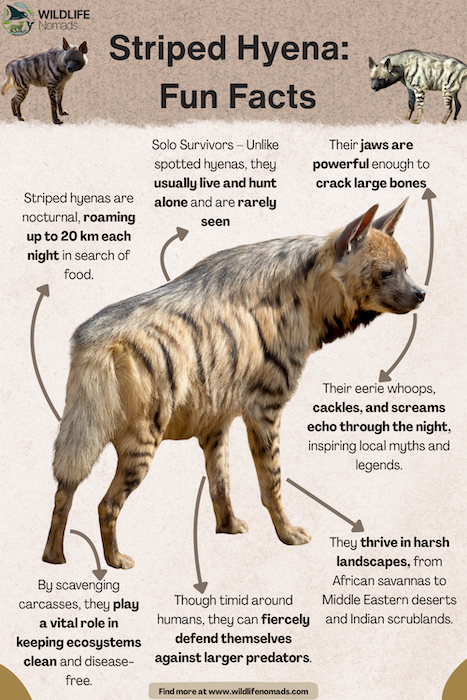
Compared to their cousins, the spotted hyenas which are very social and with matriarchal societies, striped hyenas are primarily nocturnal animals that typically travel alone or in small groups of up to seven animals. These different groups cover extensive territories, sometimes traveling over 20 kilometers in a single night while marking boundaries.
This solitary lifestyle contrasts sharply with the wolf packs social structure seen in spotted hyena clans. Within their small groups, striped hyenas display complex social behaviors including food sharing, grooming, and teaching cubs essential survival skills.
5. Incredible Physical Adaptations
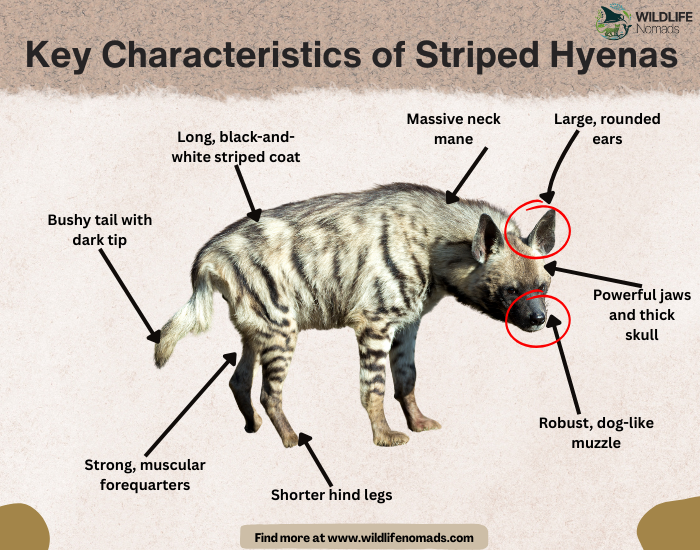
When observing striped hyenas in the field, their distinctive walk immediately stands out. Their front legs are longer than hind legs, creating a hunched appearance that provides power for digging and stamina for long-distance travel.
Key physical features include:
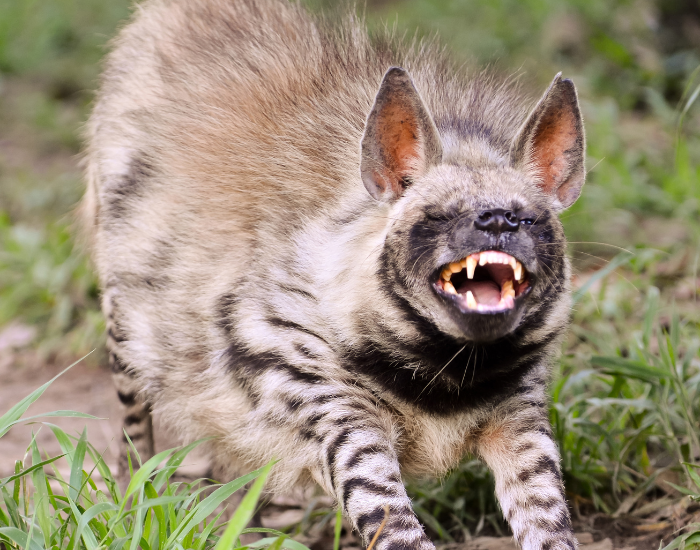
- Luxuriant mane that stands erect when threatened; raising the mane and hair along the back is a strategy to keep scary predators farther away
- Black stripes across greyish-brown fur for camouflage, with transverse stripes visible on the forelegs and outer thighs
- Black patch near the thoracic and lumbar vertebrae that becomes prominent during aggressive encounters, serving as a visual signal in social interactions
- Pointed ears for detecting large prey and scary predators
- Keen sense of smell to locate mammalian carrion kilometers away
- Specialized anal pouch for scent communication
A noticeable light zone appears on the chin or cheeks, contrasting with the darker surrounding fur and highlighting the striped hyena’s unique facial markings.
The striped hyena’s winter coat is longer, denser, and paler than its summer coat, providing extra insulation and a distinct seasonal appearance.
Some extremely rare instances feature albino striped hyenas, though such sightings remain almost unheard of in the wild.
6. Natural Cave Systems and Burrowing Behavior
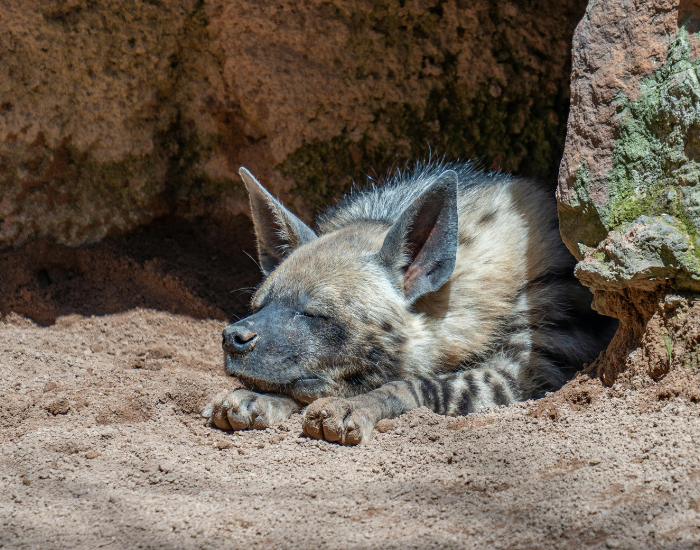
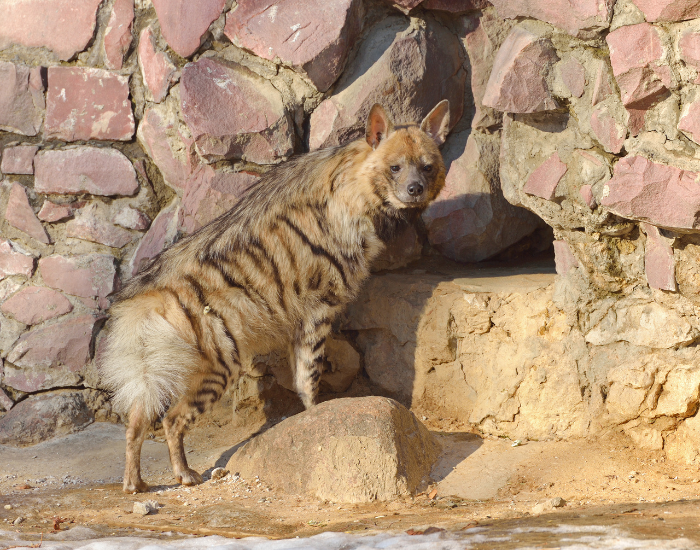
Striped hyenas are skilled hunters and diggers, using powerful front legs to create elaborate burrow dug systems for shelter. They frequently occupy existing dens created by porcupines or foxes, but can also excavate complex tunnel networks themselves. When marking their territory, striped hyenas use tree trunks, as well as grass, stalks, and stones, for scent marking.
These animals show strong preference for natural cave formations, particularly in rocky regions across Africa, the Middle East, and Central Asia. These secure refuges protect cubs from scary predators and provide temperature regulation during extreme weather.
7. Family Life: From Cubs to Independence
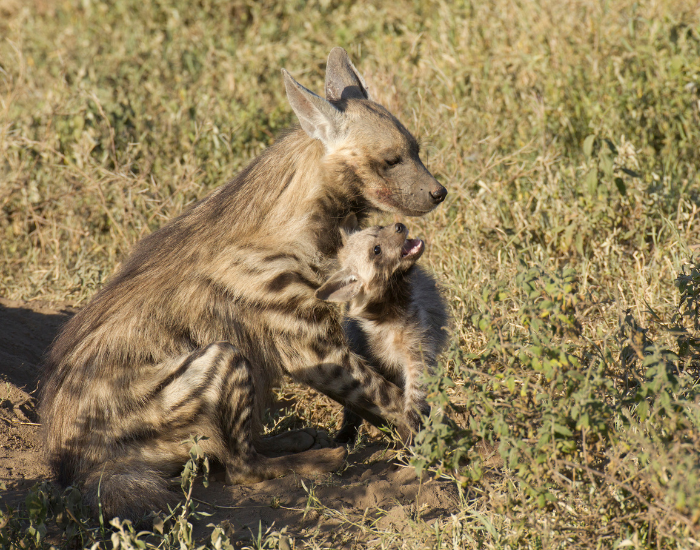
Female striped hyenas give birth to 1-6 cubs after approximately 90 days of gestation. Cubs are born in dens or natural cave systems with eyes closed and complete dependence on maternal care.
Up to seven animals may participate in cub-rearing within family groups:
- 1-2 months: Cubs begin exploring outside dens
- 6 months: Learning to scavenge and hunt small animals
- 1-2 years: Achieving independence from family groups
Cub mortality rates remain high due to scary predators like lions and leopards throughout their range.
8. Coexistence with Other Predators
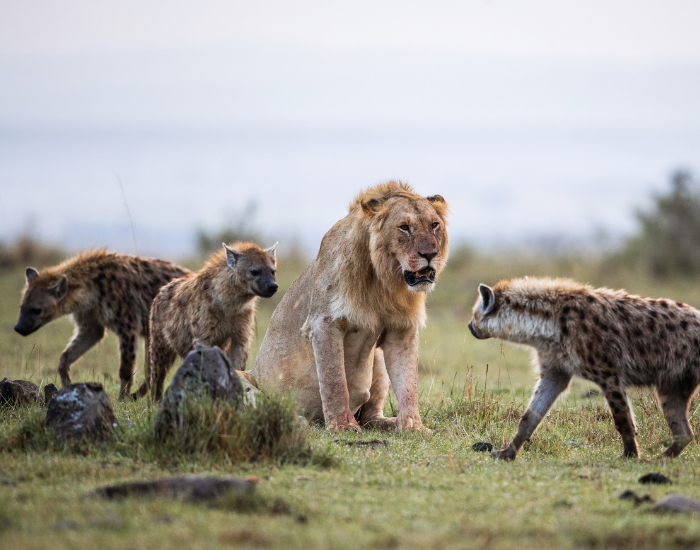
Striped hyenas regularly encounter other predators across their range. In East Africa, lions represent their primary competitors and threats. Lions frequently kill hyenas but rarely consume them, viewing them as competition rather than prey.
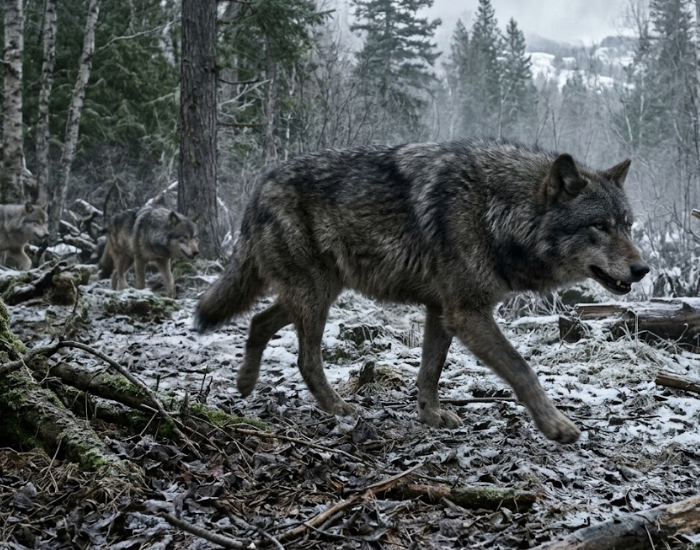
In the Middle East and Central Asia, they compete with wolf packs and leopards for resources. Remarkably, striped hyenas have been observed feeding alongside wolves, a rare alliance forged by survival necessity in harsh environments.
9. Human-Hyena Conflict: Myths, Realities, and Modern Challenges
The relationship between people and striped hyenas is as complex as the landscapes they roam. Across the Middle East and Africa, these animals are often misunderstood, sometimes feared as grave robbers or blamed for livestock losses. Myths about striped hyenas abound, painting them as dangerous or even supernatural, but the reality is far less sinister. Striped hyenas are primarily scavengers, relying on mammalian carrion and the remains that other predators leave uneaten. Their presence helps keep the environment clean and disease-free.
However, as human populations expand and settlements encroach on wild habitats, striped hyenas are increasingly forced into closer contact with people. Habitat loss and the decline of natural prey push these hyenas to adapt, sometimes leading them to raid farms or scavenge near villages. In regions with many isolated populations, such as parts of the Middle East, these encounters can spark conflict. Farmers may retaliate against hyenas, seeing them as threats to their livelihoods, even though actual attacks on livestock are relatively rare compared to the benefits hyenas provide as nature’s cleanup crew.
Modern conservationists are working to bridge the gap between myth and reality. Education programs aim to dispel old stories and highlight the ecological importance of striped hyenas. Practical solutions, like using guard animals to protect herds and creating wildlife corridors to connect isolated populations, are helping to reduce conflict. By understanding that striped hyenas are not the villains of legend but vital members of the wild fauna, communities can find ways to coexist with these remarkable survivors.
10. Cultural Significance: The Striped Hyena in Folklore and Tradition
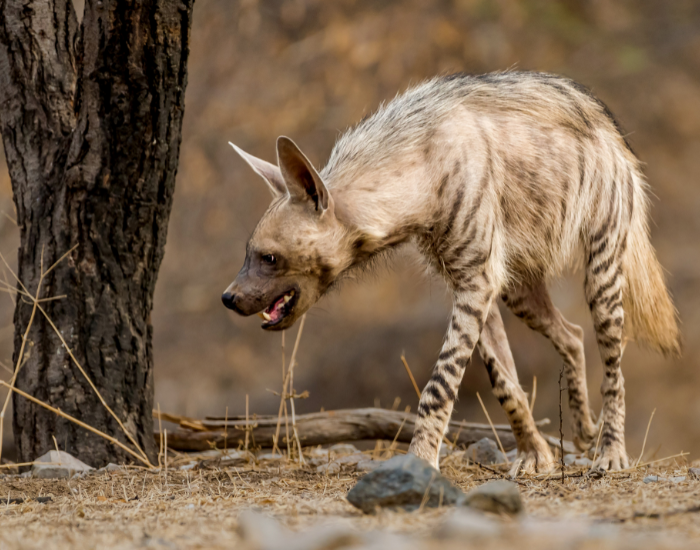
The striped hyena’s mysterious presence has left a deep imprint on the folklore and traditions of many cultures, especially across the Middle East, Africa, and the Indian subcontinent. With their black stripes, pointed ears, and distinctive walk, marked by longer front legs and shorter hind legs, striped hyenas have inspired both awe and superstition. In African tales, the hyena often appears as a cunning trickster, using intelligence and adaptability to outwit larger, scarier predators. These stories reflect the animal’s real-world ability to survive in harsh environments and adapt to changing circumstances.
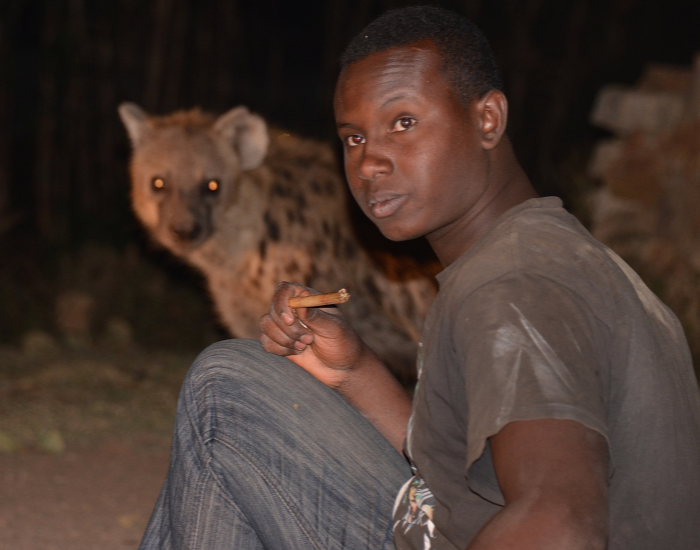
In the Middle East, the striped hyena is sometimes seen as an omen or a creature with mystical powers, its nocturnal habits and eerie silhouette fueling legends. On the Indian subcontinent, the hyena holds a more sacred status in some communities, associated with deities like Kali and believed to possess protective or healing properties. Traditional medicine has, at times, used hyena body parts, though such practices are increasingly discouraged to protect the species.
Art and literature have also celebrated the striped hyena’s unique features. Ancient Egyptian carvings depicted hyenas as symbols of royalty and power, while modern wildlife photography often captures their striking black stripes and expressive faces. The animal’s unusual gait, its front legs taller than its hind legs, has become a symbol of resilience and adaptability in local proverbs and stories.
11. Conservation Status and Threats
Striped hyenas currently face Near Threatened status on the IUCN Red List, with many isolated populations experiencing decline due to:
- Habitat destruction from farming, urbanization, and deforestation
- Human persecution due to livestock raiding farms incidents
- Poisoning and shooting in retaliation for perceived threats
- Climate change impacts on large prey distribution
Across the Indian subcontinent, fewer than 10,000 striped hyenas are estimated to remain. Conservation status improvement requires community education, anti-poisoning campaigns, and habitat restoration throughout Africa, the Middle East, and Central Asia.
12. Ecological Importance: Why Striped Hyenas Matter
Despite unfair reputation as grave robbers or cowardly scavengers, striped hyenas provide critical ecosystem services:
- Nutrient recycling through mammalian carrion consumption
- Population control of small animals and rodents
- Disease prevention by removing decomposing body parts
- Ecosystem health indicators across multiple continents
Protecting striped hyenas means safeguarding entire habitat networks from northern Africa to the Indian subcontinent. These skilled hunters and scavengers carry ancient ecological wisdom essential for maintaining natural balance.

Recent Research Spotlight: Intra-specific Aggression in Striped Hyenas
A new study published (2025) reports a rare and dramatic case of aggressive conflict between two striped hyenas in northern Israel. Unlike the usual ritualized displays or mild threats typically used to resolve disputes, this encounter escalated to sustained biting, vocal attacks, and visible injuries. The researchers note that aggression in striped hyenas is extremely uncommon, making this documented case a valuable insight into the complexity and variability of their social behavior
FAQ: Everything About Striped Hyenas
Generally no. These primarily nocturnal animals are shy and avoid human contact, though they can defend themselves if cornered by scary predators.
Striped hyenas inhabit northern Africa, East Africa, the Middle East, Arabian Peninsula, Central Asia, and the Indian subcontinent.
Striped hyena eats mammalian carrion primarily, supplemented by bones, small animals, and fruit when available. Their ability to swallow bones sets them apart from other predators.
Striped hyenas form small groups and remain largely silent, while spotted hyena communities are noisy cousins known for cackling howl vocalizations and larger social structures.
Habitat destruction, human persecution, and climate change impact many isolated populations across their range from Africa the Middle East to Central Asia.
Protecting Africa’s Silent Guardians
The striped hyena represents far more than folklore’s grave robbers. These animals serve as essential ecosystem components, demonstrating remarkable adaptation across continents from rocky scrublands in India to the vast landscapes of East Africa.
From their distinctive walk to their specialized hyena’s digestive system, striped hyenas continue their quiet, essential work maintaining nature’s balance. Their conservation status depends on our understanding and protection of these remarkable survivors.
Striped hyenas remind us that true conservation success requires protecting entire ecosystems, not just individual species. These silent guardians of the wild deserve our respect, study, and dedicated conservation efforts across Africa, the Middle East, Central Asia, and the Indian subcontinent.
Top 6 Best National Parks to See Striped Hyenas (Highest Reliability)
1. Gir National Park, India
The #1 most reliable place on Earth.
Massive striped hyena population + open scrub forests + excellent night drives.
People regularly see them here more than anywhere else.
2. Velavadar Blackbuck National Park, India
Exceptionally high density of striped hyenas.
Open grasslands make them easier to spot.
Night drives often produce repeated sightings in one evening.
3. Little Rann of Kutch (Wild Ass Sanctuary), India
Perfect habitat: salt flats + scrub + open plains.
Strong hyena population + frequent nocturnal sightings.
A hotspot for photographers.
4. Masai Mara Conservancies, Kenya
Not the main reserve—the conservancies (Olare Motorogi, Naboisho, Ol Kinyei).
Night drives allowed + low tourist pressure = higher hyena visibility.
Striped hyenas are more common here than most people realize.
5. Serengeti Ecosystem (Private Concessions), Tanzania
In the main Serengeti they’re hard to see —
BUT in adjoining private lands (Loliondo, Grumeti, Ikorongo),
night drives often bring regular striped hyena sightings.
6. Queen Elizabeth National Park, Uganda
A somewhat secret striped hyena stronghold.
Confirmed breeding population + reliable nocturnal sightings for those who target them.
Kyambura area = hotspot.
Find Amazing Experiences to see Stryped Hyenas Around the World!
This blog is reader-supported. When you buy experiences through links listed on this site, we may earn an affiliate commission.